DUBAI, United Arab Emirates (AP) — President Donald Trump on Thursday threatened sanctions on anyone who buys Iranian oil, a warning that came after planned talks over Tehran’s rapidly advancing nuclear program were postponed.
Trump wrote on social media, “All purchases of Iranian Oil, or Petrochemical products, must stop, NOW!” He said any country or person who buys those products from Iran will not be able to do business with the United States “in any way, shape, or form.”
It was unclear how Trump would implement such a ban as he threatened to levy secondary sanctions on nations that import Iranian oil. But his statement risked further escalating tensions with China — Iran’s leading customer — at a time when the relationship is severely strained over the U.S. president’s tariffs.
Based on tanker tracking data, the U.S. Energy Information Administration concluded in a report published last October that “China took nearly 90% of Iran’s crude oil and condensate exports in 2023.” Trump has separately placed 145% tariffs on China as a way to raise federal revenues and rebalance global trade.
Trump's social media threat came after Oman announced planned nuclear negotiations for this coming weekend had been postponed. Omani Foreign Minister Badr al-Busaidi made the announcement in a post on the social platform X.
“For logistical reasons we are rescheduling the US Iran meeting provisionally planned for Saturday May 3rd,” he wrote. “New dates will be announced when mutually agreed.”
Al-Busaidi, who has mediated the talks through three rounds so far, did not elaborate.
Iran's Foreign Minister Abbas Araghchi also blamed “logistical and technical reasons” for the postponement.
“On Iran’s part, there is no change in our determination to secure a negotiated solution,” he wrote on X. “We are more determined than ever to achieve a just and balanced deal: guaranteeing an end to sanctions, and creating confidence that Iran’s nuclear program will forever remain peaceful while ensuring that Iranian rights are fully respected.”
U.S. Secretary of State Marco Rubio, newly tapped to take over the duties of national security adviser in addition to his current role as America's top diplomat, reiterated that if Iran wants nuclear power plants, it can import enriched uranium.
“Iran simply needs to say, ‘We’ve agreed to no longer enrich,’” Rubio said on Fox News Channel’s “Hannity” on Thursday night. About the talks, he added, “This is the best opportunity they’re going to have.”
Meanwhile, a person familiar with the U.S. negotiations said America “had never confirmed its participation” in a fourth round of talks in Rome. However, the person said the U.S. expected the talks to occur “in the near future.” The person spoke on condition of anonymity to discuss the closed-door negotiations.
Rome will see the Vatican begin its conclave next week to pick a new pope after the death of Pope Francis. Two other rounds of U.S.-Iran talks have been held in Muscat, the capital of Oman.
The talks seek to limit Iran’s nuclear program in exchange for the lifting of some of the crushing economic sanctions the U.S. has imposed on the Islamic Republic closing in on a half-century of enmity. The negotiations have been led by Araghchi and U.S. Mideast envoy Steve Witkoff.
Trump has repeatedly threatened to unleash airstrikes targeting Iran’s program if a deal isn’t reached. Iranian officials increasingly warn that they could pursue a nuclear weapon with their stockpile of uranium enriched to near weapons-grade levels.
The U.S. president with his threat on social media would be going after Iran's major economic resource. It produced an average of 2.9 million barrels a day in 2023 of crude oil, according to the Energy Information Administration.
Iran’s 2015 nuclear deal with world powers did limit Tehran’s program. However, Trump unilaterally withdrew from it in 2018, setting in motion years of attacks and tensions. The wider Middle East also remains on edge over the Israel-Hamas war in the Gaza Strip.
Meanwhile, the U.S. continues an airstrike campaign, called “Operation Rough Rider,” that has been targeting Yemen's Houthi rebels, who long have been backed by Iran. U.S. Defense Secretary Pete Hegseth early Thursday warned Iran over the rebels.
“Message to IRAN: We see your LETHAL support to The Houthis. We know exactly what you are doing,” he wrote. “You know very well what the U.S. Military is capable of — and you were warned. You will pay the CONSEQUENCE at the time and place of our choosing.”
Last Saturday's round of talks, which included experts drilling down into the details of a possible deal, also took place as an explosion rocked an Iranian port, killing at least 70 people and injuring more than 1,000 others.
Associated Press writers Amir Vahdat in Tehran, Iran, and Matthew Lee and Josh Boak in Washington contributed to this report.
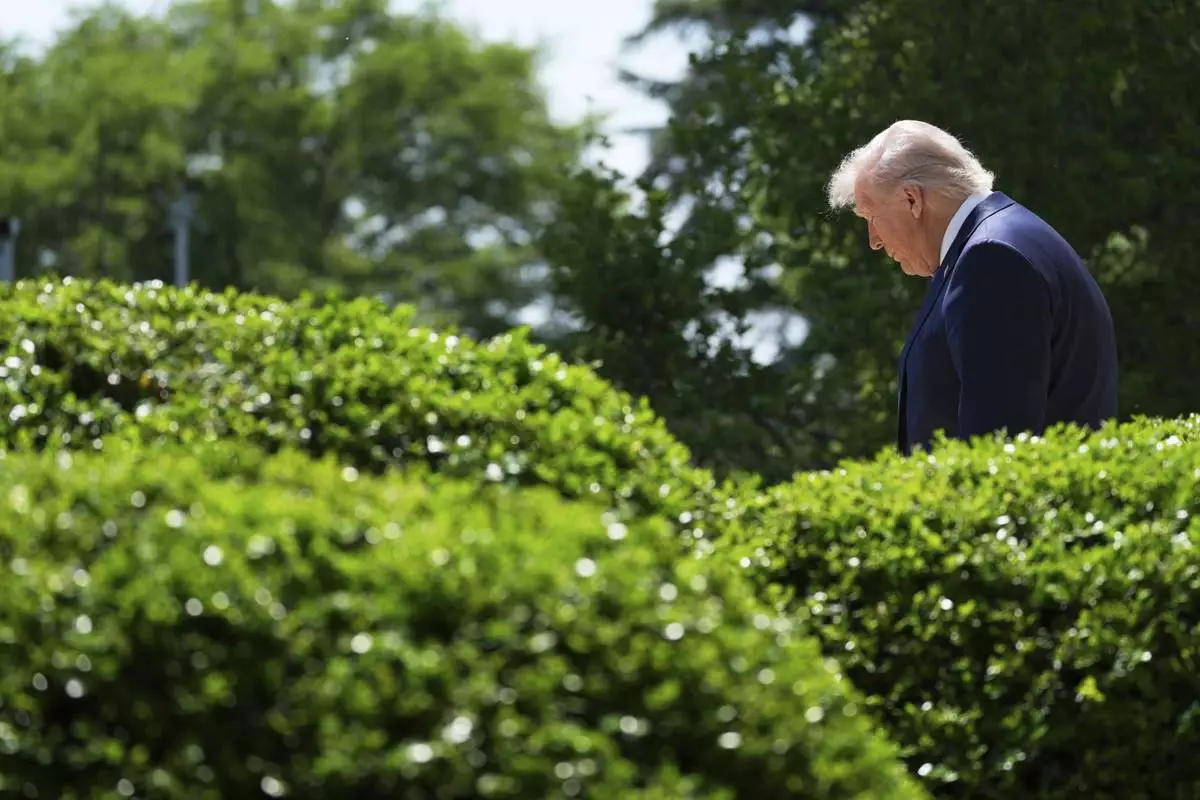
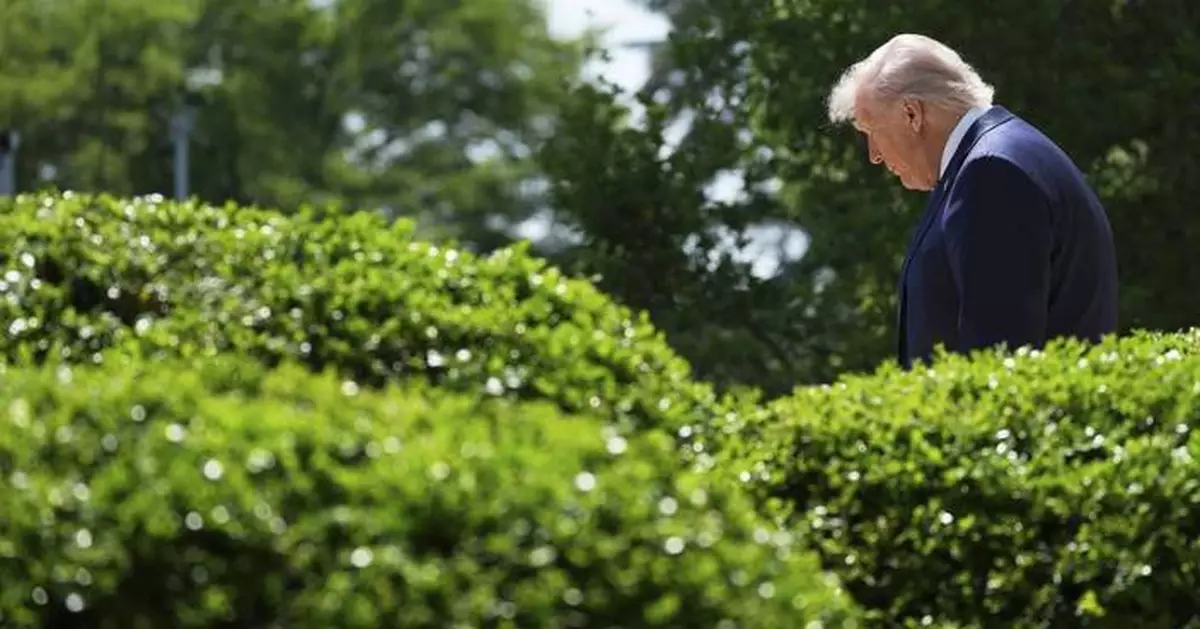
President Donald Trump arrives to speak during a National Day of Prayer event in the Rose Garden of the White House, Thursday, May 1, 2025, in Washington. (AP Photo/Evan Vucci)
NEW YORK (AP) — Thousands of nurses in three hospital systems in New York City went on strike Monday after negotiations through the weekend failed to yield breakthroughs in their contract disputes.
The strike was taking place at The Mount Sinai Hospital and two of its satellite campuses, with picket lines forming. The other affected hospitals are NewYork-Presbyterian and Montefiore Medical Center in the Bronx.
About 15,000 nurses are involved in the strike, according to New York State Nurses Association.
“After months of bargaining, management refused to make meaningful progress on core issues that nurses have been fighting for: safe staffing for patients, healthcare benefits for nurses, and workplace violence protections,” the union said in a statement issued Monday. “Management at the richest hospitals in New York City are threatening to discontinue or radically cut nurses’ health benefits.”
The strike, which comes during a severe flu season, could potentially force the hospitals to transfer patients, cancel procedures or divert ambulances. It could also put a strain on city hospitals not involved in the contract dispute, as patients avoid the medical centers hit by the strike.
The hospitals involved have been hiring temporary nurses to try and fill the labor gap during the walkout, and said in a statement during negotiations that they would “do whatever is necessary to minimize disruptions.” Montefiore posted a message assuring patients that appointments would be kept.
“NYSNA’s leaders continue to double down on their $3.6 billion in reckless demands, including nearly 40% wage increases, and their troubling proposals like demanding that a nurse not be terminated if found to be compromised by drugs or alcohol while on the job," Montefiore spokesperson Joe Solmonese said Monday after the strike had started. "We remain resolute in our commitment to providing safe and seamless care, regardless of how long the strike may last.”
New York-Presbyterian accused the union of staging a strike to “create disruption,” but said in a statement that it has taken steps to ensure patients receive the care they need.
"We’re ready to keep negotiating a fair and reasonable contract that reflects our respect for our nurses and the critical role they play, and also recognizes the challenging realities of today’s healthcare environment,” the statement said.
The work stoppage is occurring at multiple hospitals simultaneously, but each medical center is negotiating with the union independently. Several other hospitals across the city and in its suburbs reached deals in recent days to avert a possible strike.
The nurses’ demands vary by hospital, but the major issues include staffing levels and workplace safety. The union says hospitals have given nurses unmanageable workloads.
Nurses also want better security measures in the workplace, citing incidents like a an incident last week, when a man with a sharp object barricaded himself in a Brooklyn hospital room and was then killed by police.
The union also wants limitations on hospitals’ use of artificial intelligence.
The nonprofit hospitals involved in the negotiations say they’ve been working to improve staffing levels, but say the union’s demands overall are too costly.
Nurses voted to authorize the strike last month.
Both New York Gov. Kathy Hochul and Mayor Zohran Mamdani had expressed concern about the possibility of the strike. As the strike deadline neared, Mamdani urged both sides to keep negotiating and reach a deal that “both honors our nurses and keeps our hospitals open.”
“Our nurses kept this city alive through its hardest moments. Their value is not negotiable,” Mamdani said.
State Attorney General Letitia James voiced similar support, saying "nurses put their lives on the line every day to keep New Yorkers healthy. They should never be forced to choose between their own safety, their patients’ well-being, and a fair contract.”
The last major nursing strike in the city was only three years ago, in 2023. That work stoppage, at Mount Sinai and Montefiore, was short, lasting three days. It resulted in a deal raising pay 19% over three years at those hospitals.
It also led to promised staffing improvements, though the union and hospitals now disagree about how much progress has been made, or whether the hospitals are retreating from staffing guarantees.
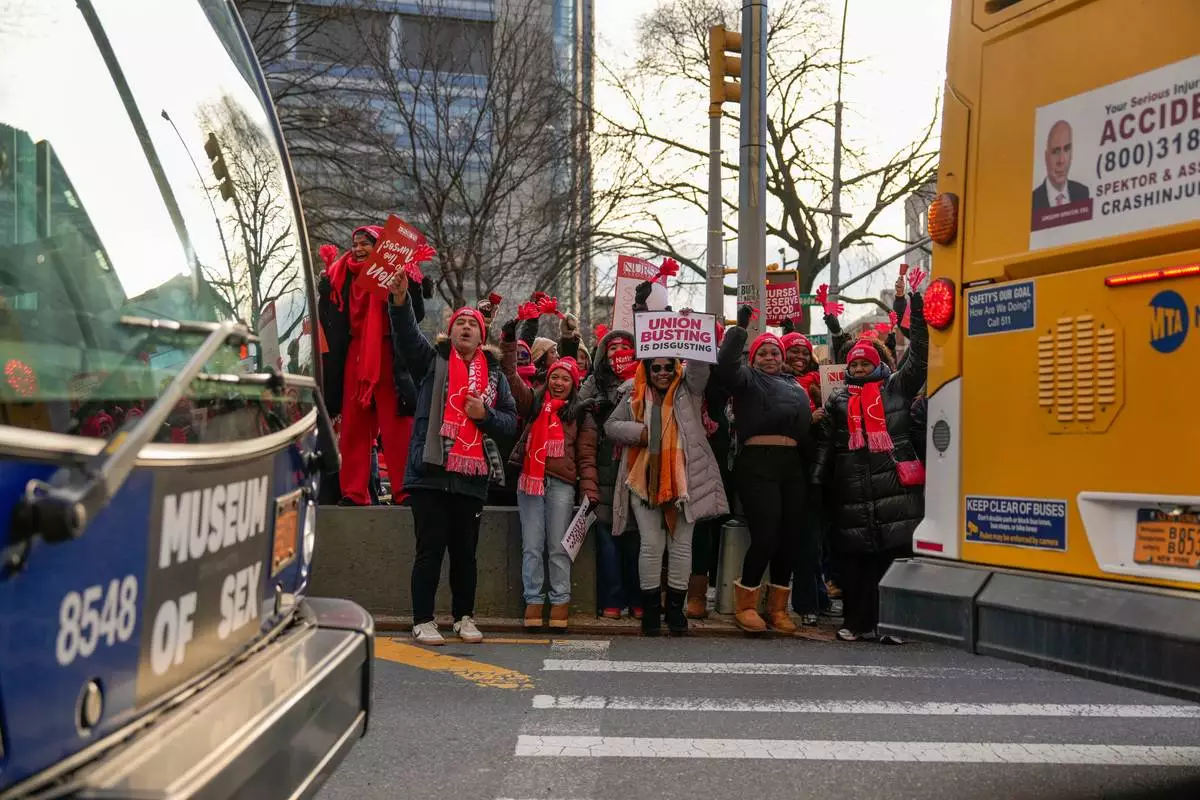
Nurses strike outside New York-Presbyterian Hospital, Monday, Jan. 12, 2026, in New York. (AP Photo/Yuki Iwamura)
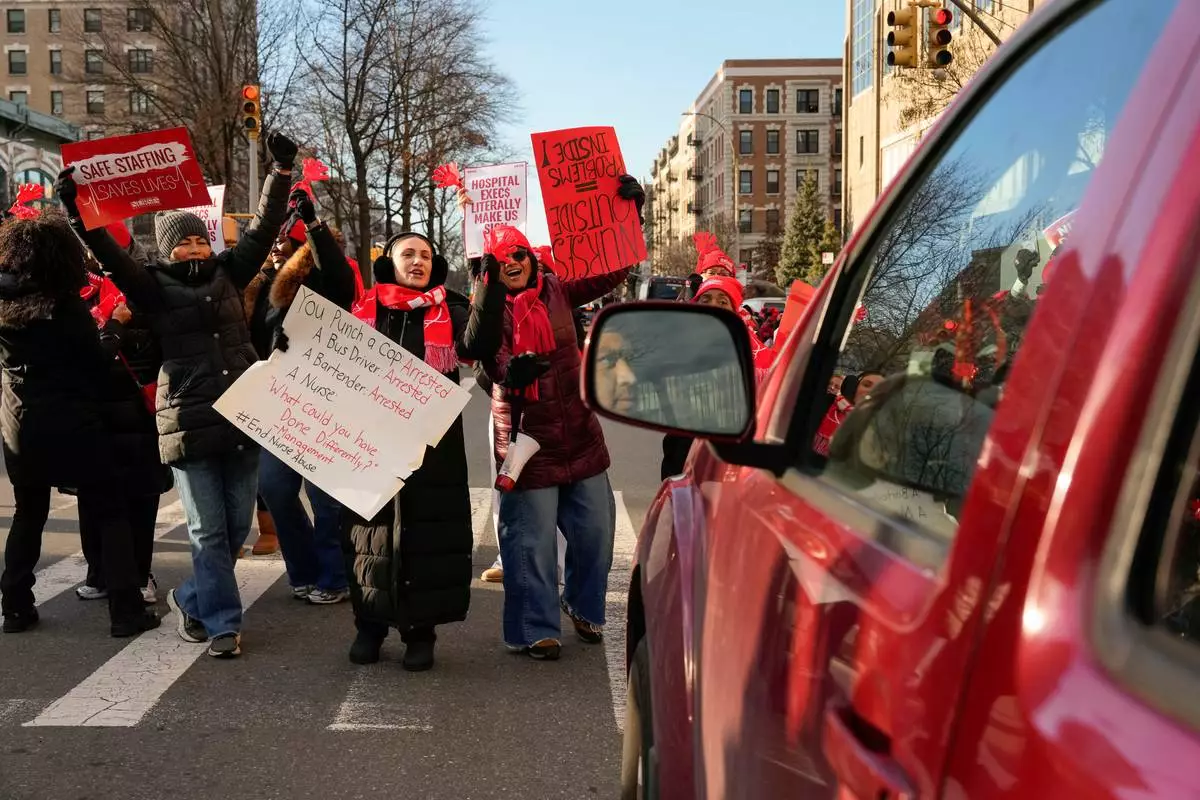
Nurses strike outside New York-Presbyterian Hospital, Monday, Jan. 12, 2026, in New York. (AP Photo/Yuki Iwamura)
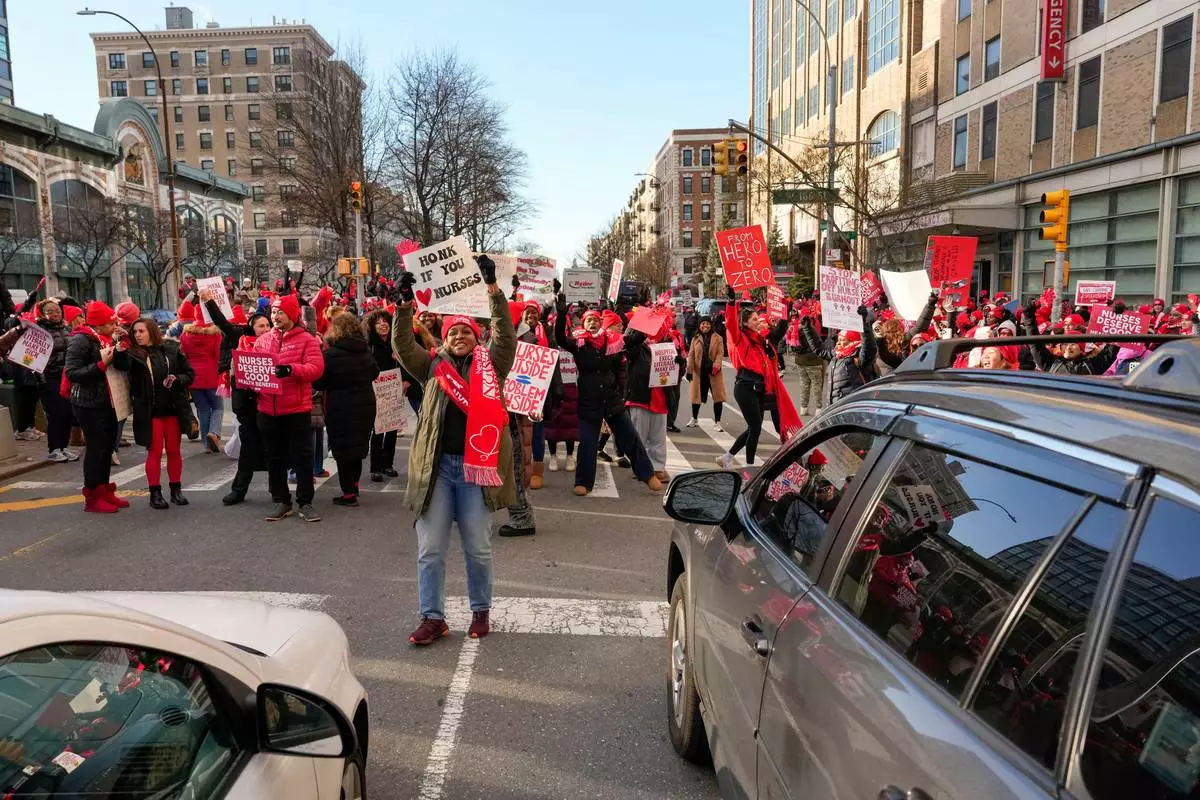
Nurses strike outside New York-Presbyterian Hospital, Monday, Jan. 12, 2026, in New York. (AP Photo/Yuki Iwamura)
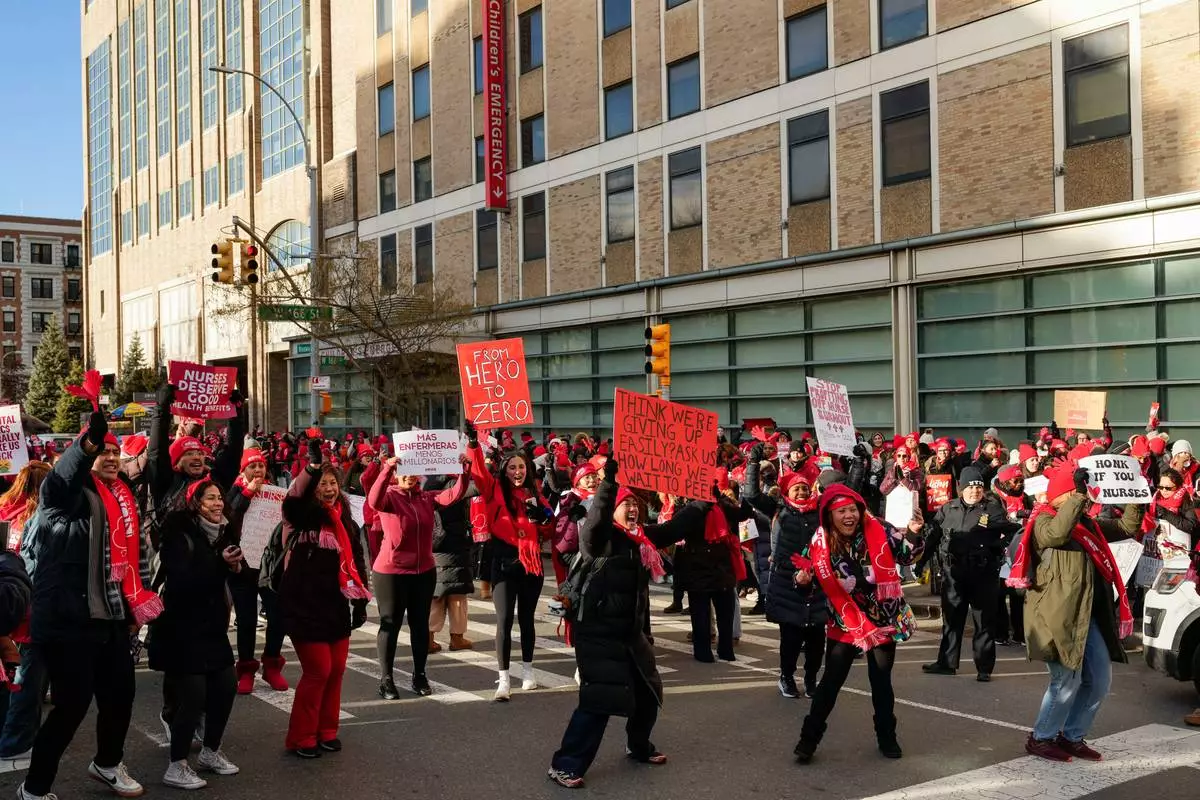
Nurses strike outside New York-Presbyterian Hospital, Monday, Jan. 12, 2026, in New York. (AP Photo/Yuki Iwamura)
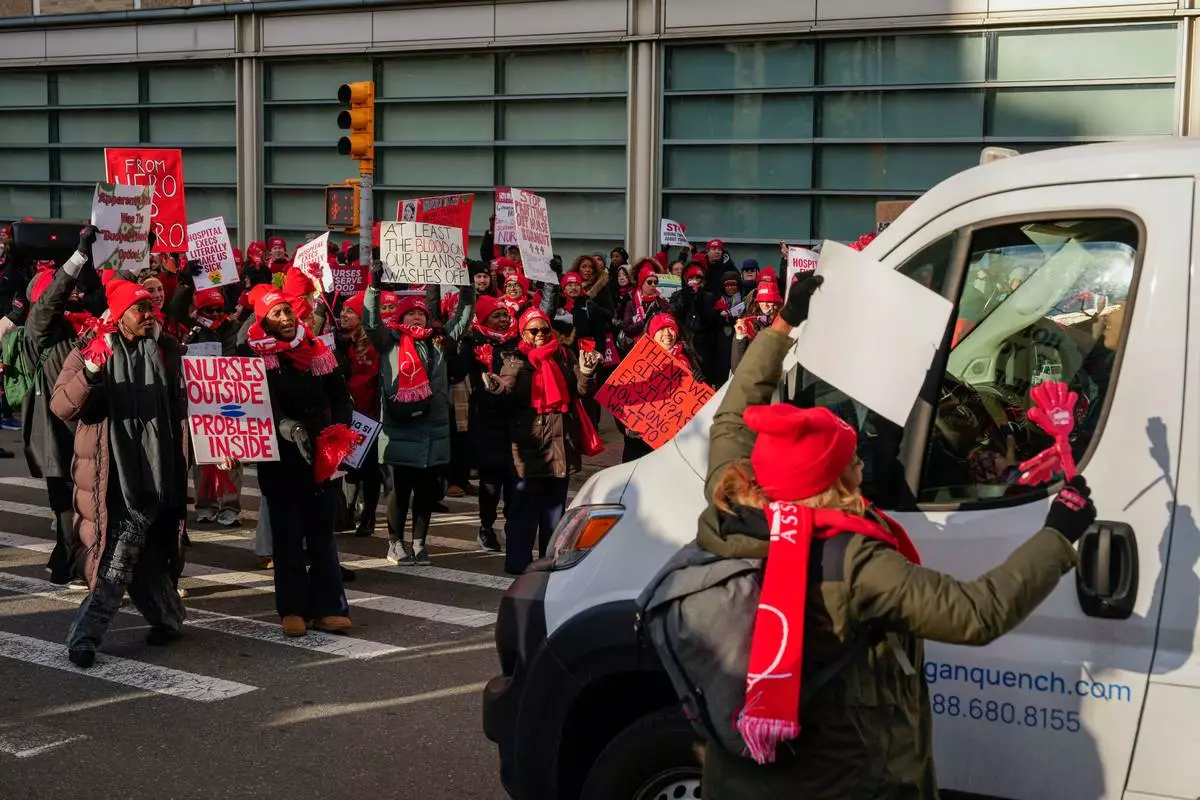
Nurses strike outside New York-Presbyterian Hospital, Monday, Jan. 12, 2026, in New York. (AP Photo/Yuki Iwamura)
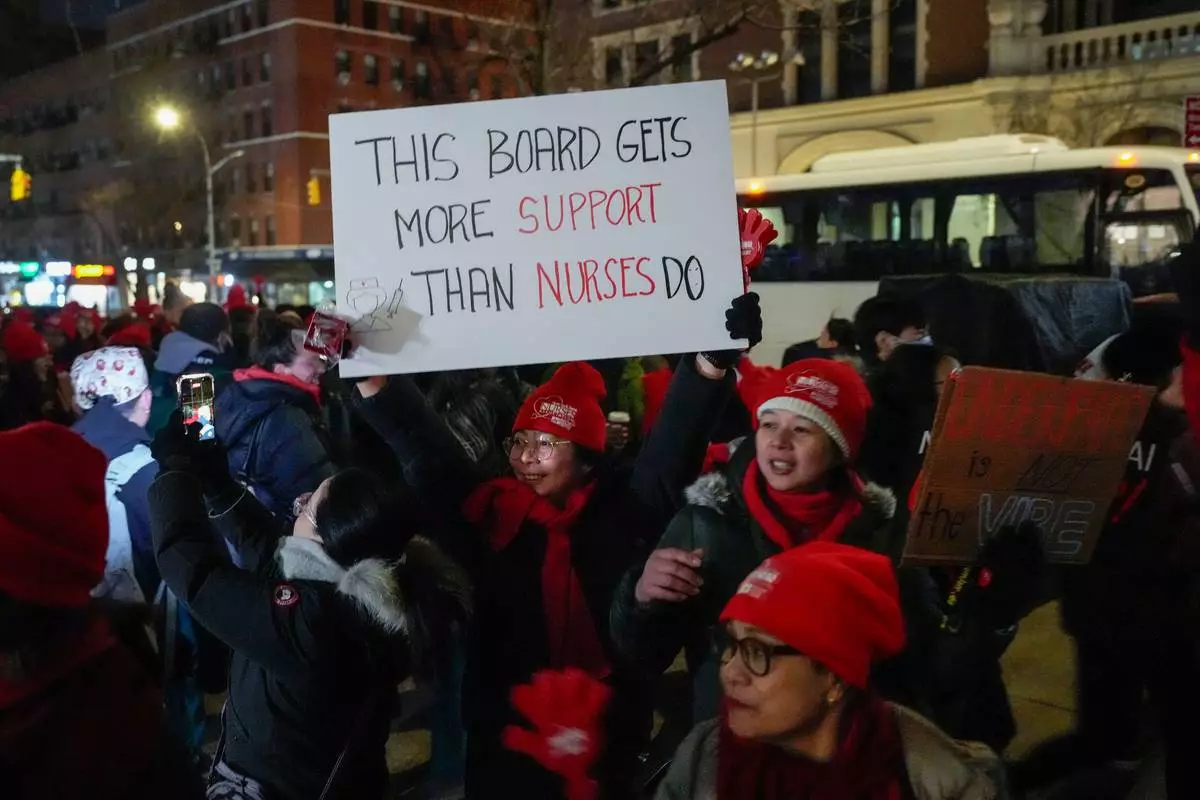
Nurses strike outside Mount Sinai West Hospital, Monday, Jan. 12, 2026, in New York. (AP Photo/Yuki Iwamura)
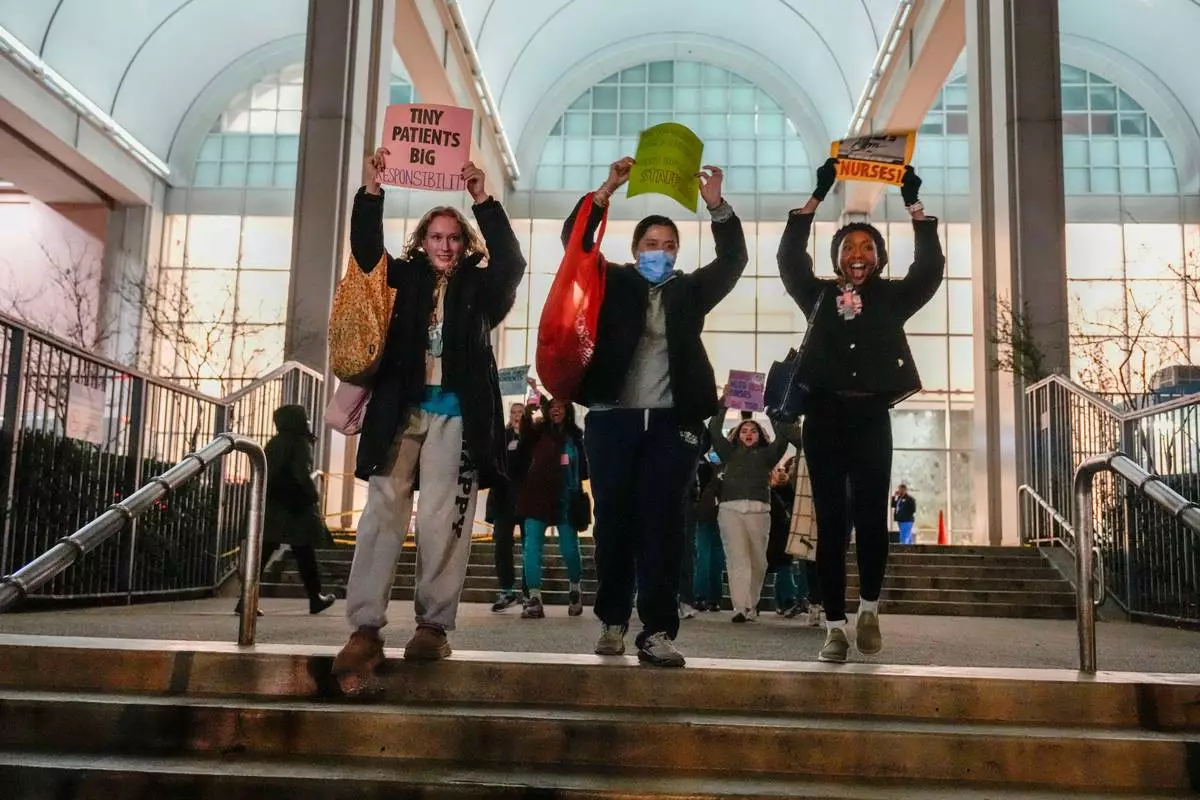
Nurses strike outside Mount Sinai West Hospital, Monday, Jan. 12, 2026, in New York. (AP Photo/Yuki Iwamura)
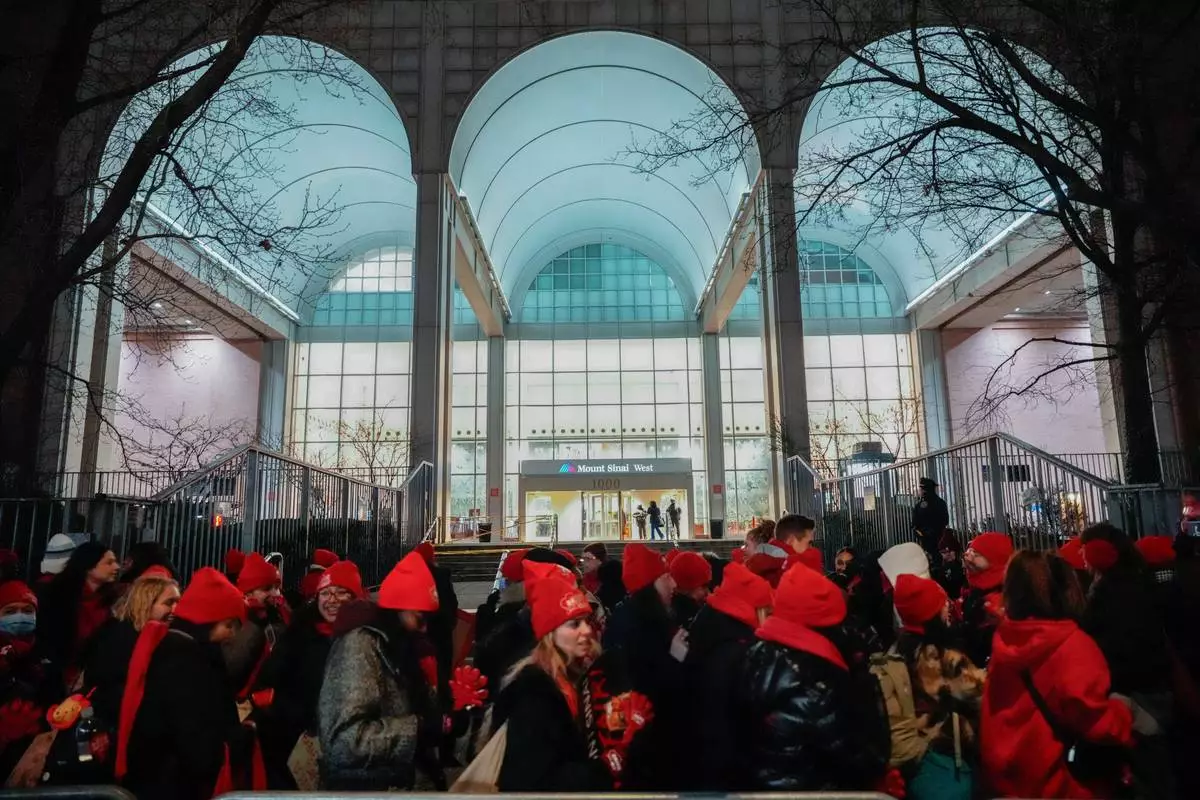
Nurses strike outside Mount Sinai West Hospital, Monday, Jan. 12, 2026, in New York. (AP Photo/Yuki Iwamura)
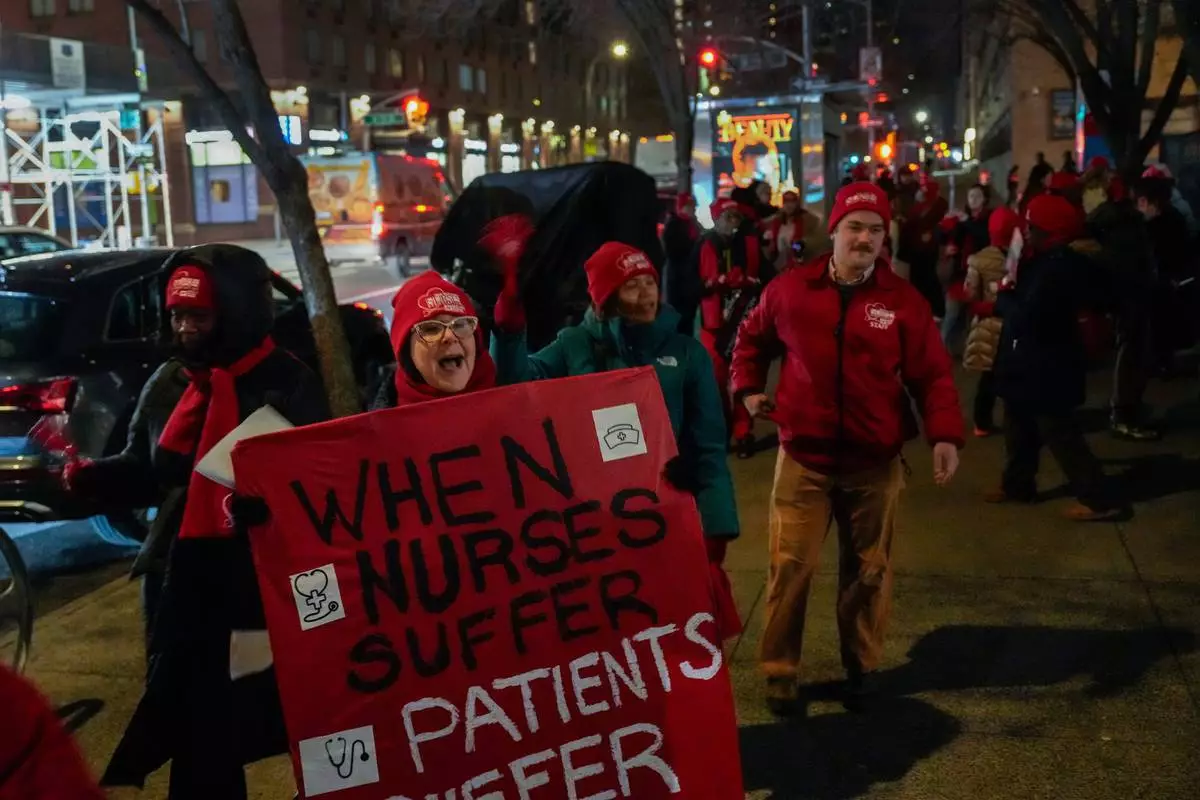
Nurses strike outside Mount Sinai West Hospital, Monday, Jan. 12, 2026, in New York. (AP Photo/Yuki Iwamura)

FILE - A medical worker transports a patient at Mount Sinai Hospital, April 1, 2020, in New York. (AP Photo/Mary Altaffer, File)