SAO PAULO (AP) — The Inter-American Commission on Human Rights is calling for a permanent monitoring system to track Brazil’s compliance with its recommendation s following the devastating floods that struck southern Brazil one year ago.
Javier Palummo, the commission’s special rapporteur, told The Associated Press Thursday the initiative aims to maintain a permanent channel with Brazil's government and "strengthen public accountability, give international visibility to good practices, and monitor risks of setbacks—especially in the most affected areas and for vulnerable groups.”
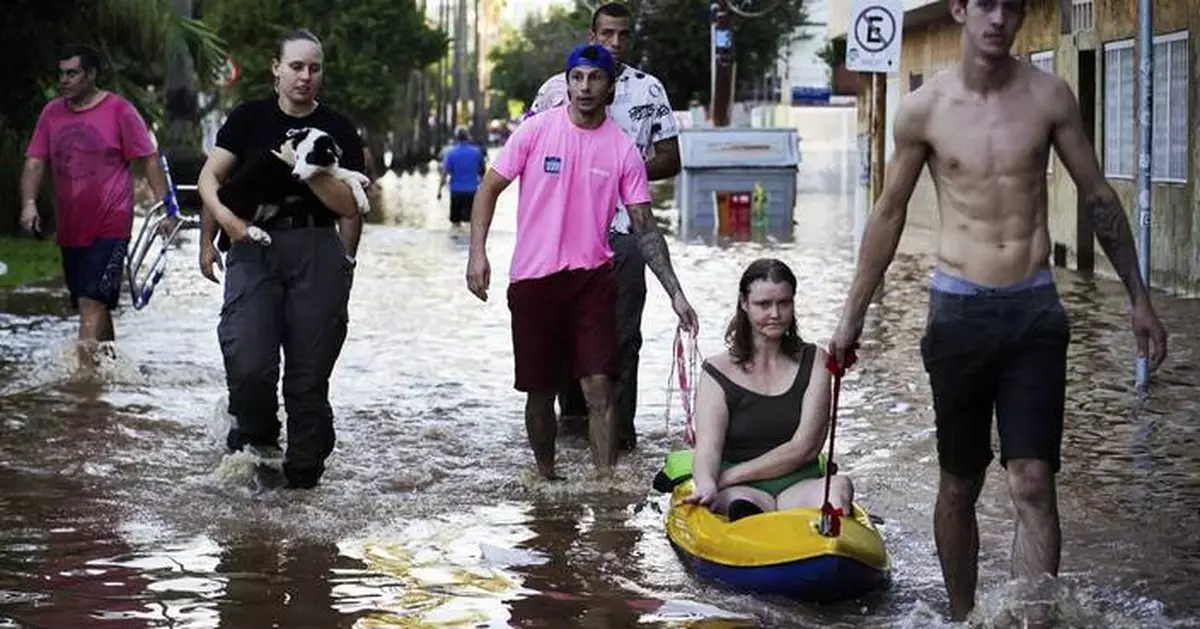
Between April and May 2024, unprecedented floods hit nearly all the municipalities in the southern state of Rio Grande do Sul. Over 2.3 million people were affected. Hundreds of thousands were displaced and 182 died, according to official data. Analysts compared the scale of devastation to Hurricane Katrina, which hit New Orleans in 2005.
A new report by the Inter-American Commission on Human Rights released Wednesday highlights stark inequalities in the recovery process. Indigenous and quilombola communities —which are home to descendants of escaped slaves—, female-headed households, and unhoused people have faced significant challenges in accessing reconstruction aid and public services.
“These groups often reported being excluded from recovery planning,” Palummo said. “The lack of land regularization and limited institutional engagement reinforce historic inequalities.”
Palummo visited flood-hit areas in December. He cited the solidarity of a quilombola community where women led relief efforts as especially moving. He also pointed to the Mbyá-Guarani people of Eldorado do Sul, who lost their homes and school first to flooding, then to a construction project. Forced to resettle near a highway, they now face insecurity, health risks, and cultural loss.
“These disasters are not just natural—they’re worsened by chronic neglect,” he said. “They reflect deep structural inequalities and growing climate vulnerability fueled by unplanned urban growth, environmental degradation, and environmental racism.”
The report, he said, is the first of its kind by the commission affiliated with Organization of American States. Palummo will present the findings next week to local communities in Porto Alegre and to federal and state officials. He will also speak at a public hearing May 8 in Brasília.
Follow AP’s coverage of Latin America and the Caribbean at https://apnews.com/hub/latin-america
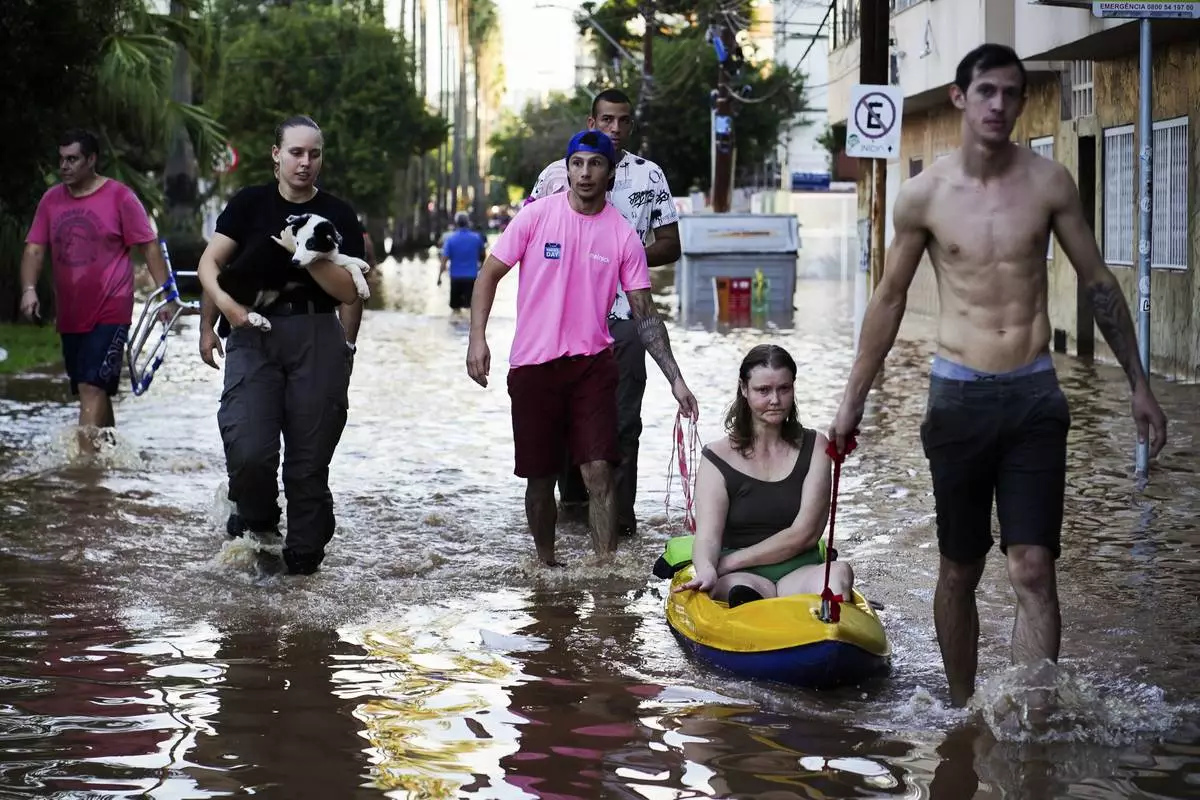
FILE - A woman is rescued from an area flooded by heavy rains in Porto Alegre, Rio Grande do Sul state, Brazil, May 6, 2024. (AP Photo/Carlos Macedo, File)
WASHINGTON (AP) — President Donald Trump is meeting with oil executives at the White House on Friday in hopes of securing $100 billion in investments to revive Venezuela’s ability to fully tap into its expansive reserves of petroleum — a plan that rides on their comfort in making commitments in a country plagued by instability, inflation and uncertainty.
Since the U.S. military raid to capture former Venezuelan leader Nicolás Maduro on Saturday, Trump has quickly pivoted to portraying the move as a newfound economic opportunity for the U.S., seizing tankers carrying Venezuelan oil, saying the U.S. is taking over the sales of 30 million to 50 million barrels of previously sanctioned Venezuelan oil and will be controlling sales worldwide indefinitely.
On Friday, U.S. forces seized their fifth tanker over the past month that has been linked to Venezuelan oil. The action reflected the determination of the U.S. to fully control the exporting, refining and production of Venezuelan petroleum, a sign of the Trump administration's plans for ongoing involvement in the sector as it seeks commitments from private companies.
It's all part of a broader push by Trump to keep gasoline prices low. At a time when many Americans are concerned about affordability, the incursion in Venezuela melds Trump’s assertive use of presidential powers with an optical spectacle meant to convince Americans that he can bring down energy prices.
The meeting, set for 2:30 p.m. EST, will be open to the news media, according to an update to the president's daily schedule. “At least 100 Billion Dollars will be invested by BIG OIL, all of whom I will be meeting with today at The White House,” Trump said Friday in a pre-dawn social media post.
Trump is set to meet with executives from 17 oil companies, according to the White House. Among the companies attending are Chevron, which still operates in Venezuela, and ExxonMobil and ConocoPhillips, which both had oil projects in the country that were lost as part of a 2007 nationalization of private businesses under Maduro’s predecessor, Hugo Chávez.
The president is meeting with a wide swath of domestic and international companies with interests ranging from construction to the commodity markets. Other companies slated to be at the meeting include Halliburton, Valero, Marathon, Shell, Singapore-based Trafigura, Italy-based Eni and Spain-based Repsol.
Large U.S. oil companies have so far largely refrained from affirming investments in Venezuela as contracts and guarantees need to be in place. Trump has suggested on social media that America would help to backstop any investments.
Venezuela’s oil production has slumped below one million barrels a day. Part of Trump's challenge to turn that around will be to convince oil companies that his administration has a stable relationship with Venezuela’s interim President Delcy Rodríguez, as well as protections for companies entering the market.
Secretary of State Marco Rubio, Energy Secretary Chris Wright and Interior Secretary Doug Burgum are slated to attend the oil executives meeting, according to the White House.
Meanwhile, the United States and Venezuelan governments said Friday they were exploring the possibility of r estoring diplomatic relations between the two countries, and that a delegation from the Trump administration arrived to the South American nation on Friday.
The small team of U.S. diplomats and diplomatic security officials traveled to Venezuela to make a preliminary assessment about the potential re-opening of the U.S. Embassy in Caracas, the State Department said in a statement.
Trump also announced on Friday he’d meet with President Gustavo Petro in early February, but called on the Colombian leader to make quick progress on stemming flow of cocaine into the U.S.
Trump, following the ouster of Maduro, had made vague threats to take similar action against Petro. Trump abruptly changed his tone Wednesday about his Colombian counterpart after a friendly phone call in which he invited Petro to visit the White House.
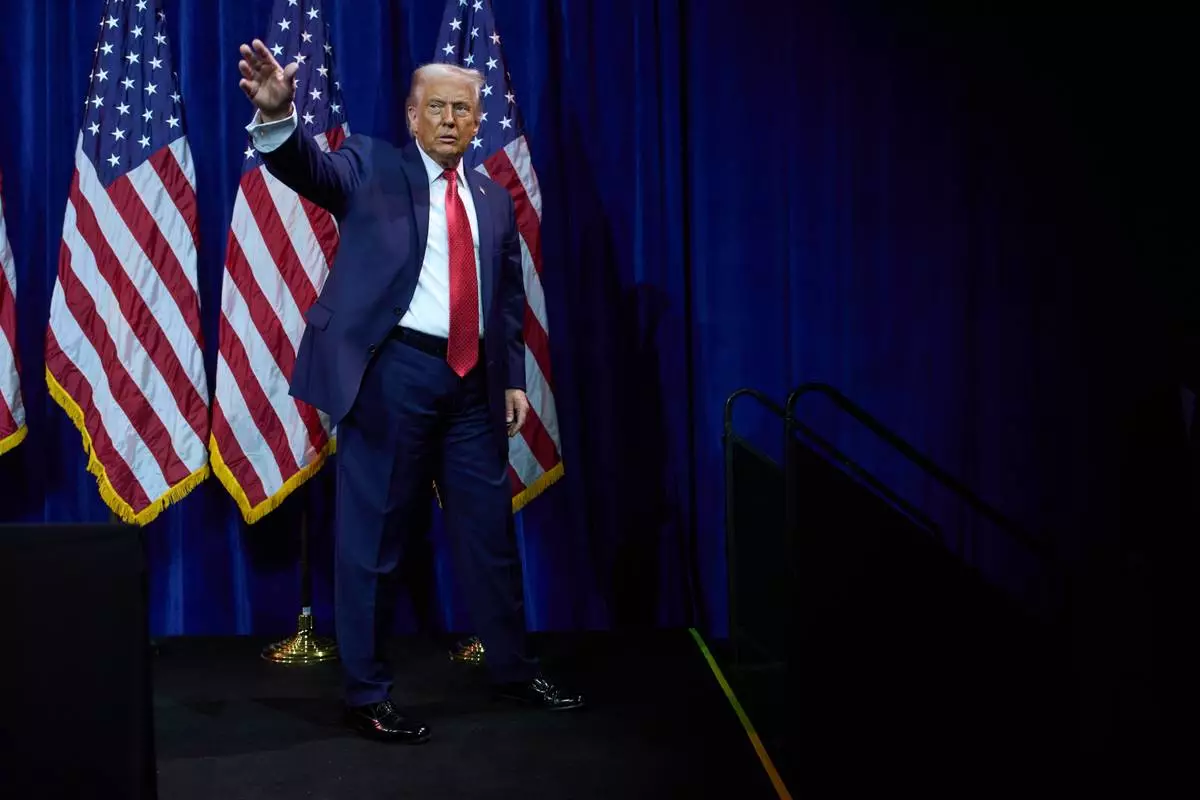
President Donald Trump waves as he walks off stage after speaking to House Republican lawmakers during their annual policy retreat, Tuesday, Jan. 6, 2026, in Washington. (AP Photo/Evan Vucci)