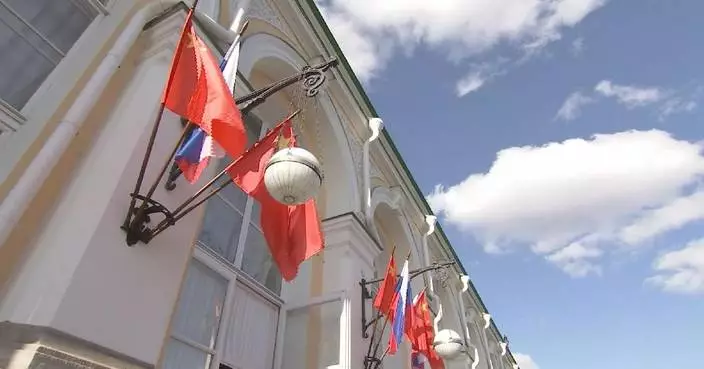
Many Taiwanese hospitality businesses are feeling the pinch of the continued absence of tourists from the Chinese mainland, with some yearning for the economic boost they provide.
Ximending, a tourist neighborhood in Taipei, is popular for its souvenir shops and local cuisine. Since the end of the pandemic, visitors have been flocking to the district again, although tourists from the Chinese mainland are mainly noticeable by their absence.
Jiang Lian Chun, a local tour guide, offers private day tours in his taxi. In the past, mainland holiday makers made up the majority of his customers.
"Chinese mainland tourists made up around 30 percent of all visitors from around the world," said Jiang.
Taiwan's tourism industry is rebounding from the pandemic slump, with about 7.8 million visitors in 2024, still far below the nearly 12 million visitors Taiwan welcomed in 2019.
Although Taiwan has seen a surge in visitors from places like South Korea, Hong Kong and Southeast Asia, these visitors haven't filled the void left by the mainland tourists and their spending power.
Retailers and restaurants alike are bearing the brunt. Souvenir shops selling Taiwan's famed pineapple tarts and other treats have taken a big hit.
"There are many souvenir shops in Ximending. Tourists from the Chinese mainland love to buy souvenirs and they buy a large quantity," said Liu Jinlong, of the Ximen Pedestrian District Development Association.
Earlier this year, China announced it would allow group tour services for residents of Fujian and Shanghai to Taiwan to resume, and many businesses here are hoping restrictions may be eased further.
Despite the positive signals on travel, cross-strait ties remain tense. There's no certainty yet that Chinese mainland visits will return to pre-pandemic levels, meaning businesses in Taiwan may struggle to fill the gap.

Taiwan businesses await return of mainland tourists
The head of the International Atomic Energy Agency (IAEA) called for maximum military restraint and full adherence to the localized ceasefire on Friday, after Russian personnel were reportedly injured near the Zaporizhzhia Nuclear Power Plant (NPP).
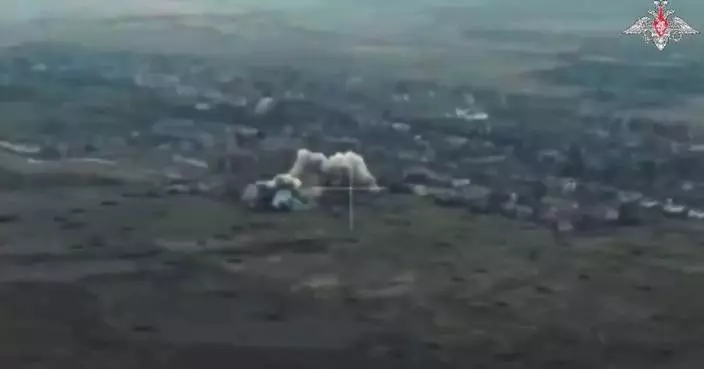
The IAEA said it has been informed that some Russian military personnel were injured during Friday's de-mining phase of the agreed localized ceasefire between Russia and Ukraine.
Earlier on Friday, the IAEA announced the start of a localized ceasefire it brokered on the front line near the Zaporizhzhia NPP, enabling repairs to the plant's crucial power line.
IAEA Director General Rafael Grossi said the restoration of the off-site power line would be an important and positive step for nuclear safety, which is in everybody's vital interest.
"Today, we have been able to agree on the sixth ceasefire, localized ceasefire brokered by us, the IAEA, with Ukraine and the Russian Federation. This will allow experts and technicians from both sides to start very crucial repairs of the Dniprovska line. It's the 750-kilowatt line, the main line that is still standing there," Grossi noted.
The line has been disconnected for more than two months. The Zaporizhzhia NPP had to rely on emergency diesel generators for the electricity it needed to cool its six shutdown reactors in the event of a power outage during military conflicts.
The Zaporizhzhia plant, one of Europe's largest nuclear power facilities, has been under Russian control since March 2022.
Alexey Likhachev, director general of Russia's state nuclear corporation Rosatom, reported Ukrainian drone strikes on the Zaporizhzhia NPP on Friday afternoon. "Three of our engineers were injured, two of them are in serious condition," Likhachev was quoted as saying by Russian news agency Interfax.
According to the IAEA, the incident is currently being investigated, and the Ukrainian side said it remains committed to the ceasefire.

IAEA chief calls for restraint, adherence to ceasefire near Zaporizhzhia