Skip to Content Facebook Feature Image

The day London went 'barmy.' An East End boy remembers the end of World War II in Europe

News

The day London went 'barmy.' An East End boy remembers the end of World War II in Europe
News

News

The day London went 'barmy.' An East End boy remembers the end of World War II in Europe

2025-05-02 14:06 Last Updated At:14:33

LONDON (AP) — John Goldsmith was too young to fight in World War II, but he remembers the rationing, the blackouts and the bombs that devastated his neighborhood in east London. And he remembers the party when peace returned to Europe.

Church bells rang across the city, bonfires were lit and conga lines snaked through Piccadilly Circus as people filled the streets to celebrate the Allied victory over Nazi Germany. For a 14-year-old boy, May 8, 1945, also brought something else: an end to the tedium of wartime rules and restrictions.

More Images
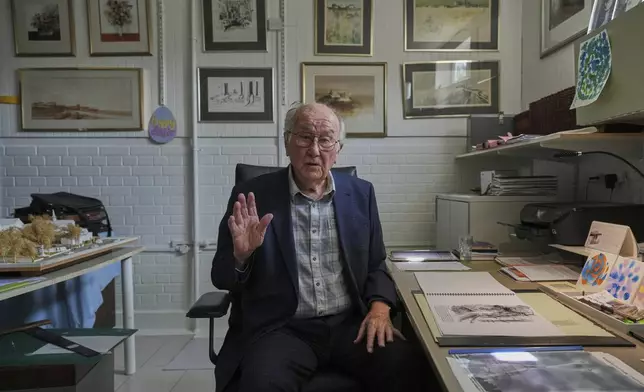
John Goldsmith, 94, speaks during an interview at his home in London, Thursday, April 24, 2025. (AP Photo/Kin Cheung)
John Goldsmith, 94, speaks during an interview at his home in London, Thursday, April 24, 2025. (AP Photo/Kin Cheung)

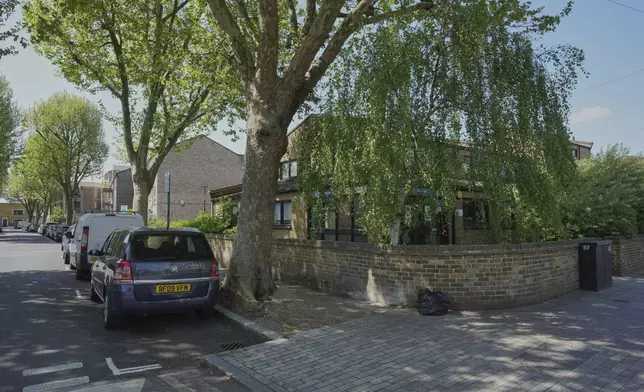
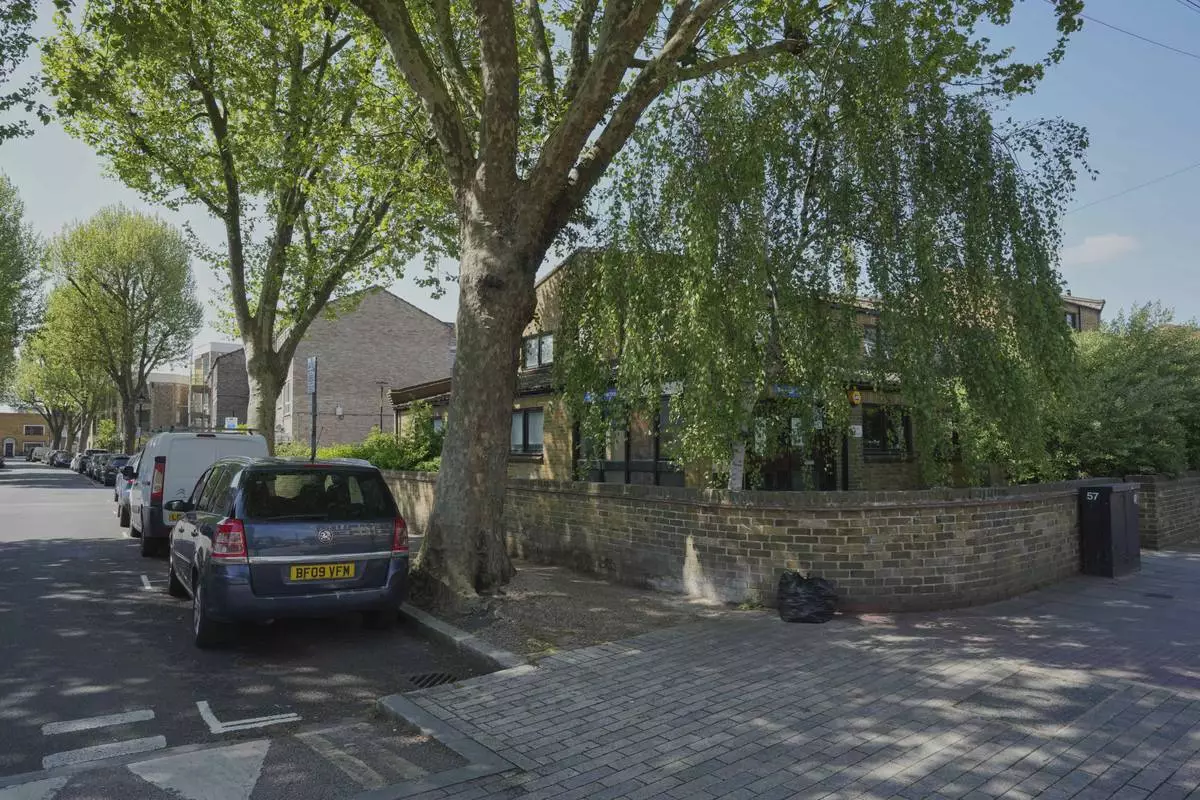
A general view of St. Stephens Road, in Bow, in London, Thursday, April 24, 2025. (AP Photo/Kin Cheung)
A general view of St. Stephens Road, in Bow, in London, Thursday, April 24, 2025. (AP Photo/Kin Cheung)

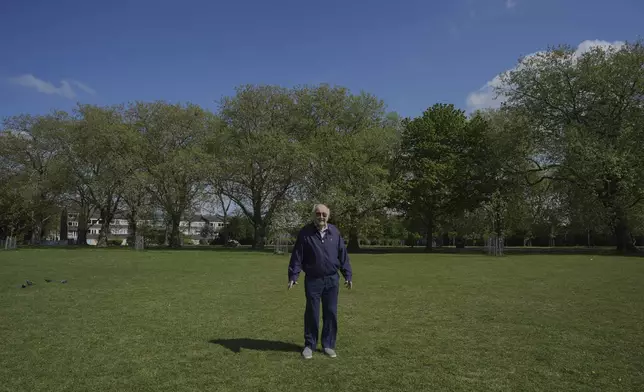
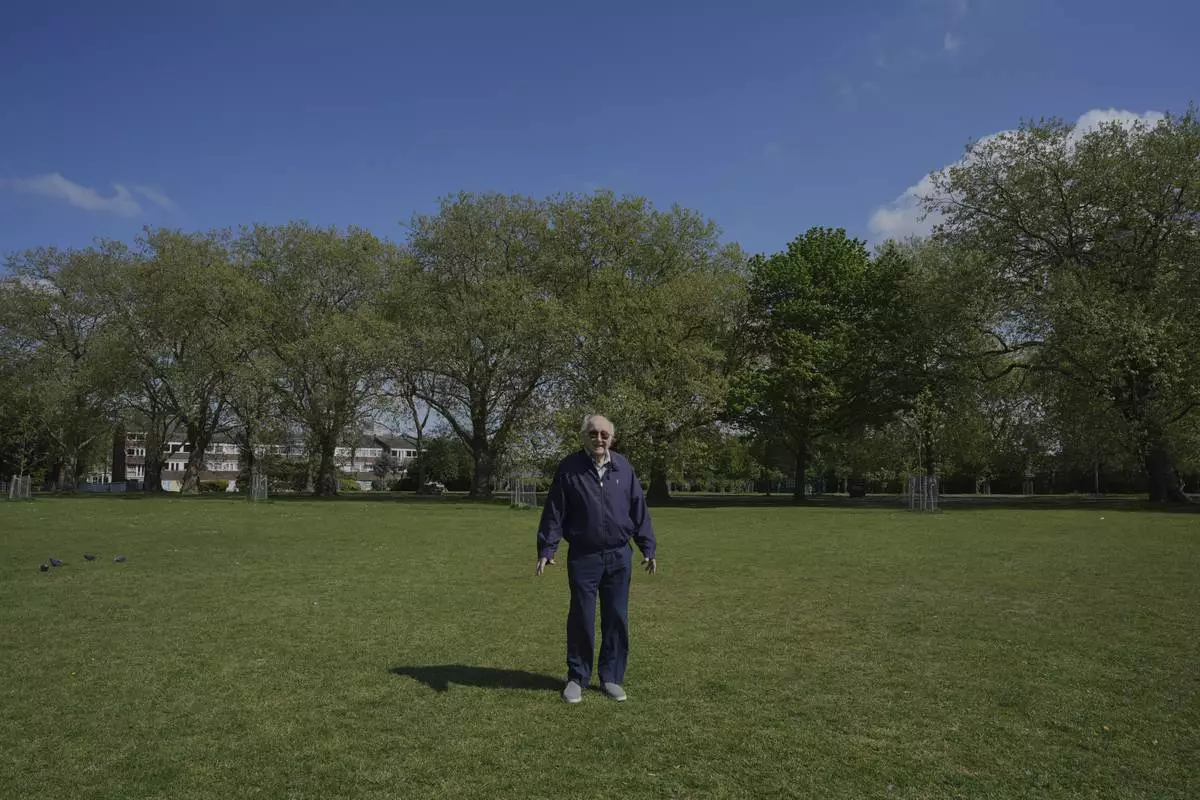
A general view of Victoria Park, in London, Thursday, April 24, 2025. (AP Photo/Kin Cheung)
A general view of Victoria Park, in London, Thursday, April 24, 2025. (AP Photo/Kin Cheung)

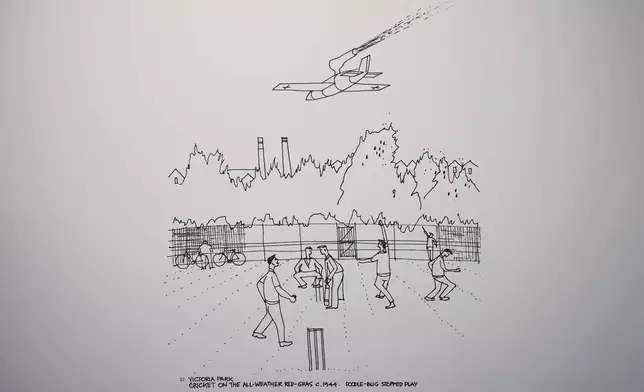
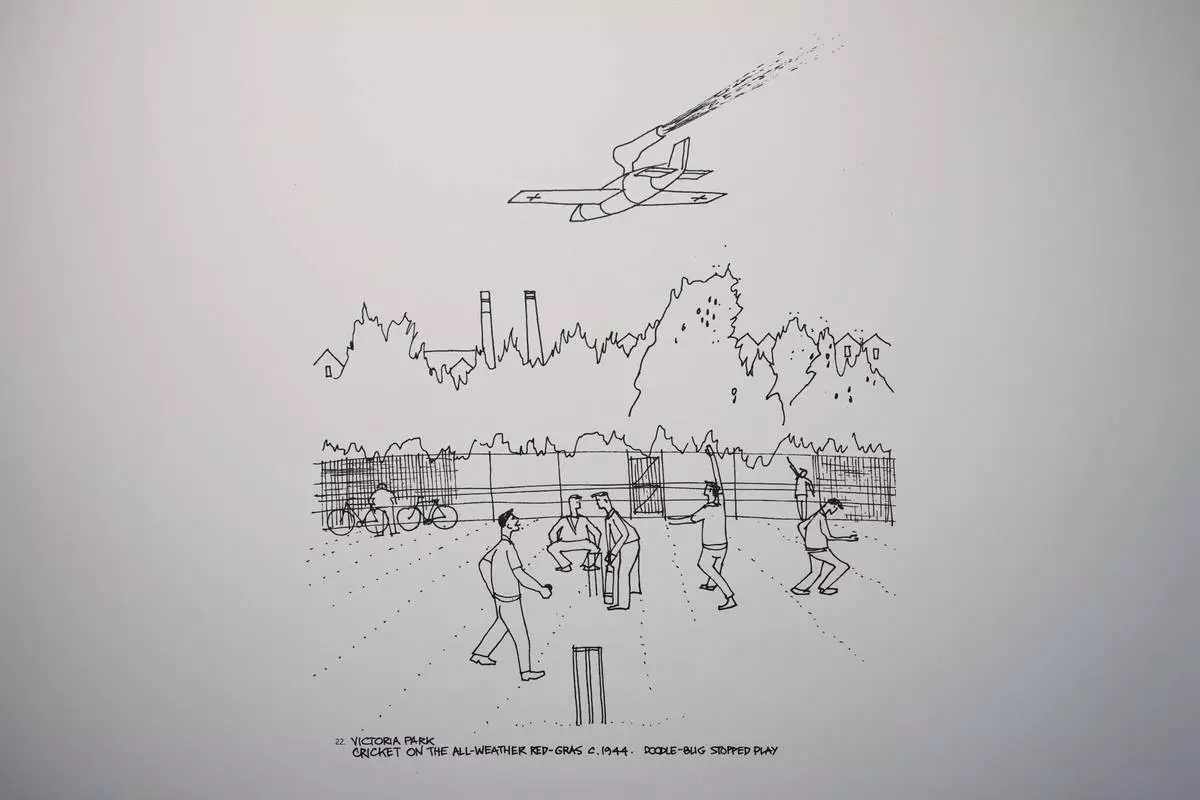
A drawing featuring Victoria Park created by John Goldsmith, in London, Thursday, April 24, 2025. (AP Photo/Kin Cheung)

A drawing featuring Victoria Park created by John Goldsmith, in London, Thursday, April 24, 2025. (AP Photo/Kin Cheung)

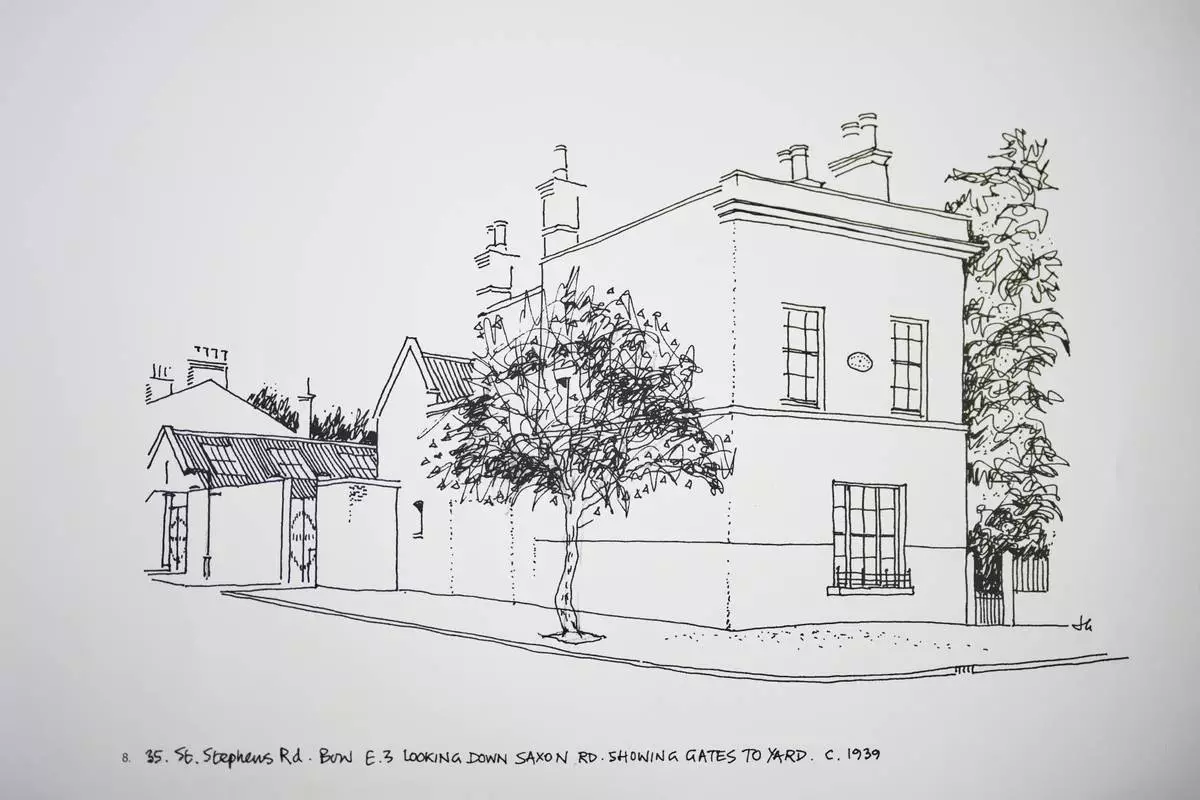
A drawing featuring St. Stephens Road, created by John Goldsmith, in Bow, in London, Thursday, April 24, 2025. (AP Photo/Kin Cheung)
A drawing featuring St. Stephens Road, created by John Goldsmith, in Bow, in London, Thursday, April 24, 2025. (AP Photo/Kin Cheung)

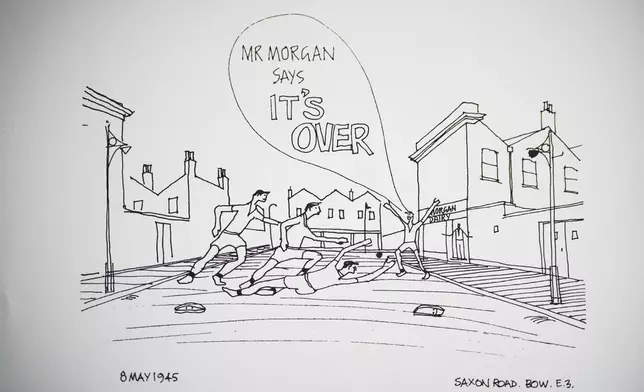
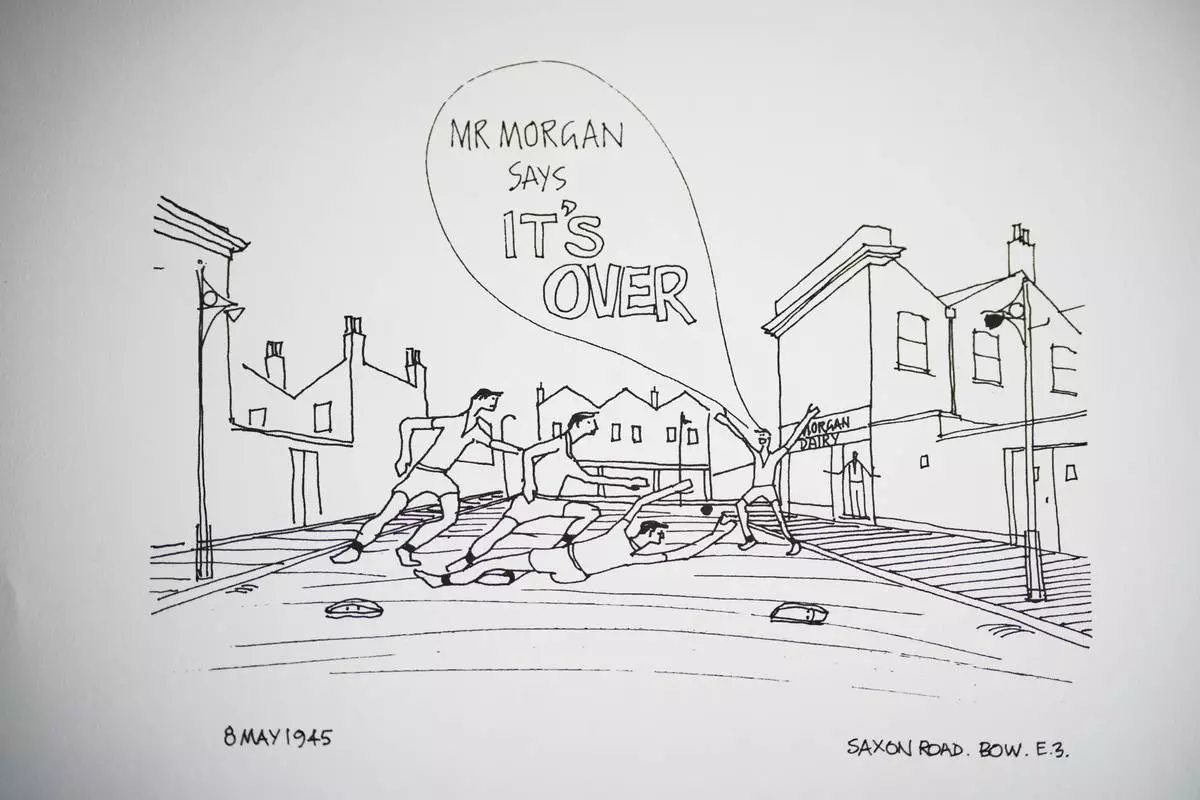
A drawing featuring Saxon Road, created by John Goldsmith, in London, Thursday, April 24, 2025. (AP Photo/Kin Cheung)
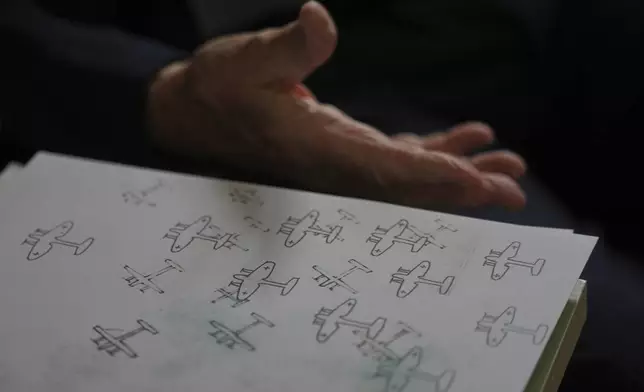
A drawing featuring Saxon Road, created by John Goldsmith, in London, Thursday, April 24, 2025. (AP Photo/Kin Cheung)

John Goldsmith, 94, speaks during an interview at his home in London, Thursday, April 24, 2025. (AP Photo/Kin Cheung)
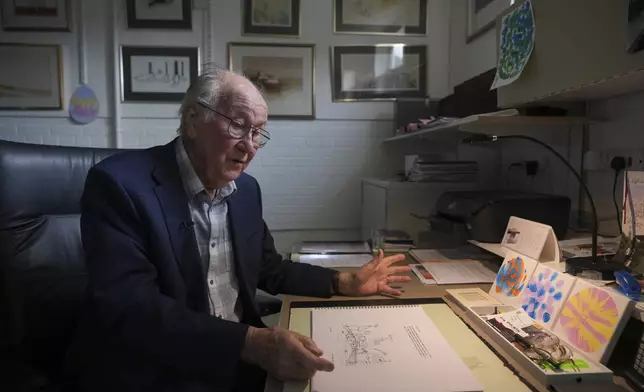
John Goldsmith, 94, speaks during an interview at his home in London, Thursday, April 24, 2025. (AP Photo/Kin Cheung)

John Goldsmith, 94, speaks during an interview at his home in London, Thursday, April 24, 2025. (AP Photo/Kin Cheung)

John Goldsmith, 94, speaks during an interview at his home in London, Thursday, April 24, 2025. (AP Photo/Kin Cheung)

John Goldsmith, 94, poses with his wife Margaret in London, Thursday, April 24, 2025. (AP Photo/Kin Cheung)
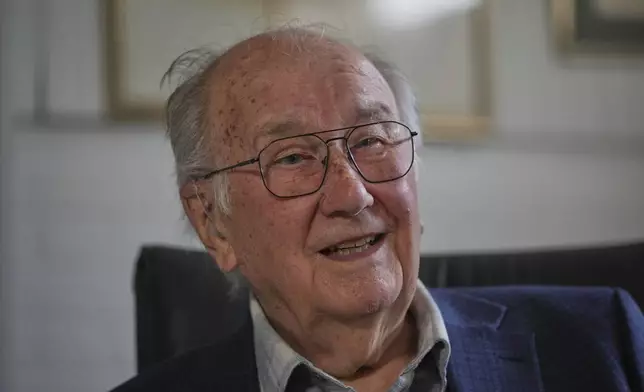
John Goldsmith, 94, poses with his wife Margaret in London, Thursday, April 24, 2025. (AP Photo/Kin Cheung)

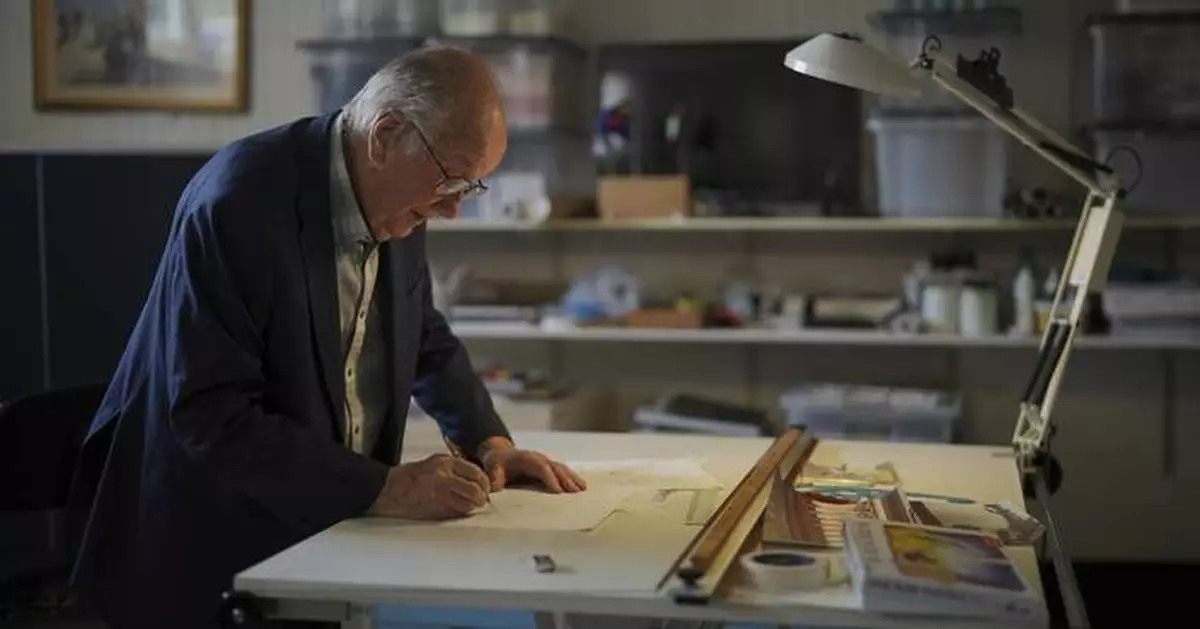
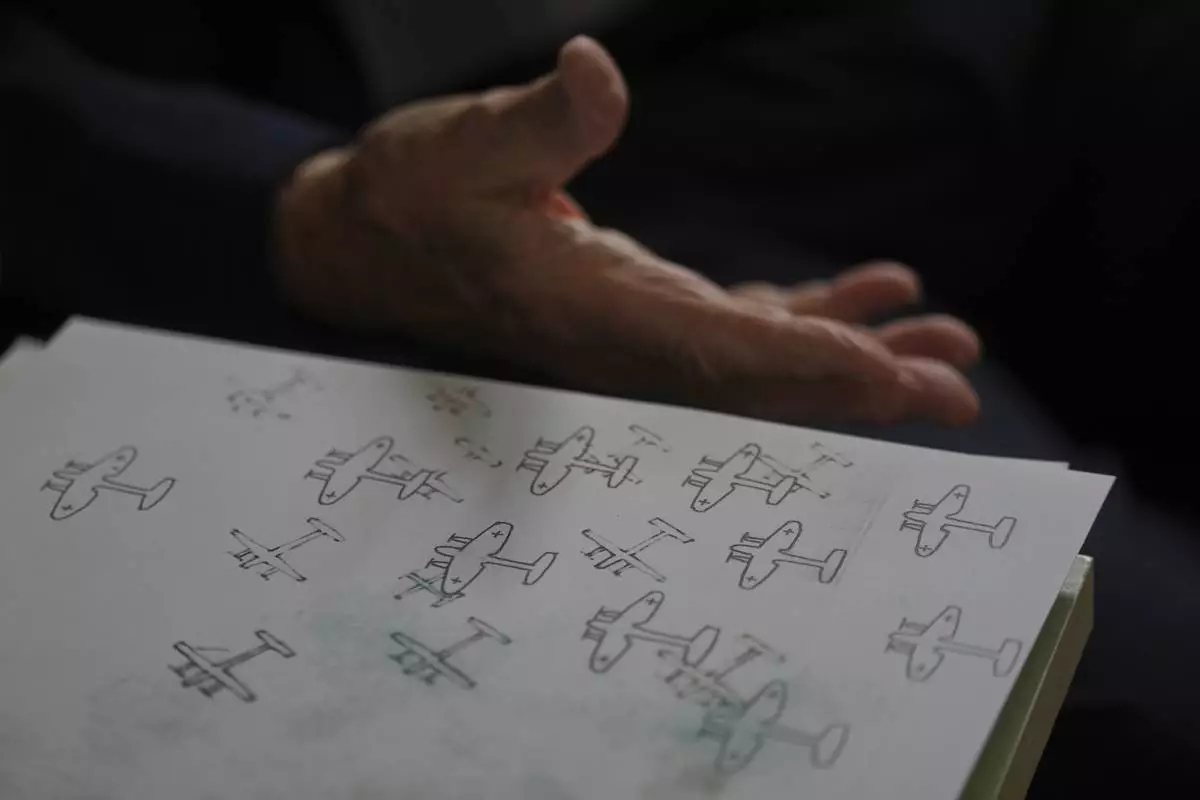
John Goldsmith, 94, draws during an interview at his home in London, Thursday, April 24, 2025. (AP Photo/Kin Cheung)
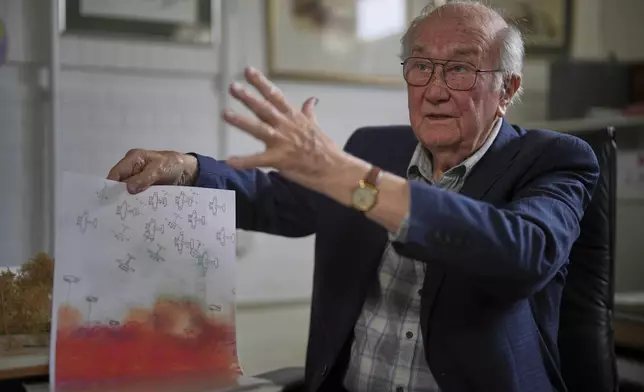
John Goldsmith, 94, draws during an interview at his home in London, Thursday, April 24, 2025. (AP Photo/Kin Cheung)

John Goldsmith, 94, shows his drawing during an interview at his home in London, Thursday, April 24, 2025. (AP Photo/Kin Cheung)

John Goldsmith, 94, shows his drawing during an interview at his home in London, Thursday, April 24, 2025. (AP Photo/Kin Cheung)

John Goldsmith, 94, draws during an interview at his home in London, Thursday, April 24, 2025. (AP Photo/Kin Cheung)

John Goldsmith, 94, draws during an interview at his home in London, Thursday, April 24, 2025. (AP Photo/Kin Cheung)

“Well, it was such a contrast. Suddenly, freedom! Mucking about. Doing all sorts of things that were frowned upon as not being the right thing to do,” Goldsmith, now 94, said.

“But now, for instance, all these wonderful pictures of Piccadilly and places like that. Buses covered with people standing on the roof just going barmy — not necessarily due to drink or anything of that nature. But definitely, they were letting their hair down,’’ he added with a giggle.

Victory in Europe Day was a moment of relief for a city scarred by bombing raids and rocket attacks that killed an estimated 30,000 civilians throughout the war and didn’t end until just a few weeks earlier. But it was also a time to look forward to the safe return of husbands, sons, brothers — and sisters — who were serving abroad, and to hope that lives put on hold in 1939 might soon return to normal.

While D-Day was all about the troops who landed on the beaches of northern France to begin the liberation of Europe, V-E Day was a moment for the public, for everyone who sacrificed for the common good.

Prime Minister Winston Churchill, who had inspired Britain during its darkest days, caught the mood of the nation when he announced the victory at 3 p.m. on May 8.

“My dear friends, this is your hour,” he said. “This is not victory of a party or of any class. It’s a victory of the great British nation as a whole.”

That’s a message Goldsmith wants people to remember before the World War II generation fades from the scene. A retired architect and amateur artist, he has long regaled his family with stories of his boyhood in the Bow neighborhood of east London. After a bit of prodding from his wife, Margaret, he recently began sketching the scenes so others could see what he lived through.

“The soldiers, the airmen, the sailors can’t operate without the people supporting them and backing them,’’ Goldsmith said. “So if we the people don’t contribute, the armored elements will collapse. So it’s so important that V-E Day should be … the people’s day.’’

While Londoners had been anticipating the end of the fighting in Europe for weeks, the announcement was like the cork popping out of a giant bottle of champagne in a city that had lived in the shadow of war for six years.

Nowhere was the relief felt more deeply than in the East End, where thousands of homes, schools and businesses were reduced to rubble as Nazi bombers pounded docks and warehouses along the River Thames during the onslaught that became known as The Blitz. When Buckingham Palace was bombed on Sept. 13, 1940, Queen Elizabeth reportedly told a policeman she was glad, because “it makes me feel I can look the East End in the face.”

Goldsmith's drawings capture the day The Blitz began, with Nazi bombers filling the air and fires turning the night sky a molten volcanic red behind the docks. There's also the time a cricket match was suspended as one of the flying bombs known as “doodlebugs” soared overhead, and the ghostly image of a rent collector emerging from a cloud of dust after a V-2 rocket, a type of long-range ballistic missile, obliterated a block of houses.

The last V-2 to hit London destroyed an apartment building less than two miles from his home on March 27, 1945.

Eighty years later, Goldsmith holds back tears when he remembers the moment he heard that the Nazis had surrendered.

He and his friends were playing street soccer using a tennis ball — soccer balls being scarce after six years of war — when a young boy ran out of the nearby dairy and shouted simply, “It’s over!”

“I have to be very careful now, because I could break up,’’ Goldsmith said, pausing to collect himself. “But that was the point when you realized: ‘I didn’t have to worry anymore.’”

People had seen the end coming, but didn’t dare to believe it could be true.

In an era before television, Londoners flocked to the cinema to watch the weekly newsreels that charted the Allied advance toward Berlin. Goldsmith, who was just 8 when the war broke out, tracked the progress of the troops through the newspaper, carefully clipping the headlines and maps. By early 1945, he realized the surrender of the Third Reich was near.

When the news finally came, it unleashed a wave of joy that lasted for days.

Goldsmith remembers climbing the steps of St. John’s Church in Bethnal Green to see over the crowds that lined the streets as King George VI and Queen Elizabeth drove through East London to celebrate with the locals.

There were street parties and bonfires. Everyone contributed what they could with food still in short supply.

“The favorite table from the lounge was brought out in the center of the street and linked with all the other personal possessions covered up with cloth and that sort of thing,” Goldsmith remembered. “Food was magicked from somewhere, and kids gorged themselves on all sorts of cakes.”

But the celebrations were bittersweet, tempered by the knowledge that V-E Day wasn't the end of the war.

“There was a sudden realization. There was still the Japanese situation in the Far East," Goldsmith said. "And people then buckled down.’’
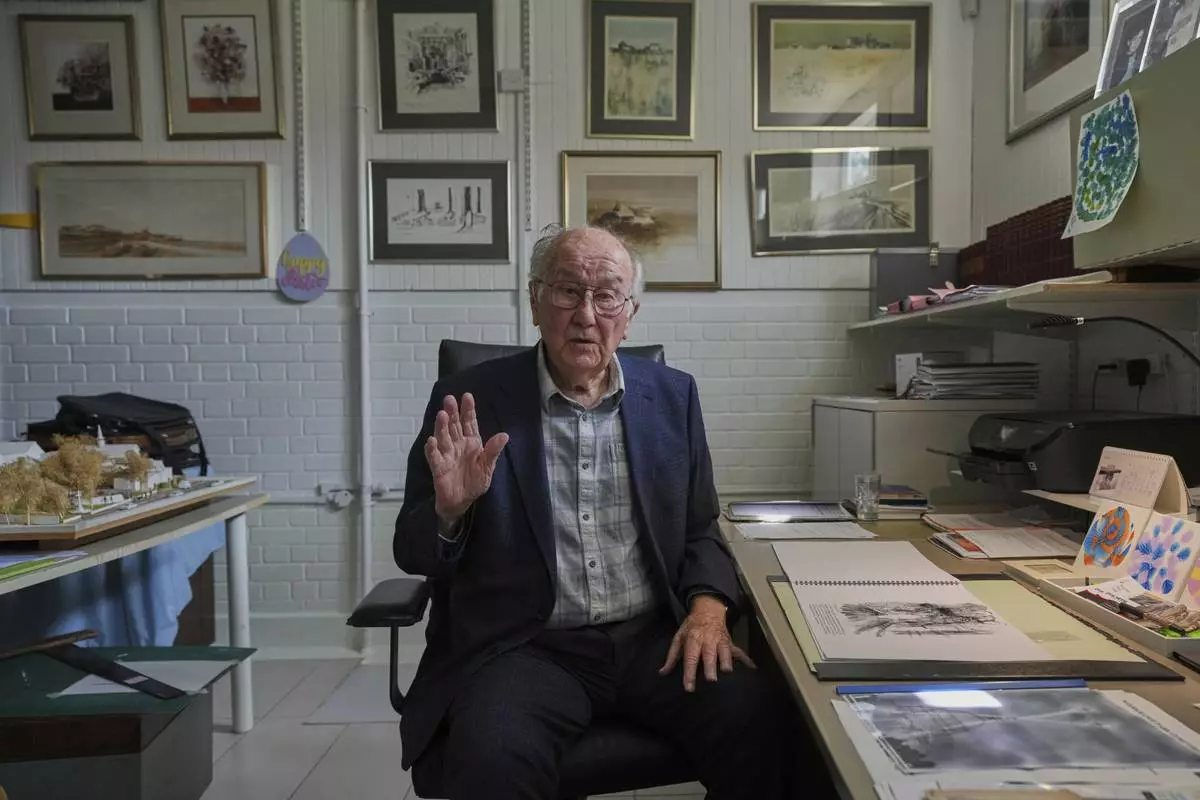
John Goldsmith, 94, speaks during an interview at his home in London, Thursday, April 24, 2025. (AP Photo/Kin Cheung)
John Goldsmith, 94, speaks during an interview at his home in London, Thursday, April 24, 2025. (AP Photo/Kin Cheung)

A general view of St. Stephens Road, in Bow, in London, Thursday, April 24, 2025. (AP Photo/Kin Cheung)
A general view of St. Stephens Road, in Bow, in London, Thursday, April 24, 2025. (AP Photo/Kin Cheung)

A general view of Victoria Park, in London, Thursday, April 24, 2025. (AP Photo/Kin Cheung)
A general view of Victoria Park, in London, Thursday, April 24, 2025. (AP Photo/Kin Cheung)

A drawing featuring Victoria Park created by John Goldsmith, in London, Thursday, April 24, 2025. (AP Photo/Kin Cheung)
A drawing featuring Victoria Park created by John Goldsmith, in London, Thursday, April 24, 2025. (AP Photo/Kin Cheung)

A drawing featuring St. Stephens Road, created by John Goldsmith, in Bow, in London, Thursday, April 24, 2025. (AP Photo/Kin Cheung)
A drawing featuring St. Stephens Road, created by John Goldsmith, in Bow, in London, Thursday, April 24, 2025. (AP Photo/Kin Cheung)

A drawing featuring Saxon Road, created by John Goldsmith, in London, Thursday, April 24, 2025. (AP Photo/Kin Cheung)
A drawing featuring Saxon Road, created by John Goldsmith, in London, Thursday, April 24, 2025. (AP Photo/Kin Cheung)

John Goldsmith, 94, speaks during an interview at his home in London, Thursday, April 24, 2025. (AP Photo/Kin Cheung)
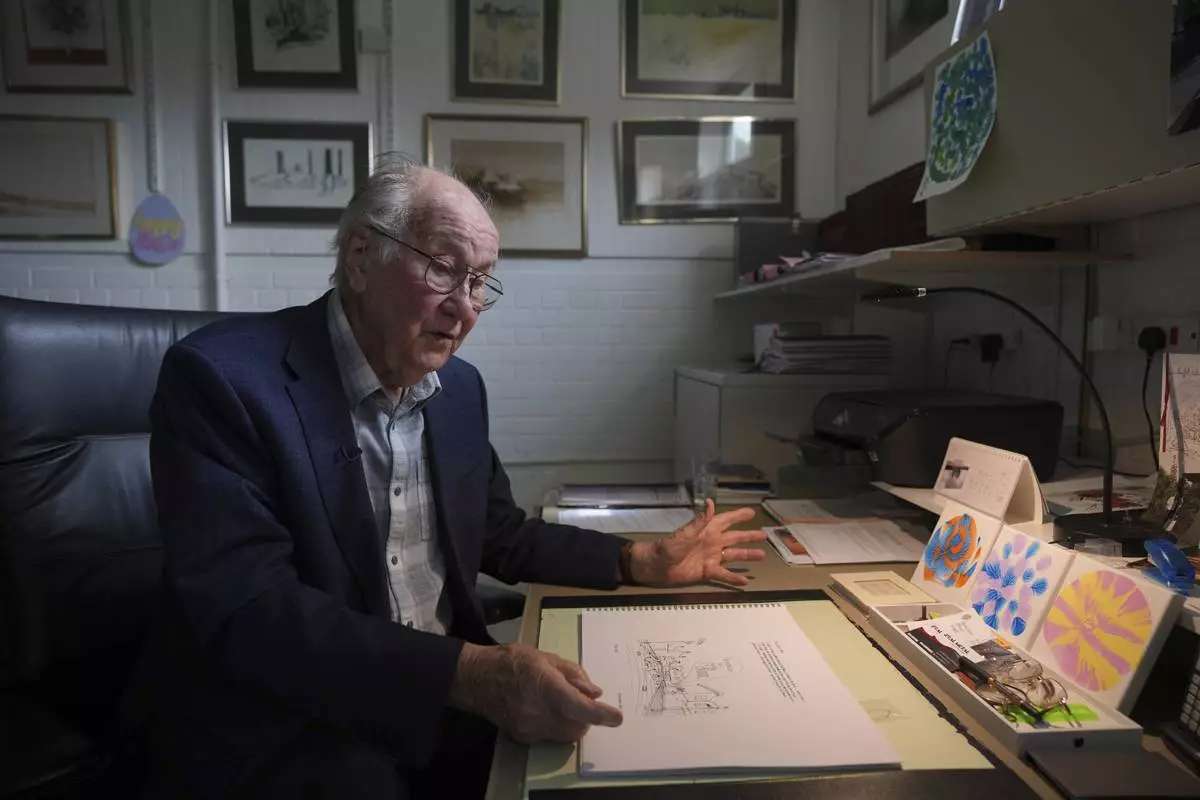
John Goldsmith, 94, speaks during an interview at his home in London, Thursday, April 24, 2025. (AP Photo/Kin Cheung)
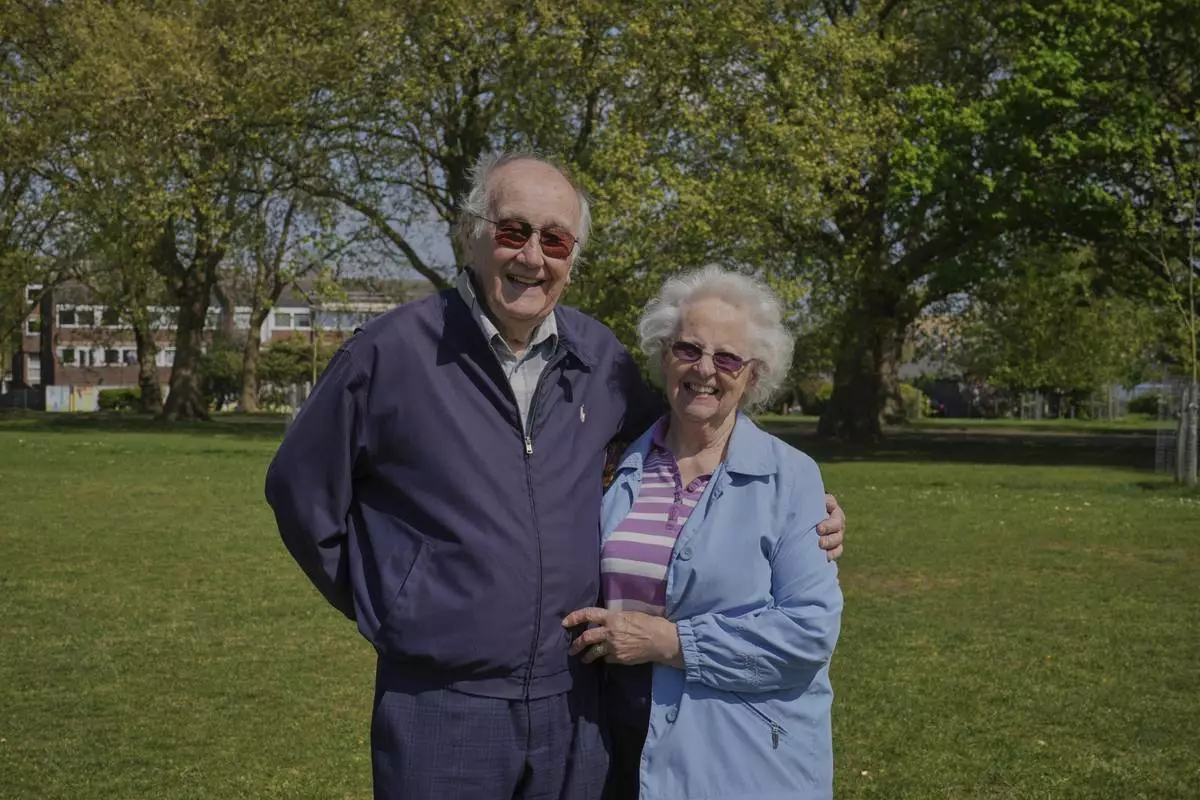
John Goldsmith, 94, speaks during an interview at his home in London, Thursday, April 24, 2025. (AP Photo/Kin Cheung)

John Goldsmith, 94, speaks during an interview at his home in London, Thursday, April 24, 2025. (AP Photo/Kin Cheung)

John Goldsmith, 94, poses with his wife Margaret in London, Thursday, April 24, 2025. (AP Photo/Kin Cheung)
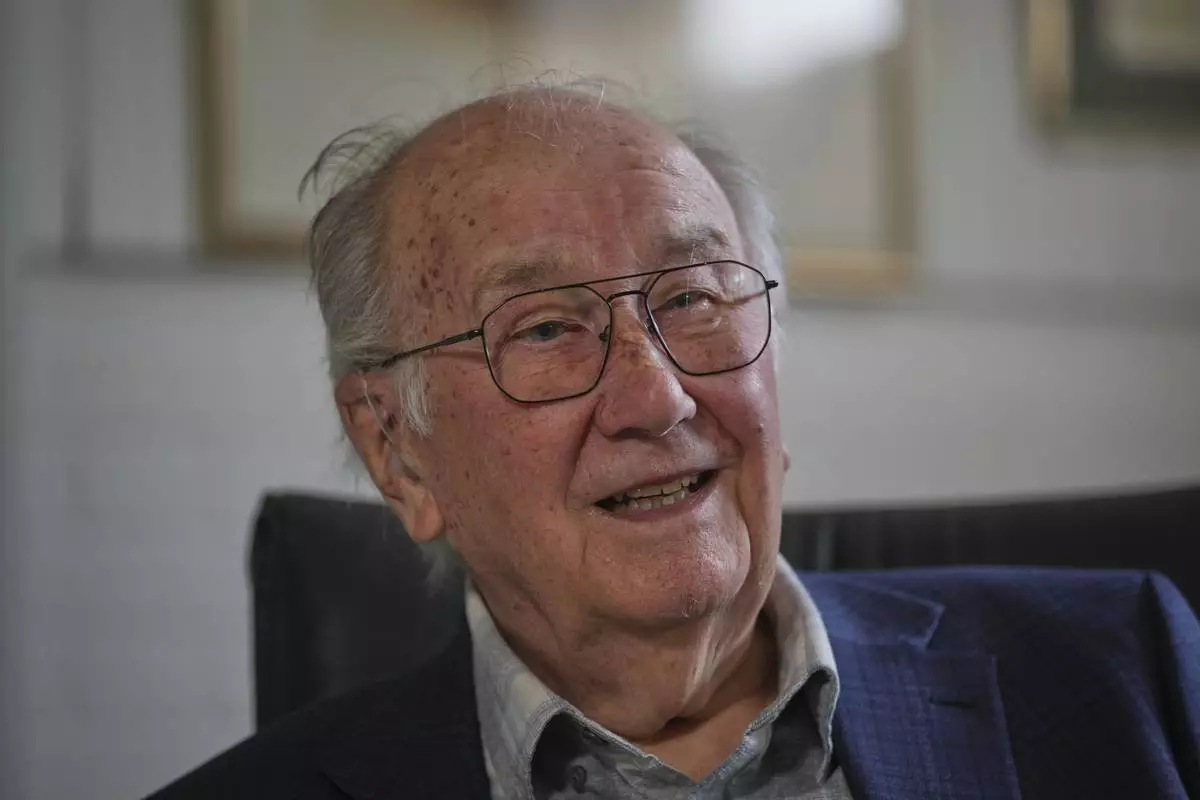
John Goldsmith, 94, poses with his wife Margaret in London, Thursday, April 24, 2025. (AP Photo/Kin Cheung)

John Goldsmith, 94, draws during an interview at his home in London, Thursday, April 24, 2025. (AP Photo/Kin Cheung)
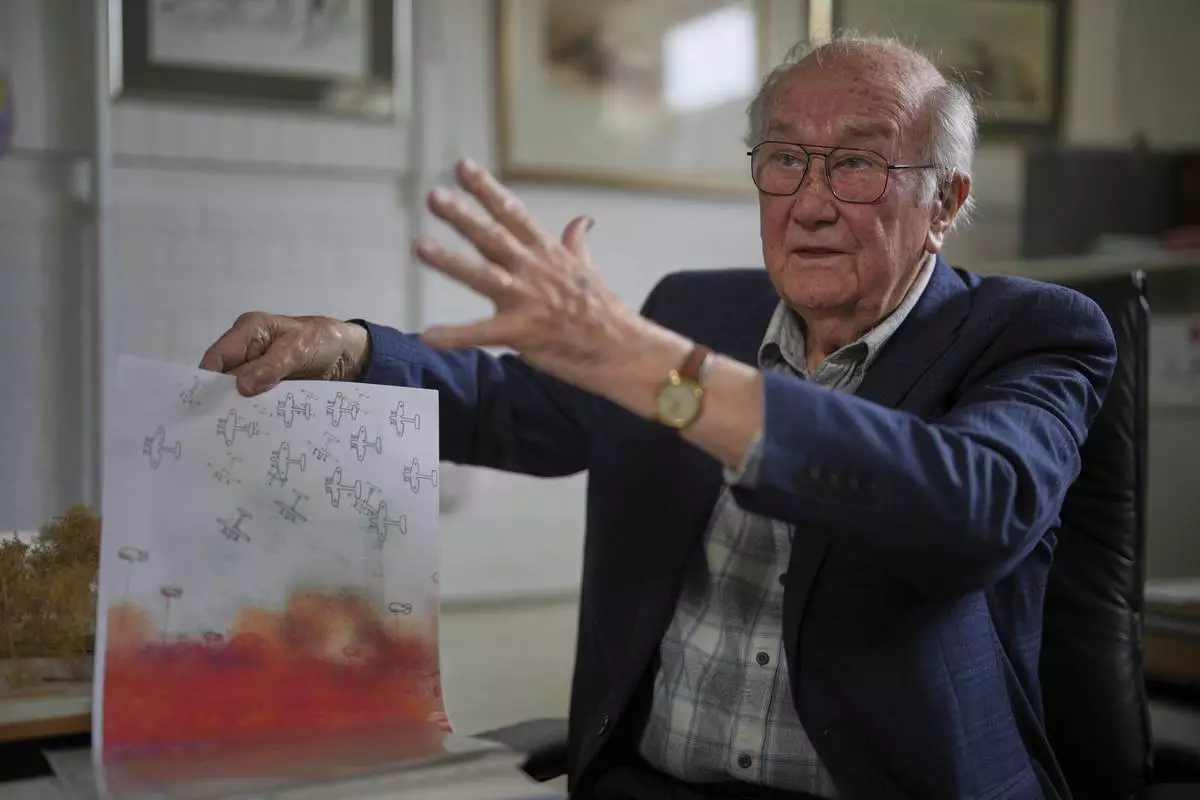
John Goldsmith, 94, draws during an interview at his home in London, Thursday, April 24, 2025. (AP Photo/Kin Cheung)

John Goldsmith, 94, shows his drawing during an interview at his home in London, Thursday, April 24, 2025. (AP Photo/Kin Cheung)
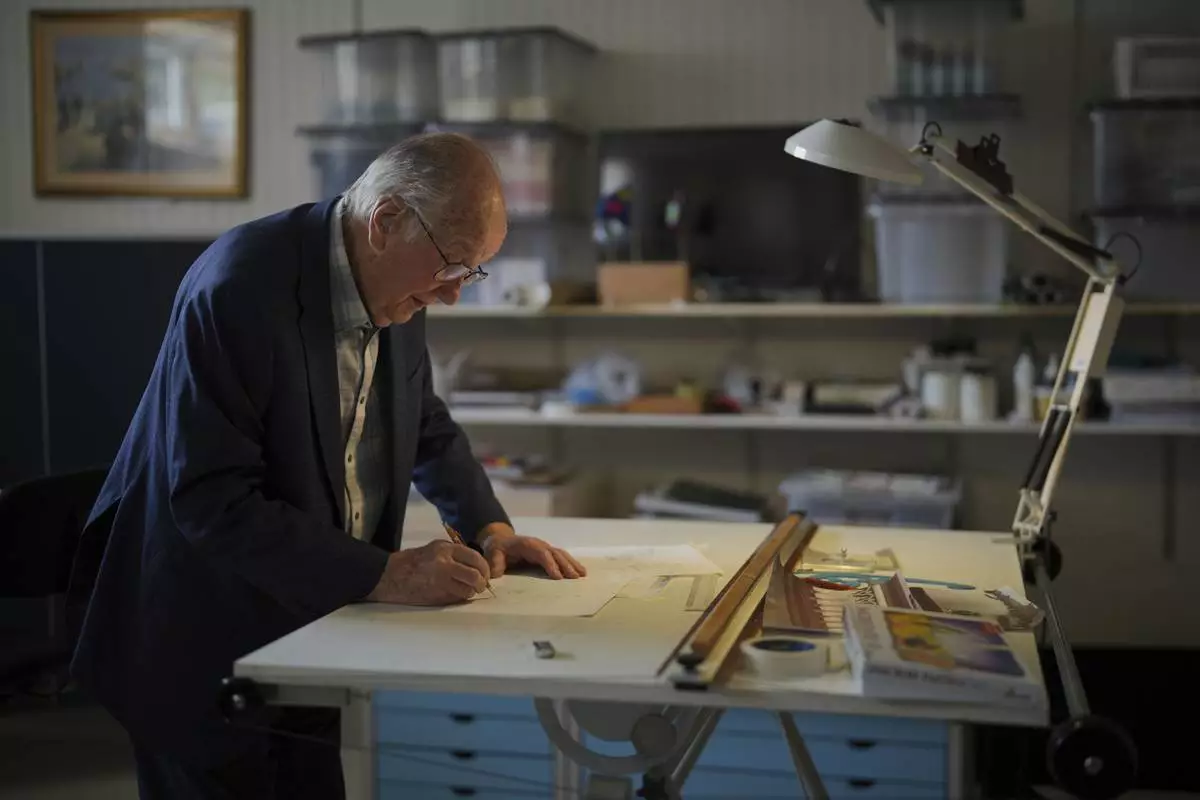
John Goldsmith, 94, shows his drawing during an interview at his home in London, Thursday, April 24, 2025. (AP Photo/Kin Cheung)

John Goldsmith, 94, draws during an interview at his home in London, Thursday, April 24, 2025. (AP Photo/Kin Cheung)
John Goldsmith, 94, draws during an interview at his home in London, Thursday, April 24, 2025. (AP Photo/Kin Cheung)
DUBAI, United Arab Emirates (AP) — U.S. President Donald Trump said Iran wants to negotiate with Washington after his threat to strike the Islamic Republic over its bloody crackdown on protesters, a move coming as activists said Monday the death toll in the nationwide demonstrations rose to at least 544.

Iran had no immediate reaction to the news, which came after the foreign minister of Oman — long an interlocutor between Washington and Tehran — traveled to Iran this weekend. It also remains unclear just what Iran could promise, particularly as Trump has set strict demands over its nuclear program and its ballistic missile arsenal, which Tehran insists is crucial for its national defense.

Meanwhile Monday, Iran called for pro-government demonstrators to head to the streets in support of the theocracy, a show of force after days of protests directly challenging the rule of 86-year-old Supreme Leader Ayatollah Ali Khamenei. Iranian state television aired chants from the crowd, who shouted “Death to America!” and “Death to Israel!”

Trump and his national security team have been weighing a range of potential responses against Iran including cyberattacks and direct strikes by the U.S. or Israel, according to two people familiar with internal White House discussions who were not authorized to comment publicly and spoke on condition of anonymity.

“The military is looking at it, and we’re looking at some very strong options,” Trump told reporters on Air Force One on Sunday night. Asked about Iran’s threats of retaliation, he said: “If they do that, we will hit them at levels that they’ve never been hit before.”

Trump said that his administration was in talks to set up a meeting with Tehran, but cautioned that he may have to act first as reports of the death toll in Iran mount and the government continues to arrest protesters.

“I think they’re tired of being beat up by the United States,” Trump said. “Iran wants to negotiate.”

He added: “The meeting is being set up, but we may have to act because of what’s happening before the meeting. But a meeting is being set up. Iran called, they want to negotiate.”

Iran through country's parliamentary speaker warned Sunday that the U.S. military and Israel would be “legitimate targets” if America uses force to protect demonstrators.

More than 10,600 people also have been detained over the two weeks of protests, said the U.S.-based Human Rights Activists News Agency, which has been accurate in previous unrest in recent years and gave the death toll. It relies on supporters in Iran crosschecking information. It said 496 of the dead were protesters and 48 were with security forces.

With the internet down in Iran and phone lines cut off, gauging the demonstrations from abroad has grown more difficult. The Associated Press has been unable to independently assess the toll. Iran’s government has not offered overall casualty figures.

Those abroad fear the information blackout is emboldening hard-liners within Iran’s security services to launch a bloody crackdown. Protesters flooded the streets in the country’s capital and its second-largest city on Saturday night into Sunday morning. Online videos purported to show more demonstrations Sunday night into Monday, with a Tehran official acknowledging them in state media.

In Tehran, a witness told the AP that the streets of the capital empty at the sunset call to prayers each night. By the Isha, or nighttime prayer, the streets are deserted.

Part of that stems from the fear of getting caught in the crackdown. Police sent the public a text message that warned: “Given the presence of terrorist groups and armed individuals in some gatherings last night and their plans to cause death, and the firm decision to not tolerate any appeasement and to deal decisively with the rioters, families are strongly advised to take care of their youth and teenagers.”

Another text, which claimed to come from the intelligence arm of the paramilitary Revolutionary Guard, also directly warned people not to take part in demonstrations.

“Dear parents, in view of the enemy’s plan to increase the level of naked violence and the decision to kill people, ... refrain from being on the streets and gathering in places involved in violence, and inform your children about the consequences of cooperating with terrorist mercenaries, which is an example of treason against the country,” the text warned.

The witness spoke to the AP on condition of anonymity due to the ongoing crackdown.

The demonstrations began Dec. 28 over the collapse of the Iranian rial currency, which trades at over 1.4 million to $1, as the country’s economy is squeezed by international sanctions in part levied over its nuclear program. The protests intensified and grew into calls directly challenging Iran’s theocracy.

Nikhinson reported from aboard Air Force One.

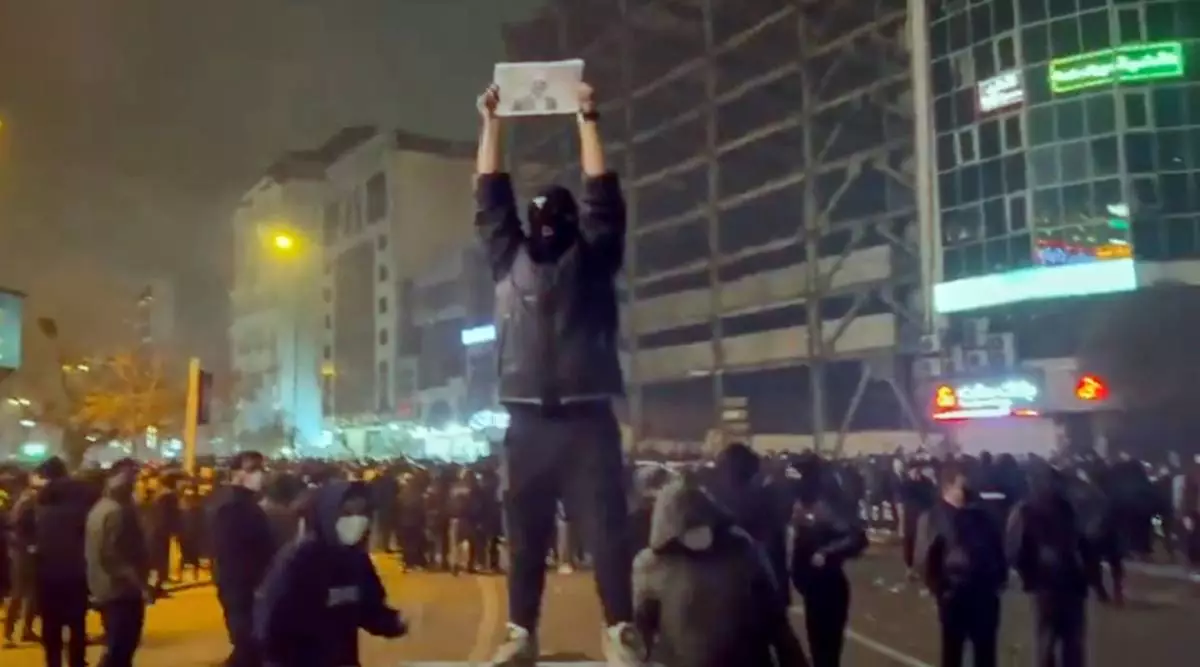
In this frame grab from video obtained by the AP outside Iran, a masked demonstrator holds a picture of Iran's Crown Prince Reza Pahlavi during a protest in Tehran, Iran, Friday, January. 9, 2026. (UGC via AP)

In this frame grab from video obtained by the AP outside Iran, a masked demonstrator holds a picture of Iran's Crown Prince Reza Pahlavi during a protest in Tehran, Iran, Friday, January. 9, 2026. (UGC via AP)

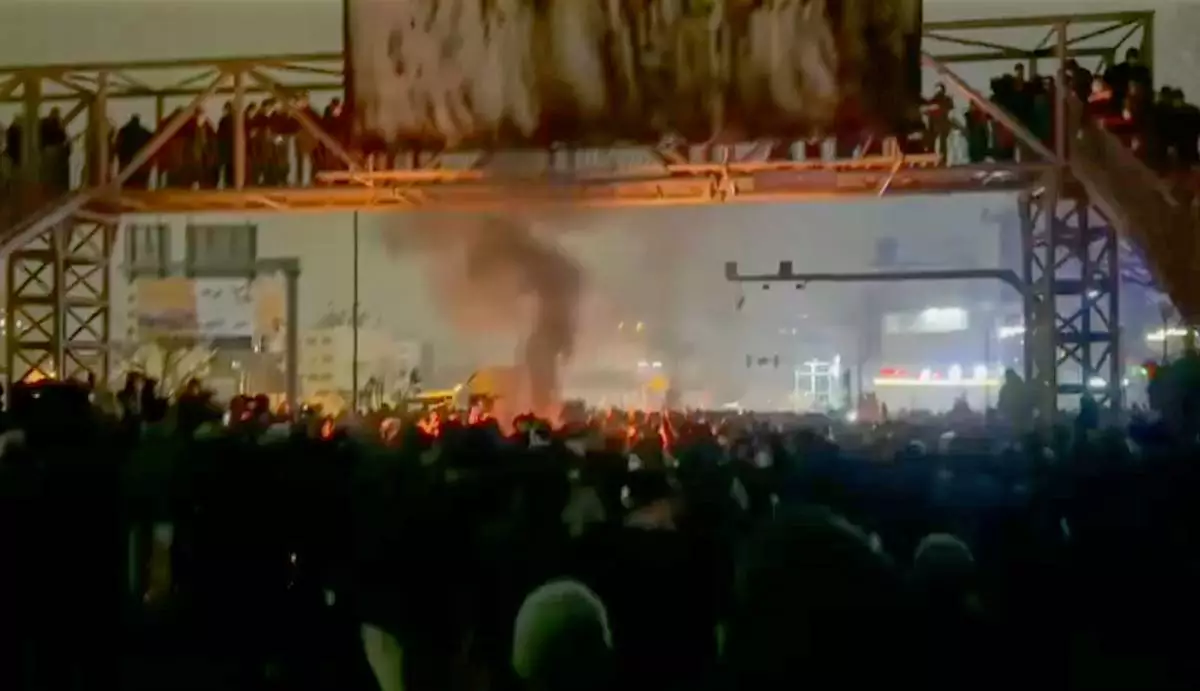
In this frame grab from footage circulating on social media from Iran shows protesters taking to the streets despite an intensifying crackdown as the Islamic Republic remains cut off from the rest of the world in Tehran, Iran, Friday, Jan. 9, 2026.(UGC via AP)

In this frame grab from footage circulating on social media from Iran shows protesters taking to the streets despite an intensifying crackdown as the Islamic Republic remains cut off from the rest of the world in Tehran, Iran, Friday, Jan. 9, 2026.(UGC via AP)

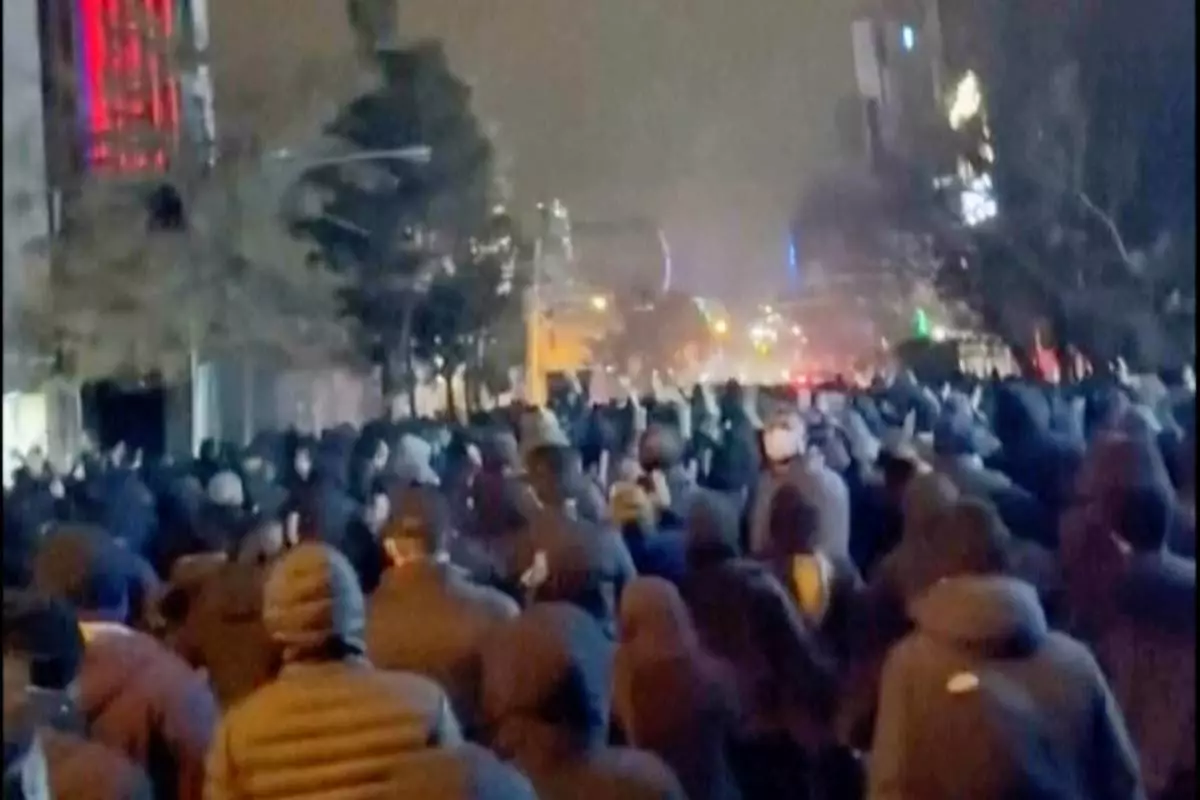
In this frame grab from footage circulating on social media from Iran showed protesters once again taking to the streets of Tehran despite an intensifying crackdown as the Islamic Republic remains cut off from the rest of the world in Tehran, Iran, Saturday Jan. 10, 2026. (UGC via AP)

In this frame grab from footage circulating on social media from Iran showed protesters once again taking to the streets of Tehran despite an intensifying crackdown as the Islamic Republic remains cut off from the rest of the world in Tehran, Iran, Saturday Jan. 10, 2026. (UGC via AP)

Recommended Articles