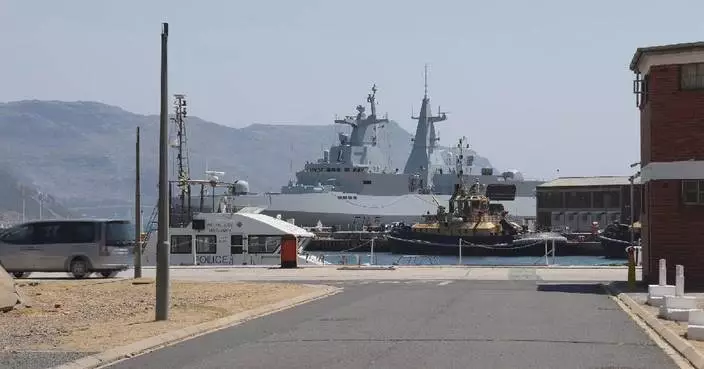
The Chinese People's Liberation Army (PLA) Support Base in Djibouti carried out a joint training with the Djiboutian military from April 27 to 30 to enhance the joint counter-terrorism capabilities of both sides in promoting regional security and stability.
The commanders of China and Djibouti formulated a mixed formation and coordinated attack plan based on the battlefield situation. The Chinese side took the lead in using drones to conduct reconnaissance on enemy strongholds and shared target information with the frontline strike formation.
After the first round of artillery fire, the formation corrected the firing parameters and used howitzers and mortars to carry out fire coverage and targeted elimination.
At the same time, the mobile strike formation carried out crossfire strikes on small groups of enemies, and the engineer obstacle removal team used rocket minesweepers to open up a path for follow-up troops.
"Rocket minesweepers have the characteristics of long range, great power and long depth. They can break through obstacles such as fortifications, barbed wire, and anti-personnel mines in a relatively short period of time, providing strong support for follow-up troops to quickly open up paths and quickly annihilate the enemy," said Chinese soldier Qiu Zhuoxun.
After entering the core position, the unmanned bombing team launched bombing strikes on the enemy sentry towers under the cover of vehicle-mounted machine guns and smoke screens.
In the end, the formation adopted an alternating cover method to approach and eliminate the mission targets.
"Through sand table simulations and the exchange of command passwords, we have effectively improved the two armies' ability to coordinate operations," said Chinese military officer Zhang Wenbo.
Officers and soldiers of the two armies also carried out training in subjects such as armored vehicle repair and battlefield rescue to test their ability to carry out diversified tasks in complex battlefield environments during the joint exercise.
"The two sides have closely coordinated and cooperated with each other sincerely to push China-Djibouti military cooperation to a new level and achieve new breakthroughs in capabilities, injecting new vitality into the joint maintenance of regional security and stability," said Chinese military officer Liu Wence.
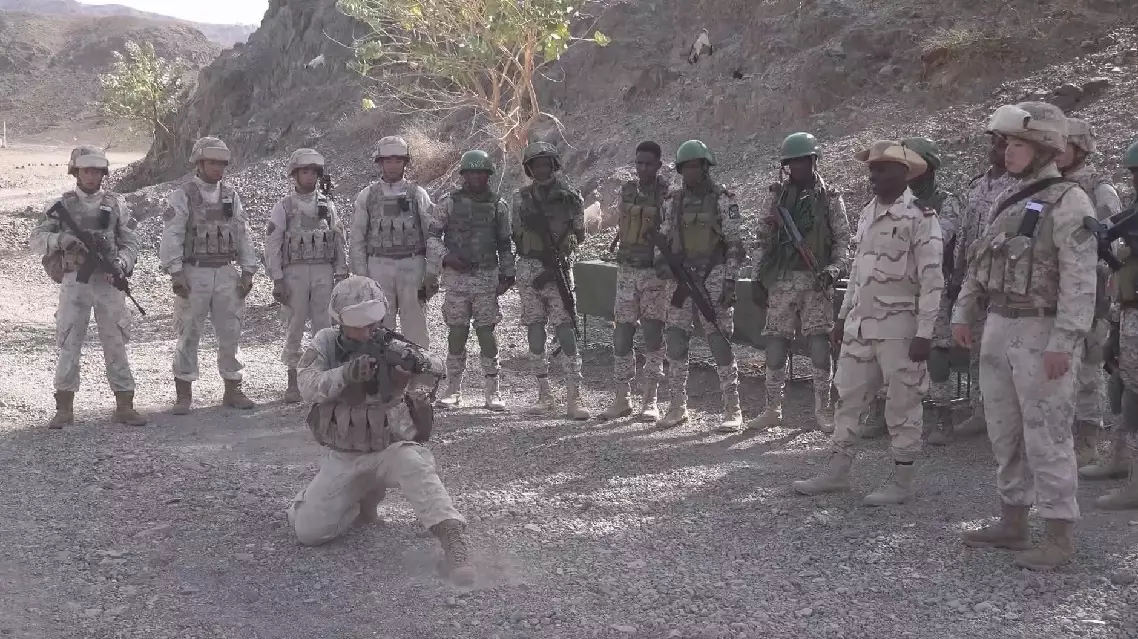
China, Djibouti conducts joint military training on counter-terrorism
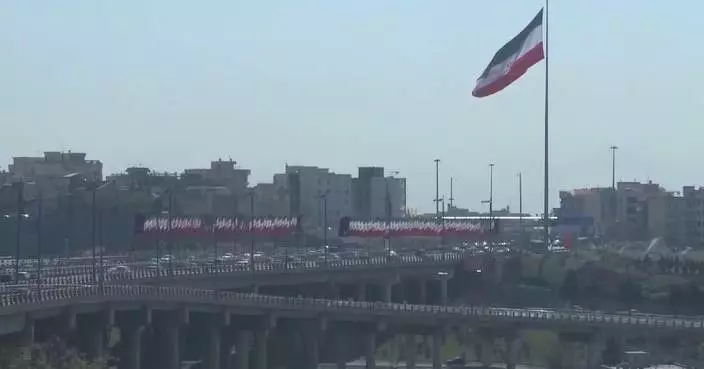
The Iranian government is focusing on public concerns and maintaining stable supplies of essential goods amid recent protests, Iranian President Masoud Pezeshkian said in a televised interview on Sunday.
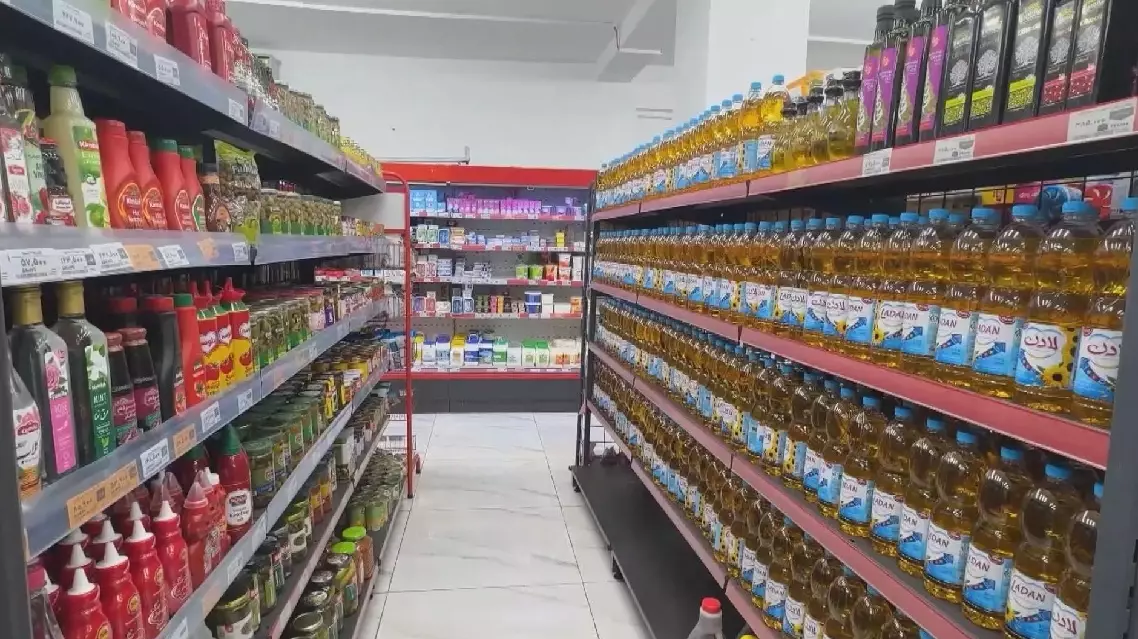
In the city of Karaj, northwest of the capital Tehran, daily life has largely continued as normal. A video filmed by a local resident on Sunday shows food stores open and grocery shelves fully stocked.
"This is the block near my home, and there are some food stores here. Daily life continues here. Last night we did not see many protests in Karaj. Right now the city is very safe. This is a grocery store close to my home. All the food is available; nothing is in shortage. Here are noodles and different types of beans. Here are dairy products, cheese, and yogurt. I also checked other grocery stores and didn't see any shortages. Everything is available," said local resident Ali Reza.
Iranian officials have described recent disturbances as acts orchestrated by the "enemy," including some carried out by well-trained and armed "terrorists." The incidents have caused casualties among security personnel and civilians, as well as property damage.
The Secretary of Iran's Supreme National Security Council Ali Larijani has directed authorities to severely punish the "terrorists."
Meanwhile, Iran's police chief Ahmad-Reza Radan said on Sunday that the police had raised alert levels and arrested several leaders of the troublemakers during the operations on Saturday.
President Pezeshkian noted in the interview that the normal demands of the Iranian people are reasonable and justified, but they must realize that triggering riots and carrying out terrorist acts are the enemy's attempts to undermine the country. He urged the public to remain vigilant.
Also on Sunday, Iranian Parliament Speaker Mohammad Baqer Qalibaf warned that Tehran would regard U.S. and Israeli bases and facilities in the Middle East as "legitimate targets" if Washington takes military action against Iran. His remarks followed media reports saying U.S. President Donald Trump is "seriously considering authorizing a strike" against Iran.
Iranian state media reported that at least 109 members of Iran's security forces have been killed in clashes since the protests began 14 days ago. Meanwhile, human rights groups based outside the country said the number of protesters killed has exceeded 200, though the figure could not be independently verified.
The protests initially erupted over a sharp depreciation of the rial and sweeping subsidy reforms. Iranian authorities have blamed the unrest on foreign-linked agents and sanctions imposed by the United States.
Iranian president says government focusing on ensuring supplies amid protests