SAN DIEGO--(BUSINESS WIRE)--May 2, 2025--
Aya Healthcare, the largest healthcare talent software and staffing company in the United States, today announced the appointment of Emily Hazen as Chief Executive Officer. Founder and CEO Alan Braynin will stay on as strategic advisor.
This press release features multimedia. View the full release here: https://www.businesswire.com/news/home/20250502437844/en/
Braynin founded Aya Healthcare in 2001 with a mission to transform healthcare staffing. His innovations injected a new vision into the industry, uniquely combining technology with exceptional service. Under his leadership, Aya created the world’s largest digital staffing platform, one that connects healthcare professionals directly to hospitals and healthcare systems. His relentless pursuit of innovation has ensured clinicians have the most opportunities to grow their careers, hospitals have the talent they need to serve their communities; all ultimately reducing the total cost of healthcare.
Regarding the new appointment, Braynin said, “Aya set out to achieve something unique in the healthcare staffing industry. Emily Hazen is a highly effective leader with strategic vision and a relentless drive to innovate. I have the utmost confidence that she is a next generation leader that will bring Aya to new heights and inspire excellence.”
Hazen most recently served dual roles as the Chief Operations Officer for Workforce Solutions and Executive Vice President of Process Optimization. In these roles, she has delivered powerful insights to advance our technology capabilities and the way they work for clients, clinicians and team members — helping scale the organization during its transformative growth phase.
With a growing healthcare workforce shortage and increasing demand on our healthcare systems, there’s an even greater need to further innovate. A key strategic focus for Hazen was enhancing the client experience by redefining Aya’s delivery model and introducing new service lines bespoke to our clients. She developed innovative strategies to effectively manage workforce disruptions, while also establishing a differentiated approach to bring qualified talent through international recruitment.
“It’s an honor to build upon Aya Healthcare’s legacy and advance our mission to help clients and clinicians care for their communities through continued investments in technologies to drive further innovations. Together, we will keep fostering Aya’s exceptional corporate culture with creativity, impact and lasting value,” said Hazen.
To learn more about Aya Healthcare’s technologies and services, visit www.ayahealthcare.com.
About Aya Healthcare:
Aya Healthcare is the largest healthcare talent software and staffing company in the United States. Aya operates the world’s largest digital staffing platform delivering every component of healthcare-focused labor services, including travel nursing and allied health, per diem, permanent staff hiring, interim leadership, locum tenens and non-clinical professionals. Aya’s AI-enabled software solutions, which include vendor management, float pool technology, provider solutions and predictive analytics, combined with its digital talent marketplaces, provide hospital systems greater efficiencies, superior operating results and reduced labor costs. While technology drives efficiency and scale, Aya’s 6,000+ global employees power the company to deliver unparalleled accountability and exceptional experiences for clients and clinicians. Aya’s company culture is rooted in giving back and supports organizations around food security, education, healthcare, safe shelter and equity. To learn more about Aya Healthcare, visit www.ayahealthcare.com.

Aya Healthcare Announces Emily Hazen as Chief Executive Officer.
DUBLIN (AP) — Police removed protesters Saturday to reopen Ireland's only oil refinery as a fifth day of disruptive demonstrations over the soaring price of fuel left many gas pumps dry and threatened to cripple transportation across the country.
Trucks and tractors continued to block access to vital fuel depots and a major port, and vehicles blocking traffic led to closures of part of the main highway around Dublin, the capital, as well as sections of other major roadways.
Irish police put all officers on notice they could be called to duty over the weekend and the military was prepared to use heavy equipment to remove trucks and tractors blocking facilities and roadways as the government renewed talks to resolve the dispute.
The protests began Tuesday and have grown as word spread on social media, leading truckers, farmers, and taxi and bus operators to stage blockades and call for caps on fuel prices or cuts to excise or carbon taxes.
Government officials, who had already introduced measures to ease the burden of price rises, have been baffled over the rationale behind the protests because the global price spike is due to the conflict in the Middle East that has restricted oil exports.
Prime Minister Micheál Martin said Friday that the country was on the brink of turning tankers away at ports during a global shortage and was in jeopardy of losing its oil supply.
“It is unconscionable, it’s illogical, it is difficult to comprehend,” Martin told RTE.
More than a third of the 1,500 service stations had run out of fuel Saturday and that number was expected to grow dramatically if the roadblocks remain, Fuels for Ireland chief executive Kevin McPartlan said.
Reopening the Whitegate refinery in County Cork will help restore some service.
At midday, police vans from the public order unit rolled into the refinery to clear the protesters as the military stood by to assist. Officers used pepper spray, and video on national broadcaster RTE showed several officers dragging a protester from a tractor.
A convoy of seven fuel delivery trucks from different companies was escorted to the refinery, according to footage posted on X by police. Another police video showed tanker trucks leaving the Foynes Port fuel hub in Limerick after protesters let them through.
Two weeks ago, the government approved a range of measures to cut fuel prices, including a temporary reduction in excise taxes on motor fuels, expansion of a rebate for truckers and bus operators that use diesel fuel, and extension of a program that helps low-income people with their heating costs.
But those reductions were quickly overtaken as international prices continued to rise.
Protests began with slow-moving convoys that restricted access to some of the busiest streets in Dublin and blocked fuel depots that supply half the country. Some protesters slept in their vehicles overnight, demanding that the government speak with them.
People took to the streets of Dublin in support of the protest Saturday and tractors slowly rolled through the streets of Cork.
Protesters shut down the road leading to Rosslare Europort, a major entry point for freight and passenger ferries in Wexford, and stranding cargo there. The port will reach capacity Sunday, Harbormaster Tom Curran told RTE.
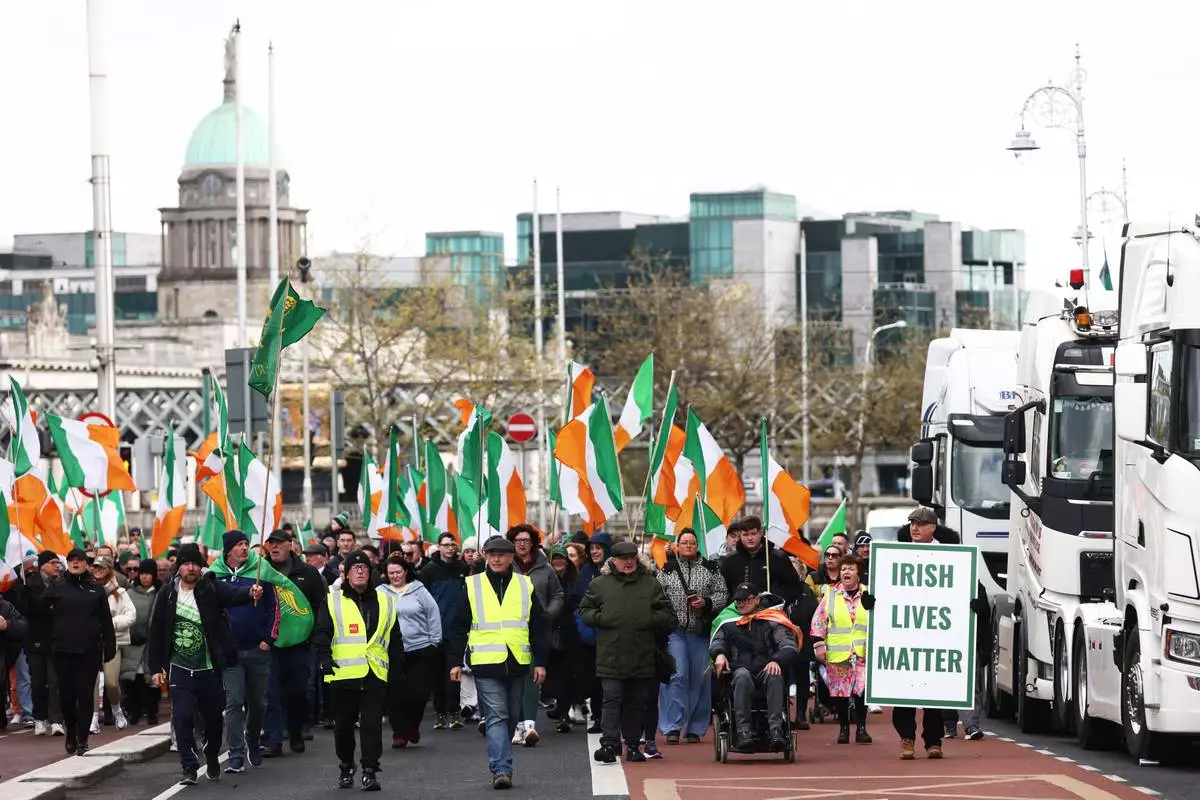
Protesters make their way to O'Connell Street during the fifth day of a National Fuel Protest, in Dublin, Ireland, Saturday, April 11, 2026. (AP Photo/Peter Morrison)
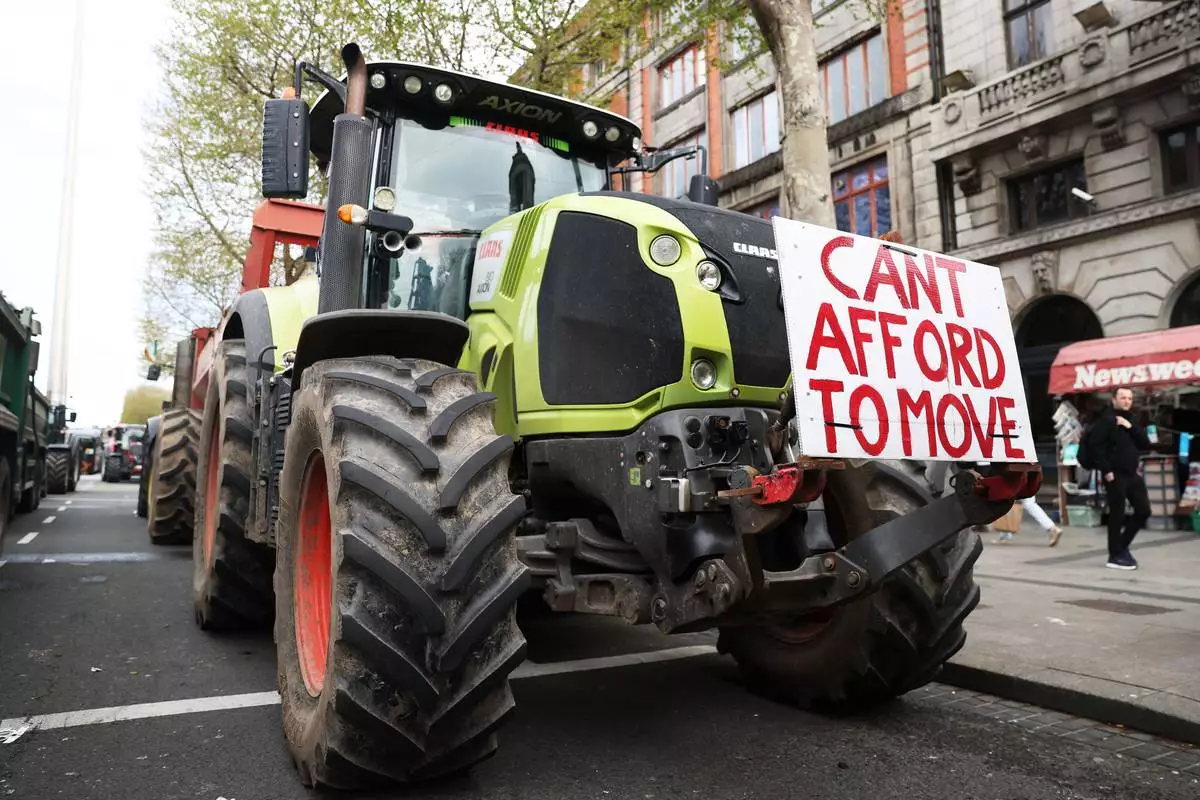
Tractors block O'Connell Street on the fifth day of the National Fuel Protest, in Dublin, Ireland, Saturday, April 11, 2026. (AP Photo/Peter Morrison)
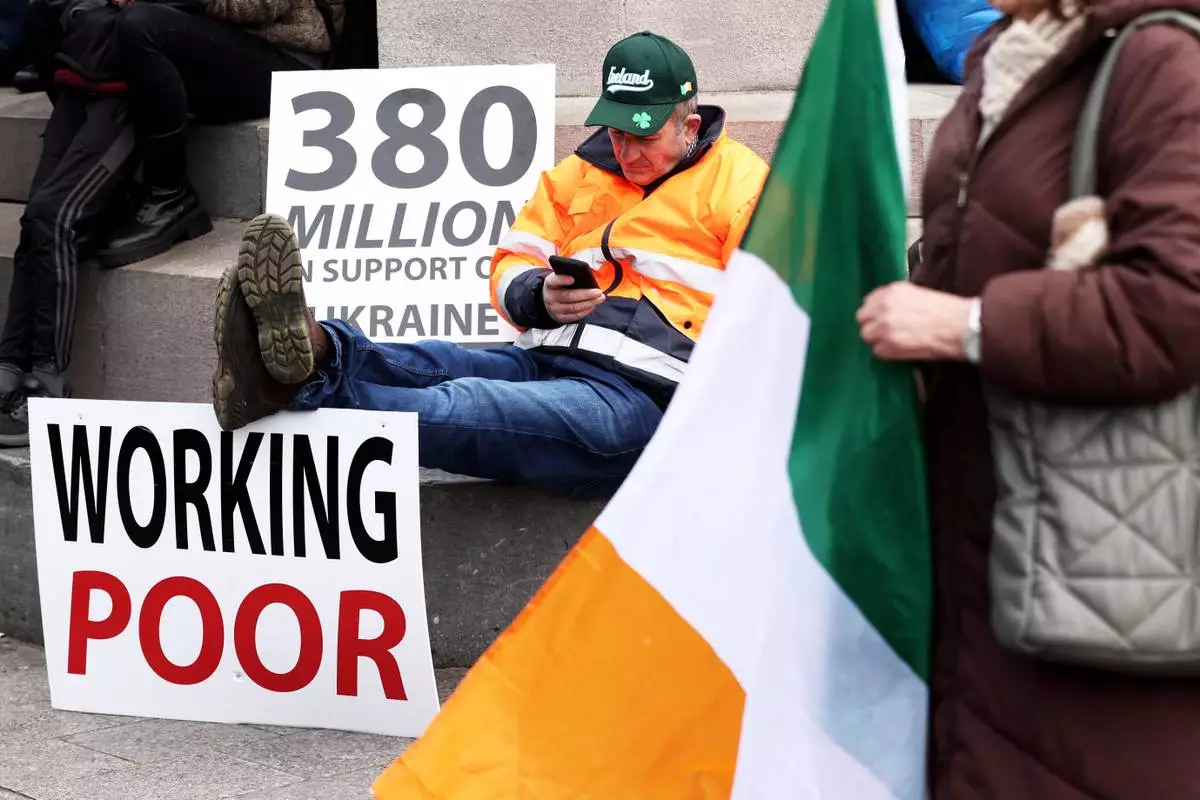
A protester sits on O'Connell Street in the heart of Dublin City center during the fifth day of a National Fuel Protest which has taken hold across Ireland, Saturday, April 11, 2026. (AP Photo/Peter Morrison)

Tractors block O'Connell Street on the fifth day of the National Fuel Protest, in Dublin, Ireland, Saturday, April 11, 2026. (AP Photo/Peter Morrison)
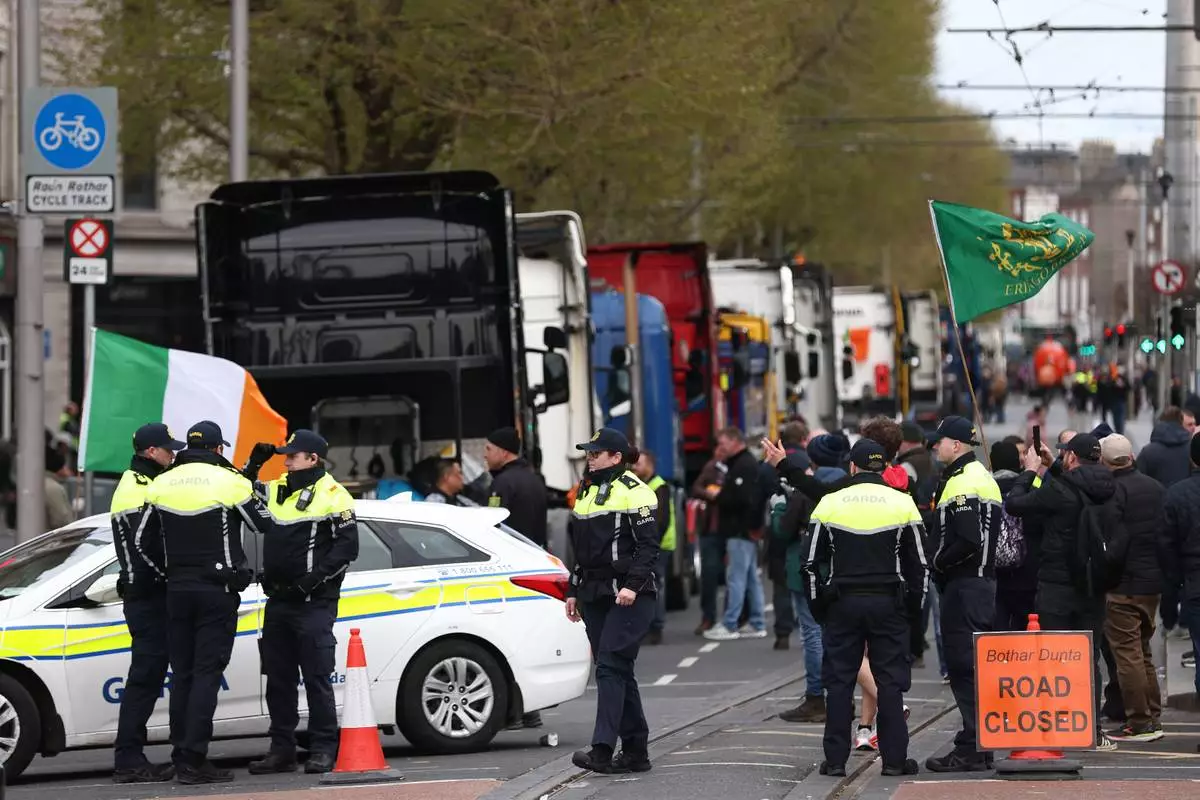
Tractors block O'Connell Street on the fifth day of the National Fuel Protest, in Dublin, Ireland, Saturday, April 11, 2026. (AP Photo/Peter Morrison)
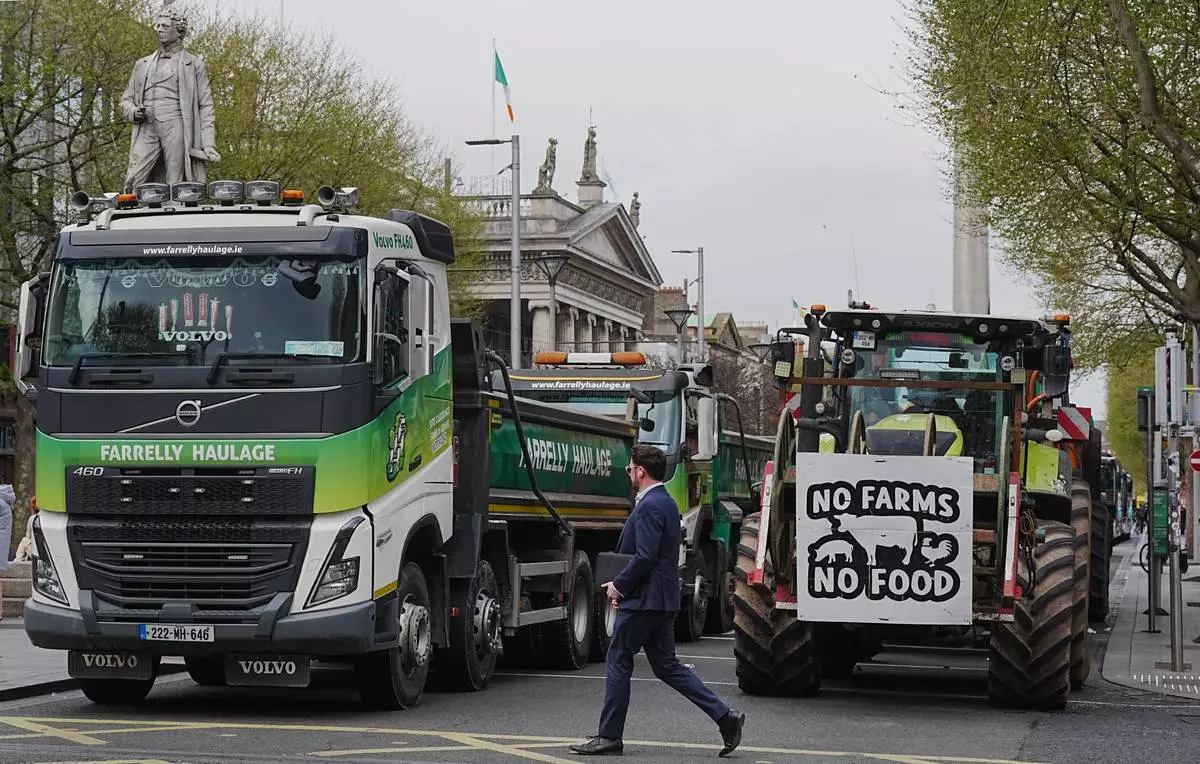
A man crosses a road where vehicles are parked on O'Connell Street, on the second day of a national fuel protest against rising fuel prices, in Dublin, Ireland, Wednesday April 8, 2026. (Brian Lawless/PA via AP)
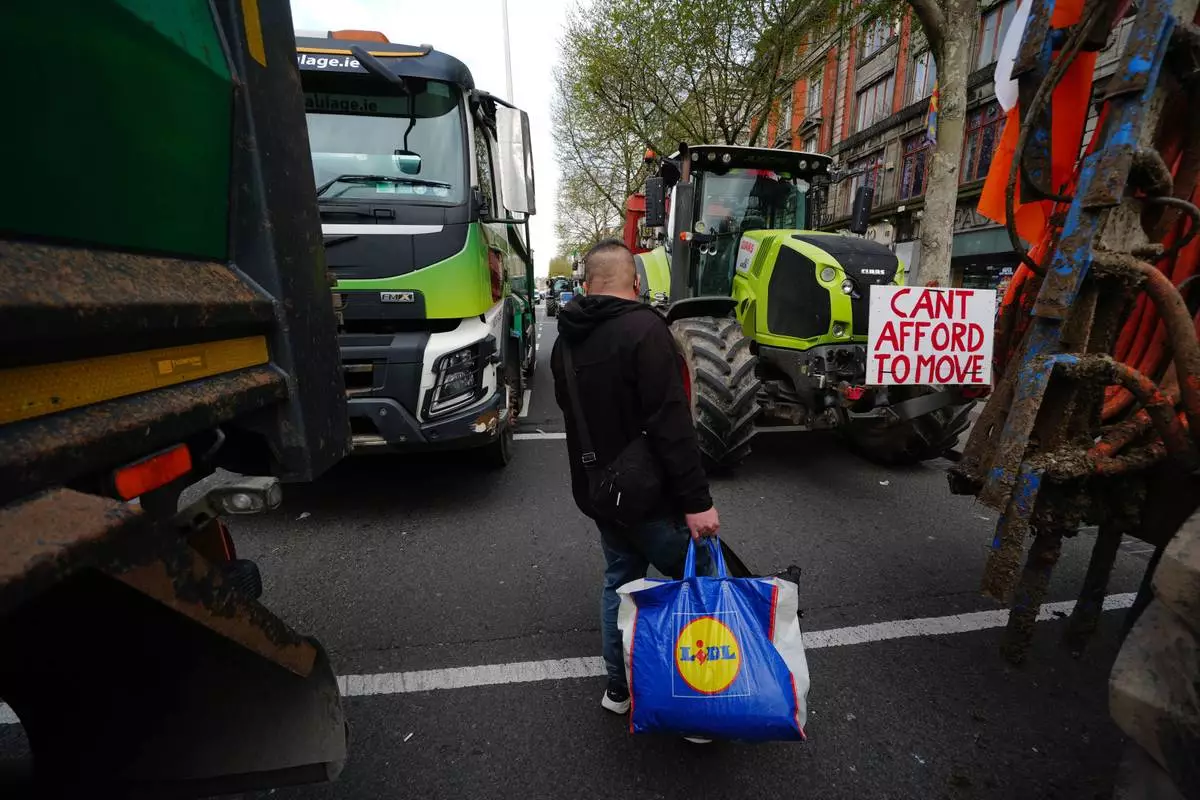
A man walks in between vehicles parked on O'Connell Street on the second day of a national fuel protest against rising fuel prices, in Dublin, Ireland, Wednesday April 8, 2026. (Brian Lawless/PA via AP)