WELLINGTON, New Zealand (AP) — Many Australians arriving at polling places on Saturday followed their civic duty by eating what’s become known as a democracy sausage, a cultural tradition as Aussie as koalas and Vegemite, and for some just as important as casting their vote.
The grilled sausage wrapped in a slice of white bread and often topped with onions and ketchup is a regular fixture of Antipodean public life. But when offered at polling places on election day, the humble treat is elevated to a democracy sausage — a national, if light-heated, symbol for electoral participation.
Click to Gallery
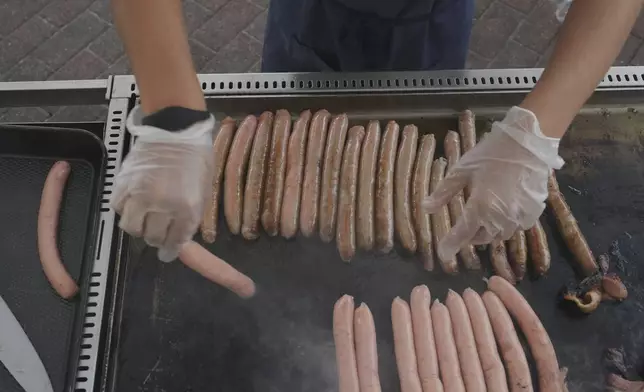
A volunteer cooks sausages on a BBQ outside a polling booth at Sydney's Bondi Beach, Saturday, May 3, 2025. (AP Photo/Mark Baker)
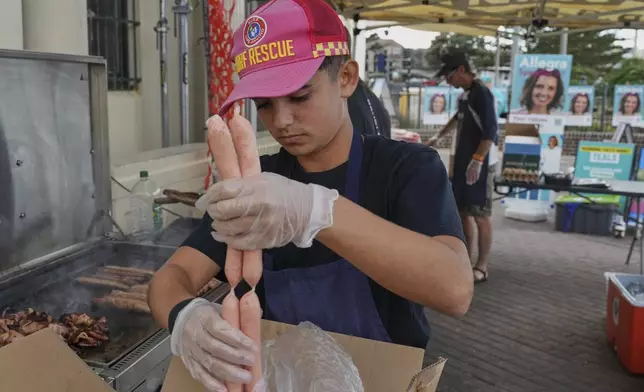
A volunteer prepares to cook sausages on a BBQ outside a polling booth at Sydney's Bondi Beach, Saturday, May 3, 2025. (AP Photo/Mark Baker)
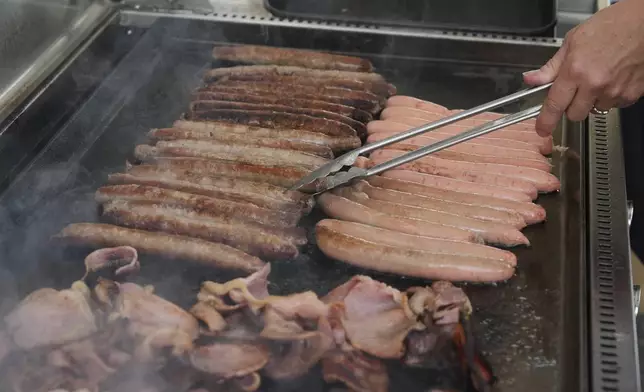
A volunteer cooks sausages on a BBQ outside a polling booth at Sydney's Bondi Beach, Saturday, May 3, 2025. (AP Photo/Mark Baker)
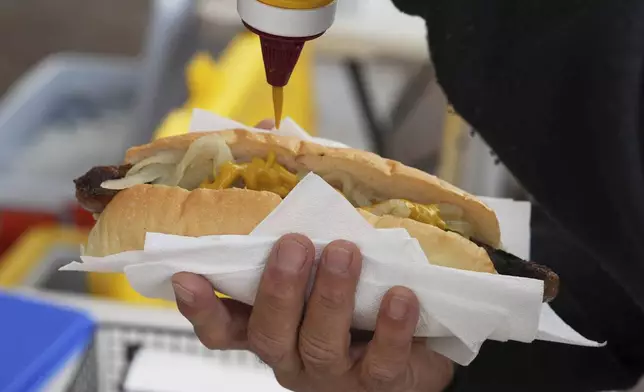
A customer pours mustard over a sausage in a bread roll outside a polling booth at Sydney's Bondi Beach, Saturday, May 3, 2025. (AP Photo/Mark Baker)
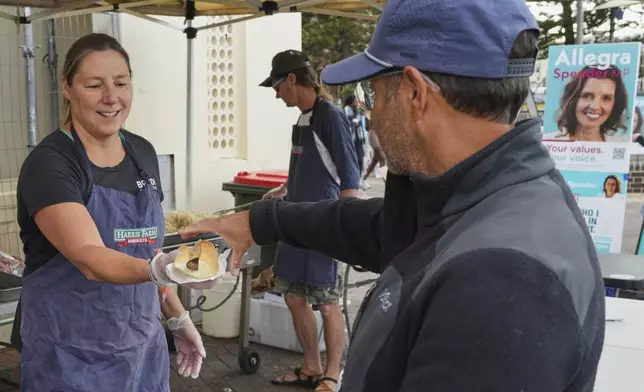
A volunteer hands a customer a sausage in a bread roll outside a polling booth at Sydney's Bondi Beach, Saturday, May 3, 2025. (AP Photo/Mark Baker)
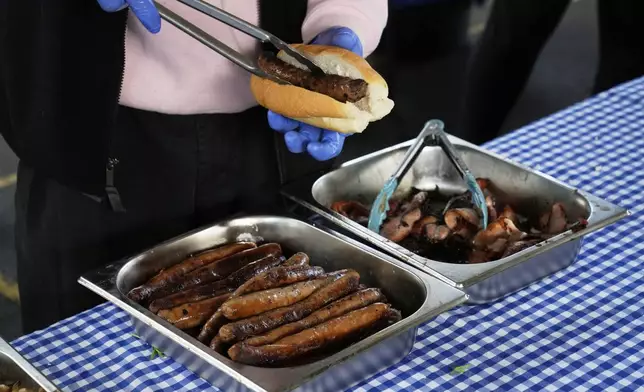
A worker prepares a "Democracy Sausage" at the Marrickville Public School in Sydney, Australia, Saturday, May 3, 2025, for someone who has voting in the general election. (AP Photo/Rick Rycroft)
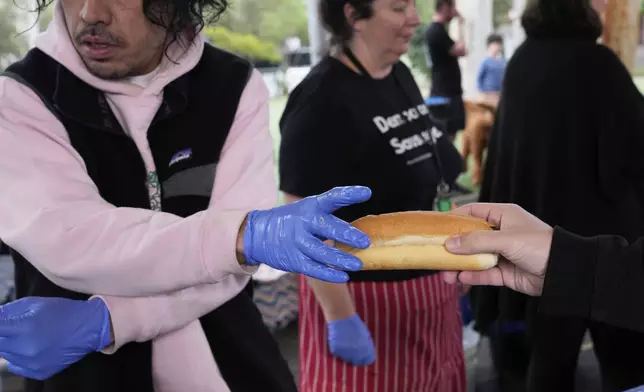
A worker hands a man a "Democracy Sausage" at the Marrickville Public School in Sydney, Australia, Saturday, May 3, 2025, after voting in the general election. (AP Photo/Rick Rycroft)
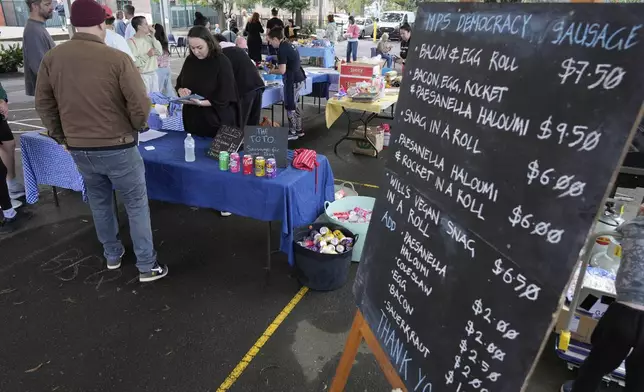
People get their "Democracy Sausage" at the Marrickville Public School in Sydney, Australia, Saturday, May 3, 2025, after voting in the general election. (AP Photo/Rick Rycroft)
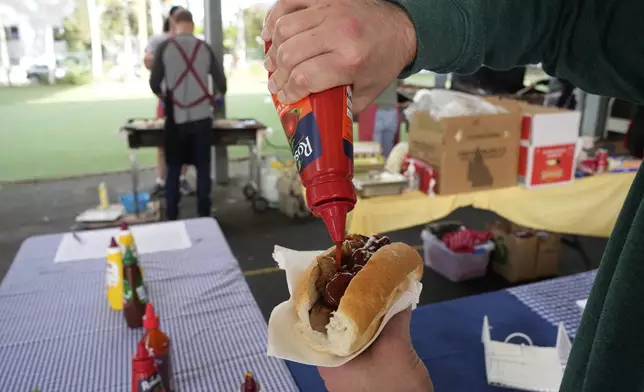
A man squirts sauce on his "Democracy Sausage" at the Marrickville Public School in Sydney, Australia, Saturday, May 3, 2025, after voting in the general election. (AP Photo/Rick Rycroft)
Or, as a website tracking real-time, crowd-sourced democracy sausage locations on polling day notes: “It’s practically part of the Australian Constitution.”
But the tradition is far from political. Cooking and selling the snacks outside polling places is the most lucrative fundraising event of the year for many school and community groups.
Democracy sausages are served everywhere Australians vote. Ahead of Saturday’s ballot, and on election day, they were due to appear at polling places for citizens abroad on nearly every continent — at Australian embassies in New York, Riyadh, Nairobi and Tokyo, and even at a research station in Antarctica.
The friends who run the apolitical and nonpartisan website democracysausage.org began the project in 2013, when they struggled to find information about which polling places would offer food on election day, spokesperson Alex Dawson told The Associated Press.
Now Dawson and his friends help voters choose their polling place with a site that has expanded to catalogue details of gluten free, vegan and halal democracy sausage options, and the availability of other treats such as cake and coffee. It makes for a hectic election day.
“We’ll usually rope in a few friends to keep an eye on incoming submissions about either stalls that we don’t already know about, or tip-offs to find out if a location has run out of sausages,” Dawson said. The volunteers take a lunchtime break to cast their own votes, and, naturally, enjoy a democracy sausage.
At the 2022 election, the website registered 2,200 of Australia’s 7,000 polling places as serving democracy sausages or other snacks and Dawson expected at least that number would participate on Saturday. Groups running the stalls made $4.1 million Australian dollars ($2.6 million) in profits in 2022, he said.
No one’s sure who coined the term democracy sausage. But fundraising snacks have been served at Australia’s voting booths for close to a century, said Judith Brett, a professor of politics at Melbourne’s LaTrobe University and author of the book “From Secret Ballot to Democracy Sausage: How Australia Got Compulsory Voting.”
What began with polling place bake sales in the 1920s became election day sausage sizzles in the 1980s with the invention of the portable barbeque grill. The democracy sausage’s success is partly because of how Australia votes.
Elections always occur on Saturdays and are family affairs — voters arrive with their children and dogs. And turning up to vote is required by law, resulting in turnouts higher than 90% and ensuring a captive market for democracy sausage sales.
Brett attributed the sausage’s appeal to the Australian sense of humor — “It was a bit of a joke,” she said — and its grassroots origins.
“Government didn’t think it up, a political party didn’t think it up as a slogan,” she added.
“It’s something that binds everyone together,” Dawson said. In 2016, the Australian National Dictionary Centre named “democracy sausage” as its word of the year.
The sausage has also proved a political cipher, a way for aspiring leaders to show they’re humble enough to consume a cheap piece of meat wrapped in bread, at times with mixed results. Photographs of politicians eating democracy sausages in bizarre and ungainly ways have become memes or episodes of Australian political folklore.
“It has been a way, I think, of connecting a younger generation, a social media generation, into the civic rituals of election day,” Brett said.
Some commentators suggest that early voting could spell the end for the democracy sausage. More than 4 million Australians went to the polls before election day, a new record. But Dawson said he wasn’t worried, because those who voted early could still drop by a polling place on Saturday to buy a snack.
“We’ve heard reports of people who are tourists over here, foreign students, that will go along to election days just to get the sausages,” he added. “I think that’s a great piece of Australian culture for people to take home with them.”
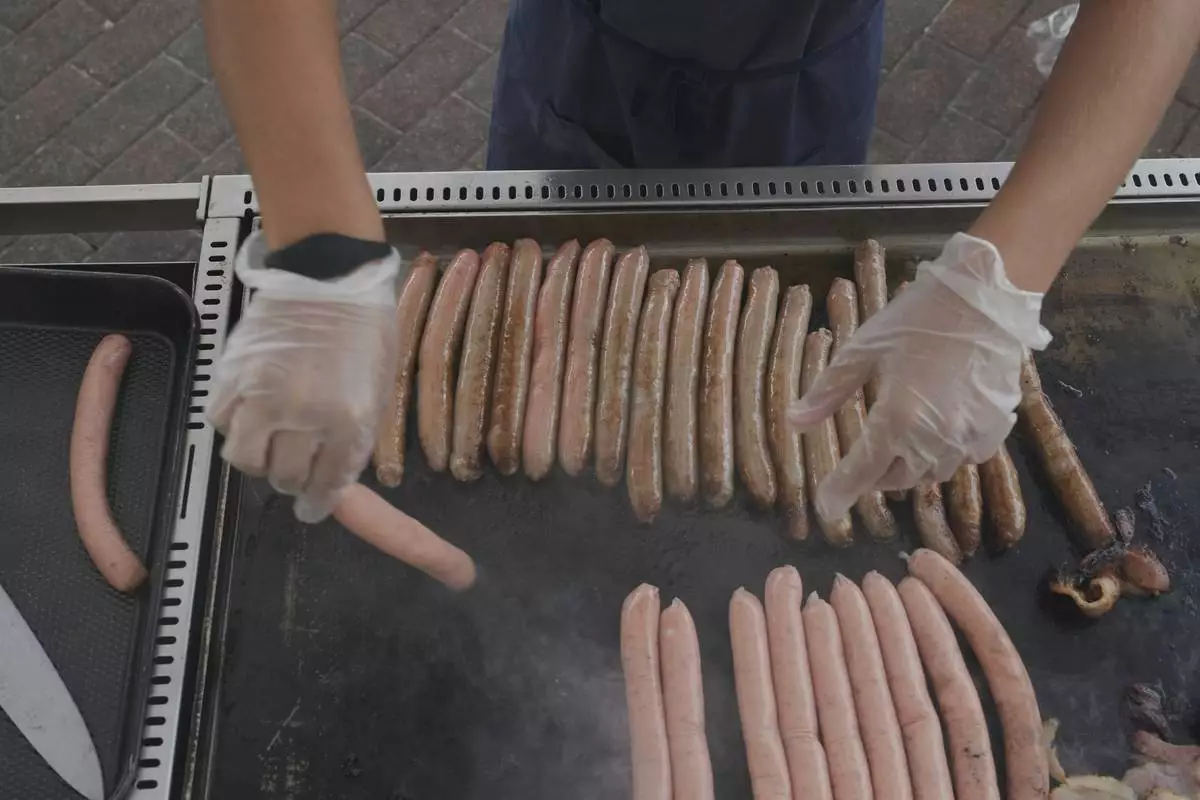
A volunteer cooks sausages on a BBQ outside a polling booth at Sydney's Bondi Beach, Saturday, May 3, 2025. (AP Photo/Mark Baker)
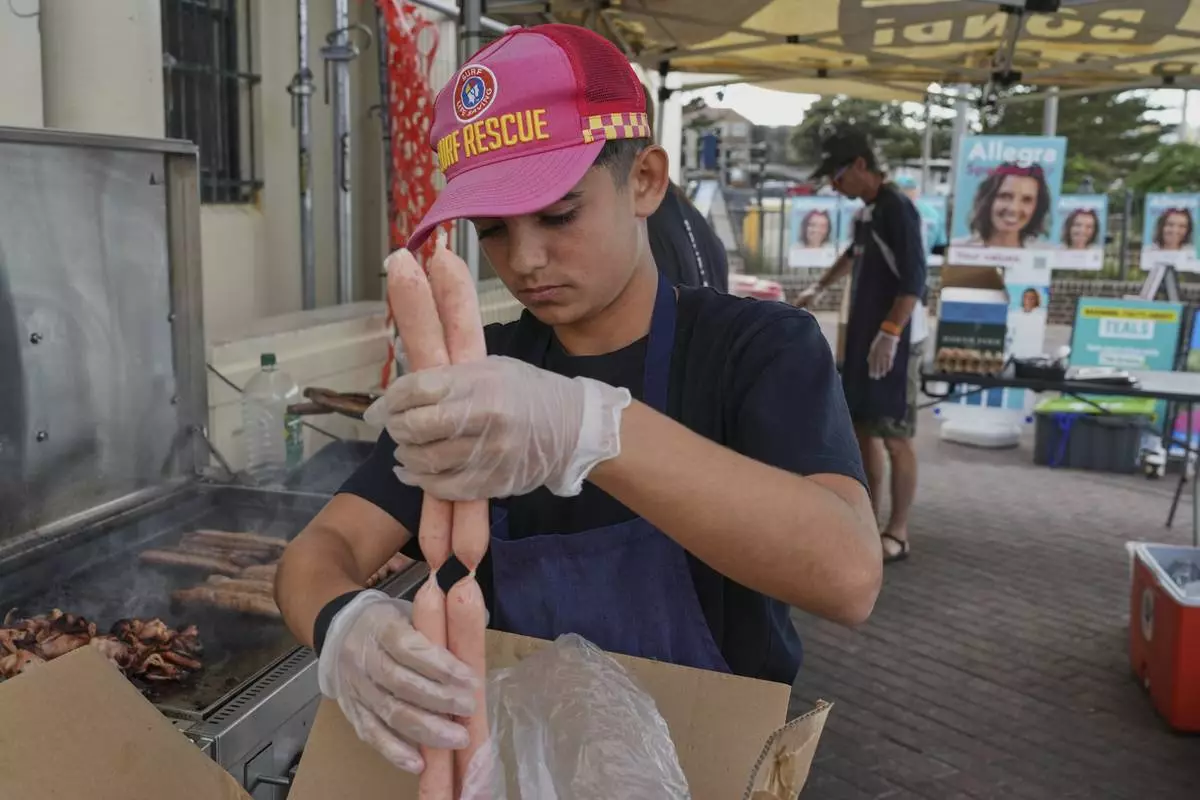
A volunteer prepares to cook sausages on a BBQ outside a polling booth at Sydney's Bondi Beach, Saturday, May 3, 2025. (AP Photo/Mark Baker)
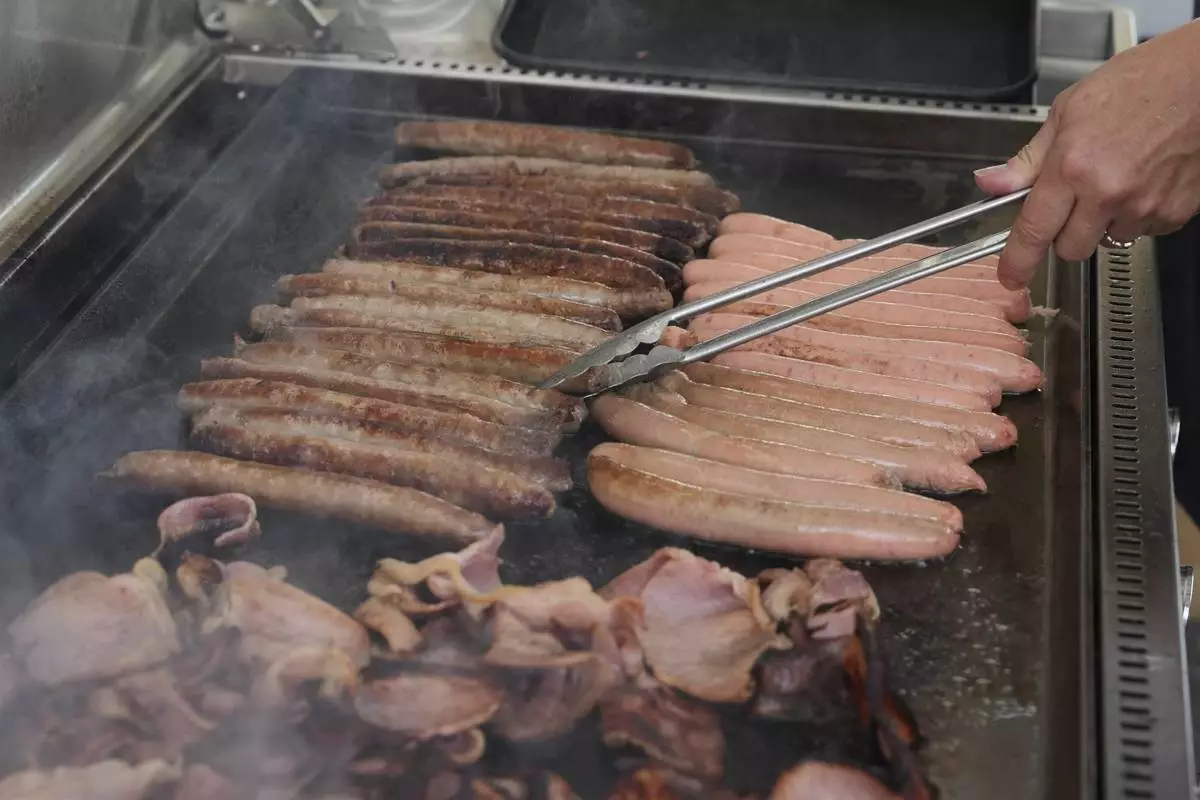
A volunteer cooks sausages on a BBQ outside a polling booth at Sydney's Bondi Beach, Saturday, May 3, 2025. (AP Photo/Mark Baker)
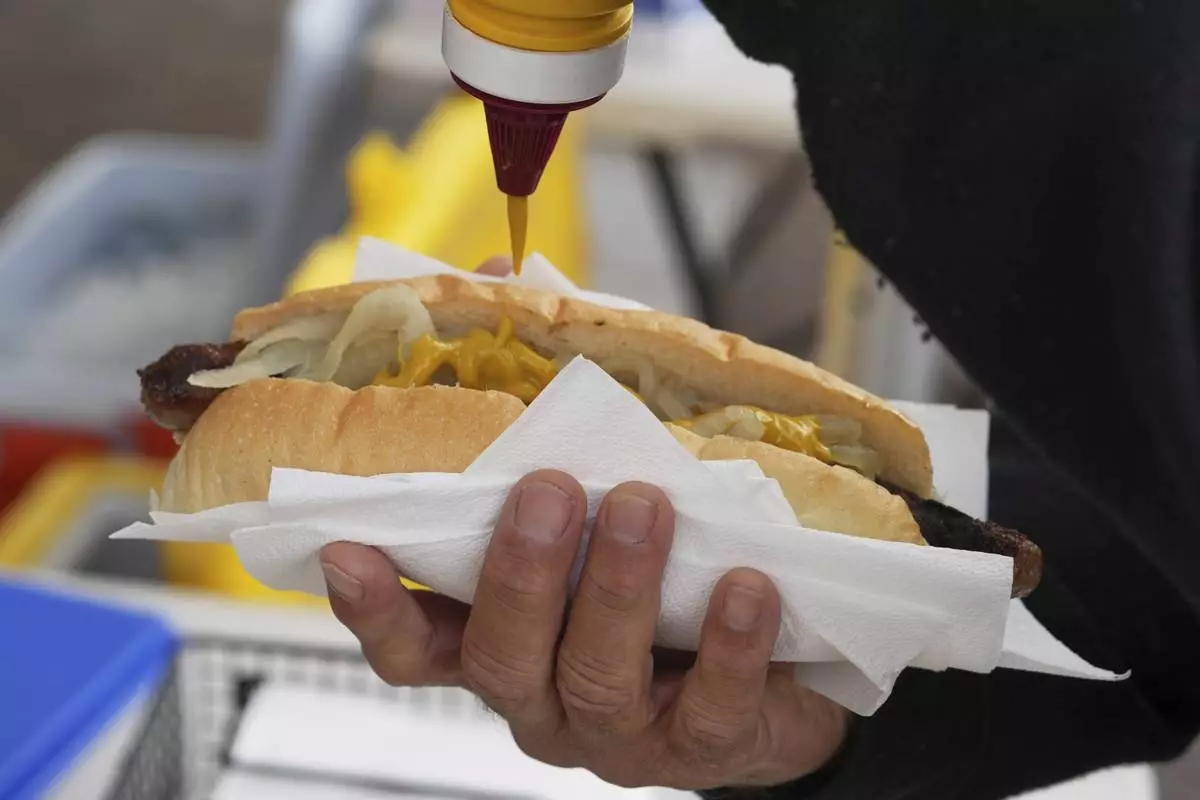
A customer pours mustard over a sausage in a bread roll outside a polling booth at Sydney's Bondi Beach, Saturday, May 3, 2025. (AP Photo/Mark Baker)
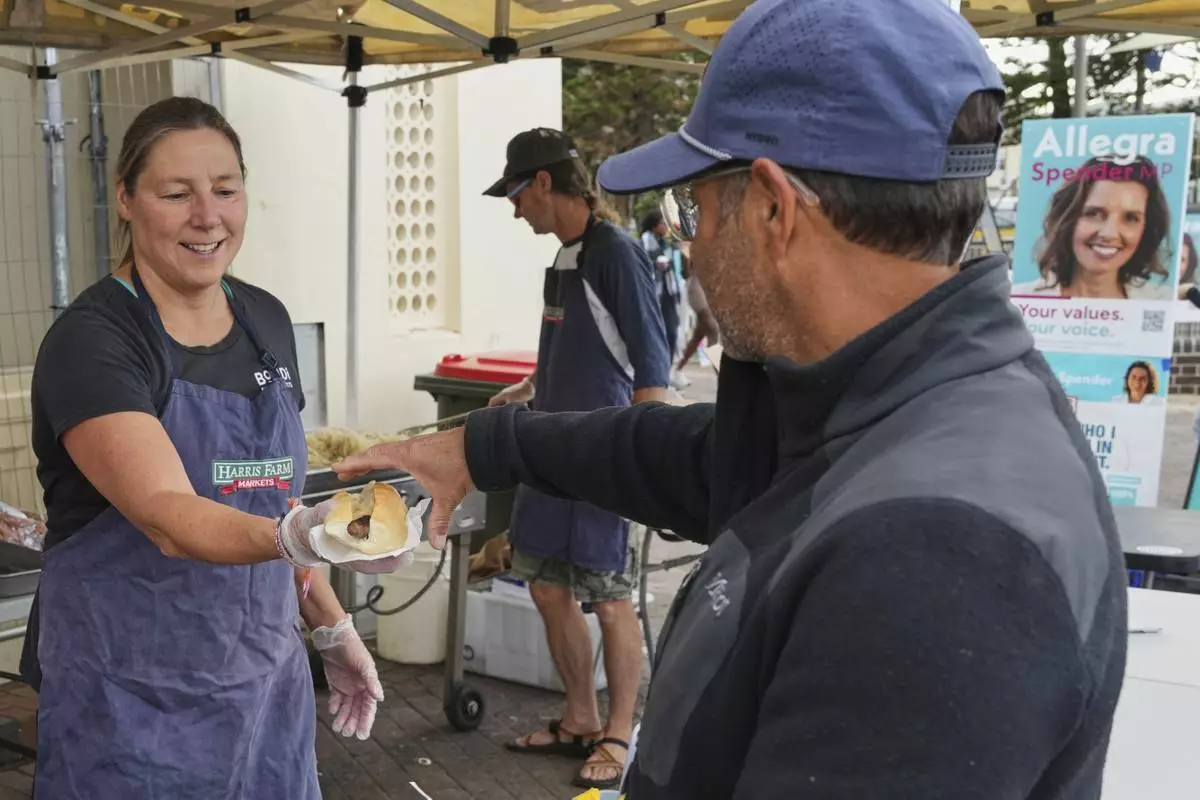
A volunteer hands a customer a sausage in a bread roll outside a polling booth at Sydney's Bondi Beach, Saturday, May 3, 2025. (AP Photo/Mark Baker)
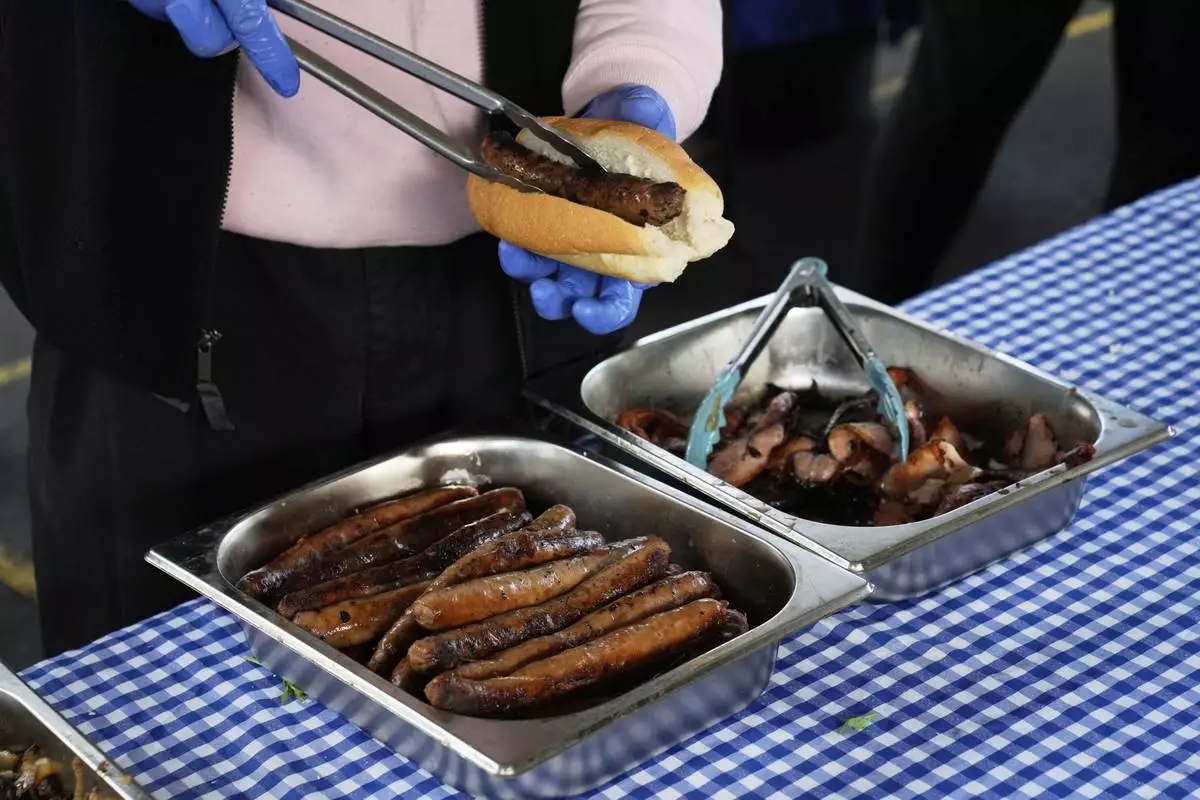
A worker prepares a "Democracy Sausage" at the Marrickville Public School in Sydney, Australia, Saturday, May 3, 2025, for someone who has voting in the general election. (AP Photo/Rick Rycroft)
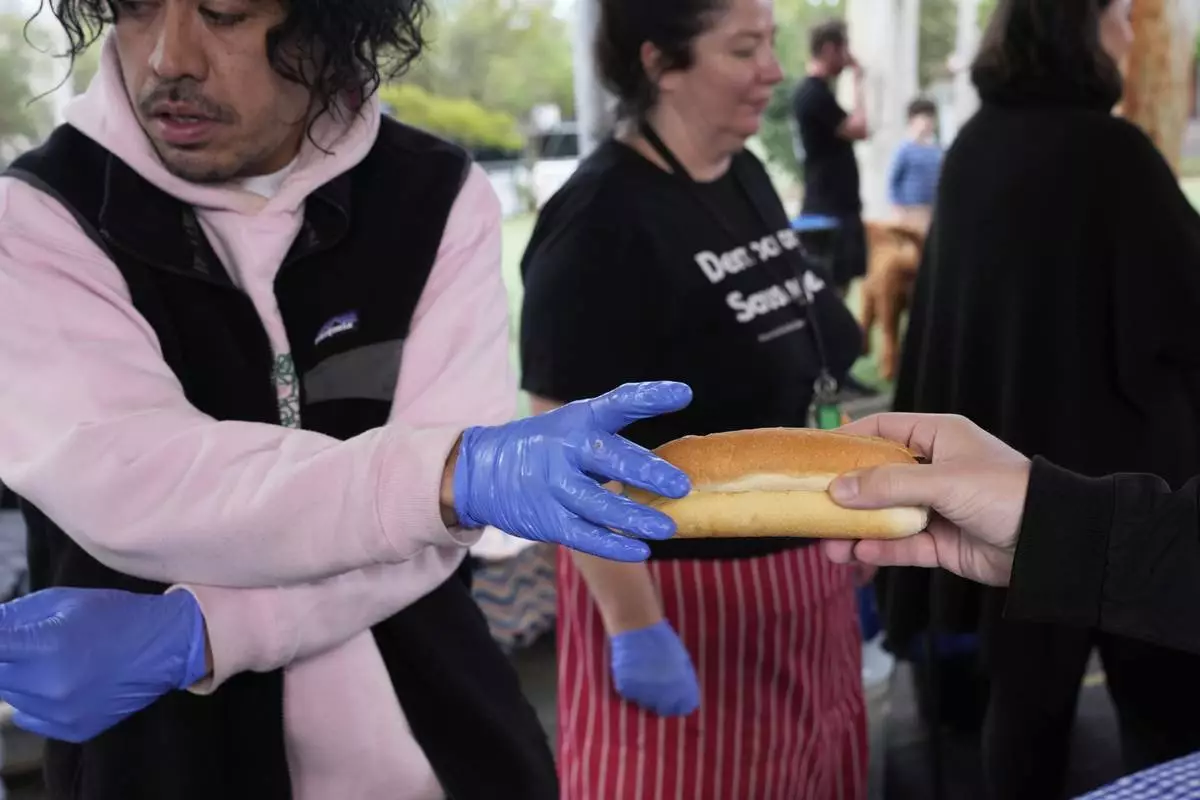
A worker hands a man a "Democracy Sausage" at the Marrickville Public School in Sydney, Australia, Saturday, May 3, 2025, after voting in the general election. (AP Photo/Rick Rycroft)
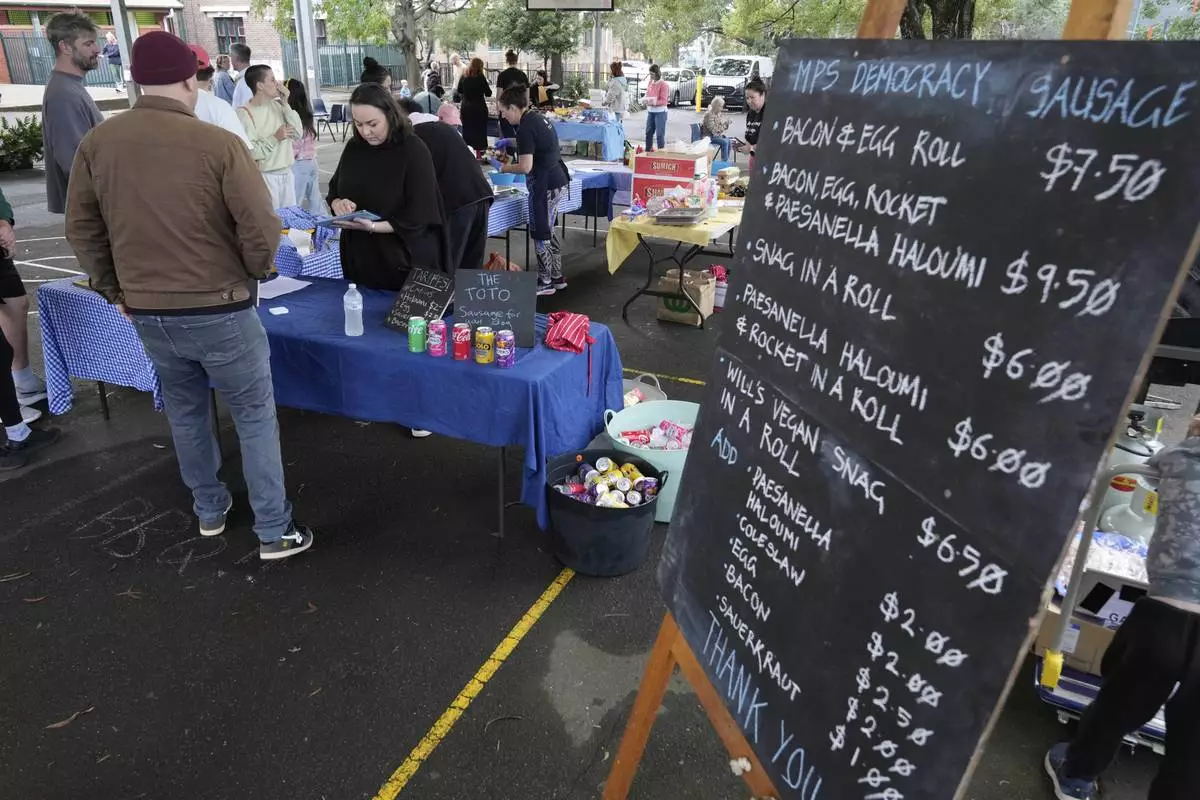
People get their "Democracy Sausage" at the Marrickville Public School in Sydney, Australia, Saturday, May 3, 2025, after voting in the general election. (AP Photo/Rick Rycroft)

A man squirts sauce on his "Democracy Sausage" at the Marrickville Public School in Sydney, Australia, Saturday, May 3, 2025, after voting in the general election. (AP Photo/Rick Rycroft)