Skip to Content Facebook Feature Image

Europe will mark V-E Day's 80th anniversary as once-unbreakable bonds with the US are under pressure

News

Europe will mark V-E Day's 80th anniversary as once-unbreakable bonds with the US are under pressure
News

News

Europe will mark V-E Day's 80th anniversary as once-unbreakable bonds with the US are under pressure

2025-05-03 14:32 Last Updated At:14:51

THIMISTER-CLERMONT, Belgium (AP) — The memory of blood dripping from trucks loaded with the mangled bodies of U.S. soldiers arriving at a nearby war cemetery straight from the battlefield in 1945 still gives 91-year-old Marcel Schmetz nightmares.

It also instilled a lifelong sense of gratitude for the young soldiers from the United States and around the world who gave their lives battling the armies of Adolf Hitler to end World War II in Europe.

More Images
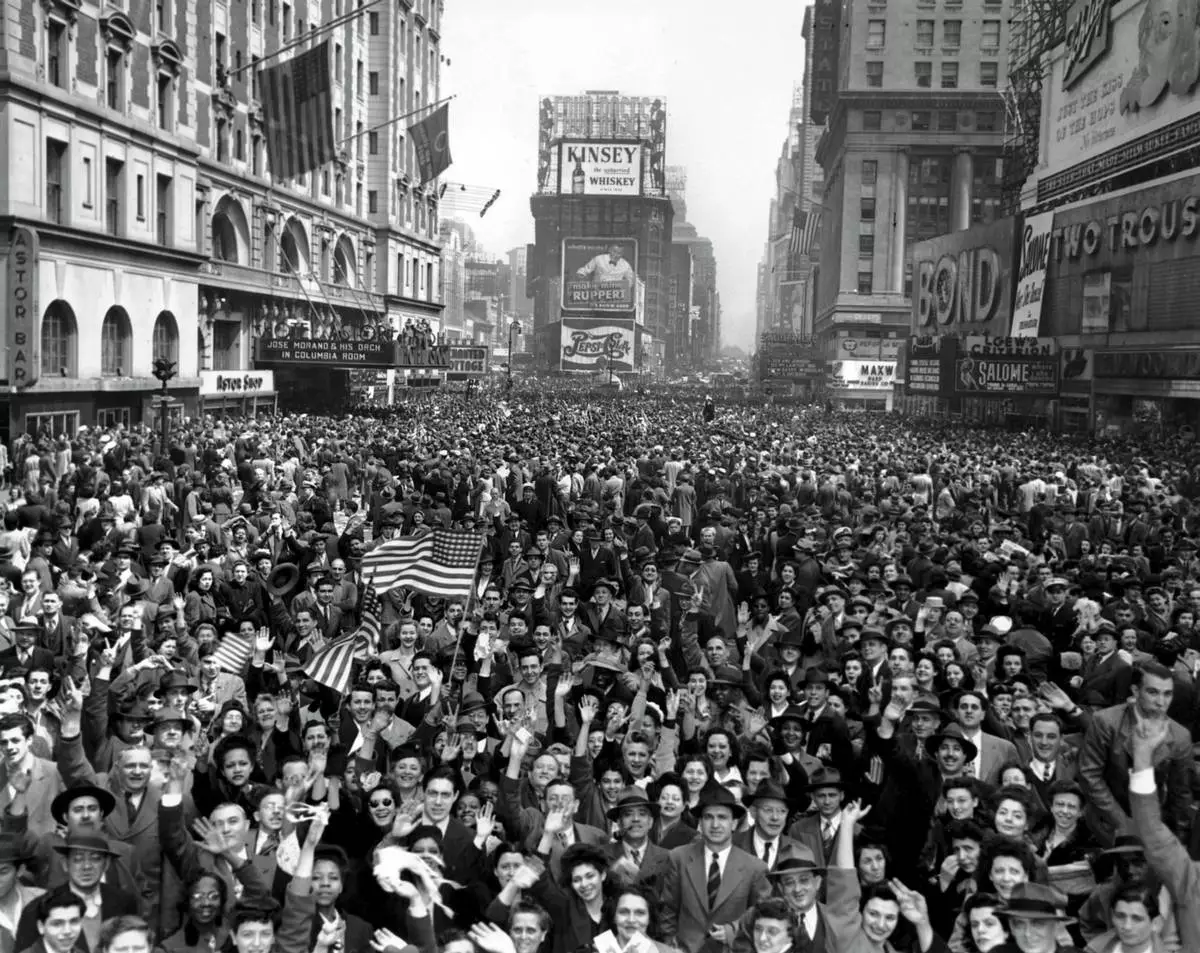
FILE - Looking north from 44th Street, New York's Times Square is packed Monday, May 7, 1945, with crowds celebrating the news of Germany's unconditional surrender in World War II. (AP Photo/Tom Fitzsimmons, File)

FILE - Looking north from 44th Street, New York's Times Square is packed Monday, May 7, 1945, with crowds celebrating the news of Germany's unconditional surrender in World War II. (AP Photo/Tom Fitzsimmons, File)

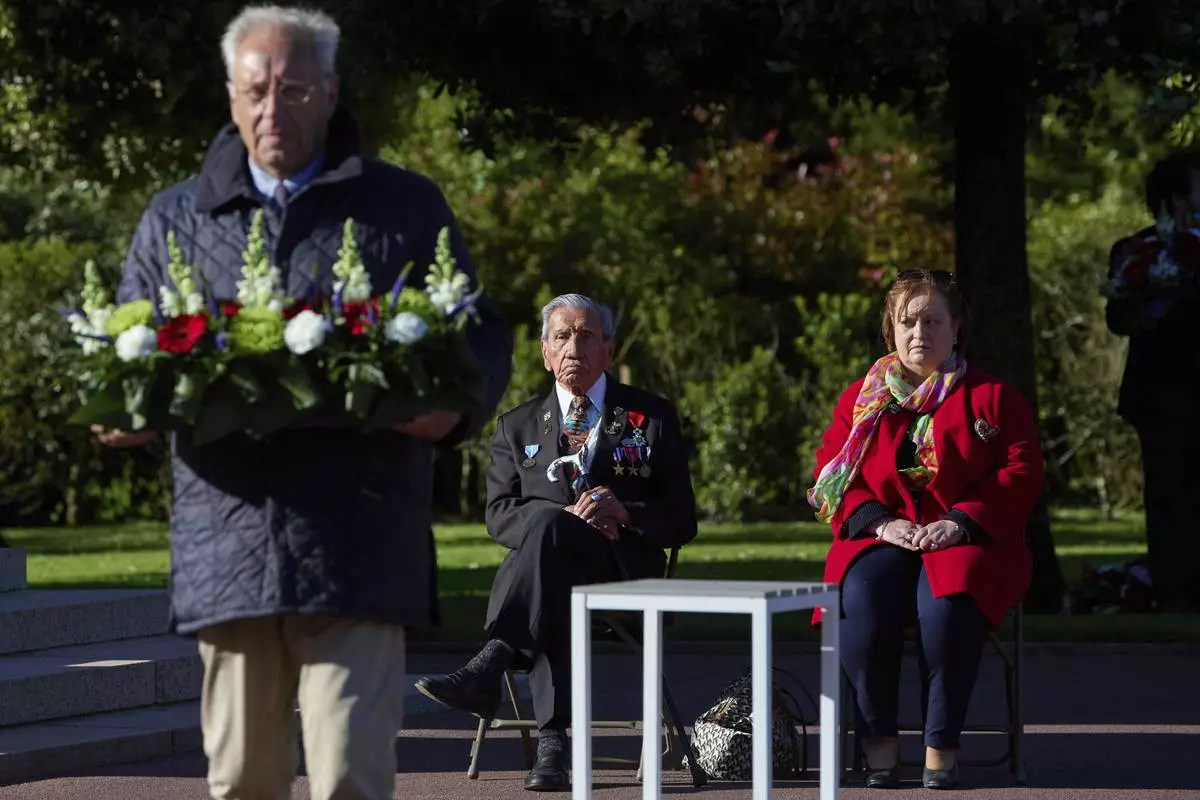
World War II D-Day veteran and Penobscot Elder from Maine, Charles Norman Shay, center, and Marie Pacale Legrand during a D-Day 76th anniversary ceremony at the Normandy American Cemetery in Colleville-sur-Mer, Normandy, France, June 6, 2020. (AP Photo/Virginia Mayo)

World War II D-Day veteran and Penobscot Elder from Maine, Charles Norman Shay, center, and Marie Pacale Legrand during a D-Day 76th anniversary ceremony at the Normandy American Cemetery in Colleville-sur-Mer, Normandy, France, June 6, 2020. (AP Photo/Virginia Mayo)

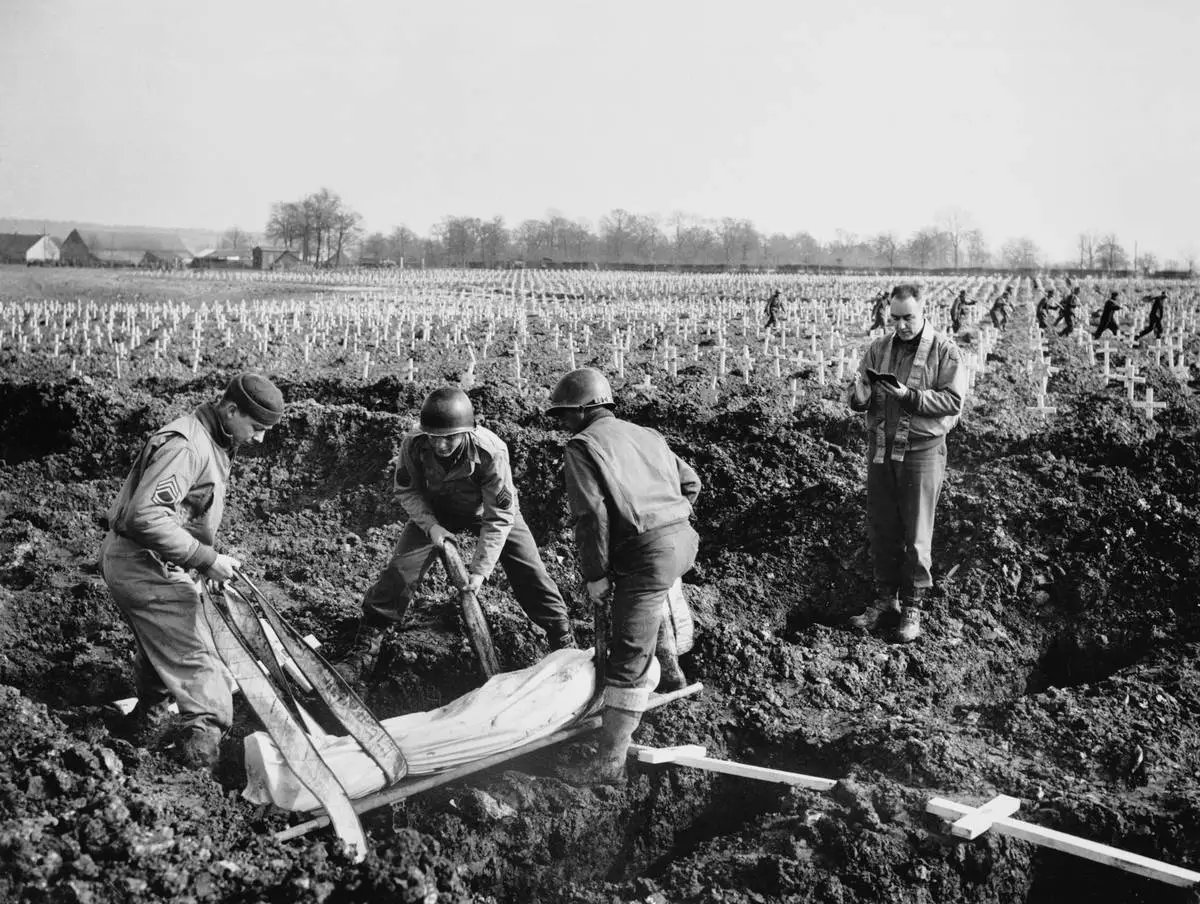
FILE - An American soldier, identified as Patsy Caliendo, is laid to rest in the largest Allied military cemetery on the Western Front March 14, 1945, in Henri-Chapelle, Belgium. (AP Photo/William C. Allen, File)

FILE - An American soldier, identified as Patsy Caliendo, is laid to rest in the largest Allied military cemetery on the Western Front March 14, 1945, in Henri-Chapelle, Belgium. (AP Photo/William C. Allen, File)

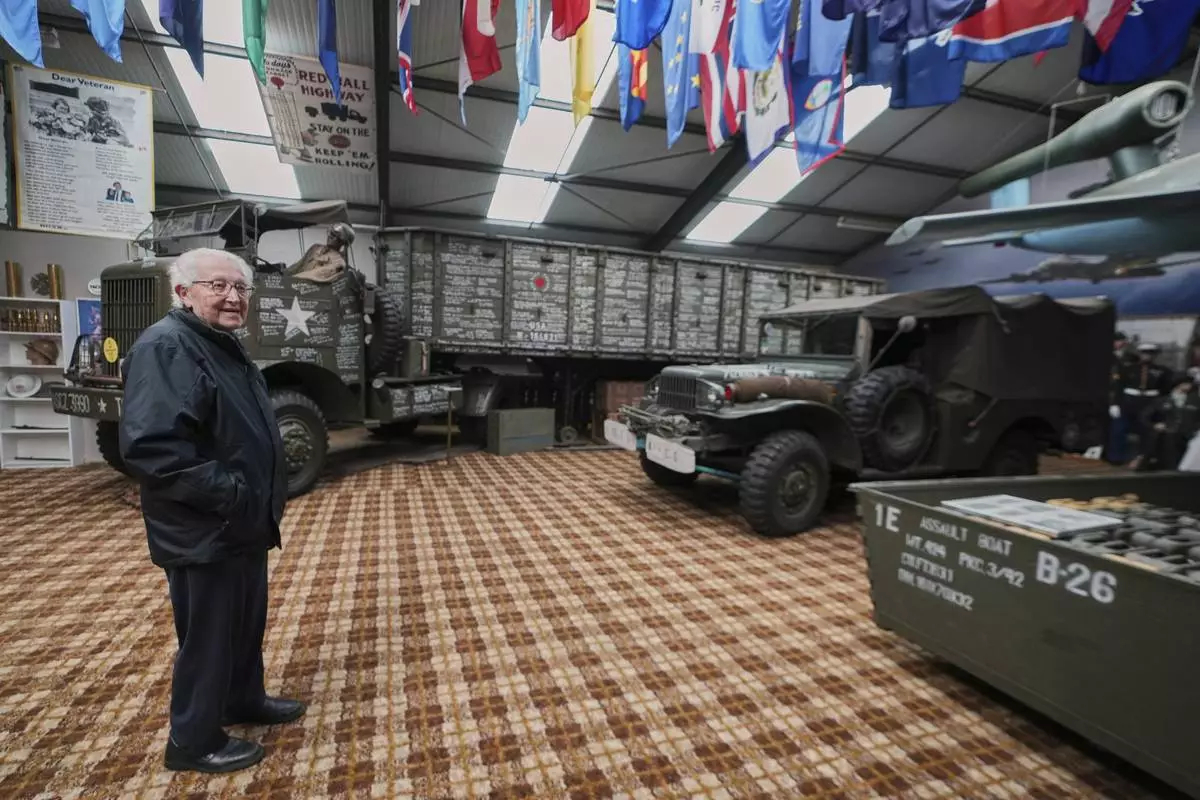
Director of the WWII Remember Museum 1939-1945, Marcel Schmetz, stands near vintage WWII vehicles inside his museum in Thimister-Clermont, Belgium, April 22, 2025. (AP Photo/Virginia Mayo)

Director of the WWII Remember Museum 1939-1945, Marcel Schmetz, stands near vintage WWII vehicles inside his museum in Thimister-Clermont, Belgium, April 22, 2025. (AP Photo/Virginia Mayo)

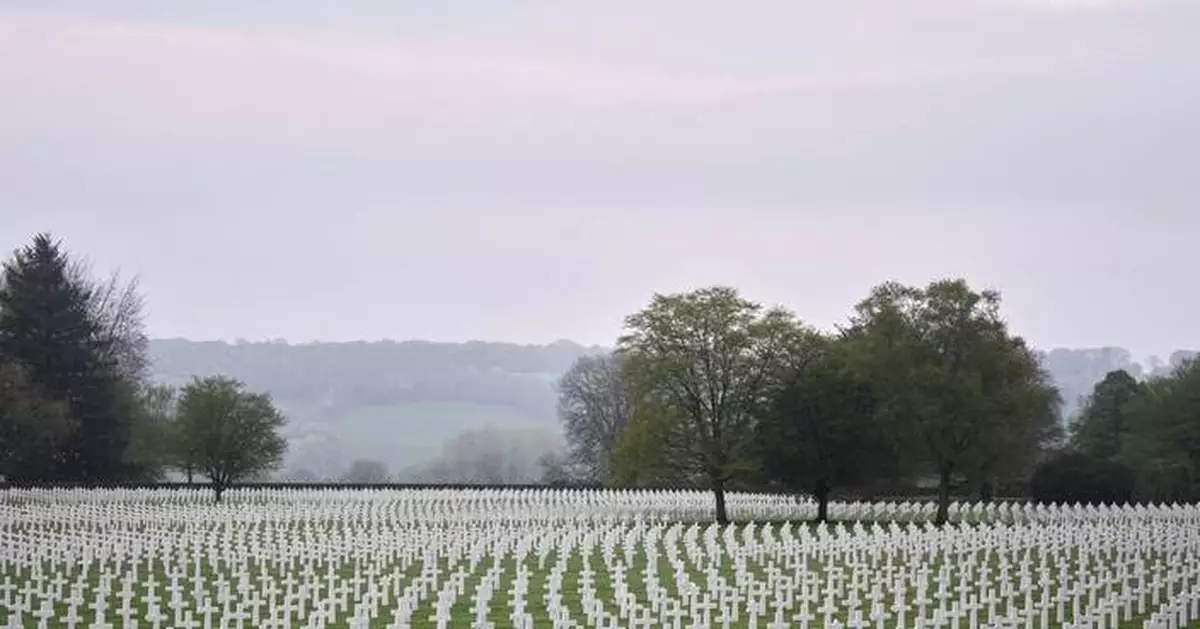
Gravestones of American WWII soldiers at the Henri-Chapelle American Cemetery in Henri Chapelle, Belgium, April 22, 2025. (AP Photo/Virginia Mayo)

Gravestones of American WWII soldiers at the Henri-Chapelle American Cemetery in Henri Chapelle, Belgium, April 22, 2025. (AP Photo/Virginia Mayo)

Schmetz even built a museum at his home in the Belgian Ardennes to honor their sacrifice.

“If the Americans hadn’t come, we wouldn’t be here,” the Belgian retiree said.

That same spirit also pervades Normandy in northern France, where the allied forces landed on June 6, 1944, a day that became the tipping point of the war.

In Normandy, Marie-Pascale Legrand is still taking care of the ailing Charles Shay, a 100-year-old American who stormed the bloodied beaches on that fateful D-Day as a teenager and fought to help liberate Europe for many more months.

“Gratitude for me means that I am eternally indebted, because I can live free today,” Legrand said.

After D-Day, it would take almost another year of fierce fighting before Germany would finally surrender on May 8, 1945. Commemorations and festivities are planned for the 80th anniversary across much of the continent for what has become known as Victory in Europe Day, or V-E Day, one of the most momentous days on the continent in recent centuries.

Ever since, for generation upon generation in the nations west of the Iron Curtain that sliced Europe in two, it became a day to confirm and reconfirm what were long seen as the unbreakable bonds with the United States as both stood united against Soviet Eastern Europe.

No more.

Over the past several months, the rhetoric from Washington has become increasingly feisty.

The Trump administration has questioned the vestiges of the decades-old alliance and slapped trade sanctions on the 27-nation European Union and the United Kingdom. Trump has insisted that the EU trade bloc was there to “screw” the United States from the start.

The wartime allies are now involved in a trade war.

“After all that has happened, it is bound to leave scars,” said Hendrik Vos, European studies professor at Ghent University.

Yet deep in the green hills and Ardennes woods where the Battle of the Bulge was fought and Schmetz lives, just as along the windswept bluffs of Legrand's Normandy, the ties endure — isolated from the tremors of geopolitics.

“For all those that criticize the Americans, we can only say that for us, they were all good,” Schmetz said. “We should never forget that.”

After watching the horrors of the dead soldiers at the nearby Henri-Chapelle cemetery as an 11-year-old, Schmetz vowed he would do something in their honor and gathered war memorabilia.

A car mechanic with a big warehouse, he immediately started to turn it into the Remember Museum 39-45 once he retired more than three decades ago.

“I had to do something for those who died,” he said.

And for the treasure trove of military artifacts, what truly stands out is a long bench in the kitchen where U.S. veterans, their children, and even their grandchildren come and sit and talk about what happened, and the bonds uniting continent, memories all meticulously kept by his wife Mathilde, to pass on to new visitors and new generations of schoolkids.

In the coming weeks, she will be going out to put 696 roses on the graves of soldiers from the 1st Infantry Division — nicknamed “The Big Red One,” or “BRO” — who lie buried among 7,987 headstones at Henri Chapelle.

Charles Shay, who is now bedridden in Normandy, was also part of the 1st Infantry Division and came through the Ardennes region too before heading to Germany. He survived the Korean War too and started making visits to the D-Day beaches around two decades ago. Over the years, he became increasingly sick and Legrand, who has helped veterans in one way or another for more than 40 years, took him in to her home in 2018.

He has been living there ever since.

The moment everything changed for Legrand was listening to then U.S. President Ronald Reagan in 1984 speaking on a Normandy bluff of the sacrifice and heroism of American soldiers.

Barely in her 20s, she realized that “their blood is in our soil and we have to show gratitude. We have to do something. I didn't know what at the time, but I knew I would do something to show it.”

She had long volunteered to help Allied veterans before she met Shay. He was lonely, sick and frail when she took him in and began caring for him at her Normandy home.

“It is a strong symbol, which takes on a new dimension in this day and age,” she said, referring to the tumultuous trans-Atlantic relations that have put the bonds between allies that Trump called “unbreakable” only six years ago, under extreme pressure.

Central in Trump's criticism of European NATO allies is that they have happily hunkered far too long under U.S. military supremacy since World War II and should start paying much more of their own way in the alliance. He has done so in such terms that many Europeans sincerely fear the breakup of the trans-Atlantic bonds that were a core of global politics for almost a century.

“The naive belief that the Americans will, by definition, always be an ally — once and for all, that is gone,” said Vos. It also raises a moral question for Europeans now.

“Are we doomed to be eternally grateful?” Vos asked.
FILE - Looking north from 44th Street, New York's Times Square is packed Monday, May 7, 1945, with crowds celebrating the news of Germany's unconditional surrender in World War II. (AP Photo/Tom Fitzsimmons, File)
FILE - Looking north from 44th Street, New York's Times Square is packed Monday, May 7, 1945, with crowds celebrating the news of Germany's unconditional surrender in World War II. (AP Photo/Tom Fitzsimmons, File)

World War II D-Day veteran and Penobscot Elder from Maine, Charles Norman Shay, center, and Marie Pacale Legrand during a D-Day 76th anniversary ceremony at the Normandy American Cemetery in Colleville-sur-Mer, Normandy, France, June 6, 2020. (AP Photo/Virginia Mayo)
World War II D-Day veteran and Penobscot Elder from Maine, Charles Norman Shay, center, and Marie Pacale Legrand during a D-Day 76th anniversary ceremony at the Normandy American Cemetery in Colleville-sur-Mer, Normandy, France, June 6, 2020. (AP Photo/Virginia Mayo)

FILE - An American soldier, identified as Patsy Caliendo, is laid to rest in the largest Allied military cemetery on the Western Front March 14, 1945, in Henri-Chapelle, Belgium. (AP Photo/William C. Allen, File)
FILE - An American soldier, identified as Patsy Caliendo, is laid to rest in the largest Allied military cemetery on the Western Front March 14, 1945, in Henri-Chapelle, Belgium. (AP Photo/William C. Allen, File)

Director of the WWII Remember Museum 1939-1945, Marcel Schmetz, stands near vintage WWII vehicles inside his museum in Thimister-Clermont, Belgium, April 22, 2025. (AP Photo/Virginia Mayo)

Director of the WWII Remember Museum 1939-1945, Marcel Schmetz, stands near vintage WWII vehicles inside his museum in Thimister-Clermont, Belgium, April 22, 2025. (AP Photo/Virginia Mayo)

Gravestones of American WWII soldiers at the Henri-Chapelle American Cemetery in Henri Chapelle, Belgium, April 22, 2025. (AP Photo/Virginia Mayo)

Gravestones of American WWII soldiers at the Henri-Chapelle American Cemetery in Henri Chapelle, Belgium, April 22, 2025. (AP Photo/Virginia Mayo)

LAS VEGAS (AP) — With the start of the New Year squarely behind us, it's once again time for the annual CES trade show to shine a spotlight on the latest tech companies plan on offering in 2026.

The multi-day event, organized by the Consumer Technology Association, kicks off this week in Las Vegas, where advances across industries like robotics, healthcare, vehicles, wearables, gaming and more are set to be on display.

Artificial intelligence will be anchored in nearly everything, again, as the tech industry explores offerings consumers will want to buy. AI industry heavyweight Jensen Huang will be taking the stage to showcase Nvidia's latest productivity solutions, and AMD CEO Lisa Su will keynote to “share her vision for delivering future AI solutions.” Expect AI to come up in other keynotes, like from Lenovo's CEO, Yuanqing Yang.

The AI industry is out in full force tackling issues in healthcare, with a particular emphasis on changing individual health habits to treat conditions — such as Beyond Medicine's prescription app focused on a particular jaw disorder — or addressing data shortages in subjects such as breast milk production.

Expect more unveils around domestic robots too. Korean tech giant LG already has announced it will show off a helper bot named “ CLOiD,” which allegedly will handle a range of household tasks. Hyundai also is announcing a major push on robotics and manufacturing advancements. Extended reality, basically a virtual training ground for robots and other physical AI, is also in the buzz around CES.

In 2025, more than 141,000 attendees from over 150 countries, regions, and territories attended the CES. Organizers expect around the same numbers for this year’s show, with more than 3,500 exhibitors across the floor space this week.

The AP spoke with CTA Executive Chair and CEO Gary Shapiro about what to expect for CES 2026. The conversation has been edited for clarity and length.

Well, we have a lot at this year's show.

Obviously, using AI in a way that makes sense for people. We’re seeing a lot in robotics. More robots and humanoid-looking robots than we’ve ever had before.

We also see longevity in health, there’s a lot of focus on that. All sorts of wearable devices for almost every part of the body. Technology is answering healthcare’s gaps very quickly and that’s great for everyone.

Mobility is big with not only self-driving vehicles but also with boats and drones and all sorts of other ways of getting around. That’s very important.

And of course, content creation is always very big.

You are seeing humanoid robots right now. It sometimes works, sometimes doesn’t.

But yes, there are more and more humanoid robots. And when we talk about CES 5, 10, 15, 20 years now, we’re going to see an even larger range of humanoid robots.

Obviously, last year we saw a great interest in them. The number one product of the show was a little robotic dog that seems so life-like and fun, and affectionate for people that need that type of affection.

But of course, the humanoid robots are just one aspect of that industry. There’s a lot of specialization in robot creation, depending on what you want the robot to do. And robots can do many things that humans can’t.

AI is the future of creativity.

Certainly AI itself may be arguably creative, but the human mind is so unique that you definitely get new ideas that way. So I think the future is more of a hybrid approach, where content creators are working with AI to craft variations on a theme or to better monetize what they have to a broader audience.

We’re seeing all sorts of different devices that are implementing AI. But we have a special focus at this show, for the first time, on the disability community. Verizon set this whole stage up where we have all different ways of taking this technology and having it help people with disabilities and older people.

Well, there’s definitely no bubble when it comes to what AI can do. And what AI can do is perform miracles and solve fundamental human problems in food production and clean air and clean water. Obviously in healthcare, it’s gonna be overwhelming.

But this was like the internet itself. There was a lot of talk about a bubble, and there actually was a bubble. The difference is that in late 1990s there were basically were no revenue models. Companies were raising a lot of money with no plans for revenue.

These AI companies have significant revenues today, and companies are investing in it.

What I’m more concerned about, honestly, is not Wall Street and a bubble. Others can be concerned about that. I’m concerned about getting enough energy to process all that AI. And at this show, for the first time, we have a Korean company showing the first ever small-scale nuclear-powered energy creation device. We expect more and more of these people rushing to fill this gap because we need the energy, we need it clean and we need a kind of all-of-the-above solution.

A Coro breastfeeding monitor is pictured at a Coroflo booth during the CES Unveiled tech show Sunday, Jan. 4, 2026, in Las Vegas. (AP Photo/Abbie Parr)

A Coro breastfeeding monitor is pictured at a Coroflo booth during the CES Unveiled tech show Sunday, Jan. 4, 2026, in Las Vegas. (AP Photo/Abbie Parr)

Yonbo X1 robots are pictured at the X-Orgin booth during the CES Unveiled tech show Sunday, Jan. 4, 2026, in Las Vegas. (AP Photo/Abbie Parr)

Yonbo X1 robots are pictured at the X-Orgin booth during the CES Unveiled tech show Sunday, Jan. 4, 2026, in Las Vegas. (AP Photo/Abbie Parr)

A Tombot robotic puppy is pictured at a Tombot booth during the CES Unveiled tech show Sunday, Jan. 4, 2026, in Las Vegas. (AP Photo/Abbie Parr)

A Tombot robotic puppy is pictured at a Tombot booth during the CES Unveiled tech show Sunday, Jan. 4, 2026, in Las Vegas. (AP Photo/Abbie Parr)

People arrive at the CES Unveiled tech show Sunday, Jan. 4, 2026, in Las Vegas. (AP Photo/Abbie Parr)

People arrive at the CES Unveiled tech show Sunday, Jan. 4, 2026, in Las Vegas. (AP Photo/Abbie Parr)

Recommended Articles