PARIS (AP) — For the first time in 35 years, two Paris-based soccer clubs will be playing in France’s top division.
Paris FC, which was recently bought by France's richest family, secured promotion to the topflight and will join Qatar-funded Paris Saint-Germain next season in the elite as the City of Light’s soccer scene undergoes a major facelift.
Click to Gallery
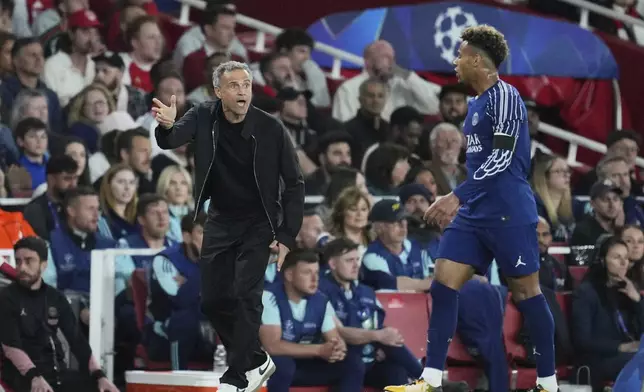
PSG's head coach Luis Enrique gestures to PSG's Desire Doue during the Champions League semifinal first leg soccer match between Arsenal and Paris Saint-Germain at Arsenal Stadium in London, England, Tuesday, April 29, 2025. (AP Photo/Kin Cheung)
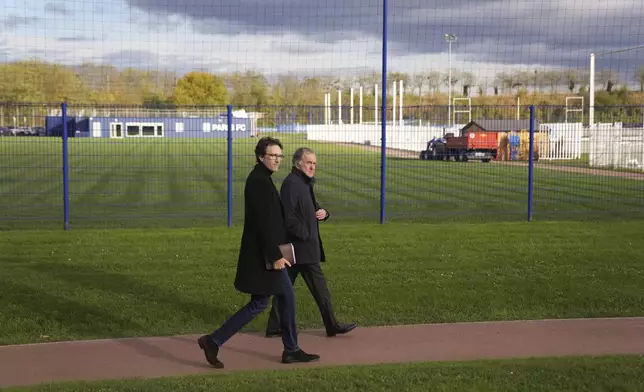
FILE -Antoine Arnault, of the French luxury group LVMH, left, and Paris FC football club owner Pierre Ferracci, arrive to give a press conference, in Orly, south of Paris, Nov. 20, 2024. (AP Photo/Thibault Camus, File)
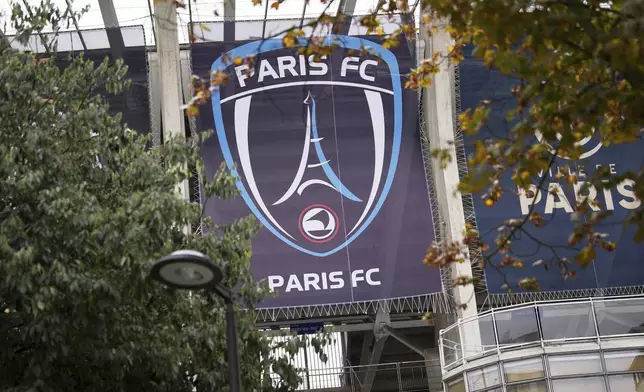
FILE - The Paris FC soccer club banner is seen outside the Charlety stadium in Paris, France, Thursday, Oct.17, 2024. (AP Photo/Thibault Camus, File)
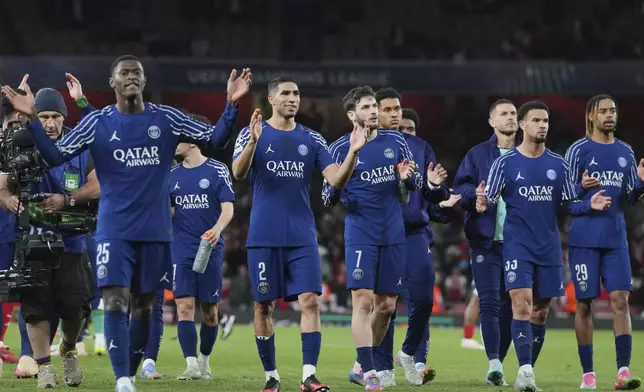
PSG players celebrate with their fans at the end of the Champions League semifinal first leg soccer match between Arsenal and Paris Saint-Germain at Arsenal Stadium in London, England, Tuesday, April 29, 2025. (AP Photo/Kin Cheung)
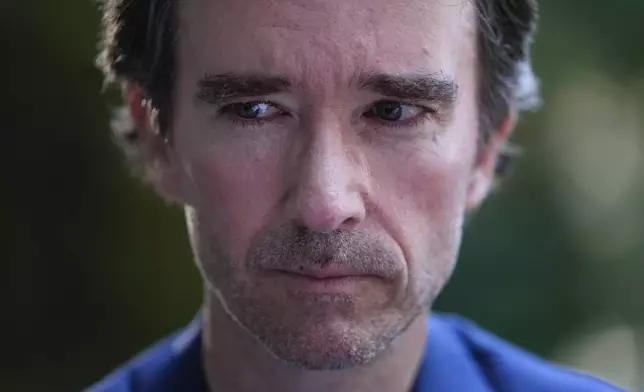
FILE -Antoine Arnault, of the French luxury group LVMH, attends an event to open the LVMH Pavilion, showcasing creations of the luxury brand related to the Paris 2024 Summer Olympics, July 22, 2024, in Paris. (AP Photo/Rebecca Blackwell, File)
Paris FC’s promotion to Ligue 1 puts an end to the French anomaly of having only one major football team in the capital. The Associated Press takes a look at the reasons behind the lack of top clubs in Paris.
When fans visit some European cities, they are spoiled for choice about which match to watch. While there are seven London clubs in the Premier League this season, there is only one top side in Paris: PSG.
It’s a rarity in European soccer, where big cities such as Madrid, Rome, Barcelona, Milan, and even Manchester and Lisbon, generally have two high-level clubs.
“There’s a paradox. We have a very popular sport that produces great soccer players but for the moment has not produced great clubs in Paris,” sports history researcher Paul Dietschy told The Associated Press. “The Seine Saint-Denis area (north of Paris) is one of the main scouting grounds for Europe’s top clubs. And at the same time, Paris has never produced clubs with the same long-lasting impact as those in major European cities such as Madrid, London, Barcelona or Manchester.”
It is not the first time an ambitious billionaire has invested in a Paris club.
Before the Arnault family, the late French media baron Jean-Luc Lagardère tried to revive the fortunes of Paris’ former greatest team, Racing Club. In the 1980s, Lagardère launched Matra Racing, signing big players such as Uruguay star Enzo Francescoli, Germany’s dribbling ace Pierre Littbarski, France midfielder Luis Fernandez and spectacular goalkeeper Pascal Olmeta in an attempt to compete with PSG.
It threatened to work, but in the end Matra struggled to draw fans, did not achieve significant results and Lagardère opted out of the ill-fated adventure after just a few years.
Many Paris teams alive at the start of the 20th century have gradually sunk from view. Red Star, which has returned to the second division, still enjoys a strong working-class fan base, but its chaotic functioning and lack of stability have kept the club in the shadows over the last 50 years.
The lack of top-level clubs in Paris and across the country can find its roots in the complex relationship between France and soccer.
First of all, French soccer had a slow start. While the English FA Cup was first played in 1871, soccer did not become France’s No. 1 sport until the 1930s-40s. Cycling previously captivated audiences thanks to the Tour de France.
“There’s also the fact that from the Second World War onwards, there’s been a divorce between French capitalism and soccer,” Dietschy said. “And with the nationalizations, there were fewer big companies to support soccer clubs.”
Another factor, he added, was the abundance of sports in Paris coupled with the political situation in the working-class neighborhoods on the outskirts of the city.
“There are so many different kinds of entertainment in Paris. Soccer’s main rival was cycling. There was also boxing. Soccer was just another form of entertainment that didn’t generate a strong identity," Dietschy said. "And in the Communist suburbs, the idea of developing a popular amateur sport inspired by the Soviet Union ran counter to the development of professional clubs.”
In a championship that traditionally struggles to attract star names, lacks significant financial clout and lags behind in salaries, PSG has won 11 Ligue 1 titles in 13 seasons since Qatari backer QSI took over the club. Monaco won in 2017 with a young Kylian Mbappé and Lille did so against the odds in 2021.
That makes Ligue 1 easier to invest in for outsiders. The talent is already there.
France’s exceptional soccer academies are arguably the world’s best along with Brazil and Spain, producing a veritable production line of talent, such as 2022 Ballon d’Or winner Karim Benzema (Lyon) and Mbappé.
So French soccer’s richness remains more anchored in its grass roots than its results. Only Marseille has won the Champions League, way back in 1993, and a handful of finals have been graced by PSG, Monaco and, decades ago, Reims.
This has not impacted France’s academies which, thanks to their vast scouting networks, detect young talents across Europe and beyond. Monaco and Lyon, for example, are good at spotting players from South America. More recently, the likes of Arsenal’s William Saliba and Chelsea’s Wesley Fofana came through Saint-Etienne’s academy before earning high-profile Premier League moves.
Although French soccer is well-established with more than two million people affiliated to clubs, interest in Ligue 1 remains fickle and league officials struggle to sell their TV rights. France is not like England, where the passion for football clubs is fierce and pervades every class of society.
Even though Les Bleus have won four major trophies and finished runner-up at three others, this has not produced a lasting effect at home. With the few exceptions of teams like Marseille, Saint-Etienne, Strasbourg or Lens, which have faithful supporters, the interest for club soccer remains mediocre.
There is one sports daily in France, L’Equipe, but soccer stories remain scarce in the general news press unless it’s an established star such as Mbappé, or Zinedine Zidane before him. By comparison, English media churns out 10 pages of sport across several national daily newspapers, with large chunks dedicated to soccer.
Elsewhere, Spain has Marca, AS and Mundo Deportivo; while Italy boasts the renowned La Gazzetta dello Sport, Tuttosport and Corriere dello Sport.
Interest in the French league did spike considerably during the ‘80s-’90s, however, when Marseille played with verve and style. Stars like Rudi Voeller, Chris Waddle, Rai and George Weah joined a league where the rivalry between Marseille and newly confident PSG was relentlessly promoted by the clubs’ owners: Bernard Tapie at Marseille and pay TV channel Canal Plus at PSG.
Then came the Bosman ruling in 1995, which hurt French clubs badly.
The end of restrictions on the number of foreign players in clubs led to a mass exodus of French talent to more prestigious and — crucially — higher-paying leagues. It took until the past decade for a French club to re-emerge with major spending power: PSG.
Created in 1969, Paris FC’s men’s team has yet to achieve any significant success.
The Arnault family, owners of the LVMH luxury empire, plan to draw on Jürgen Klopp’s expertise as part of an ambitious project to transform Paris FC into a force in French soccer. The family’s takeover has energy drink giant Red Bull on board as a minority stakeholder. Klopp, the former Liverpool manager, has joined Red Bull as head of global soccer.
Arnault has described the project as a long-term effort to elevate Paris FC’s men’s and women’s teams to top-tier success.
“The Paris FC business can work," Dietschy said, "because there are no more seats left at the Parc des Princes to see PSG. It will make for a second offer, although it’s a team with no real history. Everything has to be created, so why not? Things have changed over the last 25 years. Now there’s the bling side of football, and popular culture has invaded the luxury sector, they might want to seize that opportunity.”
AP soccer: https://apnews.com/hub/soccer
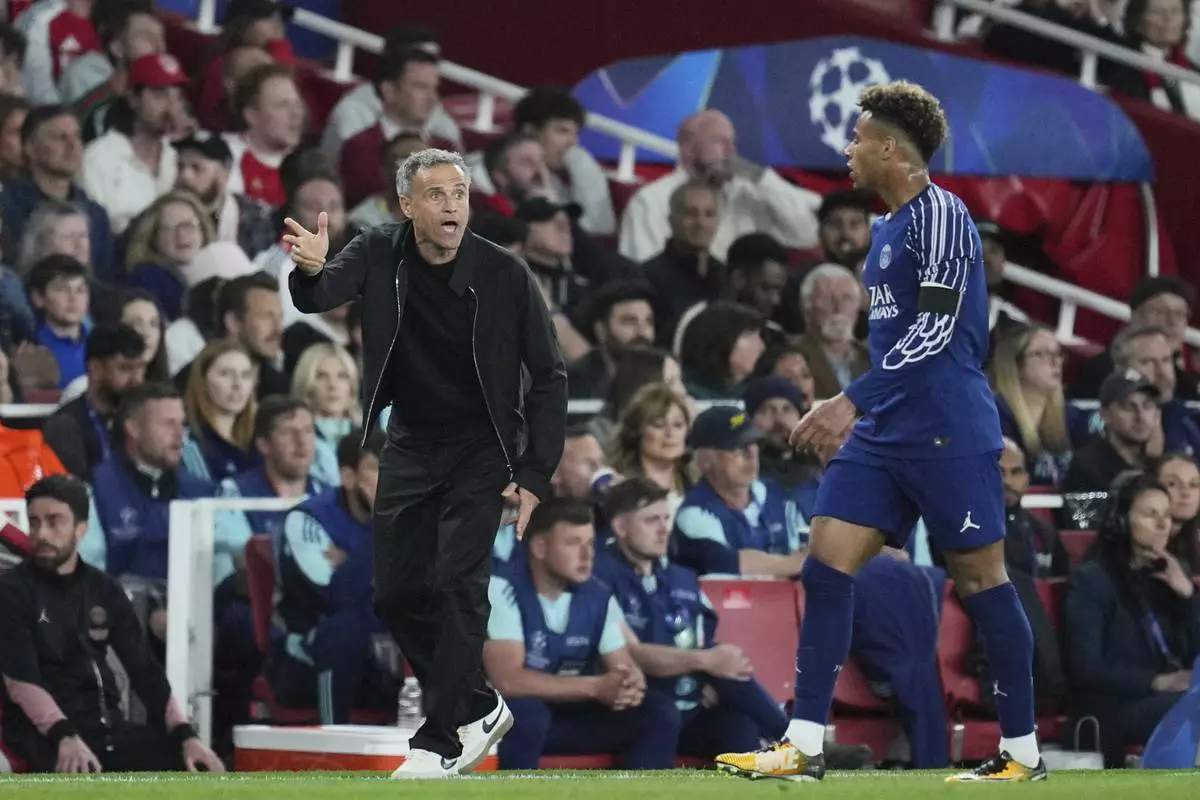
PSG's head coach Luis Enrique gestures to PSG's Desire Doue during the Champions League semifinal first leg soccer match between Arsenal and Paris Saint-Germain at Arsenal Stadium in London, England, Tuesday, April 29, 2025. (AP Photo/Kin Cheung)
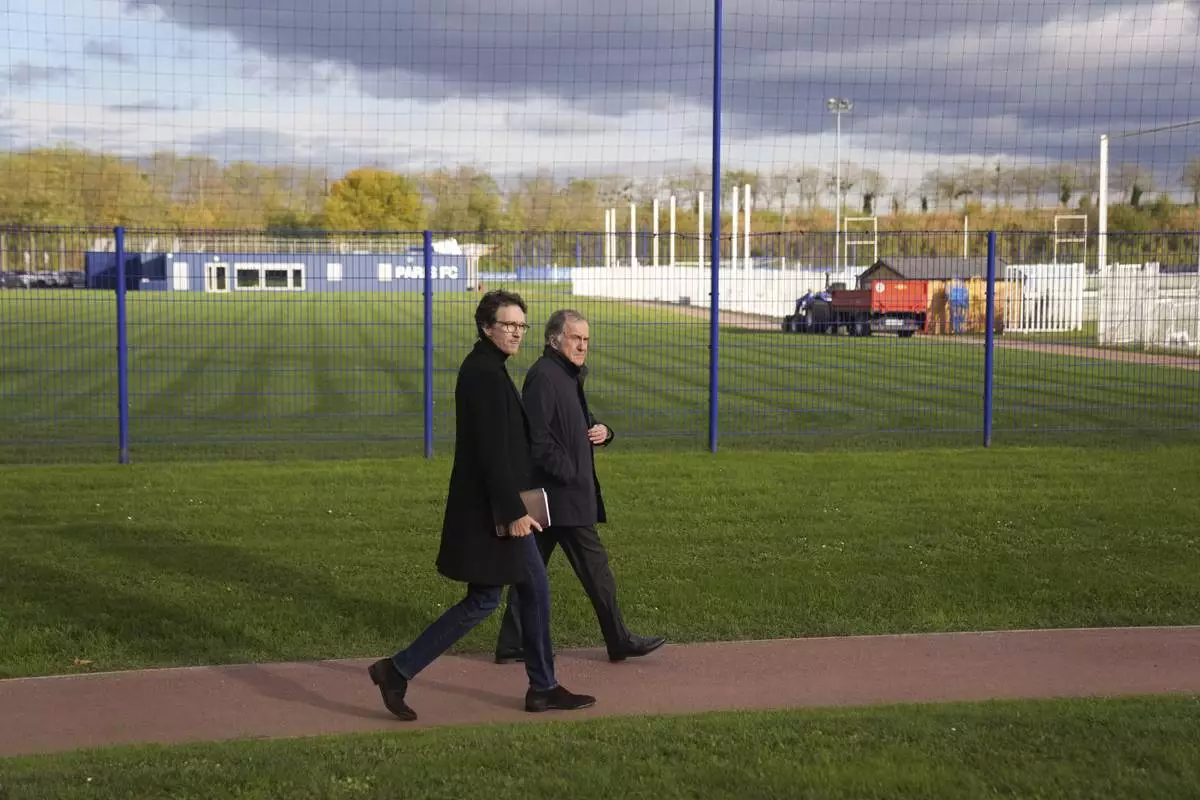
FILE -Antoine Arnault, of the French luxury group LVMH, left, and Paris FC football club owner Pierre Ferracci, arrive to give a press conference, in Orly, south of Paris, Nov. 20, 2024. (AP Photo/Thibault Camus, File)
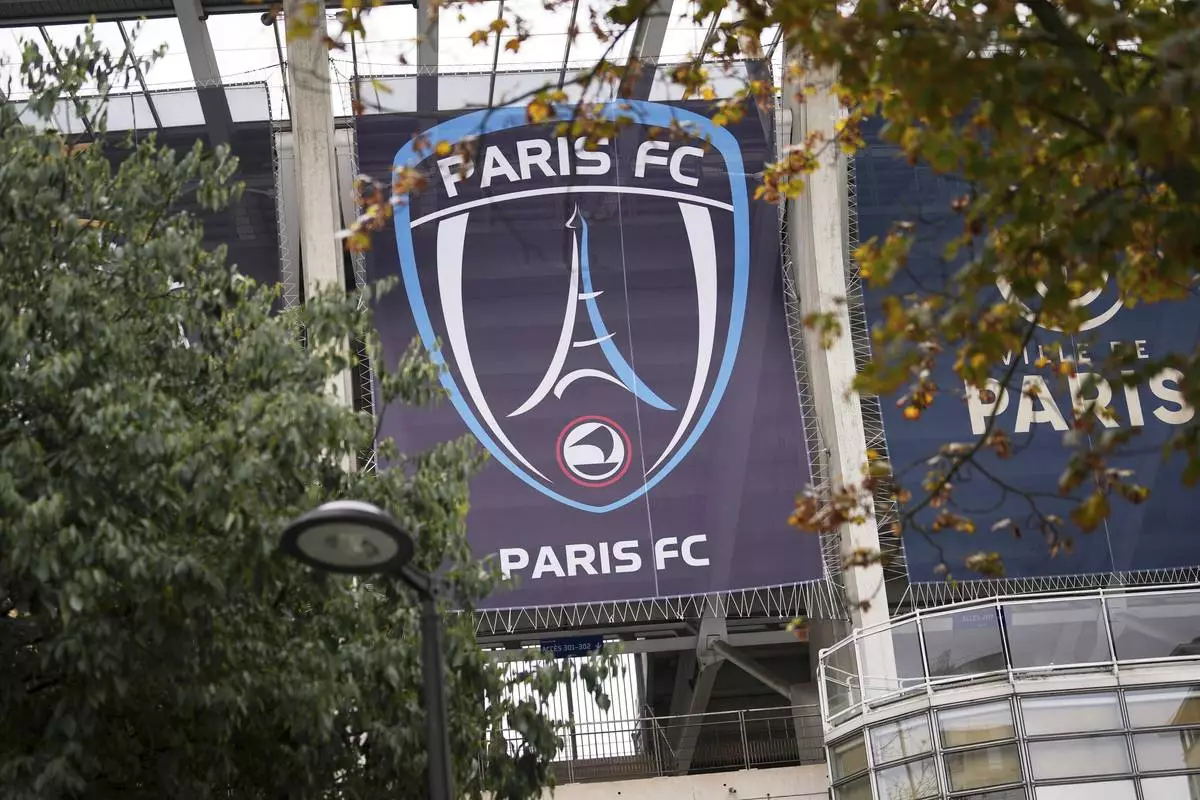
FILE - The Paris FC soccer club banner is seen outside the Charlety stadium in Paris, France, Thursday, Oct.17, 2024. (AP Photo/Thibault Camus, File)
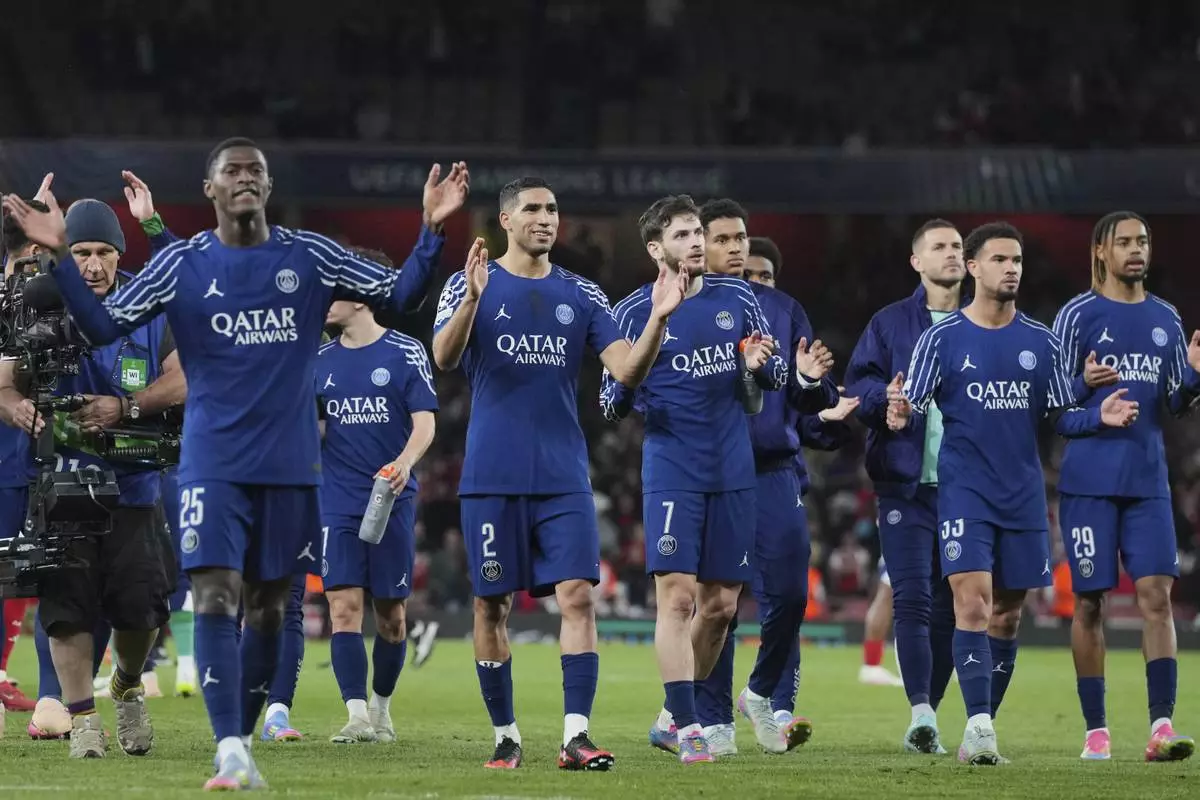
PSG players celebrate with their fans at the end of the Champions League semifinal first leg soccer match between Arsenal and Paris Saint-Germain at Arsenal Stadium in London, England, Tuesday, April 29, 2025. (AP Photo/Kin Cheung)
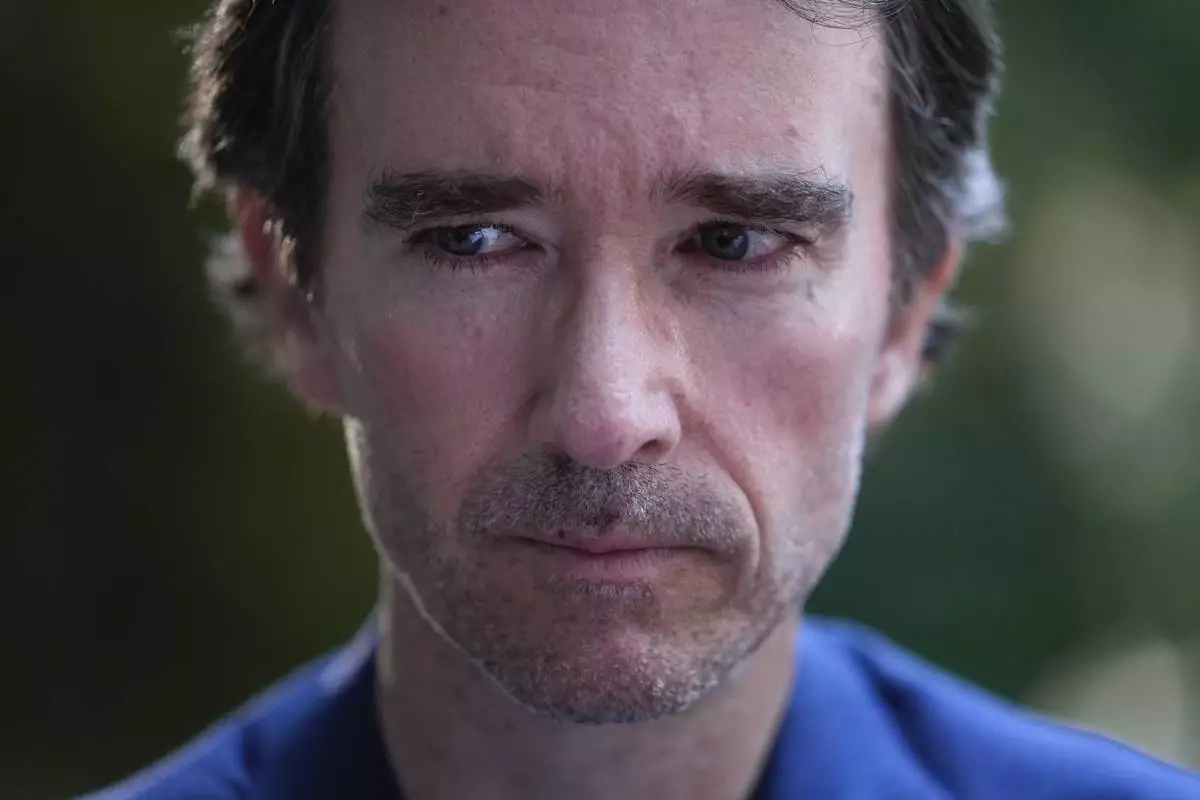
FILE -Antoine Arnault, of the French luxury group LVMH, attends an event to open the LVMH Pavilion, showcasing creations of the luxury brand related to the Paris 2024 Summer Olympics, July 22, 2024, in Paris. (AP Photo/Rebecca Blackwell, File)