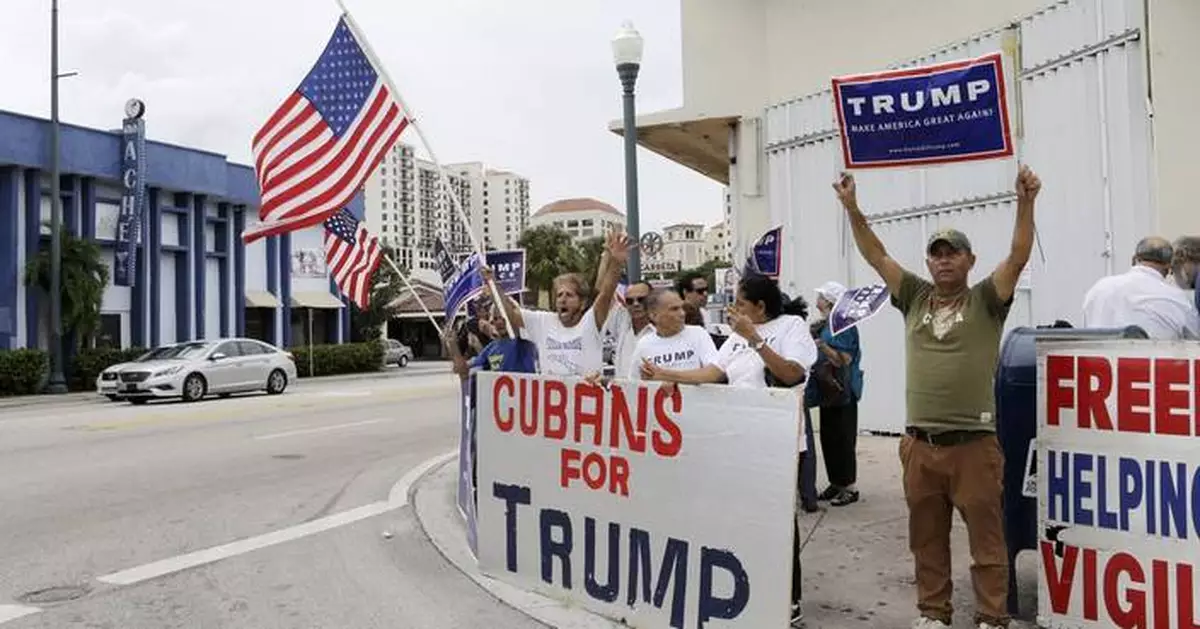
For years, President Donald Trump blamed “communists” for his legal and political troubles. Now, the second Trump administration is deploying that same historically loaded label to cast his opponents — from judges to educators — as threats to American identity, culture and values.
Why? Trump himself explained the strategy last year when he described how he planned to defeat his Democratic opponent, then-Vice President Kamala Harris, in the White House election.
“All we have to do is define our opponent as being a communist or a socialist or somebody who is going to destroy our country,” he told reporters at his New Jersey golf club in August.
Trump did just that — branding Harris “comrade Kamala” — and he won in November. With the assent of more than 77 million Americans who cast ballots — 49.9% of the vote — Trump is carrying that strategy into his second term.
In 2025, communism wields big influence in countries such as China, Vietnam, North Korea and Cuba. But not the United States.
“The core of communism is the belief that governments can do better than markets in providing goods and services. There are very, very few people in the West who seriously believe that," said Raymond Robertson of the Texas A&M University Bush School of Government & Public Service. "Unless they are arguing that the government should run U.S. Steel and Tesla, they are simply not communists.”
The word “communist,” on the other hand, can carry great emotional power as a rhetorical tool, even now. It’s all the more potent as a pejorative — though frequently inaccurate, even dangerous — amid the contemporary flash of social media and misinformation. After all, the fear and paranoia of the Russian Revolution, the “Red Scare,” World War II, McCarthyism and the Cold War are fading into the 20th century past.
But Trump, 78 and famous for labeling people he views as obstacles, remembers.
“We cannot allow a handful of communist radical-left judges to obstruct the enforcement of our laws,” Trump said Tuesday in Michigan while celebrating his first 100 days in office. The White House did not reply to a request for what Trump means when he calls someone a “communist.”
The timing of his use of “communist” is worth noting.
Trump's Michigan speech came during a week of dicey economic and political news. Days earlier, The Associated Press-NORC Center for Public Affairs published a poll showing that more Americans disagree with Trump’s priorities so far than agree with them, and that many Republicans are ambivalent about his choices of focus. After the speech, the government reported that the economy shrank during the first quarter of 2025 as Trump's tariffs disrupted business.
On Thursday, senior presidential aide Stephen Miller stepped to the White House podium and uttered the same c-word four times in about 35 minutes during a denunciation of past policies on transgender, diversity and immigration issues.
“These are a few of the areas in which President Trump has fought the cancerous, communist woke culture that was destroying this country,” Miller told reporters.
His collection of words offered a selection of clickbait for social media users, as well as terms that could catch the attention of older Americans. Voters over age 45 narrowly voted for Trump over his Democratic rivals in 2020 and 2024.
Smack in the middle of Miller's sentence: “communist.”
“It tends to be a term that is loaded with negative affect, particularly for older Americans who grew up during the Cold War,” said Jacob Neiheisel, a political communications expert at the University at Buffalo. “Appending emotionally laden terms to political adversaries is a way to minimize their legitimacy in the eyes of the public and paint them in a negative light.”
The threat that communists could influence or even obliterate the United States hovered over the country for decades and drove some of the country's ugliest chapters.
The years after World War I and the Russian Revolution in 1917, along with a wave of immigrants, led to what's known as the “Red Scare” of 1920, a period of intense paranoia about the potential for a communist-led revolution in America.
“McCarthyism” after World War II meant the hunt for supposed communists. It's named for Sen. Joseph McCarthy, the Wisconsin Republican who conducted televised hearings at the dawn of the Cold War that drove anti-communist fears to new heights with a series of threats, innuendos and untruths.
Culturally, the merest suggestion that someone was “soft” on communism could end careers and ruin lives. "Blacklists” of suspected communists proliferated in Hollywood and beyond. McCarthy fell into disgrace and died in 1957.
The senator's chief counsel during the hearings, Roy Cohn, became Trump's mentor and fixer as Trump rose as a real estate mogul in New York. The Cold War was more than three decades old. The threat of nuclear war was pervasive.
Communism started to collapse in 1989 and the Soviet Union was dissolved two years later. It's now Russia, led by President Vladimir Putin.
But communism — at least in one form — lives on in China, with which Trump is waging a trade war that could result in fewer and costlier products in the United States. By week's end, Trump was acknowledging the potential consequences of his government stepping in: Americans might soon not be able to buy what they want, or they might be forced to pay more. He insisted China would be hurt more by the tariffs.
The real modern debate, Robertson says, is not between capitalism and communism, but about how much the government needs to step in — and when. He suggests that Trump is not really debating communism vs. capitalism anyway.
“Calling people who advocate for slightly more government involvement ‘communists’ is typical misleading political rhetoric that, unfortunately, works really well with busy voters who do not have a lot of time to think about technical definitions and economic paradigms,” he said in an email. “It is also really helpful (to Trump) because it is inflammatory, making people angry, which can be addictive."
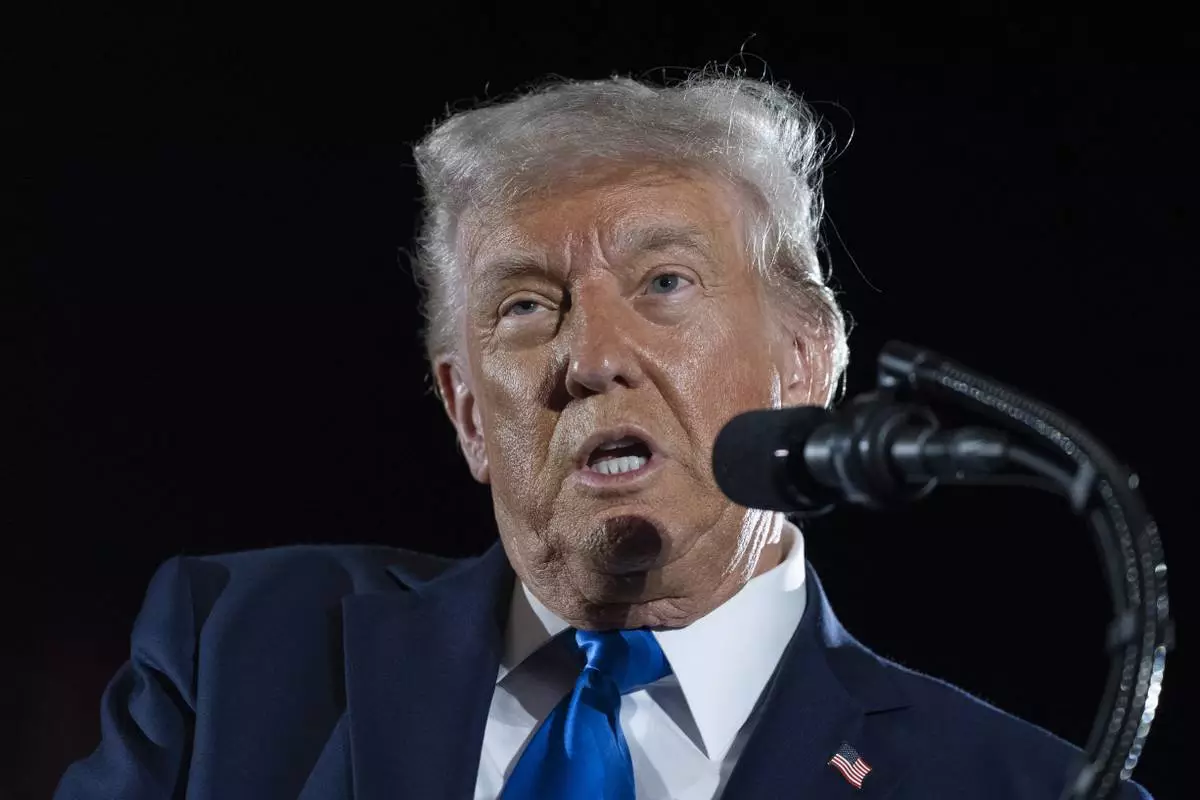
President Donald Trump gives a commencement address at the University of Alabama, Thursday, May 1, 2025, in Tuscaloosa, Ala.(AP Photo/Manuel Balce Ceneta)
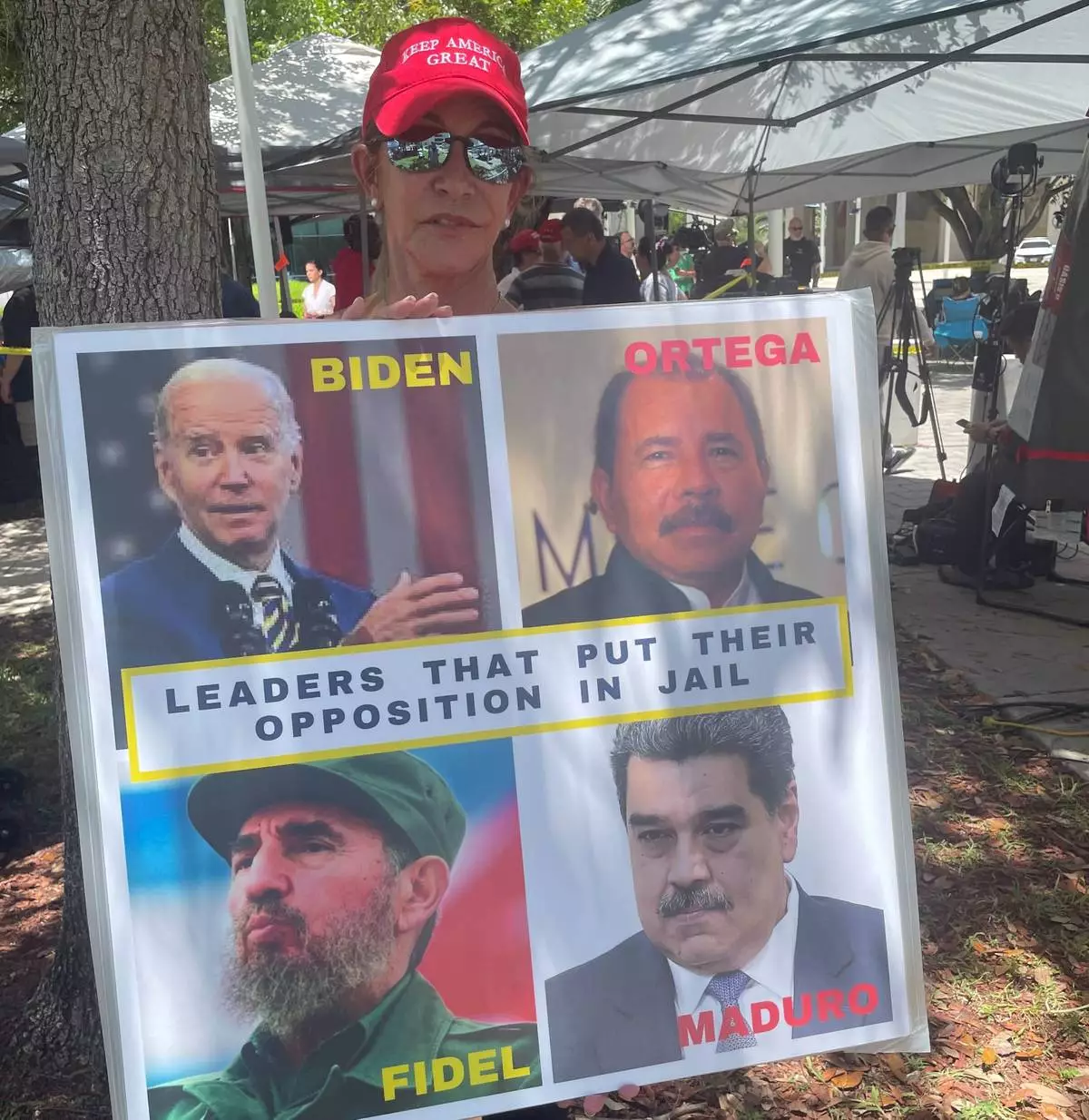
FILE - Madelin Munilla, 67, who came to Miami as a child when her parents fled Fidel Castro's Cuba, holds up a sign comparing President Joe Biden to Castro and other Latin American leaders at a rally outside the Wilkie D. Ferguson Jr. U.S. Courthouse, June 13, 2023, in Miami. (AP Photo/Joshua Goodman, File)
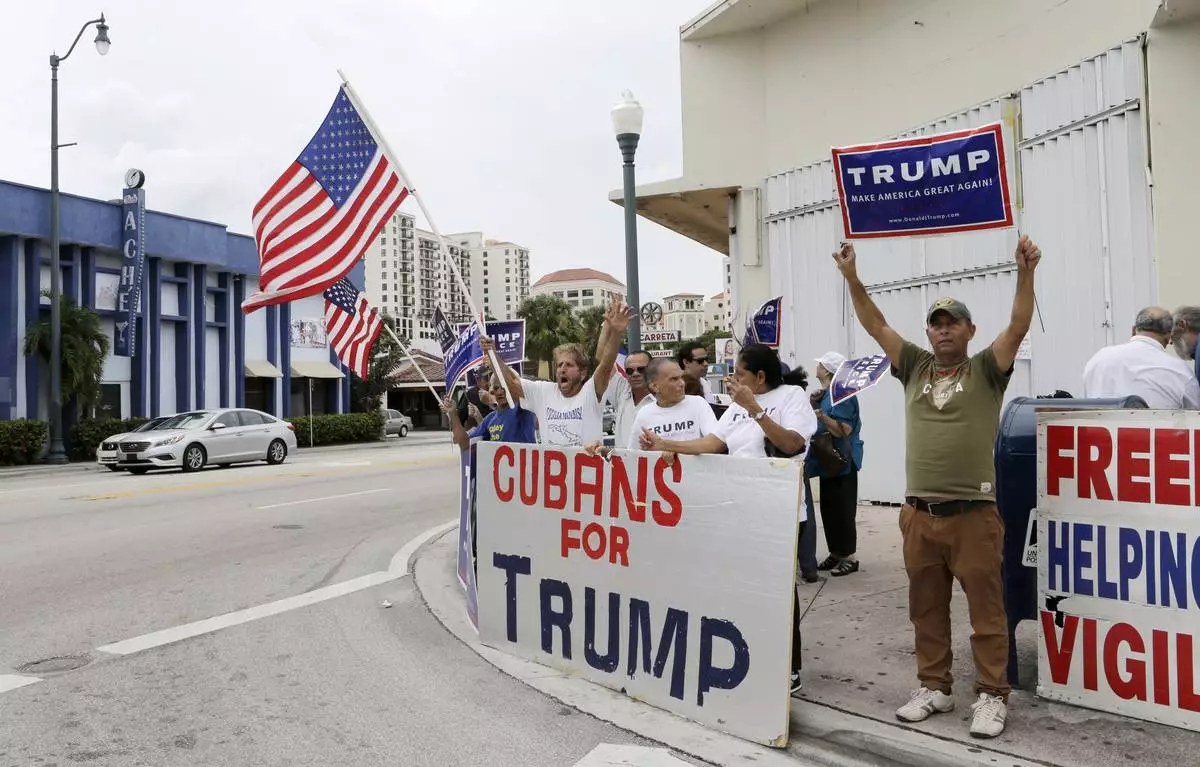
FILE - Cuban-Americans chant pro-Trump slogans as they show their support for Republican presidential candidate Donald Trump, in Miami, Oct. 28, 2016. (AP Photo/Alan Diaz, File)