NEW YORK (AP) — Passengers with flights to or from Newark Liberty International Airport encountered long delays and cancellations Saturday due to an air traffic controller shortage, a nationwide problem the Trump administration has pledged to fix.
The busy airport outside New York City experienced disruptions all week. Faulting the Federal Aviation Administration's alleged failure to address “long-simmering” challenges related to the air-traffic control system, United Airlines cut 35 daily flights from its Newark schedule starting Saturday.
United CEO Scott Kirby said the technology used to manage planes at the New Jersey airport failed more than once in recent days. The flight delays, cancellations and diversions the equipment problems caused were compounded when more than one-fifth of Newark's traffic controllers “walked off the job,” he said.
"This particular air traffic control facility has been chronically understaffed for years and without these controllers, it’s now clear — and the FAA tells us — that Newark airport cannot handle the number of planes that are scheduled to operate there in the weeks and months ahead," Kirby wrote in a letter to customers.
Airport status reports from the FAA said staffing issues were causing average delays of nearly two hours and ones as long as five hours for flights scheduled to arrive at Newark on Saturday morning. Departures were delayed by an average of 45 minutes. , and average delays of 45 minutes for departures on Saturday morning, according to the status reports.
By late afternoon, arriving flights were running more than three hours behind schedule, while the delay for departing flights had shortened to a half-hour on average. The “misery map” maintained by flight tracking company FlightAware showed the ripple effect on airports in Los Angeles, Atlanta, Chicago, Miami, Dallas and other cities.
United Airlines operates the most flights out of Newark by far, and 35 flights represents about 10% of the round-trip domestic schedule operated by the carrier and its regional United Express network, according to information on the company's website.
Newark Liberty International Airport pointed to both staffing issues and “construction” when it warned travelers about delays on Thursday.
The Trump administration says it’s been trying to “supercharge” the air traffic controller workforce and make moves to address the nation's shortage of controllers. The U.S. transportation secretary, Sean Duffy, on Thursday announced a program to recruit new controllers and give existing ones incentives not to retire.
The National Air Traffic Controllers Association, a workers’ union, said at the time that those moves could help address staffing shortages, but it also said the system is “ long overdue for technology and infrastructure upgrades.”
Duffy said on Friday that he visited with “our hard working air traffic controllers as we work to fix these equipment outages caused by outdated technology.”
United's decision to pare back its flight schedule in Newark come at an already uncertain time for U.S. airlines. Potential customers across the industry are reconsidering whether to fly for work or for vacation given all the unknowns about what President Donald Trump's trade war will do to the economy.
Uncertainty is so high that United recently made the unusual move to offer two separate forecasts for how it could perform financially this year: one if there were a recession, and one if not.
From Newark, United flies to 76 U.S. cities and 81 international destinations.
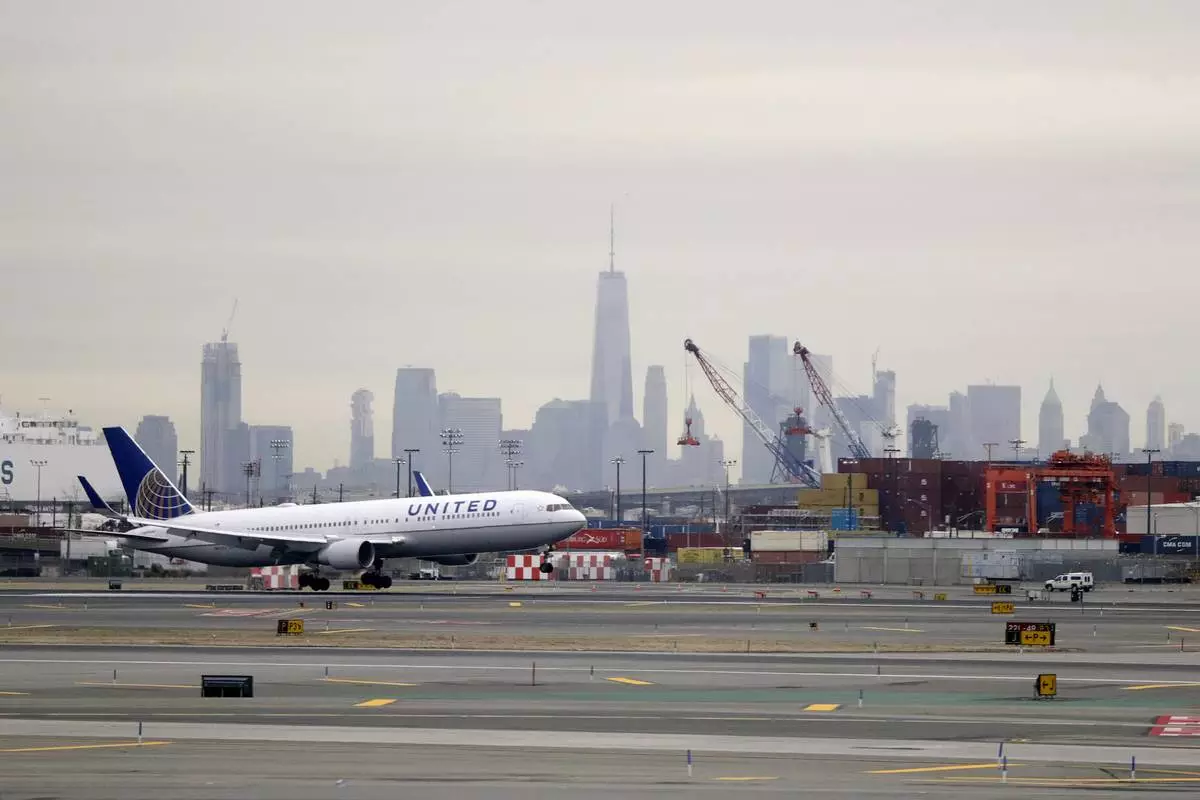
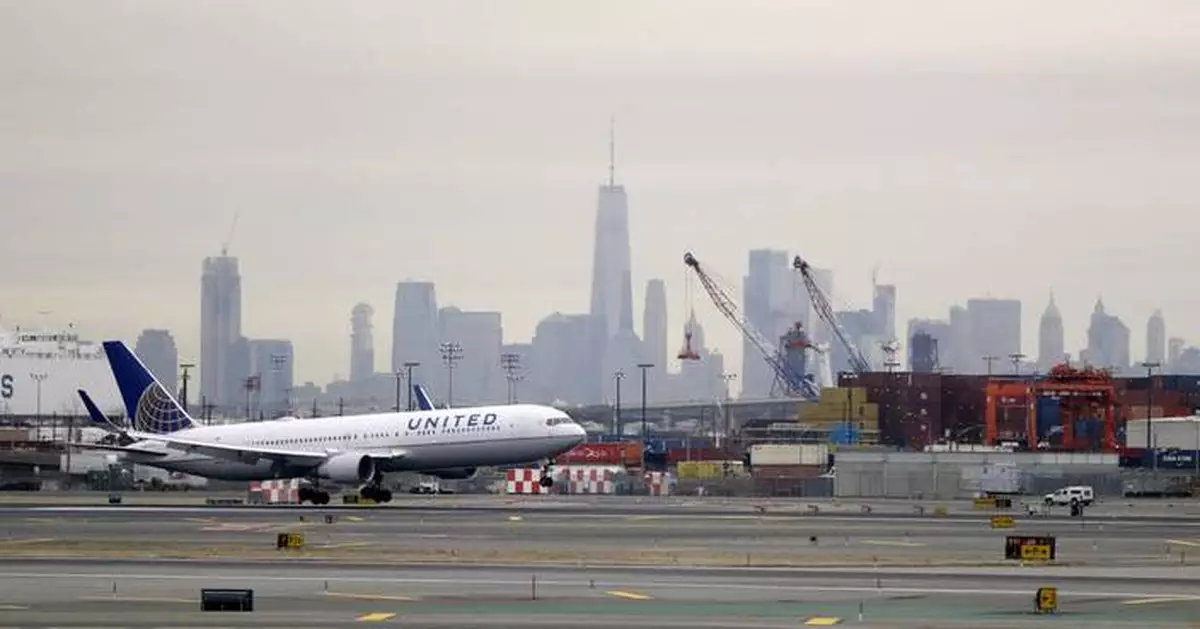
FILE - A United Airlines jet prepares touches down at Newark Liberty International Airport a day after a temporary grounding of aircraft was placed after reports of drones in the flight path, Wednesday, Jan. 23, 2019, in Newark, N.J. (AP Photo/Julio Cortez, File)
NEW YORK (AP) — Thousands of nurses in three hospital systems in New York City went on strike Monday after negotiations through the weekend failed to yield breakthroughs in their contract disputes.
The strike was taking place at The Mount Sinai Hospital and two of its satellite campuses, with picket lines forming. The other affected hospitals are NewYork-Presbyterian and Montefiore Medical Center in the Bronx.
About 15,000 nurses are involved in the strike, according to New York State Nurses Association.
“After months of bargaining, management refused to make meaningful progress on core issues that nurses have been fighting for: safe staffing for patients, healthcare benefits for nurses, and workplace violence protections,” the union said in a statement issued Monday. “Management at the richest hospitals in New York City are threatening to discontinue or radically cut nurses’ health benefits.”
The strike, which comes during a severe flu season, could potentially force the hospitals to transfer patients, cancel procedures or divert ambulances. It could also put a strain on city hospitals not involved in the contract dispute, as patients avoid the medical centers hit by the strike.
The hospitals involved have been hiring temporary nurses to try and fill the labor gap during the walkout, and said in a statement during negotiations that they would “do whatever is necessary to minimize disruptions.” Montefiore posted a message assuring patients that appointments would be kept.
“NYSNA’s leaders continue to double down on their $3.6 billion in reckless demands, including nearly 40% wage increases, and their troubling proposals like demanding that a nurse not be terminated if found to be compromised by drugs or alcohol while on the job," Montefiore spokesperson Joe Solmonese said Monday after the strike had started. "We remain resolute in our commitment to providing safe and seamless care, regardless of how long the strike may last.”
New York-Presbyterian accused the union of staging a strike to “create disruption,” but said in a statement that it has taken steps to ensure patients receive the care they need.
"We’re ready to keep negotiating a fair and reasonable contract that reflects our respect for our nurses and the critical role they play, and also recognizes the challenging realities of today’s healthcare environment,” the statement said.
The work stoppage is occurring at multiple hospitals simultaneously, but each medical center is negotiating with the union independently. Several other hospitals across the city and in its suburbs reached deals in recent days to avert a possible strike.
The nurses’ demands vary by hospital, but the major issues include staffing levels and workplace safety. The union says hospitals have given nurses unmanageable workloads.
Nurses also want better security measures in the workplace, citing incidents like a an incident last week, when a man with a sharp object barricaded himself in a Brooklyn hospital room and was then killed by police.
The union also wants limitations on hospitals’ use of artificial intelligence.
The nonprofit hospitals involved in the negotiations say they’ve been working to improve staffing levels, but say the union’s demands overall are too costly.
Nurses voted to authorize the strike last month.
Both New York Gov. Kathy Hochul and Mayor Zohran Mamdani had expressed concern about the possibility of the strike. As the strike deadline neared, Mamdani urged both sides to keep negotiating and reach a deal that “both honors our nurses and keeps our hospitals open.”
“Our nurses kept this city alive through its hardest moments. Their value is not negotiable,” Mamdani said.
State Attorney General Letitia James voiced similar support, saying "nurses put their lives on the line every day to keep New Yorkers healthy. They should never be forced to choose between their own safety, their patients’ well-being, and a fair contract.”
The last major nursing strike in the city was only three years ago, in 2023. That work stoppage, at Mount Sinai and Montefiore, was short, lasting three days. It resulted in a deal raising pay 19% over three years at those hospitals.
It also led to promised staffing improvements, though the union and hospitals now disagree about how much progress has been made, or whether the hospitals are retreating from staffing guarantees.
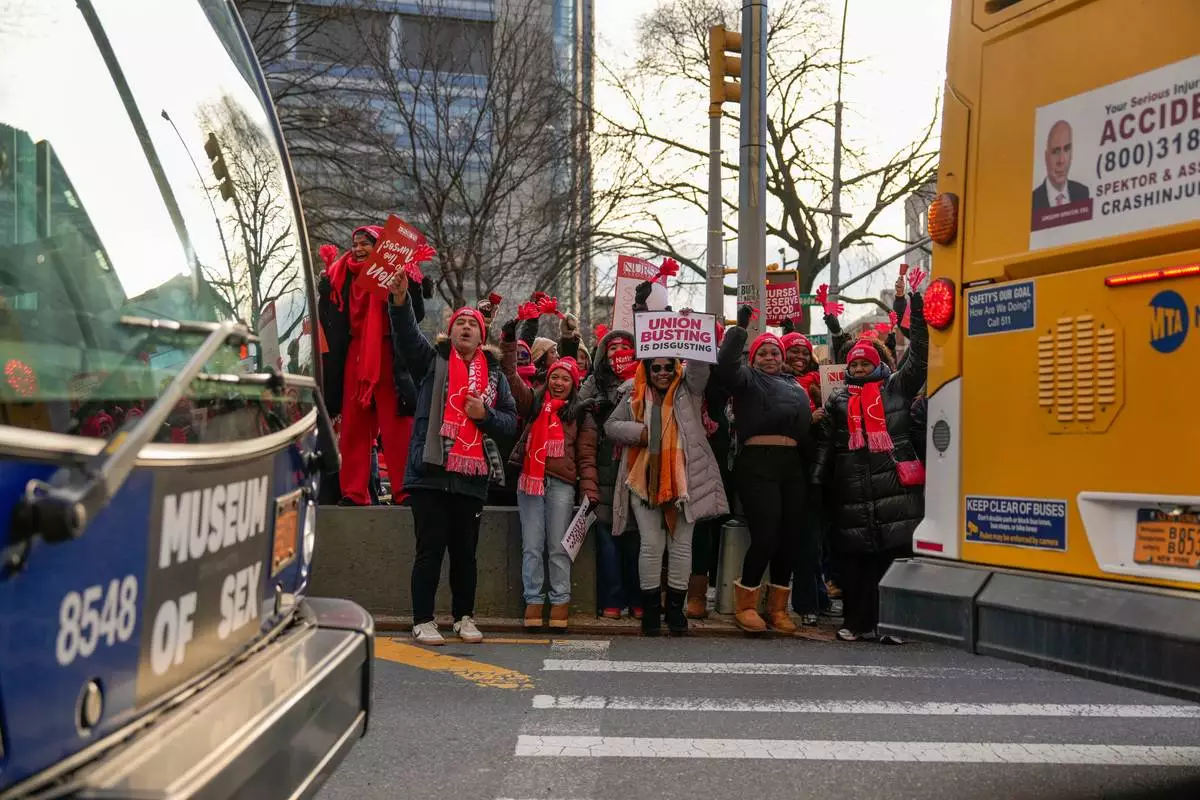
Nurses strike outside New York-Presbyterian Hospital, Monday, Jan. 12, 2026, in New York. (AP Photo/Yuki Iwamura)
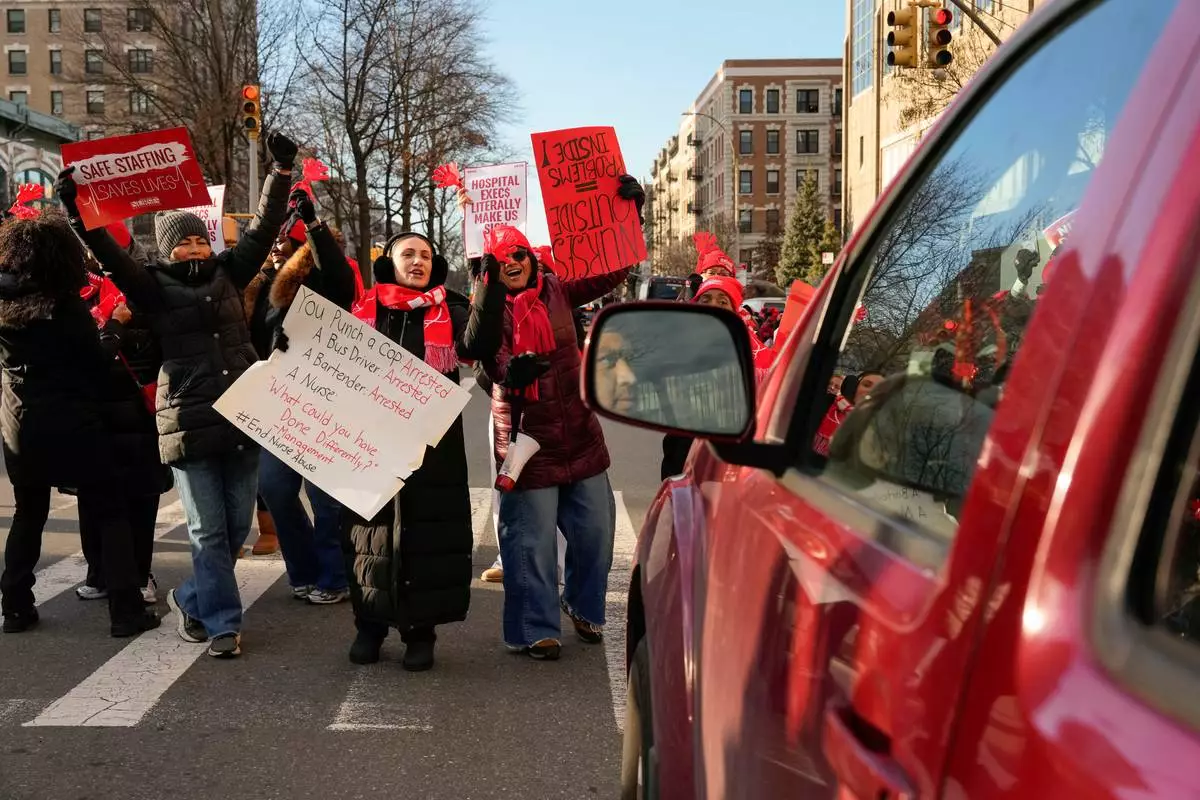
Nurses strike outside New York-Presbyterian Hospital, Monday, Jan. 12, 2026, in New York. (AP Photo/Yuki Iwamura)
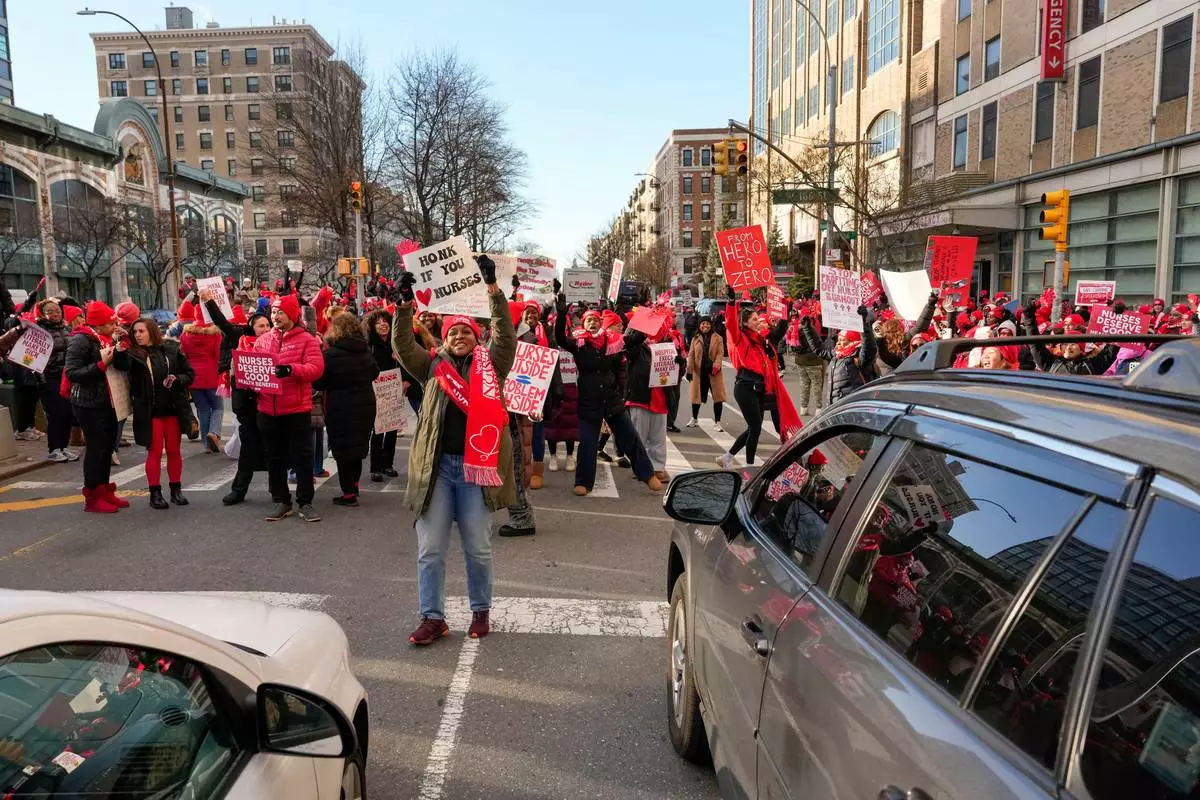
Nurses strike outside New York-Presbyterian Hospital, Monday, Jan. 12, 2026, in New York. (AP Photo/Yuki Iwamura)
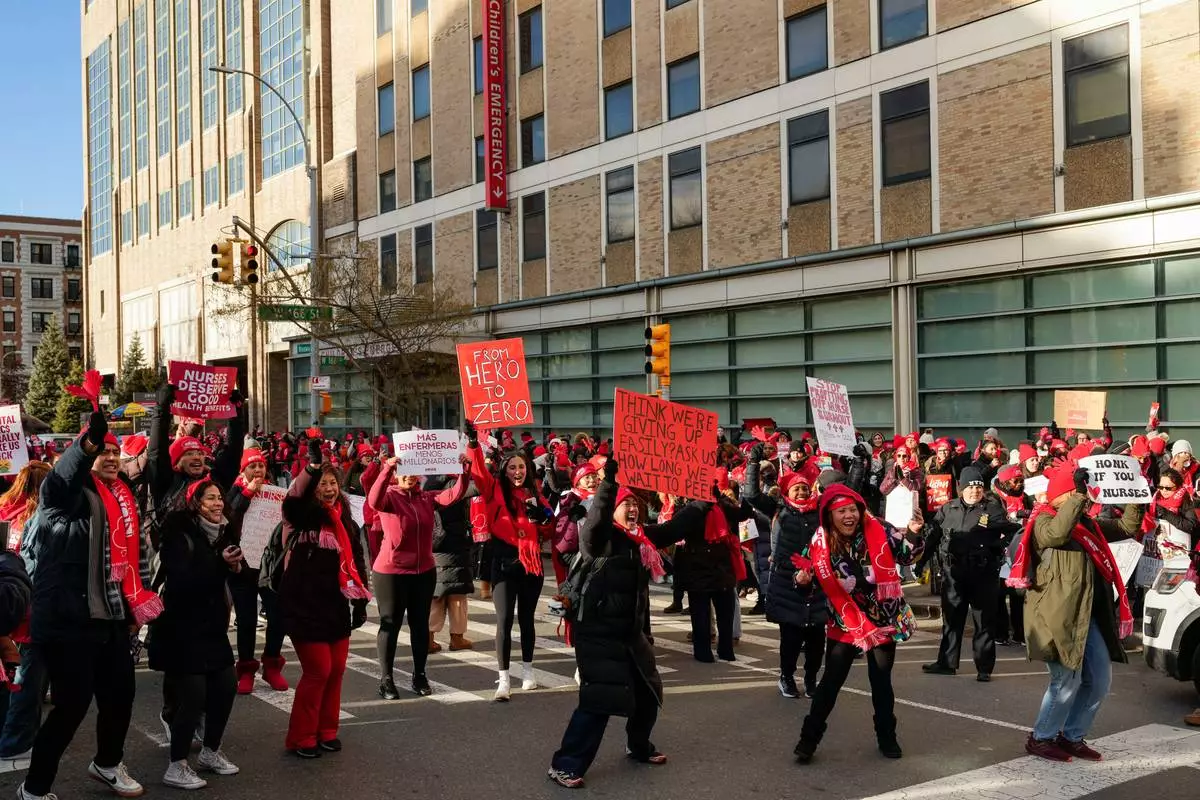
Nurses strike outside New York-Presbyterian Hospital, Monday, Jan. 12, 2026, in New York. (AP Photo/Yuki Iwamura)
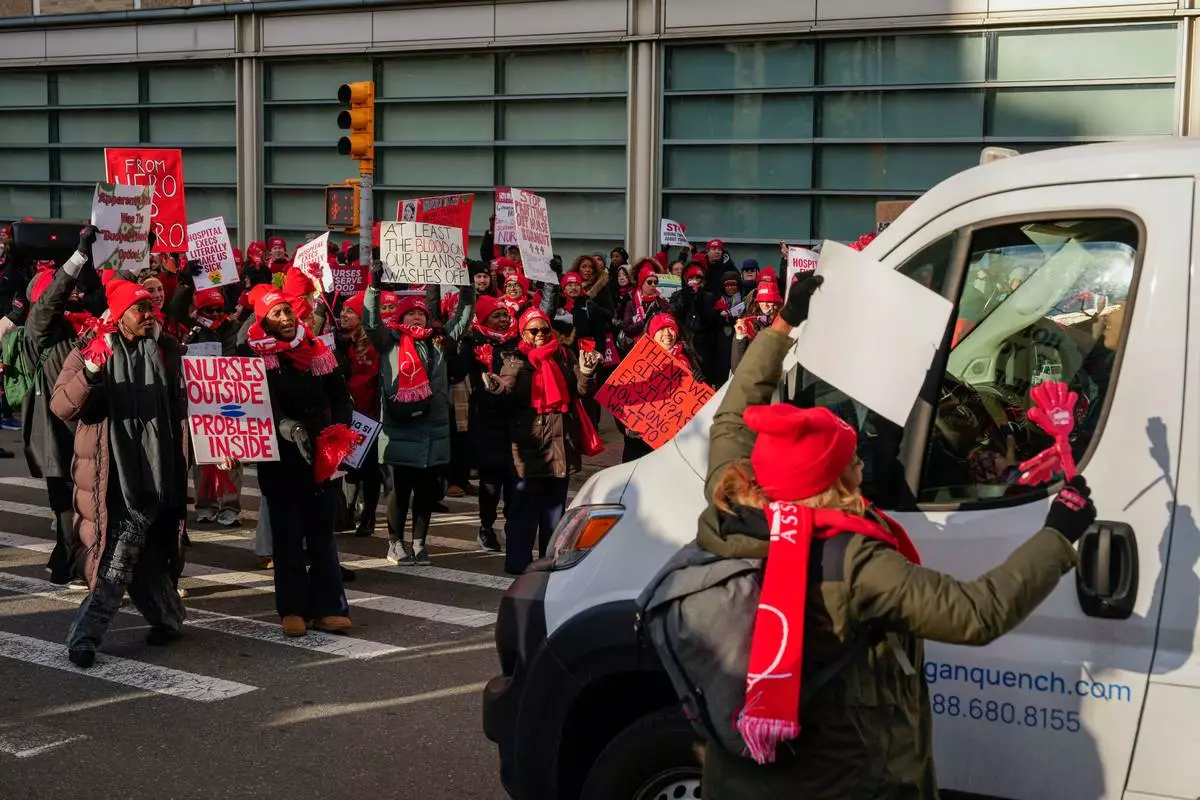
Nurses strike outside New York-Presbyterian Hospital, Monday, Jan. 12, 2026, in New York. (AP Photo/Yuki Iwamura)
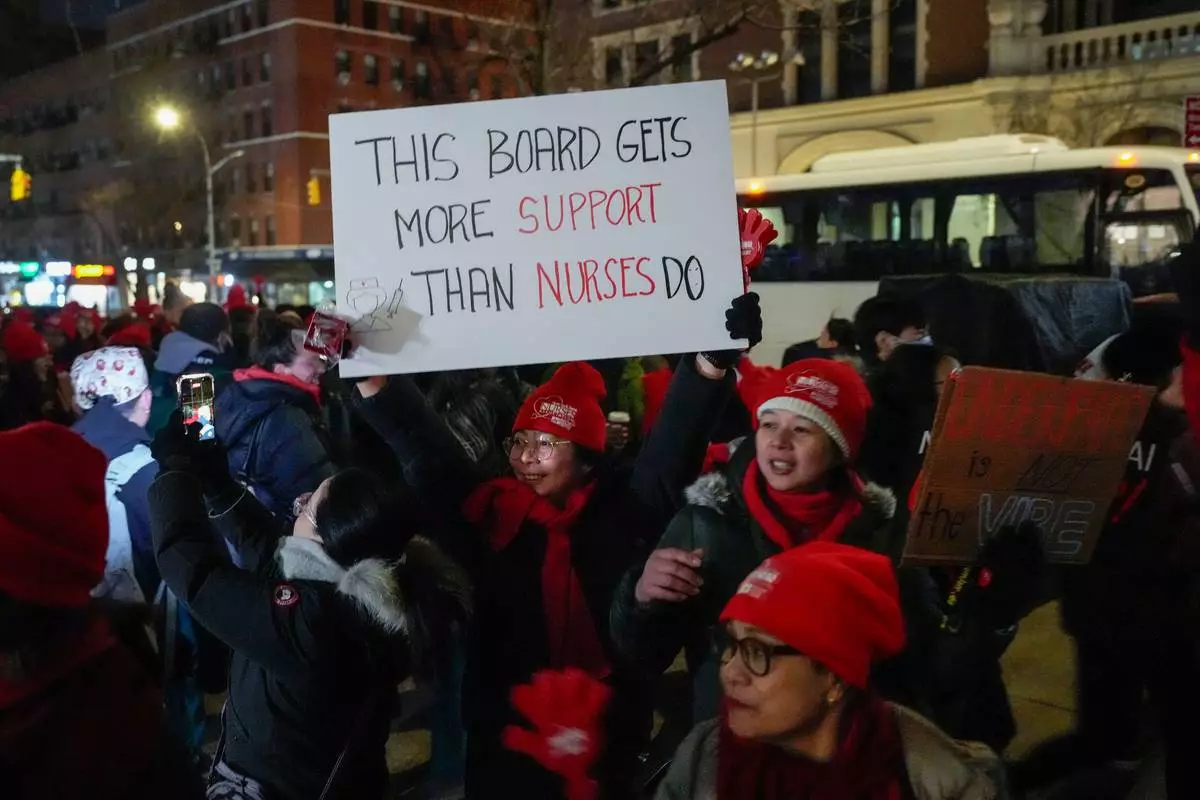
Nurses strike outside Mount Sinai West Hospital, Monday, Jan. 12, 2026, in New York. (AP Photo/Yuki Iwamura)
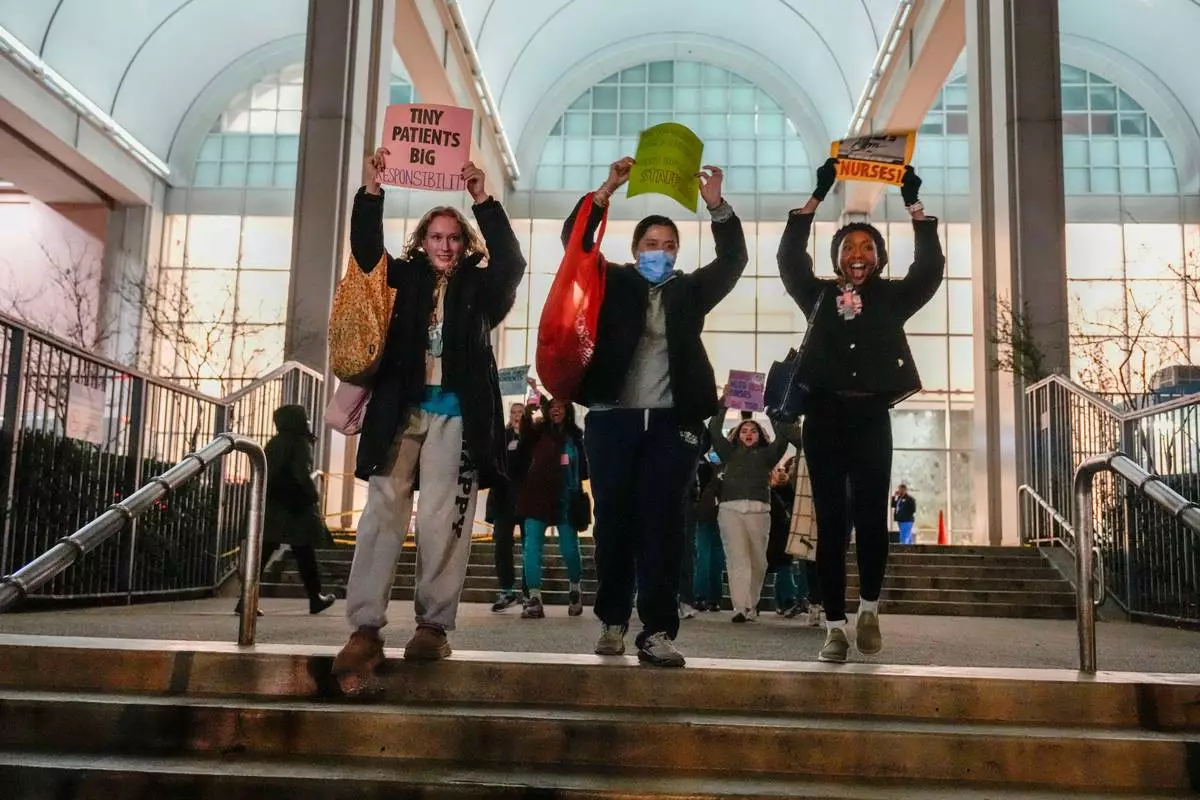
Nurses strike outside Mount Sinai West Hospital, Monday, Jan. 12, 2026, in New York. (AP Photo/Yuki Iwamura)
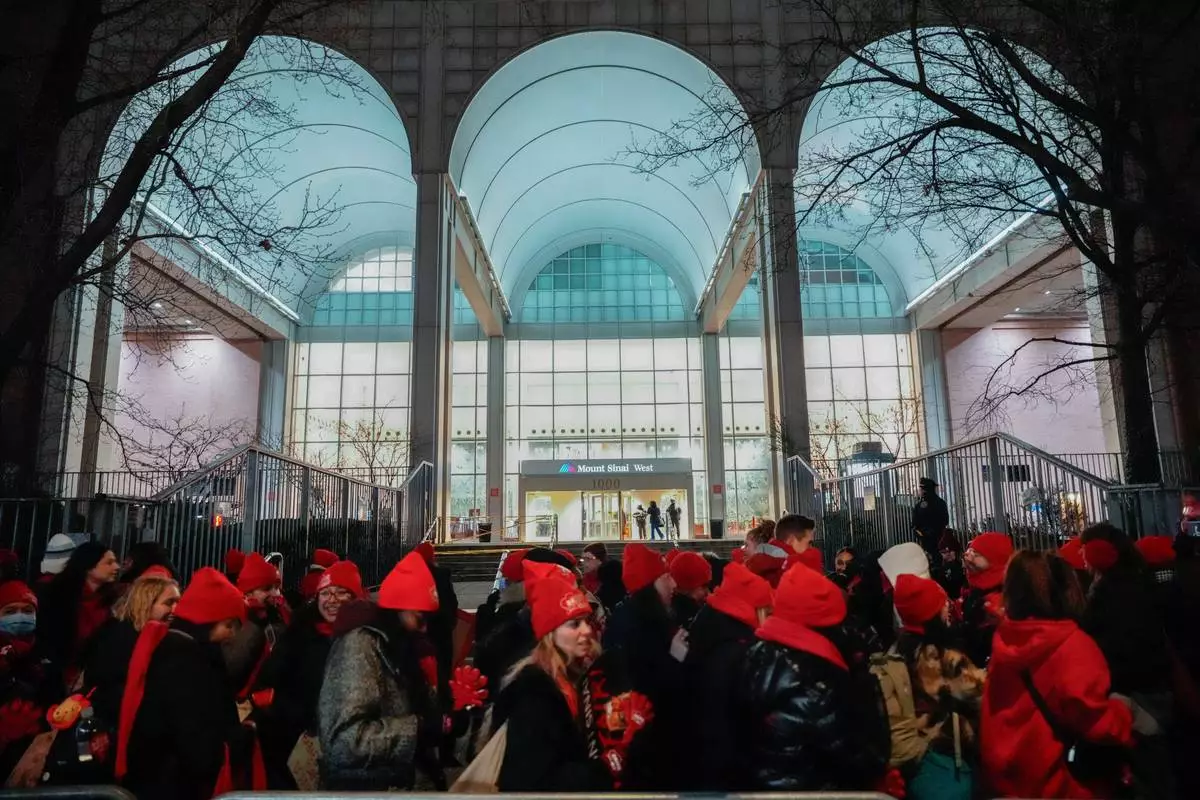
Nurses strike outside Mount Sinai West Hospital, Monday, Jan. 12, 2026, in New York. (AP Photo/Yuki Iwamura)
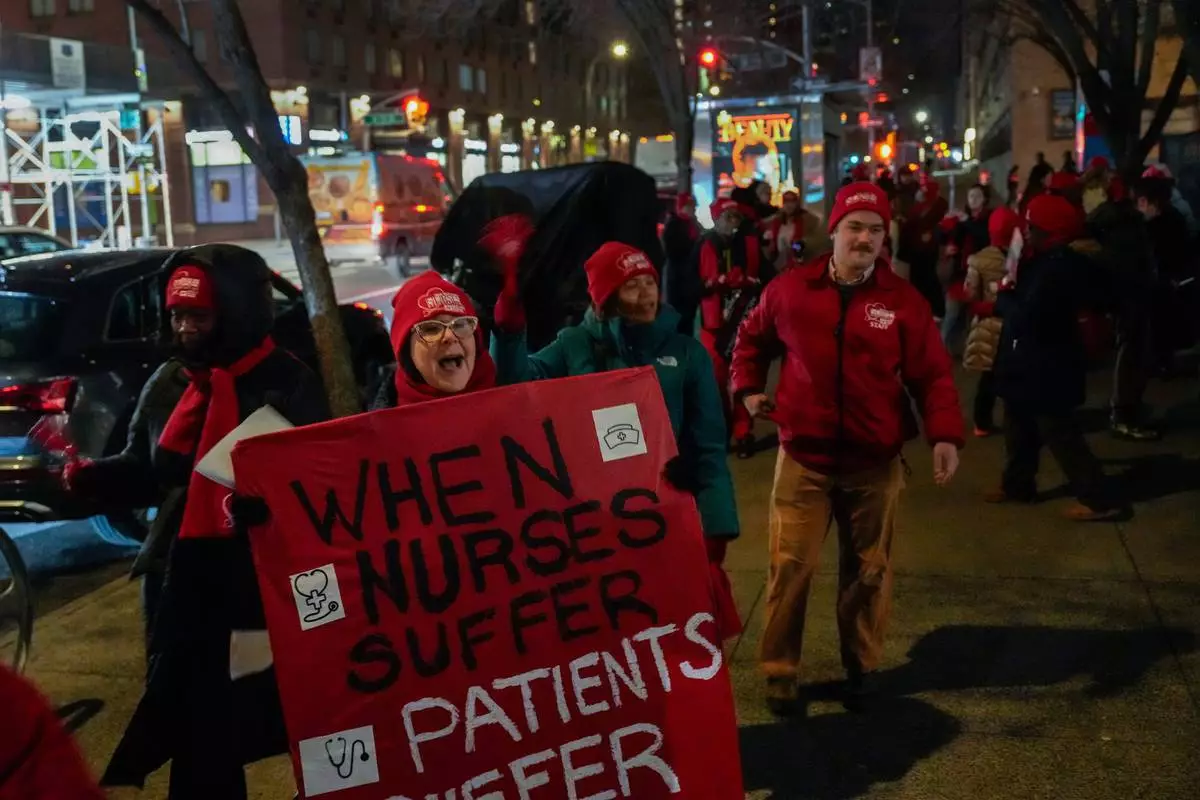
Nurses strike outside Mount Sinai West Hospital, Monday, Jan. 12, 2026, in New York. (AP Photo/Yuki Iwamura)

FILE - A medical worker transports a patient at Mount Sinai Hospital, April 1, 2020, in New York. (AP Photo/Mary Altaffer, File)