MOSCOW (AP) — When she heard the news of Nazi Germany surrendering 80 years ago, Valentina Efremova couldn’t believe the devastating war was over.
Efremova, now 101, was a teenager when Nazi Germany invaded the Soviet Union in June 1941. She ended up serving as a nurse in field hospitals on the front and remembers the horrors of the fighting all too well.
Click to Gallery
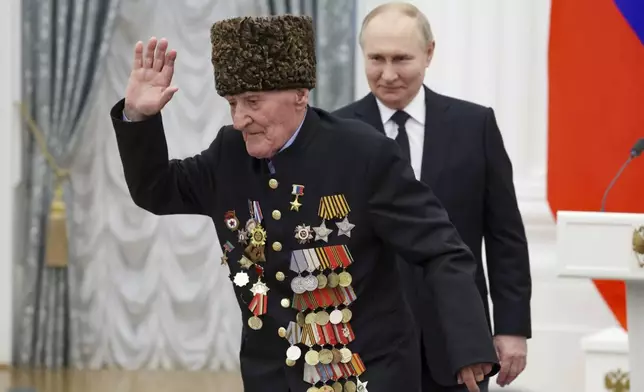
FILE - Russian President Vladimir Putin, right, looks at World War II veteran Ibragim-Pasha Sadykov, 101, after giving him the Hero of Russia award in the Kremlin's St. Catherine Hall in Moscow, Russia, on Thursday, May 30, 2024. (Vyacheslav Prokofyev, Sputnik, Kremlin Pool Photo via AP, File)
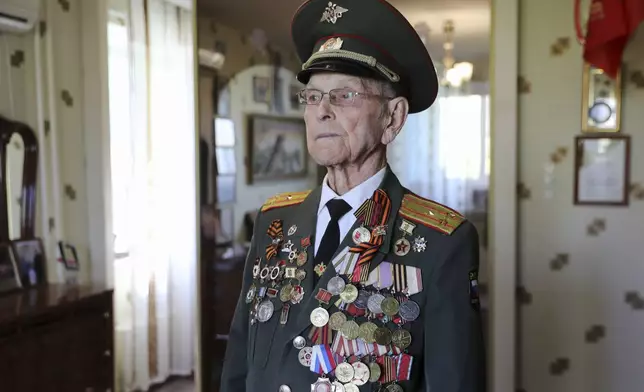
World War II veteran Alexander Medkov poses for a portrait in Volgograd, Russia, on Thursday, May 1, 2025. Medkov was drafted into the Soviet army in 1943 and served as a communications officer. (AP Photo/Alexandr Kulikov)
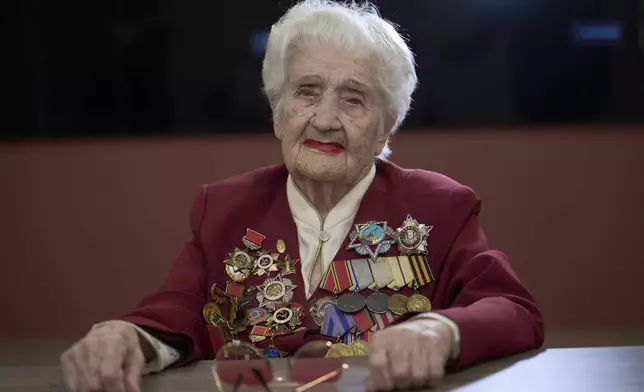
World War II veteran Maria Rokhlina, 100, poses for a portrait in Moscow, Russia, on Monday, April 28, 2025. Rokhlina volunteered to build defensive lines near the Ukrainian capital of Kyiv and later became a combat medic. (AP Photo/Alexander Zemlianichenko)
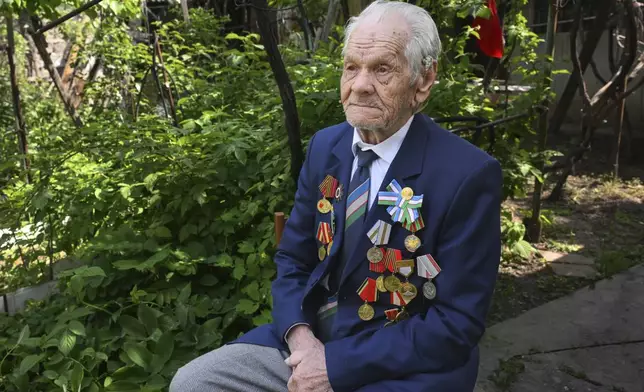
World War II veteran Fyodor Fedin poses for a portrait in Tashkent, Uzbekistan, on Wednesday, April 23, 2025. Fedin joined the Soviet army in 1944 and was a communications operator in an air defense unit. (AP Photo/Anvar Ilyasov)
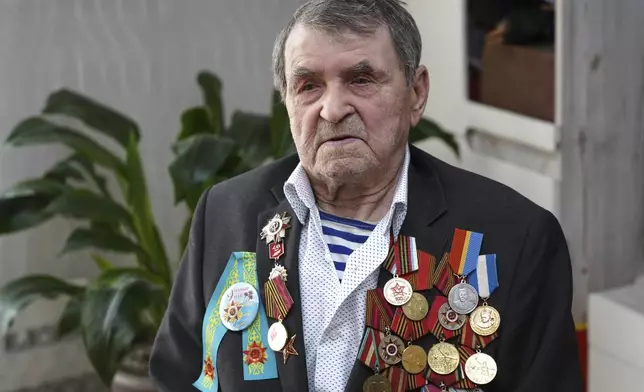
World War II veteran Vasily Zinchenko, 101, poses for a portrait in Almaty, Kazakhstan, on Wednesday, April 16, 2025. Zinchenko took part in key battles, including the Battle of Stalingrad. (AP Photo/Vladimir Tretyakov)
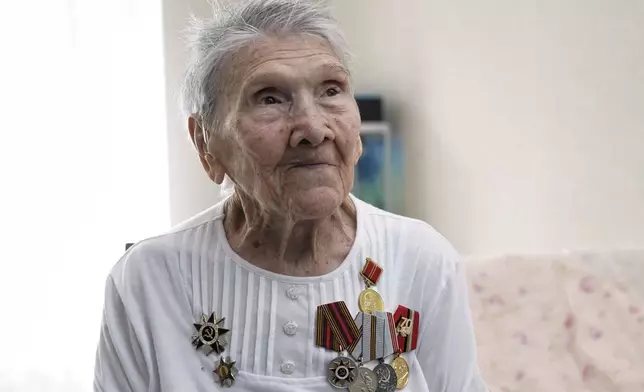
World War II veteran Olga Savenko, 101, poses for a portrait in Almaty, Kazakhstan, on Wednesday, April 16, 2025. Savenko joined the Soviet army on the front lines in 1941, when she was just 18, and served as a communications operator. (AP Photo/Vladimir Tretyakov)
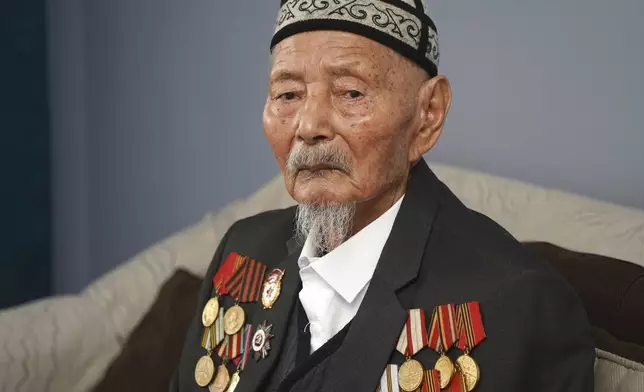
World War II veteran Kolbai Anafiryaev, 98, poses for a portrait in Almaty, Kazakhstan, on Tuesday, April 15, 2025. Anafiryaev was drafted into the Soviet army in 1944. (AP Photo/Vladimir Tretyakov)
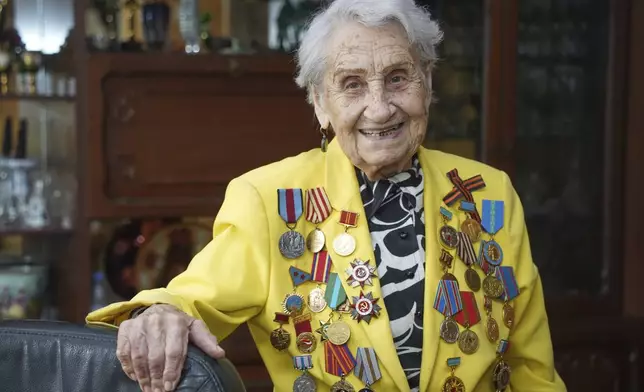
World War II veteran Tamara Maksimova, 101, poses for a portrait in Almaty, Kazakhstan, on Tuesday, April 15, 2025. Maksimova volunteered for the Soviet army when she was still a student in high school and became a nurse. (AP Photo/Vladimir Tretyakov)
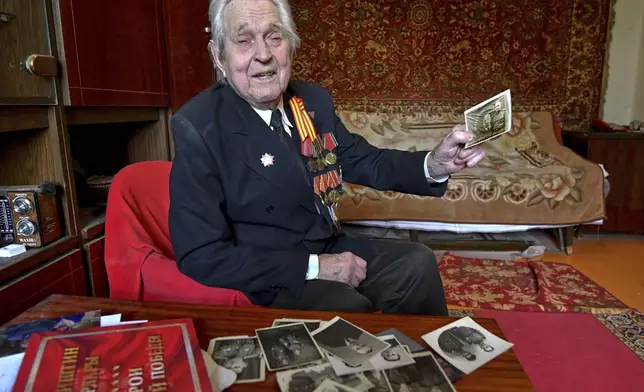
World War II veteran Mikhail Sukhinin, 97, poses for a portrait in Bishkek, Kyrgyzstan, on Thursday, April 10, 2025. Sukhinin was drafted into the Soviet army in 1944 and served in a rifle regiment. (AP Photo/Vladimir Voronin)
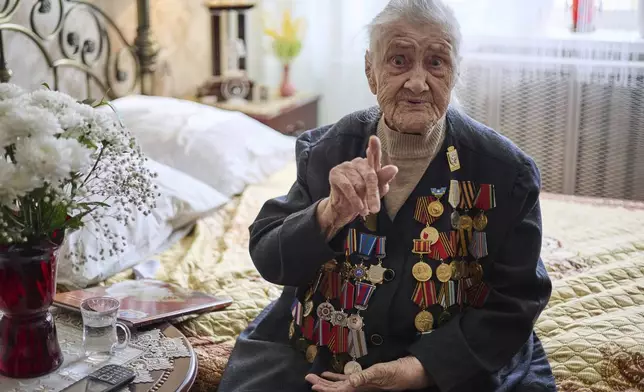
World War II veteran Valentina Efremova, 101, poses for a portrait in Yakutsk, Russia, on Friday, April 18, 2025. Efremova served as a nurse in field hospitals on the front lines. (AP Photo/Roman Kutukov)
“When wounded soldiers our age were brought in, I cried. It hurt. I felt so sorry for them. They called me ‘little sister.’ But I pulled myself together. I came from a very disciplined family,” she told The Associated Press from Yakutsk in eastern Siberia.
The Soviet Union lost an estimated 27 million people in what Russians call the “Great Patriotic War” -– a staggering toll that left a lasting imprint on the nation’s collective memory.
Many who served were teenagers when the war began: nurses, communications specialists laying wire under fire, or new recruits deployed to Europe. Some fought in the Far East after Germany’s surrender, in final battles against Japan.
The portraits featured here are of veterans who served in the Soviet military before the breakup of the USSR who are from Russia, Kazakhstan, Kyrgyzstan and Uzbekistan. They were field medics, scouts, radio operators and sappers who dug anti-tank trenches. Some stayed in the military after the war, while others returned home to civilian lives.
Still Russia’s most significant secular holiday, Victory Day on May 9 honors the enormous wartime sacrifices of the Soviet Union. It also serves as a platform for the Kremlin to promote its own brand of patriotism.
President Vladimir Putin, who has led Russia for 25 of the 80 years that have passed since the end of the war, has made Victory Day central to his rule, using it to frame and justify what the Kremlin calls it “a special military operation” in Ukraine.
—-
This is a photo gallery curated by AP photo editors.

FILE - Russian President Vladimir Putin, right, looks at World War II veteran Ibragim-Pasha Sadykov, 101, after giving him the Hero of Russia award in the Kremlin's St. Catherine Hall in Moscow, Russia, on Thursday, May 30, 2024. (Vyacheslav Prokofyev, Sputnik, Kremlin Pool Photo via AP, File)

World War II veteran Alexander Medkov poses for a portrait in Volgograd, Russia, on Thursday, May 1, 2025. Medkov was drafted into the Soviet army in 1943 and served as a communications officer. (AP Photo/Alexandr Kulikov)

World War II veteran Maria Rokhlina, 100, poses for a portrait in Moscow, Russia, on Monday, April 28, 2025. Rokhlina volunteered to build defensive lines near the Ukrainian capital of Kyiv and later became a combat medic. (AP Photo/Alexander Zemlianichenko)

World War II veteran Fyodor Fedin poses for a portrait in Tashkent, Uzbekistan, on Wednesday, April 23, 2025. Fedin joined the Soviet army in 1944 and was a communications operator in an air defense unit. (AP Photo/Anvar Ilyasov)

World War II veteran Vasily Zinchenko, 101, poses for a portrait in Almaty, Kazakhstan, on Wednesday, April 16, 2025. Zinchenko took part in key battles, including the Battle of Stalingrad. (AP Photo/Vladimir Tretyakov)
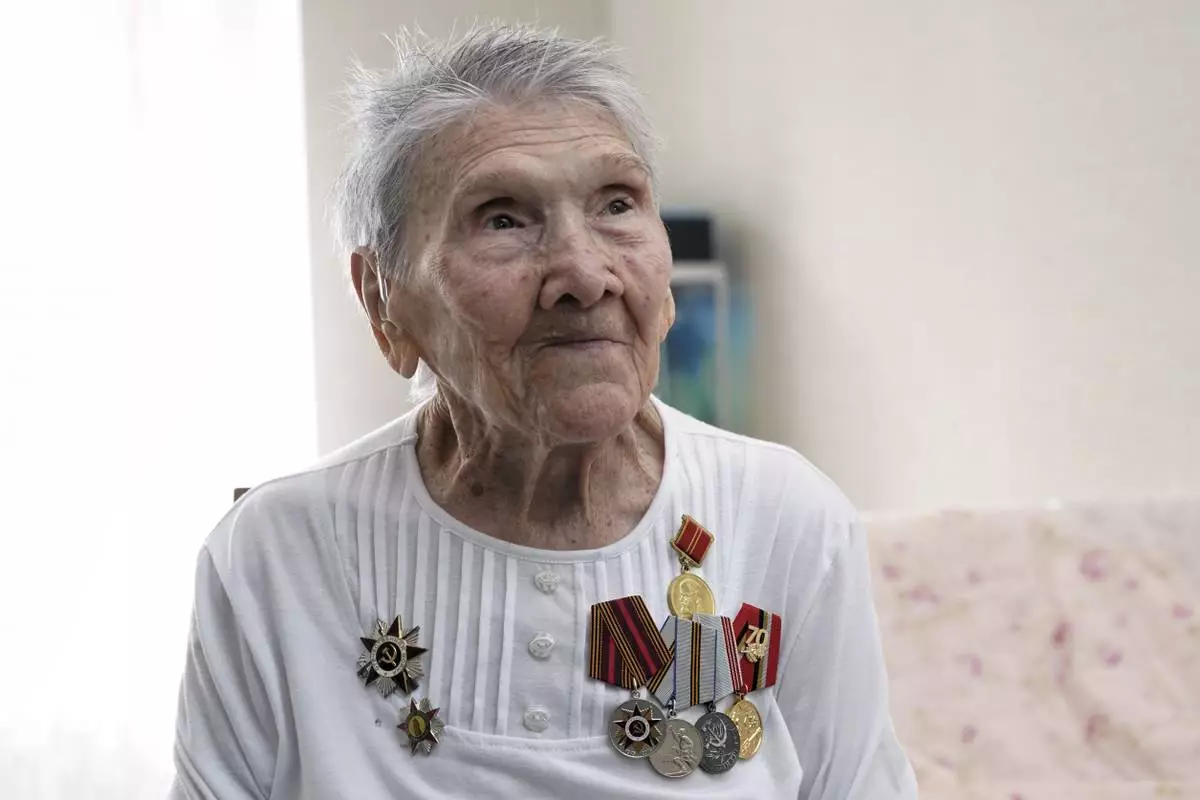
World War II veteran Olga Savenko, 101, poses for a portrait in Almaty, Kazakhstan, on Wednesday, April 16, 2025. Savenko joined the Soviet army on the front lines in 1941, when she was just 18, and served as a communications operator. (AP Photo/Vladimir Tretyakov)

World War II veteran Kolbai Anafiryaev, 98, poses for a portrait in Almaty, Kazakhstan, on Tuesday, April 15, 2025. Anafiryaev was drafted into the Soviet army in 1944. (AP Photo/Vladimir Tretyakov)

World War II veteran Tamara Maksimova, 101, poses for a portrait in Almaty, Kazakhstan, on Tuesday, April 15, 2025. Maksimova volunteered for the Soviet army when she was still a student in high school and became a nurse. (AP Photo/Vladimir Tretyakov)

World War II veteran Mikhail Sukhinin, 97, poses for a portrait in Bishkek, Kyrgyzstan, on Thursday, April 10, 2025. Sukhinin was drafted into the Soviet army in 1944 and served in a rifle regiment. (AP Photo/Vladimir Voronin)

World War II veteran Valentina Efremova, 101, poses for a portrait in Yakutsk, Russia, on Friday, April 18, 2025. Efremova served as a nurse in field hospitals on the front lines. (AP Photo/Roman Kutukov)