PARIS (AP) — As France prepares to mark the 80th anniversary of the Nazi surrender to Allied forces, survivors of World War II reflect on painful memories of fear, deprivation and persecution shaped by the German occupation of the country and the deportation of Jews and others to death camps.
In May 1940, Nazi forces swept through France. Among those caught in the chaos was 15-year-old Geneviève Perrier, who fled her village in northeastern France to escape the advancing German troops like millions of others. By June, France had surrendered.
Click to Gallery

People walk with a banner reading "Inter-generation march for memory and transmission" before the commemoration of the 80th anniversary of the return of the deportees, in Paris, France, Sunday, April 27, 2025. (AP Photo/Thomas Padilla)
Holocaust survivor Arlette Testyler attends the ceremony to mark the 80th anniversary of the return of the deportees, in Paris, France, Sunday, April 27, 2025. (AP Photo/Thomas Padilla)

From the left, holocaust survivors Marie-Josee Chombart de Lauwe, Ginette Kolinka, Arlette Testyler, Josette Grabarz, Jacques Altmann, Ester Senot attend a commemoration to mark the 80th anniversary of the return of the deportees, in Paris, France, Sunday, April 27, 2025. (AP Photo/Thomas Padilla)
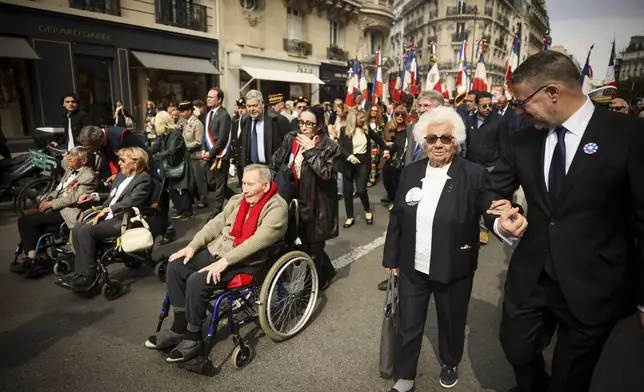
From the left, holocaust survivors Ginette Kolinka, Arlette Testyler, Jacques Altmann, and Ester Senot walk during the commemoration of the 80th anniversary of the return of the deportees, in Paris, France, Sunday, April 27, 2025. (AP Photo/Thomas Padilla)
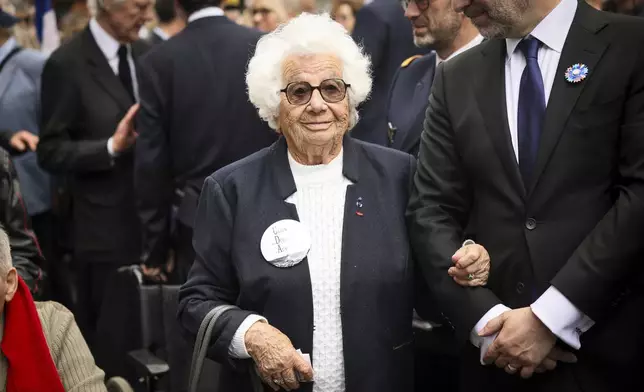
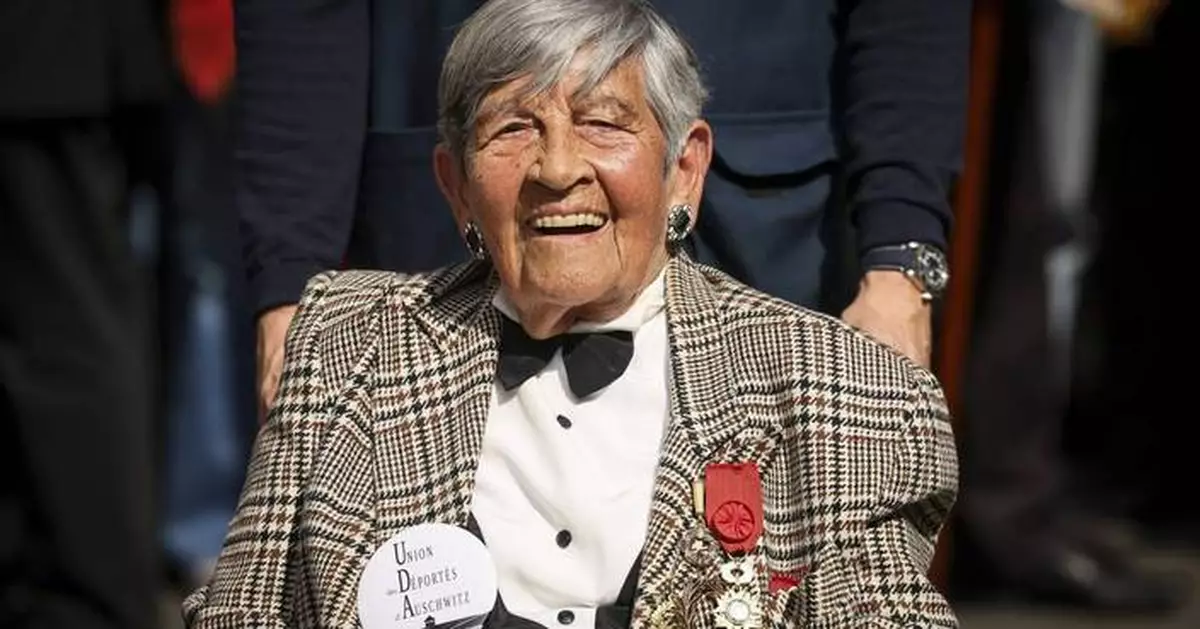
Holocaust survivor Ester Senot, 97, attends a commemorative ceremony to mark the 80th anniversary of the return of the deportees, in Paris, France, Sunday, April 27, 2025. (AP Photo/Thomas Padilla)

People attend the ceremony marking the 80th anniversary of the return of the deportees, in Paris, France, Sunday, April 27, 2025. (AP Photo/Thomas Padilla)
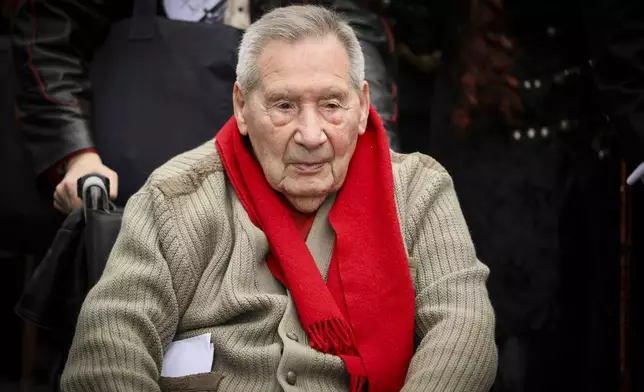
Holocaust survivor Jacques Altmann attends a commemorative ceremony to mark the 80th anniversary of the return of the deportees, in Paris, France, Sunday, April 27, 2025. (AP Photo/Thomas Padilla)
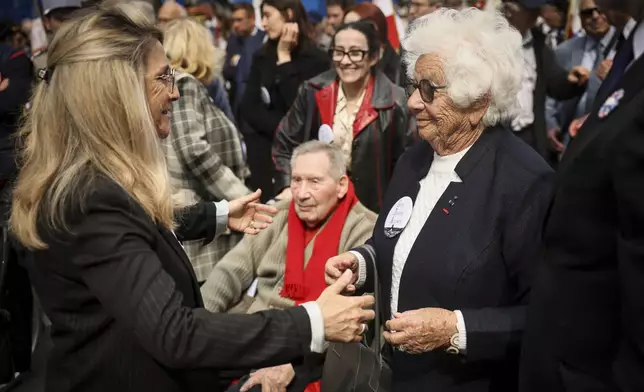
Patricia Miralles, left, French Minister in charge of War Veterans and Memory, welcomes Holocaust survivor Ester Senot at the ceremony marking the 80th anniversary of the return of the deportees, in Paris, France, Sunday, April 27, 2025. (AP Photo/Thomas Padilla)

Front from the left, holocaust survivors Arlette Testyler, Ginette Kolinka, Ester Senot, standing with white hair, and Jacques Altmann, attend a ceremony to mark the 80th anniversary of the return of the deportees, in Paris, France, Sunday, April 27, 2025. (AP Photo/Thomas Padilla)

People attend a commemorative ceremony to mark the 80th anniversary of the return of the deportees in front of the Hotel Lutetia, in background, in Paris, France, Sunday, April 27, 2025. (AP Photo/Thomas Padilla)
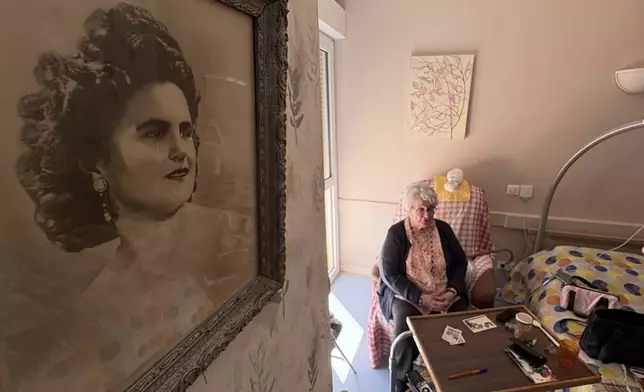
Genevieve Perrier, 99, a civilian under Nazi occupation, answers the Associated Press, with a portrait of her when she was 20 in 1945, on Tuesday April 29 2025 in Precy sous Thil, Burgundy, France. (AP Photo/Nicolas Garriga)
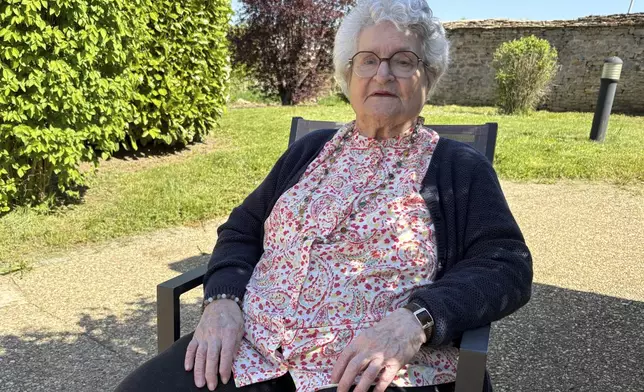
Genevieve Perrier, 99, a civilian under Nazi occupation, poses as she answers the Associated Press on Tuesday April 29 2025 in Precy sous Thil, Burgundy, France. (AP Photo/Nicolas Garriga)
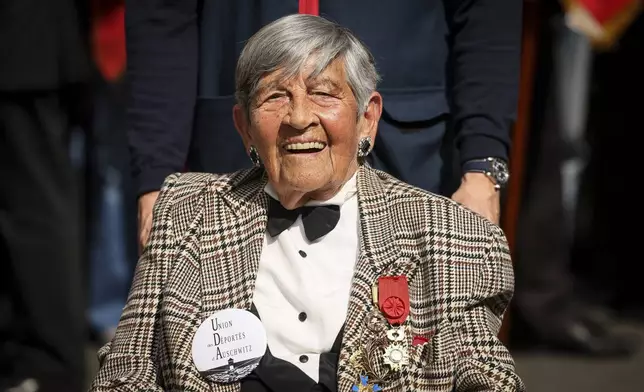
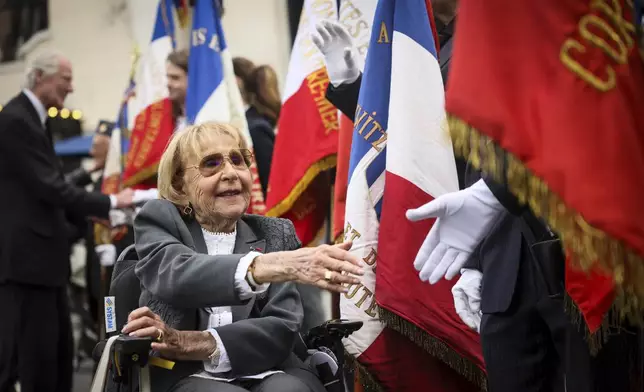
Holocaust survivor Ginette Kolinka ,100, attends a commemorative ceremony to mark the 80th anniversary of the return of the deportees, in Paris, France, Sunday, April 27, 2025. (AP Photo/Thomas Padilla)
Three years later, Esther Senot, 15, was arrested by French police and deported to Auschwitz-Birkenau. In 1944, 19-year-old Ginette Kolinka was sent to the same death camp.
Now close to 100 years old, the women continue to share their stories, determined to keep the memory of the war alive and pass its lessons on to future generations.
“We were scared,” Perrier remembered as she described fleeing on bicycle with her mother, carrying only a small travel bag, while her uncle took a horse-drawn cart on the roads of eastern France.
“There were lots of people fleeing, with kids in baby carriages, everyone was running away. There was a column of civilians fleeing and a column of French soldiers fleeing," she said.
Perrier and others hid in a field when they heard bomber planes. “Mom had a white hat. Some told her: ‘remove your hat!’ And that’s when I saw a huge bomb pass over our heads. It didn’t explode. It was the chance of a lifetime.”
Later taking a train, Perrier found refuge for a few months in a small town in southwestern France, in an area governed by the collaborationist Vichy regime, before her mother decided they would go back home — only to live under harsh Nazi occupation.
“The Resistance was big in our area,” Perrier said, adding she was willing to join the so-called French Forces of the Interior (FFI). Three women from the FFI were captured and tortured by the Nazis just a few kilometers away from her home, she recalled.
“My mother kept telling me: ‘No, I don’t want you to leave. I don’t have a husband any more, so if you go…’" she said. "She was right, because all three of them were killed.”
Still, Perrier kept her spirit of resistance in her daily life.
“At church, there was a Catholic hymn,” she said, singing: “Catholic and French, always!”
“We bellowed it with all our might, hoping they (the Nazi soldiers) would hear,” she said.
When the Allied forces landed on Normandy beaches on June 6, 1944, Perrier said she didn't have much access to news and could not believe it.
Later that year, she saw the troops of General Leclerc’s 2nd French Division, equipped with American tanks, coming into her village. “They liberated us and there was a tank that had stopped almost on our doorstep. So I went to see the tank, of course. And then, they held a ball not far away,” she said.
Towards the end of the war, French men brought a German soldier they accused of having killed a baby to the village's cemetery. “They made him dig his grave. They put him in it… They killed him," she said.
Born in Poland from a Jewish family who emigrated to France at the end of the 1930s, Esther Senot was 15 when she was arrested in Paris by French police. She was deported in Sept. 1943 to the Auschwitz-Birkenau camp by cattle train. At the ramp, the Nazis selected those they could use as forced laborers.
“A German with his loudspeaker said: the elderly, women, children, those who are tired can get on the trucks,” she recalled. "Out of the 1,000 people we were, 650 got on the trucks.... And 106 of us, women, were selected to go back to work in the camp to forced labor.” Others were gassed to death soon after their arrival.
Senot survived 17 months in Auschwitz-Birkenau and other camps and made it back to France at age 17.
In spring 1945, the Lutetia hotel in Paris became a gathering place for those returning from the concentration camps. Senot described the crowd of people looking for missing family members, some bringing photos of their loved ones, while walls were covered with posters listing the names of survivors.
“It was bureaucratic," Senot said. “At the first counter, they gave us temporary identity cards. Then they gave us a fairly basic medical examination ... And those who were lucky enough to find their family, they went to an office where they were given some money and were told: ‘Now you’ve completed the formalities... you go home.’”
Seventeen members of Senot’s family were killed by the Nazis during WWII, including her mother, her father and six siblings.
In a recent commemoration in front of the hotel, Senot said she had hoped her survival would "bear witness to the absolute crime in which we were caught.” But once back in France, she felt the hardest thing was the indifference to the fate of those who had been deported.
“France had been liberated for one year and people didn’t expect us to return with all the misery in the world on our shoulders," she said.
In her former Parisian neighborhood, a small crowd watched her. "I weighed 32 kilos (70 pounds) when I came back, my hair was shaved. One year after the Liberation, people hadn’t meet any woman looking like that."
Senot said when she started to explain what happened to her, “you could see the disbelief in their eyes.” "And suddenly they got angry. They said: 'But you have gone mad, you are talking nonsense, it couldn’t have happened.’ And I will always remember the face of a man who looked at me and said: ‘You came back in such small numbers, what did you do to come back and not the others?‘”
Kolinka, who was 19 when she was deported in April 1944 to Auschwitz-Birkenau, is well known in France for sharing her vivid memories of the concentration camps with the younger generation in the past two decades.
In June 1945, when she returned to Paris, she weighed only 26 kilos (57 pounds) and was very weak. Still, compared to some others, she felt “lucky” to find her mother and four sisters alive in France when coming back home. Her father, a brother and a sister died in death camps.
She did not speak about the war for over half a century. “Those who told their story, it’s true that it seemed unbelievable (at the time),” she said.
Six million European Jews and people from other minorities were killed by the Nazis and their collaborators during the Holocaust.
In the 2000s, Kolinka joined an association of surviving deportees and began to speak out.
“What we have to keep in mind is that everything that happened was because one man (Adolf Hitler) hated the Jews," she said.
“Hatred, for me, is dangerous,” she added. “As soon as we say: that one is like this, that one is like that, it already proves that we make a difference when in reality, no matter whether we are Jews, Muslims, Christians, Blacks, we are human beings.”
—-
AP journalists Nicolas Garriga and Patrick Hermansen contributed to the story.

People walk with a banner reading "Inter-generation march for memory and transmission" before the commemoration of the 80th anniversary of the return of the deportees, in Paris, France, Sunday, April 27, 2025. (AP Photo/Thomas Padilla)
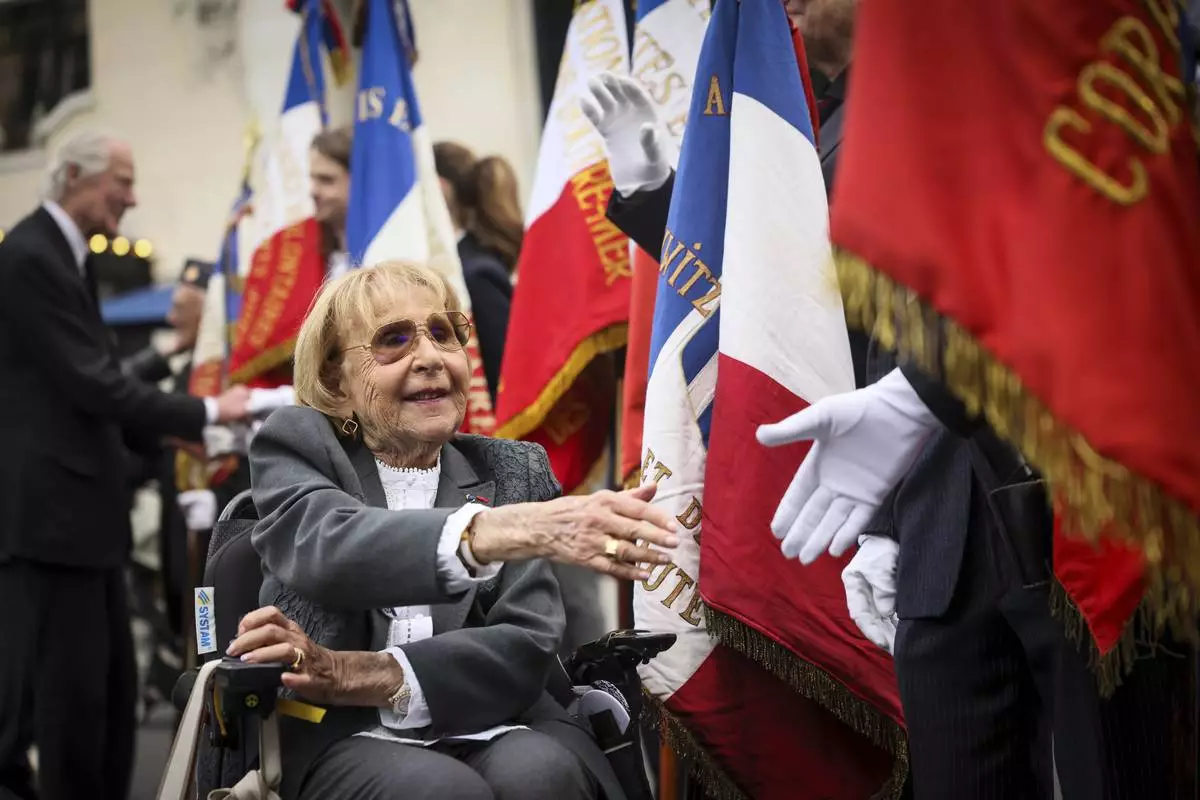
Holocaust survivor Arlette Testyler attends the ceremony to mark the 80th anniversary of the return of the deportees, in Paris, France, Sunday, April 27, 2025. (AP Photo/Thomas Padilla)

From the left, holocaust survivors Marie-Josee Chombart de Lauwe, Ginette Kolinka, Arlette Testyler, Josette Grabarz, Jacques Altmann, Ester Senot attend a commemoration to mark the 80th anniversary of the return of the deportees, in Paris, France, Sunday, April 27, 2025. (AP Photo/Thomas Padilla)
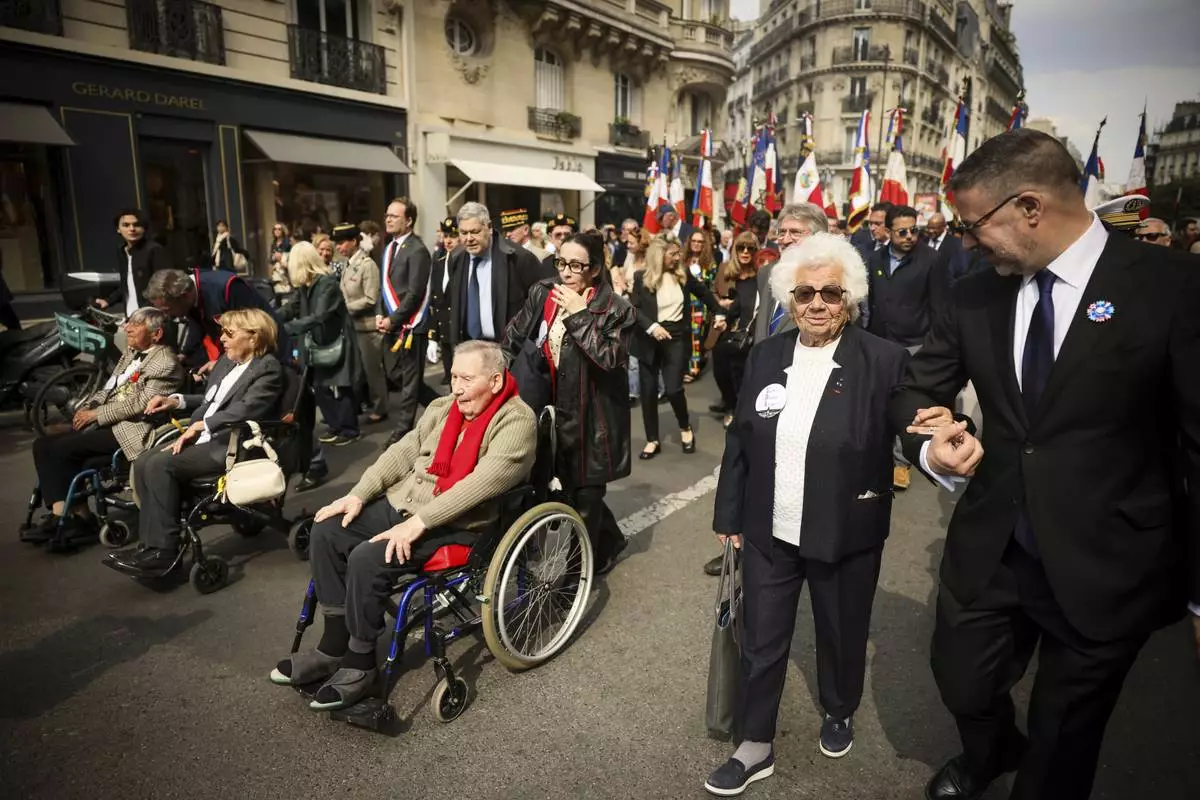
From the left, holocaust survivors Ginette Kolinka, Arlette Testyler, Jacques Altmann, and Ester Senot walk during the commemoration of the 80th anniversary of the return of the deportees, in Paris, France, Sunday, April 27, 2025. (AP Photo/Thomas Padilla)
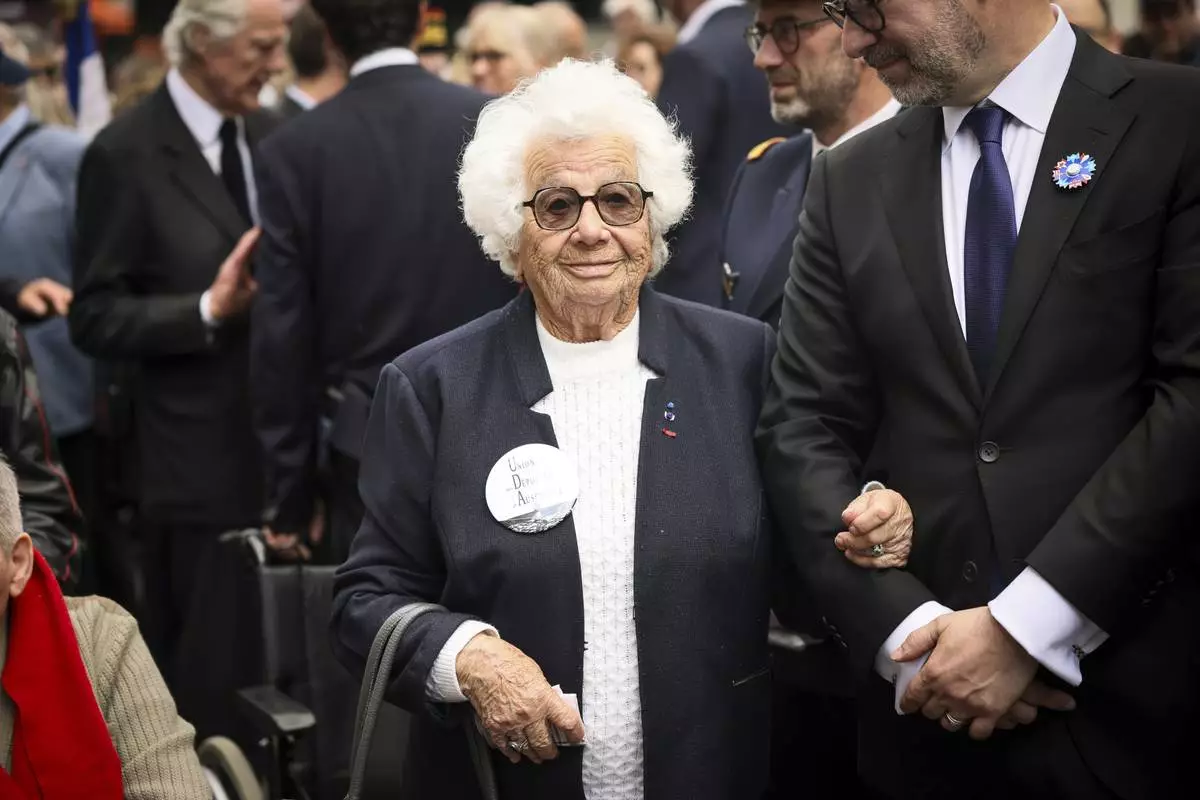
Holocaust survivor Ester Senot, 97, attends a commemorative ceremony to mark the 80th anniversary of the return of the deportees, in Paris, France, Sunday, April 27, 2025. (AP Photo/Thomas Padilla)

People attend the ceremony marking the 80th anniversary of the return of the deportees, in Paris, France, Sunday, April 27, 2025. (AP Photo/Thomas Padilla)
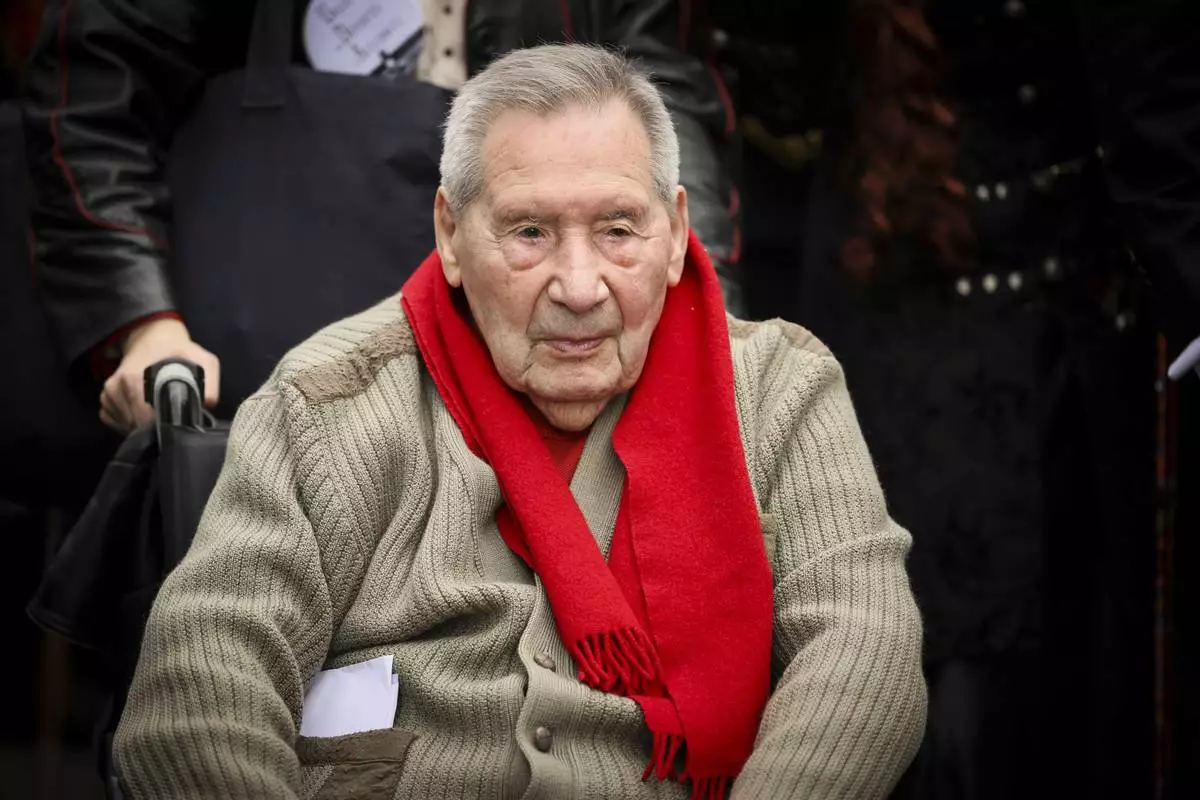
Holocaust survivor Jacques Altmann attends a commemorative ceremony to mark the 80th anniversary of the return of the deportees, in Paris, France, Sunday, April 27, 2025. (AP Photo/Thomas Padilla)
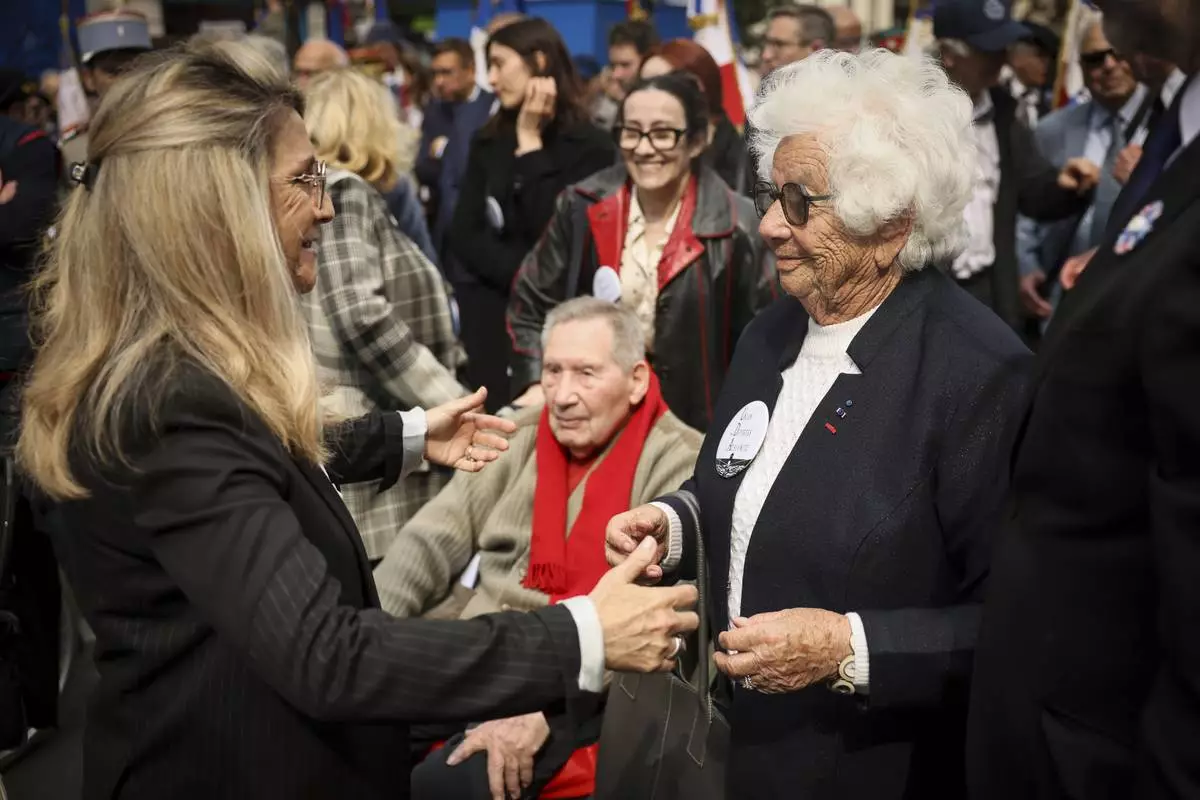
Patricia Miralles, left, French Minister in charge of War Veterans and Memory, welcomes Holocaust survivor Ester Senot at the ceremony marking the 80th anniversary of the return of the deportees, in Paris, France, Sunday, April 27, 2025. (AP Photo/Thomas Padilla)

Front from the left, holocaust survivors Arlette Testyler, Ginette Kolinka, Ester Senot, standing with white hair, and Jacques Altmann, attend a ceremony to mark the 80th anniversary of the return of the deportees, in Paris, France, Sunday, April 27, 2025. (AP Photo/Thomas Padilla)
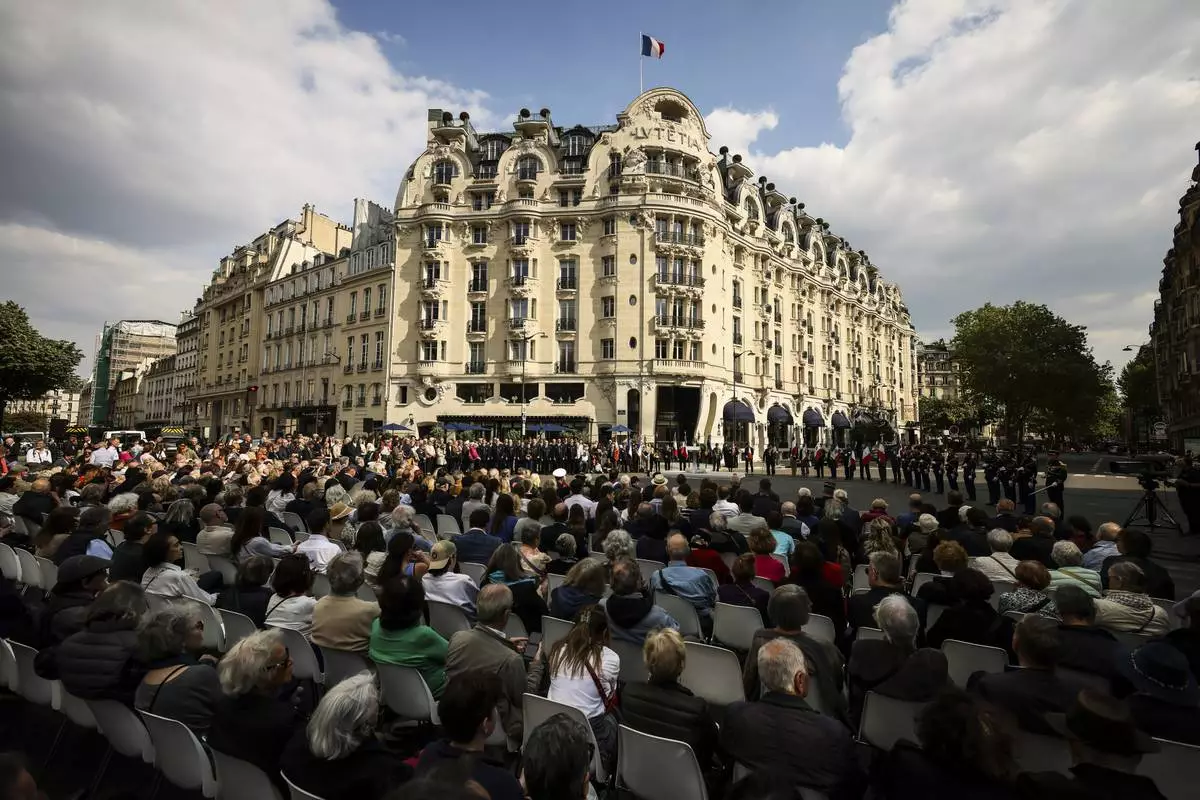
People attend a commemorative ceremony to mark the 80th anniversary of the return of the deportees in front of the Hotel Lutetia, in background, in Paris, France, Sunday, April 27, 2025. (AP Photo/Thomas Padilla)
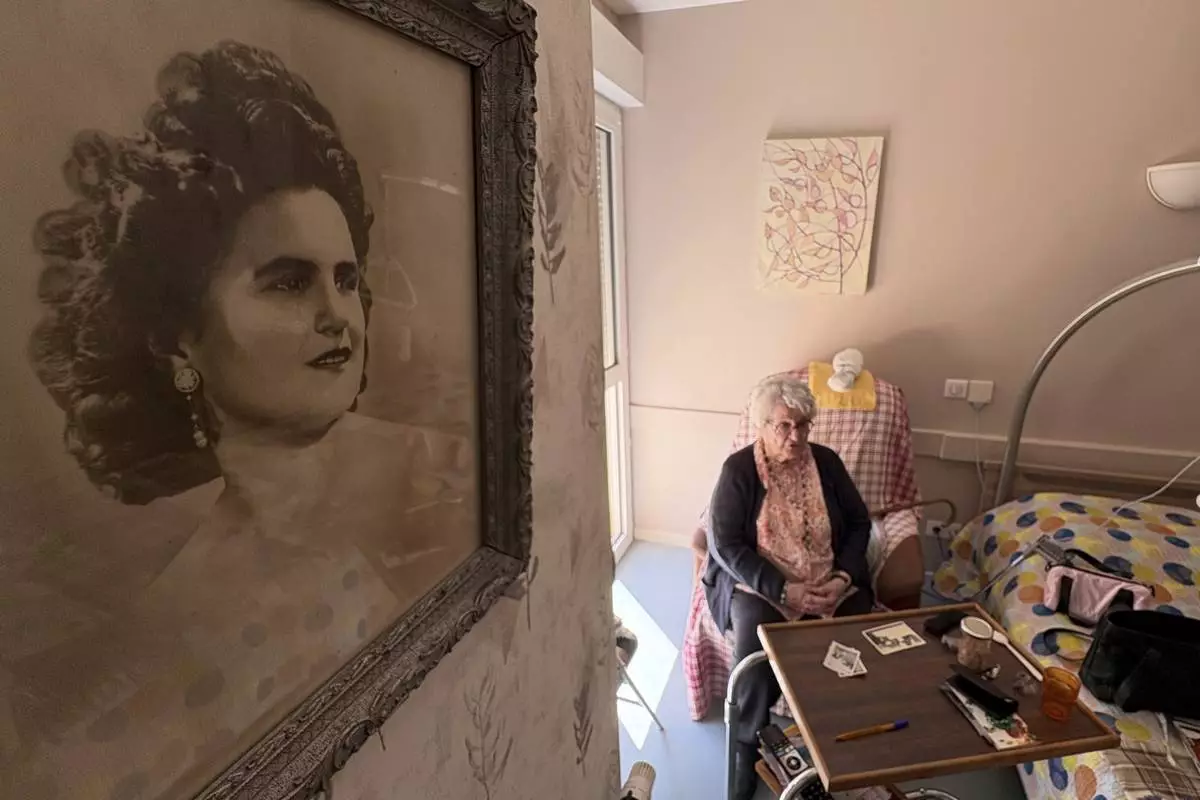
Genevieve Perrier, 99, a civilian under Nazi occupation, answers the Associated Press, with a portrait of her when she was 20 in 1945, on Tuesday April 29 2025 in Precy sous Thil, Burgundy, France. (AP Photo/Nicolas Garriga)
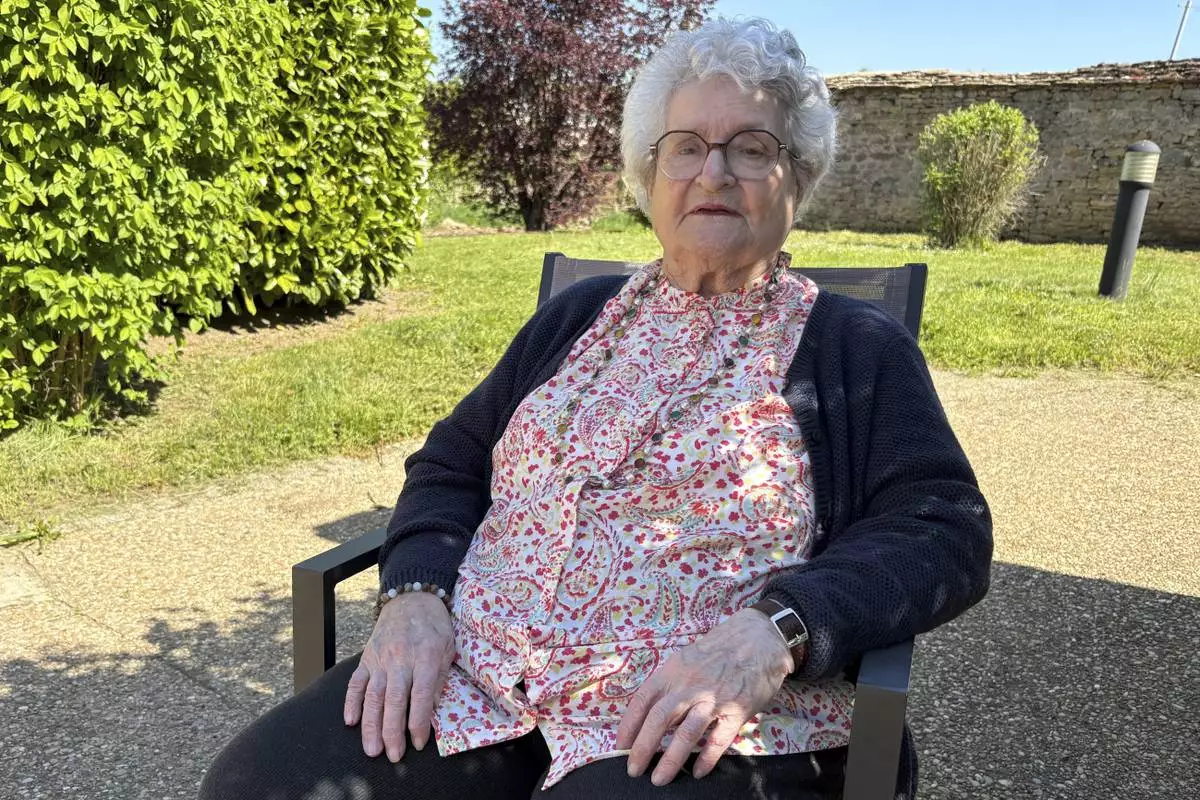
Genevieve Perrier, 99, a civilian under Nazi occupation, poses as she answers the Associated Press on Tuesday April 29 2025 in Precy sous Thil, Burgundy, France. (AP Photo/Nicolas Garriga)
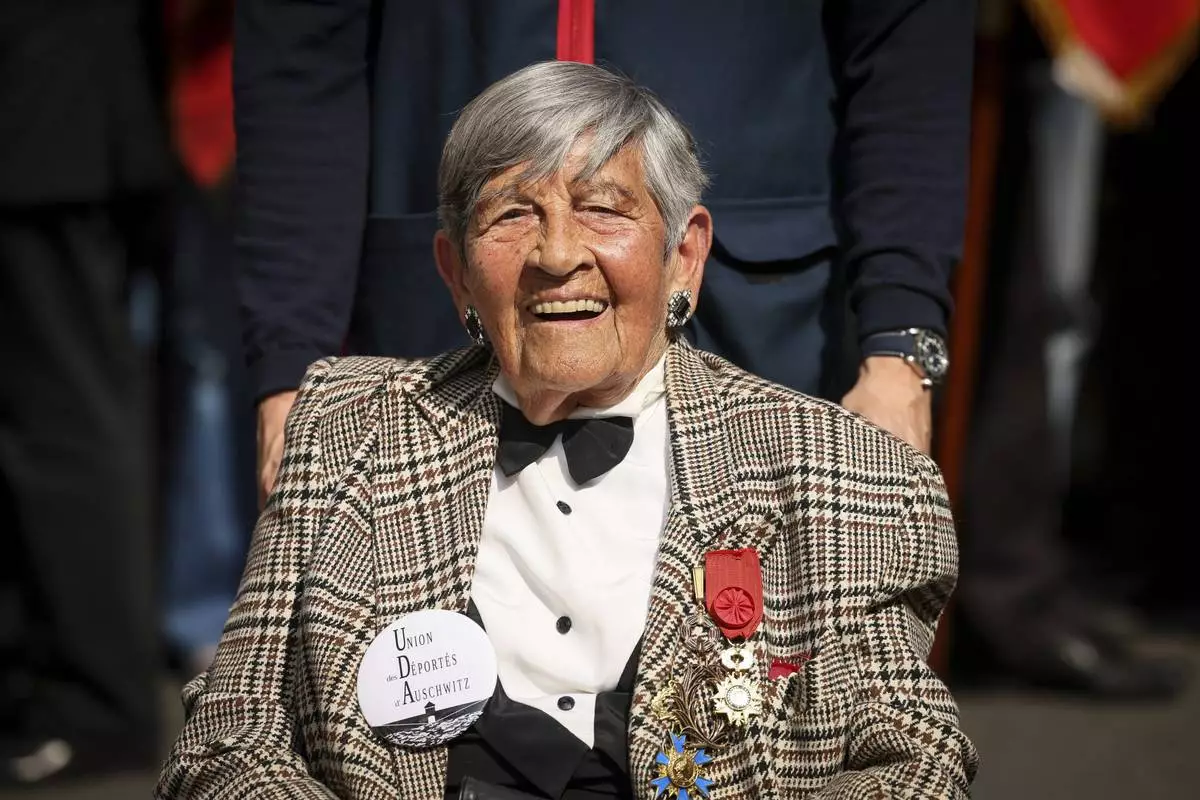
Holocaust survivor Ginette Kolinka ,100, attends a commemorative ceremony to mark the 80th anniversary of the return of the deportees, in Paris, France, Sunday, April 27, 2025. (AP Photo/Thomas Padilla)