Skip to Content Facebook Feature Image

How the stock market made back all its losses after Trump escalated the trade war

News

How the stock market made back all its losses after Trump escalated the trade war
News

News

How the stock market made back all its losses after Trump escalated the trade war

2025-05-04 22:01 Last Updated At:22:10

It felt much longer, but the U.S. stock market needed just a few weeks to roar all the way back to where it was on President Donald Trump's “Liberation Day.” That's when he shocked Wall Street by announcing much steeper tariffs than expected on nearly all U.S. trading partners.

Those tariffs unveiled on April 2 were so severe that they raised fears Trump did not worry about causing a recession in his attempt to reshape the global economy. Within just four days, the S&P 500 fell about 12%, and the Dow Jones Industrial Average lost nearly 4,600 points, or about 11%.

This past Friday, though, the S&P 500 rallied 1.5% for a ninth straight gain and pulled back to where it was on April 2.

Of course, the index at the heart of many 401(k) accounts is still more than 7% below its all-time high set earlier this year. And stocks could easily fall again as uncertainty remains high about what Trump's tariffs will ultimately do to the economy. But the run for U.S. stocks back upward has been just as wild and unexpected as its fall. Here's a look at what happened:

On April 9, Trump announced on social media a “90-day PAUSE” for most of the tariffs he’d announced a week earlier, except those against China. The S&P 500 soared 9.5% for one of its best days ever. Even that good news came with a bit of controversy, however: hours before he announced the pause, Trump proclaimed on Truth Social that “this is a great time to buy."

The weeks after the pause were a roller coaster. Trump talked about negotiating tariffs with the trading partners while also using tariffs to force companies to move manufacturing to the U.S., two goals seemingly at odds with one another. The market did find relief in what the Treasury secretary referred to as de-escalation between the U.S. and China. Investors also welcomed Trump’s moves to ease tariffs on autos as well as smartphones and other electronics.

The severity of the U.S. stock market's fall after Liberation Day surprised some market watchers. They had assumed Trump would backtrack on policies that hurt the Dow Jones Industrial Average. This is a president, after all, who crowed repeatedly during his first term about how the Dow was doing.

But it was fear in other financial markets that may have forced Trump's hand. Tumbling prices for U.S. government bonds raised worries that the U.S. Treasury market was losing its status as the world's safest place to keep cash. The value of the U.S. dollar also sank in another signal of diminishing faith in the United States as a safe haven for investors.

Trump himself said he had noticed how bond investors were “getting a little queasy” before he paused his tariffs.

Economists and investors had to reconcile contradictory signals about the economy. Surveys of consumers showed declining confidence, largely due to the uncertainty created by the Trump trade policy. But what investors call “hard data,” such as employment numbers, indicated the economy was still doing OK. As of Friday, when the government said employers had added 177,000 jobs in April, the hard numbers appeared to have a advantage over the weak sentiment.

The Federal Reserve cut rates three times at the end of 2024, but then implemented a pause of its own by keeping rates steady, in part to assess the impact of the Trump trade policy. The strong jobs report seemed to give the Fed clearance to keep rates where they are for now — despite Trump repeating his call for cuts — but the market is still looking for 3 cuts before the end of the year.

Through all the market's tumult, U.S. companies have continued to deliver profit reports for the start of the year that have topped analysts' expectations. Stock prices tend to follow profits over the long term, and that's given the market a notable boost.

Three out of every four companies in the S&P 500 have beaten analysts' expectations for profits in recent weeks, including such market heavyweights as Microsoft and Meta Platforms. They're on track to deliver growth of nearly 13% from a year earlier, according to FactSet.

Even as companies have delivered fatter profits than expected, many have also warned they're unsure whether it can last. CEOs have been either lowering or withdrawing their financial forecasts for the year given all the uncertainty around how Trump's tariffs will end up.

United Airlines even made the unusual move of offering two separate forecasts for the year: one if there’s a recession, and one if not.

Trump’s off-again-on-again approach to tariffs had made this the most volatile period for the market since the onset of the pandemic. The pause is in its fourth week and the administration has yet to announce an agreement with any of U.S. trading partners. Based on his recent comments, Trump is still all-in on tariffs, so the pause could prove to be just that.

“We’ve already seen how financial markets will react if the administration moves forward with their initial tariff plan, so unless they take a different tack in July when the 90-day pause expires, we will see market action similar to the first week of April,” said Chris Zaccarelli, chief investment officer for Northlight Asset Management.
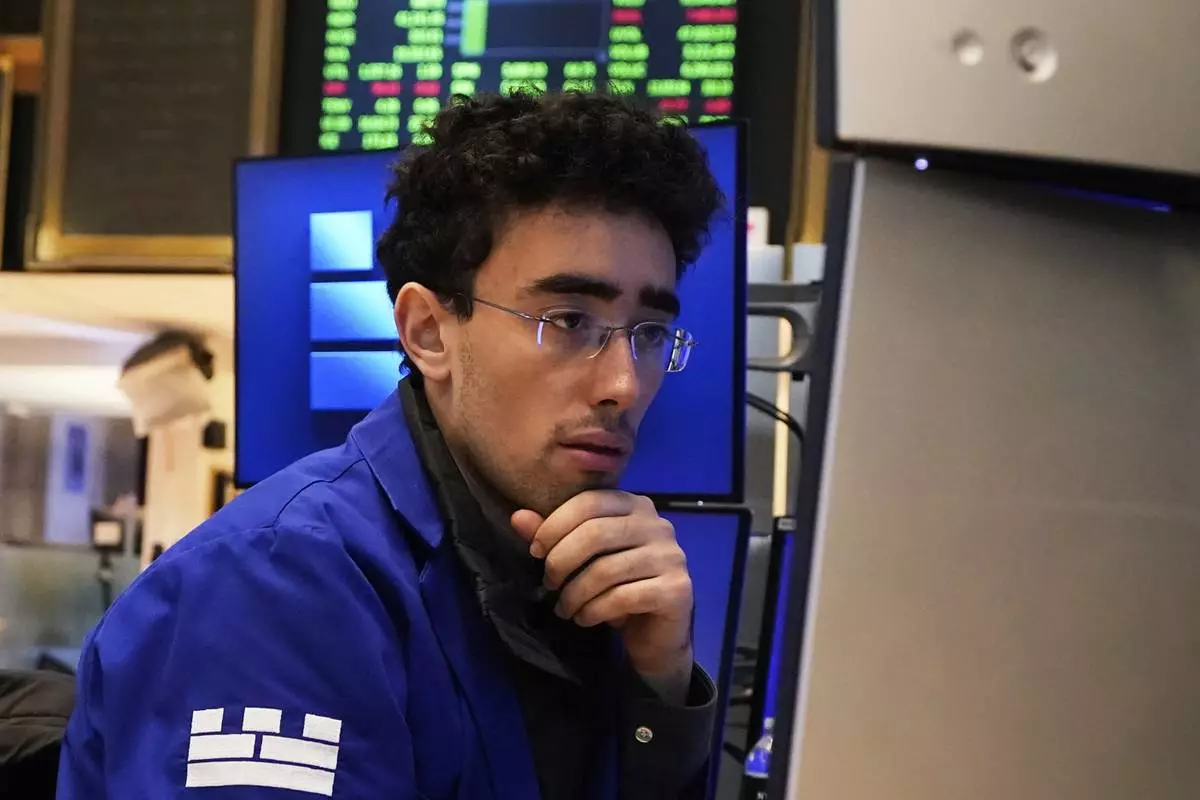
Specialist Alex Weitzman works at his post on the floor of the New York Stock Exchange, Friday, May 2, 2025. (AP Photo/Richard Drew)
Specialist Alex Weitzman works at his post on the floor of the New York Stock Exchange, Friday, May 2, 2025. (AP Photo/Richard Drew)
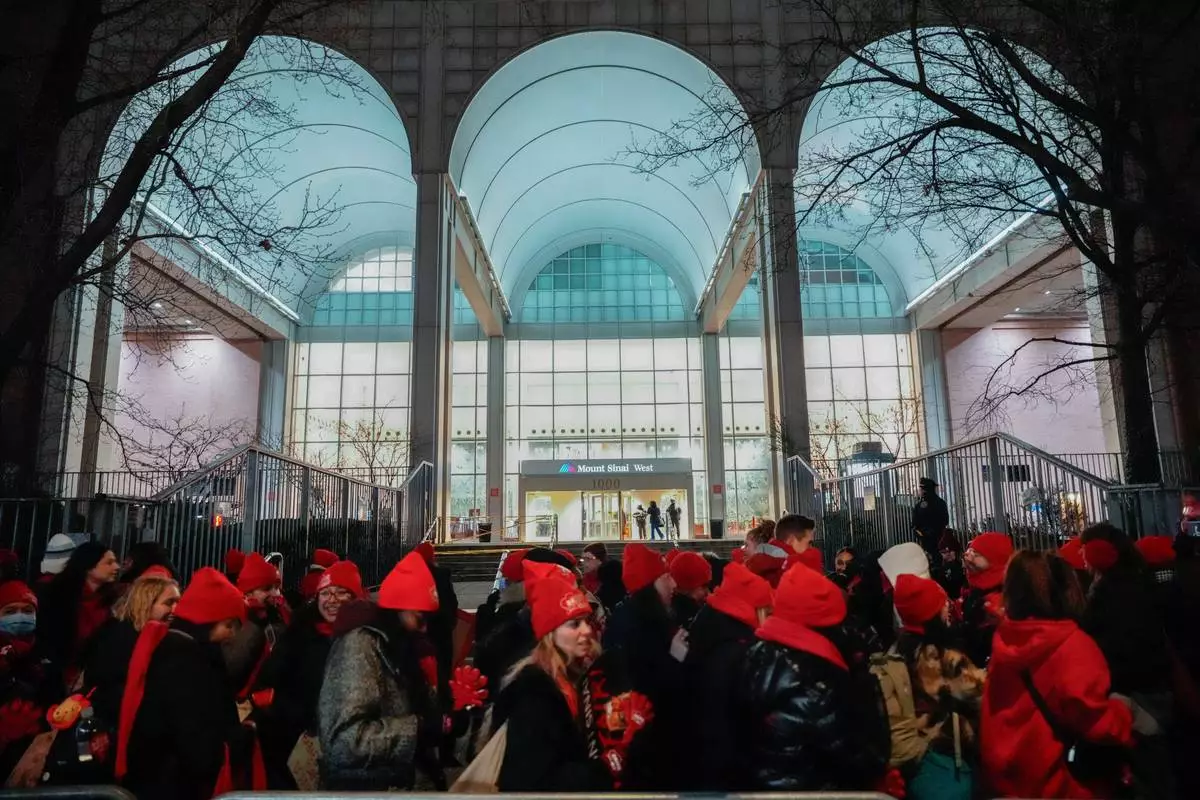
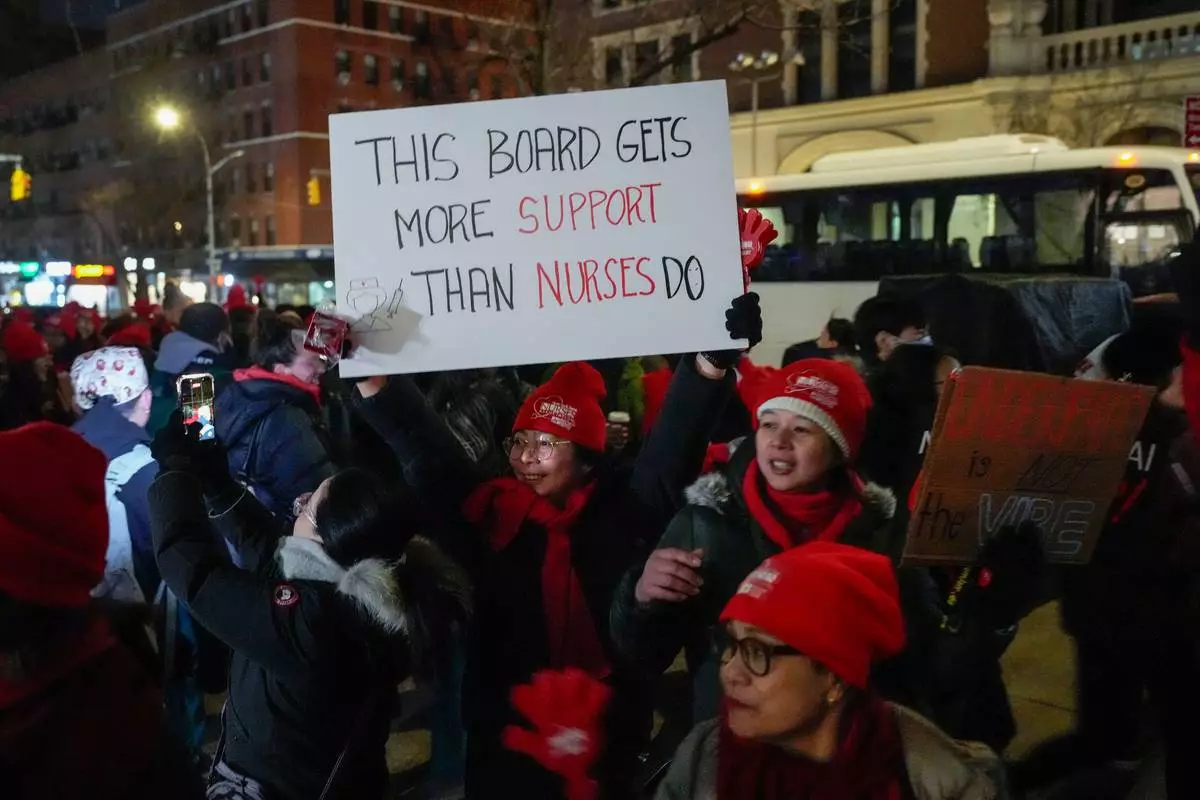
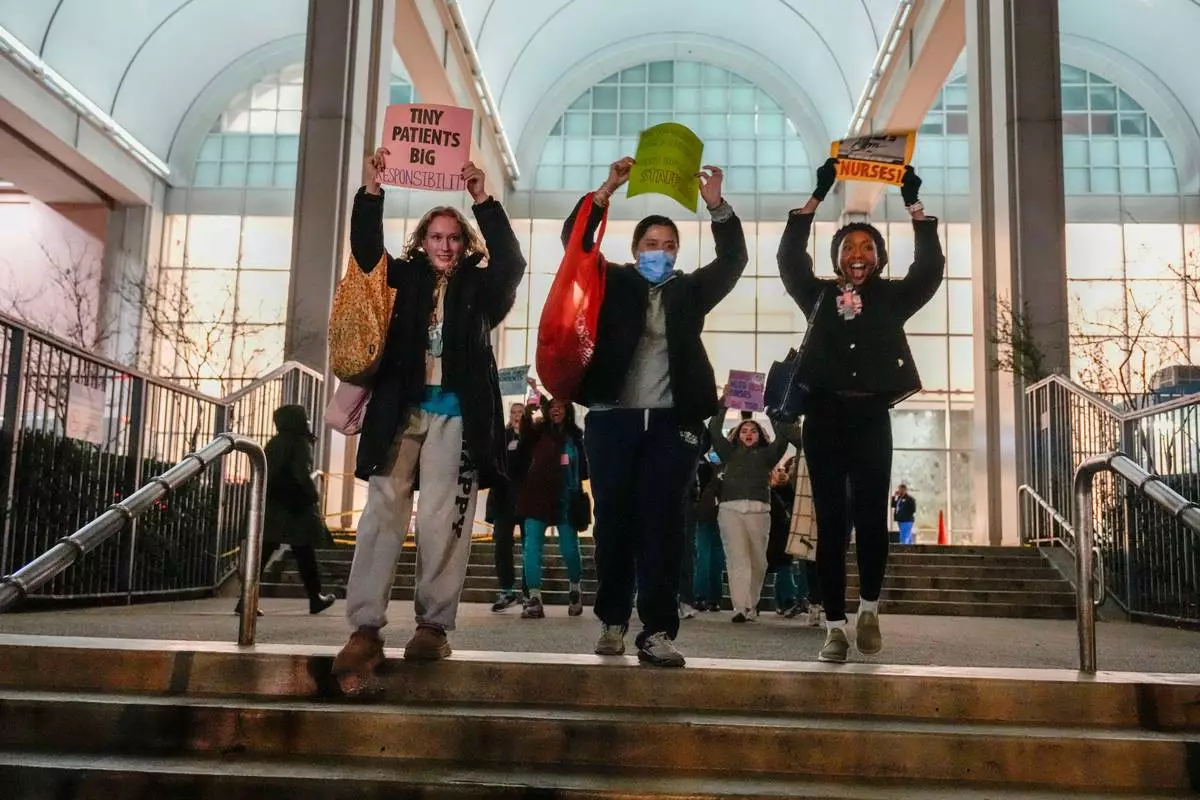
NEW YORK (AP) — Thousands of nurses in three hospital systems in New York City went on strike Monday after negotiations through the weekend failed to yield breakthroughs in their contract disputes.

The strike was taking place at The Mount Sinai Hospital and two of its satellite campuses, with picket lines forming. The other affected hospitals are NewYork-Presbyterian and Montefiore Medical Center in the Bronx.

About 15,000 nurses are involved in the strike, according to New York State Nurses Association.

“After months of bargaining, management refused to make meaningful progress on core issues that nurses have been fighting for: safe staffing for patients, healthcare benefits for nurses, and workplace violence protections,” the union said in a statement issued Monday. “Management at the richest hospitals in New York City are threatening to discontinue or radically cut nurses’ health benefits.”

The strike, which comes during a severe flu season, could potentially force the hospitals to transfer patients, cancel procedures or divert ambulances. It could also put a strain on city hospitals not involved in the contract dispute, as patients avoid the medical centers hit by the strike.

The hospitals involved have been hiring temporary nurses to try and fill the labor gap during the walkout, and said in a statement during negotiations that they would “do whatever is necessary to minimize disruptions.” Montefiore posted a message assuring patients that appointments would be kept.

“NYSNA’s leaders continue to double down on their $3.6 billion in reckless demands, including nearly 40% wage increases, and their troubling proposals like demanding that a nurse not be terminated if found to be compromised by drugs or alcohol while on the job," Montefiore spokesperson Joe Solmonese said Monday after the strike had started. "We remain resolute in our commitment to providing safe and seamless care, regardless of how long the strike may last.”

New York-Presbyterian accused the union of staging a strike to “create disruption,” but said in a statement that it has taken steps to ensure patients receive the care they need.

"We’re ready to keep negotiating a fair and reasonable contract that reflects our respect for our nurses and the critical role they play, and also recognizes the challenging realities of today’s healthcare environment,” the statement said.

The work stoppage is occurring at multiple hospitals simultaneously, but each medical center is negotiating with the union independently. Several other hospitals across the city and in its suburbs reached deals in recent days to avert a possible strike.

The nurses’ demands vary by hospital, but the major issues include staffing levels and workplace safety. The union says hospitals have given nurses unmanageable workloads.

Nurses also want better security measures in the workplace, citing incidents like a an incident last week, when a man with a sharp object barricaded himself in a Brooklyn hospital room and was then killed by police.

The union also wants limitations on hospitals’ use of artificial intelligence.

The nonprofit hospitals involved in the negotiations say they’ve been working to improve staffing levels, but say the union’s demands overall are too costly.

Nurses voted to authorize the strike last month.

Both New York Gov. Kathy Hochul and Mayor Zohran Mamdani had expressed concern about the possibility of the strike. As the strike deadline neared, Mamdani urged both sides to keep negotiating and reach a deal that “both honors our nurses and keeps our hospitals open.”

“Our nurses kept this city alive through its hardest moments. Their value is not negotiable,” Mamdani said.

State Attorney General Letitia James voiced similar support, saying "nurses put their lives on the line every day to keep New Yorkers healthy. They should never be forced to choose between their own safety, their patients’ well-being, and a fair contract.”

The last major nursing strike in the city was only three years ago, in 2023. That work stoppage, at Mount Sinai and Montefiore, was short, lasting three days. It resulted in a deal raising pay 19% over three years at those hospitals.

It also led to promised staffing improvements, though the union and hospitals now disagree about how much progress has been made, or whether the hospitals are retreating from staffing guarantees.

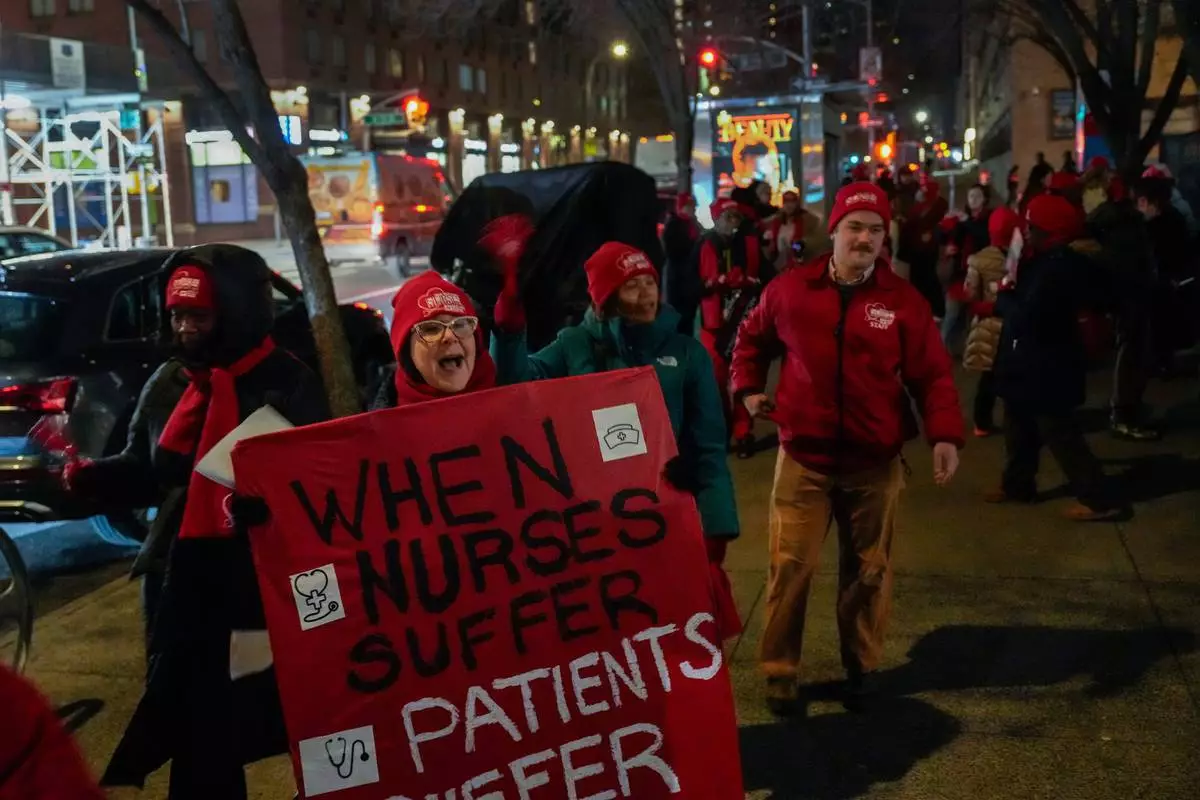
Nurses strike outside Mount Sinai West Hospital, Monday, Jan. 12, 2026, in New York. (AP Photo/Yuki Iwamura)

Nurses strike outside Mount Sinai West Hospital, Monday, Jan. 12, 2026, in New York. (AP Photo/Yuki Iwamura)

Nurses strike outside Mount Sinai West Hospital, Monday, Jan. 12, 2026, in New York. (AP Photo/Yuki Iwamura)

Nurses strike outside Mount Sinai West Hospital, Monday, Jan. 12, 2026, in New York. (AP Photo/Yuki Iwamura)

Nurses strike outside Mount Sinai West Hospital, Monday, Jan. 12, 2026, in New York. (AP Photo/Yuki Iwamura)

Nurses strike outside Mount Sinai West Hospital, Monday, Jan. 12, 2026, in New York. (AP Photo/Yuki Iwamura)

Nurses strike outside Mount Sinai West Hospital, Monday, Jan. 12, 2026, in New York. (AP Photo/Yuki Iwamura)

Nurses strike outside Mount Sinai West Hospital, Monday, Jan. 12, 2026, in New York. (AP Photo/Yuki Iwamura)

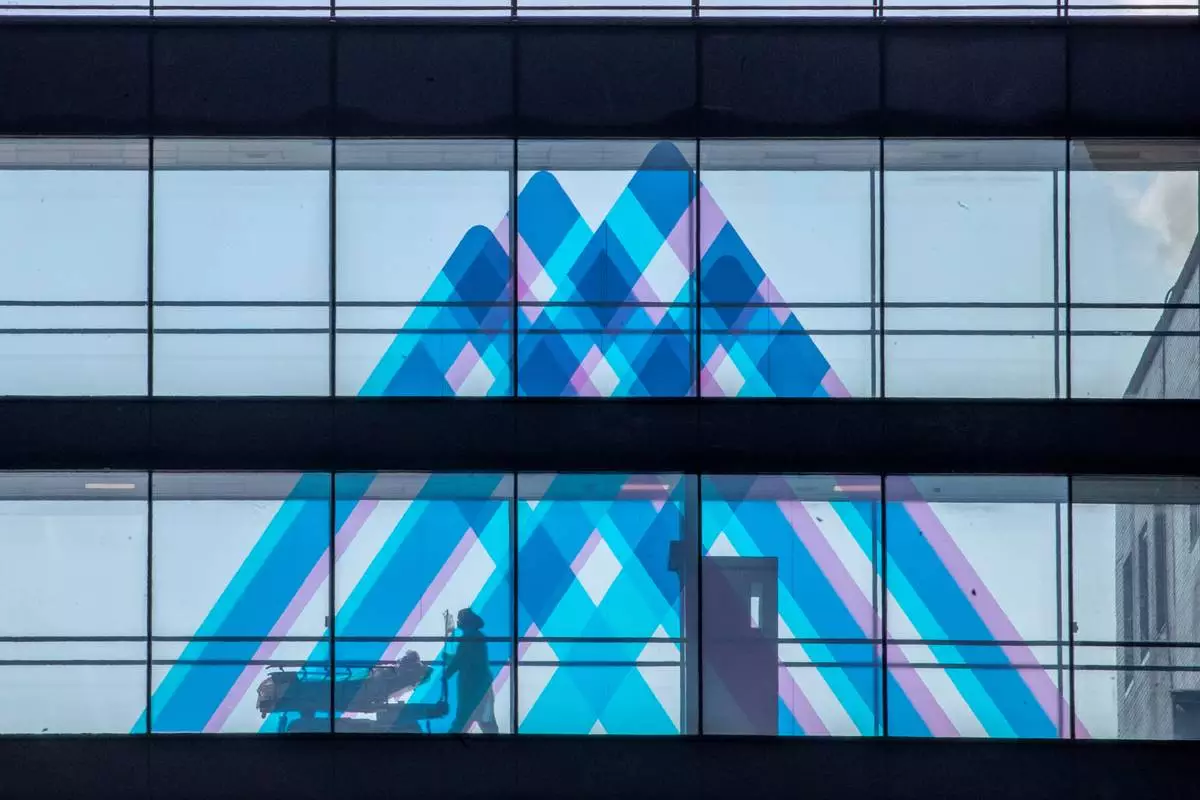
FILE - A medical worker transports a patient at Mount Sinai Hospital, April 1, 2020, in New York. (AP Photo/Mary Altaffer, File)

FILE - A medical worker transports a patient at Mount Sinai Hospital, April 1, 2020, in New York. (AP Photo/Mary Altaffer, File)

Recommended Articles