Skip to Content Facebook Feature Image

Few migrants remain in the Darien Gap, but an environmental crisis has been left behind

ENT

Few migrants remain in the Darien Gap, but an environmental crisis has been left behind
ENT

ENT

Few migrants remain in the Darien Gap, but an environmental crisis has been left behind

2025-05-05 12:03 Last Updated At:13:02

VILLA CALETA, Panama (AP) — For centuries, the Comarca Embera people have fished and bathed in the Turquesa River, a jungle waterway flowing out of the Darien Gap. They've long been accustomed to changes in the water — rainy season brings mud and sediment in the faster-flowing river. But now, they're seeing unprecedented change in the wake of a migratory crisis: Trash, gasoline and fecal matter have been left behind from the 1.2 million vulnerable people who trekked through one of the Earth's most biodiverse rainforests.

Migration through the Darien Gap — a remote area along the Colombia-Panama that sat largely untouched until it became the epicenter of 2021's crush of migration — has virtually vanished, but families in the small community of Villa Caleta still fear bathing in the winding river. Fish, their main food source, reek of fuel from boats that carried people down the Turquesa. And deeper in the jungle, criminal groups that pushed into the region to profit off the migratory route are part of illegal gold mining and deforestation operations.

More Images
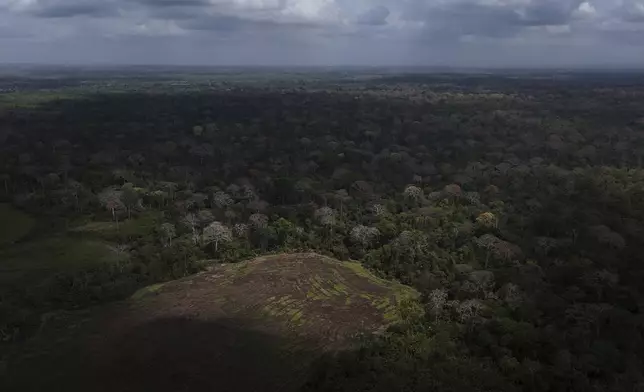
Land cleared for ranching in Santa Fe, Panama, Sunday, April 6, 2025. (AP Photo/Matias Delacroix)

Land cleared for ranching in Santa Fe, Panama, Sunday, April 6, 2025. (AP Photo/Matias Delacroix)
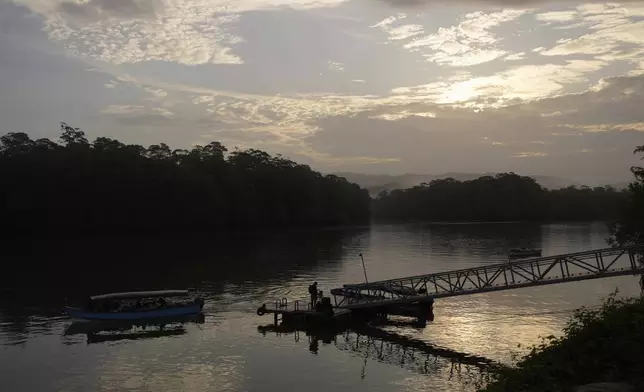
A boat arrives to Puerto Kimba, Panama, Saturday, April 5, 2025. (AP Photo/Matias Delacroix)
A boat arrives to Puerto Kimba, Panama, Saturday, April 5, 2025. (AP Photo/Matias Delacroix)

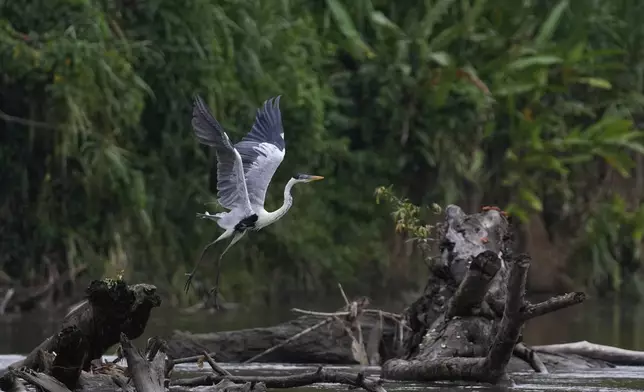
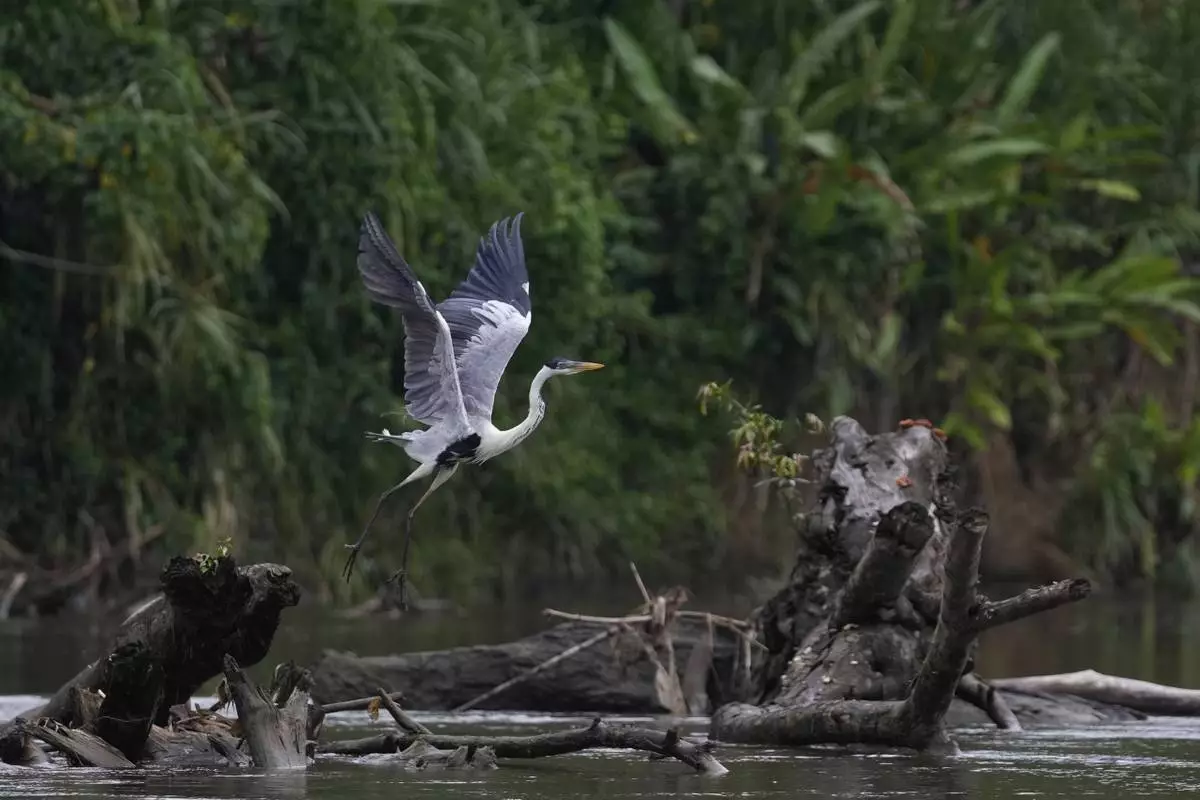
A wading bird takes flight in Villa Caleta, Panama, Monday, April 7, 2025. (AP Photo/Matias Delacroix)
A wading bird takes flight in Villa Caleta, Panama, Monday, April 7, 2025. (AP Photo/Matias Delacroix)

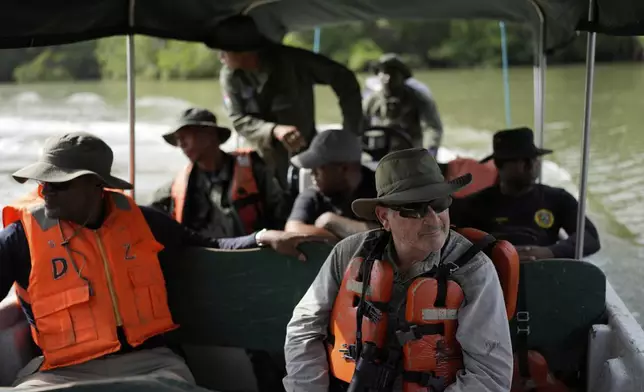
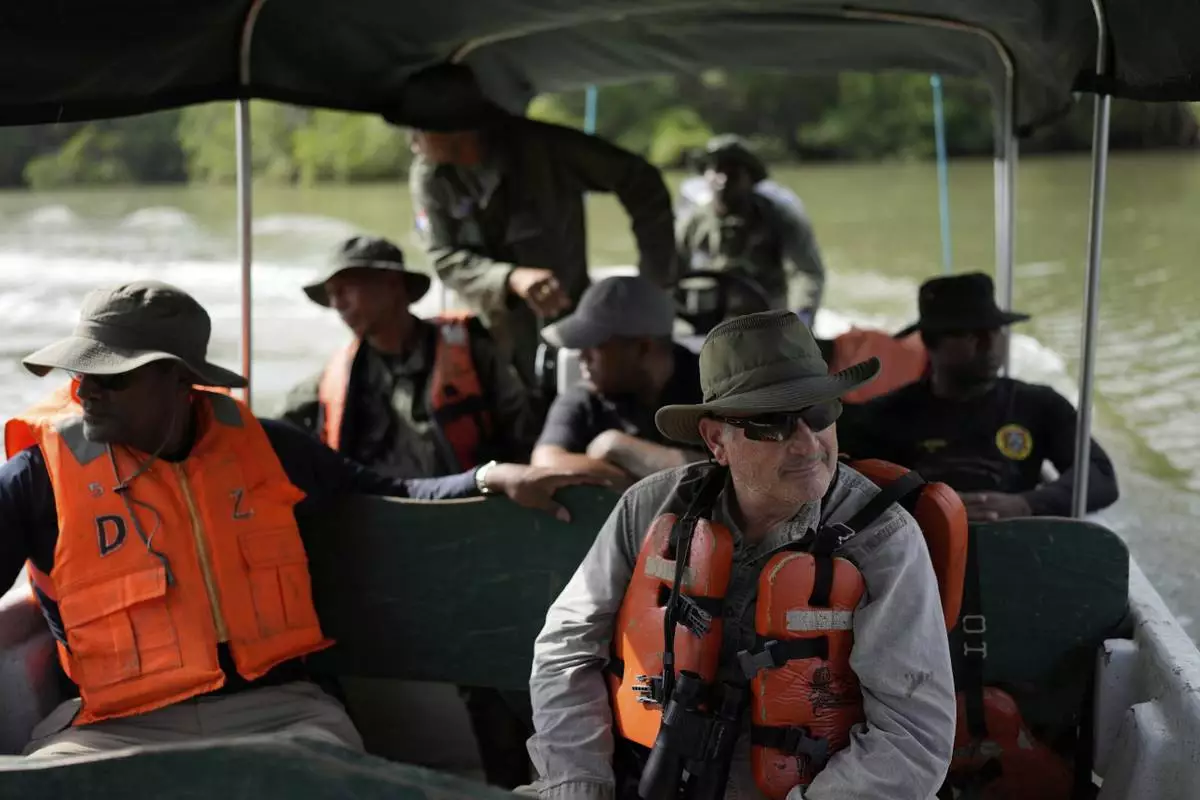
Panama's Environment Minister Juan Carlos Navarro tours Punta Patino, Panama, Saturday, April 5, 2025. (AP Photo/Matias Delacroix)
Panama's Environment Minister Juan Carlos Navarro tours Punta Patino, Panama, Saturday, April 5, 2025. (AP Photo/Matias Delacroix)

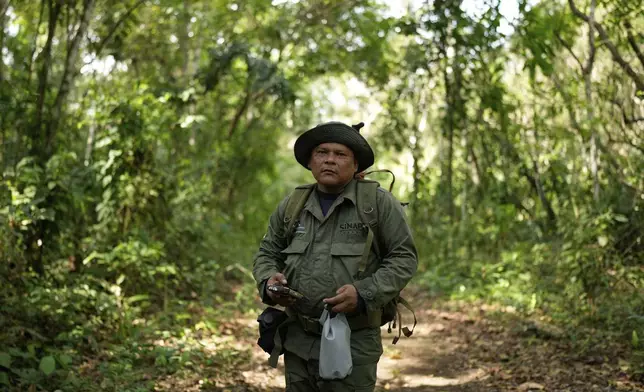
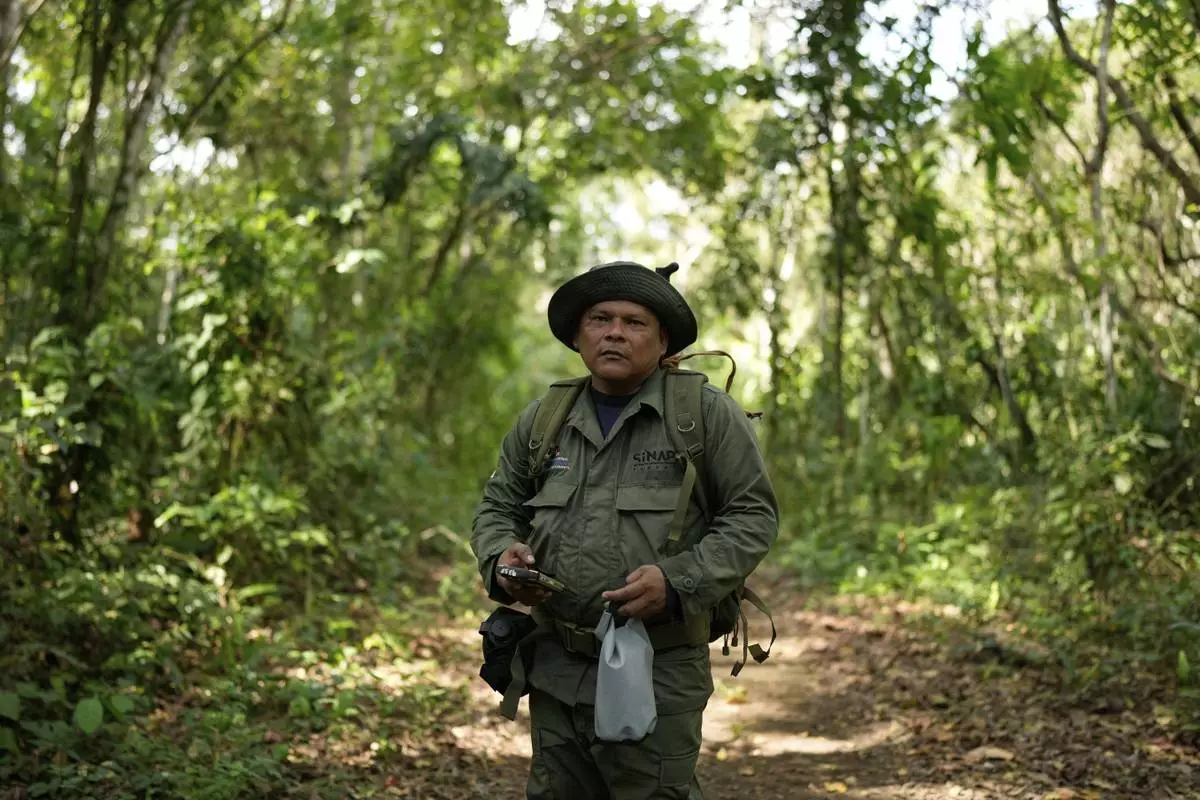
Park ranger Gari Mepaquito in Punta Patino, Panama, Saturday, April 5, 2025. (AP Photo/Matias Delacroix)
Park ranger Gari Mepaquito in Punta Patino, Panama, Saturday, April 5, 2025. (AP Photo/Matias Delacroix)

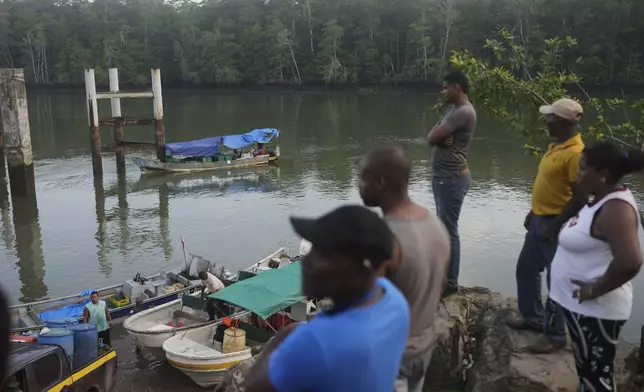
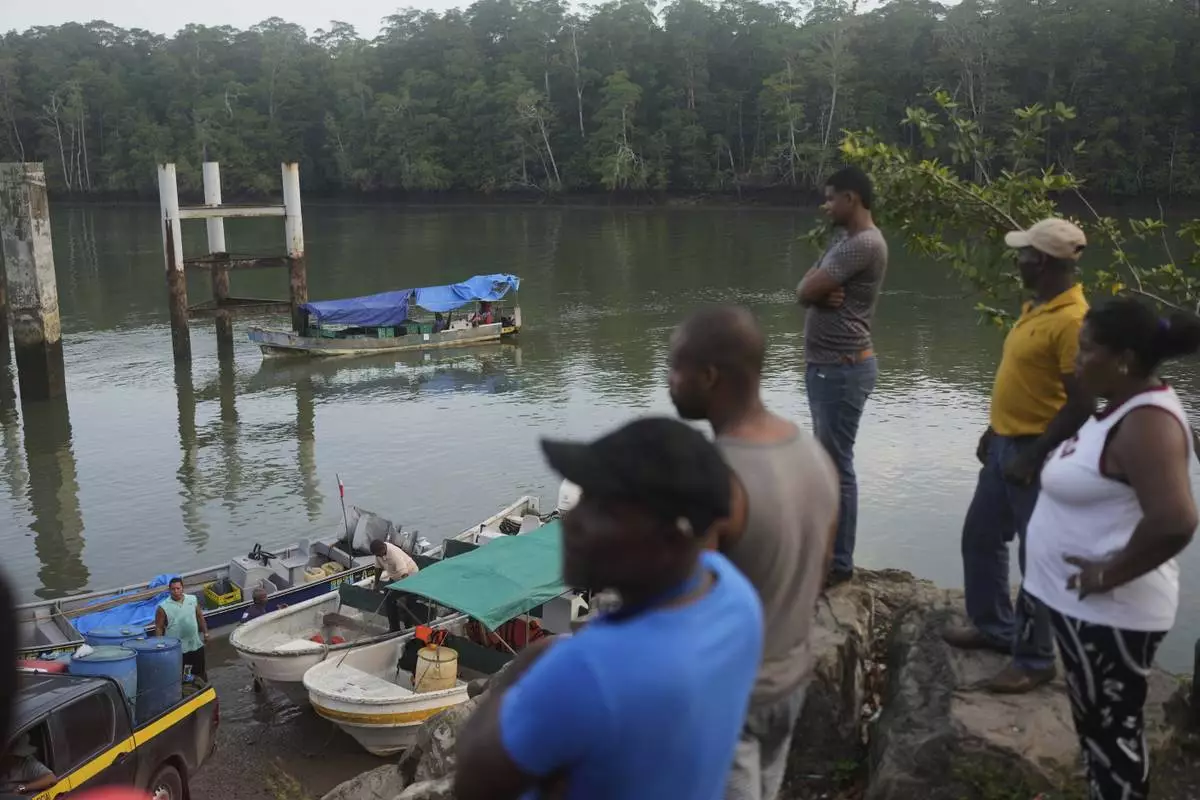
Residents gather on the dock in Puerto Kimba, Panama, Saturday, April 5, 2025. (AP Photo/Matias Delacroix)
Residents gather on the dock in Puerto Kimba, Panama, Saturday, April 5, 2025. (AP Photo/Matias Delacroix)

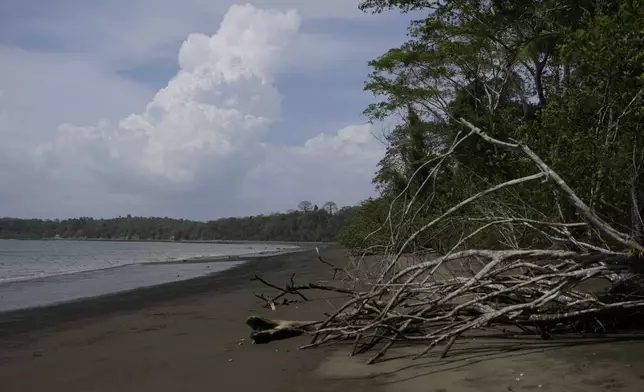
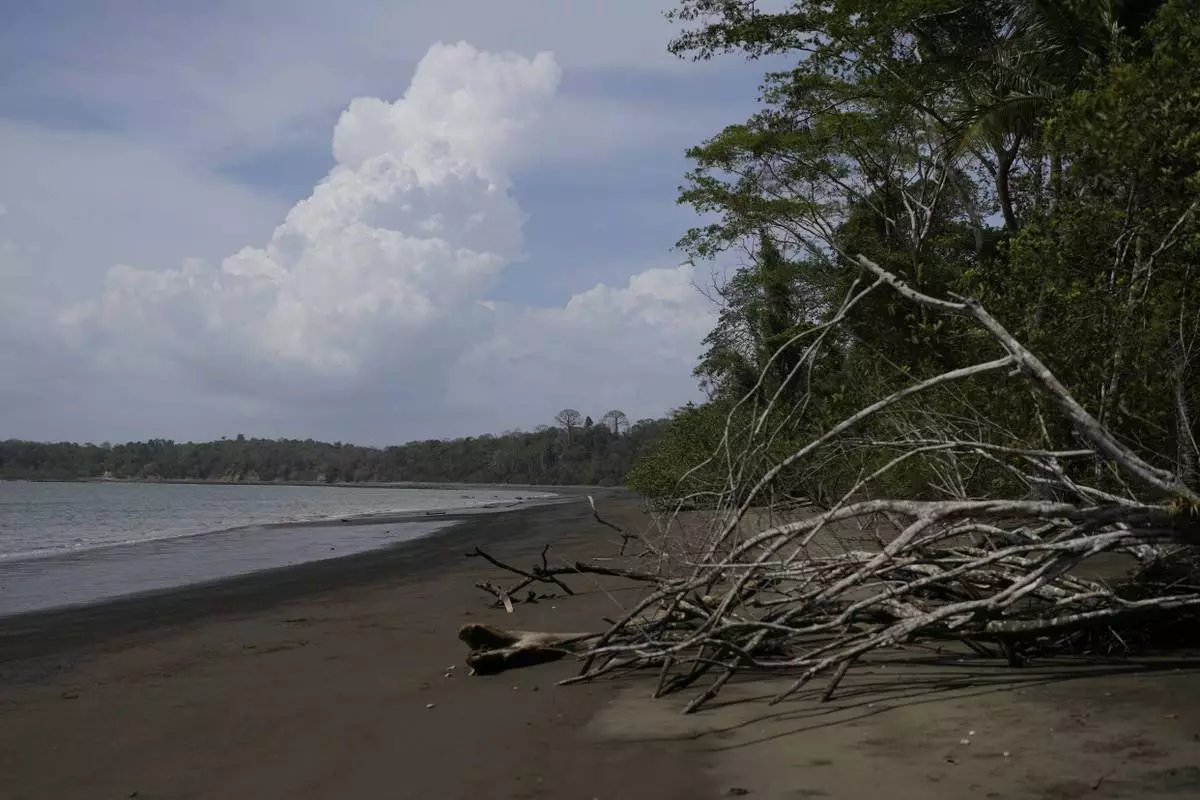
A view of the beach shore in Punta Patino, Panama, Saturday, April 5, 2025. (AP Photo/Matias Delacroix)
A view of the beach shore in Punta Patino, Panama, Saturday, April 5, 2025. (AP Photo/Matias Delacroix)

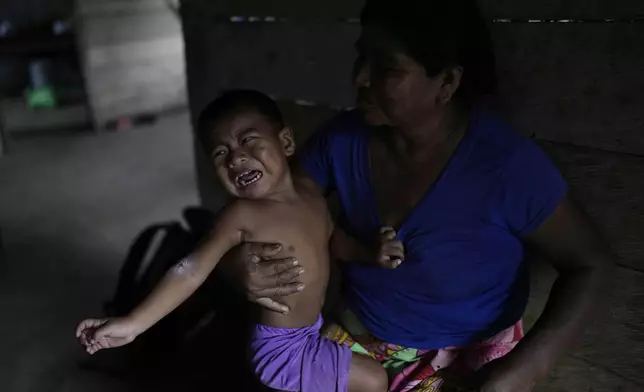
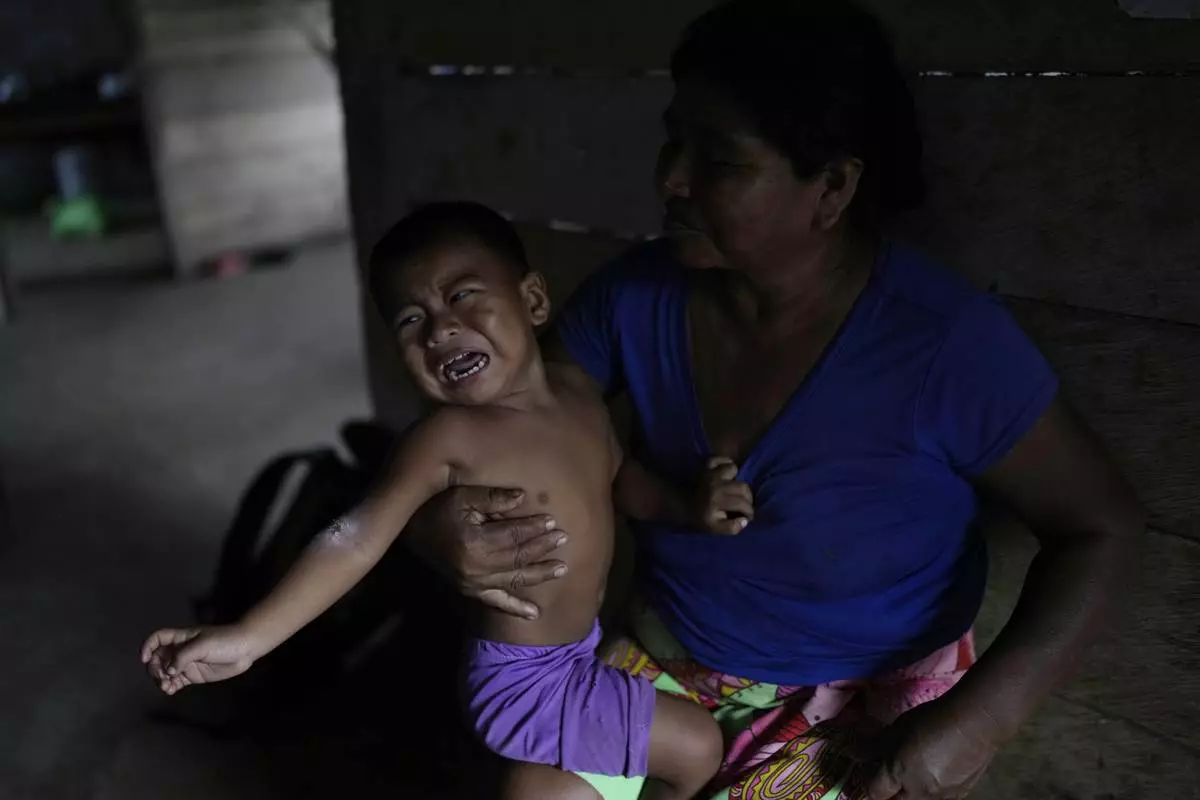
Flor Maria Guainora holds her grandson who cries due to a skin rash in Villa Caleta, a community in Panama once traversed by hundreds of thousands of migrants on their way to the United States, Monday, April 7, 2025. (AP Photo/Matias Delacroix)
Flor Maria Guainora holds her grandson who cries due to a skin rash in Villa Caleta, a community in Panama once traversed by hundreds of thousands of migrants on their way to the United States, Monday, April 7, 2025. (AP Photo/Matias Delacroix)

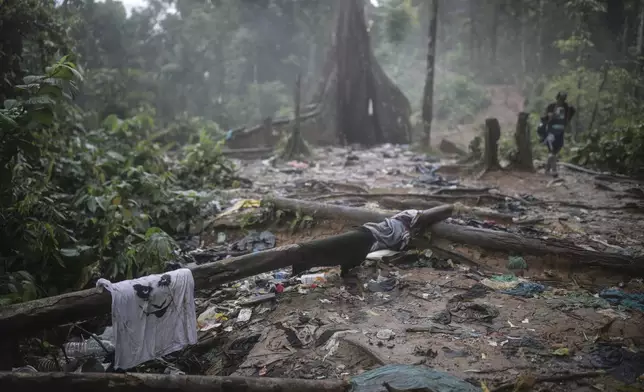
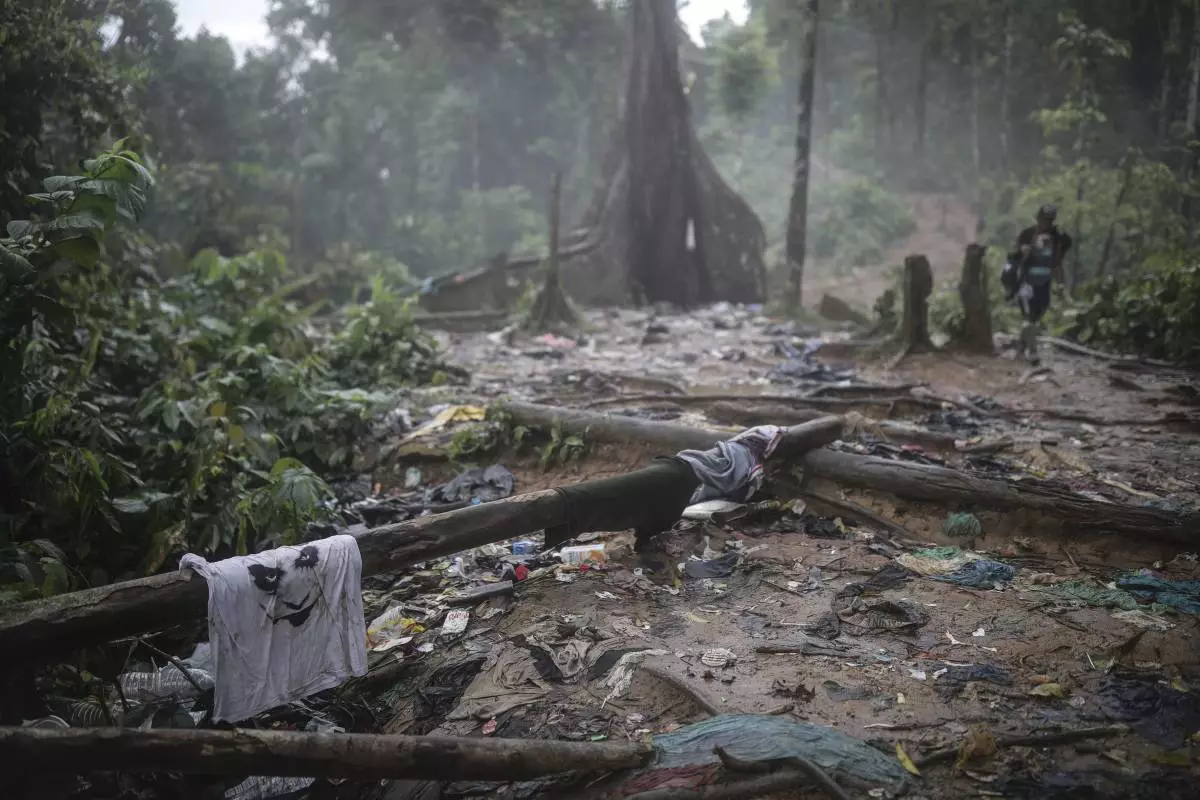
FILE - Clothing and garbage litter the trail where migrants have been trekking across the Darien Gap from Colombia to Panama in hopes of eventually reaching the United States, on May 10, 2023. (AP Photo/Ivan Valencia, File)
FILE - Clothing and garbage litter the trail where migrants have been trekking across the Darien Gap from Colombia to Panama in hopes of eventually reaching the United States, on May 10, 2023. (AP Photo/Ivan Valencia, File)

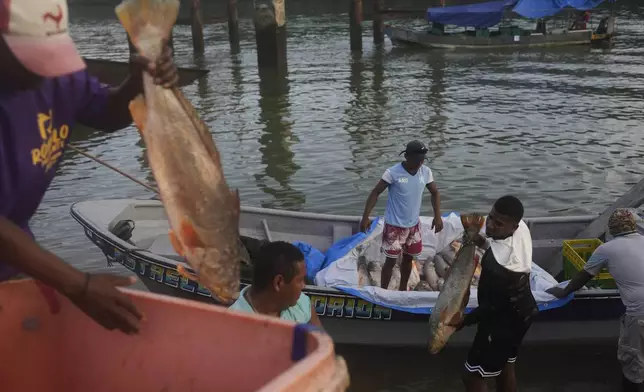
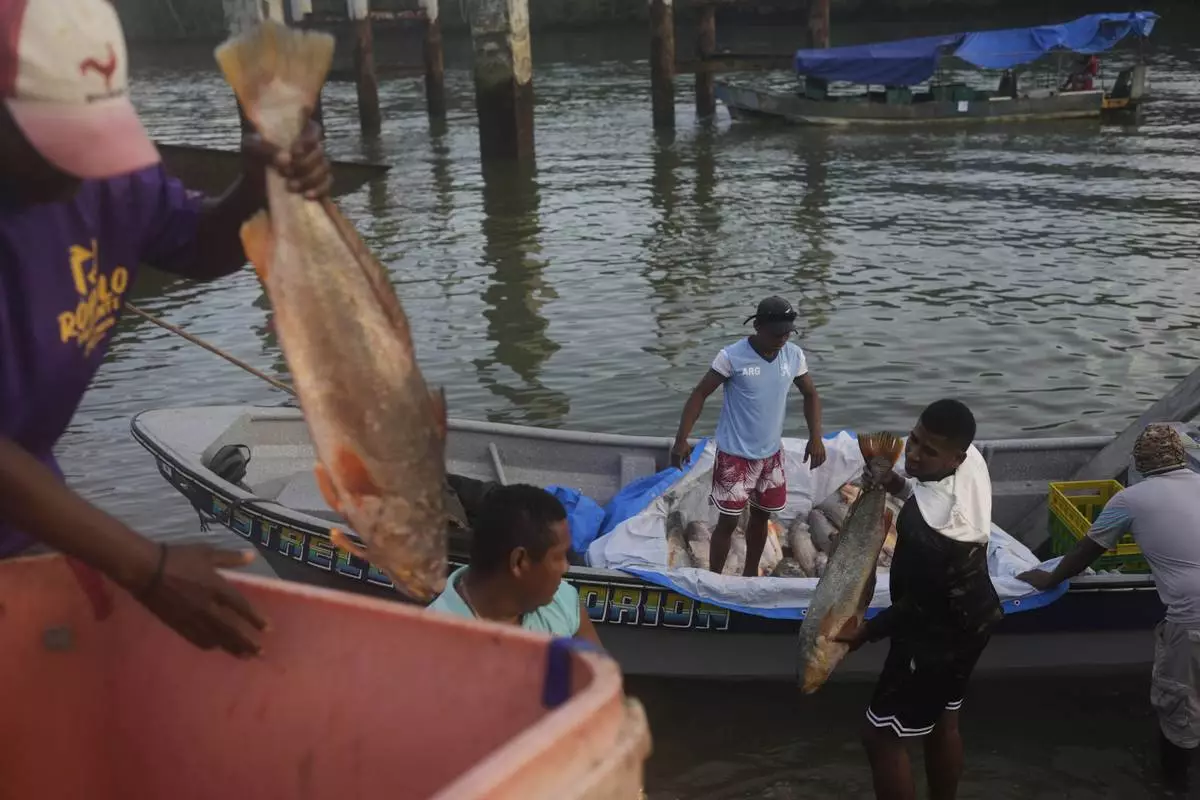
Fishermen unload their catch at Puerto Kimba, Panama, Saturday, April 5, 2025. (AP Photo/Matias Delacroix)
Fishermen unload their catch at Puerto Kimba, Panama, Saturday, April 5, 2025. (AP Photo/Matias Delacroix)

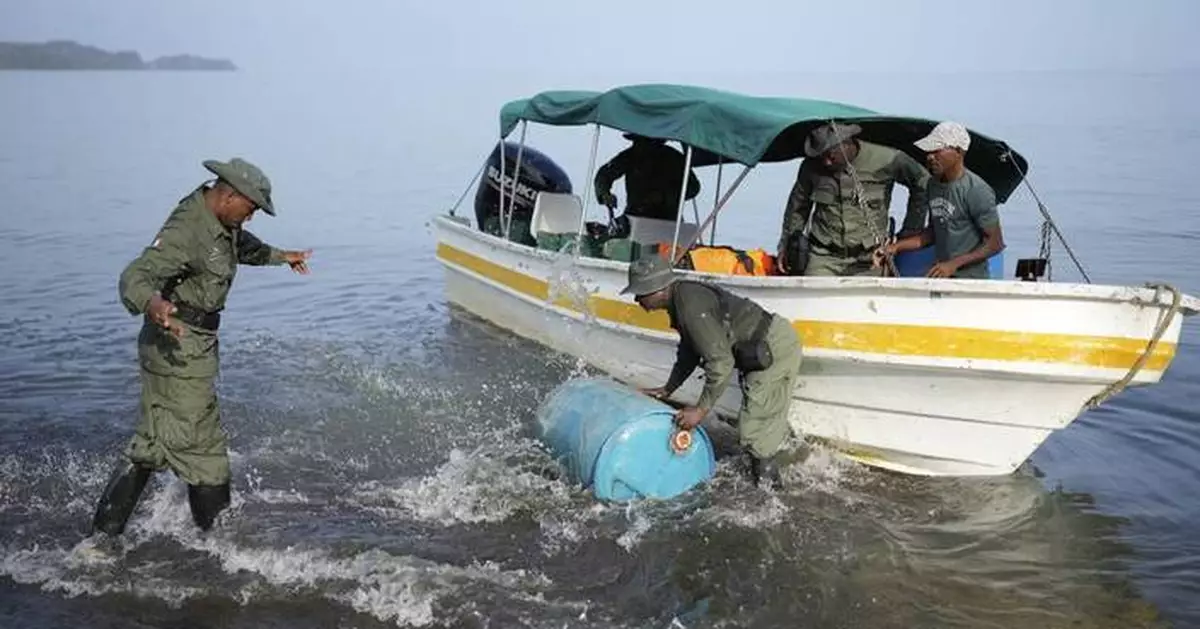
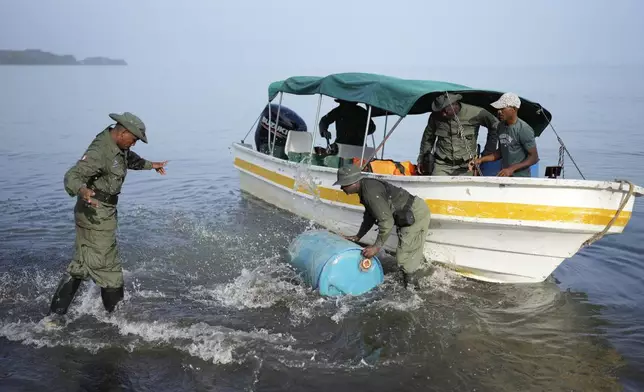
Park rangers unload a container in Punta Patino, Panama, Saturday, April 5, 2025. (AP Photo/Matias Delacroix)

Park rangers unload a container in Punta Patino, Panama, Saturday, April 5, 2025. (AP Photo/Matias Delacroix)

Panamanian authorities and residents say that with the humanitarian crisis came an environmental crisis that will take years to reverse, while local communities suffer the consequences.

“The water is polluted with garbage,” said Militza Olea, 43, eyeing the red sores still dotting the skin of her 3-year-old nephew days after he bathed in the Turquesa. “We have to be careful. Everyone climbs out of the river with hives on their skin, especially the children.”

It's been months since migration in the once-untouched jungles and rivers plummeted, but authorities say pollution and other environmental concerns are at a high. They estimate that 2,500 tons of trash were left in the Darien Gap and that just cleaning it up along the migratory route will cost around $12 million.

At the height of migration, as many as 3,000 people a day floated down the Turquesa past Villa Caleta and other communities on their way out of the jungle.

Today, floating in the water and tangled in trees are foam mats migrants used to sleep, tattered shirts plastered with dirt, backpacks, plastic bottles and more.

Panamanian Environmental Minister Juan Carlos Navarro blames the American government. He said the Trump administration should foot the bill for cleaning because the vast majority of migrants traversing the Darien Gap were headed to the U.S.

Navarro noted Panama's lack of money and resources and said the government was promised $3 million by the outgoing Biden administration in January, but that under President Donald Trump the promised funds haven’t arrived.

“They’re not cleaning up their mess,” he said. "If the United States is responsible because it opened its borders, then the United States should pay for it.”

The White House didn't respond to an emailed request for comment.

Beyond the trash that can be seen floating in the river, officials say tests show dangerous levels of contamination.

The most recent test by government hydrologists, in August, showed high amounts of fecal coliform bacteria in the Turquesa River, typically indicating human waste. Communities also found decomposing bodies floating past their homes, leaders said.

Officials said they need to carry out more tests on the water's current state. But they believe the issues likely remain, as most of what's leftover from migration remains farther upstream, where border police blocked Associated Press journalists despite permission granted by Panamanian environmental authorities.

Olea and others in the Indigenous Comarca Embera community — consisting of about 12,000 people who long lived off fertile lands deep in Panama’s southern jungle, until their territory intersected with the migratory route running from Colombia — attribute the rashes appearing on residents' arms to the pollution.

While doctors and officials have made no medical diagnosis, residents say symptoms appeared only when migration began to surge, around 2021.

Olea said her family spends money from its plantain crops for expensive antibiotic creams, brought by family members who travel hours by boat from the closest towns. Not everyone can afford it, and they say their rashes spread.

Olea also worries about water supply. There's fresh drinking water for now, thanks to a small plant installed by an aid organization, but she said their small water stores won’t be enough during the summer dry season.

“When the time comes, the people here are going to need that water,” she said. “The river has to be clean.”

Food scarcity was already an issue, with the economy suffering from the disappearance of the migrants. Many say environmental effects are exacerbating the problem.

“The fish we catch, they still smell of gasoline,” community leader Cholino de Gracia said. “We can’t fish anymore because you’d practically be eating a fish full of gasoline.”

With the flow of migrants, the Colombian criminal group known as the Gulf Clan pushed into the region, seizing control of the migration route, said Henry Shuldiner, a researcher with Insight Crime investigating organized crime in the Darien Gap.

The group has long cultivated coca, the plant used to produce cocaine, and illegally mined gold — a process that uses mercury to extract gold from ore, poisoning lands and waters around the mines.

On the Colombian side of the Darien Gap, Shuldiner said, the group has taken advantage of its control of large swathes of jungle to expand operations and rake in money from environmental crimes. In some cases, that’s included taking a cut from existing illegal logging operations. In others, they've sliced and burnt through dense jungle to replace with fields of coca.

“We’re seeing increased land clearings around these municipalities that bordered the Darien, mostly for coca cultivation,” Shuldiner said. Along the former migrant trail, “there are environmental crimes happening, and the (Gulf Clan) is profiting directly.”

In some cases, that criminal activity has trickled into Panama as groups set up illegal mining operations in federally protected national parks. In January, authorities said they had dismantled an illegal gold mining network and detained 10 Colombians and Panamanians who left the jungle contaminated with mercury and cyanide.

In other places, Environmental Minister Navarro and residents said, criminals rent land on Indigenous reservations to launder money earned during the economic boom from migration, and they burn and chop down dense jungle to make way for cattle ranches.

In 2023, deforestation in the Darien shot up after years of decline, according to the latest data from Global Forest Watch, which monitors deforestation using satellites. Local leaders say that will deal a long-term blow to the communities that have lived off the land for centuries.

Navarro said Panama's government must try to rescue the jungle from a state of “environmental anarchy.”

“This is a treasure trove of biodiversity,” Navarro said. “They’ve disrupted the whole system of life in this community and damaged some of them forever. ... Now that this disaster has ended, we’re going to be able to conserve our forests.”

But community leader De Gracia and others in the region say the area has long been neglected. They blame Panama's government for not doing more to clean their waters or develop the region in a way that would allow them to bounce back faster.

Olea, watching her nephew play even with the rash running along his arms, worries most for the children in places like Villa Caleta.

“Without water, there's no life here,” she said.
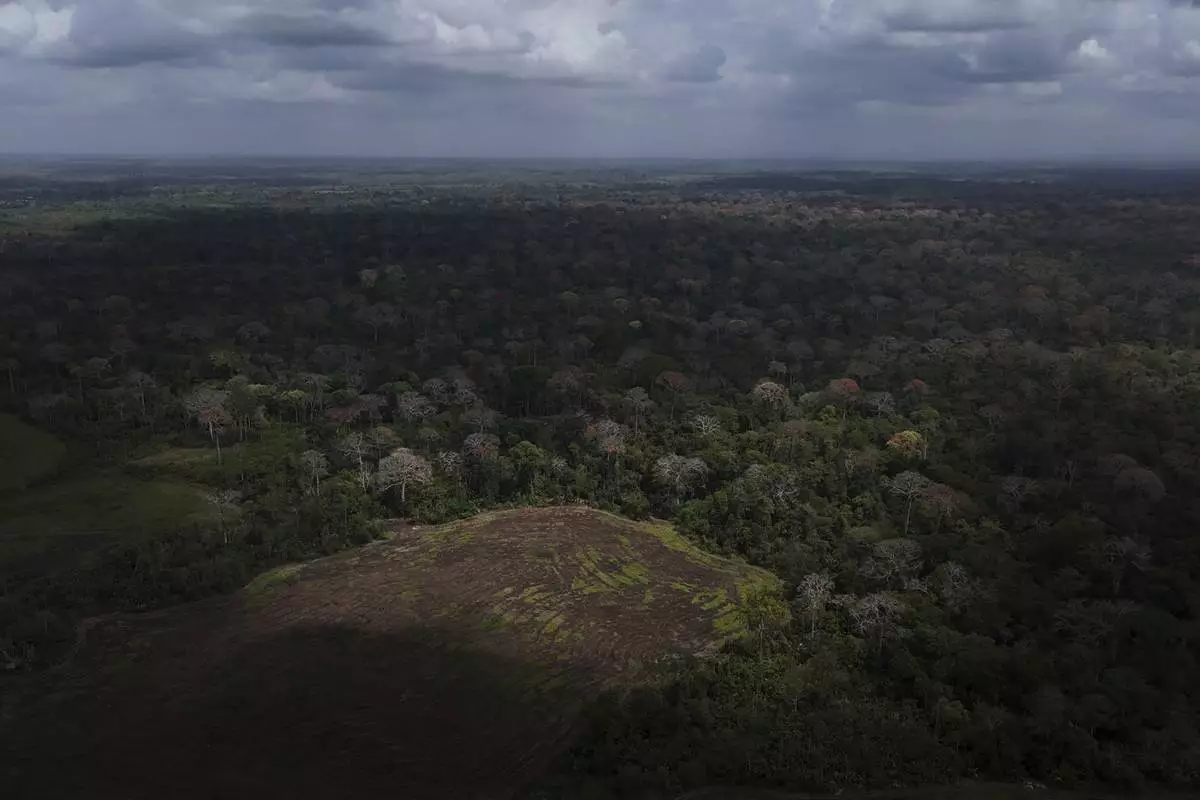
Land cleared for ranching in Santa Fe, Panama, Sunday, April 6, 2025. (AP Photo/Matias Delacroix)
Land cleared for ranching in Santa Fe, Panama, Sunday, April 6, 2025. (AP Photo/Matias Delacroix)

A boat arrives to Puerto Kimba, Panama, Saturday, April 5, 2025. (AP Photo/Matias Delacroix)
A boat arrives to Puerto Kimba, Panama, Saturday, April 5, 2025. (AP Photo/Matias Delacroix)

A wading bird takes flight in Villa Caleta, Panama, Monday, April 7, 2025. (AP Photo/Matias Delacroix)
A wading bird takes flight in Villa Caleta, Panama, Monday, April 7, 2025. (AP Photo/Matias Delacroix)

Panama's Environment Minister Juan Carlos Navarro tours Punta Patino, Panama, Saturday, April 5, 2025. (AP Photo/Matias Delacroix)
Panama's Environment Minister Juan Carlos Navarro tours Punta Patino, Panama, Saturday, April 5, 2025. (AP Photo/Matias Delacroix)

Park ranger Gari Mepaquito in Punta Patino, Panama, Saturday, April 5, 2025. (AP Photo/Matias Delacroix)
Park ranger Gari Mepaquito in Punta Patino, Panama, Saturday, April 5, 2025. (AP Photo/Matias Delacroix)

Residents gather on the dock in Puerto Kimba, Panama, Saturday, April 5, 2025. (AP Photo/Matias Delacroix)
Residents gather on the dock in Puerto Kimba, Panama, Saturday, April 5, 2025. (AP Photo/Matias Delacroix)

A view of the beach shore in Punta Patino, Panama, Saturday, April 5, 2025. (AP Photo/Matias Delacroix)
A view of the beach shore in Punta Patino, Panama, Saturday, April 5, 2025. (AP Photo/Matias Delacroix)

Flor Maria Guainora holds her grandson who cries due to a skin rash in Villa Caleta, a community in Panama once traversed by hundreds of thousands of migrants on their way to the United States, Monday, April 7, 2025. (AP Photo/Matias Delacroix)
Flor Maria Guainora holds her grandson who cries due to a skin rash in Villa Caleta, a community in Panama once traversed by hundreds of thousands of migrants on their way to the United States, Monday, April 7, 2025. (AP Photo/Matias Delacroix)

FILE - Clothing and garbage litter the trail where migrants have been trekking across the Darien Gap from Colombia to Panama in hopes of eventually reaching the United States, on May 10, 2023. (AP Photo/Ivan Valencia, File)
FILE - Clothing and garbage litter the trail where migrants have been trekking across the Darien Gap from Colombia to Panama in hopes of eventually reaching the United States, on May 10, 2023. (AP Photo/Ivan Valencia, File)

Fishermen unload their catch at Puerto Kimba, Panama, Saturday, April 5, 2025. (AP Photo/Matias Delacroix)
Fishermen unload their catch at Puerto Kimba, Panama, Saturday, April 5, 2025. (AP Photo/Matias Delacroix)

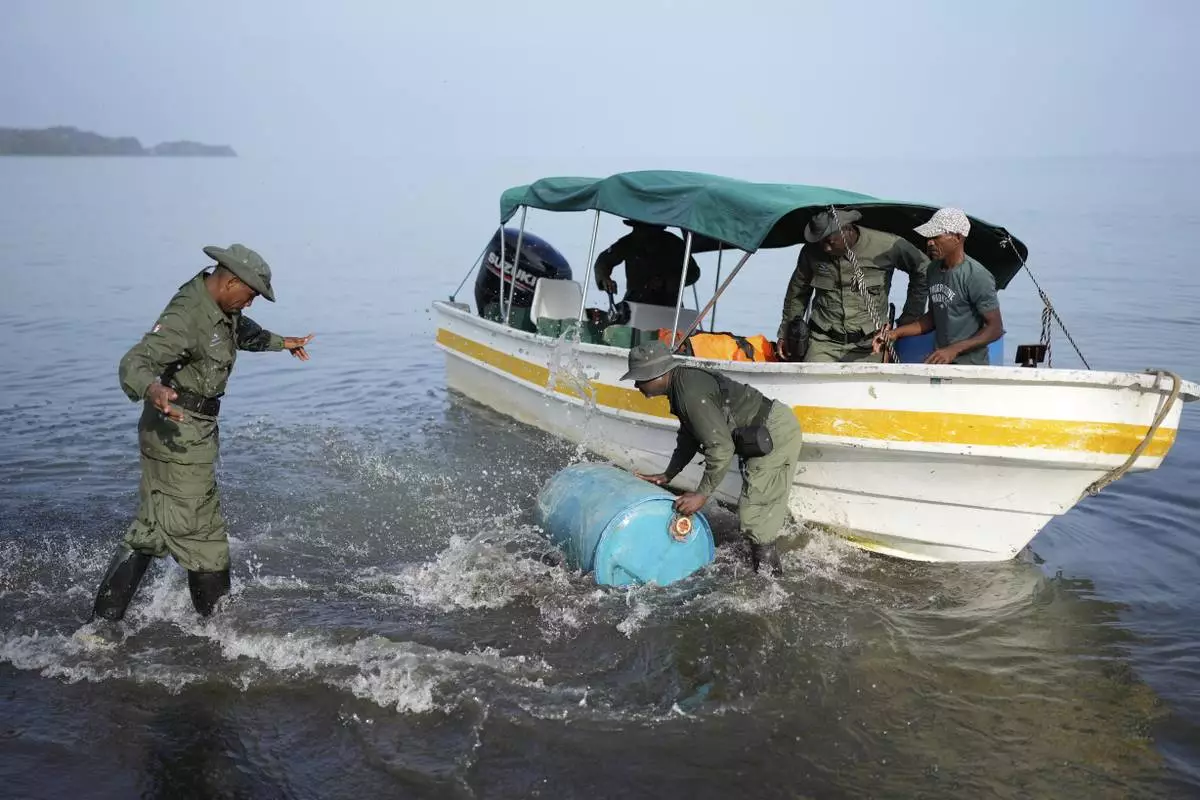
Park rangers unload a container in Punta Patino, Panama, Saturday, April 5, 2025. (AP Photo/Matias Delacroix)
Park rangers unload a container in Punta Patino, Panama, Saturday, April 5, 2025. (AP Photo/Matias Delacroix)
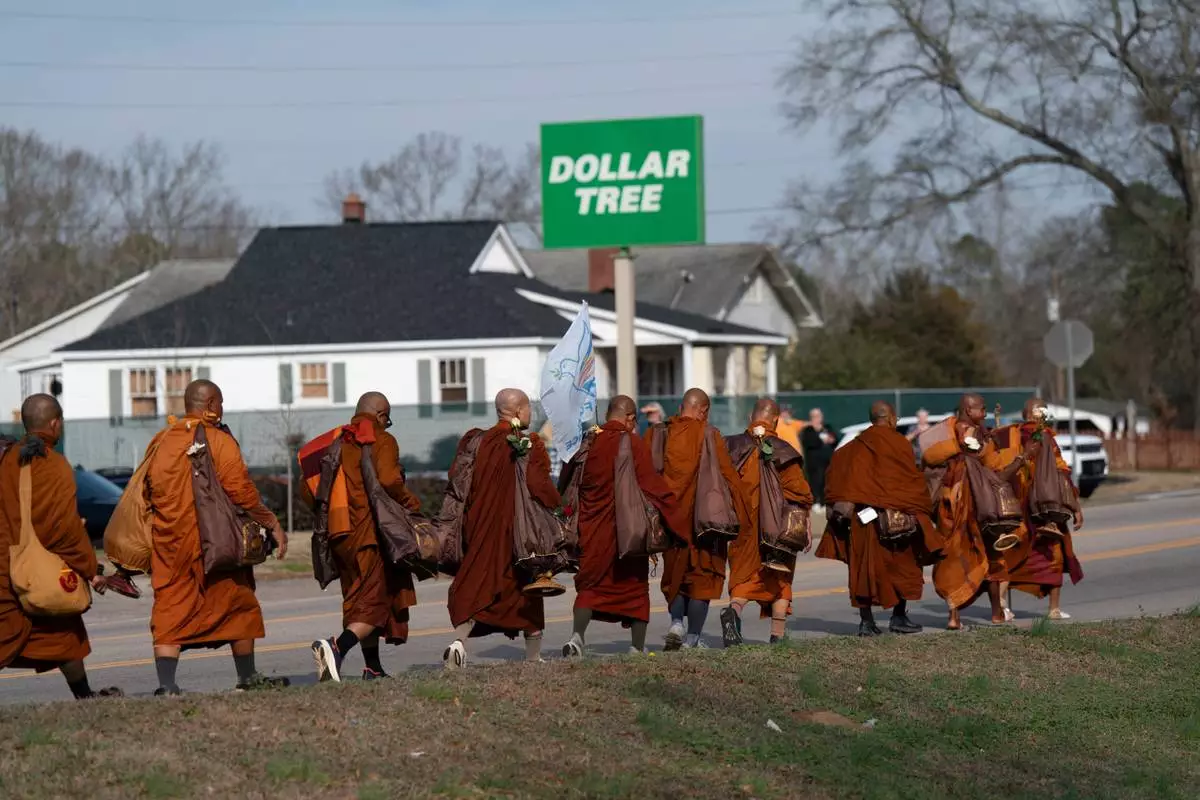
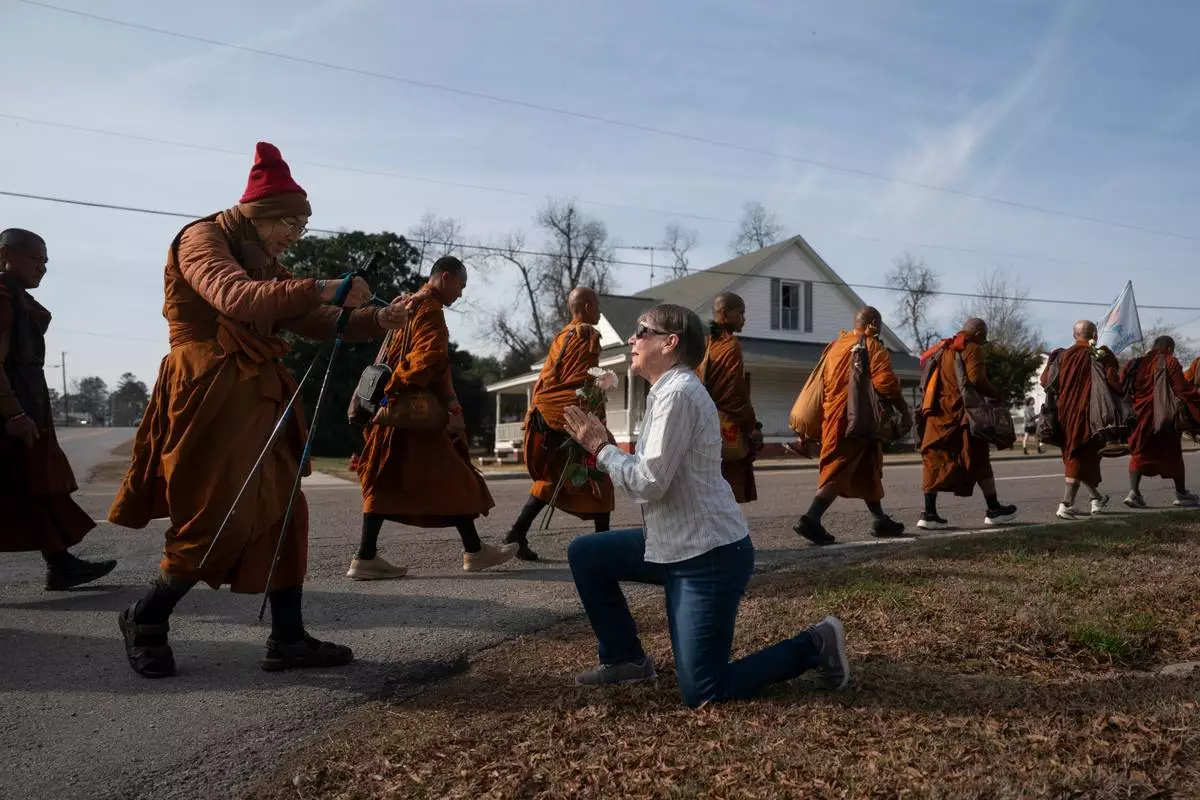
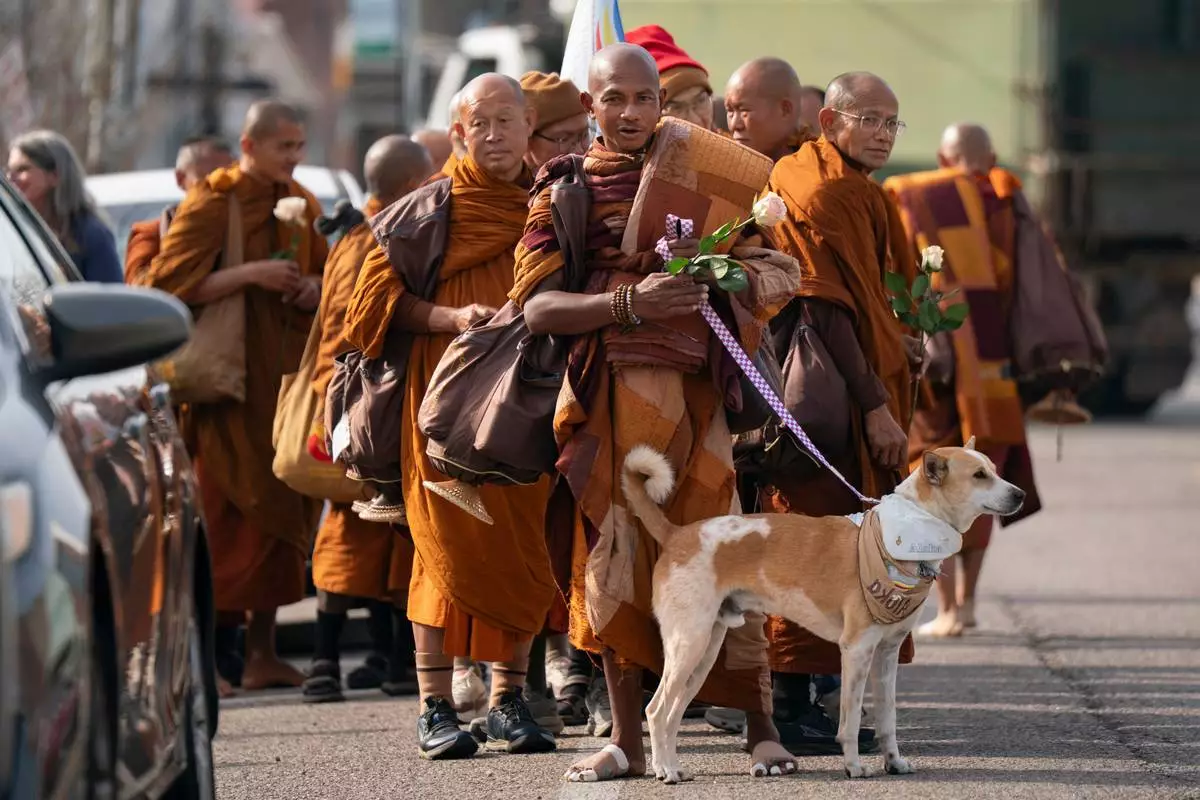
A group of Buddhist monks and their rescue dog are striding single file down country roads and highways across the South, captivating Americans nationwide and inspiring droves of locals to greet them along their route.

In their flowing saffron and ocher robes, the men are walking for peace. It's a meditative tradition more common in South Asian countries, and it's resonating now in the U.S., seemingly as a welcome respite from the conflict, trauma and politics dividing the nation.

Their journey began Oct. 26, 2025, at a Vietnamese Buddhist temple in Texas, and is scheduled to end in mid-February in Washington, D.C., where they will ask Congress to recognize Buddha’s day of birth and enlightenment as a federal holiday. Beyond promoting peace, their highest priority is connecting with people along the way.

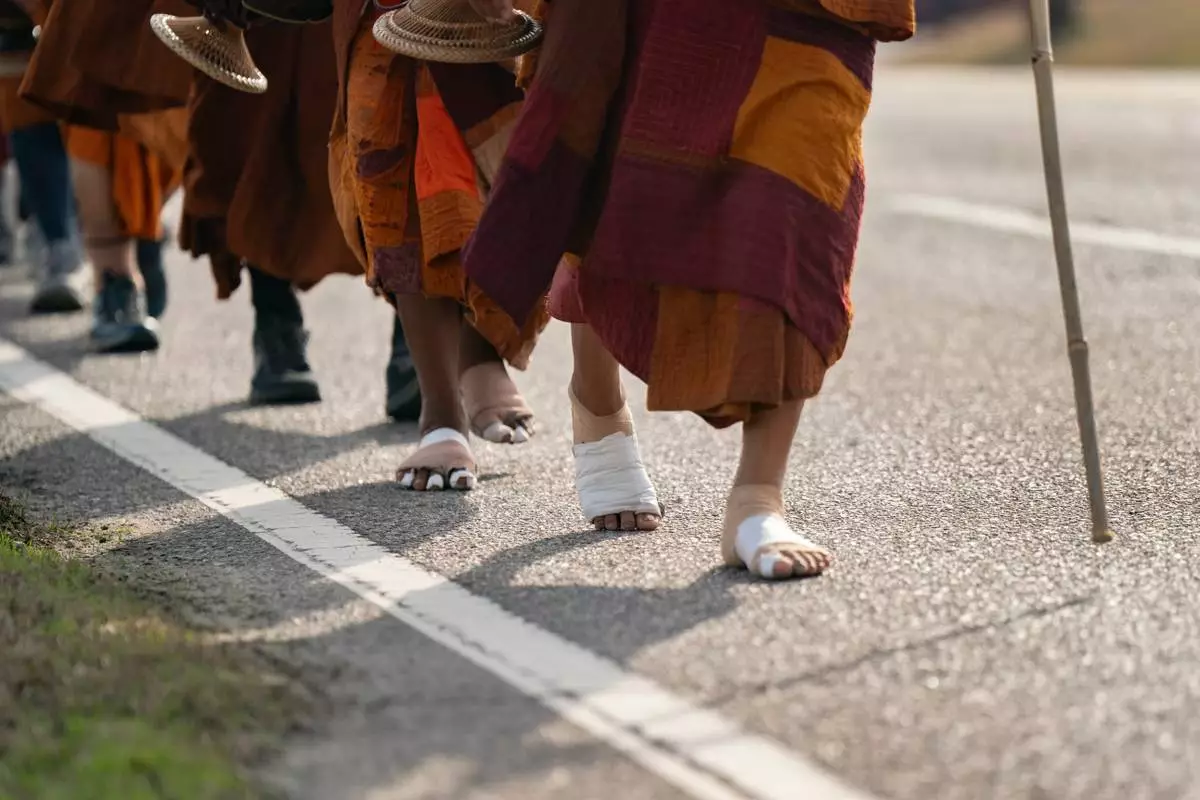
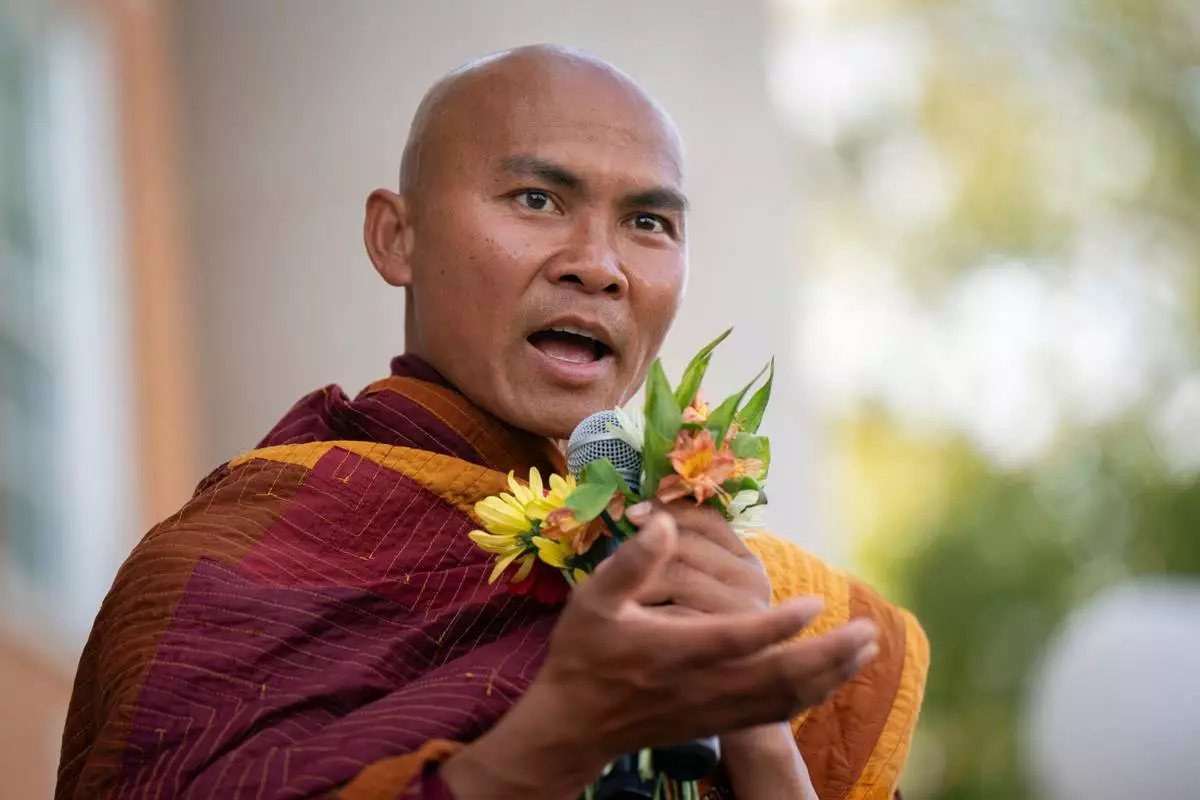
“My hope is, when this walk ends, the people we met will continue practicing mindfulness and find peace,” said the Venerable Bhikkhu Pannakara, the group’s soft-spoken leader who is making the trek barefoot. He teaches about mindfulness, forgiveness and healing at every stop.

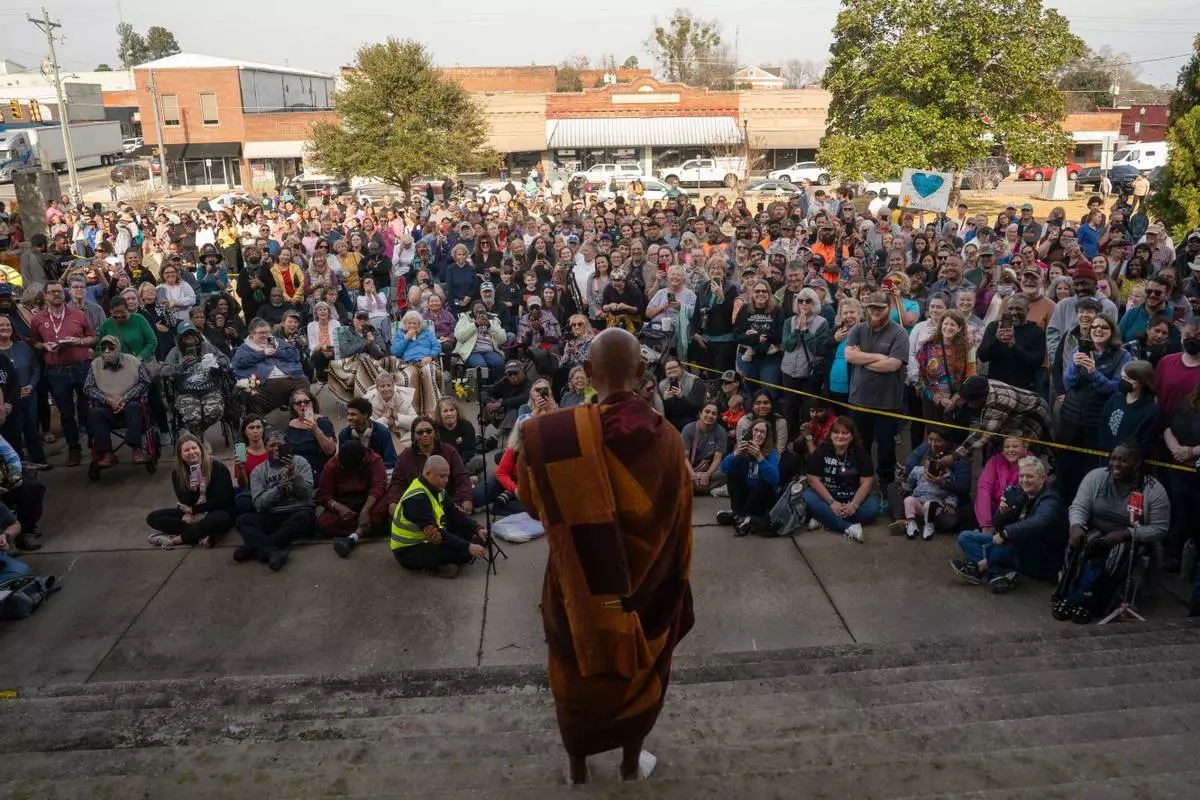
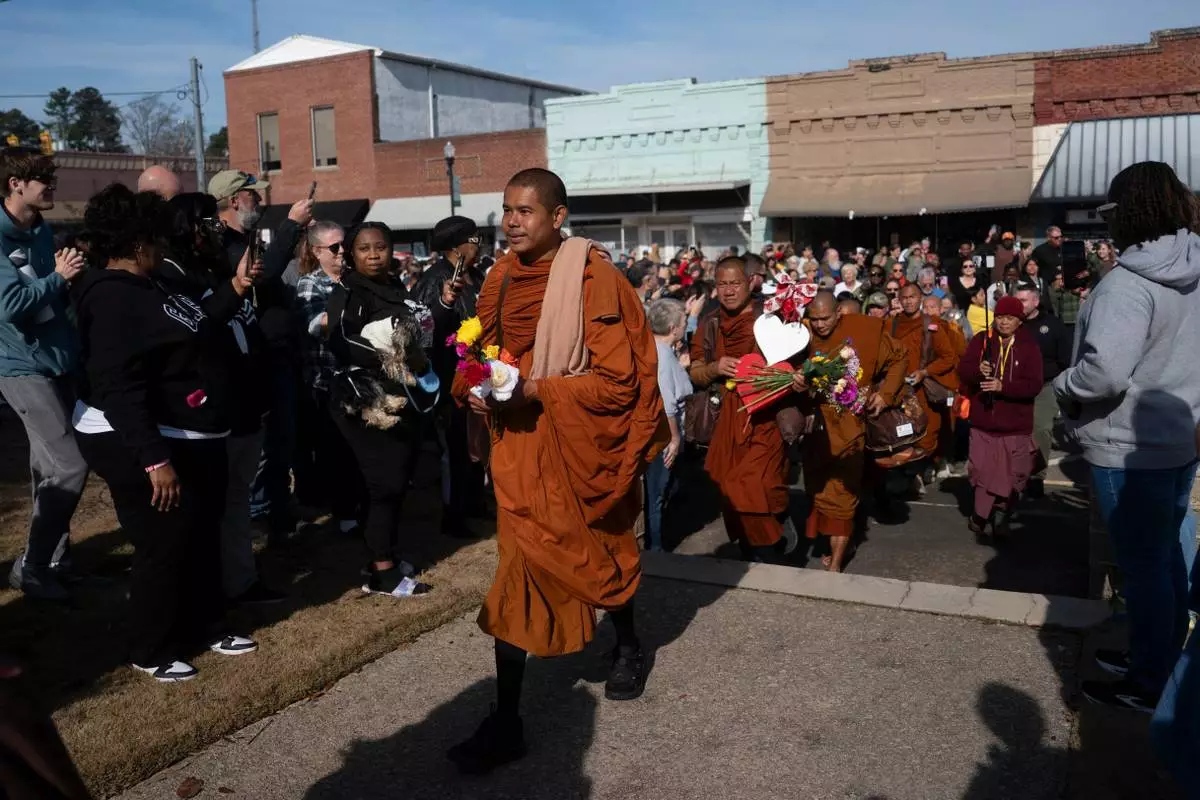
Preferring to sleep each night in tents pitched outdoors, the monks have been surprised to see their message transcend ideologies, drawing huge crowds into churchyards, city halls and town squares across six states. Documenting their journey on social media, they — and their dog, Aloka — have racked up millions of followers online. On Saturday, thousands thronged in Columbia, South Carolina, where the monks chanted on the steps of the State House and received a proclamation from the city's mayor, Daniel Rickenmann.

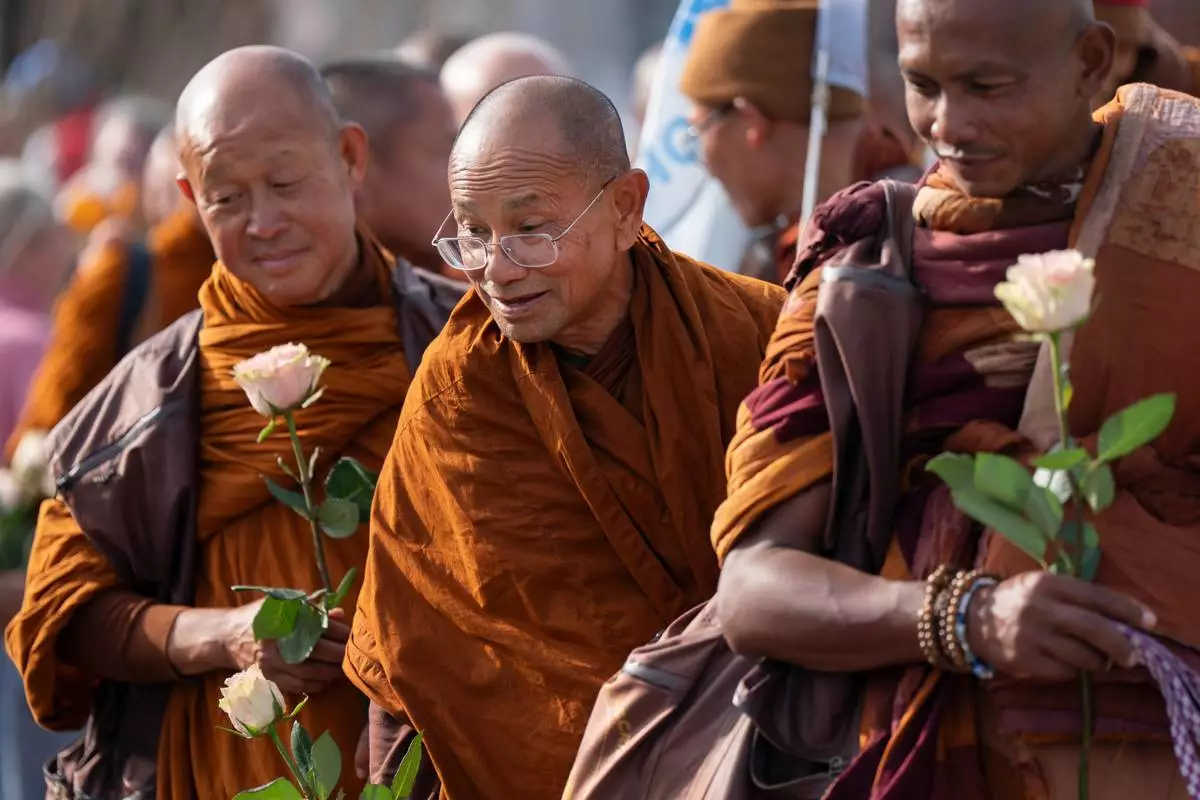
At their stop Thursday in Saluda, South Carolina, Audrie Pearce joined the crowd lining Main Street. She had driven four hours from her village of Little River, and teared up as Pannakara handed her a flower.

“There’s something traumatic and heart-wrenching happening in our country every day,” said Pearce, who describes herself as spiritual, but not religious. “I looked into their eyes and I saw peace. They’re putting their bodies through such physical torture and yet they radiate peace.”

Hailing from Theravada Buddhist monasteries across the globe, the 19 monks began their 2,300 mile (3,700 kilometer) trek at the Huong Dao Vipassana Bhavana Center in Fort Worth.

Their journey has not been without peril. On Nov. 19, as the monks were walking along U.S. Highway 90 near Dayton, Texas, their escort vehicle was hit by a distracted truck driver, injuring two monks. One of them lost his leg, reducing the group to 18.

This is Pannakara's first trek in the U.S., but he's walked across several South Asian countries, including a 112-day journey across India in 2022 where he first encountered Aloka, an Indian Pariah dog whose name means divine light in Sanskrit.

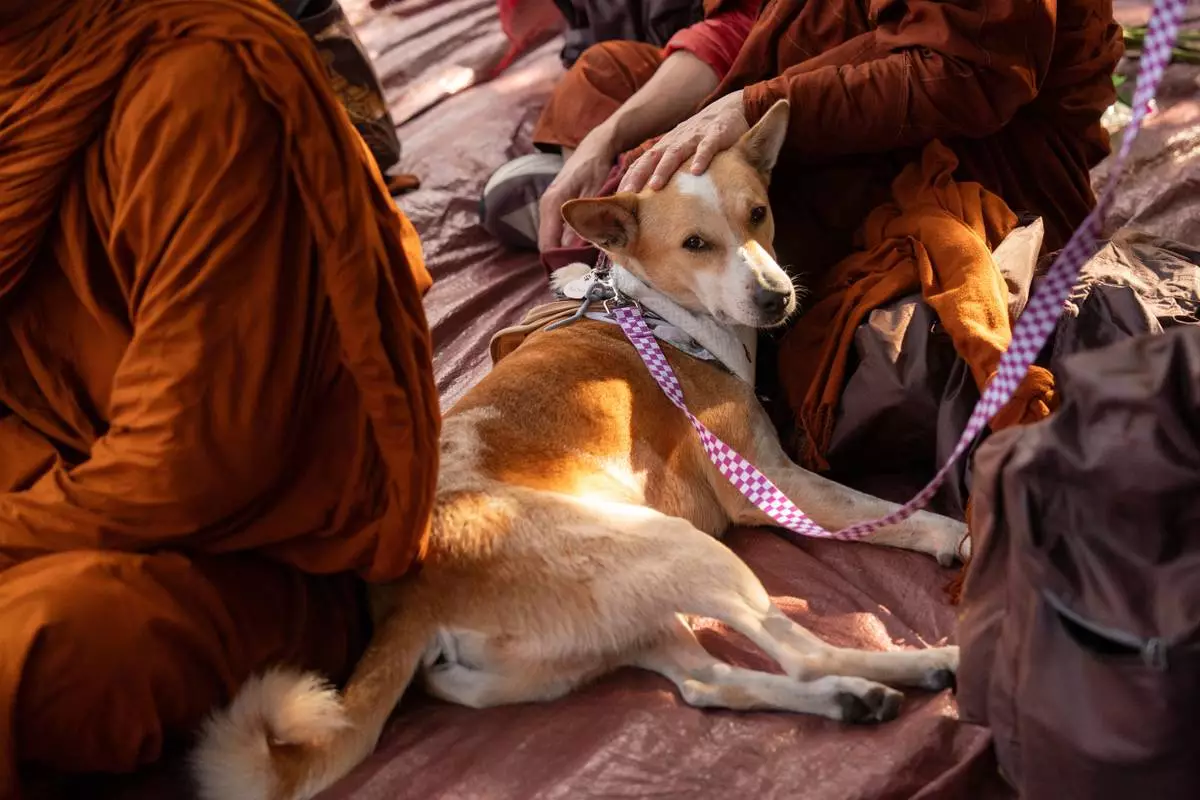
Then a stray, the dog followed him and other monks from Kolkata in eastern India all the way to the Nepal border. At one point, he fell critically ill and Pannakara scooped him up in his arms and cared for him until he recovered. Now, Aloka inspires him to keep going when he feels like giving up.

“I named him light because I want him to find the light of wisdom,” Pannakara said.

The monk's feet are now heavily bandaged because he's stepped on rocks, nails and glass along the way. His practice of mindfulness keeps him joyful despite the pain from these injuries, he said.

Still, traversing the southeast United States has presented unique challenges, and pounding pavement day after day has been brutal.

“In India, we can do shortcuts through paddy fields and farms, but we can’t do that here because there are a lot of private properties,” Pannakara said. “But what’s made it beautiful is how people have welcomed and hosted us in spite of not knowing who we are and what we believe.”

In Opelika, Alabama, the Rev. Patrick Hitchman-Craig hosted the monks on Christmas night at his United Methodist congregation.

He expected to see a small crowd, but about 1,000 people showed up, creating the feel of a block party. The monks seemed like the Magi, he said, appearing on Christ’s birthday.

“Anyone who is working for peace in the world in a way that is public and sacrificial is standing close to the heart of Jesus, whether or not they share our tradition,” said Hitchman-Craig. “I was blown away by the number of people and the diversity of who showed up.”

After their night on the church lawn, the monks arrived the next afternoon at the Collins Farm in Cusseta, Alabama. Judy Collins Allen, whose father and brother run the farm, said about 200 people came to meet the monks — the biggest gathering she’s ever witnessed there.

“There was a calm, warmth and sense of community among people who had not met each other before and that was so special,” she said.

Long Si Dong, a spokesperson for the Fort Worth temple, said the monks, when they arrive in Washington, plan to seek recognition of Vesak, the day which marks the birth and enlightenment of the Buddha, as a national holiday.

“Doing so would acknowledge Vesak as a day of reflection, compassion and unity for all people regardless of faith,” he said.

But Pannakara emphasized that their main goal is to help people achieve peace in their lives. The trek is also a separate endeavor from a $200 million campaign to build towering monuments on the temple’s 14-acre property to house the Buddha’s teachings engraved in stone, according to Dong.

The monks practice and teach Vipassana meditation, an ancient Indian technique taught by the Buddha himself as core for attaining enlightenment. It focuses on the mind-body connection — observing breath and physical sensations to understand reality, impermanence and suffering. Some of the monks, including Pannakara, walk barefoot to feel the ground directly and be present in the moment.

Pannakara has told the gathered crowds that they don't aim to convert people to Buddhism.

Brooke Schedneck, professor of religion at Rhodes College in Memphis, Tennessee, said the tradition of a peace walk in Theravada Buddhism began in the 1990s when the Venerable Maha Ghosananda, a Cambodian monk, led marches across war-torn areas riddled with landmines to foster national healing after civil war and genocide in his country.

“These walks really inspire people and inspire faith,” Schedneck said. “The core intention is to have others watch and be inspired, not so much through words, but through how they are willing to make this sacrifice by walking and being visible.”

On Thursday, Becki Gable drove nearly 400 miles (about 640 kilometers) from Cullman, Alabama, to catch up with them in Saluda. Raised Methodist, Gable said she wanted some release from the pain of losing her daughter and parents.

“I just felt in my heart that this would help me have peace,” she said. “Maybe I could move a little bit forward in my life.”

Gable says she has already taken one of Pannakara’s teachings to heart. She’s promised herself that each morning, as soon as she awakes, she’d take a piece of paper and write five words on it, just as the monk prescribed.

“Today is my peaceful day.”

Freelance photojournalist Allison Joyce contributed to this report.

Associated Press religion coverage receives support through the AP’s collaboration with The Conversation US, with funding from Lilly Endowment Inc. The AP is solely responsible for this content.

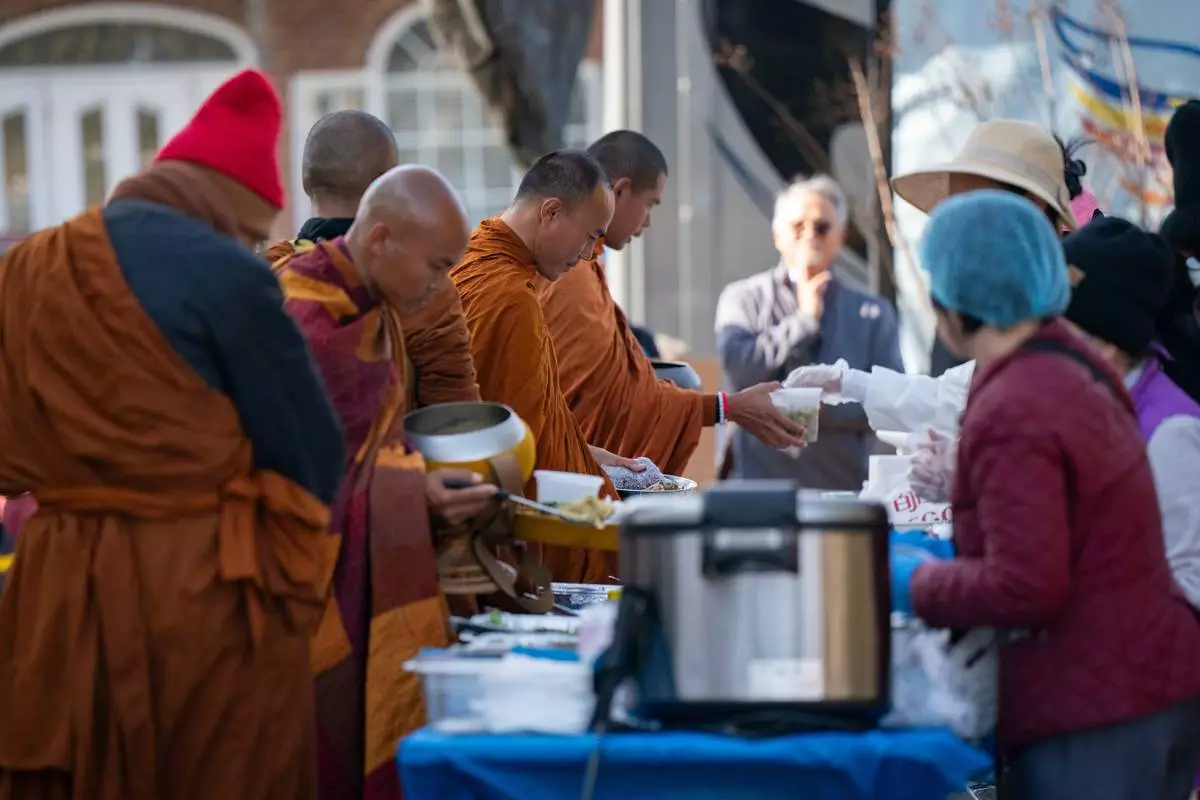
Buddhist monks who are participating in the, "Walk For Peace," get lunch Thursday, Jan. 8, 2026, in Saluda, S.C. (AP Photo/Allison Joyce)

Buddhist monks who are participating in the, "Walk For Peace," get lunch Thursday, Jan. 8, 2026, in Saluda, S.C. (AP Photo/Allison Joyce)

Aloka rests with Buddhist monks who are participating in the, "Walk For Peace," Thursday, Jan. 8, 2026, in Saluda, S.C. (AP Photo/Allison Joyce)

Aloka rests with Buddhist monks who are participating in the, "Walk For Peace," Thursday, Jan. 8, 2026, in Saluda, S.C. (AP Photo/Allison Joyce)

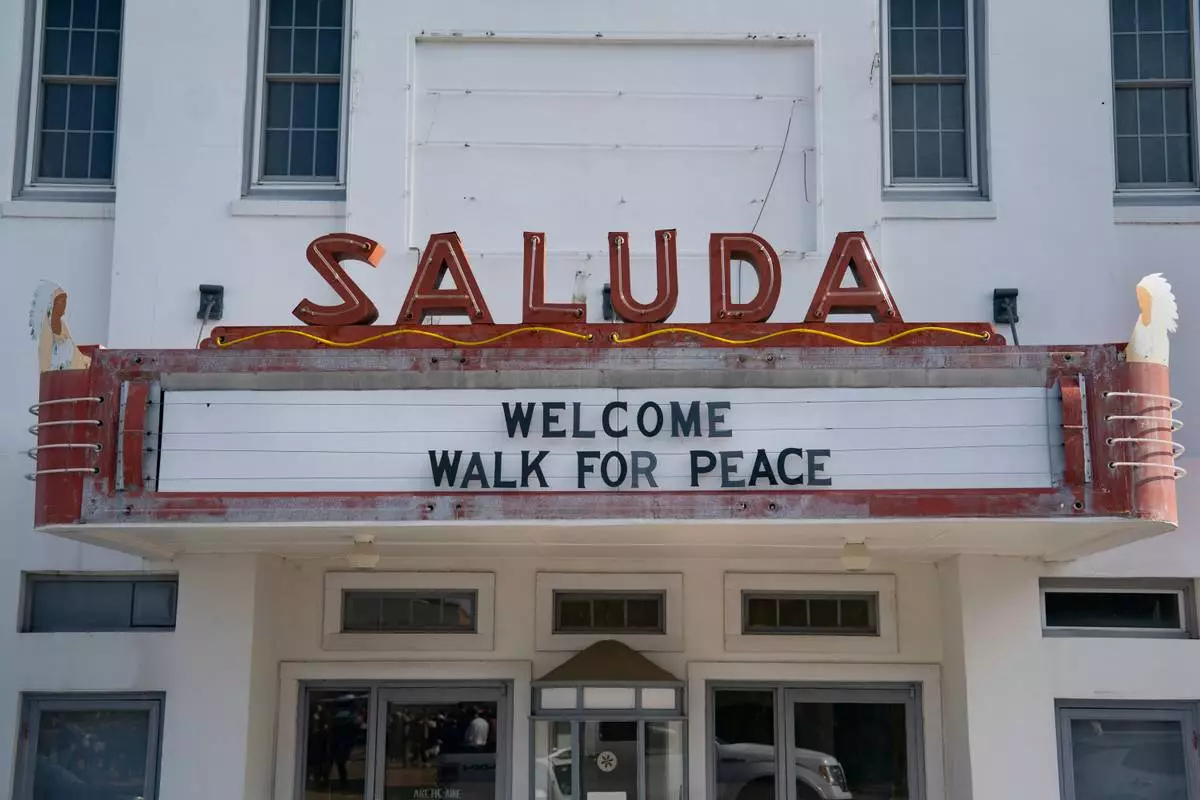
A sign is seen greeting the Buddhist monks who are participating in the, "Walk For Peace," Thursday, Jan. 8, 2026, in Saluda, S.C. (AP Photo/Allison Joyce)

A sign is seen greeting the Buddhist monks who are participating in the, "Walk For Peace," Thursday, Jan. 8, 2026, in Saluda, S.C. (AP Photo/Allison Joyce)

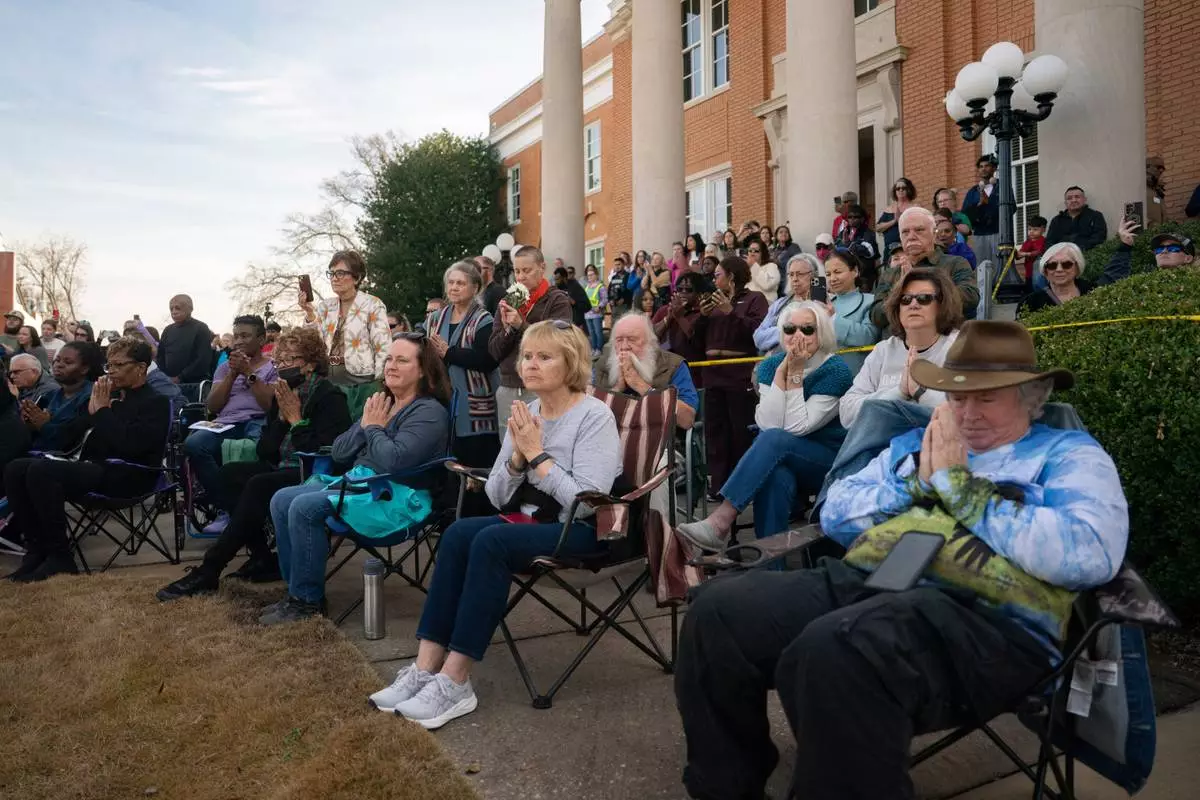
Supporters pray with Buddhist monks who are participating in the, "Walk For Peace," Thursday, Jan. 8, 2026, in Saluda, S.C. (AP Photo/Allison Joyce)

Supporters pray with Buddhist monks who are participating in the, "Walk For Peace," Thursday, Jan. 8, 2026, in Saluda, S.C. (AP Photo/Allison Joyce)

Supporters watch Buddhist monks who are participating in the, "Walk For Peace," Thursday, Jan. 8, 2026, in Saluda, S.C. (AP Photo/Allison Joyce)

Supporters watch Buddhist monks who are participating in the, "Walk For Peace," Thursday, Jan. 8, 2026, in Saluda, S.C. (AP Photo/Allison Joyce)

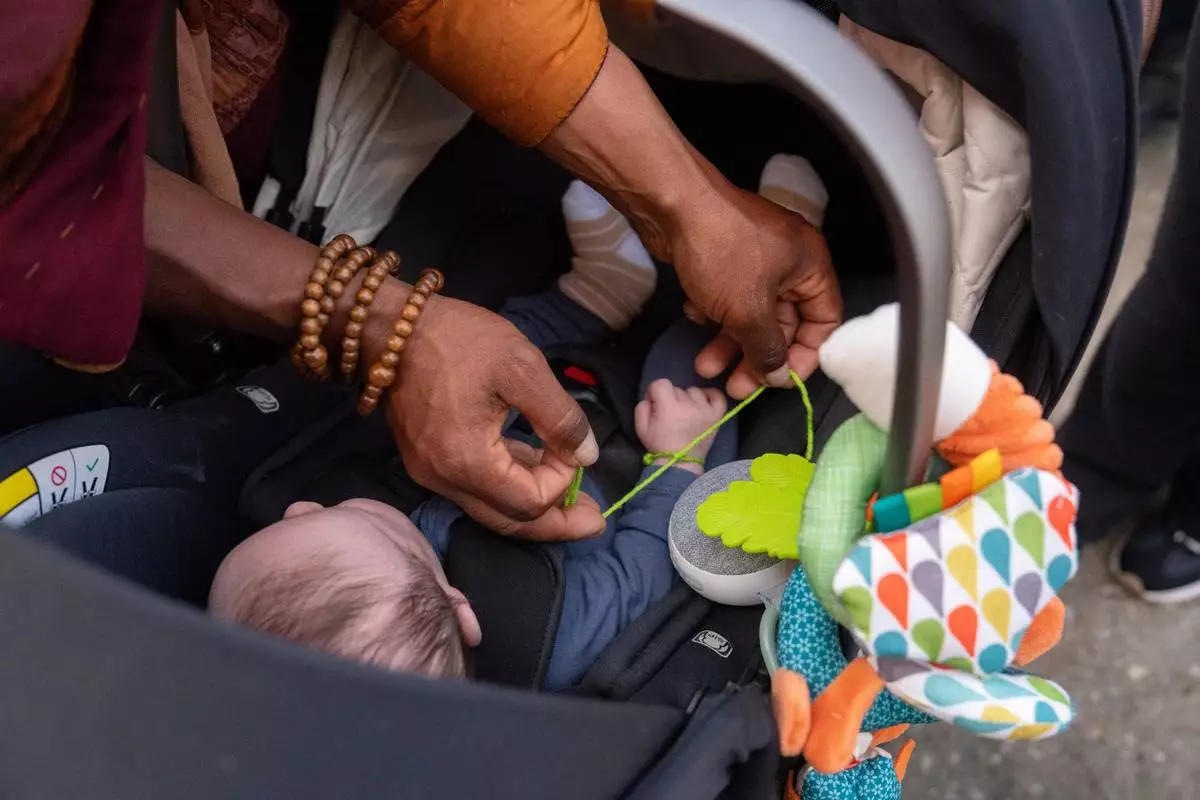
A Buddhist monk ties a prayer bracelet around the wrist of Josey Lee, 2-months-old, during the, "Walk For Peace," Thursday, Jan. 8, 2026, in Saluda, S.C. (AP Photo/Allison Joyce)

A Buddhist monk ties a prayer bracelet around the wrist of Josey Lee, 2-months-old, during the, "Walk For Peace," Thursday, Jan. 8, 2026, in Saluda, S.C. (AP Photo/Allison Joyce)

Bhikkhu Pannakara, a spiritual leader, speaks to supporters during the, "Walk For Peace," Thursday, Jan. 8, 2026, in Saluda, S.C. (AP Photo/Allison Joyce)

Bhikkhu Pannakara, a spiritual leader, speaks to supporters during the, "Walk For Peace," Thursday, Jan. 8, 2026, in Saluda, S.C. (AP Photo/Allison Joyce)

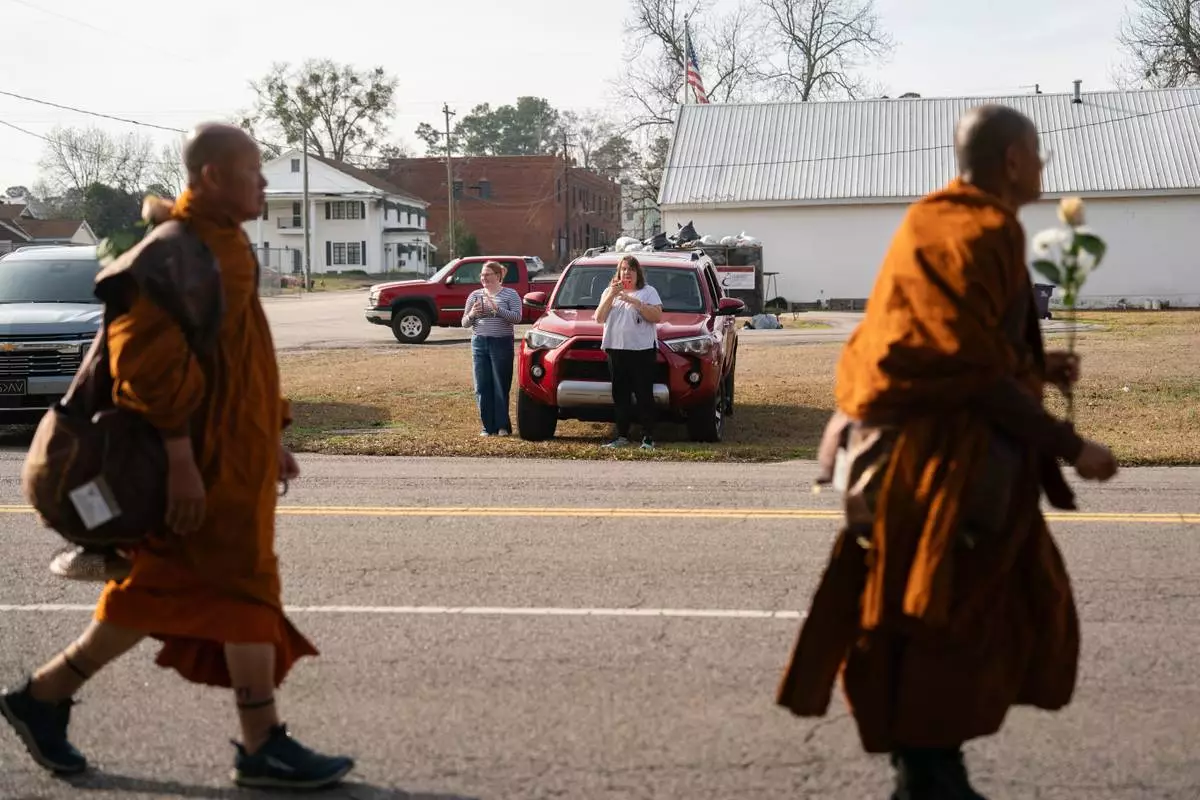
Buddhist monks participate in the, "Walk For Peace," Thursday, Jan. 8, 2026, in Saluda, S.C. (AP Photo/Allison Joyce)

Buddhist monks participate in the, "Walk For Peace," Thursday, Jan. 8, 2026, in Saluda, S.C. (AP Photo/Allison Joyce)

Buddhist monks participate in the, "Walk For Peace," Thursday, Jan. 8, 2026, in Saluda, S.C. (AP Photo/Allison Joyce)

Buddhist monks participate in the, "Walk For Peace," Thursday, Jan. 8, 2026, in Saluda, S.C. (AP Photo/Allison Joyce)

Bhikkhu Pannakara leads other buddhist monks in the, "Walk For Peace," Thursday, Jan. 8, 2026, in Saluda, S.C. (AP Photo/Allison Joyce)

Bhikkhu Pannakara leads other buddhist monks in the, "Walk For Peace," Thursday, Jan. 8, 2026, in Saluda, S.C. (AP Photo/Allison Joyce)

Audrie Pearce greets Buddhist monks who are participating in the, "Walk For Peace," Thursday, Jan. 8, 2026, in Saluda, S.C. (AP Photo/Allison Joyce)

Audrie Pearce greets Buddhist monks who are participating in the, "Walk For Peace," Thursday, Jan. 8, 2026, in Saluda, S.C. (AP Photo/Allison Joyce)

Bhikkhu Pannakara, a spiritual leader, speaks to supporters during the, "Walk For Peace," Thursday, Jan. 8, 2026, in Saluda, S.C. (AP Photo/Allison Joyce)

Bhikkhu Pannakara, a spiritual leader, speaks to supporters during the, "Walk For Peace," Thursday, Jan. 8, 2026, in Saluda, S.C. (AP Photo/Allison Joyce)

Buddhist monks who are participating in the, "Walk For Peace," arrive in Saluda, Thursday, Jan. 8, 2026, in Saluda, S.C. (AP Photo/Allison Joyce)

Buddhist monks who are participating in the, "Walk For Peace," arrive in Saluda, Thursday, Jan. 8, 2026, in Saluda, S.C. (AP Photo/Allison Joyce)

Buddhist monks who are participating in the, "Walk For Peace," are seen with their dog, Aloka, Thursday, Jan. 8, 2026, in Saluda, S.C. (AP Photo/Allison Joyce)

Buddhist monks who are participating in the, "Walk For Peace," are seen with their dog, Aloka, Thursday, Jan. 8, 2026, in Saluda, S.C. (AP Photo/Allison Joyce)

Recommended Articles