Skip to Content Facebook Feature Image

Berlin still bears scars 80 years after pivotal battle that sealed the defeat of Nazi Germany

News

Berlin still bears scars 80 years after pivotal battle that sealed the defeat of Nazi Germany
News

News

Berlin still bears scars 80 years after pivotal battle that sealed the defeat of Nazi Germany

2025-05-05 15:51 Last Updated At:16:11

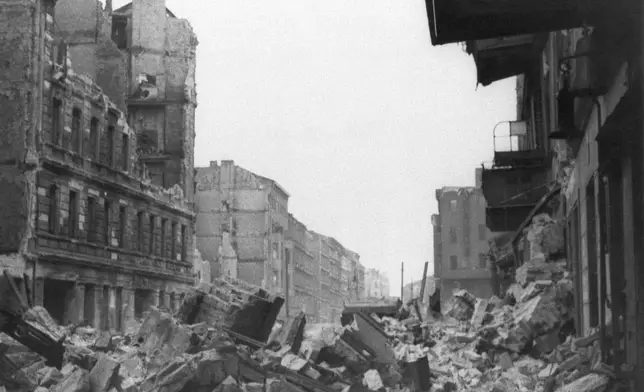
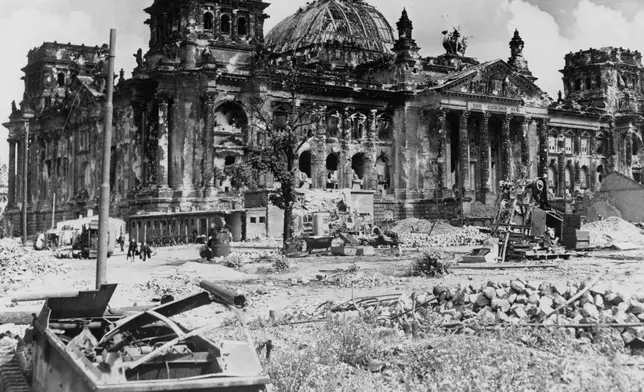
BERLIN (AP) — Central Berlin was in ruins after the Red Army completed the Allied victory over Nazi Germany in an intense fight for the capital in May 1945.

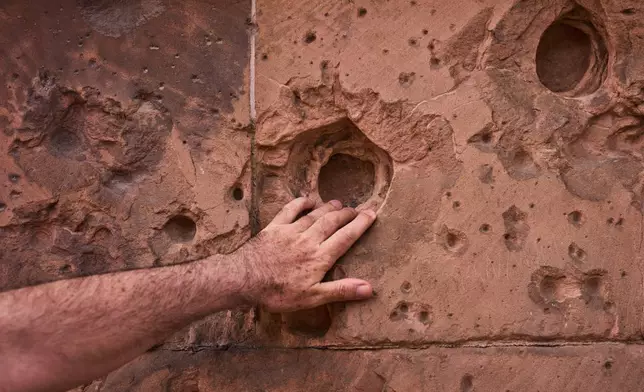
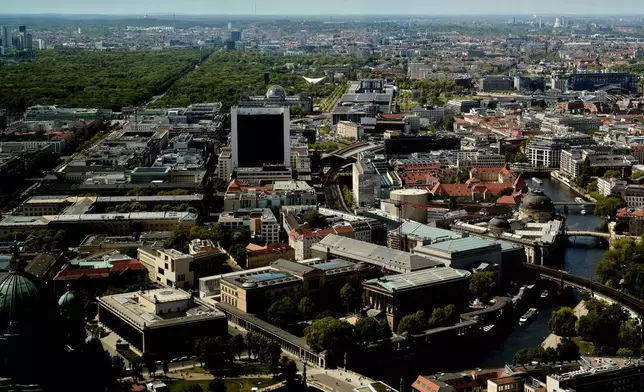
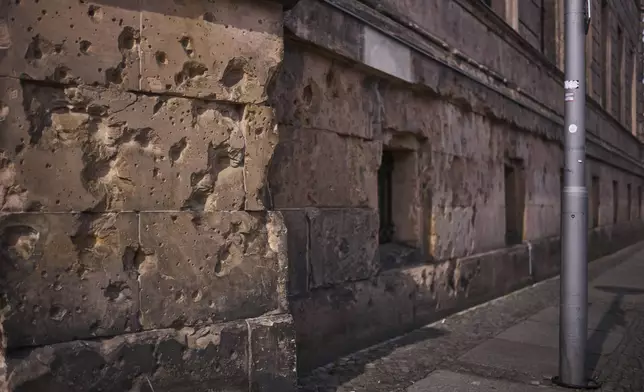
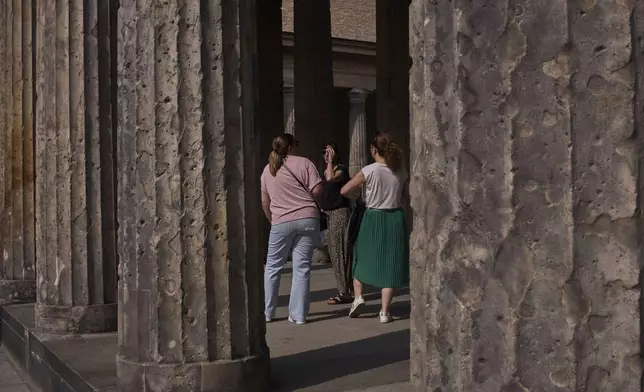
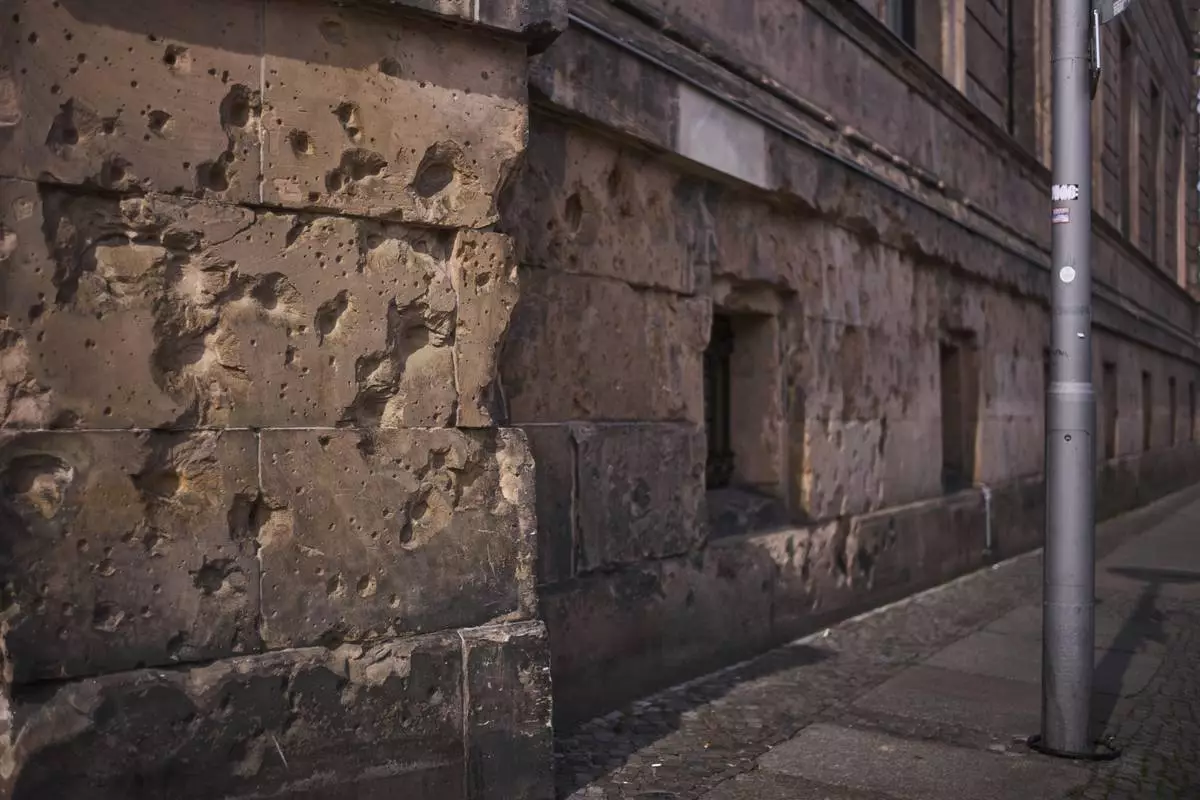
After decades of division and its revival as the capital of a reunited, democratic Germany, the city is now transformed, blending painstakingly restored buildings with modern architecture. But the scars of the past remain visible in many places: facades riddled with holes from bullets and shrapnel, or gaps in rows of houses sometimes plugged by new buildings.

More Images
A tourist touches a hole from artillery fire. still visible on the facade of a house eighty years after the end of World War II, in Berlin, Germany, Friday, May 2, 2025. (AP Photo/Markus Schreiber)
A tourist touches a hole from artillery fire. still visible on the facade of a house eighty years after the end of World War II, in Berlin, Germany, Friday, May 2, 2025. (AP Photo/Markus Schreiber)

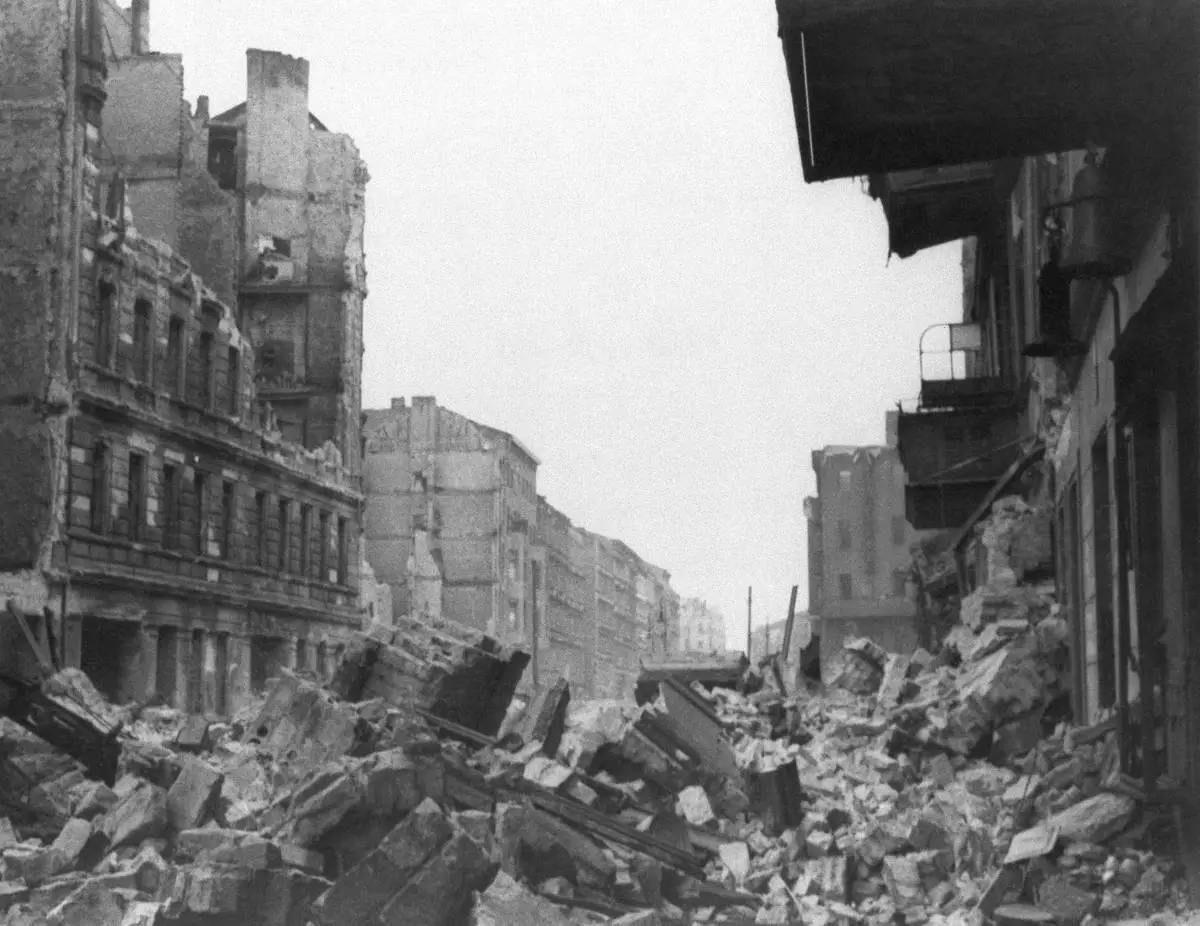
FILE - Wreckage and debris fill Frankfurter Allee near Lasdehner Strasse in a working district in the eastern section of Berlin on July 31, 1945, following an allied aerial attack on Feb. 26, 1945, prior to the fall of the city. (AP Photo, File)
FILE - Wreckage and debris fill Frankfurter Allee near Lasdehner Strasse in a working district in the eastern section of Berlin on July 31, 1945, following an allied aerial attack on Feb. 26, 1945, prior to the fall of the city. (AP Photo, File)

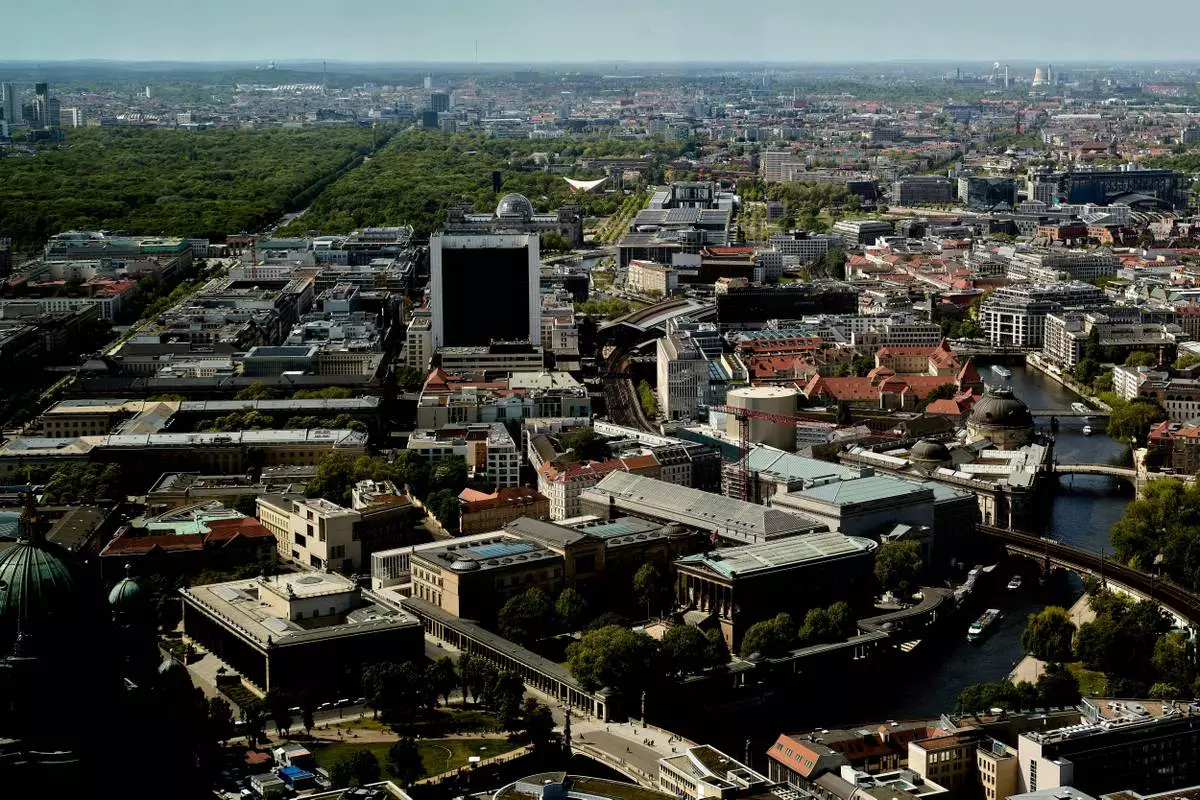
A aeriel view of the area around the Reichstag Building with the glass dome, at center top, of Berlin, Germany, Tuesday, April 29, 2025. (AP Photo/Markus Schreiber)
A aeriel view of the area around the Reichstag Building with the glass dome, at center top, of Berlin, Germany, Tuesday, April 29, 2025. (AP Photo/Markus Schreiber)

Eighty years after the end of World War II, holes from artillery fire are still visible on the facade of a house in the city center of Berlin, Germany, Friday, May 2, 2025. (AP Photo/Markus Schreiber)
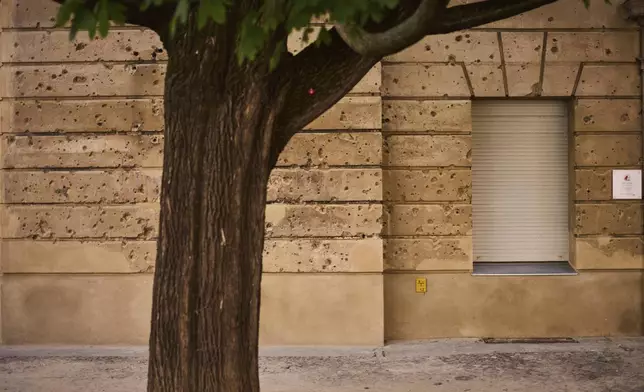
Eighty years after the end of World War II, holes from artillery fire are still visible on the facade of a house in the city center of Berlin, Germany, Friday, May 2, 2025. (AP Photo/Markus Schreiber)
Eighty years after the end of World War II, holes from artillery fire are still visible on the facade of a house in the city center of Berlin, Germany, Friday, May 2, 2025. (AP Photo/Markus Schreiber)

Eighty years after the end of World War II, holes from artillery fire are still visible on the facade of a house in the city center of Berlin, Germany, Friday, May 2, 2025. (AP Photo/Markus Schreiber)

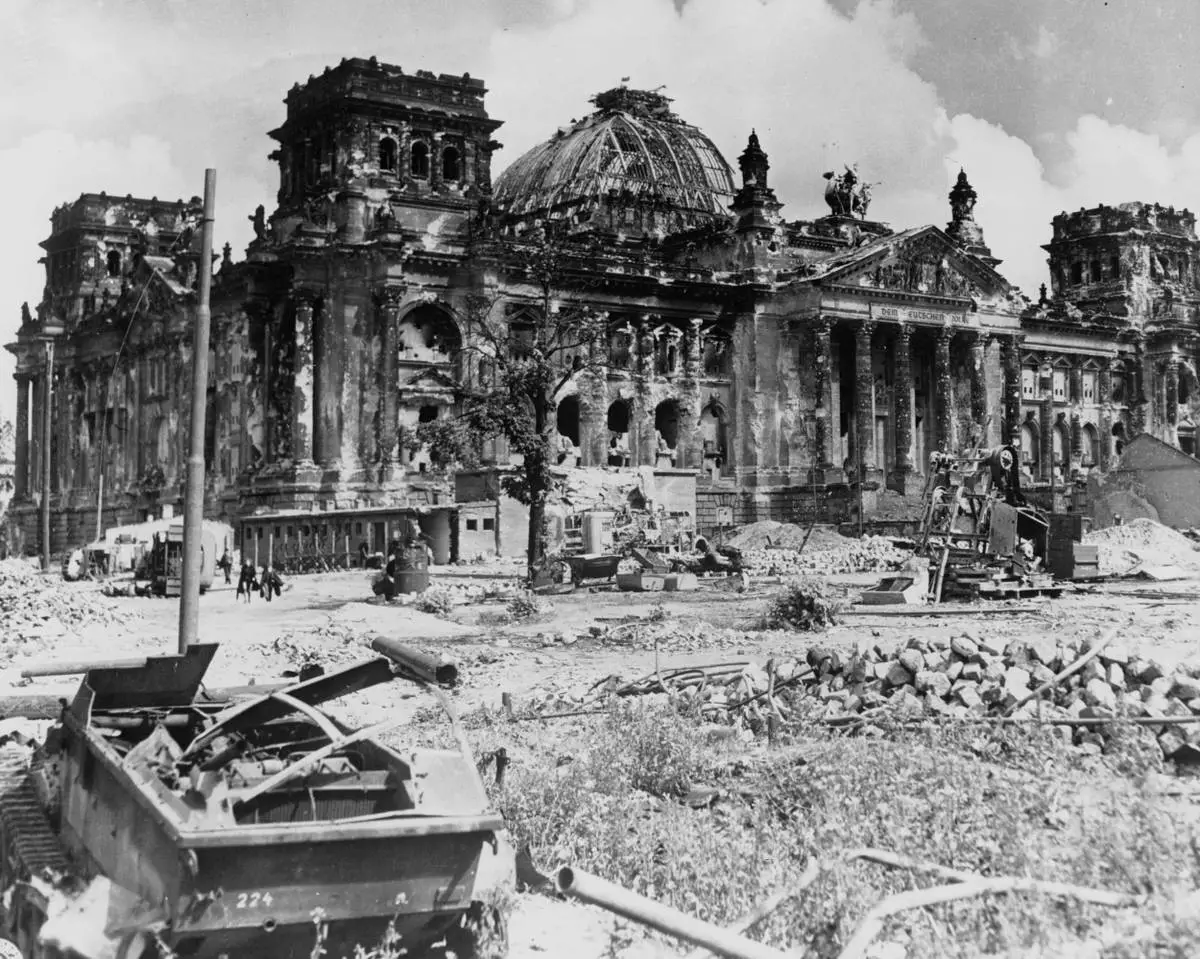
FILE - A view of the burned-out ruins of the German Reichstag in Berlin in this photo from August 1945, three months after the Nazis surrendered to the Allied Powers on May 8, 1945. (AP Photo, file)
FILE - A view of the burned-out ruins of the German Reichstag in Berlin in this photo from August 1945, three months after the Nazis surrendered to the Allied Powers on May 8, 1945. (AP Photo, file)

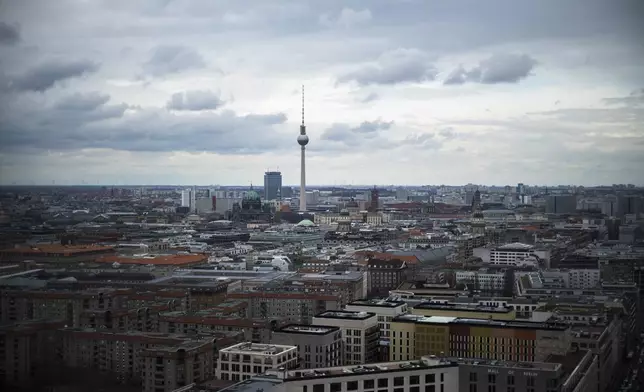
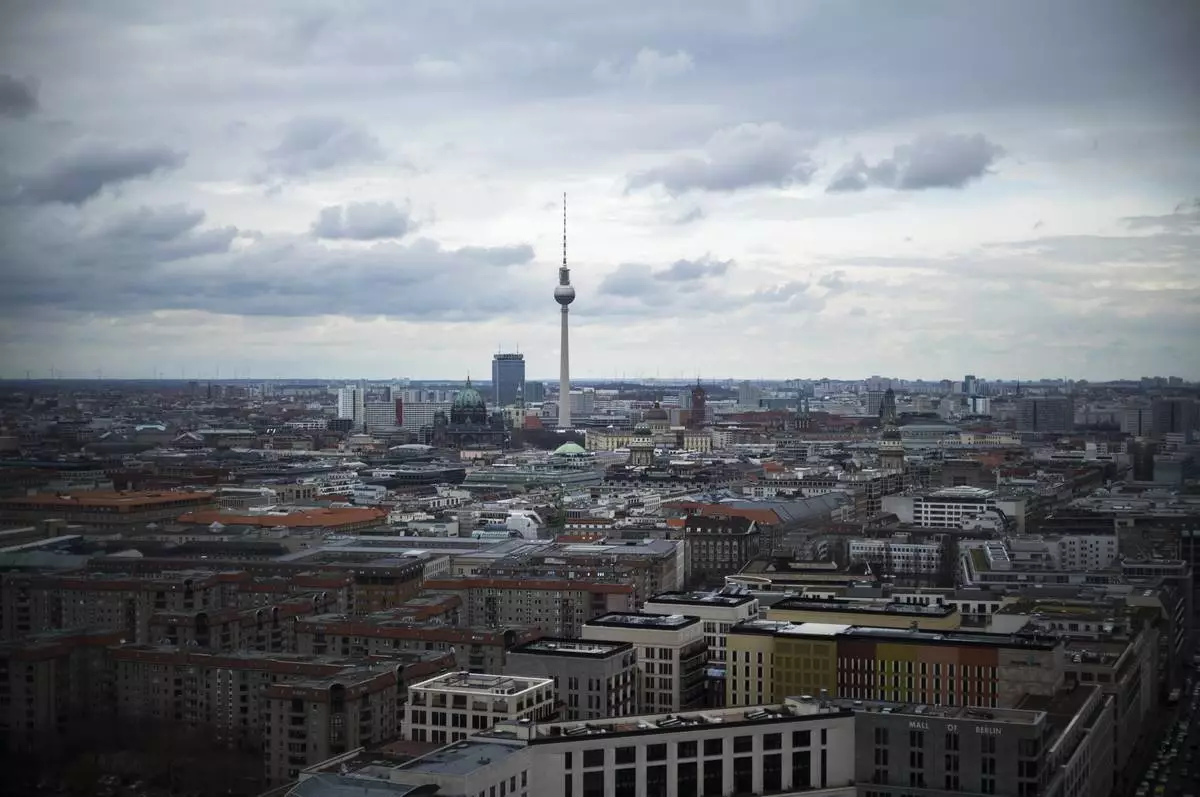
FILE - A view of the Berlin TV Tower, in the center of Berlin, March 24, 2023. (AP Photo/Markus Schreiber, File)
FILE - A view of the Berlin TV Tower, in the center of Berlin, March 24, 2023. (AP Photo/Markus Schreiber, File)

Tourists stand between the columns on Museum Island with holes from artillery fire from World War II, in Berlin, Germany, Friday, May 2, 2025. (AP Photo/Markus Schreiber)
Tourists stand between the columns on Museum Island with holes from artillery fire from World War II, in Berlin, Germany, Friday, May 2, 2025. (AP Photo/Markus Schreiber)

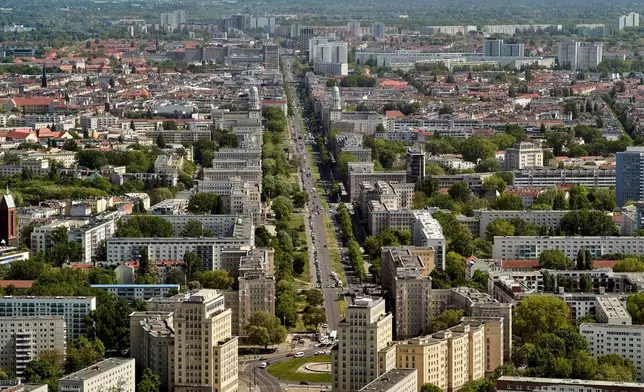
A view of the former Frankfurter Allee, now Karl-Marx-Strasse in central Berlin, Germany, Tuesday, April 29, 2025. (AP Photo/Markus Schreiber)
A view of the former Frankfurter Allee, now Karl-Marx-Strasse in central Berlin, Germany, Tuesday, April 29, 2025. (AP Photo/Markus Schreiber)

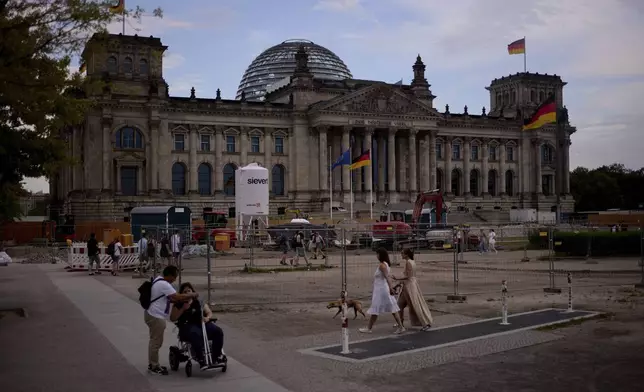
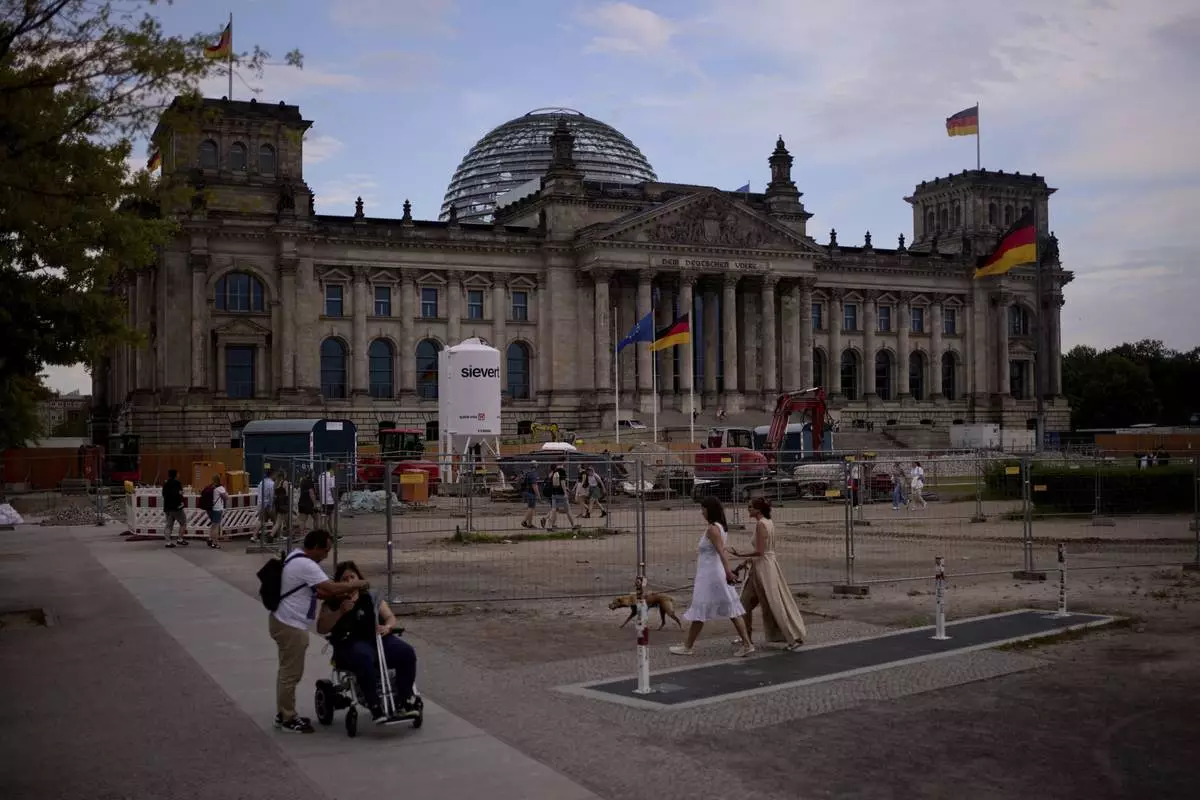
People walk in front of the Reichtag Building, in Berlin, Germany, Friday, May 2, 2025. (AP Photo/Markus Schreiber)
People walk in front of the Reichtag Building, in Berlin, Germany, Friday, May 2, 2025. (AP Photo/Markus Schreiber)

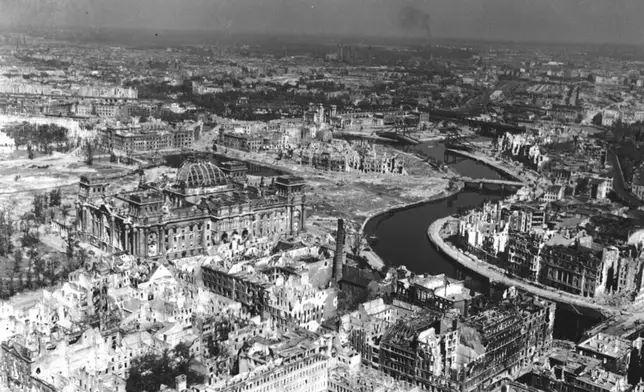
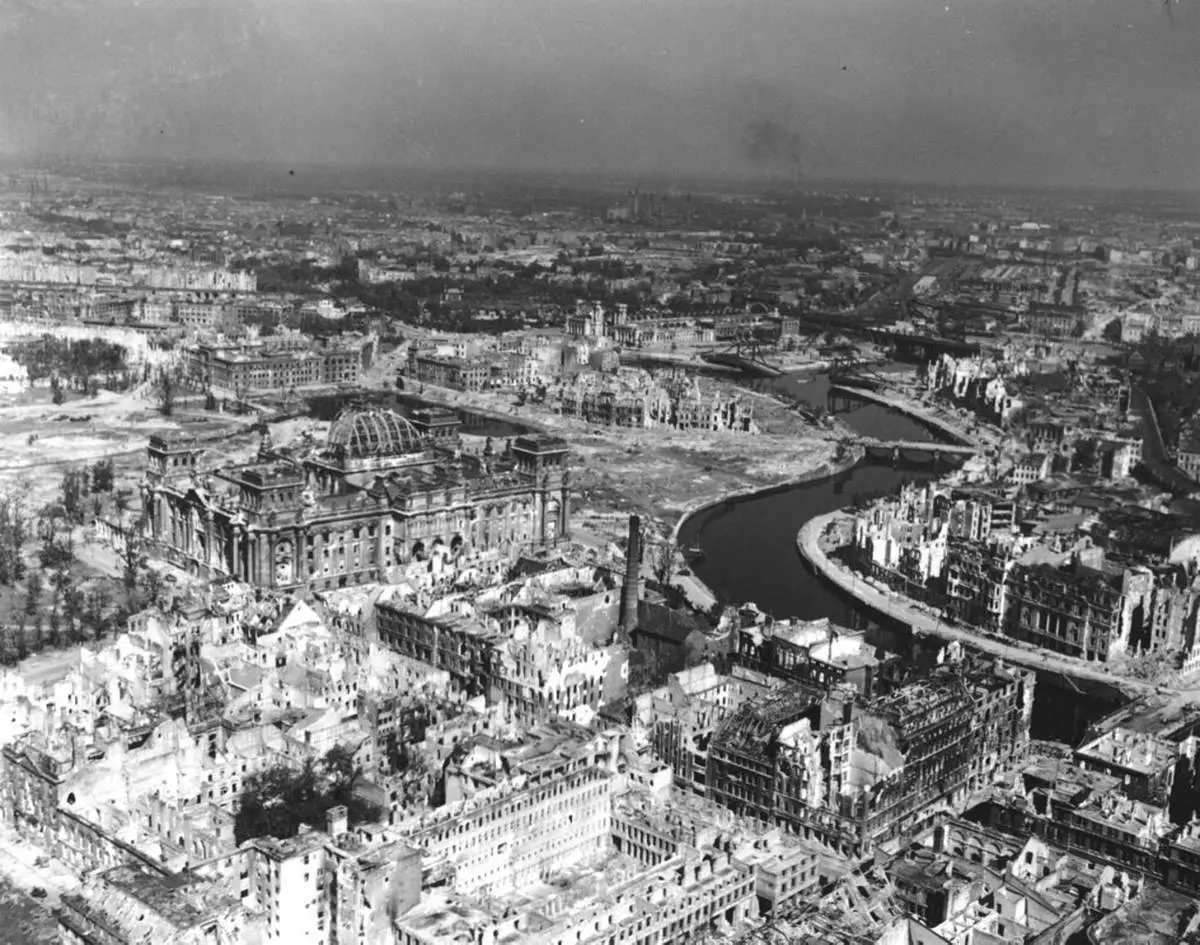
FILE - A view taken from a Cub artillery observation plane on July 10, 1945, shows vast areas of destruction in Berlin, after repeated Anglo-American air raids on the German capital. Seen on the left, center, is the heavily damaged building of the German Reichstag with its distinct cupola, in the background center are the remains of Lehrter Bahnhof, one of the city's train stations. (AP Photo, File)

FILE - A view taken from a Cub artillery observation plane on July 10, 1945, shows vast areas of destruction in Berlin, after repeated Anglo-American air raids on the German capital. Seen on the left, center, is the heavily damaged building of the German Reichstag with its distinct cupola, in the background center are the remains of Lehrter Bahnhof, one of the city's train stations. (AP Photo, File)

An Associated Press story from May 9, 1945, painted a stark picture. It read: “This town is a city of the dead. As a metropolis it has simply ceased to exist. Every house within miles of the center seems to have had its own bomb.”

Berlin, the epicenter of Adolf Hitler's power, was the ultimate prize as the Allies closed in from east and west on the disintegrating German defenses in the final stage of World War II.

“We all had a little case next to the bed, even the children," recalled Eva-Maria Kolb, now 89, of the constant aerial bombing in the last six months of the war. “When there was an air raid warning you had to pull something on quickly and then go down to the basement.”

The final Battle of Berlin in late April and early May 1945 reduced much of what was left of the city to rubble. The Soviet military attacked from several directions with an enormous concentration of troops, who faced a struggle to cross rivers and canals and an intensifying street fight as they moved deeper and deeper into the city.

On April 25, Berlin was encircled. Hitler killed himself in his bunker on April 30; and on May 2, the commander of German military forces in Berlin, Gen. Helmuth Weidling, capitulated to Soviet forces.

“Berlin was a heap of rubble — because of these last 10 days, almost everything in the center was ruined,” said Jörg Morré, the director of the Museum Berlin-Karlshorst, located in the building where Germany's final surrender was signed.

But “the infrastructure could be repaired relatively quickly — the sewerage system wasn't so badly damaged. They managed to get the water supply and pipes going again. A lot of old Berliners are still familiar with hand pumps ... electricity came, so that the trams starting running again, and the commuter trains.”

Kolb said: “It was, of course, a great relief in ‘45 that the war was over and Hitler was no longer alive ... everyone who wasn't a Nazi was very, very grateful that the war was over.”

She recalled that parts of the city were rubble, but she went to a school in the Tempelhof district, south of the center, “that was only half-ruined. It no longer had a roof and the second or third floor was missing — but we had lessons. Only when it rained were lessons canceled.”

Post-war Berlin was divided into sectors controlled by the wartime allies. That hardened into a Cold War division that saw two separate German states founded in 1949 and ultimately led to the building in 1961 of the Berlin Wall, which fell 28 years later as communist rule collapsed in East Germany.

Germany was reunited in 1990 and the national government moved to Berlin in 1999. Parliament now meets in the restored Reichstag, where the raising of the Soviet Union's red flag in 1945 was emblematic of the victory over Nazi Germany. Graffiti left by Soviet troops at the Reichstag has been preserved at several places in the building.

The military surrender of Berlin on May 2, 1945, wasn't quite the end of the war. Hitler's successor, Grand Adm. Karl Dönitz, tried to fight on but was quickly forced to negotiate Germany's surrender.

Germany's unconditional capitulation was signed at Allied headquarters in Reims, France, on May 7 and came into effect the following day.

But the Soviet Union had only a liaison officer at the ceremony and fighting against the Red Army continued in the east, so a second ceremony was agreed at Soviet headquarters in Berlin on May 8, Morré said. As a result, the West and Russia mark the end of the war in Europe on May 8 and May 9, respectively.

“In this room, World War II ended in Europe,” he said, in the preserved hall where the capitulation was signed in Berlin. “This marked the end.”

Geir Moulson in Berlin contributed to this report.
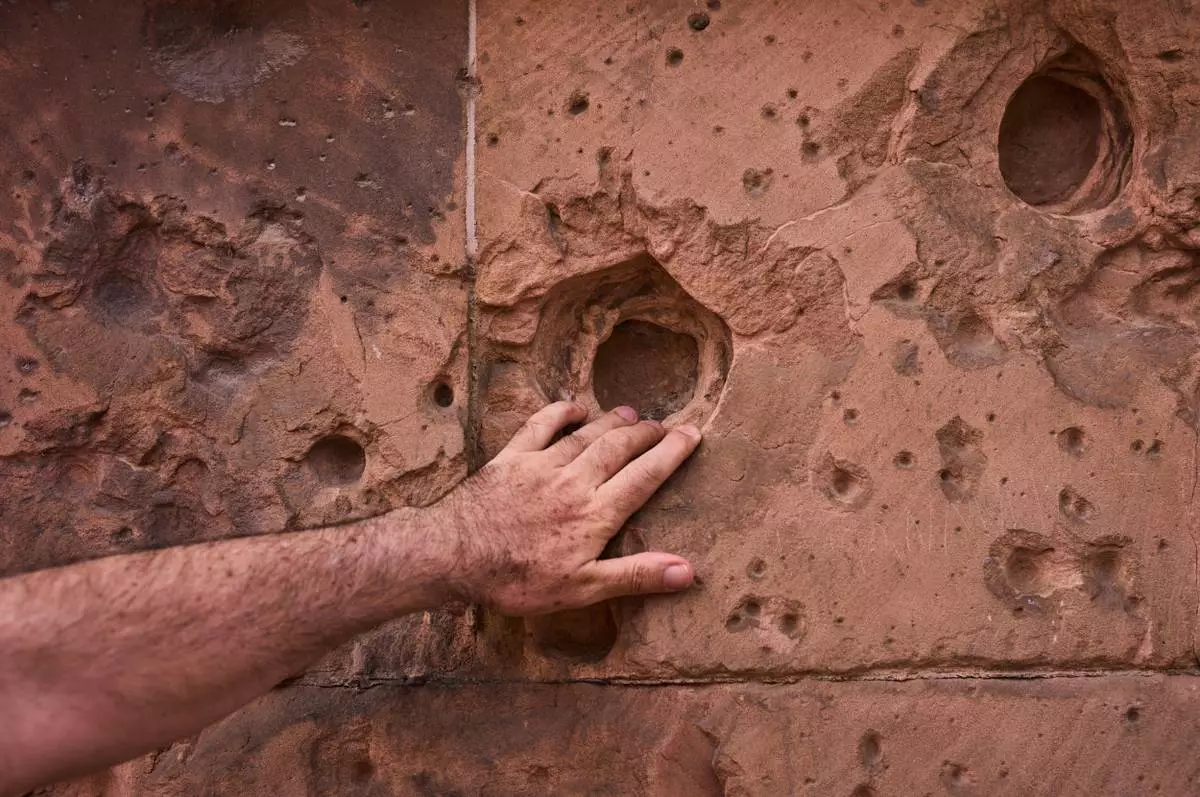
A tourist touches a hole from artillery fire. still visible on the facade of a house eighty years after the end of World War II, in Berlin, Germany, Friday, May 2, 2025. (AP Photo/Markus Schreiber)
A tourist touches a hole from artillery fire. still visible on the facade of a house eighty years after the end of World War II, in Berlin, Germany, Friday, May 2, 2025. (AP Photo/Markus Schreiber)

FILE - Wreckage and debris fill Frankfurter Allee near Lasdehner Strasse in a working district in the eastern section of Berlin on July 31, 1945, following an allied aerial attack on Feb. 26, 1945, prior to the fall of the city. (AP Photo, File)
FILE - Wreckage and debris fill Frankfurter Allee near Lasdehner Strasse in a working district in the eastern section of Berlin on July 31, 1945, following an allied aerial attack on Feb. 26, 1945, prior to the fall of the city. (AP Photo, File)

A aeriel view of the area around the Reichstag Building with the glass dome, at center top, of Berlin, Germany, Tuesday, April 29, 2025. (AP Photo/Markus Schreiber)
A aeriel view of the area around the Reichstag Building with the glass dome, at center top, of Berlin, Germany, Tuesday, April 29, 2025. (AP Photo/Markus Schreiber)

Eighty years after the end of World War II, holes from artillery fire are still visible on the facade of a house in the city center of Berlin, Germany, Friday, May 2, 2025. (AP Photo/Markus Schreiber)

Eighty years after the end of World War II, holes from artillery fire are still visible on the facade of a house in the city center of Berlin, Germany, Friday, May 2, 2025. (AP Photo/Markus Schreiber)
Eighty years after the end of World War II, holes from artillery fire are still visible on the facade of a house in the city center of Berlin, Germany, Friday, May 2, 2025. (AP Photo/Markus Schreiber)

Eighty years after the end of World War II, holes from artillery fire are still visible on the facade of a house in the city center of Berlin, Germany, Friday, May 2, 2025. (AP Photo/Markus Schreiber)

FILE - A view of the burned-out ruins of the German Reichstag in Berlin in this photo from August 1945, three months after the Nazis surrendered to the Allied Powers on May 8, 1945. (AP Photo, file)
FILE - A view of the burned-out ruins of the German Reichstag in Berlin in this photo from August 1945, three months after the Nazis surrendered to the Allied Powers on May 8, 1945. (AP Photo, file)

FILE - A view of the Berlin TV Tower, in the center of Berlin, March 24, 2023. (AP Photo/Markus Schreiber, File)

FILE - A view of the Berlin TV Tower, in the center of Berlin, March 24, 2023. (AP Photo/Markus Schreiber, File)

Tourists stand between the columns on Museum Island with holes from artillery fire from World War II, in Berlin, Germany, Friday, May 2, 2025. (AP Photo/Markus Schreiber)

Tourists stand between the columns on Museum Island with holes from artillery fire from World War II, in Berlin, Germany, Friday, May 2, 2025. (AP Photo/Markus Schreiber)

A view of the former Frankfurter Allee, now Karl-Marx-Strasse in central Berlin, Germany, Tuesday, April 29, 2025. (AP Photo/Markus Schreiber)
A view of the former Frankfurter Allee, now Karl-Marx-Strasse in central Berlin, Germany, Tuesday, April 29, 2025. (AP Photo/Markus Schreiber)

People walk in front of the Reichtag Building, in Berlin, Germany, Friday, May 2, 2025. (AP Photo/Markus Schreiber)
People walk in front of the Reichtag Building, in Berlin, Germany, Friday, May 2, 2025. (AP Photo/Markus Schreiber)

FILE - A view taken from a Cub artillery observation plane on July 10, 1945, shows vast areas of destruction in Berlin, after repeated Anglo-American air raids on the German capital. Seen on the left, center, is the heavily damaged building of the German Reichstag with its distinct cupola, in the background center are the remains of Lehrter Bahnhof, one of the city's train stations. (AP Photo, File)


FILE - A view taken from a Cub artillery observation plane on July 10, 1945, shows vast areas of destruction in Berlin, after repeated Anglo-American air raids on the German capital. Seen on the left, center, is the heavily damaged building of the German Reichstag with its distinct cupola, in the background center are the remains of Lehrter Bahnhof, one of the city's train stations. (AP Photo, File)

NEW YORK (AP) — Thousands of nurses in three hospital systems in New York City went on strike Monday after negotiations through the weekend failed to yield breakthroughs in their contract disputes.

The strike was taking place at The Mount Sinai Hospital and two of its satellite campuses, with picket lines forming. The other affected hospitals are NewYork-Presbyterian and Montefiore Medical Center in the Bronx.

About 15,000 nurses are involved in the strike, according to New York State Nurses Association.

“After months of bargaining, management refused to make meaningful progress on core issues that nurses have been fighting for: safe staffing for patients, healthcare benefits for nurses, and workplace violence protections,” the union said in a statement issued Monday. “Management at the richest hospitals in New York City are threatening to discontinue or radically cut nurses’ health benefits.”

The strike, which comes during a severe flu season, could potentially force the hospitals to transfer patients, cancel procedures or divert ambulances. It could also put a strain on city hospitals not involved in the contract dispute, as patients avoid the medical centers hit by the strike.

The hospitals involved have been hiring temporary nurses to try and fill the labor gap during the walkout, and said in a statement during negotiations that they would “do whatever is necessary to minimize disruptions.” Montefiore posted a message assuring patients that appointments would be kept.

“NYSNA’s leaders continue to double down on their $3.6 billion in reckless demands, including nearly 40% wage increases, and their troubling proposals like demanding that a nurse not be terminated if found to be compromised by drugs or alcohol while on the job," Montefiore spokesperson Joe Solmonese said Monday after the strike had started. "We remain resolute in our commitment to providing safe and seamless care, regardless of how long the strike may last.”

New York-Presbyterian accused the union of staging a strike to “create disruption,” but said in a statement that it has taken steps to ensure patients receive the care they need.

"We’re ready to keep negotiating a fair and reasonable contract that reflects our respect for our nurses and the critical role they play, and also recognizes the challenging realities of today’s healthcare environment,” the statement said.

The work stoppage is occurring at multiple hospitals simultaneously, but each medical center is negotiating with the union independently. Several other hospitals across the city and in its suburbs reached deals in recent days to avert a possible strike.

The nurses’ demands vary by hospital, but the major issues include staffing levels and workplace safety. The union says hospitals have given nurses unmanageable workloads.

Nurses also want better security measures in the workplace, citing incidents like a an incident last week, when a man with a sharp object barricaded himself in a Brooklyn hospital room and was then killed by police.

The union also wants limitations on hospitals’ use of artificial intelligence.

The nonprofit hospitals involved in the negotiations say they’ve been working to improve staffing levels, but say the union’s demands overall are too costly.

Nurses voted to authorize the strike last month.

Both New York Gov. Kathy Hochul and Mayor Zohran Mamdani had expressed concern about the possibility of the strike. As the strike deadline neared, Mamdani urged both sides to keep negotiating and reach a deal that “both honors our nurses and keeps our hospitals open.”

“Our nurses kept this city alive through its hardest moments. Their value is not negotiable,” Mamdani said.

State Attorney General Letitia James voiced similar support, saying "nurses put their lives on the line every day to keep New Yorkers healthy. They should never be forced to choose between their own safety, their patients’ well-being, and a fair contract.”

The last major nursing strike in the city was only three years ago, in 2023. That work stoppage, at Mount Sinai and Montefiore, was short, lasting three days. It resulted in a deal raising pay 19% over three years at those hospitals.

It also led to promised staffing improvements, though the union and hospitals now disagree about how much progress has been made, or whether the hospitals are retreating from staffing guarantees.

Nurses strike outside New York-Presbyterian Hospital, Monday, Jan. 12, 2026, in New York. (AP Photo/Yuki Iwamura)

Nurses strike outside New York-Presbyterian Hospital, Monday, Jan. 12, 2026, in New York. (AP Photo/Yuki Iwamura)

Nurses strike outside New York-Presbyterian Hospital, Monday, Jan. 12, 2026, in New York. (AP Photo/Yuki Iwamura)

Nurses strike outside New York-Presbyterian Hospital, Monday, Jan. 12, 2026, in New York. (AP Photo/Yuki Iwamura)

Nurses strike outside New York-Presbyterian Hospital, Monday, Jan. 12, 2026, in New York. (AP Photo/Yuki Iwamura)

Nurses strike outside New York-Presbyterian Hospital, Monday, Jan. 12, 2026, in New York. (AP Photo/Yuki Iwamura)

Nurses strike outside New York-Presbyterian Hospital, Monday, Jan. 12, 2026, in New York. (AP Photo/Yuki Iwamura)

Nurses strike outside New York-Presbyterian Hospital, Monday, Jan. 12, 2026, in New York. (AP Photo/Yuki Iwamura)

Nurses strike outside New York-Presbyterian Hospital, Monday, Jan. 12, 2026, in New York. (AP Photo/Yuki Iwamura)

Nurses strike outside New York-Presbyterian Hospital, Monday, Jan. 12, 2026, in New York. (AP Photo/Yuki Iwamura)

Nurses strike outside Mount Sinai West Hospital, Monday, Jan. 12, 2026, in New York. (AP Photo/Yuki Iwamura)

Nurses strike outside Mount Sinai West Hospital, Monday, Jan. 12, 2026, in New York. (AP Photo/Yuki Iwamura)

Nurses strike outside Mount Sinai West Hospital, Monday, Jan. 12, 2026, in New York. (AP Photo/Yuki Iwamura)

Nurses strike outside Mount Sinai West Hospital, Monday, Jan. 12, 2026, in New York. (AP Photo/Yuki Iwamura)

Nurses strike outside Mount Sinai West Hospital, Monday, Jan. 12, 2026, in New York. (AP Photo/Yuki Iwamura)

Nurses strike outside Mount Sinai West Hospital, Monday, Jan. 12, 2026, in New York. (AP Photo/Yuki Iwamura)

Nurses strike outside Mount Sinai West Hospital, Monday, Jan. 12, 2026, in New York. (AP Photo/Yuki Iwamura)

Nurses strike outside Mount Sinai West Hospital, Monday, Jan. 12, 2026, in New York. (AP Photo/Yuki Iwamura)

FILE - A medical worker transports a patient at Mount Sinai Hospital, April 1, 2020, in New York. (AP Photo/Mary Altaffer, File)

FILE - A medical worker transports a patient at Mount Sinai Hospital, April 1, 2020, in New York. (AP Photo/Mary Altaffer, File)

Recommended Articles