Skip to Content Facebook Feature Image

South Dakota students weigh protest against university honors for homeland security chief Noem

News

South Dakota students weigh protest against university honors for homeland security chief Noem
News

News

South Dakota students weigh protest against university honors for homeland security chief Noem

2025-05-05 23:48 Last Updated At:23:50

MADISON, S.D. (AP) — Dakota State University hasn't experienced the student protests taking place at other U.S. colleges. Nestled in rural South Dakota, most of the nearly 4,000 students have been focused on their studies or job hunts, avoiding politics and partisan groups.

Until now.

The university administration decided to award an honorary doctorate to Homeland Security Secretary Kristi Noem and invited her to give a commencement speech May 10, bringing politics to the campus.

In response, students have planned a rally on graduation day opposing the former South Dakota governor and the Trump administration and expect protestors from across southeast South Dakota to join them.

They want to speak out against the federal government’s immigration policies, which are being implemented with Noem's oversight, on behalf of peers who fear for their legal status. They also are expected to protest Noem's anti-LGBT actions during her time as governor.

Some students and faculty also said they thought the honorary degree was too high an honor to bestow upon her.

Among DSU students, many are unsure if they should join the objections or stay quiet to avoid the kind of punishments suffered by students at more outspoken colleges.

“The atmosphere is tense,” humanities instructor Daniel Spencer said. “Students are afraid of making their voices heard.”

Students studying in its renowned cybersecurity program have traditionally been hesitant to take political stances because they fear potential blowback when they later seek government and private sector jobs.

DSU’s location in Madison, a small town about an hour’s drive northwest of Sioux Falls, also is a factor.

“Many of our students are from rural South Dakota, and there's a bit of an unwillingness to confront authority,” Professor Emeritus Dale Droge said. “We don't have very many students in the political sciences or history where they might be thinking about these more civil rights kind of actions.”

Hundreds of international students who attend DSU and haven't yet been affected by recent DHS actions are weighing their participation options. The agency had terminated the legal status of more than 1,000 international students before reversing course and outlining a new policy for those terminations.

“I have international students coming to me from outside of the senate, across campus, who expressed to me that they don’t want to get involved in any of this because they have fears of getting their visas revoked,” said Anden Wieseler, a DSU junior and student senate vice president.

DSU selected Noem because she was an “unwavering champion of Dakota State” during her time as governor, university spokesperson Andrew Sogn said in a written statement to The Associated Press.

Noem, who received a political science degree from South Dakota State University, supported Dakota State's cybersecurity initiatives and helped secure millions of dollars in funding, cementing the school's standing as a national cybersecurity leader, Sogn said.

“She was asked to share remarks with DSU’s graduates based on her distinguished and ground-breaking career in public service, and her many efforts to support the citizens of the state of South Dakota and the nation,” Sogn said.

Noem's office did not respond to a request for comment.

DSU President José-Marie Griffiths nominated Noem to receive an honorary doctorate, though the university declined to provide details of the offer. The general faculty and student senate voted against the nomination, with only one of the 15 student senators voting in favor of the nomination, Wiesler said.

“There is a fear among a lot of the international student body on speaking on this matter, just a result of the current political climate,” said Tyler Sprik, a freshman and student senator. “That's part of the reason me and several other senators have become so involved — it's because a lot of our colleagues can't."

Faculty members also are apprehensive to share their opinions publicly. Some said the administration discouraged them from speaking to media and joining student rallies. Some cited President Donald Trump's heightened scrutiny on higher education as reason for caution.

Other students said they feared reprisal from the administration and spoke to the AP on condition of anonymity because they didn’t want to jeopardize their jobs.

Sogn said that faculty members are welcome to speak with the media.

South Dakota faculty are afforded fewer protections than in other states due to a 2020 state law outlawing faculty unions at public colleges.

Droge is troubled by the reluctance to speak out.

“It is very concerning to me that we’ve reached a point in not just Dakota State, but in so many institutions that people are afraid to speak freely even on issues like this of free speech and principles and ethics,” Droge said. “These things aren’t against the university in any way but it’s about allowing people to speak their minds freely.”

Some faculty members also said having a high-profile figure at commencement may take attention away from the graduates.

“The biggest chatter I've heard from students and other faculty is first and foremost concern that there will be a disruption to the commencement, which we all feel is so important to the students that are there,” said Stephen Krebsbach, a computer science professor.

Still, many students are preparing for the rally.

“The students’ attitude is clear. No honor for Noem. Give commencement back to the graduates and listen to us,” Sprik said.

This story corrects that Sogn did not address faculty protections in South Dakota.
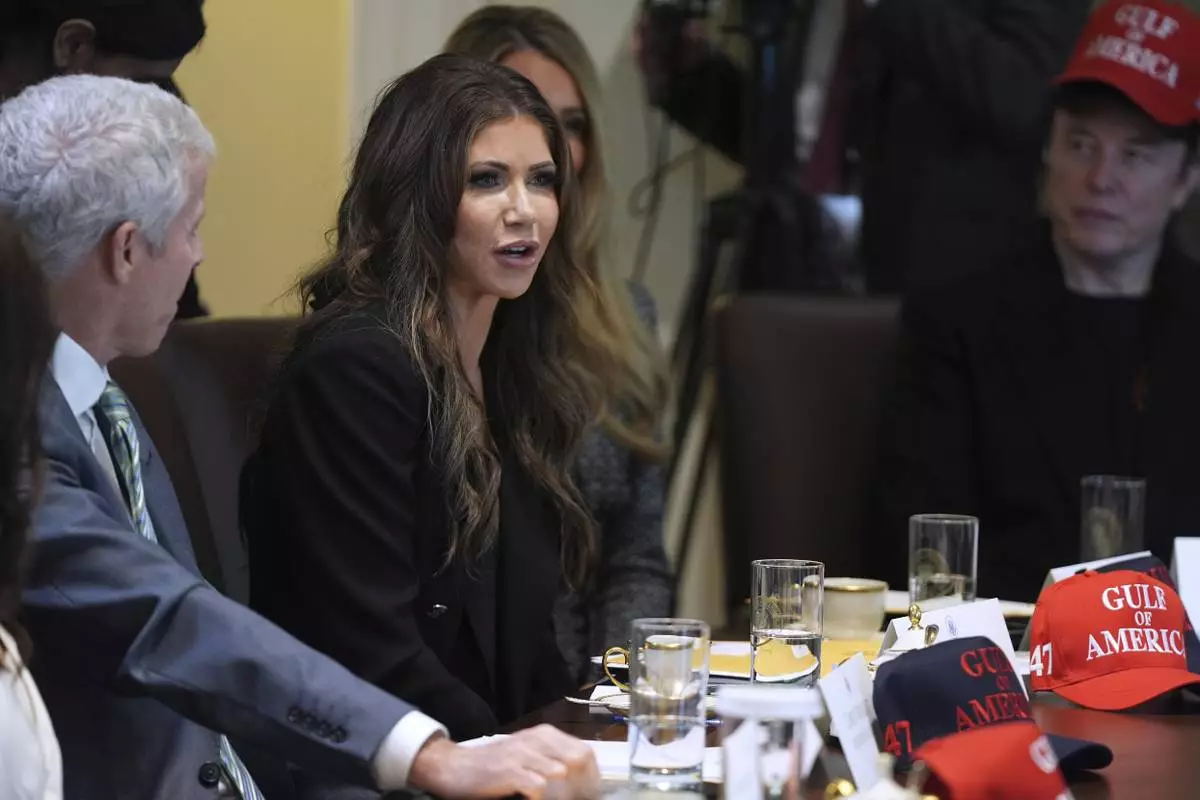
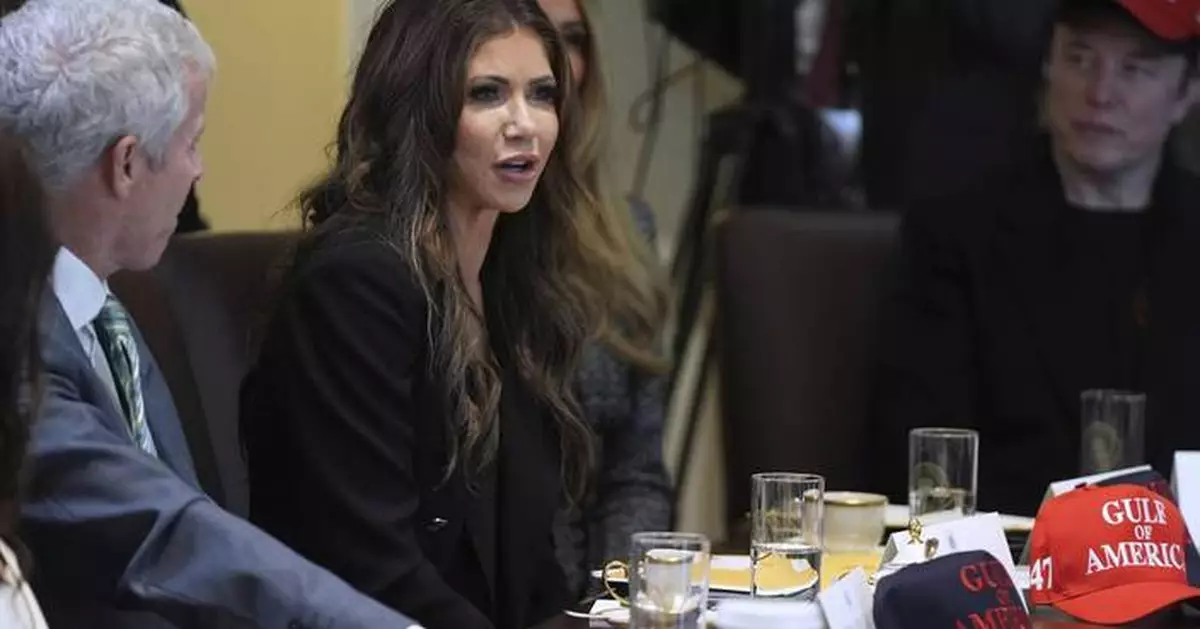
Secretary of Homeland Security Kristi Noem speaks during a cabinet meeting at the White House, Wednesday, April 30, 2025, in Washington. (AP Photo/Evan Vucci)
Secretary of Homeland Security Kristi Noem speaks during a cabinet meeting at the White House, Wednesday, April 30, 2025, in Washington. (AP Photo/Evan Vucci)
DUBAI, United Arab Emirates (AP) — U.S. President Donald Trump said Iran wants to negotiate with Washington after his threat to strike the Islamic Republic over its bloody crackdown on protesters, a move coming as activists said Monday the death toll in the nationwide demonstrations rose to at least 544.

Iran had no immediate reaction to the news, which came after the foreign minister of Oman — long an interlocutor between Washington and Tehran — traveled to Iran this weekend. It also remains unclear just what Iran could promise, particularly as Trump has set strict demands over its nuclear program and its ballistic missile arsenal, which Tehran insists is crucial for its national defense.

Meanwhile Monday, Iran called for pro-government demonstrators to head to the streets in support of the theocracy, a show of force after days of protests directly challenging the rule of 86-year-old Supreme Leader Ayatollah Ali Khamenei. Iranian state television aired chants from the crowd, who shouted “Death to America!” and “Death to Israel!”

Trump and his national security team have been weighing a range of potential responses against Iran including cyberattacks and direct strikes by the U.S. or Israel, according to two people familiar with internal White House discussions who were not authorized to comment publicly and spoke on condition of anonymity.

“The military is looking at it, and we’re looking at some very strong options,” Trump told reporters on Air Force One on Sunday night. Asked about Iran’s threats of retaliation, he said: “If they do that, we will hit them at levels that they’ve never been hit before.”

Trump said that his administration was in talks to set up a meeting with Tehran, but cautioned that he may have to act first as reports of the death toll in Iran mount and the government continues to arrest protesters.

“I think they’re tired of being beat up by the United States,” Trump said. “Iran wants to negotiate.”

He added: “The meeting is being set up, but we may have to act because of what’s happening before the meeting. But a meeting is being set up. Iran called, they want to negotiate.”

Iran through country's parliamentary speaker warned Sunday that the U.S. military and Israel would be “legitimate targets” if America uses force to protect demonstrators.

More than 10,600 people also have been detained over the two weeks of protests, said the U.S.-based Human Rights Activists News Agency, which has been accurate in previous unrest in recent years and gave the death toll. It relies on supporters in Iran crosschecking information. It said 496 of the dead were protesters and 48 were with security forces.

With the internet down in Iran and phone lines cut off, gauging the demonstrations from abroad has grown more difficult. The Associated Press has been unable to independently assess the toll. Iran’s government has not offered overall casualty figures.

Those abroad fear the information blackout is emboldening hard-liners within Iran’s security services to launch a bloody crackdown. Protesters flooded the streets in the country’s capital and its second-largest city on Saturday night into Sunday morning. Online videos purported to show more demonstrations Sunday night into Monday, with a Tehran official acknowledging them in state media.

In Tehran, a witness told the AP that the streets of the capital empty at the sunset call to prayers each night. By the Isha, or nighttime prayer, the streets are deserted.

Part of that stems from the fear of getting caught in the crackdown. Police sent the public a text message that warned: “Given the presence of terrorist groups and armed individuals in some gatherings last night and their plans to cause death, and the firm decision to not tolerate any appeasement and to deal decisively with the rioters, families are strongly advised to take care of their youth and teenagers.”

Another text, which claimed to come from the intelligence arm of the paramilitary Revolutionary Guard, also directly warned people not to take part in demonstrations.

“Dear parents, in view of the enemy’s plan to increase the level of naked violence and the decision to kill people, ... refrain from being on the streets and gathering in places involved in violence, and inform your children about the consequences of cooperating with terrorist mercenaries, which is an example of treason against the country,” the text warned.

The witness spoke to the AP on condition of anonymity due to the ongoing crackdown.

The demonstrations began Dec. 28 over the collapse of the Iranian rial currency, which trades at over 1.4 million to $1, as the country’s economy is squeezed by international sanctions in part levied over its nuclear program. The protests intensified and grew into calls directly challenging Iran’s theocracy.

Nikhinson reported from aboard Air Force One.

In this frame grab from video obtained by the AP outside Iran, a masked demonstrator holds a picture of Iran's Crown Prince Reza Pahlavi during a protest in Tehran, Iran, Friday, January. 9, 2026. (UGC via AP)

In this frame grab from video obtained by the AP outside Iran, a masked demonstrator holds a picture of Iran's Crown Prince Reza Pahlavi during a protest in Tehran, Iran, Friday, January. 9, 2026. (UGC via AP)

In this frame grab from footage circulating on social media from Iran shows protesters taking to the streets despite an intensifying crackdown as the Islamic Republic remains cut off from the rest of the world in Tehran, Iran, Friday, Jan. 9, 2026.(UGC via AP)

In this frame grab from footage circulating on social media from Iran shows protesters taking to the streets despite an intensifying crackdown as the Islamic Republic remains cut off from the rest of the world in Tehran, Iran, Friday, Jan. 9, 2026.(UGC via AP)

In this frame grab from footage circulating on social media from Iran showed protesters once again taking to the streets of Tehran despite an intensifying crackdown as the Islamic Republic remains cut off from the rest of the world in Tehran, Iran, Saturday Jan. 10, 2026. (UGC via AP)

In this frame grab from footage circulating on social media from Iran showed protesters once again taking to the streets of Tehran despite an intensifying crackdown as the Islamic Republic remains cut off from the rest of the world in Tehran, Iran, Saturday Jan. 10, 2026. (UGC via AP)

Recommended Articles