President Donald Trump wants to convert Alcatraz back into a federal prison, decades after the California island fortress was converted into a U.S. tourist destination because it had become too costly to house America's worst criminals.
The prison off the coast of San Francisco is where the government sent notorious gangsters Al Capone and George “Machine Gun” Kelly as well as lesser-known men who were considered too dangerous to lock up elsewhere.
Click to Gallery
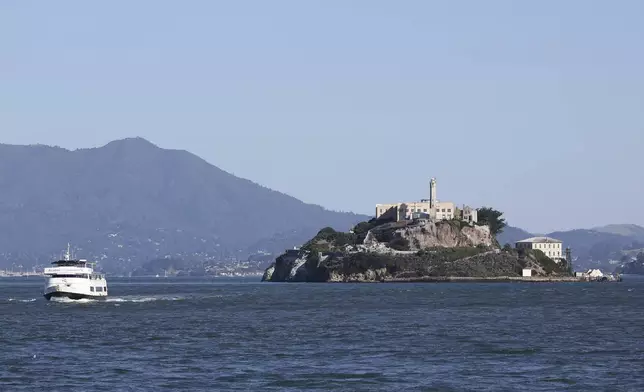
A tour boat is skippered past Alcatraz Island Monday, May 5, 2025, in San Francisco. (AP Photo/Jed Jacobsohn)
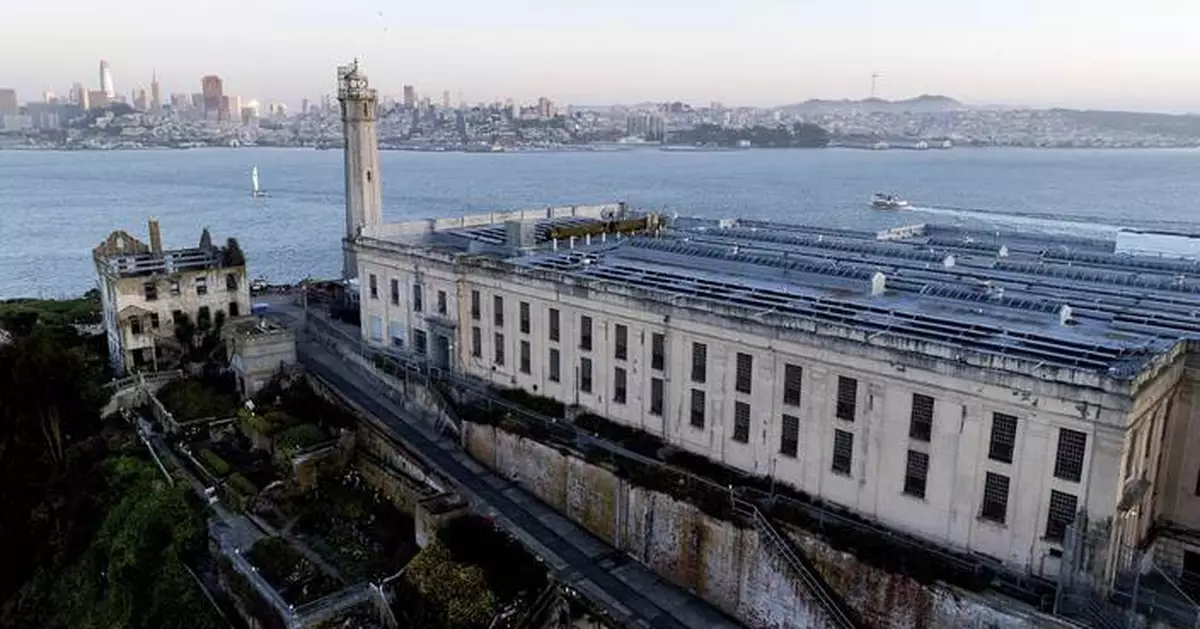
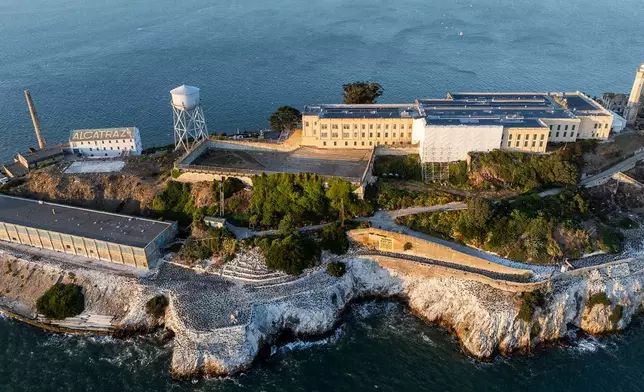
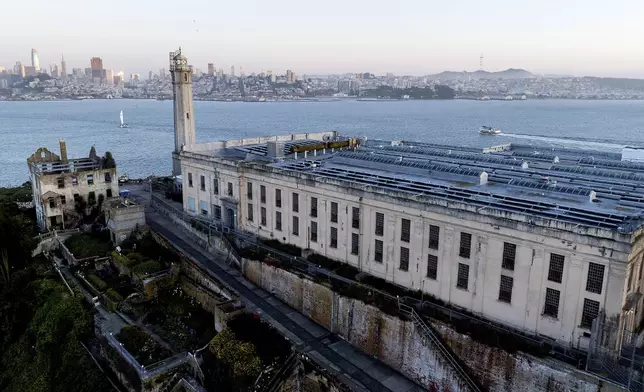
Alcatraz Island is pictured on Sunday, May 4, 2025, in the San Francisco Bay, Calif. (AP Photo/Noah Berger)
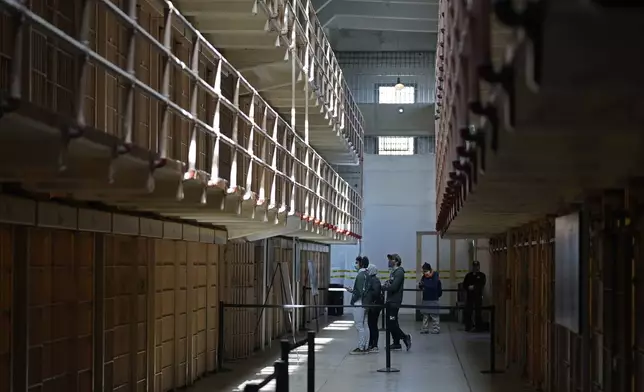
FILE - People tour the main cell house on Alcatraz Island in San Francisco, March 15, 2021, as the historic island prison was reopened to visitors after being closed since Dec. 2020, because of the coronavirus threat. (AP Photo/Eric Risberg, File)
Alcatraz Island is pictured on Sunday, May 4, 2025, in the San Francisco Bay, Calif. (AP Photo/Noah Berger)
Circled by herons and gulls and often shrouded in fog, Alcatraz has been the setting for movies featuring Sean Connery, Nicolas Cage and Clint Eastwood.
Trump says Alcatraz, now part of the National Park Service, suddenly is needed to house America’s “most ruthless and violent” criminals.
“When we were a more serious Nation, in times past, we did not hesitate to lock up the most dangerous criminals, and keep them far away from anyone they could harm. That’s the way it’s supposed to be,” Trump said Sunday on his Truth Social site.
California Democratic state Sen. Scott Wiener criticized Trump, saying he wants to create a “domestic gulag right in the middle of San Francisco Bay.”
Alcatraz is in the bay and visible from San Francisco's Golden Gate Bridge. It is best known for its years as a federal prison, from 1934-63, but its history is much longer.
President Millard Fillmore in 1850 declared the island for public purposes, according to the park service, and it soon became a military site. Confederates were housed there during the Civil War.
By the 1930s, the government decided that it needed a place to hold the worst criminals, and Alcatraz became the choice for a prison.
“A remote site was sought, one that would prohibit constant communication with the outside world by those confined within its walls,” the park service said. “Although land in Alaska was being considered, the availability of Alcatraz Island conveniently coincided with the government’s perceived need for a high security prison.”
The remoteness eventually made it impractical. Everything from food to fuel had to arrive by boat.
“The island had no source of fresh water,” according to the U.S. Bureau of Prisons, “so nearly one million gallons of water had to be barged to the island each week.”
The cost to house someone there in 1959 was $10.10 a day compared with $3 at a federal prison in Atlanta, the government said. It was cheaper to build a new prison from scratch.
Despite the location, many prisoners tried to get out: 36 men attempted 14 separate escapes into the bay, according to the FBI. Nearly all were caught or didn’t survive the cold water and swift current.
“Escape from Alcatraz,” a 1979 movie starring Eastwood, told the story of John Anglin, his brother Clarence and Frank Morris, who all escaped in 1962, leaving behind handmade plaster heads with real hair in their beds to fool guards.
“For the 17 years we worked on the case, no credible evidence emerged to suggest the men were still alive, either in the U.S. or overseas,” the FBI said.
“The Rock,” a 1996 fictional thriller with Connery and Cage, centers on an effort to rescue hostages from rogue Marines on Alcatraz.
Alcatraz became part of the Golden Gate National Recreation Area and was opened to the public in 1973, a decade after it was closed as a prison.
The park service says the island gets more than 1 million visitors a year who arrive by ferry. A ticket for an adult costs $47.95, and visitors can see the cells where prisoners were held.
Rob Frank, 55, of Springfield, Missouri, said he toured Alcatraz about a decade ago. He said it's hard to imagine the millions of dollars that would be needed to reopen the prison.
“It didn’t seem very humane to me,” Frank said. “They had the cells stacked on top of each other. Small cells. Everything's concrete. It was kind of a dark place.”
In 1969, a group of Native Americans, mostly college students, claimed to have a historical right to Alcatraz and began an occupation that lasted for 19 months until federal authorities intervened in 1971.
“The underlying goals of the Indians on Alcatraz were to awaken the American public to the reality of the plight of the first Americans and to assert the need for Indian self-determination,” late historian Troy Johnson wrote.
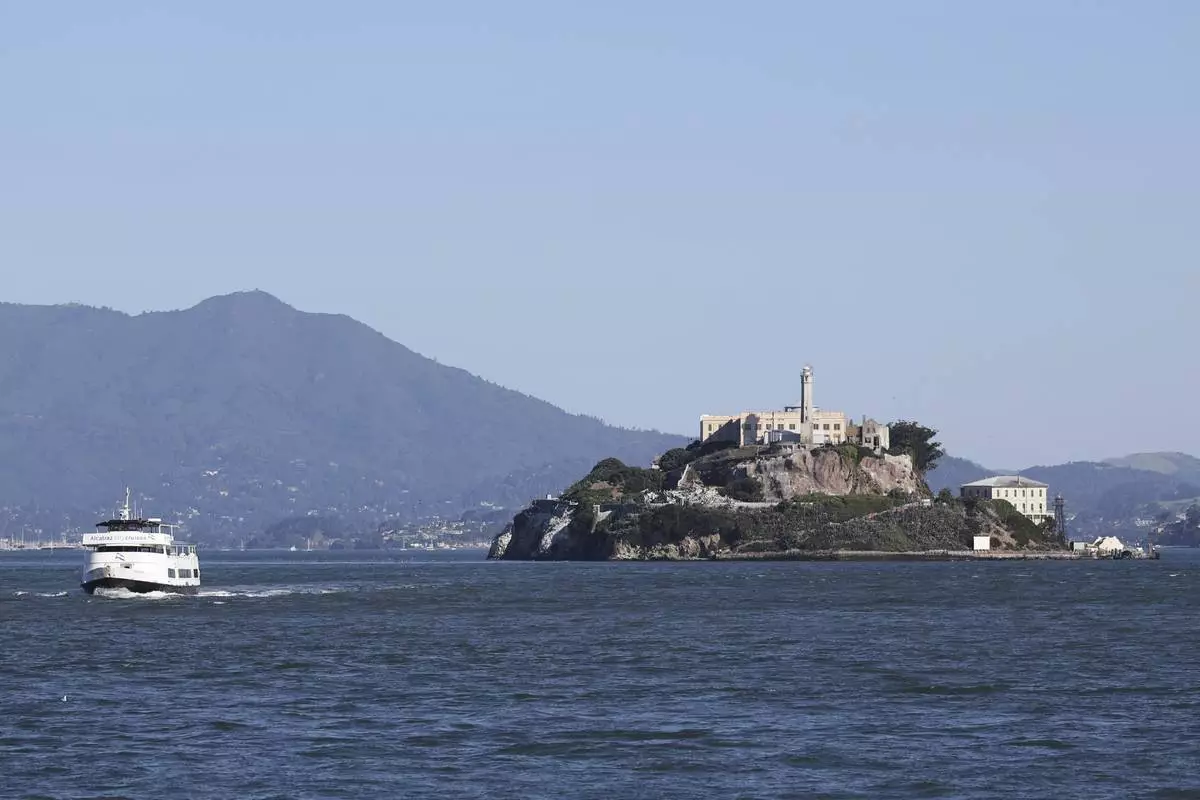
A tour boat is skippered past Alcatraz Island Monday, May 5, 2025, in San Francisco. (AP Photo/Jed Jacobsohn)
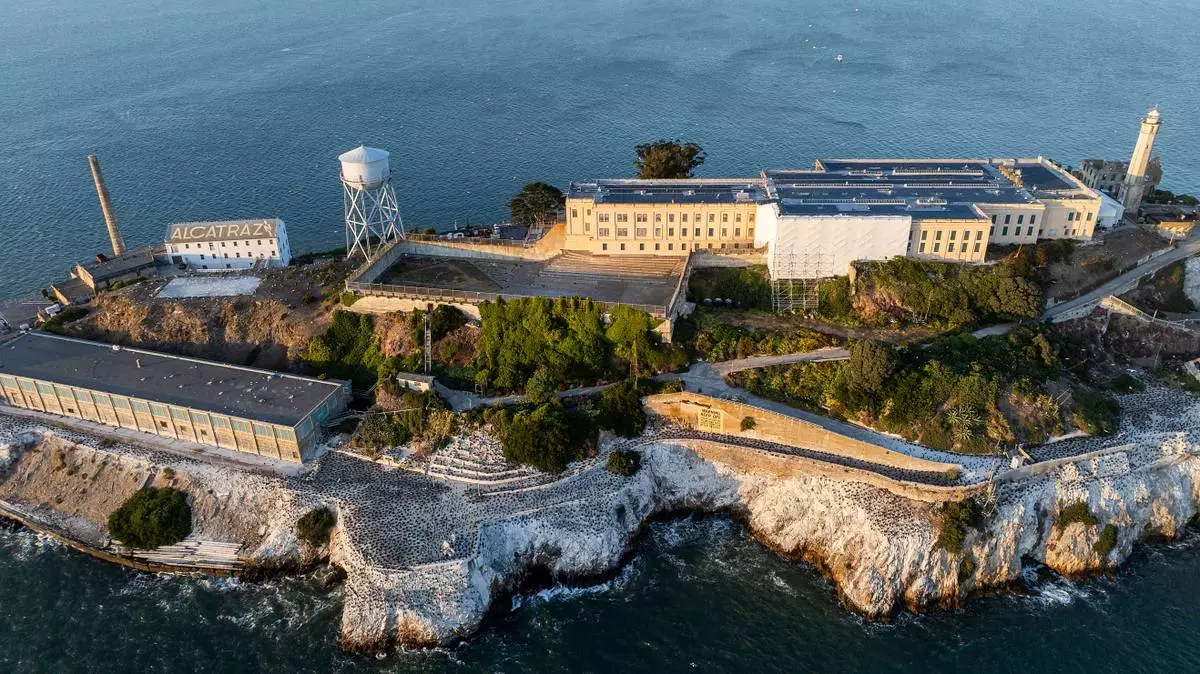
Alcatraz Island is pictured on Sunday, May 4, 2025, in the San Francisco Bay, Calif. (AP Photo/Noah Berger)
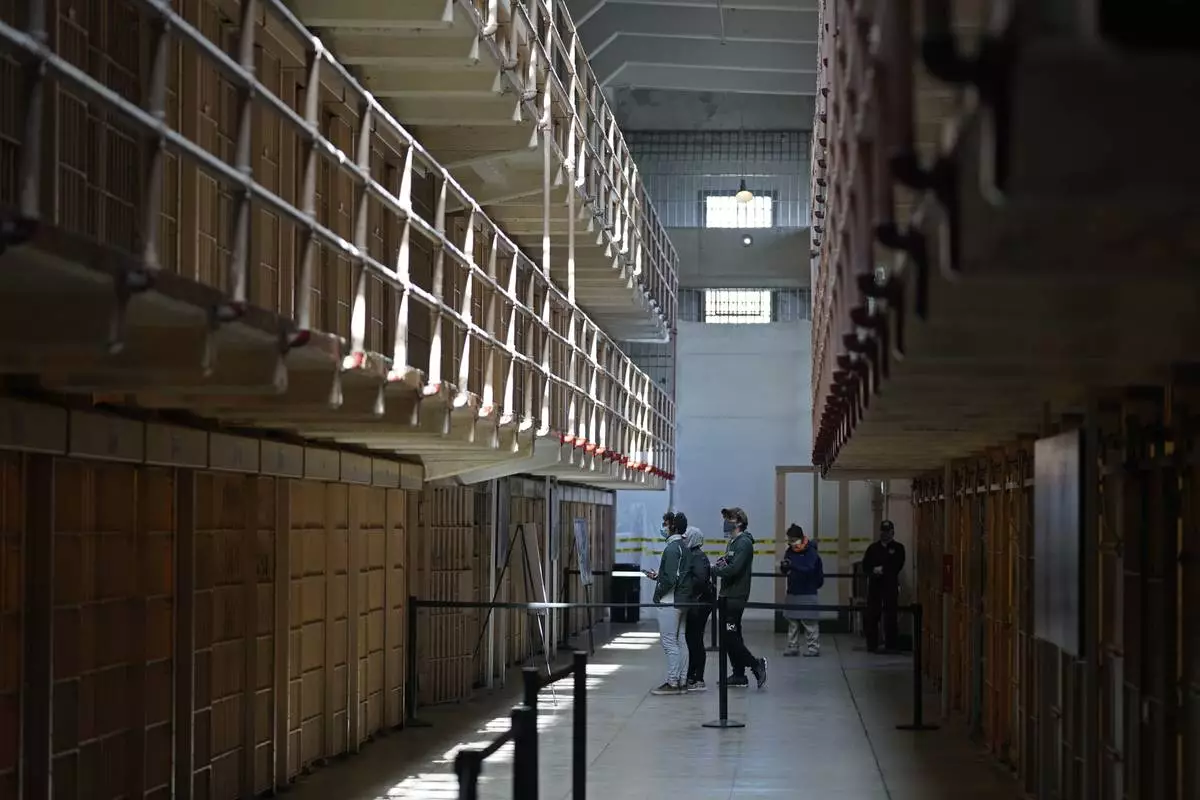
FILE - People tour the main cell house on Alcatraz Island in San Francisco, March 15, 2021, as the historic island prison was reopened to visitors after being closed since Dec. 2020, because of the coronavirus threat. (AP Photo/Eric Risberg, File)
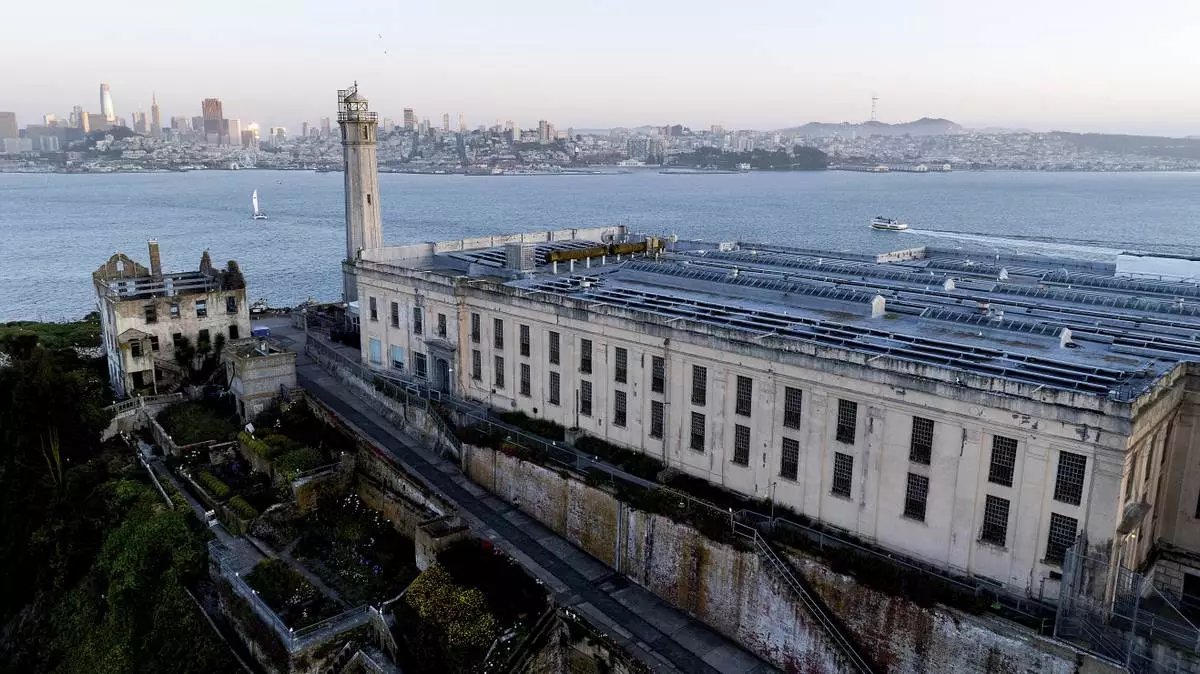
Alcatraz Island is pictured on Sunday, May 4, 2025, in the San Francisco Bay, Calif. (AP Photo/Noah Berger)
NEW YORK (AP) — Reviving a campaign pledge, President Donald Trump wants a one-year, 10% cap on credit card interest rates, a move that could save Americans tens of billions of dollars but drew immediate opposition from an industry that has been in his corner.
Trump was not clear in his social media post Friday night whether a cap might take effect through executive action or legislation, though one Republican senator said he had spoken with the president and would work on a bill with his “full support.” Trump said he hoped it would be in place Jan. 20, one year after he took office.
Strong opposition is certain from Wall Street in addition to the credit card companies, which donated heavily to his 2024 campaign and have supported Trump's second-term agenda. Banks are making the argument that such a plan would most hurt poor people, at a time of economic concern, by curtailing or eliminating credit lines, driving them to high-cost alternatives like payday loans or pawnshops.
“We will no longer let the American Public be ripped off by Credit Card Companies that are charging Interest Rates of 20 to 30%,” Trump wrote on his Truth Social platform.
Researchers who studied Trump’s campaign pledge after it was first announced found that Americans would save roughly $100 billion in interest a year if credit card rates were capped at 10%. The same researchers found that while the credit card industry would take a major hit, it would still be profitable, although credit card rewards and other perks might be scaled back.
About 195 million people in the United States had credit cards in 2024 and were assessed $160 billion in interest charges, the Consumer Financial Protection Bureau says. Americans are now carrying more credit card debt than ever, to the tune of about $1.23 trillion, according to figures from the New York Federal Reserve for the third quarter last year.
Further, Americans are paying, on average, between 19.65% and 21.5% in interest on credit cards according to the Federal Reserve and other industry tracking sources. That has come down in the past year as the central bank lowered benchmark rates, but is near the highs since federal regulators started tracking credit card rates in the mid-1990s. That’s significantly higher than a decade ago, when the average credit card interest rate was roughly 12%.
The Republican administration has proved particularly friendly until now to the credit card industry.
Capital One got little resistance from the White House when it finalized its purchase and merger with Discover Financial in early 2025, a deal that created the nation’s largest credit card company. The Consumer Financial Protection Bureau, which is largely tasked with going after credit card companies for alleged wrongdoing, has been largely nonfunctional since Trump took office.
In a joint statement, the banking industry was opposed to Trump's proposal.
“If enacted, this cap would only drive consumers toward less regulated, more costly alternatives," the American Bankers Association and allied groups said.
Bank lobbyists have long argued that lowering interest rates on their credit card products would require the banks to lend less to high-risk borrowers. When Congress enacted a cap on the fee that stores pay large banks when customers use a debit card, banks responded by removing all rewards and perks from those cards. Debit card rewards only recently have trickled back into consumers' hands. For example, United Airlines now has a debit card that gives miles with purchases.
The U.S. already places interest rate caps on some financial products and for some demographics. The Military Lending Act makes it illegal to charge active-duty service members more than 36% for any financial product. The national regulator for credit unions has capped interest rates on credit union credit cards at 18%.
Credit card companies earn three streams of revenue from their products: fees charged to merchants, fees charged to customers and the interest charged on balances. The argument from some researchers and left-leaning policymakers is that the banks earn enough revenue from merchants to keep them profitable if interest rates were capped.
"A 10% credit card interest cap would save Americans $100 billion a year without causing massive account closures, as banks claim. That’s because the few large banks that dominate the credit card market are making absolutely massive profits on customers at all income levels," said Brian Shearer, director of competition and regulatory policy at the Vanderbilt Policy Accelerator, who wrote the research on the industry's impact of Trump's proposal last year.
There are some historic examples that interest rate caps do cut off the less creditworthy to financial products because banks are not able to price risk correctly. Arkansas has a strictly enforced interest rate cap of 17% and evidence points to the poor and less creditworthy being cut out of consumer credit markets in the state. Shearer's research showed that an interest rate cap of 10% would likely result in banks lending less to those with credit scores below 600.
The White House did not respond to questions about how the president seeks to cap the rate or whether he has spoken with credit card companies about the idea.
Sen. Roger Marshall, R-Kan., who said he talked with Trump on Friday night, said the effort is meant to “lower costs for American families and to reign in greedy credit card companies who have been ripping off hardworking Americans for too long."
Legislation in both the House and the Senate would do what Trump is seeking.
Sens. Bernie Sanders, I-Vt., and Josh Hawley, R-Mo., released a plan in February that would immediately cap interest rates at 10% for five years, hoping to use Trump’s campaign promise to build momentum for their measure.
Hours before Trump's post, Sanders said that the president, rather than working to cap interest rates, had taken steps to deregulate big banks that allowed them to charge much higher credit card fees.
Reps. Alexandria Ocasio-Cortez, D-N.Y., and Anna Paulina Luna, R-Fla., have proposed similar legislation. Ocasio-Cortez is a frequent political target of Trump, while Luna is a close ally of the president.
Seung Min Kim reported from West Palm Beach, Fla.
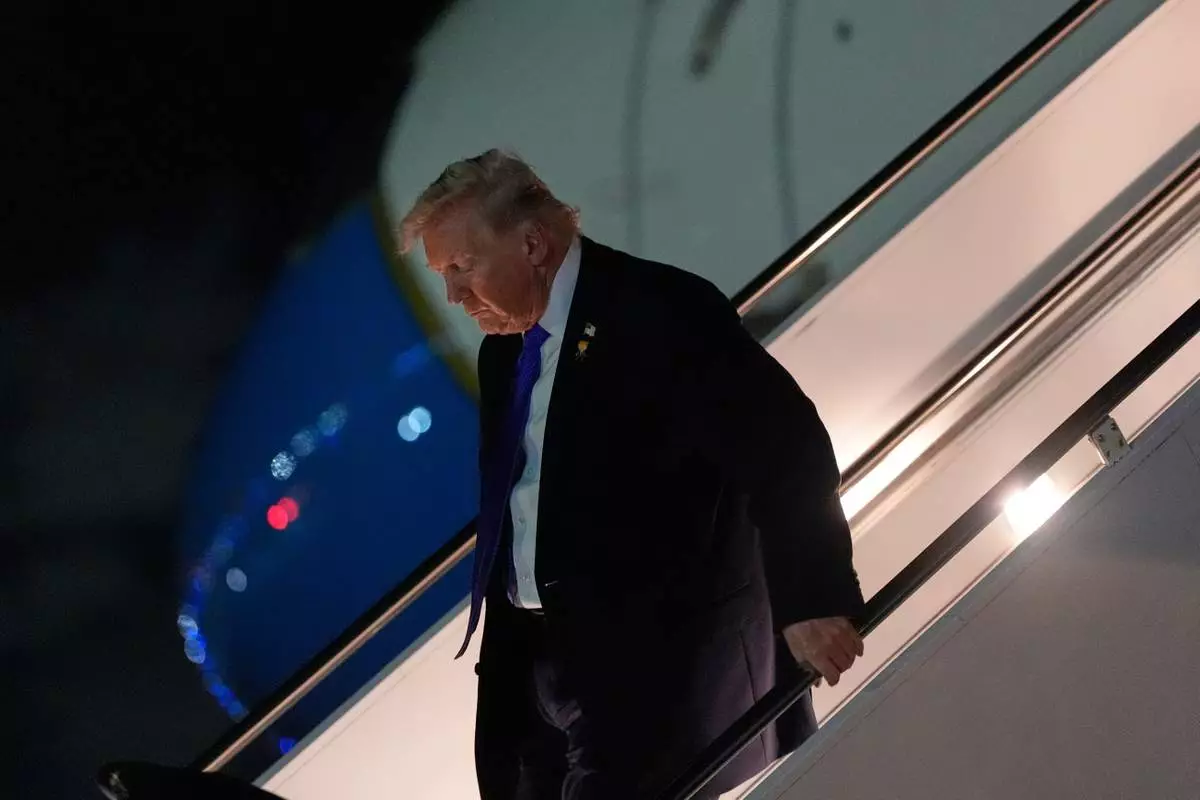
President Donald Trump arrives on Air Force One at Palm Beach International Airport, Friday, Jan. 9, 2025, in West Palm Beach, Fla. (AP Photo/Julia Demaree Nikhinson)
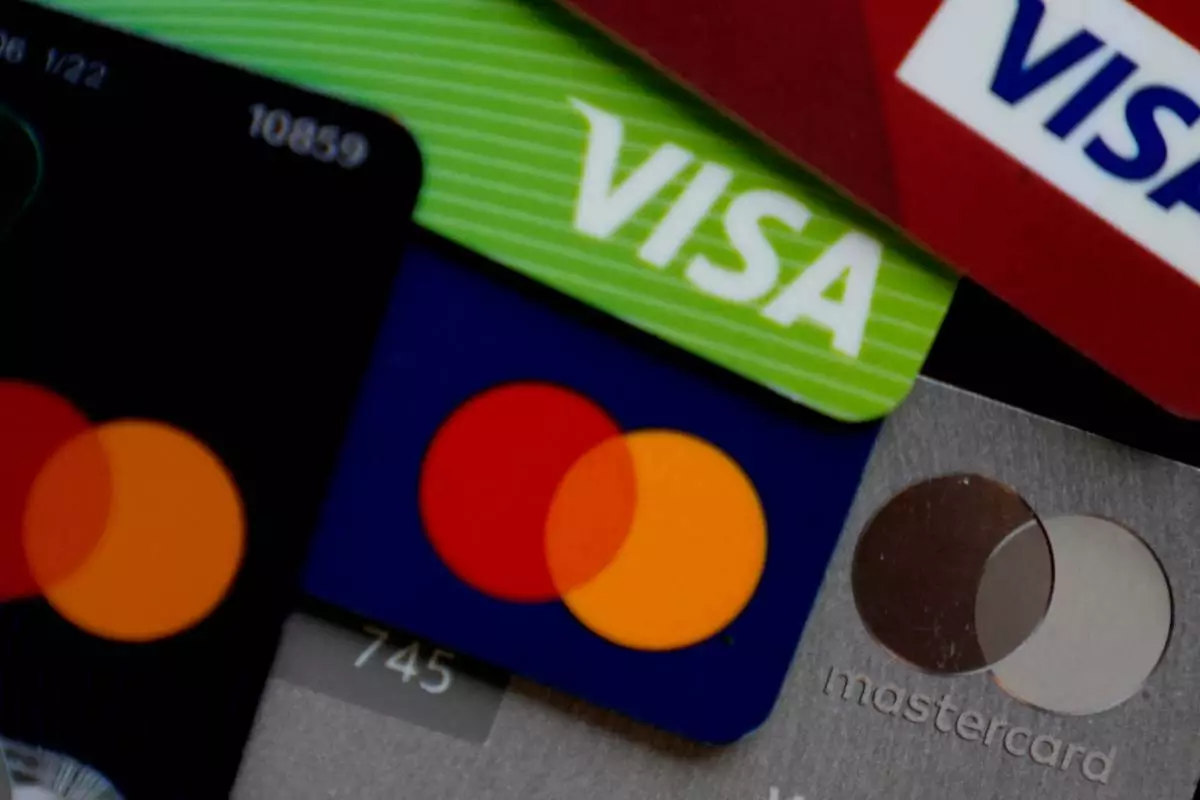
FILE - Visa and Mastercard credit cards are shown in Buffalo Grove, Ill., Feb. 8, 2024. (AP Photo/Nam Y. Huh, File)