GRAND RAPIDS, Mich. (AP) — Jurors began deliberations Monday over whether a former Michigan police officer could have reasonably feared that he was at risk of great bodily injury or death when he shot and killed 26-year-old Patrick Lyoya, a Congolese immigrant, over three years ago.
In closing statements Monday morning, prosecutors said videos of a traffic stop show that former Grand Rapids officer Christopher Schurr was not in danger at the time, while defense attorneys argued the same videos show Lyoya had control of Schurr's Taser, a weapon that discharges small amounts of electricity to incapacitate someone. Schurr, who is white, was charged with second-degree murder and faces up to life in prison if convicted.
Click to Gallery
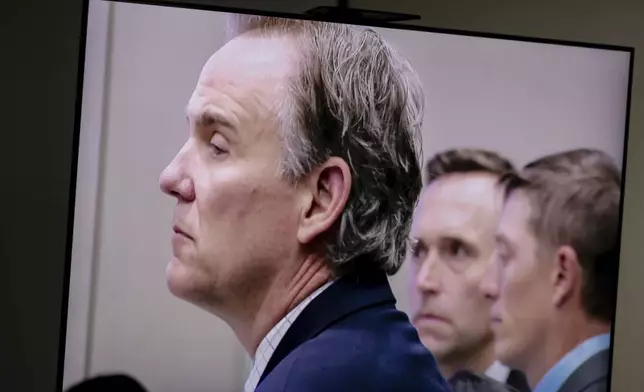
Defense attorney Matthew Borgula listens as Judge Christina Mims addresses the courtroom during the fourth day of trial for former Grand Rapids Police officer Christopher Schurr, who is charged with second-degree murder in the fatal shooting of Patrick Lyoya, a Congolese immigrant, during a traffic stop, at the Kent County Courthouse in Grand Rapids, Mich., Thursday, May 1 2025. (Joel Bissell/MLive.com/Kalamazoo Gazette via AP)
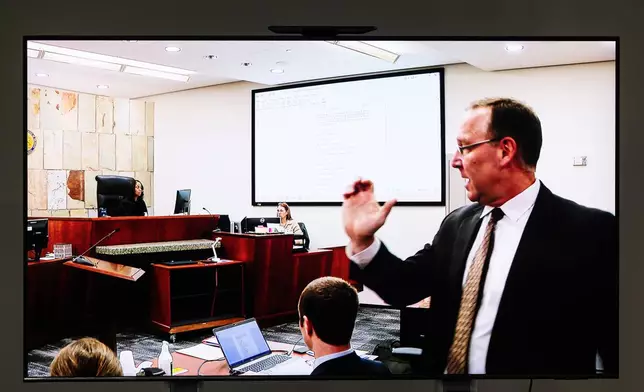
Kent County Prosecutor Chris Becker cross-examines David Siver, GRPD Capt., as he testifies during the fourth day of trial for former Grand Rapids Police officer Christopher Schurr, who is charged with second-degree murder in the fatal shooting of Patrick Lyoya, a Congolese immigrant, during a traffic stop, at the Kent County Courthouse in Grand Rapids, Mich., Thursday, May 1, 2025. (Joel Bissell/MLive.com/Kalamazoo Gazette via AP)
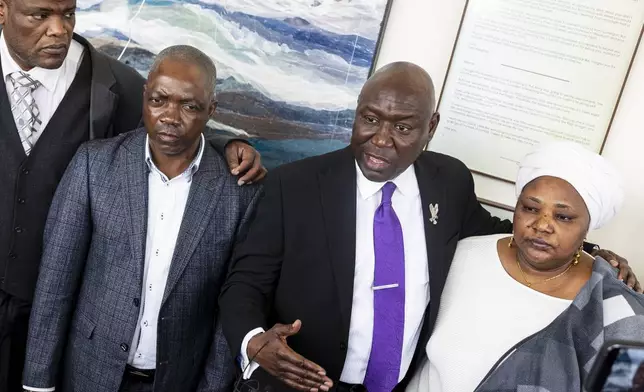
Civil-rights attorney Ben Crump holds a press conference with friends and family of Patrick Lyoya after former Grand Rapids police officer Christopher Schurr testified during the fifth day of his trial at the Kent County Courthouse in Grand Rapids, Mich., Friday, May 2, 2025. (Joel Bissell/Kalamazoo Gazette via AP)
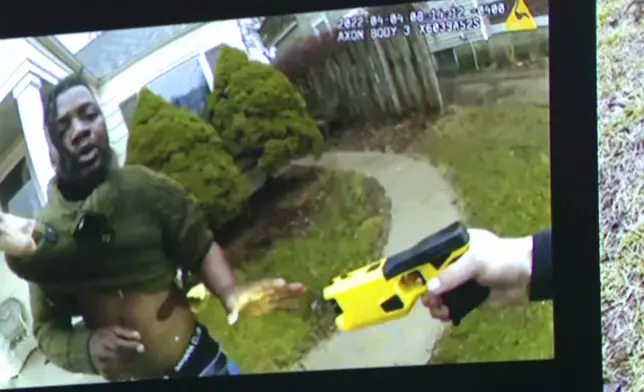
Body worn camera footage showing former Grand Rapids Police officer Christopher Schurr with a Taser7 and Patrick Lyoya is shown during the third day at the Kent County Courthouse with his wife Brandey in Grand Rapids, Mich. on Wednesday, April 30, 2025. (Joel Bissell/Kalamazoo Gazette via AP)
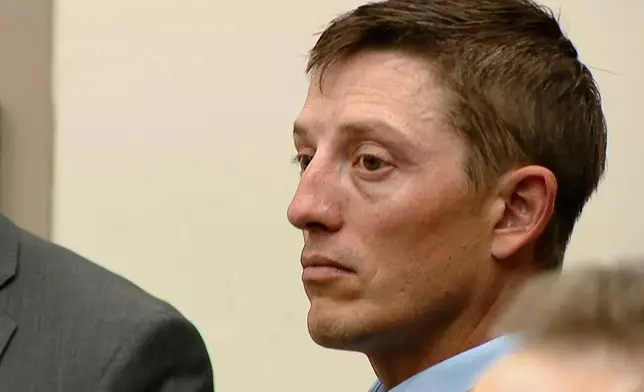
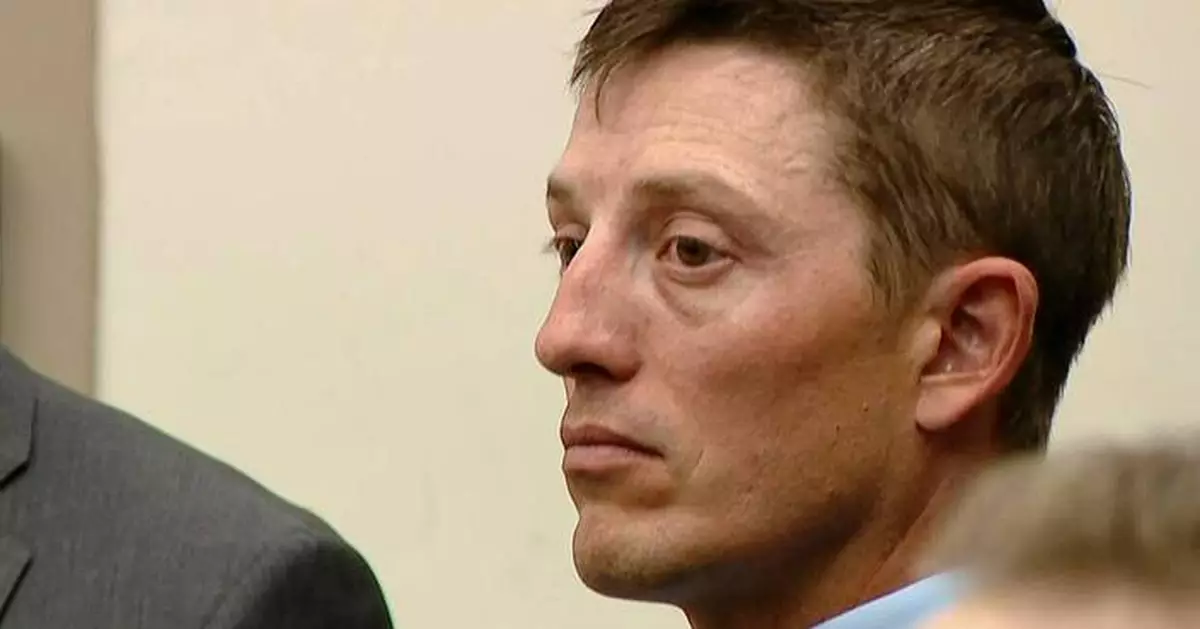
Former Grand Rapids Police officer Christopher Schurr sits in court during the second day of his trial at the Kent County Courthouse in Grand Rapids, Mich., Tuesday, April 29, 2025. Schurr is charged with second-degree murder in the fatal shooting of Patrick Lyoya, a 26-year-old Congolese immigrant during a traffic stop on April 4, 2022. (WOOD-TV via AP, Pool)
Jurors have the option to convict Schurr of the lesser charge of manslaughter, which carries a sentence of up to 15 years in prison and/or a fine of up to $7,500.
“I hope you're not getting callous,” Kent County prosecutor Christopher Becker said to the jury in his closing statement. “How many times have you watched this video of another person — Patrick — dying over and over and over again?"
Jurors watched videos of the shooting — taken from multiple angles on a doorbell camera, body camera, dashboard camera and a bystander’s cellphone — numerous times throughout the trial, sometimes side by side and sometimes frame by frame.
Schurr pulled over a vehicle driven by Lyoya for improper license plates in April 2022 in a residential Grand Rapids neighborhood, roughly 150 miles (240 kilometers) west of Detroit. Video footage shows Schurr struggling to subdue Lyoya as they grappled over the officer’s Taser. Schurr told Lyoya to stop resisting and drop the weapon multiple times throughout the encounter.
While Lyoya was facedown on the ground with Schurr on top of him, the officer took out his gun and shot him once in the back of the head.
Schurr testified last week that he thought Lyoya was going to use the Taser against him.
Referencing photos of the encounter shown to the jury, Becker argued that Lyoya was trying to avoid being shot with the Taser and was attempting to get away from Schurr, rather than harm him. Lyoya never had a tactical advantage over Schurr, Becker said, and did not pose a threat.
“You can’t take a life without a darn good reason,” Becker said.
Lead defense attorney Matthew Borgula walked jurors through the traffic stop again during his closing, arguing that Schurr performed his duties as a police officer reasonably at each moment.
“He’s doing his job," Borgula said.
Borgula said Schurr was on Lyoya's back because he was trying to get the Taser back. He said officers do not have to wait to be injured to use deadly force, referencing testimony from several high-ranking Grand Rapids police officers last week. Schurr was fired from the department shortly after he was charged in 2022.
“Christopher Schurr was at work, and he was faced with the toughest decision of his life in half a second," Borgula said.
The fatal shooting prompted weeks of protest in Grand Rapids, and demonstrators on both sides have protested outside of the Kent County courthouse during the trial. Civil rights groups decried the shooting as part of a pattern of aggression perpetuated against Black people in the U.S. by white officers.
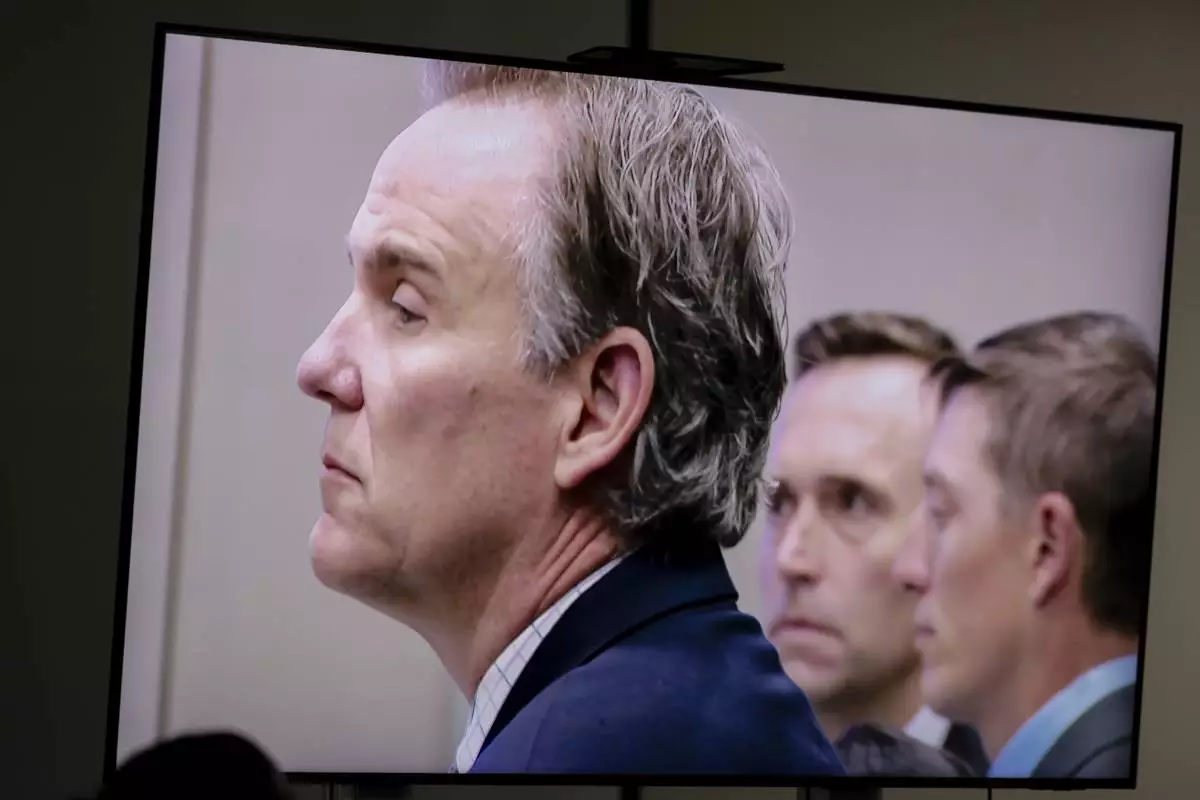
Defense attorney Matthew Borgula listens as Judge Christina Mims addresses the courtroom during the fourth day of trial for former Grand Rapids Police officer Christopher Schurr, who is charged with second-degree murder in the fatal shooting of Patrick Lyoya, a Congolese immigrant, during a traffic stop, at the Kent County Courthouse in Grand Rapids, Mich., Thursday, May 1 2025. (Joel Bissell/MLive.com/Kalamazoo Gazette via AP)
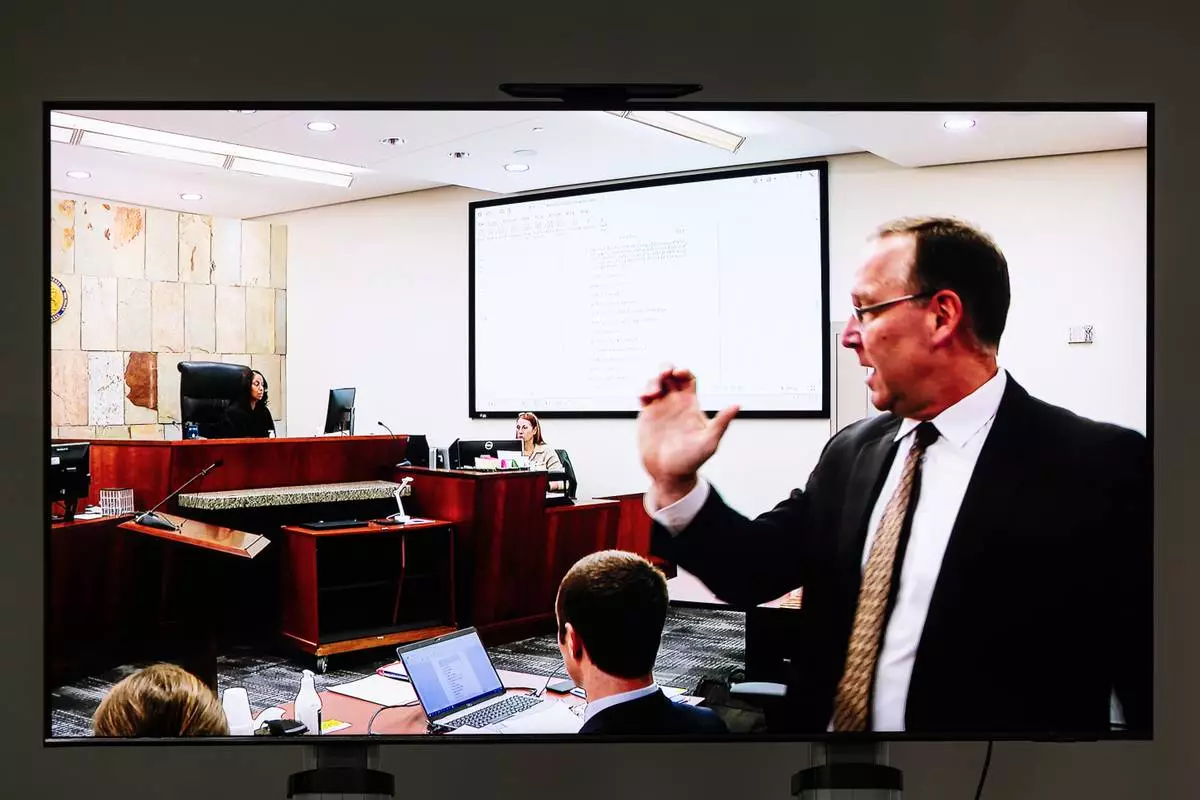
Kent County Prosecutor Chris Becker cross-examines David Siver, GRPD Capt., as he testifies during the fourth day of trial for former Grand Rapids Police officer Christopher Schurr, who is charged with second-degree murder in the fatal shooting of Patrick Lyoya, a Congolese immigrant, during a traffic stop, at the Kent County Courthouse in Grand Rapids, Mich., Thursday, May 1, 2025. (Joel Bissell/MLive.com/Kalamazoo Gazette via AP)
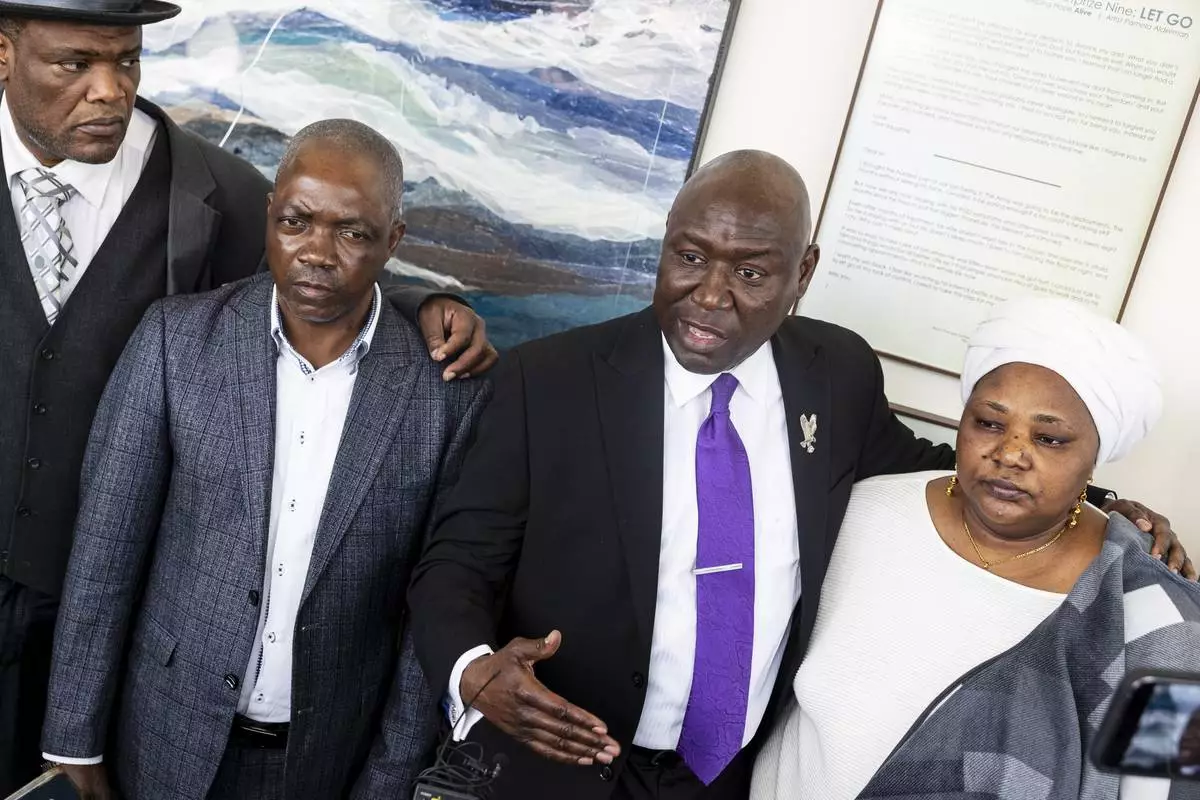
Civil-rights attorney Ben Crump holds a press conference with friends and family of Patrick Lyoya after former Grand Rapids police officer Christopher Schurr testified during the fifth day of his trial at the Kent County Courthouse in Grand Rapids, Mich., Friday, May 2, 2025. (Joel Bissell/Kalamazoo Gazette via AP)
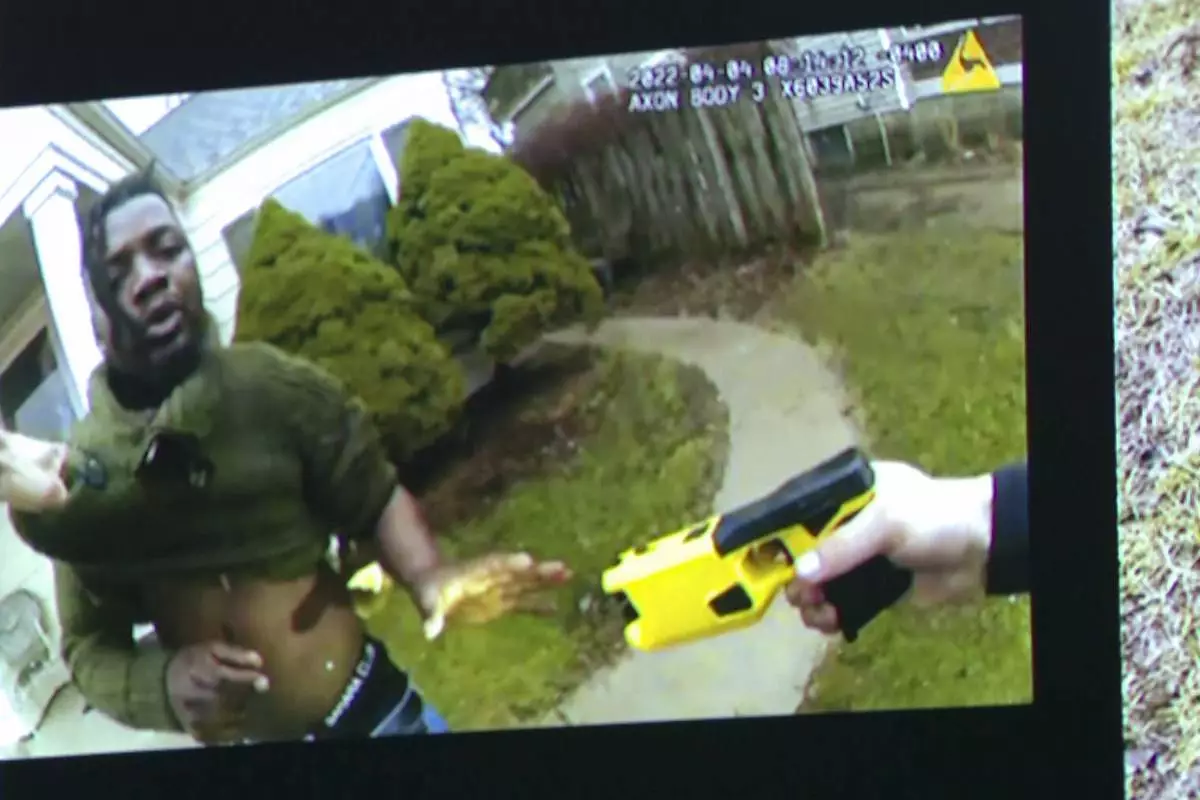
Body worn camera footage showing former Grand Rapids Police officer Christopher Schurr with a Taser7 and Patrick Lyoya is shown during the third day at the Kent County Courthouse with his wife Brandey in Grand Rapids, Mich. on Wednesday, April 30, 2025. (Joel Bissell/Kalamazoo Gazette via AP)
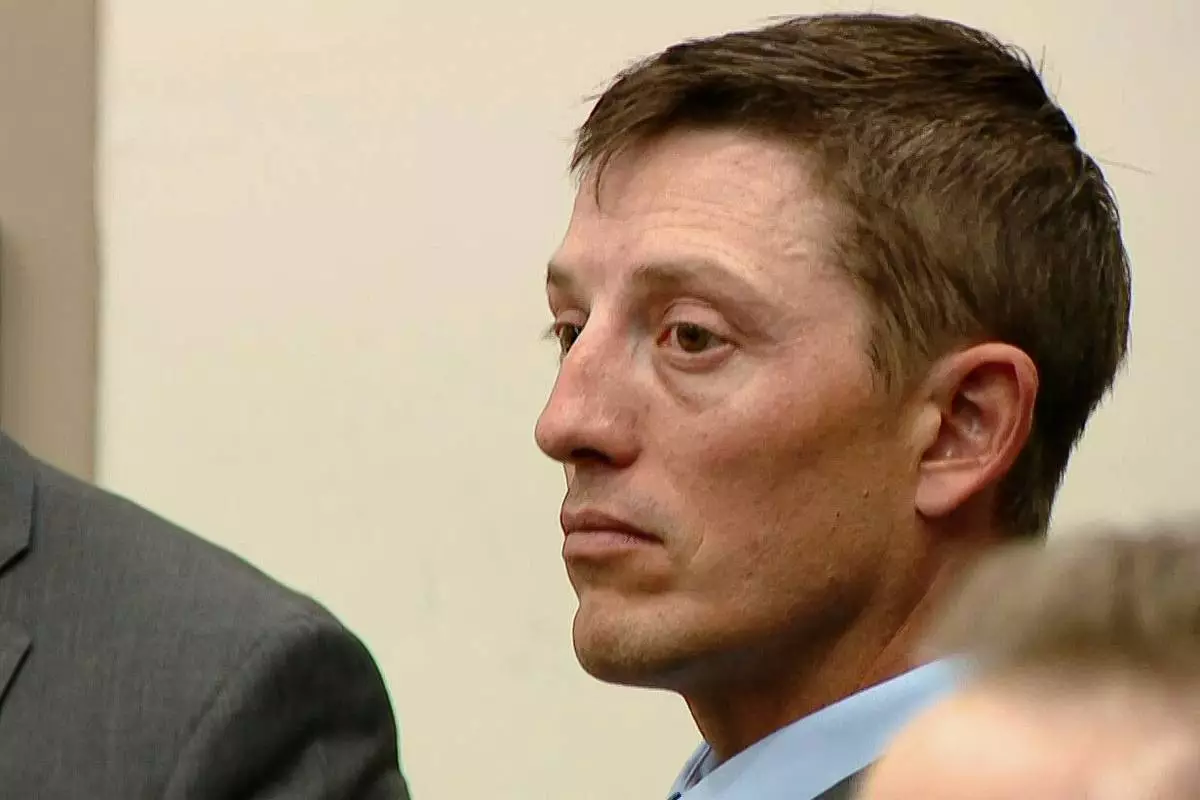
Former Grand Rapids Police officer Christopher Schurr sits in court during the second day of his trial at the Kent County Courthouse in Grand Rapids, Mich., Tuesday, April 29, 2025. Schurr is charged with second-degree murder in the fatal shooting of Patrick Lyoya, a 26-year-old Congolese immigrant during a traffic stop on April 4, 2022. (WOOD-TV via AP, Pool)