Chinese medical aid teams serving in Guyana since 1993 have not only brought health and hope to local patients but have also played a key role in advancing the country's medical practices and technologies.
Recently, 65-year-old Lionel Alexander Chinian visited Doctor Huang Xiaobo at Georgetown Public Hospital for a follow-up consultation after treatment for his eye disease.
He had been diagnosed with diabetic retinopathy complicated by neovascular glaucoma. After timely surgery, his eyesight was restored.
"I've actually met with three Chinese doctors, doctor Shi, doctor Liu and now doctor Huang. And the treatment I have received so far is excellent, I can say, because prior to that I did not have vision in this eye, and I must say thanks to the doctors. I would also like to give my thanks to the People's Republic of China for affording Guyana the opportunity of these doctors coming here," said Chinian.
The aid team helps treat patients of all ages, including those in need of emergency care.
A seven-year-old boy who was caught in a fire and suffered burns covering over 30 percent of his skin was in critical condition when he was sent to the hospital.
Gong Zhenhua, a burn specialist, used new treatment techniques brought from China to create a detailed treatment and rehabilitation plan for the boy. After more than a month of treatment, the boy met the discharge criteria.
"Currently, all the wounds have healed, and he is now in the rehabilitation phase. He is expected to be discharged soon. The treatment for burn patients at the local hospital has adopted some of the Chinese treatment experiences, new concepts, techniques, and methods," said Gong, who serves on the 20th China medical aid team to Guyana.
Located in the northern part of South America, Guyana has a population of nearly 800,000 and faces a shortage of medical resources.
For over 30 years, Chinese medical teams have been improving the healthcare of local patients, but they have also trained a large number of local healthcare workers.
"There's an old saying, if you give a man a fish, you just feed him for a day. If you teach him to fish, you feed him forever. And that's the kind of what the Chinese medical team are doing here, it's training our staff capacity, transfer of skills and they are continuously helping us do that," said Robbie Rambarran, Chief Executive Officer (CEO) of Georgetown Public Hospital Corporation (GPHC).
Since September last year, members of the 20th batch of China's medical aid team to Guyana have treated nearly 7,000 patients, performed around 700 surgeries, and rescued almost 100 critically ill patients.
Recently, the team also organized free clinics for indigenous communities deep in the tropical rainforest.
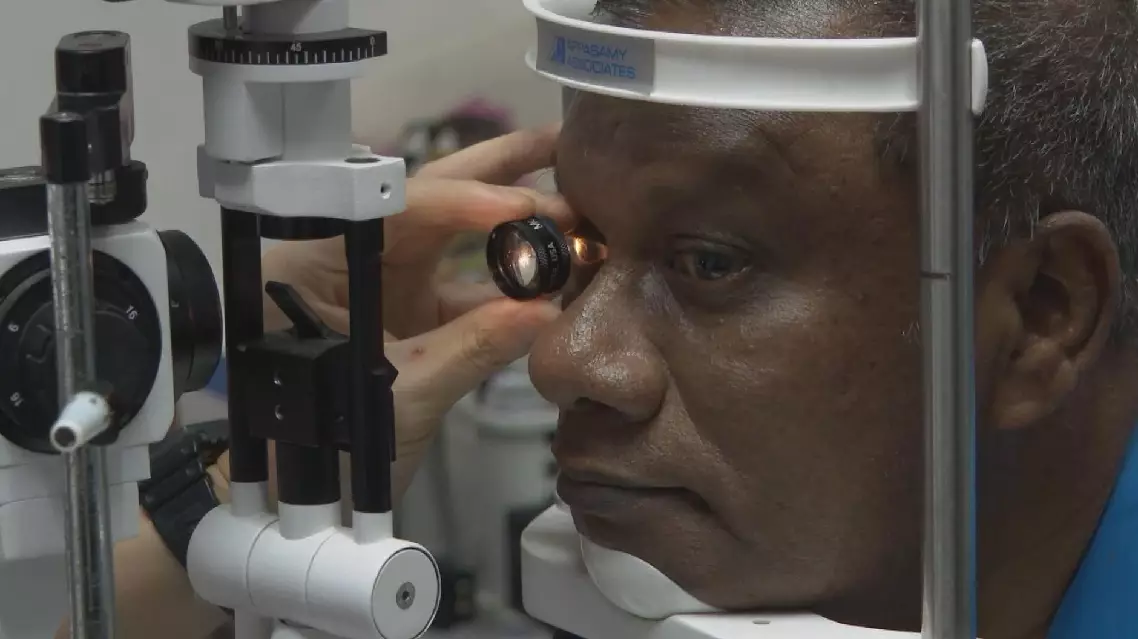
Chinese medical teams help improve healthcare, advance technology in Guyana