An attorney in the $2.8 billion legal case reshaping college sports said Monday he thinks “the agreement we will reach with the NCAA will solve the judge's concerns” over roster limits that have delayed final approval.
Steve Berman, co-lead counsel for the plaintiffs, told The Associated Press that all is on track to file paperwork by Wednesday, which is U.S. District Judge Claudia Wilken's deadline for addressing concerns that prevented her from granting approval to the deal last month.
Berman said he created a chart listing the several dozen athletes who lodged objections to the agreement based on roster limits. He said he thinks almost every one will be offered a solution.
“We’re still negotiating, and I’m confident that everyone who lost a roster spot will have a chance to get a spot back,” he said.
He did not go into detail about whether those spots would be on their previous teams or new ones.
NCAA vice president of external affairs Tim Buckley said the NCAA would not comment on the litigation while negotiations are ongoing.
Wilken looked favorably on other key components of the settlement — namely, the up to $20.5 million some schools can pay their athletes for name, image likeness (NIL) deals and the nearly $2.8 billion in back pay that will go to players who said the NCAA and five biggest conferences wrongly kept them from earning NIL money.
But she asked lawyers to rework the part of the deal that will replace scholarship limits with roster limits. It's a proposal that could make more overall scholarship money available but could cost thousands of athletes their spots on rosters in moves that began shortly after Wilken gave preliminary approval to the deal last fall.
The NCAA's first response to Wilken's request — which included the idea of “grandfathering in” current players to their roster spots — was to change nothing, arguing that undoing roster moves already in play would create more turmoil in an already chaotic process.
Wilken wasn't moved, saying in her April 24 order that “any disruption that may occur is a problem of Defendants’ and NCAA members schools’ own making.”
Berman acknowledged that the objectors likely wouldn't approve of the new deal being worked on.
“But I don't think it's going to be a big deal,” he said, because it is designed to find roster spots for virtually all the individual athletes who objected.
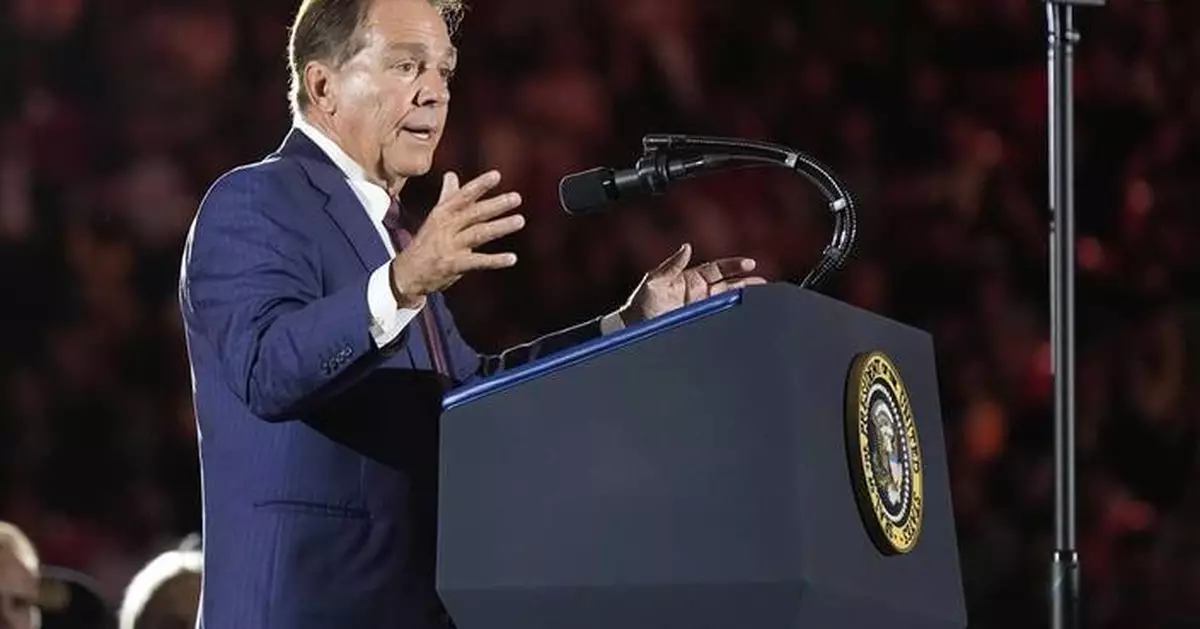
Berman also criticized Nick Saban after reports emerged that the retired Alabama football coach was urging President Donald Trump to undo damage he says has been caused by all the money flowing into college sports.
The Wall Street Journal reported Trump is considering an executive order that would call for some sort of structure behind NIL compensation now going toward players who are now able to move more freely between schools.
Berman said he believes an executive order would be subject to lawsuits “like there are against so many of his other orders.”
“But here, the question is, ‘Why does the president need to get involved?’" Berman said, while outlining the financial gains players have made in the NIL era. “Just because Nick Saban thinks he knows better and resents change? This is a coach who made more money off college football than any other coach, did absolutely nothing to make it right for these student-athletes. Why should he drive the president's thinking?”
Saban, who made more than $11 million in his last year at Alabama and who some have said should become the commissioner of college football — a position that doesn't exist — has said he isn't completely against players making money.
But he has argued for rules and laws to keep things from looking like the “pay for play” model that the NCAA hopes to avoid but that is often what NIL payments look like.
AP college sports: https://apnews.com/hub/college-sports
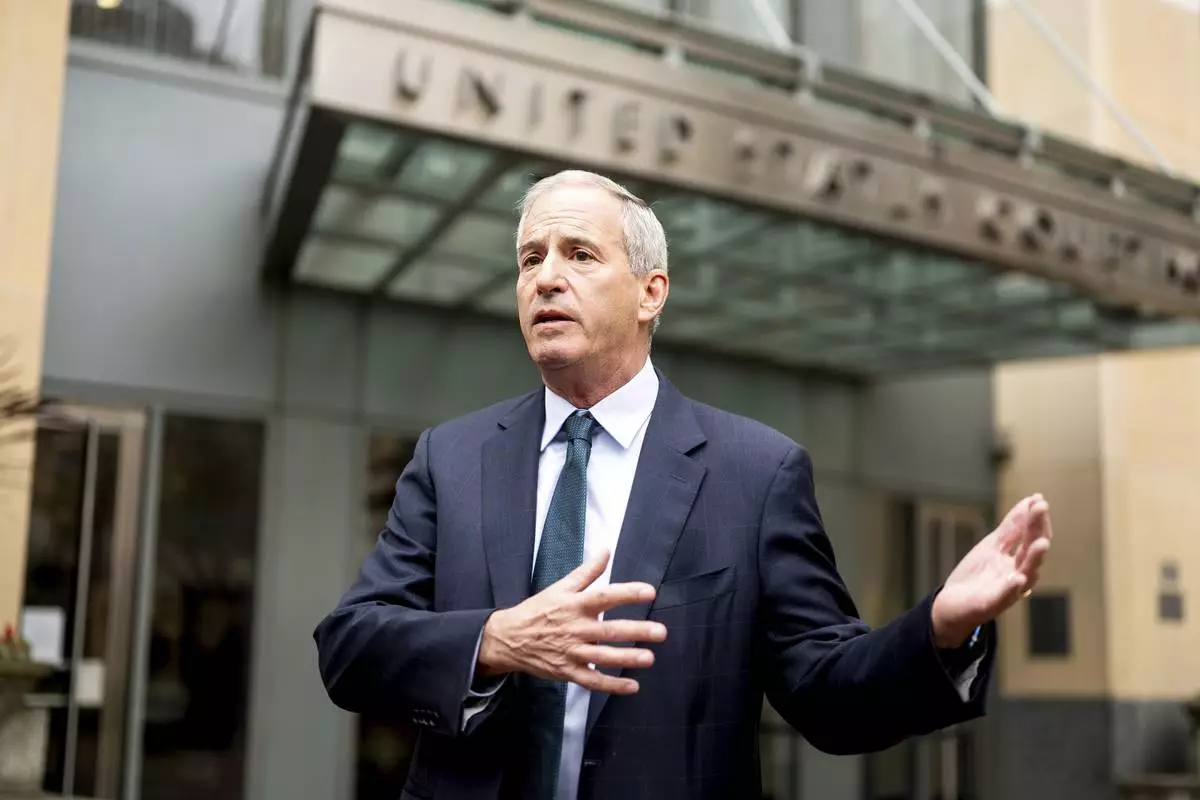
FILE - Attorney Steve Berman arrives at federal court on April 7, 2025, in Oakland, Calif. (AP Photo/Noah Berger, File)

Nick Saban speaks before President Donald Trump gives a commencement address at the University of Alabama, Thursday, May 1, 2025, in Tuscaloosa, Ala. (AP Photo/Manuel Balce Ceneta)
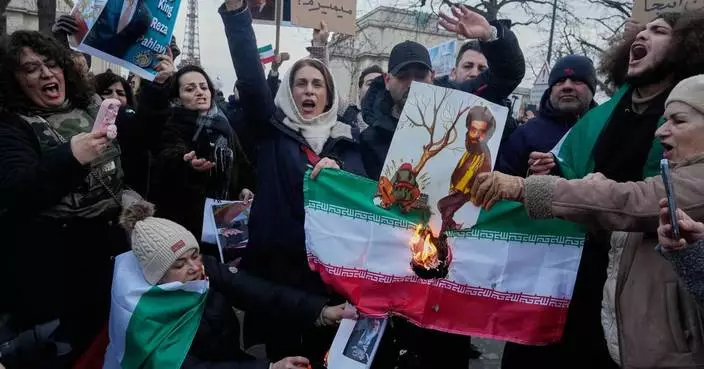
DUBAI, United Arab Emirates (AP) — U.S. President Donald Trump said Iran wants to negotiate with Washington after his threat to strike the Islamic Republic over its bloody crackdown on protesters, a move coming as activists said Monday the death toll in the nationwide demonstrations rose to at least 544.
Iran had no immediate reaction to the news, which came after the foreign minister of Oman — long an interlocutor between Washington and Tehran — traveled to Iran this weekend. It also remains unclear just what Iran could promise, particularly as Trump has set strict demands over its nuclear program and its ballistic missile arsenal, which Tehran insists is crucial for its national defense.
Meanwhile Monday, Iran called for pro-government demonstrators to head to the streets in support of the theocracy, a show of force after days of protests directly challenging the rule of 86-year-old Supreme Leader Ayatollah Ali Khamenei. Iranian state television aired chants from the crowd, who shouted “Death to America!” and “Death to Israel!”
Trump and his national security team have been weighing a range of potential responses against Iran including cyberattacks and direct strikes by the U.S. or Israel, according to two people familiar with internal White House discussions who were not authorized to comment publicly and spoke on condition of anonymity.
“The military is looking at it, and we’re looking at some very strong options,” Trump told reporters on Air Force One on Sunday night. Asked about Iran’s threats of retaliation, he said: “If they do that, we will hit them at levels that they’ve never been hit before.”
Trump said that his administration was in talks to set up a meeting with Tehran, but cautioned that he may have to act first as reports of the death toll in Iran mount and the government continues to arrest protesters.
“I think they’re tired of being beat up by the United States,” Trump said. “Iran wants to negotiate.”
He added: “The meeting is being set up, but we may have to act because of what’s happening before the meeting. But a meeting is being set up. Iran called, they want to negotiate.”
Iran through country's parliamentary speaker warned Sunday that the U.S. military and Israel would be “legitimate targets” if America uses force to protect demonstrators.
More than 10,600 people also have been detained over the two weeks of protests, said the U.S.-based Human Rights Activists News Agency, which has been accurate in previous unrest in recent years and gave the death toll. It relies on supporters in Iran crosschecking information. It said 496 of the dead were protesters and 48 were with security forces.
With the internet down in Iran and phone lines cut off, gauging the demonstrations from abroad has grown more difficult. The Associated Press has been unable to independently assess the toll. Iran’s government has not offered overall casualty figures.
Those abroad fear the information blackout is emboldening hard-liners within Iran’s security services to launch a bloody crackdown. Protesters flooded the streets in the country’s capital and its second-largest city on Saturday night into Sunday morning. Online videos purported to show more demonstrations Sunday night into Monday, with a Tehran official acknowledging them in state media.
In Tehran, a witness told the AP that the streets of the capital empty at the sunset call to prayers each night. By the Isha, or nighttime prayer, the streets are deserted.
Part of that stems from the fear of getting caught in the crackdown. Police sent the public a text message that warned: “Given the presence of terrorist groups and armed individuals in some gatherings last night and their plans to cause death, and the firm decision to not tolerate any appeasement and to deal decisively with the rioters, families are strongly advised to take care of their youth and teenagers.”
Another text, which claimed to come from the intelligence arm of the paramilitary Revolutionary Guard, also directly warned people not to take part in demonstrations.
“Dear parents, in view of the enemy’s plan to increase the level of naked violence and the decision to kill people, ... refrain from being on the streets and gathering in places involved in violence, and inform your children about the consequences of cooperating with terrorist mercenaries, which is an example of treason against the country,” the text warned.
The witness spoke to the AP on condition of anonymity due to the ongoing crackdown.
The demonstrations began Dec. 28 over the collapse of the Iranian rial currency, which trades at over 1.4 million to $1, as the country’s economy is squeezed by international sanctions in part levied over its nuclear program. The protests intensified and grew into calls directly challenging Iran’s theocracy.
Nikhinson reported from aboard Air Force One.
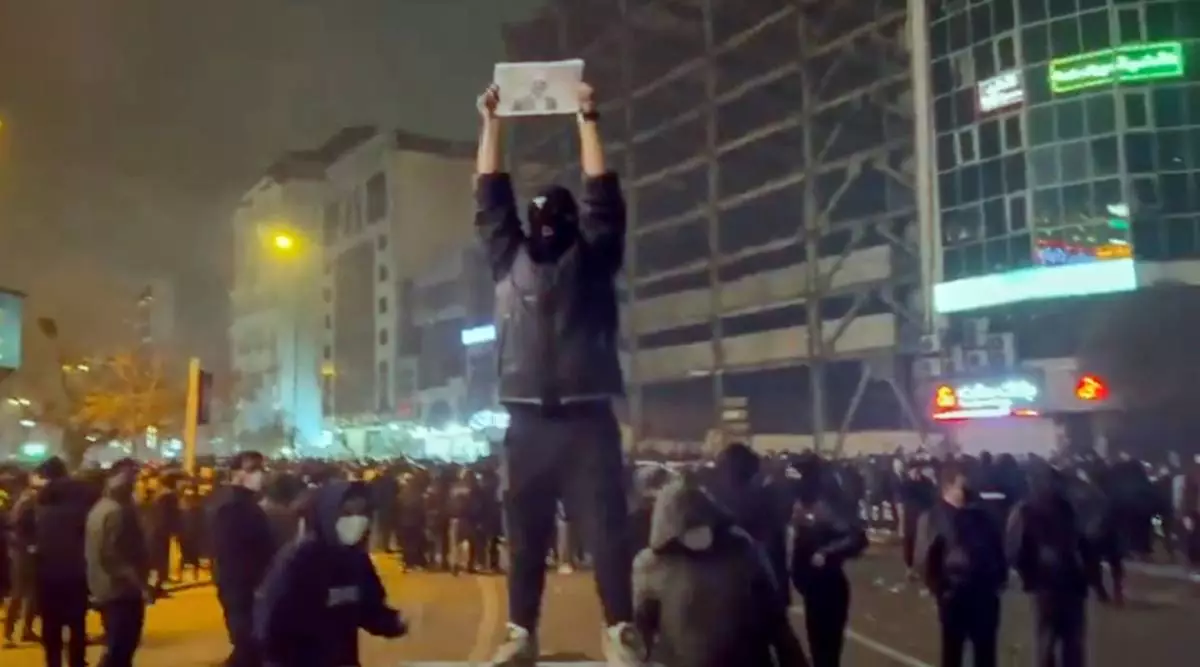
In this frame grab from video obtained by the AP outside Iran, a masked demonstrator holds a picture of Iran's Crown Prince Reza Pahlavi during a protest in Tehran, Iran, Friday, January. 9, 2026. (UGC via AP)
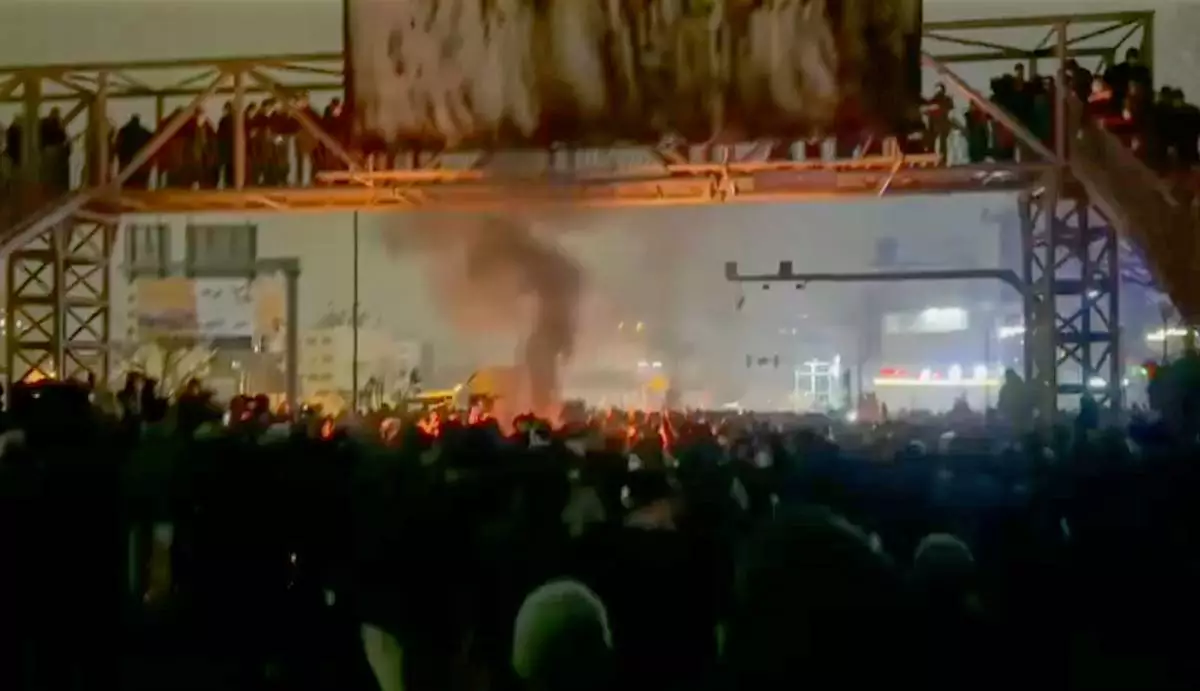
In this frame grab from footage circulating on social media from Iran shows protesters taking to the streets despite an intensifying crackdown as the Islamic Republic remains cut off from the rest of the world in Tehran, Iran, Friday, Jan. 9, 2026.(UGC via AP)
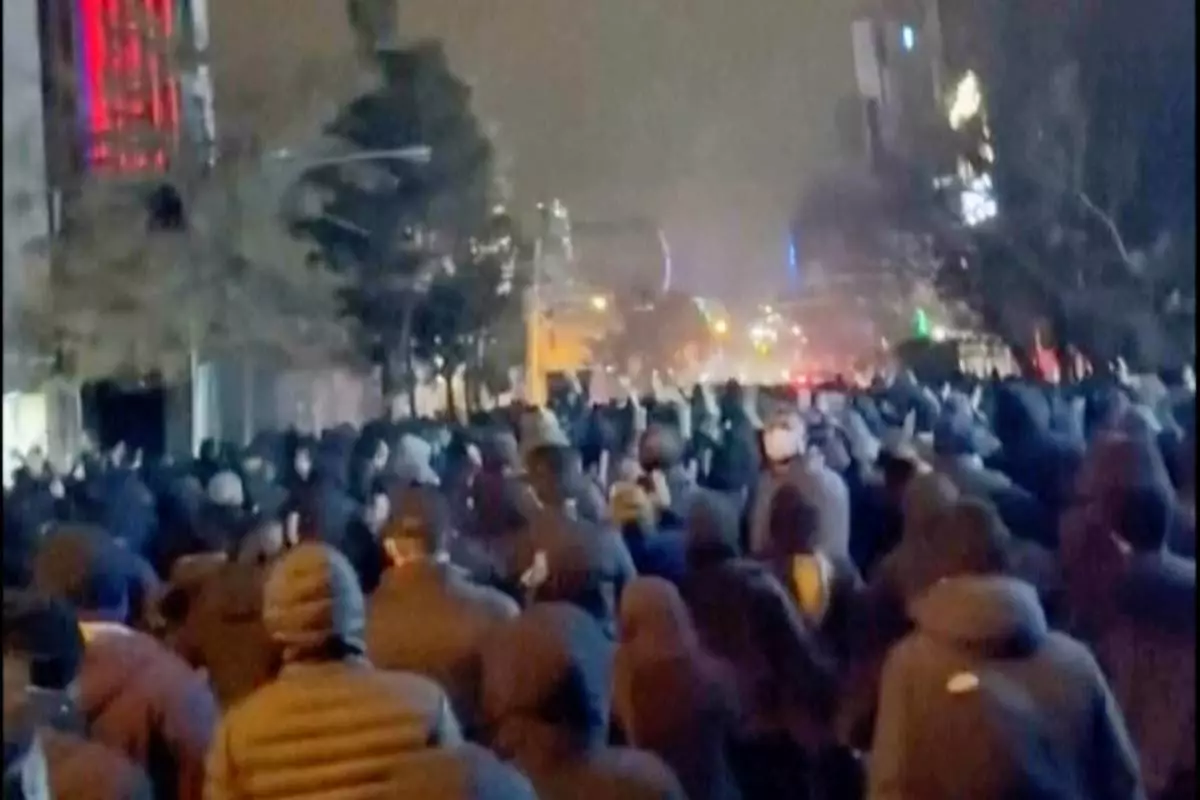
In this frame grab from footage circulating on social media from Iran showed protesters once again taking to the streets of Tehran despite an intensifying crackdown as the Islamic Republic remains cut off from the rest of the world in Tehran, Iran, Saturday Jan. 10, 2026. (UGC via AP)