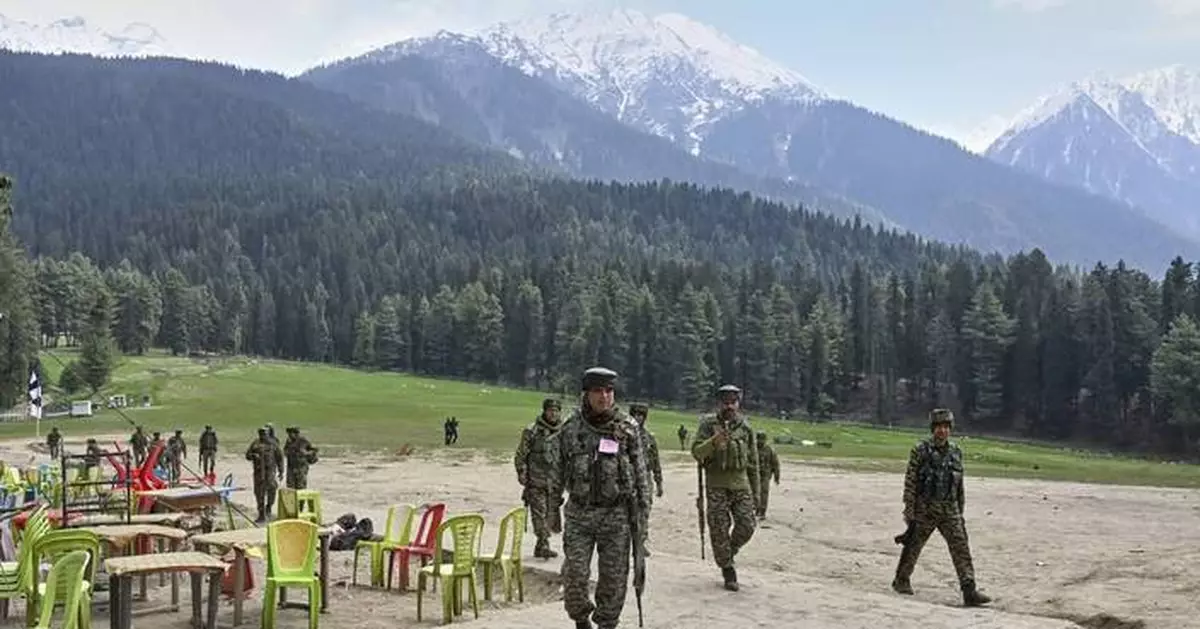
SRINAGAR, India (AP) — Hundreds of Indian tourists, families and honeymooners, drawn by the breathtaking Himalayan beauty, were enjoying a picture-perfect meadow in Kashmir. They didn’t know gunmen in army fatigues were lurking in the woods.
When the attackers got their chance, they shot mostly Indian Hindu men, many of them at close-range, leaving behind bodies strewn across the Baisaran meadow and survivors screaming for help.
Click to Gallery
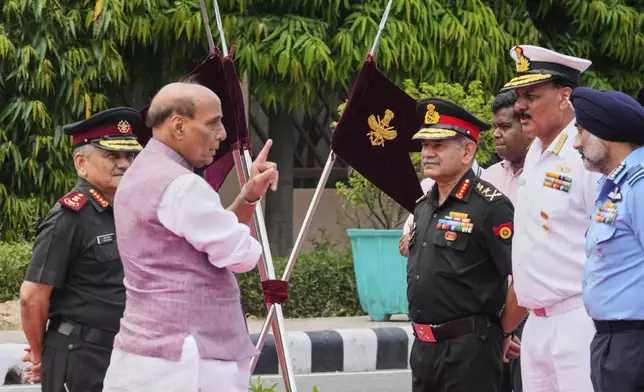
Indian Defense Minister Rajnath Singh, second left, talks to three Indian defense chiefs, Army General Upendra Dwivedi, third right, Naval Admiral Dinesh K Tripathi, second right, and Air Force Air Chief Marshal A P Singh, right, as Indian Chief of Defense Staff General Anil Chauhan, left, watches as they wait for the arrival of Japan's Defense Minister Gen Nakatani in New Delhi, India, Monday, May 5, 2025.(AP Photo/Manish Swarup)
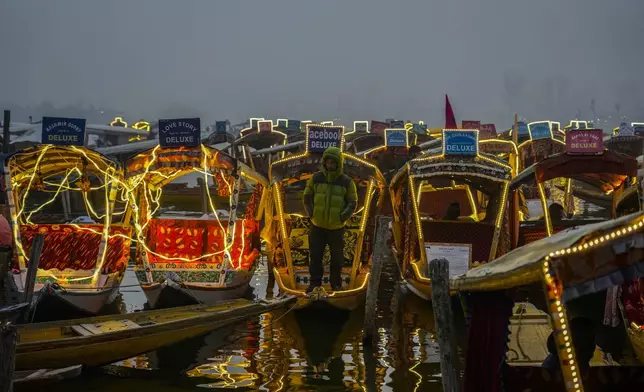
FILE - A Kashmiri boatman stands on his illuminated boat during a laser show and and live concert organized to boost winter tourism in Srinagar, Indian controlled Kashmir, Dec. 7, 2022. (AP Photo/Mukhtar Khan, File)
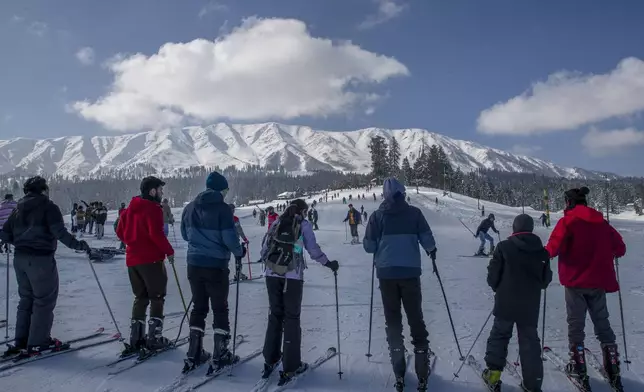
FILE - Tourists wait for their turn to use a ski-lift to transport them up a slope in Gulmarg, northwest of Srinagar, Indian controlled Kashmir, Jan. 10, 2021. (AP Photo/Dar Yasin, File)
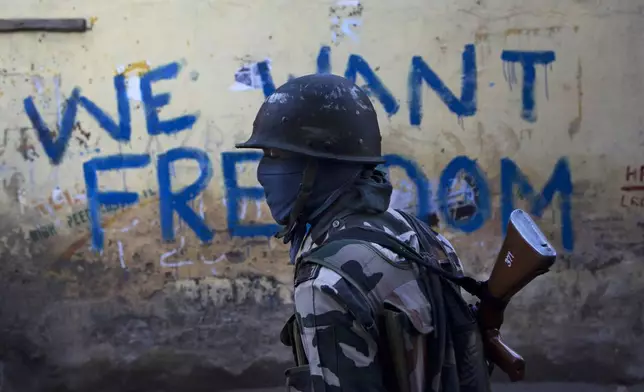
FILE - An Indian paramilitary soldier walks past graffiti on a wall in Srinagar, Indian-controlled Kashmir, Aug. 29, 2016. (AP Photo/Dar Yasin, File)
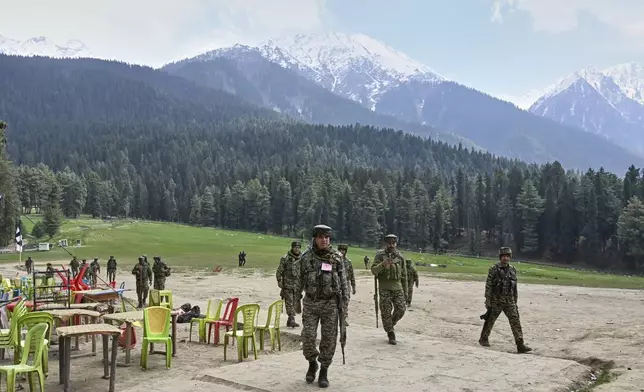
FILE - Indian security officers inspect the site where militants indiscriminately opened fired on tourists on Tuesday, in Pahalgam, Indian controlled Kashmir, Wednesday, April 23, 2025. (AP Photo, File)
The gunmen quickly vanished into thick forests. By the time Indian authorities arrived, 26 people were dead and 17 others were wounded.
India has described the April 22 massacre as a terror attack and blamed Pakistan for backing it, an accusation denied by Islamabad. India swiftly announced diplomatic actions against its archrival Pakistan, which responded with its own tit-for-tat measures.
The assailants are still on the run, as calls in India for military action against Pakistan are growing.
World leaders have been scrambling to de-escalate the tensions between two nuclear-armed neighbors, which have historically relied on third countries for conflict management.
But the massacre has also touched a raw nerve.
Early on Wednesday, India fired missiles that struck at least three locations inside Pakistani-controlled territory, according to Pakistani security officials who spoke on condition of anonymity because they were not authorized to talk to the media. India said it was striking infrastructure used by militants.
Indian Prime Minister Narendra Modi’s administration has governed Kashmir with an iron fist in recent years, claiming militancy in the region was in check and a tourism influx was a sign of normalcy returning.
Those claims now lie shattered.
Security experts and former intelligence and senior military officers who have served in the region say Modi’s government — riding on a nationalistic fervor over Kashmir to please its supporters — missed warning signs.
The government acknowledged that in a rare admission.
Two days after the attack, Kiren Rijiju, India’s parliamentary affairs minister, said that a crucial all-party meeting discussed “where the lapses occurred.”
“We totally missed ... the intentions of our hostile neighbor,” said Avinash Mohananey, a former Indian intelligence officer who has operated in Kashmir and Pakistan.
The meadow, near the resort town of Pahalgam, can be reached by trekking or pony rides, and visitors cross at least three security camps and a police station to reach there. According to Indian media, there was no security presence for more than 1,000 tourists that day.
Pahalgam serves as a base for an annual Hindu pilgrimage that draws hundreds of thousands of people from across India. The area is ringed by thick woods that connect with forest ranges in the Jammu area, where Indian troops have faced attacks by rebels in recent years after fighting ebbed in the Kashmir Valley, the heart of an anti-India rebellion.
The massacre brought Modi’s administration almost back to where it started when a suicide car bombing in the region in 2019 prompted his government to strip Kashmir of its semi-autonomy and bring it under direct federal rule. Tensions have simmered ever since, but the region has also drawn millions of visitors amid a strange calm enforced by an intensified security crackdown.
“We probably started buying our own narrative that things were normal in Kashmir,” Mohananey said.
In the past, insurgents have carried out brazen attacks and targeted Hindu pilgrims, Indian Hindu as well as Muslim immigrant workers, and local Hindus and Sikhs. However, this time a large number of tourists were attacked, making it one of the worst massacres involving civilians in recent years.
The attack outraged people in Kashmir and India, where it led to calls of swift action against Pakistan.
Indian television news channels amplified these demands and panelists argued that India should invade Pakistan. Modi and his senior ministers vowed to hunt down the attackers and their backers.
Experts say much of the public pressure on the Indian government to act militarily against Pakistan falls within the pattern of long, simmering animosity between both countries.
“All the talk of military options against Pakistan mainly happens in echo chambers and feeds a nationalist narrative,” in India, New Delhi-based counterterrorism expert Ajai Sahni said.
“It doesn’t matter what will be done. We will be told it was done and was a success,” he said. “And it will be celebrated nonetheless.”
Experts also say that the Modi government’s optimism was also largely misplaced and that its continuous boasting of rising tourism in the region was a fragile barometer of normalcy. Last year, Omar Abdullah, Kashmir’s top elected official, cautioned against such optimism.
“By this attack, Pakistan wants to convey that there is no normalcy in Kashmir and that tourism is no indicator for it. They want to internationalize the issue,” said D.S. Hooda, former military commander for northern India between 2014 to 2016.
Hooda said the “choice of targets and the manner in which the attack was carried out indicates that it was well-planned.”
“If there would have been a good security cover, maybe this incident would not have happened,” he said.
Indian security experts believe the attack could be a retaliation for a passenger train hijacking in Pakistan in March by Baloch insurgents. Islamabad accused New Delhi of orchestrating the attack in which 25 people were killed. India denies it.
Mohananey said that Indian authorities should have taken the accusations seriously and beefed-up security in Kashmir, while arguing there was a striking similarity in both attacks since only men were targeted.
“It was unusual that women and children were spared" in both cases, Mohananey said.
Two senior police officers, who have years of counterinsurgency experience in Kashmir, said after the train attack in Pakistan that they were anticipating some kind of reaction in the region by militants.
The officers, who spoke on condition of anonymity because of the sensitivity of the matter, said that security officials perceived the threat of an imminent attack, and Modi’s inauguration of a strategic rail line in the region was canceled. A large-scale attack on tourists, however, wasn't anticipated, because there was no such precedence, the officers said.
Hooda, who commanded what New Delhi called “surgical strikes” against militants in the Pakistan-controlled part of Kashmir in 2016, said that the attack has deepened thinking that it was time to tackle the Pakistani state, not just militants.
Such calculus could be a marked shift. In 2016 and 2019, India said that its army struck militant infrastructure inside Pakistan after two major militant attacks against its soldiers.
“After this attack,” Hooda said, India wants to stop Pakistan "from using terrorism as an instrument of state policy.”
“We need to tighten our security and plug lapses, but the fountainhead of terrorism needs to be tackled,” Hooda said. “The fountainhead is Pakistan.”
Saaliq and Roy reported from New Delhi.
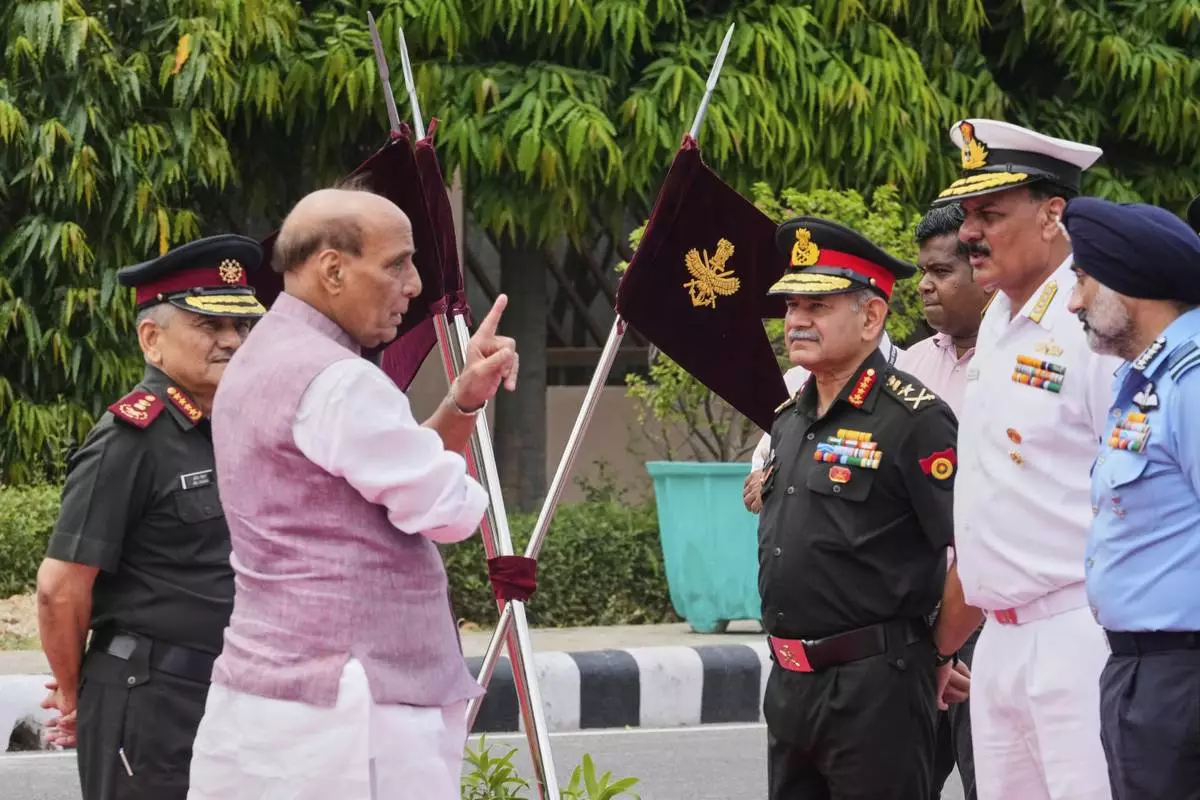
Indian Defense Minister Rajnath Singh, second left, talks to three Indian defense chiefs, Army General Upendra Dwivedi, third right, Naval Admiral Dinesh K Tripathi, second right, and Air Force Air Chief Marshal A P Singh, right, as Indian Chief of Defense Staff General Anil Chauhan, left, watches as they wait for the arrival of Japan's Defense Minister Gen Nakatani in New Delhi, India, Monday, May 5, 2025.(AP Photo/Manish Swarup)
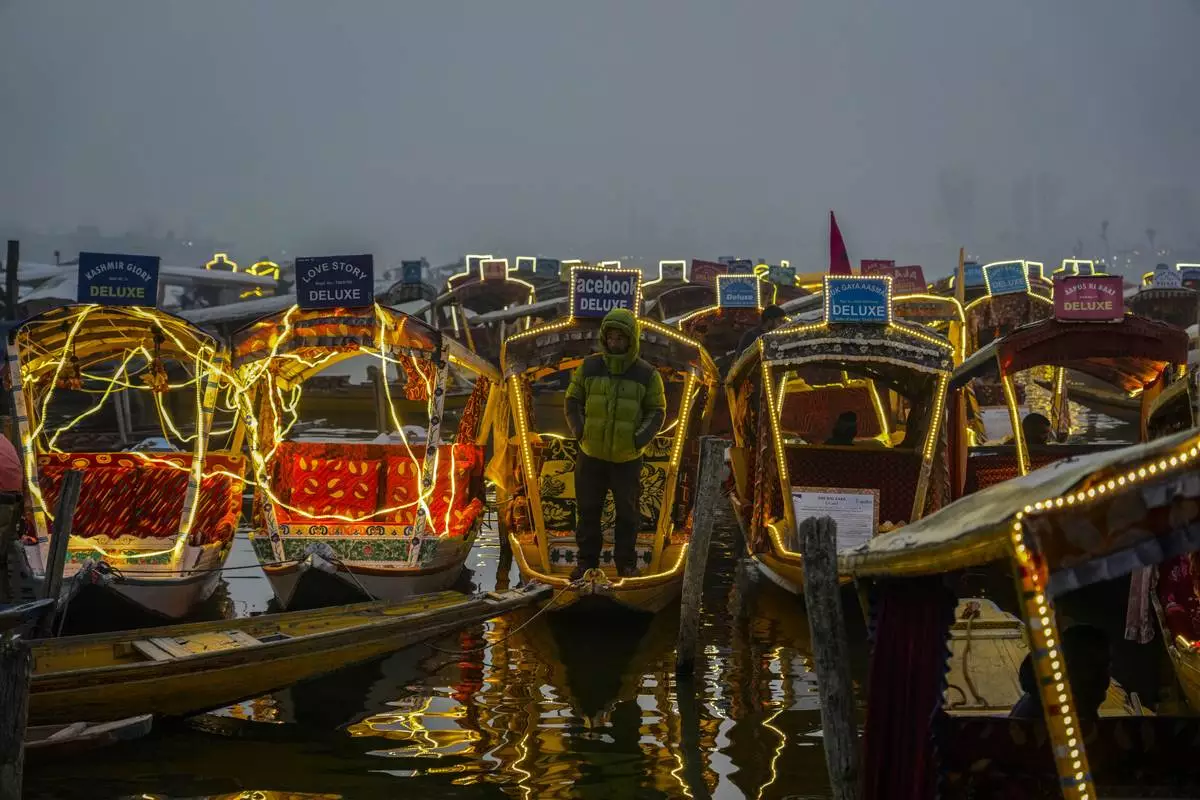
FILE - A Kashmiri boatman stands on his illuminated boat during a laser show and and live concert organized to boost winter tourism in Srinagar, Indian controlled Kashmir, Dec. 7, 2022. (AP Photo/Mukhtar Khan, File)
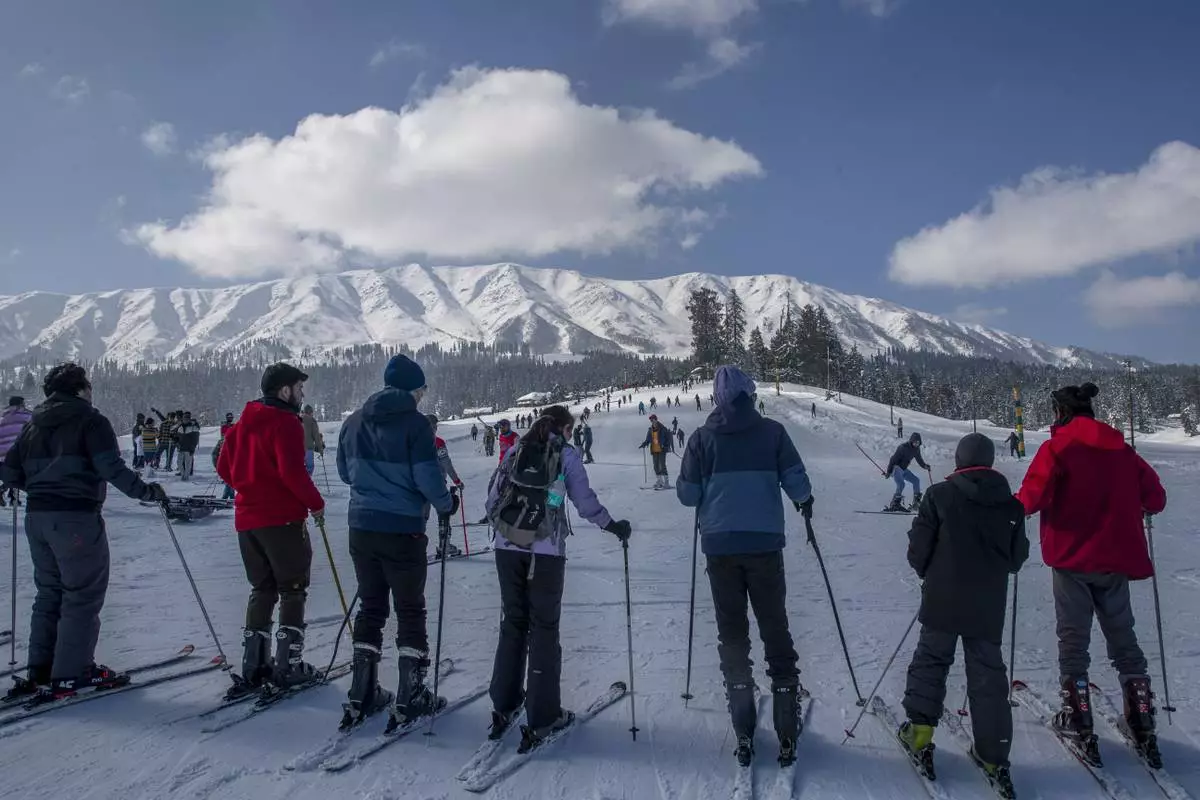
FILE - Tourists wait for their turn to use a ski-lift to transport them up a slope in Gulmarg, northwest of Srinagar, Indian controlled Kashmir, Jan. 10, 2021. (AP Photo/Dar Yasin, File)
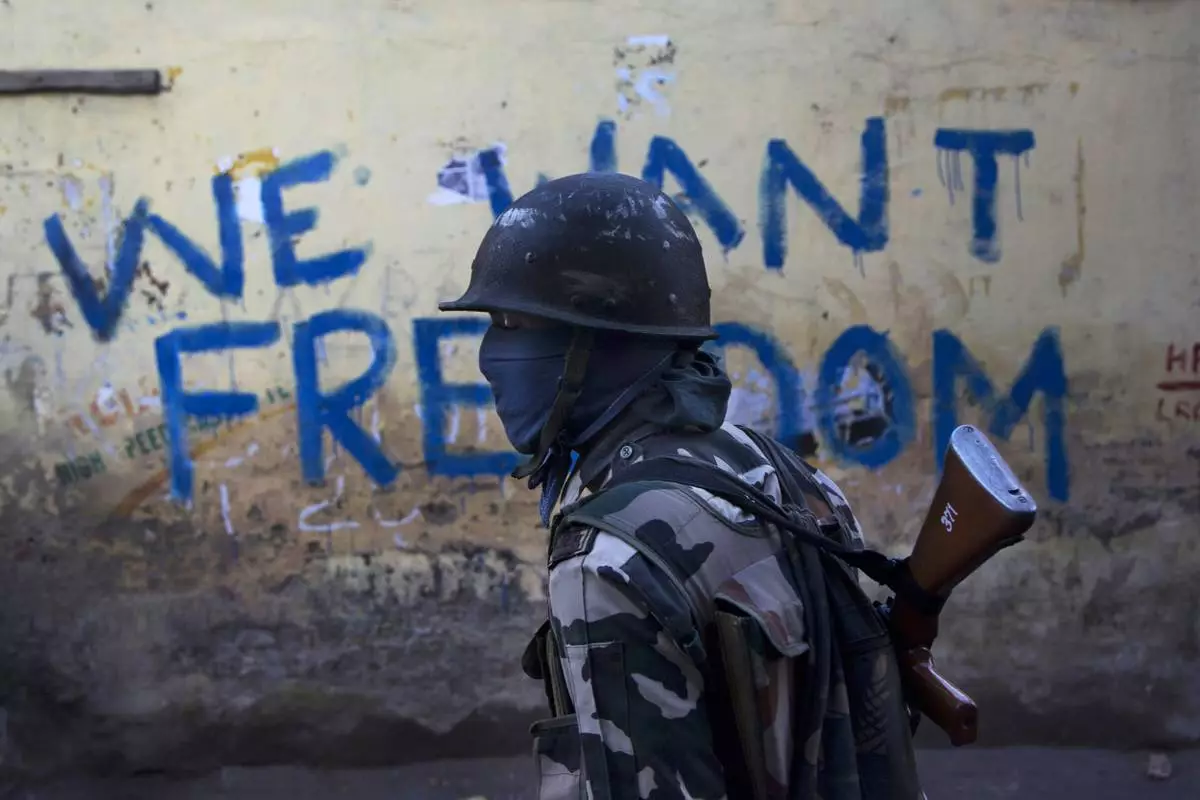
FILE - An Indian paramilitary soldier walks past graffiti on a wall in Srinagar, Indian-controlled Kashmir, Aug. 29, 2016. (AP Photo/Dar Yasin, File)
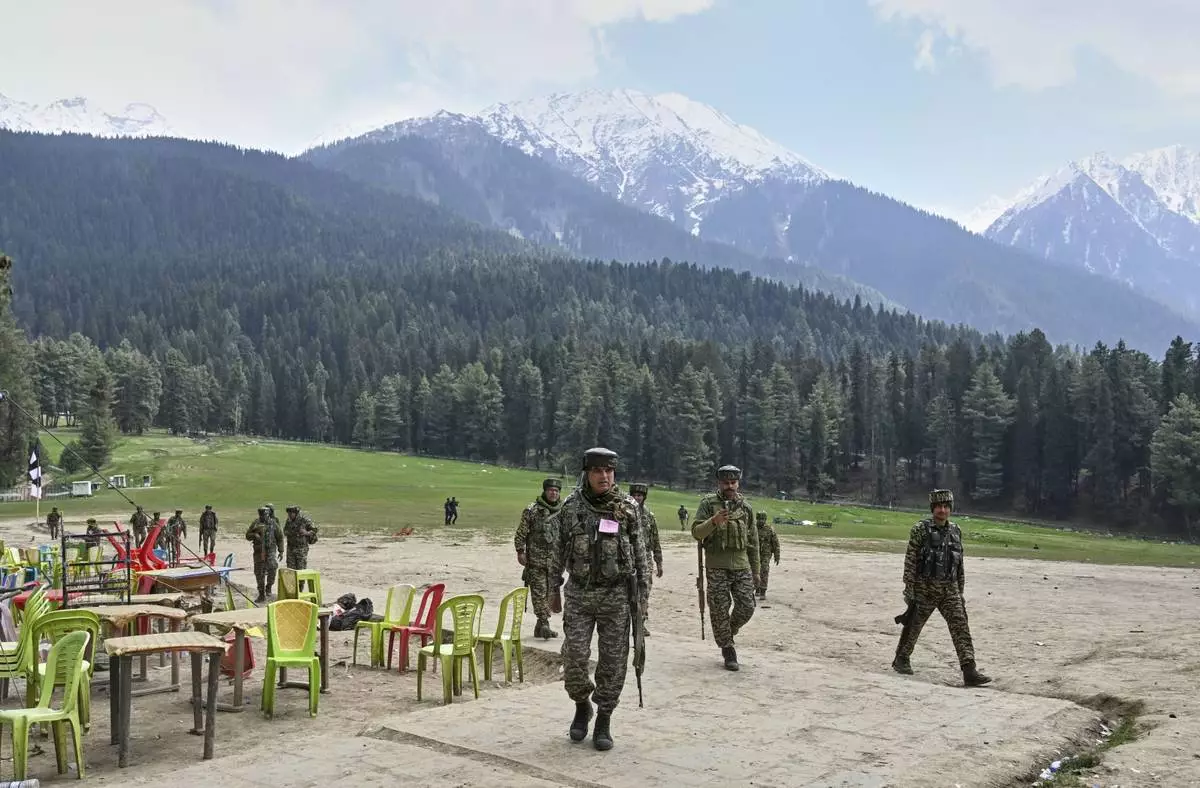
FILE - Indian security officers inspect the site where militants indiscriminately opened fired on tourists on Tuesday, in Pahalgam, Indian controlled Kashmir, Wednesday, April 23, 2025. (AP Photo, File)