The global manufacturing purchasing managers' index (PMI) declined to 49.1 percent in April, 0.5 percentage points lower than that in March, according to data released by the China Federation of Logistics and Purchasing on Tuesday.
The decline marks two straight months below the 50 percent threshold that separates expansion from contraction, reflecting a further decline in global industrial activity, the federation said.
Analysts said the sustained weakness in manufacturing underscores increasing global economic strain. Heightened trade tensions, particularly new U.S. tariff hikes, are seen as a key factor exacerbating downside risks.
Regionally, the Americas' manufacturing PMI dropped to 48.4 percent, down 0.5 percentage points from the previous month, marking the third consecutive month of decline. Asia's PMI held at the neutral 50 percent mark, but still fell 1.3 percentage points from March, reflecting slower growth under the pressure of new U.S. tariffs.
Africa's index dipped back into contraction territory at 49.5 percent after a brief rebound above 50 percent last month. In Europe, the PMI edged up slightly to 48.4 percent, up 0.2 percentage points from the previous month, but the sector remains in contraction, with geopolitical tensions and tariff-related disruptions threatening the continent's fragile recovery.
Major international institutions have recently revised down their forecasts for global economic and trade growth. The International Monetary Fund's latest World Economic Outlook cut its 2025 global growth projection to 2.8 percent, down 0.5 points from its January estimate. The World Trade Organization also warned in its latest Global Trade Outlook and Statistics report that the growth rate of global goods trade may plunge from the previous long-term average of nearly 3 percent to -0.2 percent.
Experts cautioned that in the face of growing uncertainty, it is crucial for countries to stay committed to the right path. They stressed focusing on respect for mutual rights, multilateral economic cooperation, and efforts to ease the negative impacts of U.S. tariffs through enhanced trade facilitation.
Global manufacturing slows amid rising economic pressures
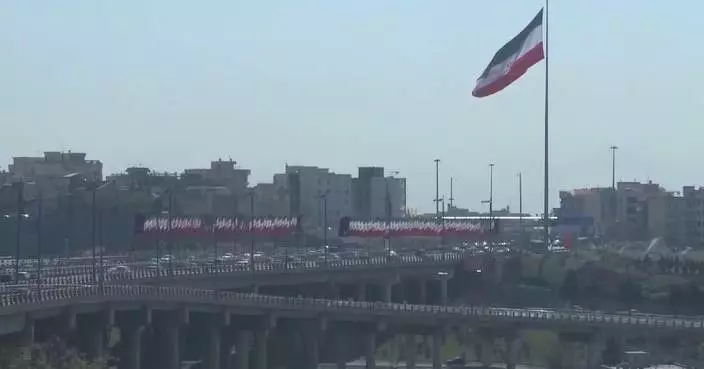
The Iranian government is focusing on public concerns and maintaining stable supplies of essential goods amid recent protests, Iranian President Masoud Pezeshkian said in a televised interview on Sunday.
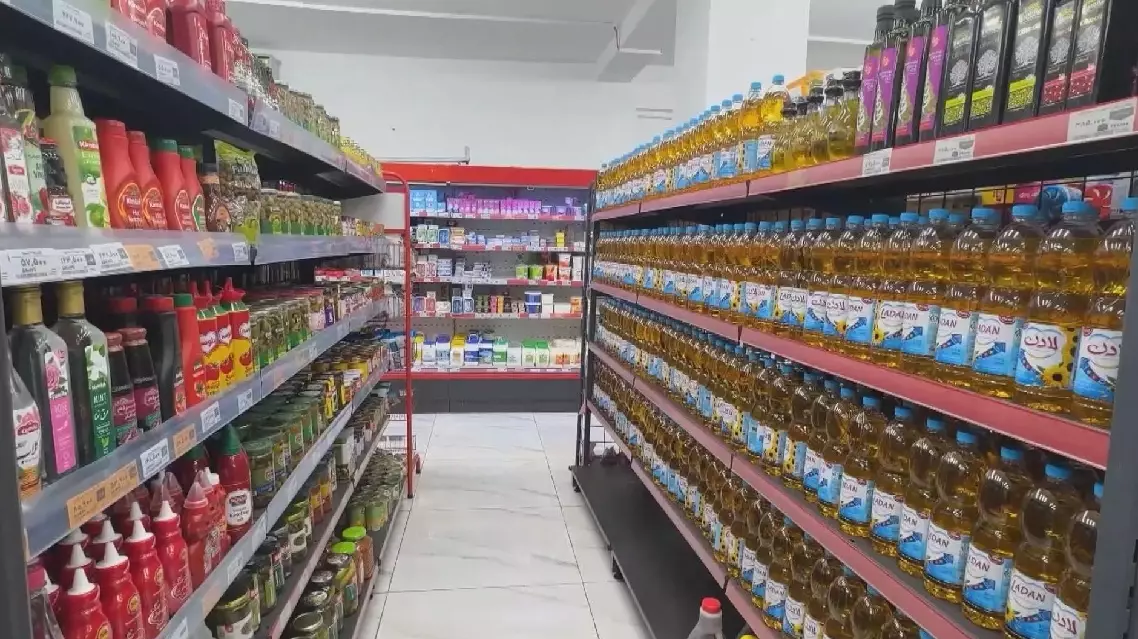
In the city of Karaj, northwest of the capital Tehran, daily life has largely continued as normal. A video filmed by a local resident on Sunday shows food stores open and grocery shelves fully stocked.
"This is the block near my home, and there are some food stores here. Daily life continues here. Last night we did not see many protests in Karaj. Right now the city is very safe. This is a grocery store close to my home. All the food is available; nothing is in shortage. Here are noodles and different types of beans. Here are dairy products, cheese, and yogurt. I also checked other grocery stores and didn't see any shortages. Everything is available," said local resident Ali Reza.
Iranian officials have described recent disturbances as acts orchestrated by the "enemy," including some carried out by well-trained and armed "terrorists." The incidents have caused casualties among security personnel and civilians, as well as property damage.
The Secretary of Iran's Supreme National Security Council Ali Larijani has directed authorities to severely punish the "terrorists."
Meanwhile, Iran's police chief Ahmad-Reza Radan said on Sunday that the police had raised alert levels and arrested several leaders of the troublemakers during the operations on Saturday.
President Pezeshkian noted in the interview that the normal demands of the Iranian people are reasonable and justified, but they must realize that triggering riots and carrying out terrorist acts are the enemy's attempts to undermine the country. He urged the public to remain vigilant.
Also on Sunday, Iranian Parliament Speaker Mohammad Baqer Qalibaf warned that Tehran would regard U.S. and Israeli bases and facilities in the Middle East as "legitimate targets" if Washington takes military action against Iran. His remarks followed media reports saying U.S. President Donald Trump is "seriously considering authorizing a strike" against Iran.
Iranian state media reported that at least 109 members of Iran's security forces have been killed in clashes since the protests began 14 days ago. Meanwhile, human rights groups based outside the country said the number of protesters killed has exceeded 200, though the figure could not be independently verified.
The protests initially erupted over a sharp depreciation of the rial and sweeping subsidy reforms. Iranian authorities have blamed the unrest on foreign-linked agents and sanctions imposed by the United States.
Iranian president says government focusing on ensuring supplies amid protests