LONDON (AP) — Cities from London to Moscow will be awash with parades, flyovers and memorials this week as the world marks the 80th anniversary of Victory in Europe Day — the day Nazi Germany surrendered to Allied forces.
The surrender didn’t end World War II because the war against Japan continued in the Far East. However, it was a moment of celebration for the servicemen and women who battled Adolf Hitler’s armies, as well as civilians across Europe who had been bombed, invaded and subjugated since the invasion of Poland in 1939.
Click to Gallery
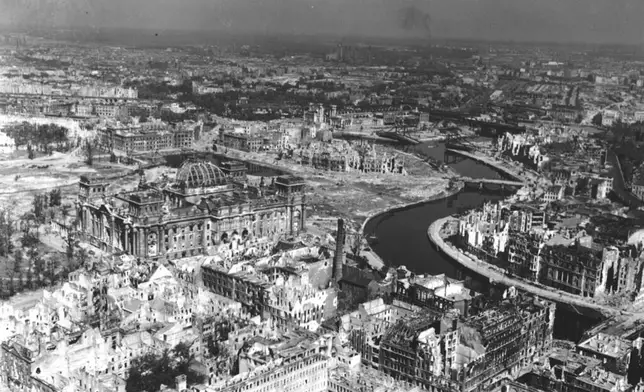
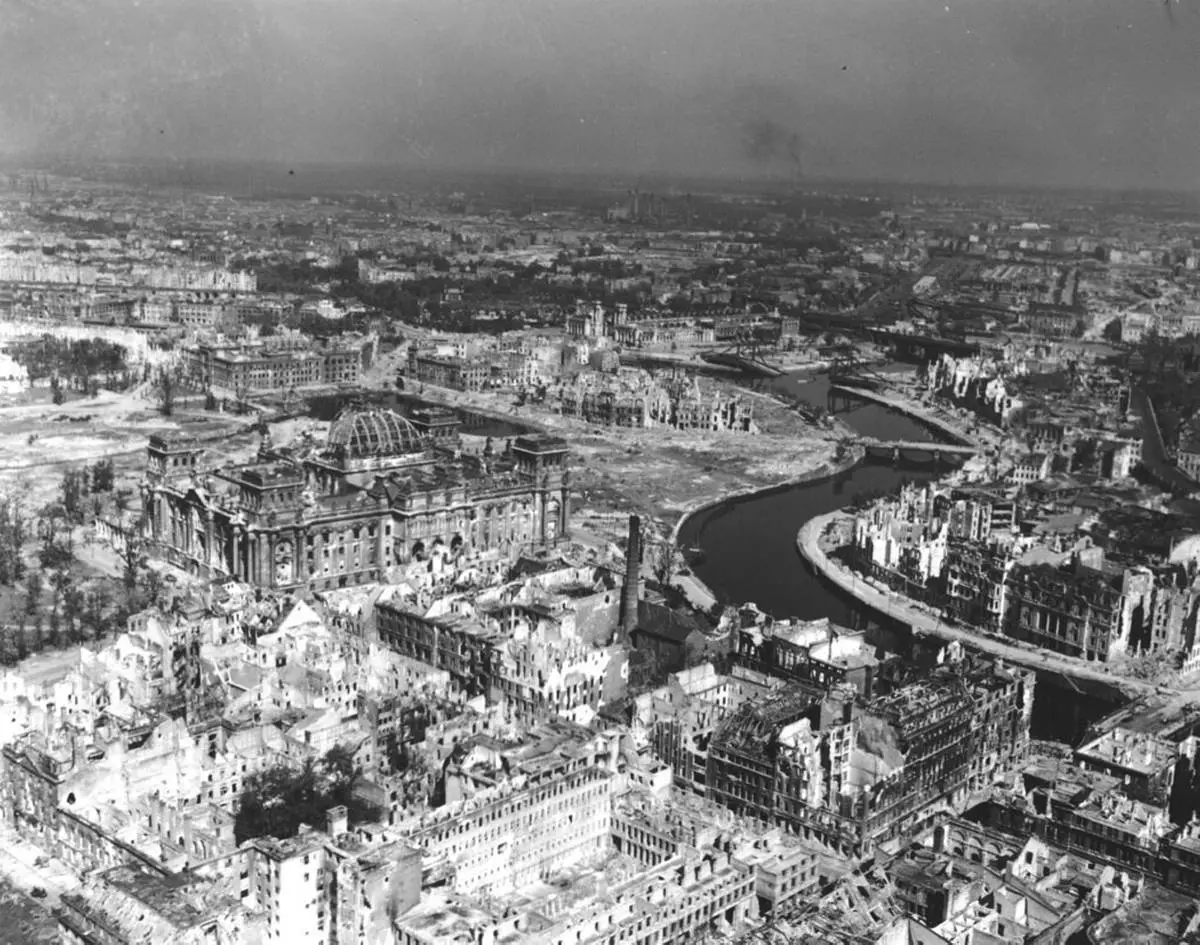
FILE - A view taken from a Cub artillery observation plane on July 10, 1945, shows vast areas of destruction in Berlin, after repeated Anglo-American air raids on the German capital. Seen on the left, center, is the heavily damaged building of the German Reichstag with its distinct cupola, in the background center are the remains of Lehrter Bahnhof, one of the city's train stations. (AP Photo, File)

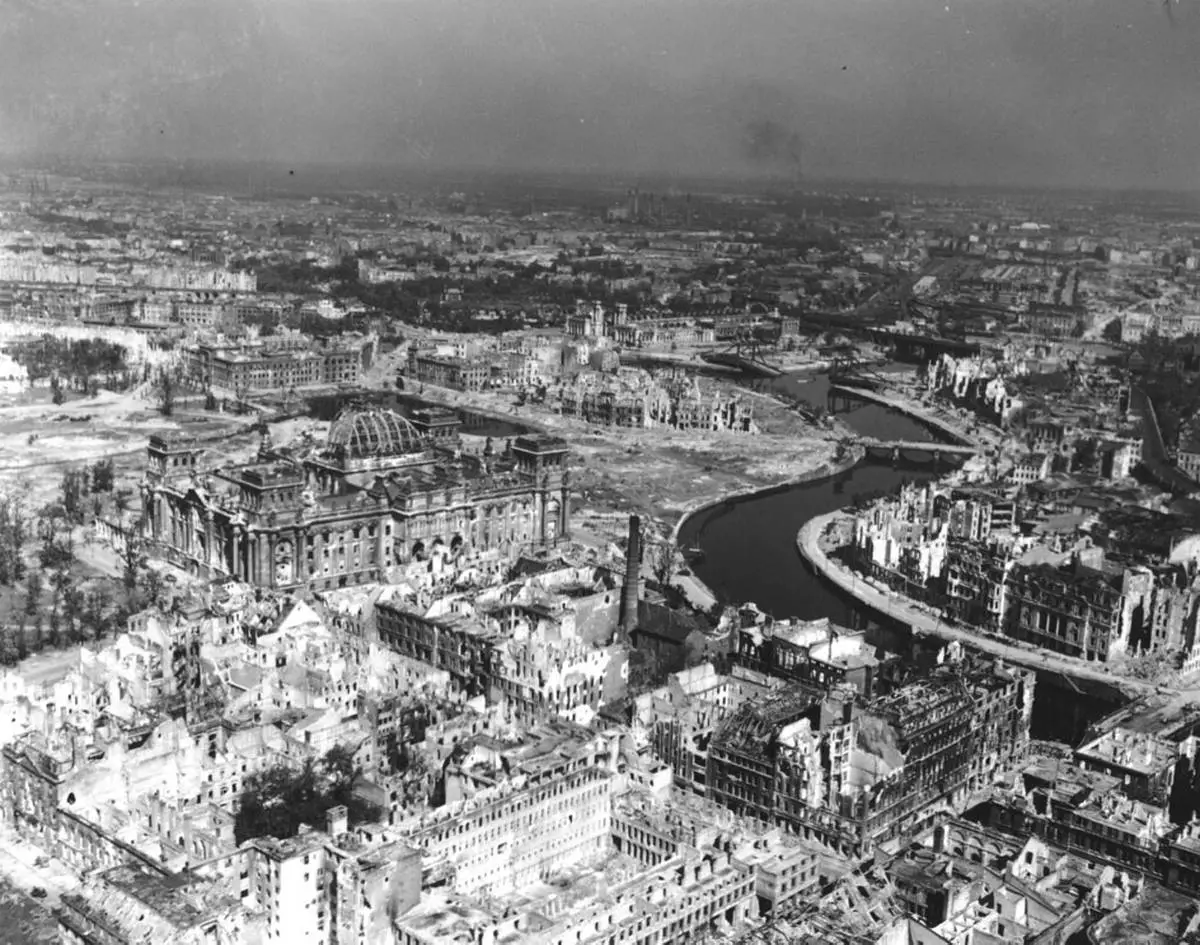
FILE - A view taken from a Cub artillery observation plane on July 10, 1945, shows vast areas of destruction in Berlin, after repeated Anglo-American air raids on the German capital. Seen on the left, center, is the heavily damaged building of the German Reichstag with its distinct cupola, in the background center are the remains of Lehrter Bahnhof, one of the city's train stations. (AP Photo, File)
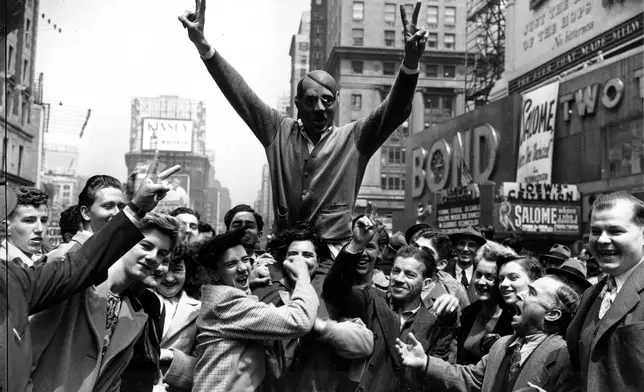
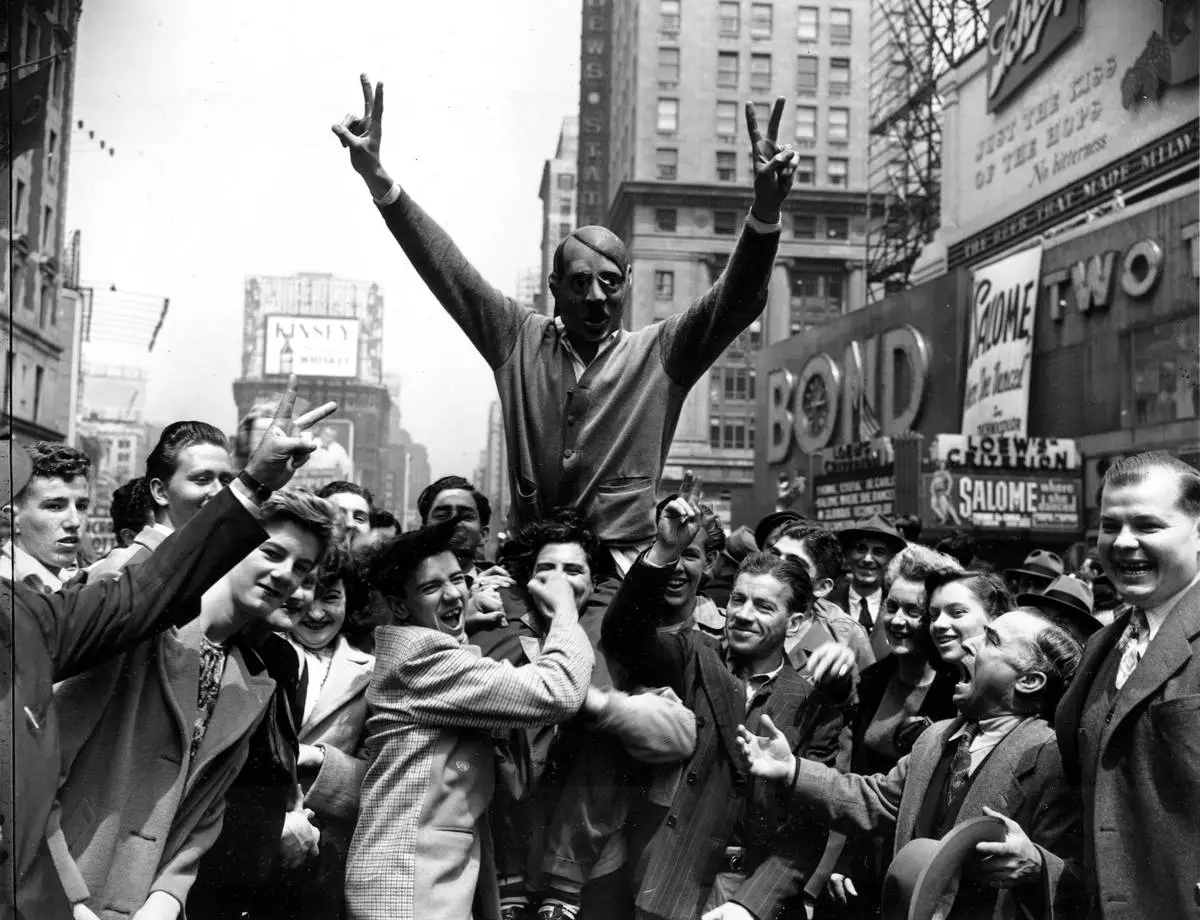
FILE - New Yorkers gather around a youth wearing a mask of Adolf Hitler to cheer the news of the surrender of Germany in New York's Times Square on May 7, 1945. (AP Photo/Harry Harris, File)
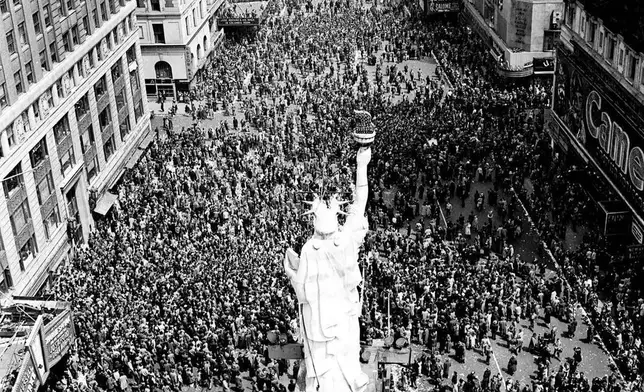
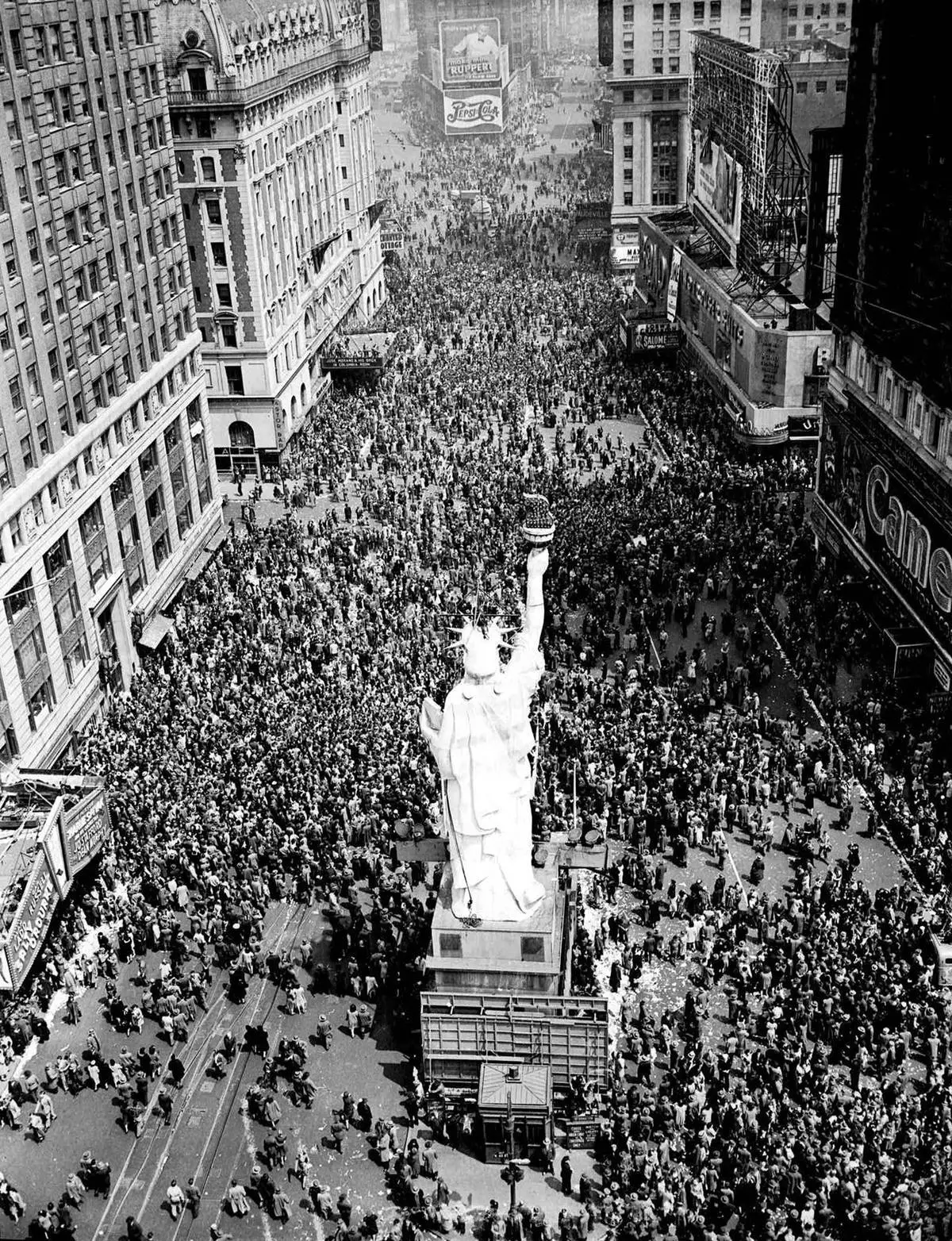
People crowd Times Square at 42nd Street in New York City on May 8, 1945, as the V-E Day celebration continues into the night. (AP Photo/Matty Zimmerman, File)
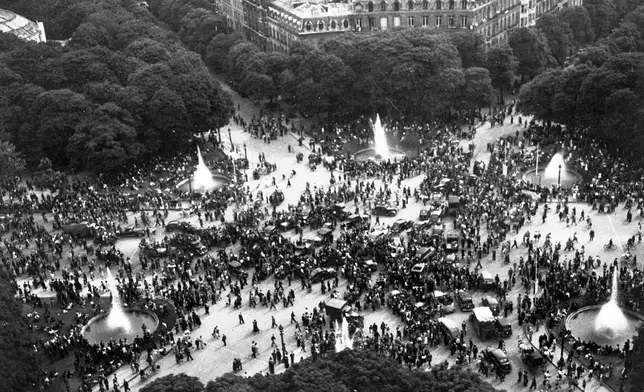
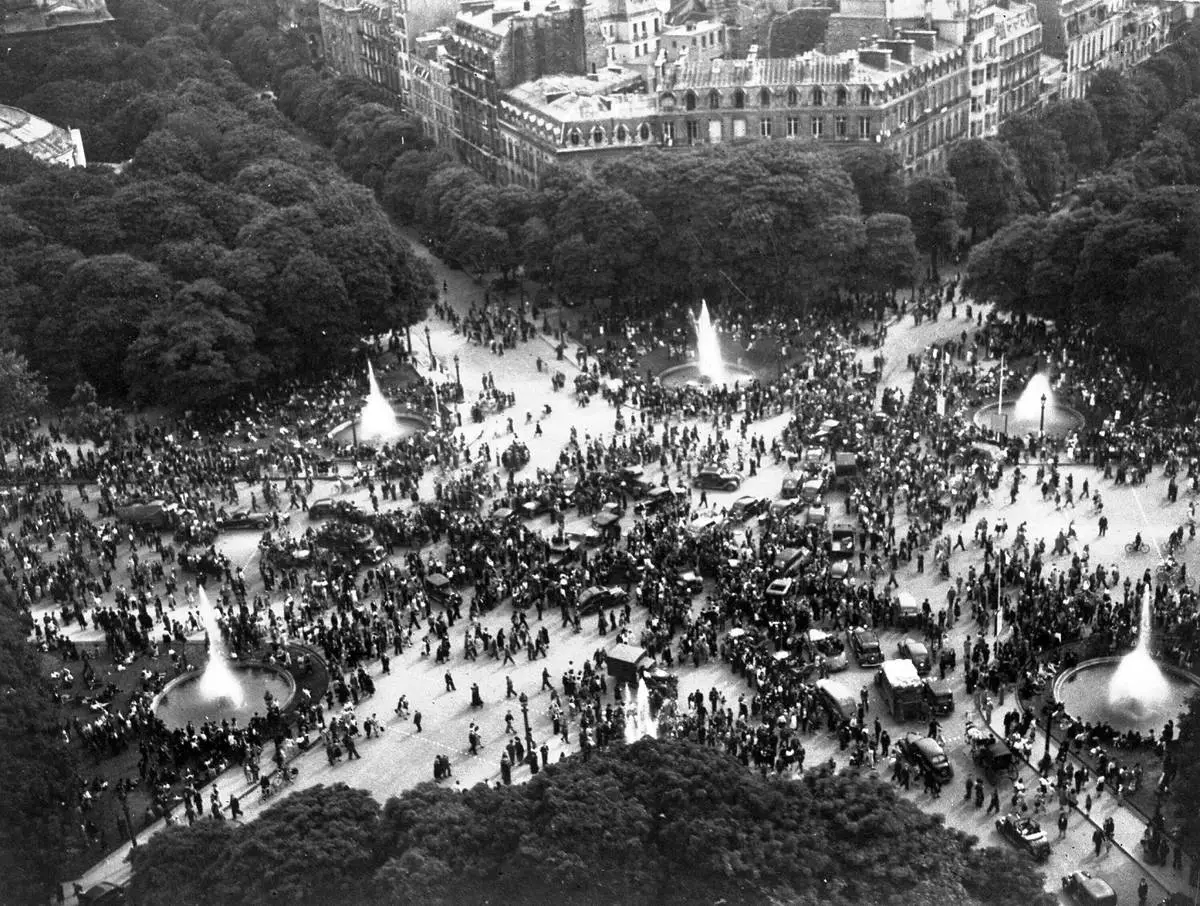
FILE - Happy crowds gather round the Rond-Point on the Champs-Elysees, Paris, France, on V-E Day, May 8, 1945, to celebrate the announcement of Germany's unconditional surrender. (AP Photo/Henry L. Griffin, File)
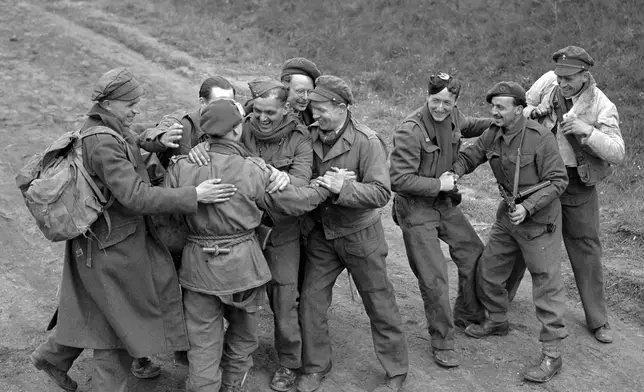
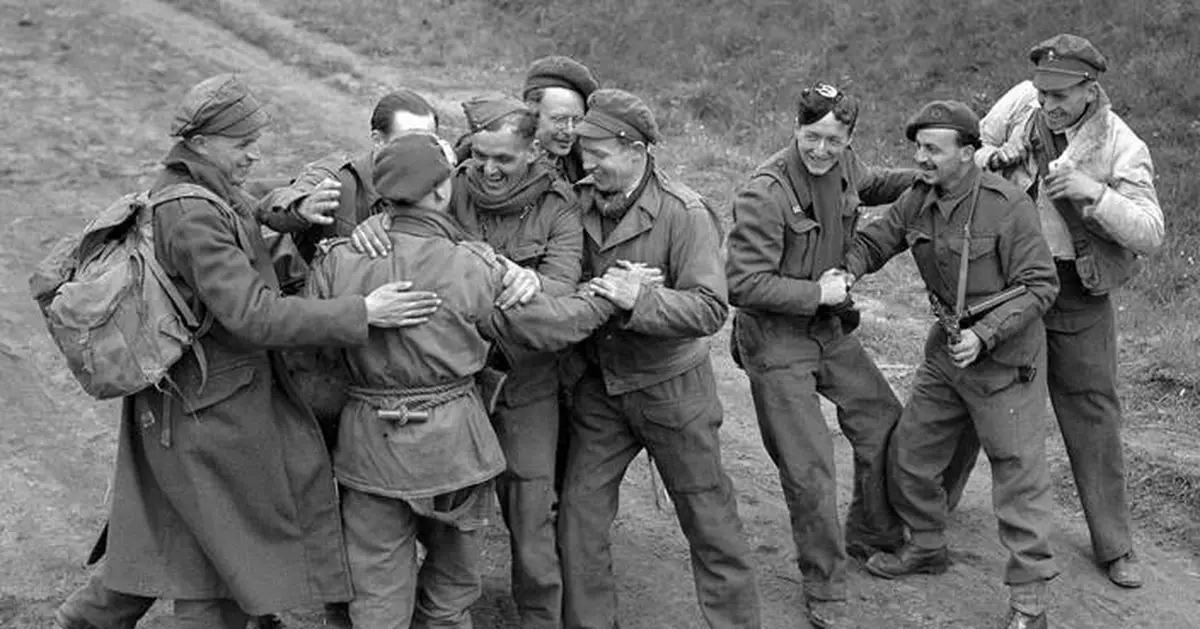
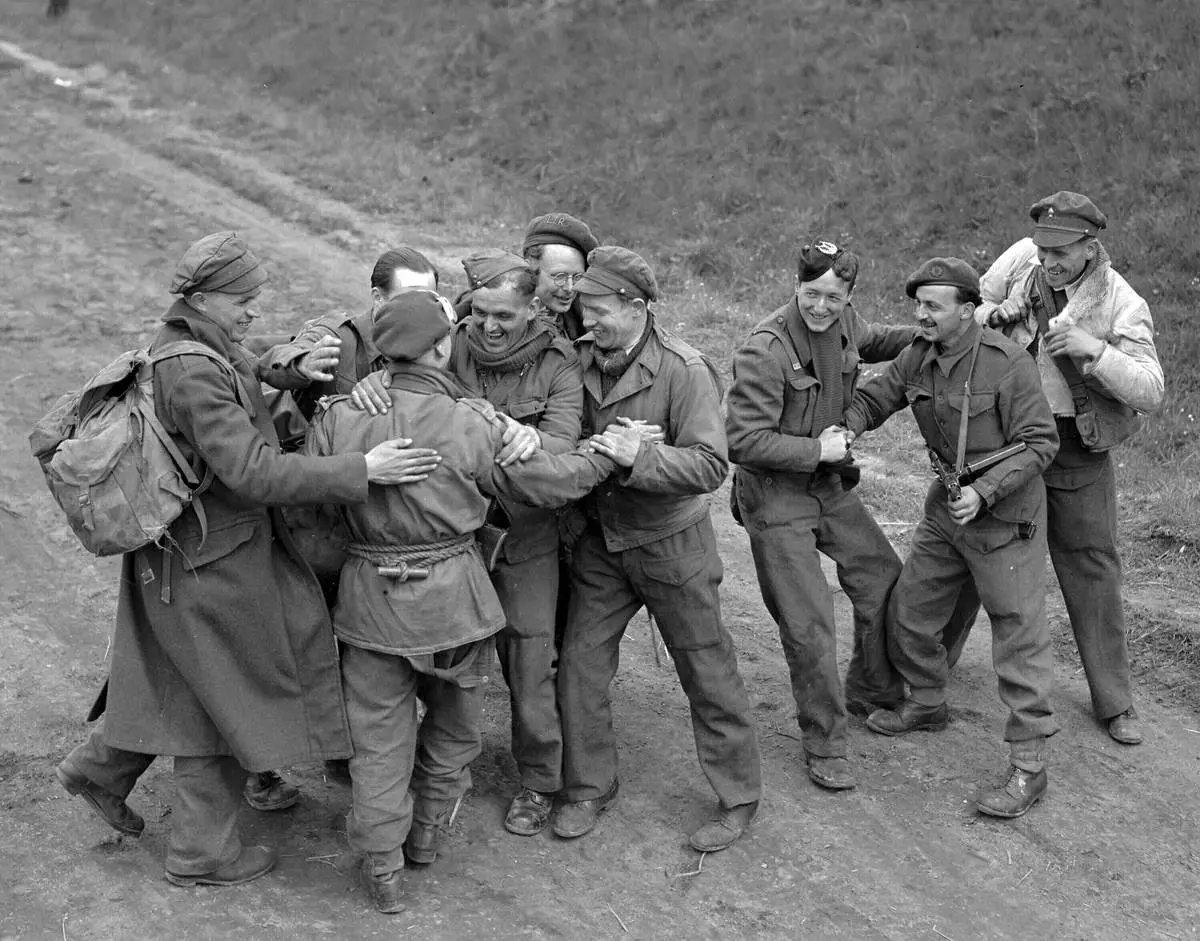
FILE - Recently released British prisoners of war meet up with a parachute recce party while marching towards Allied lines, in Germany May 4, 1945. German authorities have recently released 8,000 British prisoners of war. (AP Photo/Eddie Worth, File)
When the surrender was announced, people poured into the streets of London, New York and Paris to celebrate in what the BBC described as a “mood of thanksgiving.”
Here's a look at the events leading up to V-E Day and its significance.
While most Western countries celebrate the anniversary on May 8, that’s not an easy question to answer.
Gen. Dwight Eisenhower, supreme commander of the Allied forces in Europe, actually accepted the unconditional surrender of Nazi Germany at 2:41 a.m. local time on May 7, in a ceremony at Reims, France. Although the news had leaked out by that evening, the official announcement was delayed until the following day. The U.S., Britain and France were trying to work out differences with the Soviet Union, which felt the surrender didn’t recognize the sacrifices its troops had made in securing victory.
A second surrender document was signed around midnight on May 8 in Berlin, satisfying Soviet concerns. Russia celebrates what it calls Victory Day on May 9.
By the time France fell to the Nazi “Blitzkrieg” on June 25, 1940, Hitler’s forces controlled most of Europe and were threatening to invade Britain.
But the war in Europe began to turn in early 1942, when the Soviet Red Army defeated German forces attempting to take Moscow. Hitler suffered another crushing defeat in February 1943, when German forces surrendered in the Battle of Stalingrad.
Invading the Soviet Union was “probably not Hitler’s best idea,” said Rob Citino, distinguished fellow at The National WWII Museum in New Orleans.
“They were counterpunched in front of Moscow, and in a war that the Germans had taken very few casualties up to now they suddenly had added a million and they never recovered from it.”
Then in 1944 the Western Allies and the Soviet Union launched twin offensives that forced Nazi Germany to fight for survival on two fronts. The Allies began their march across Europe with the D-Day landings in northern France on June 6, 1944. Two weeks later, the Soviets began their push toward Berlin.
As 1944 turned to 1945, “victory is all but certain,” Citino said. “But something else is certain: There's still a lot of soldiers, a lot of military personnel, on both sides who are going to die.’’
The Red Army alone lost about 3 million soldiers in 1945, or about 70,000 a day, he estimated.
Soviet forces began their assault on Berlin on April 16, 1945, while the Allies were still fighting their way across western Germany.
With the city in ruins and the Red Army advancing street by street, Hitler retreated to his bunker under the Reich Chancellery, where he committed suicide on April 30. The last defenders finally surrendered on May 2.
V-E-Day came after a series of surrenders.
The first came on April 29 at the Palace of Caserta, outside Naples, Italy where British Field Marshal Harold Alexander accepted the surrender of German and Italian forces in Italy and western Austria. Five days later, Field Marshal Bernard Montgomery accepted the surrender of German forces in northwestern Germany, Denmark and the Netherlands at Luneberg Heath, south of Hamburg.
Finally, there was the unconditional surrender of all Nazi forces in Europe that was signed first at Reims and again in Berlin.
V-E Day was a time of reflection as well as celebration.
While many people lit bonfires and threw back the blackout curtains, others thought about what they had lost. The world also had to reckon with the Holocaust after the advancing armies uncovered the horrors of the Nazi concentration camps where millions of Jews were slaughtered.
“It was just a big letting off (of) steam and a massive relief for so many people,’’ said Dan Ellin, a historian at the University of Lincoln in the U.K. “But then, of course, for others, there wasn’t an awful lot to celebrate. For thousands of people, the victory was tinged with a sadness because for them, their loved ones were not going to come home.”
And V-E Day wasn’t actually the end of the war. The Japanese were still fighting ferociously to defend their home against any invasion, and many Allied soldiers expected that they would be deployed to the Far East as soon as the war in Europe ended.
“Everybody knows there’s a big show left and the big show is going to be gigantic and it’s going to be bloody … ,’’ Citino said. “And I bet you every single Allied soldier in Europe, after toasting victory in Europe, they sat down and said, ‘I’m going to Japan. This isn’t over yet.’”
Most were spared another fight when Japan surrendered on Sept. 2, after the United States dropped atomic bombs on Hiroshima and Nagasaki.
Dorothea Barron, now 100, who served as a signaler in the Wrens, the Women’s Royal Naval Service, remembers the sense of camaraderie as everyone banded together to defeat a common enemy.
“Well, naturally, it’s something worth celebrating, because we had finally stopped the Germans from trying to get into England,” she said. “Because we were absolutely determined they weren't going to set foot in our country, absolutely, and we would have resisted, man, woman and child.''
Mervyn Kersh, also 100, said V-E Day should be a reminder to today’s leaders that they must stand up to bullies and despots, wherever they may be.
“You can’t have peace without strength,'' he said. ”It’s no good just remembering. You’ve got to do something."
——
This story has been corrected to say the date of Japan's surrender was Sept. 2, not Aug. 2.
FILE - A view taken from a Cub artillery observation plane on July 10, 1945, shows vast areas of destruction in Berlin, after repeated Anglo-American air raids on the German capital. Seen on the left, center, is the heavily damaged building of the German Reichstag with its distinct cupola, in the background center are the remains of Lehrter Bahnhof, one of the city's train stations. (AP Photo, File)
FILE - A view taken from a Cub artillery observation plane on July 10, 1945, shows vast areas of destruction in Berlin, after repeated Anglo-American air raids on the German capital. Seen on the left, center, is the heavily damaged building of the German Reichstag with its distinct cupola, in the background center are the remains of Lehrter Bahnhof, one of the city's train stations. (AP Photo, File)
FILE - New Yorkers gather around a youth wearing a mask of Adolf Hitler to cheer the news of the surrender of Germany in New York's Times Square on May 7, 1945. (AP Photo/Harry Harris, File)
People crowd Times Square at 42nd Street in New York City on May 8, 1945, as the V-E Day celebration continues into the night. (AP Photo/Matty Zimmerman, File)
FILE - Happy crowds gather round the Rond-Point on the Champs-Elysees, Paris, France, on V-E Day, May 8, 1945, to celebrate the announcement of Germany's unconditional surrender. (AP Photo/Henry L. Griffin, File)
FILE - Recently released British prisoners of war meet up with a parachute recce party while marching towards Allied lines, in Germany May 4, 1945. German authorities have recently released 8,000 British prisoners of war. (AP Photo/Eddie Worth, File)