DEIR AL-BALAH, Gaza Strip (AP) — An Israeli plan to seize the Gaza Strip and expand the military operation has alarmed many in the region. Palestinians are exhausted and hopeless, pummeled by 19 months of heavy bombing. Families of Israeli hostages still being held in Gaza are terrified that the possibility of a ceasefire is slipping further away.
“What’s left for you to bomb?” asked Moaz Kahlout, a displaced man from Gaza City who said many resort to GPS to locate the rubble of homes wiped out in the war.
Click to Gallery
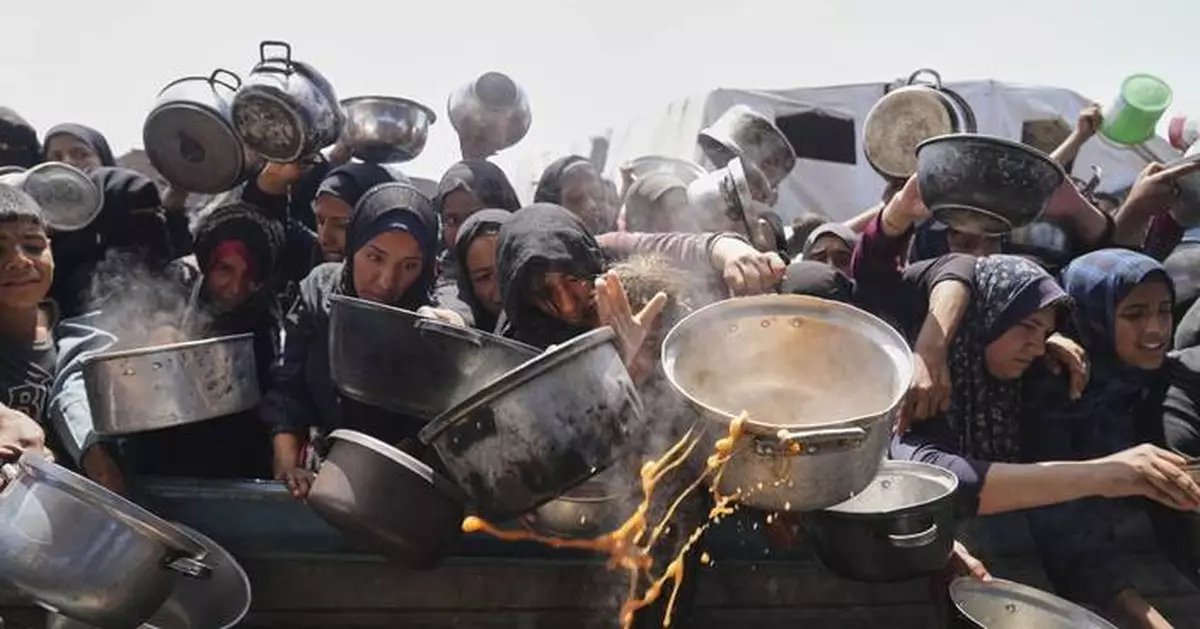
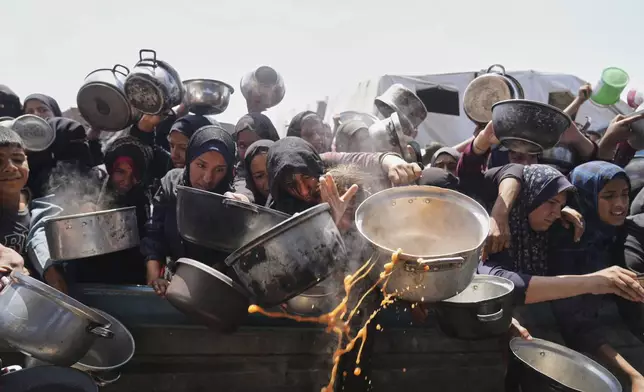
Palestinians struggle to get donated food at a community kitchen in Khan Younis, Gaza Strip, Monday, May 5, 2025. (AP Photo/Abdel Kareem Hana)
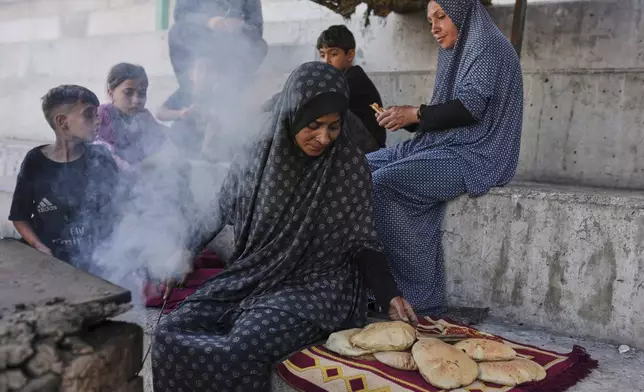
Displaced Palestinians prepare bread in a makeshift oven in Gaza City, Monday, May 5, 2025. (AP Photo/Jehad Alshrafi)
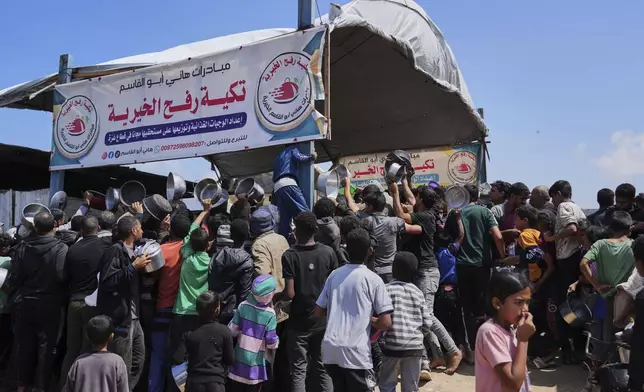
Palestinians struggle to get donated food at a community kitchen in Khan Younis, Gaza Strip, Monday, May 5, 2025. (AP Photo/Abdel Kareem Hana)
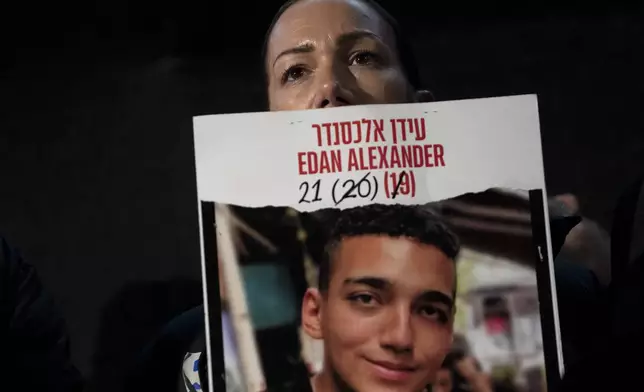
FILE - Yael Alexander holds a poster of her son, Edan, who was taken hostage by Hamas militants on Oct. 7, 2023, during a weekly rally for families of hostages held in the Gaza Strip and their supporters, in Tel Aviv, Israel, Feb. 22, 2025. (AP Photo/Maya Alleruzzo, File)
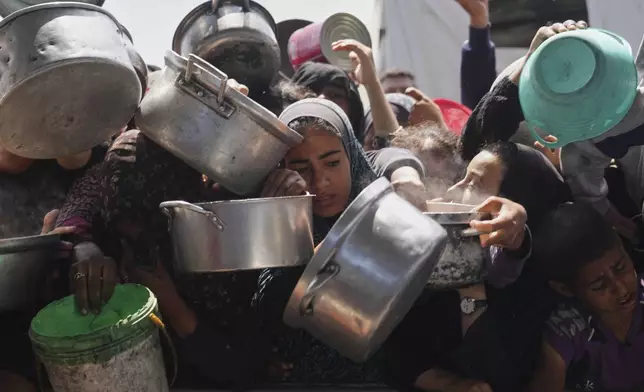
Palestinians struggle to get donated food at a community kitchen in Khan Younis, Gaza Strip, Monday, May 5, 2025. (AP Photo/Abdel Kareem Hana)
Israeli officials said Monday that Cabinet ministers approved the plan to seize Gaza and remain in the Palestinian territory for an unspecified amount of time — news that came hours after the military chief said the army was calling up tens of thousands of reserve soldiers.
Details of the plan were not formally announced, and its exact timing and implementation were not clear. It may be another measure by Israel to try to pressure Hamas into making concessions in ceasefire negotiations.
The war began after Hamas-led militants attacked southern Israel on Oct. 7, 2023, killing some 1,200 people, mostly civilians, and abducting 251. Israel says 59 captives remain in Gaza. U.S. President Donald Trump said Tuesday that three more hostages have been confirmed dead, leaving 21 still believed alive.
Israel’s ensuing offensive has killed more than 52,000 people in Gaza, many of them women and children, according to Palestinian health officials, who don’t distinguish between combatants and civilians in their count.
“They destroyed us, displaced us and killed us,” said Enshirah Bahloul, a woman from the southern city of Khan Younis. “We want safety and peace in this world. We do not want to remain homeless, hungry, and thirsty.”
Some Israelis are also opposed to the plan. Hundreds of people protested outside the parliament Monday as the government opened for its summer session. One person was arrested.
Families of hostages held in Gaza are afraid of what an expanded military operation or seizure could mean for their relatives.
“I don’t see the expansion of the war as a solution — it led us absolutely nowhere before. It feels like déjà vu from the year ago,” said Adi Alexander, father of Israeli-American Edan Alexander, a soldier captured in the Oct. 7 attack.
The father is pinning some hopes on Trump’s visit to the Middle East, set for next week. Israeli leaders have said they don't plan to expand the operation in Gaza until after Trump’s visit, leaving the door open for a possible deal. Trump isn't expected to visit Israel, but he and other American officials have frequently spoken about Edan Alexander, the last American-Israeli held in Gaza who is still believed to be alive.
Moshe Lavi, the brother-in-law of Omri Miran, 48, the oldest hostage still believed to be alive, said the family was concerned about the plan.
“We hope it’s merely a signal to Hamas that Israel is serious in its goal to dismantle its governmental and military capabilities as a leverage for negotiations, but it’s unclear whether this is an end or a means,” he said.
Meanwhile, every day, dozens of Palestinians gather outside a charity kitchen that distributes hot meals to displaced families in southern Gaza. Children thrust pots or buckets forward, pushing and shoving in a desperate attempt to bring food to their families.
“What should we do?” asked Sara Younis, a woman from the southernmost city of Rafah, as she waited for a hot meal for her children. “There’s no food, no flour, nothing.”
Israel cut off Gaza from all imports in early March, leading to dire shortages of food, medicine and other supplies. Israel says the goal is to pressure Hamas to free the remaining hostages.
Aid organizations have warned that malnutrition and hunger are becoming increasingly prevalent in Gaza. The United Nations says the vast majority of the population relies on aid.
Aid groups have expressed concerns that gains to avert famine made during this year's ceasefire have been diminishing.
Like most aid groups in Gaza, Tikeya has run out of most food and has cooked almost exclusively pasta for the past two weeks.
Nidal Abu Helal, a displaced man from Rafah who works at the charity, said that the group is increasingly concerned that people, especially children, will die of starvation.
“We’re not afraid of dying from missiles," he said. "We’re afraid that our children will die of hunger in front of us.”
Lidman reported from Jerusalem. Associated Press writer Samy Magdy contributed from Cairo.
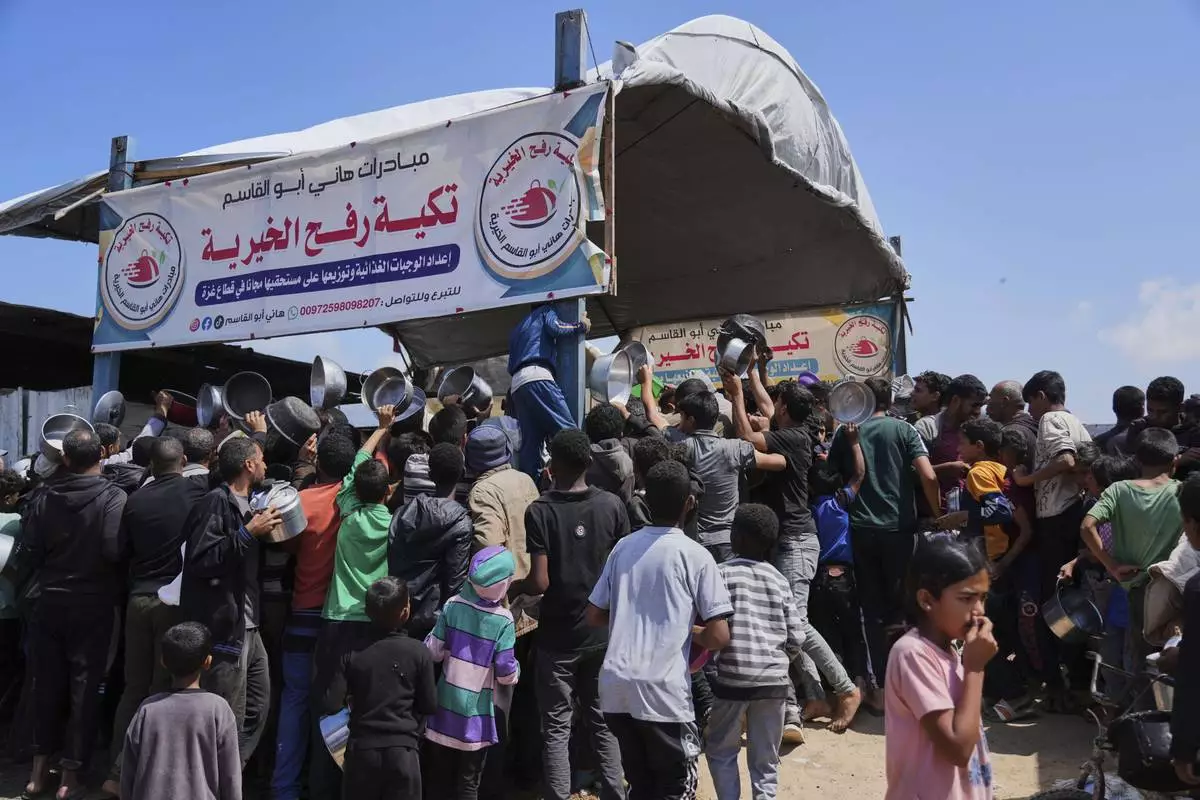
Palestinians struggle to get donated food at a community kitchen in Khan Younis, Gaza Strip, Monday, May 5, 2025. (AP Photo/Abdel Kareem Hana)
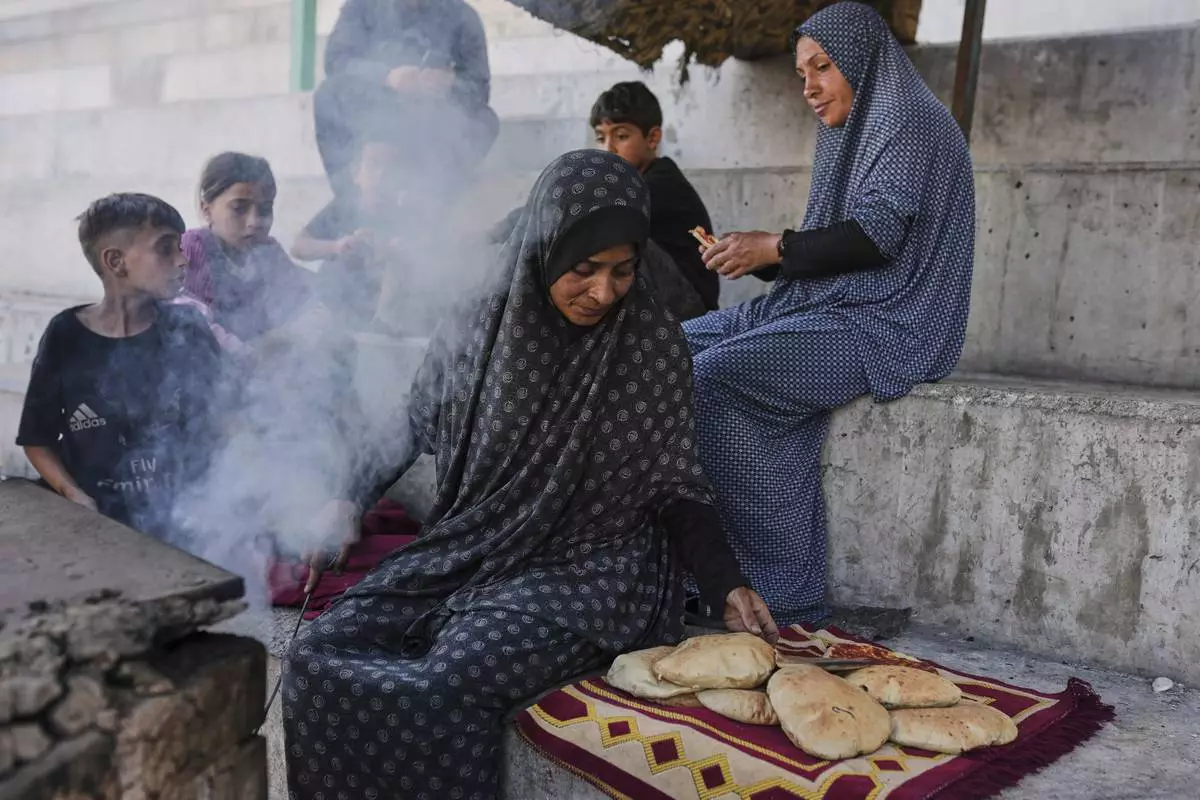
Displaced Palestinians prepare bread in a makeshift oven in Gaza City, Monday, May 5, 2025. (AP Photo/Jehad Alshrafi)
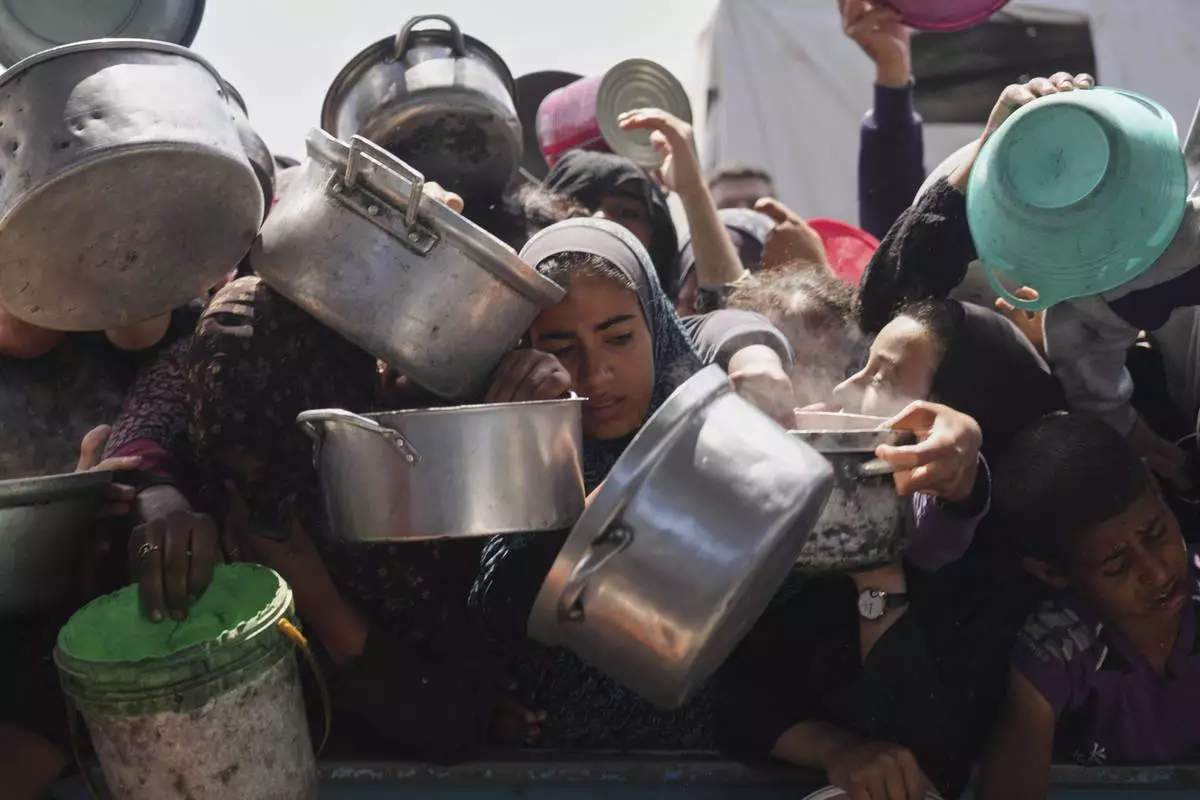
Palestinians struggle to get donated food at a community kitchen in Khan Younis, Gaza Strip, Monday, May 5, 2025. (AP Photo/Abdel Kareem Hana)
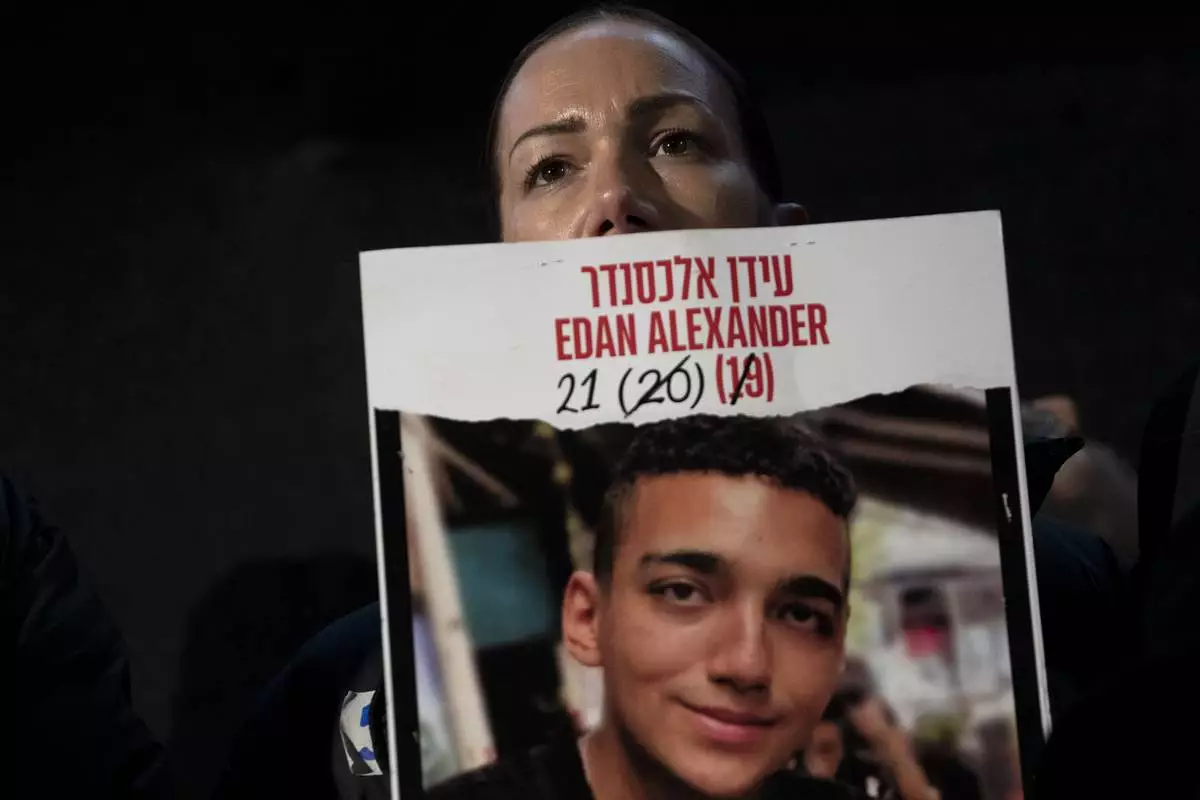
FILE - Yael Alexander holds a poster of her son, Edan, who was taken hostage by Hamas militants on Oct. 7, 2023, during a weekly rally for families of hostages held in the Gaza Strip and their supporters, in Tel Aviv, Israel, Feb. 22, 2025. (AP Photo/Maya Alleruzzo, File)
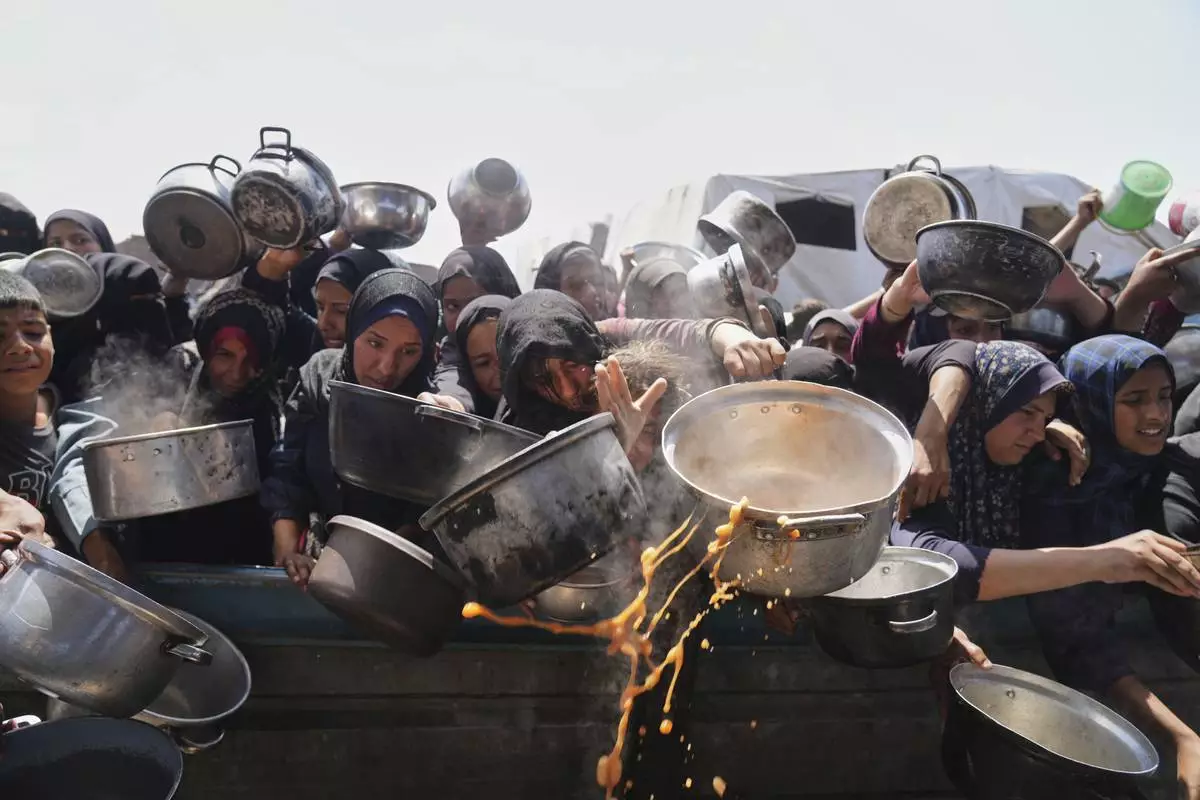
Palestinians struggle to get donated food at a community kitchen in Khan Younis, Gaza Strip, Monday, May 5, 2025. (AP Photo/Abdel Kareem Hana)
MINNEAPOLIS (AP) — Federal agents carrying out immigration arrests in Minnesota's Twin Cities region already shaken by the fatal shooting of a woman rammed the door of one home Sunday and pushed their way inside, part of what the Department of Homeland Security has called its largest enforcement operation ever.
In a dramatic scene similar to those playing out across Minneapolis, agents captured a man in the home just minutes after pepper spraying protesters outside who had confronted the heavily armed federal agents. Along the residential street, protesters honked car horns, banged on drums and blew whistles in attempts to disrupt the operation.
Video of the clash taken by The Associated Press showed some agents pushing back protesters while a distraught woman later emerged from the house with a document that federal agents presented to arrest the man. Signed by an immigration officer, the document — unlike a warrant signed by a judge — does not authorize forced entry into a private residence. A warrant signed by an immigration officer only authorizes arrest in a public area.
Immigrant advocacy groups have conducted extensive “know-your-rights” campaigns urging people not to open their doors unless agents have a court order signed by a judge.
But within minutes of ramming the door in a neighborhood filled with single-family homes, the handcuffed man was led away.
More than 2,000 immigration arrests have been made in Minnesota since the enforcement operation began at the beginning of December, said Homeland Security spokesperson Tricia McLaughlin.
Homeland Security Secretary Kristi Noem told Fox News on Sunday that the administration would send additional federal agents to Minnesota to protect immigration officers and continue enforcement.
The Twin Cities — the latest target in President Donald Trump’s immigration enforcement campaign — is bracing for what is next after 37-year-old Renee Good was shot and killed by an immigration officer on Wednesday.
“We’re seeing a lot of immigration enforcement across Minneapolis and across the state, federal agents just swarming around our neighborhoods,” said Jason Chavez, a Minneapolis city councilmember. “They’ve definitely been out here.”
Chavez, the son of Mexican immigrants who represents an area with a growing immigrant population, said he is closely monitoring information from chat groups about where residents are seeing agents operating.
People holding whistles positioned themselves in freezing temperatures on street corners Sunday in the neighborhood where Good was killed, watching for any signs of federal agents.
More than 20,000 people have taken part in a variety of trainings to become “observers” of enforcement activities in Minnesota since the 2024 election, said Luis Argueta, a spokesperson for Unidos MN, a local human rights organization .
“It’s a role that people choose to take on voluntarily, because they choose to look out for their neighbors,” Argueta said.
The protests have been largely peaceful, but residents remained anxious. On Monday, Minneapolis public schools will start offering remote learning for the next month in response to concerns that children might feel unsafe venturing out while tensions remain high.
Many schools closed last week after Good’s shooting and the upheaval that followed.
While the enforcement activity continues, two of the state’s leading Democrats said that the investigation into Good's shooting death should not be overseen solely by the federal government.
Minneapolis Mayor Jacob Frey and U.S. Sen. Tina Smith said in separate interviews Sunday that state authorities should be included in the investigation because the federal government has already made clear what it believes happened.
“How can we trust the federal government to do an objective, unbiased investigation, without prejudice, when at the beginning of that investigation they have already announced exactly what they saw — what they think happened," Smith said on ABC’s "This Week."
The Trump administration has defended the officer who shot Good in her car, saying he was protecting himself and fellow agents and that Good had “weaponized” her vehicle.
Todd Lyons, acting director of U.S. Immigration and Customs Enforcement, defended the officer on Fox News Channel’s “The Sunday Briefing.”
"That law enforcement officer had milliseconds, if not short time to make a decision to save his life and his other fellow agents,” he said.
Lyons also said the administration’s enforcement operations in Minnesota wouldn't be needed “if local jurisdictions worked with us to turn over these criminally illegal aliens once they are already considered a public safety threat by the locals.”
The killing of Good by an ICE officer and the shooting of two people by federal agents in Portland, Oregon, led to dozens of protests in cities across the country over the weekend, including New York, Los Angeles, Washington D.C. and Oakland, California.
Contributing were Associated Press journalists Giovanna Dell’Orto in Minneapolis; Thomas Strong in Washington; Bill Barrow in Atlanta; Christopher Weber in Los Angeles; and John Seewer in Toledo, Ohio.
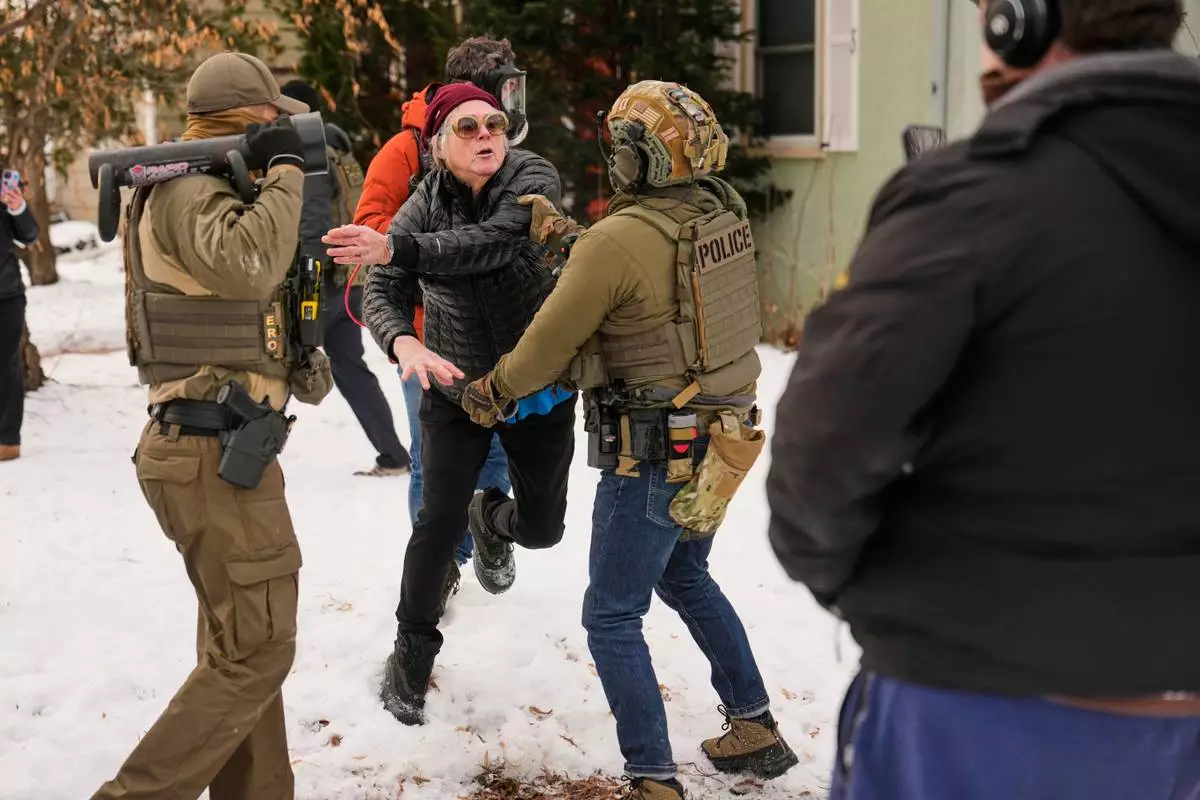
A woman gets into an altercation with a federal immigration officer as officers make an arrest Sunday, Jan. 11, 2026, in Minneapolis. (AP Photo/John Locher)
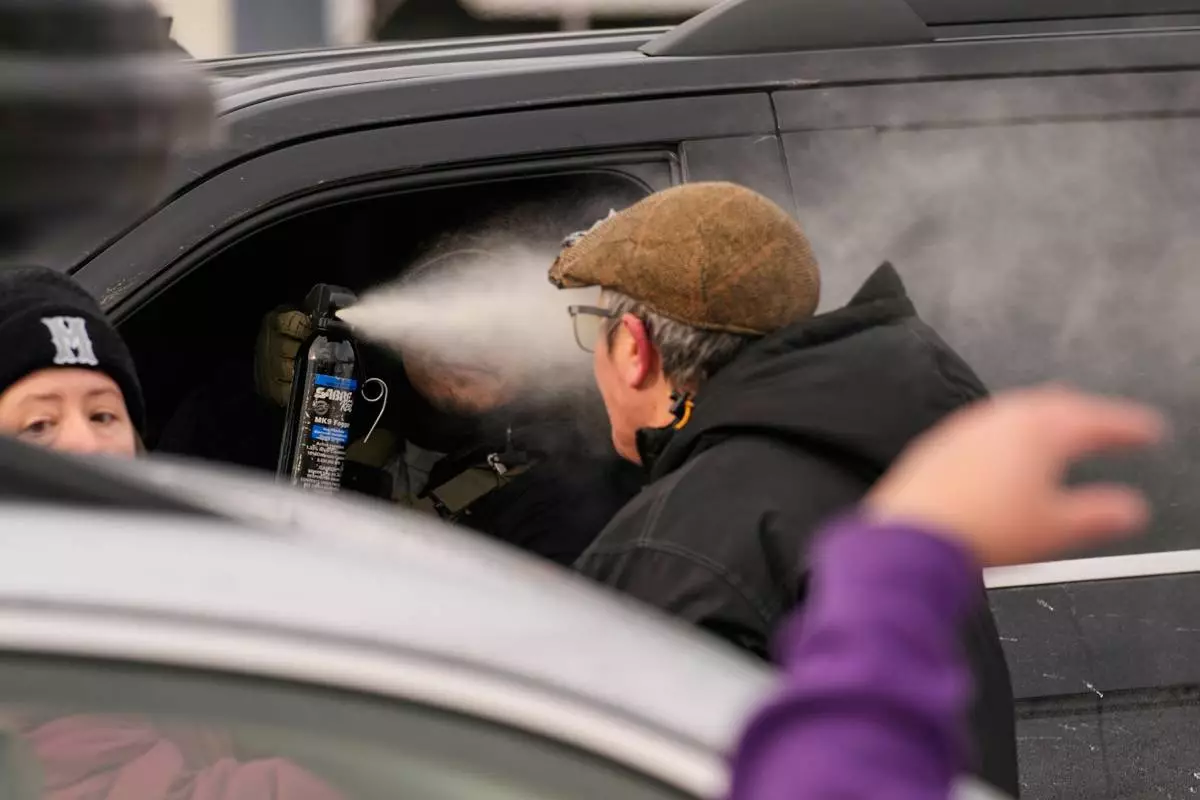
A federal immigration officer deploys pepper spray as officers make an arrest Sunday, Jan. 11, 2026, in Minneapolis. (AP Photo/John Locher)
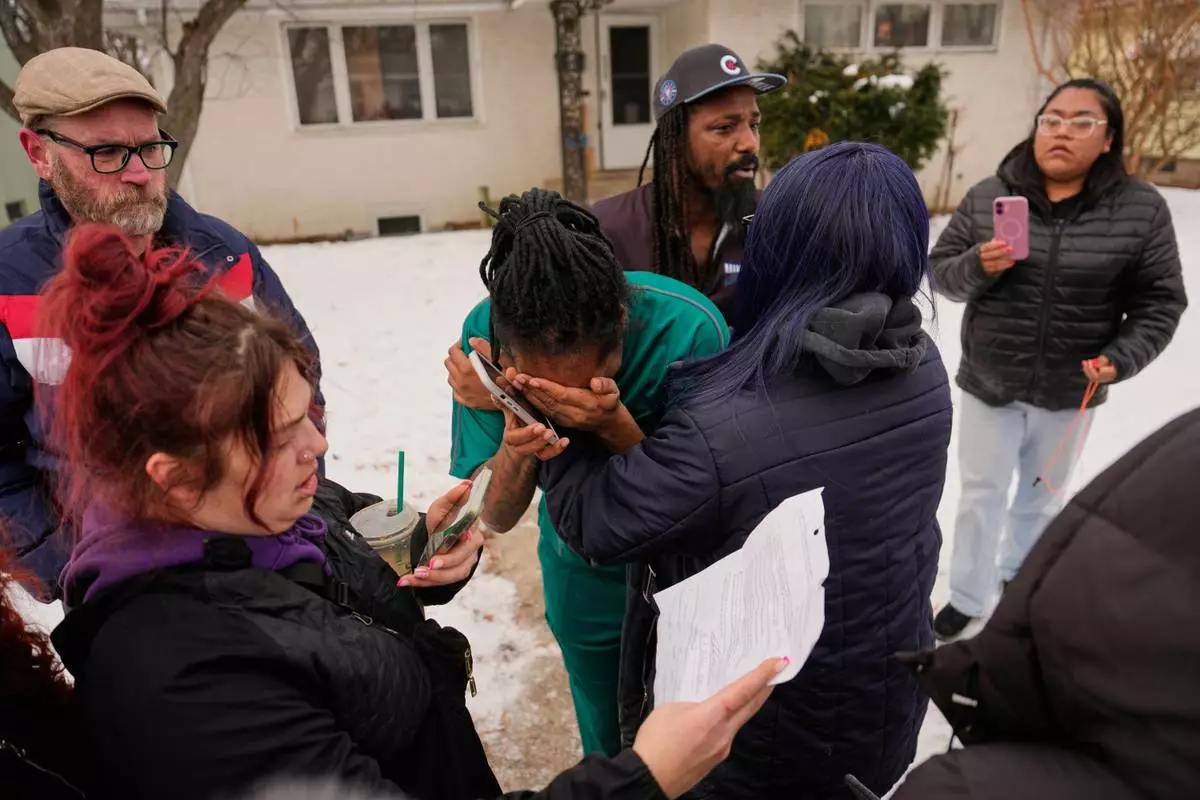
A family member, center, reacts after federal immigration officers make an arrest Sunday, Jan. 11, 2026, in Minneapolis. (AP Photo/John Locher)
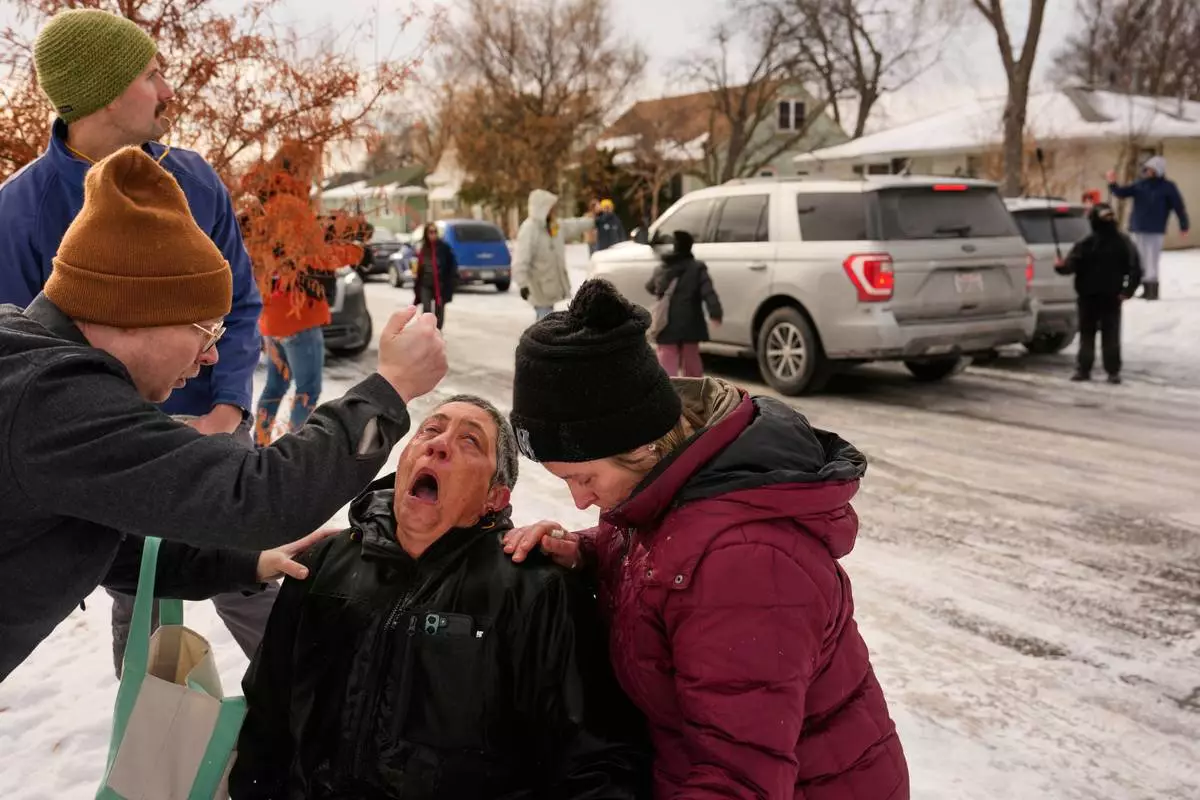
Bystanders are treated after being pepper sprayed as federal immigration officers make an arrest Sunday, Jan. 11, 2026, in Minneapolis. (AP Photo/John Locher)
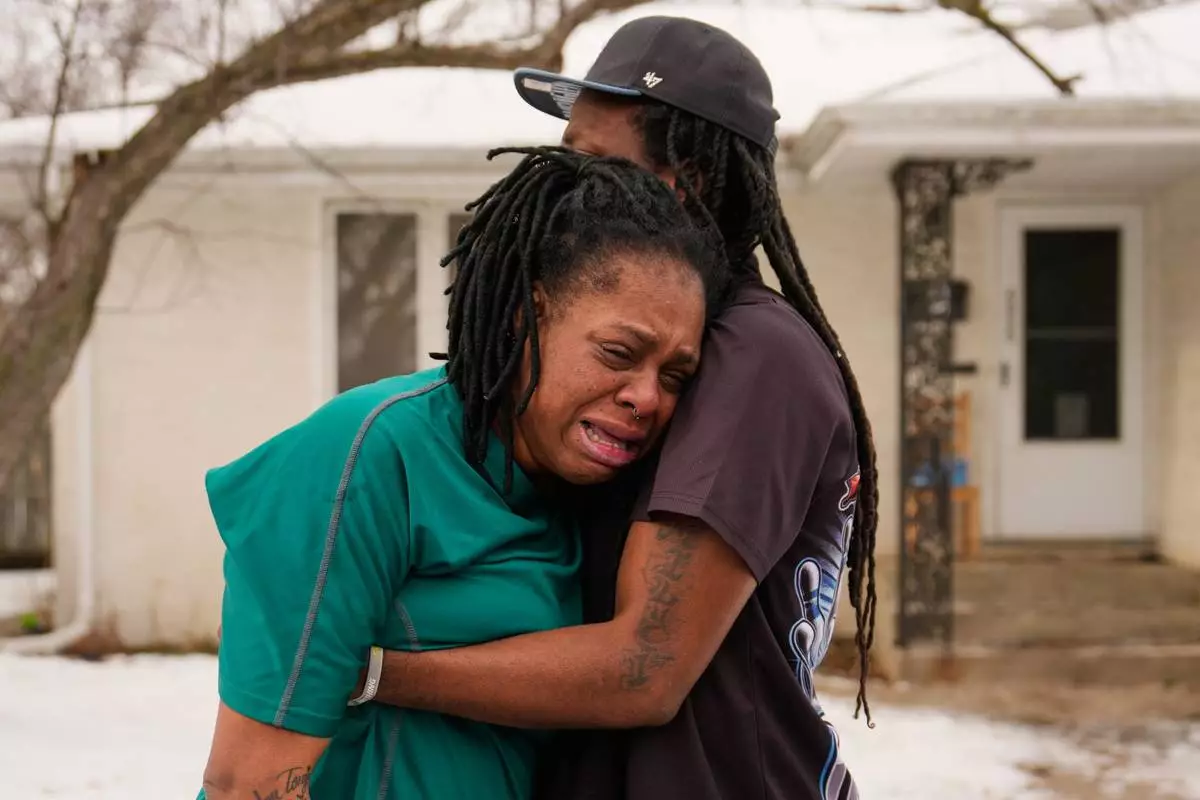
A family member reacts after federal immigration officers make an arrest Sunday, Jan. 11, 2026, in Minneapolis. (AP Photo/John Locher)
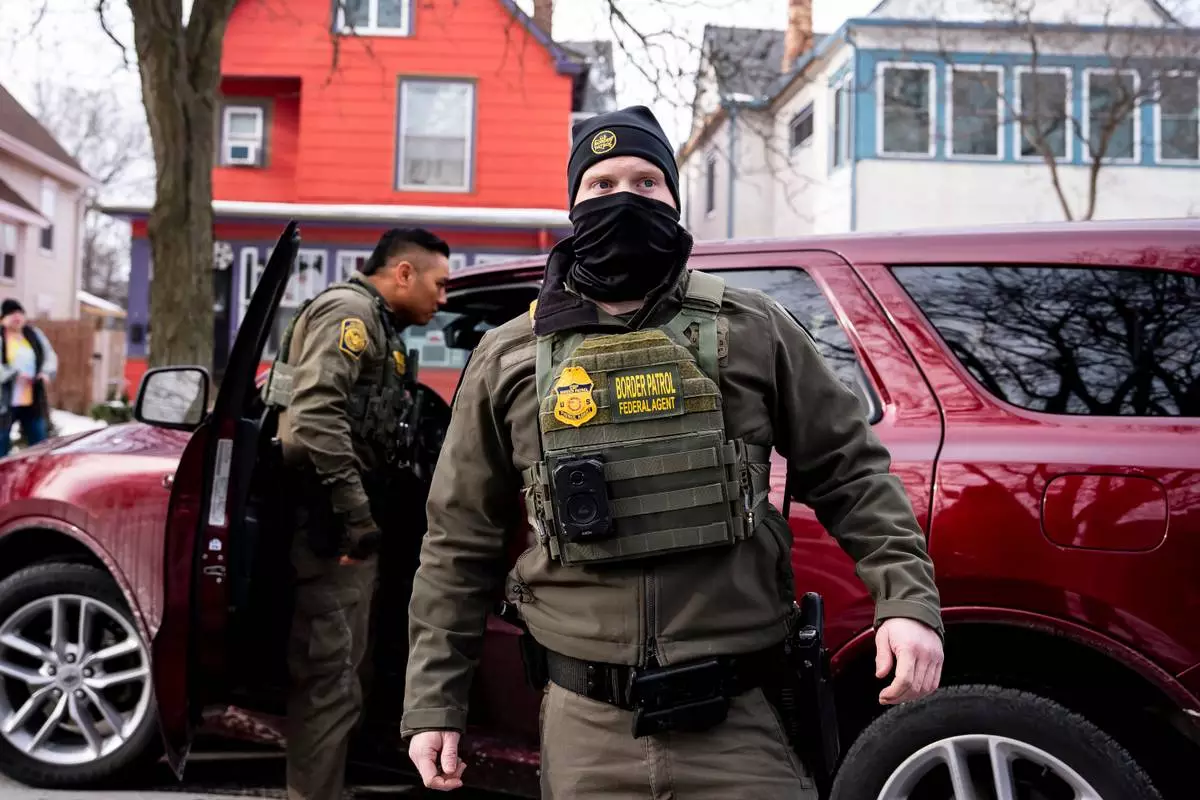
Federal agents look on after detaining a person during a patrol in Minneapolis, Minn., Sunday, Jan. 11, 2026. (Christopher Katsarov/The Canadian Press via AP)
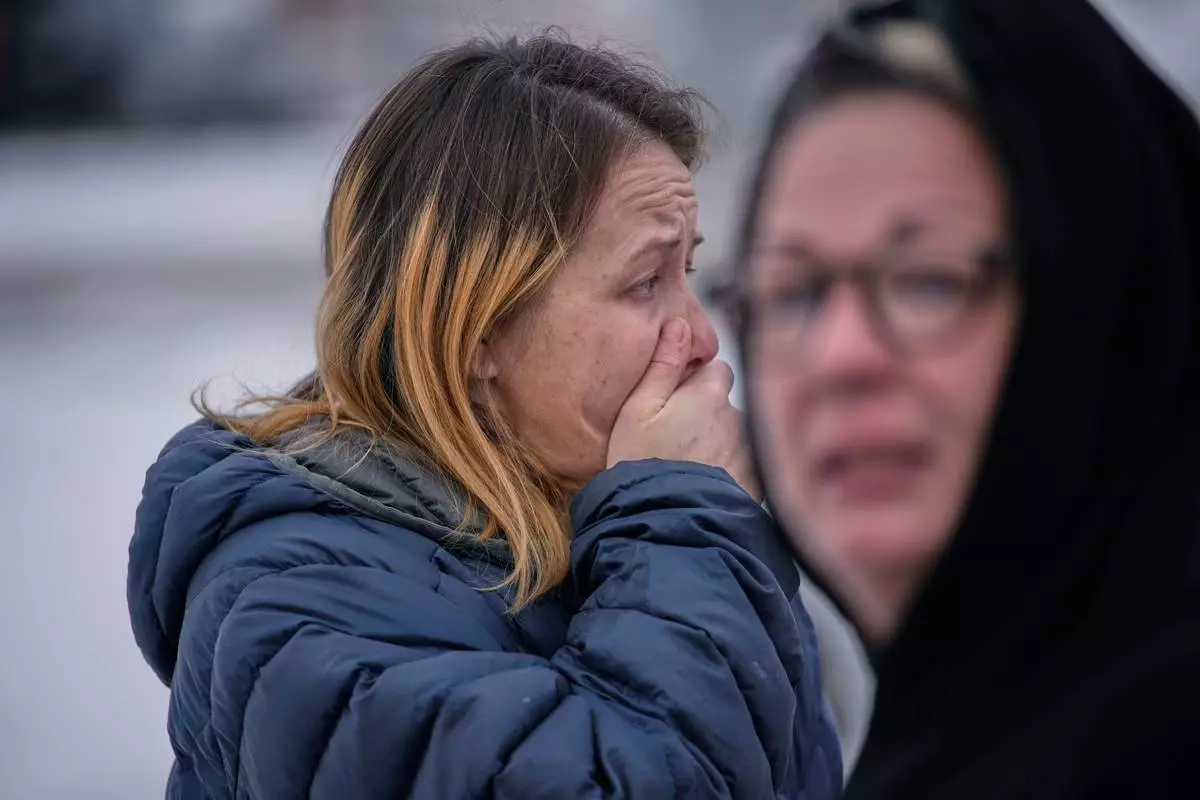
Bystanders react after a man was detained by Immigration and Customs Enforcement (ICE) agents during a traffic stop, Sunday, Jan. 11, 2026, in Robbinsdale, Minn. (AP Photo/John Locher)
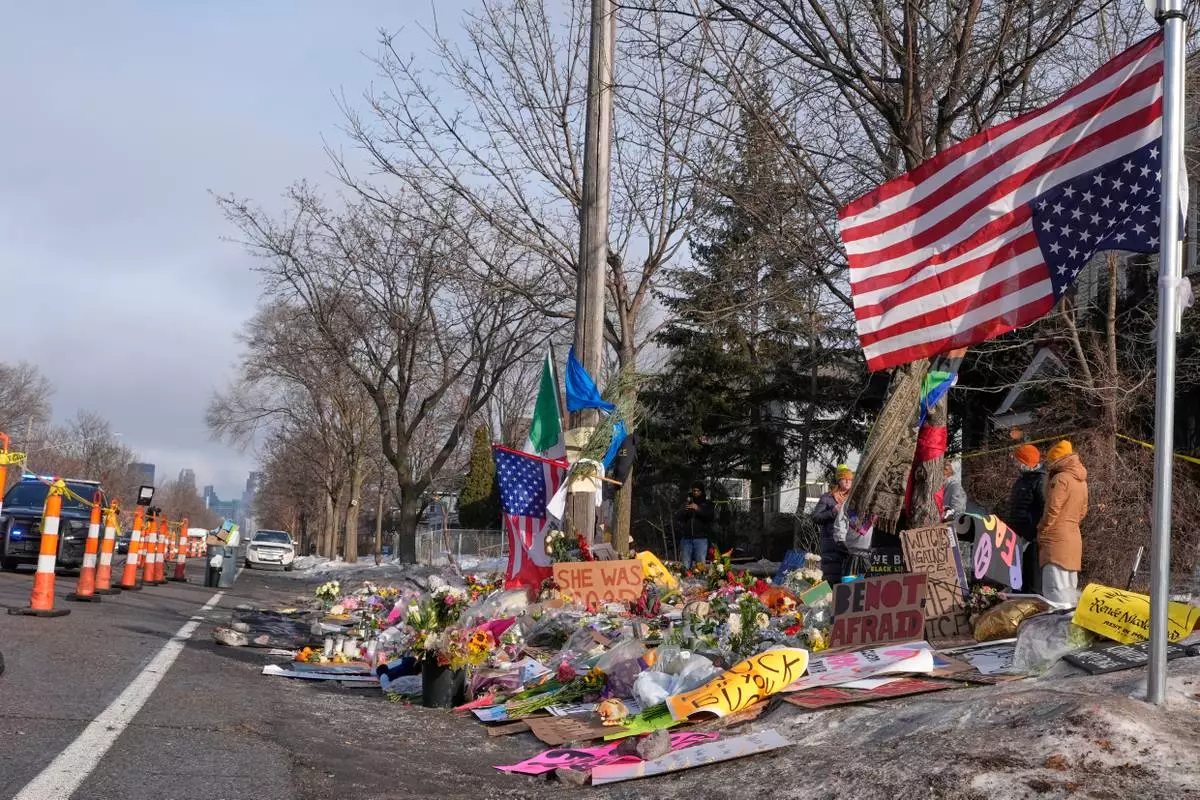
People stand near a memorial at the site where Renee Good was fatally shot by an ICE agent, Sunday, Jan. 11, 2026, in Minneapolis. (AP Photo/Jen Golbeck)
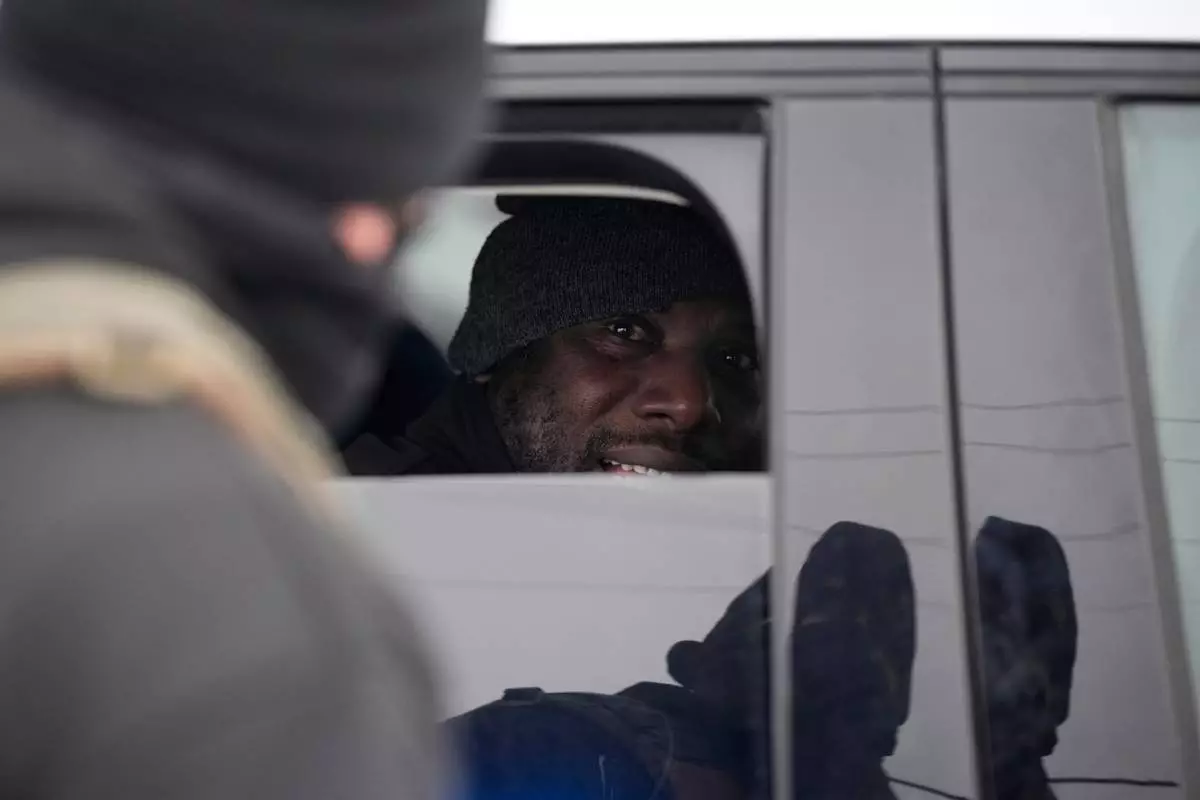
A man looks out of a car window after being detained by Immigration and Customs Enforcement (ICE) agents during a traffic stop, Sunday, Jan. 11, 2026, in Robbinsdale, Minn. (AP Photo/John Locher)
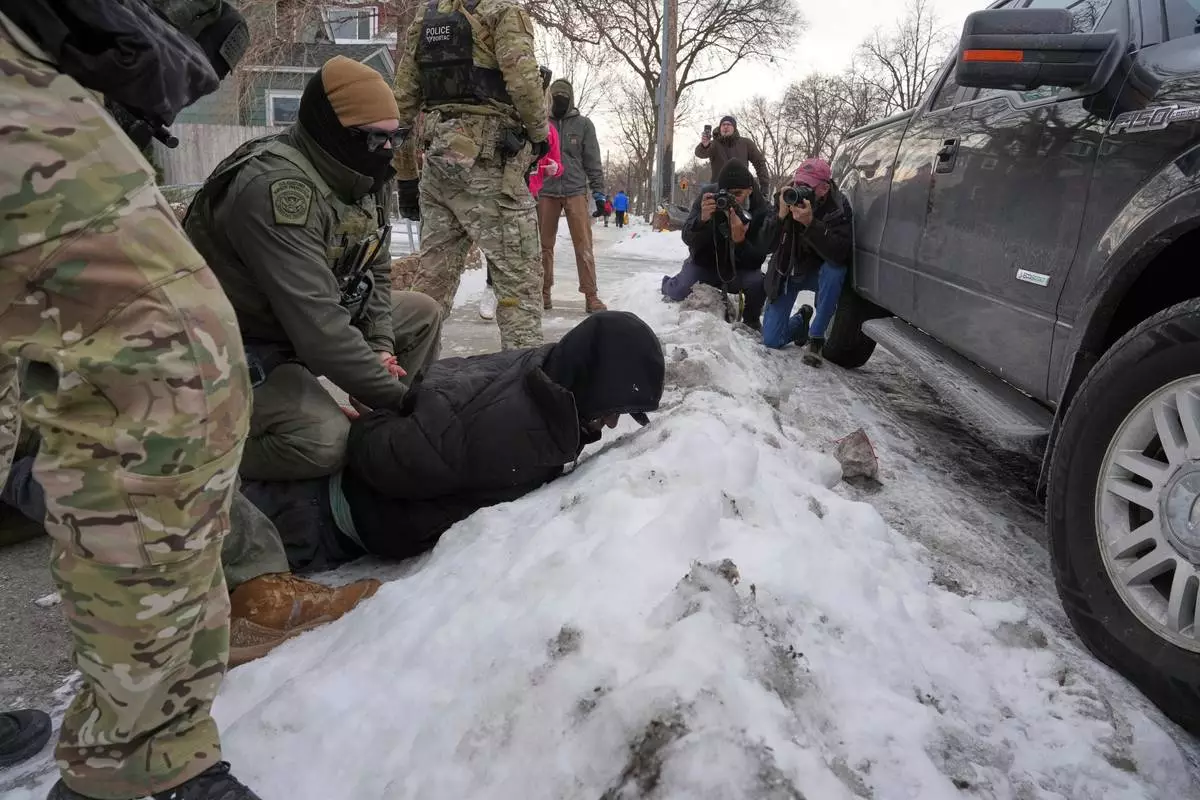
Border Patrol agents detain a man, Sunday, Jan. 11, 2026, in Minneapolis. (AP Photo/Adam Gray)
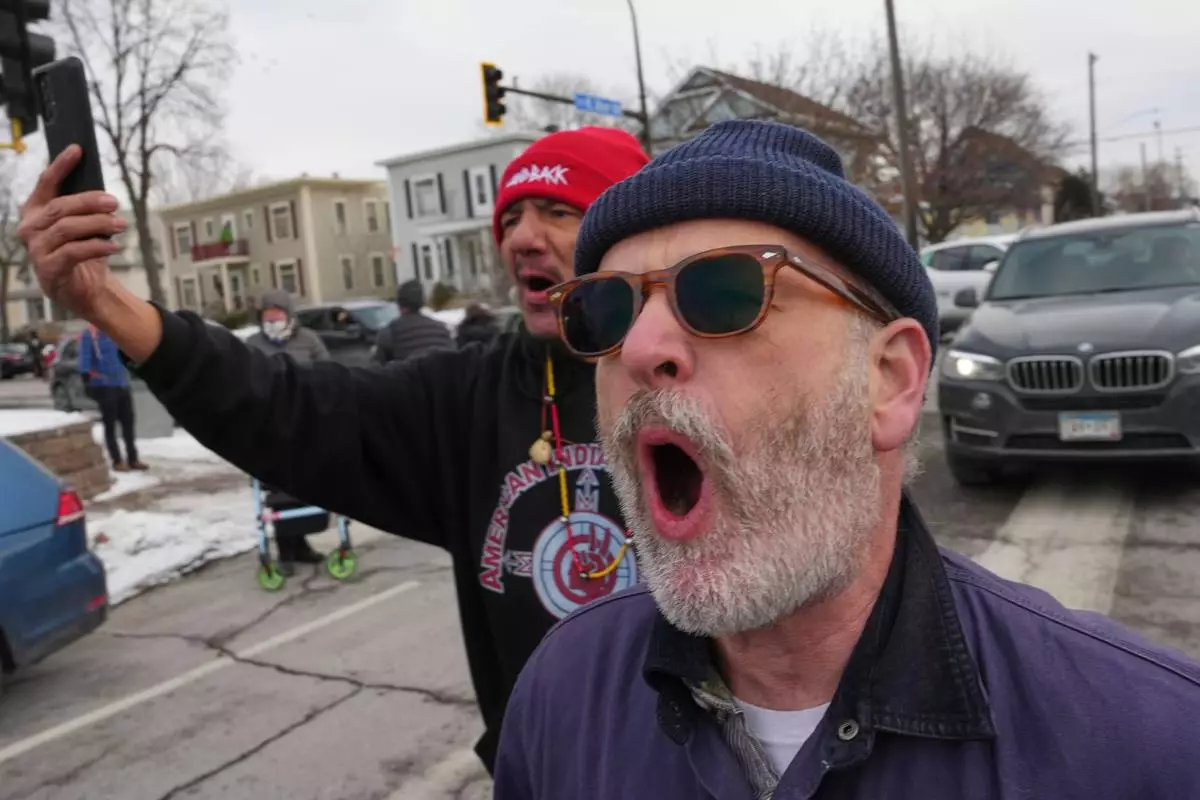
People shout toward Border Patrol agents making an arrest, Sunday, Jan. 11, 2026, in Minneapolis. (AP Photo/Adam Gray)
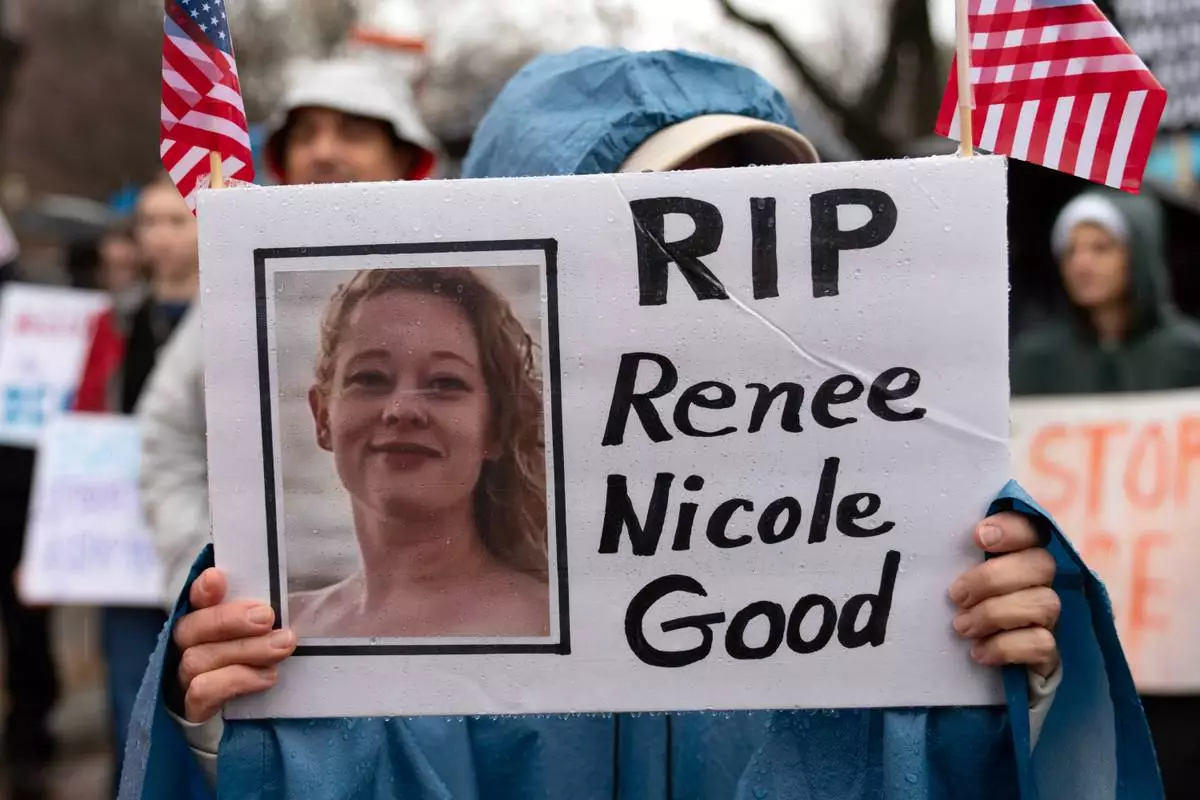
Demonstrators protest outside the White House in Washington, Saturday, Jan. 10, 2026, against the Immigration and Customs Enforcement agent who fatally shot Renee Good in Minneapolis. (AP Photo/Jose Luis Magana)
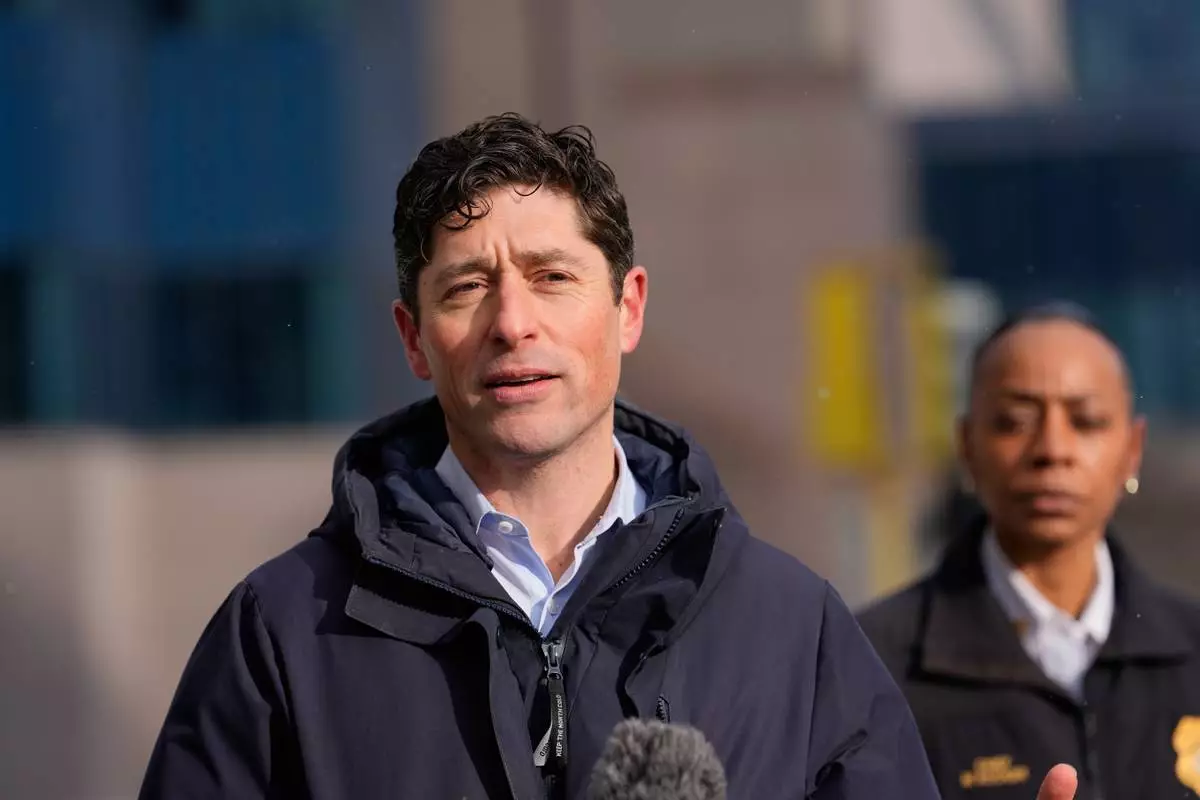
Minneapolis Mayor Jacob Frey holds a news conference on Saturday, Jan. 10, 2026, in Minneapolis. (AP Photo/Jen Golbeck)
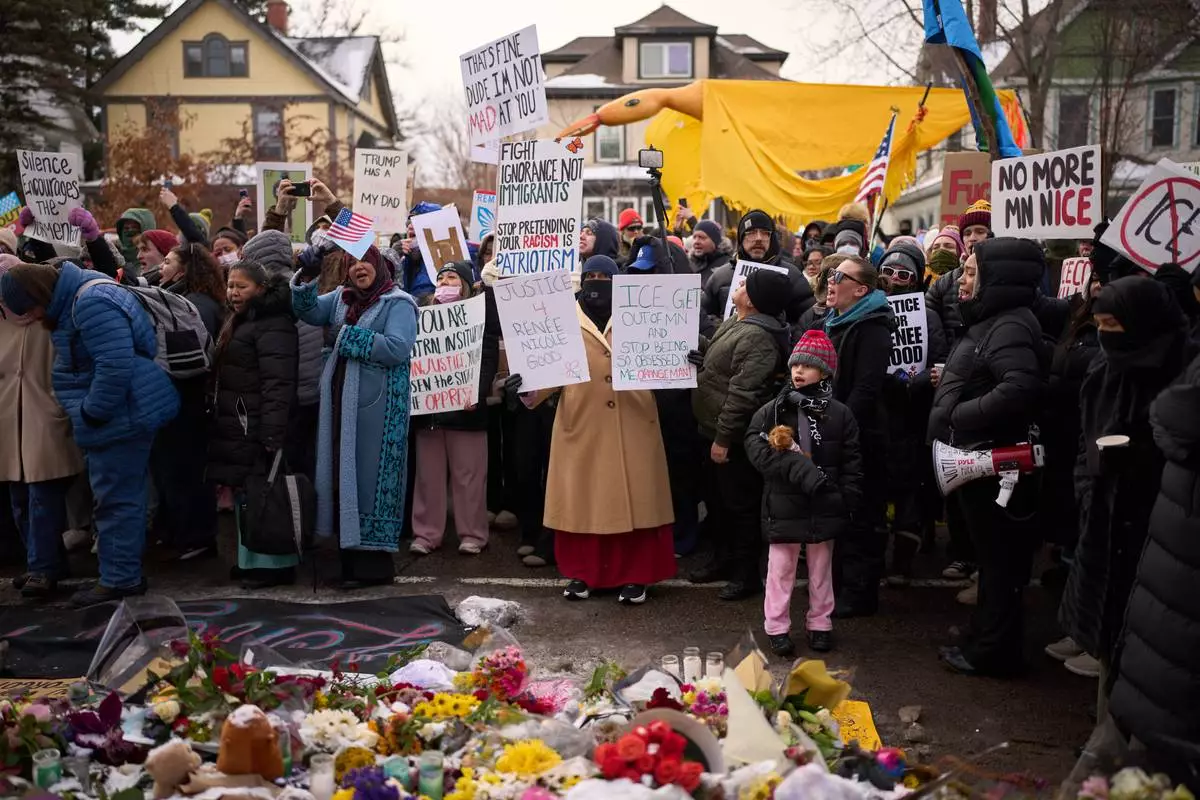
Protesters react as they visit a makeshift memorial during a rally for Renee Good, who was fatally shot by an ICE officer earlier in the week, Saturday, Jan. 10, 2026, in Minneapolis. (AP Photo/John Locher)