Skip to Content Facebook Feature Image

Canada's Carney becomes the latest foreign leader to get the Trump treatment in the Oval Office

News

Canada's Carney becomes the latest foreign leader to get the Trump treatment in the Oval Office
News

News

Canada's Carney becomes the latest foreign leader to get the Trump treatment in the Oval Office

2025-05-07 07:16 Last Updated At:07:32

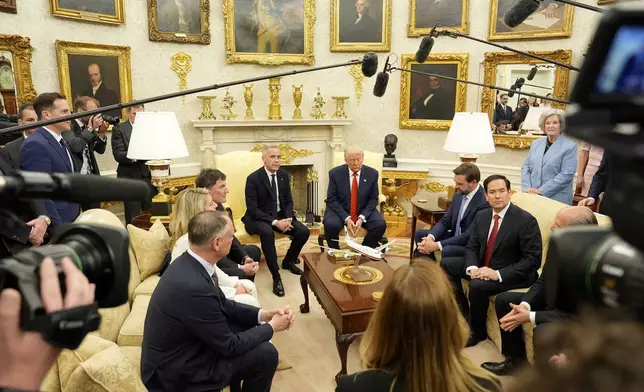
WASHINGTON (AP) — A meeting between the leaders of Canada and the United States is not usually considered a high-stakes showdown, but there was little ordinary about this one. Here was newly elected Prime Minister Mark Carney making his first visit to the Oval Office to see President Donald Trump, who has spent months musing about turning America's northern neighbor into the 51st state.

It didn't take long for a reporter to ask about what was on everyone's mind. Trump said he was still interested in annexing Canada, describing the border between the two countries as nothing more than an arbitrary line.

More Images
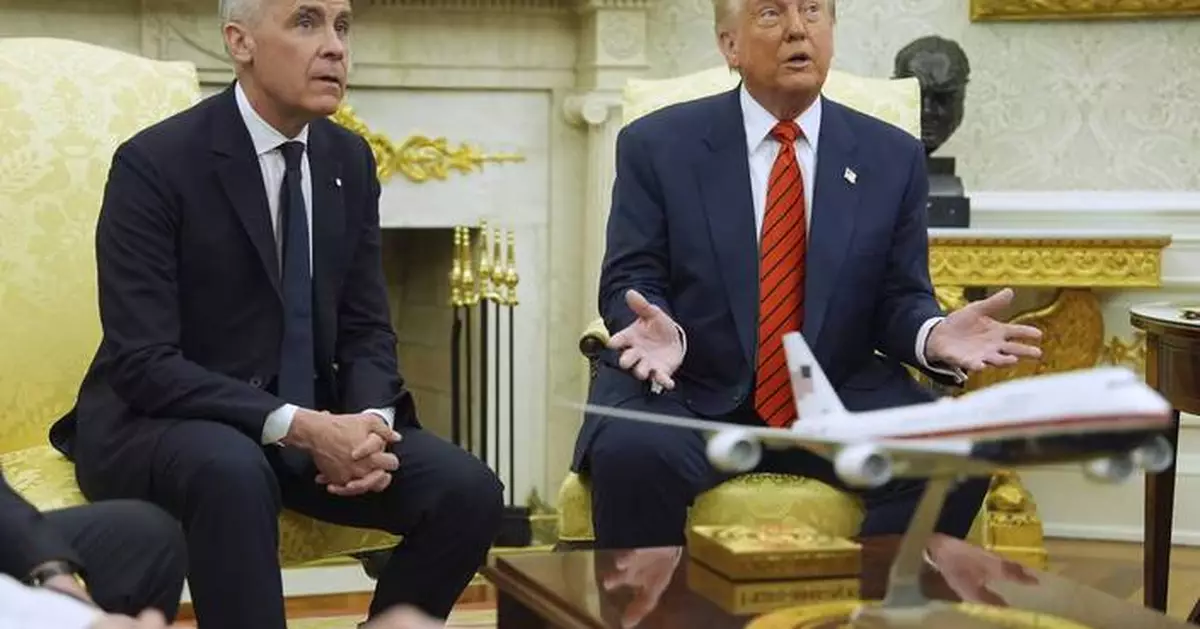
Canada Prime Minister Mark Carney and U.S. President Donald Trump engage in a meeting at the White House in Washington, Tuesday, May 6, 2025. (Adrian Wyld/The Canadian Press via AP)
Canada Prime Minister Mark Carney and U.S. President Donald Trump engage in a meeting at the White House in Washington, Tuesday, May 6, 2025. (Adrian Wyld/The Canadian Press via AP)

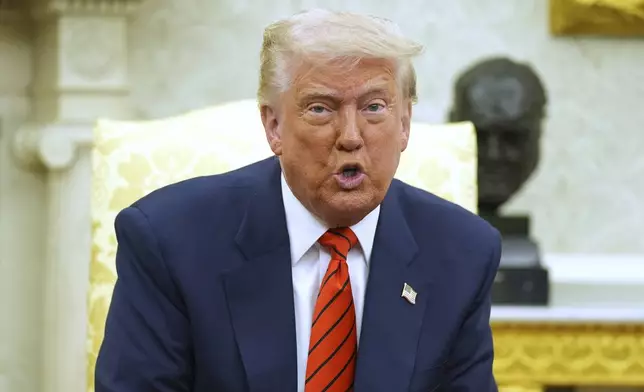
President Donald Trump speaks during a meeting with Canadian Prime Minister Mark Carney in the Oval Office of the White House, Tuesday, May 6, 2025, in Washington. (AP Photo/Evan Vucci)
President Donald Trump speaks during a meeting with Canadian Prime Minister Mark Carney in the Oval Office of the White House, Tuesday, May 6, 2025, in Washington. (AP Photo/Evan Vucci)

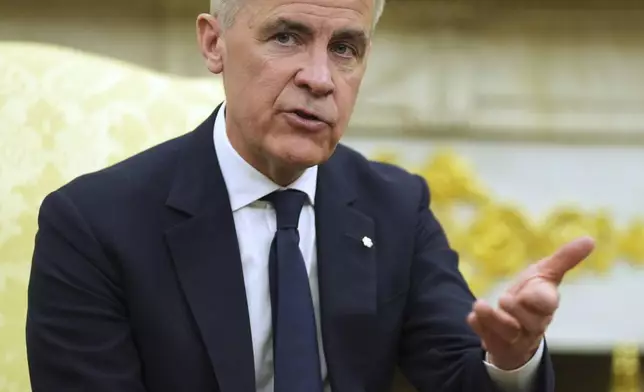
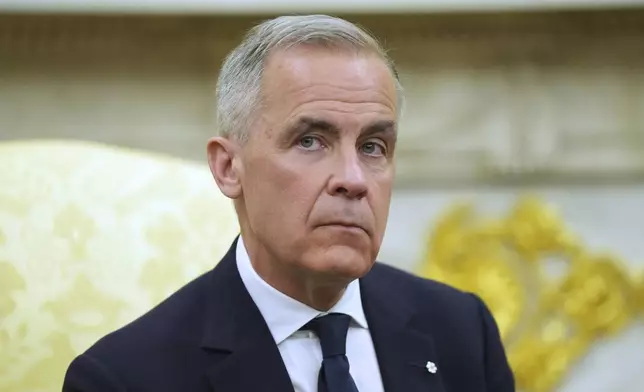
Canadian Prime Minister Mark Carney speaks during a meeting with President Donald Trump in the Oval Office of the White House, Tuesday, May 6, 2025, in Washington. (AP Photo/Evan Vucci)
Canadian Prime Minister Mark Carney speaks during a meeting with President Donald Trump in the Oval Office of the White House, Tuesday, May 6, 2025, in Washington. (AP Photo/Evan Vucci)

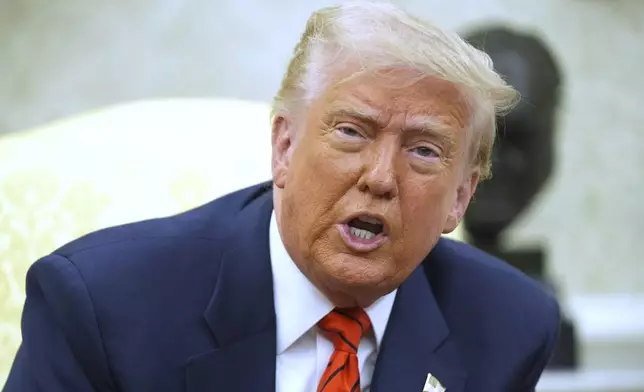
President Donald Trump speaks during a meeting with Canadian Prime Minister Mark Carney in the Oval Office of the White House, Tuesday, May 6, 2025, in Washington. (AP Photo/Evan Vucci)
President Donald Trump speaks during a meeting with Canadian Prime Minister Mark Carney in the Oval Office of the White House, Tuesday, May 6, 2025, in Washington. (AP Photo/Evan Vucci)

Canadian Prime Minister Mark Carney listtens to questions during a meeting with President Donald Trump in the Oval Office of the White House, Tuesday, May 6, 2025, in Washington. (AP Photo/Evan Vucci)
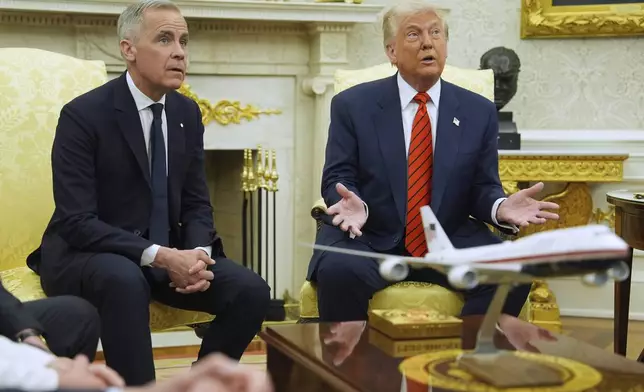
Canadian Prime Minister Mark Carney listtens to questions during a meeting with President Donald Trump in the Oval Office of the White House, Tuesday, May 6, 2025, in Washington. (AP Photo/Evan Vucci)

President Donald Trump meets Canadian Prime Minister Mark Carney in the Oval Office of the White House, Tuesday, May 6, 2025, in Washington. (AP Photo/Evan Vucci)

President Donald Trump meets Canadian Prime Minister Mark Carney in the Oval Office of the White House, Tuesday, May 6, 2025, in Washington. (AP Photo/Evan Vucci)

Carney's campaign was fueled by a wave of anger at Trump's aggressive rhetoric, and now was his chance to defend his country to the president's face. He was polite and firm.

"Some places are never for sale," Carney said. Canada is one of them, he added, and “it won't be for sale, ever.”

Trump gave a little shrug and raised his eyebrows. “Never say never,” he responded.

Carney mouthed the words “never, never, never.”

The interaction offered a glimpse into how Trump has transformed Oval Office meetings from brief and bland encounters into precarious affairs that often force foreign leaders to choose between placating or confronting the American president. His approach can be thrilling for supporters and destabilizing for diplomats accustomed to a more deliberative approach to international relations.

“There is no formula for dealing with this,” said Daniel Mulhall, who was Ireland’s ambassador to the U.S. during Trump’s first term. He described the president's unpredictable behavior as a “risk factor” and “an extraordinary departure from the norm."

It appears that Carney struck the right balance, at least in Trump's mind. As the meeting ended, the president said, “I like this guy."

Carney grinned.

An invitation to the Oval Office has long been the height of international prestige, but the meetings were rarely dramatic. Journalists were ushered into the room to take pictures and, if they were lucky, ask a couple of questions while leaders made perfunctory remarks.

Now, they're raucous episodes in a foreign policy reality show, starring Trump. While the president can be a gracious host, he openly complains about visitors' countries — their trade policies, their lack of defense spending, their perceived ingratitude. He's also willing to take question upon question on a range of topics from reporters, turning guests into silent spectators.

Sixteen foreign leaders have visited the White House since Trump returned to office, outpacing Barack Obama and Joe Biden at similar points in their presidencies.

"Thanks to this president’s commitment to transparency and accessibility, Americans can watch his foreign policy agenda play out in real time — presenting an opportunity for both foreign leaders and the president to convey their message to the American people," said a statement from Anna Kelly, a White House deputy press secretary.

The meetings sometimes become endurance tests. On Tuesday, Carney listened to Trump criticize California's delayed high-speed rail project, boast about upgrading the Oval Office with “great love and 24-karat gold” and make a surprise announcement that the U.S. would stop bombing the Houthis in Yemen.

Trump also went on an extended tangent about Obama's plans for his presidential library in Chicago, claiming that there are delays because his predecessor “only wants woke people to build it.”

“He wanted to be very politically correct, and he didn’t use good, hard, tough, mean construction workers," Trump claimed.

As time dragged on, Carney’s lips tightened, his mouth twitched and his eyes darted around the room. He kept his hands clasped in front of him, except for largely futile gestures as he tried to get a word in.

El Salvador’s Nayib Bukele was more at ease during his own meeting with Trump. He grinned as Trump bragged about getting “the highest mark” on his latest cognitive test, criticized a reporter’s “low ratings” and declared himself “very flexible” on tariffs.

Elise Labott, a longtime journalist who is now a fellow at the Council on Foreign Relations, dismissed the White House's characterization of the encounters as evidence of the president being transparent.

“It’s just another part of the show," she said. Oval Office meetings, she added, have been "hijacked for part of the circus.”

Foreign leaders often walk a careful line to avoid publicly confronting Trump, and they often rely on quick pivots when difficult subjects arise.

NATO Secretary General Mark Rutte was in the Oval Office while Trump talked about annexing Greenland — which is the territory of Denmark, another NATO ally.

Rutte said, “I don’t want to drag NATO in that" and quickly shifted to an area of agreement. When it comes to the issue of security in the Arctic, Rutte told Trump, “you are totally right.”

Jordanian King Abdullah II squirmed through a meeting where Trump explained his idea for the United States to take over Gaza and expel Palestinians from their homes. It's among the most sensitive issues for Abdullah, whose country is home to more than two million Palestinian refugees, and he sidestepped questions about Trump's proposal. It wasn't until after the meeting that he posted about his opposition to Trump's idea on social media.

French President Emmanuel Macron was the rare leader to correct Trump without facing a backlash. When the U.S. leader claimed that Europe was lending Ukraine money — instead of donating it outright — Macron gently placed his left hand on Trump’s right forearm to interject.

Trump rolled with it. “If you believe that, it’s OK with me," he told reporters.

No meeting has gone as poorly as Trump’s sit-down with Ukrainian President Volodymyr Zelenskyy in February. After a heated exchange over the best way to end the war with Russia, Trump told him, “It's going to be very hard to do business like this.”

“You have to be thankful," Trump told Zelenskyy. "You don't have the cards.”

As journalists left the room, Trump added, “This is going to be great television.”

Rufus Gifford, former chief of protocol for Biden, said Trump was successful at little more than getting attention for himself.

“Donald Trump has an ability to have eyeballs on him. That is, without a doubt, impressive," he said. "But just because he’s able to get people to watch him doesn’t mean the strategy is smart or good for the United States of America.”

Max Bergmann, a former State Department official now at the Center for Strategic and International Studies, said the meetings are "always going to be really challenging because the president can be volatile.”

“It will give a lot of diplomats around the world pause about whether they want to schedule a meeting," he said.

But a meeting with Trump is a hard thing to avoid, especially for American allies.

British Prime Minister Keir Starmer prepped intensively for his first encounter with Trump, understanding that the president prizes personal relationships and it’s hard to recover if he dislikes you.

Starmer handed the president a written invitation from King Charles III for a state visit and praised him for returning a bust of Winston Churchill to the Oval Office. He also thanked Trump for changing the conversation on Ukraine — even though he did that by siding more with Russia than European allies want.

Irish Prime Minister Micheál Martin came out largely unscathed by taking a roll-with-the-punches approach — not contradicting Trump when he claimed Ireland “took” U.S. companies through “improper taxation” — while engaging the president over boxing and golf.

“Every leader has to have their own strategy," Mulhall said.

__

Associated Press writer Jill Lawless in London contributed to this report.
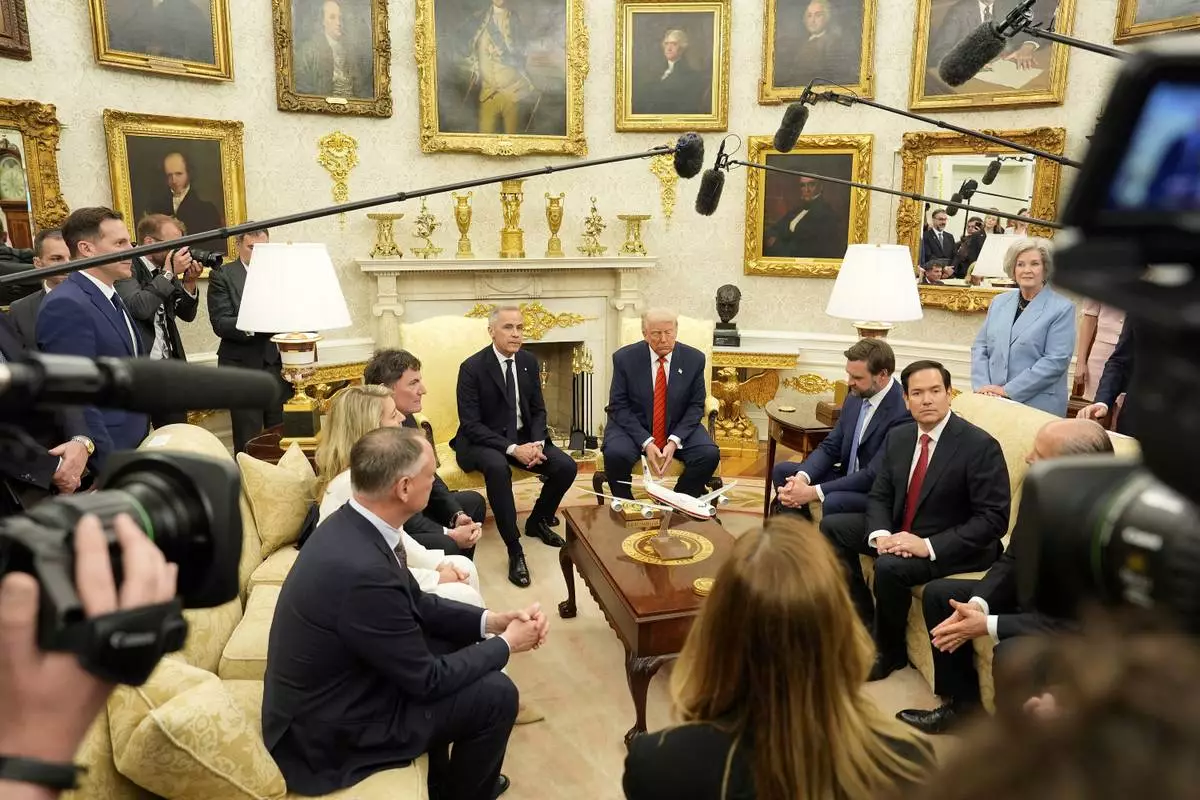
Canada Prime Minister Mark Carney and U.S. President Donald Trump engage in a meeting at the White House in Washington, Tuesday, May 6, 2025. (Adrian Wyld/The Canadian Press via AP)
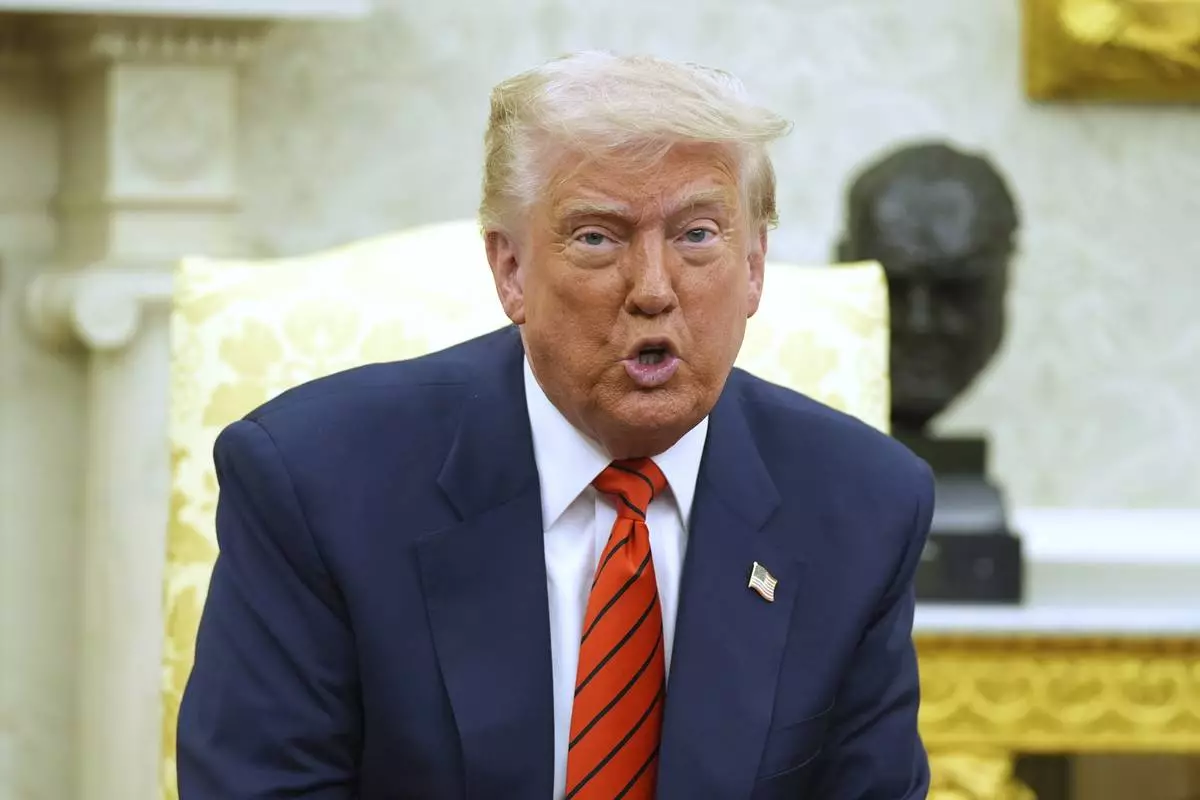
Canada Prime Minister Mark Carney and U.S. President Donald Trump engage in a meeting at the White House in Washington, Tuesday, May 6, 2025. (Adrian Wyld/The Canadian Press via AP)

President Donald Trump speaks during a meeting with Canadian Prime Minister Mark Carney in the Oval Office of the White House, Tuesday, May 6, 2025, in Washington. (AP Photo/Evan Vucci)
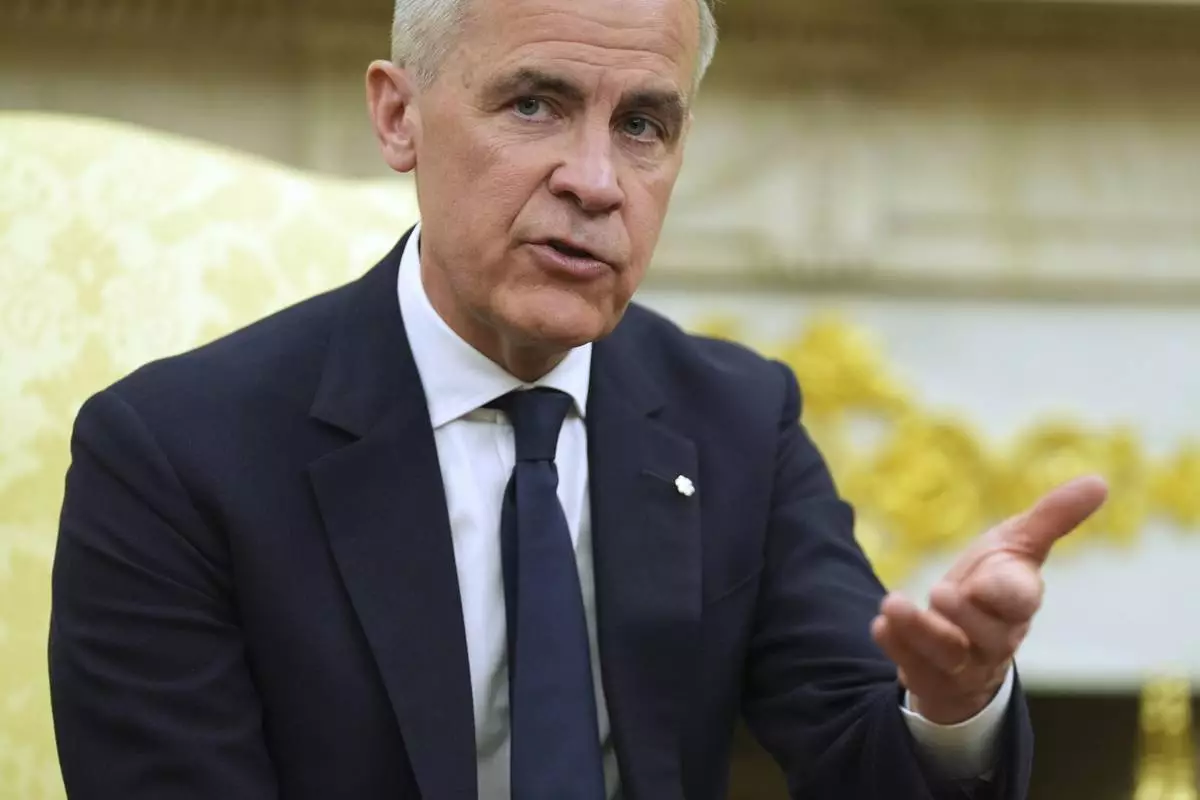
President Donald Trump speaks during a meeting with Canadian Prime Minister Mark Carney in the Oval Office of the White House, Tuesday, May 6, 2025, in Washington. (AP Photo/Evan Vucci)

Canadian Prime Minister Mark Carney speaks during a meeting with President Donald Trump in the Oval Office of the White House, Tuesday, May 6, 2025, in Washington. (AP Photo/Evan Vucci)
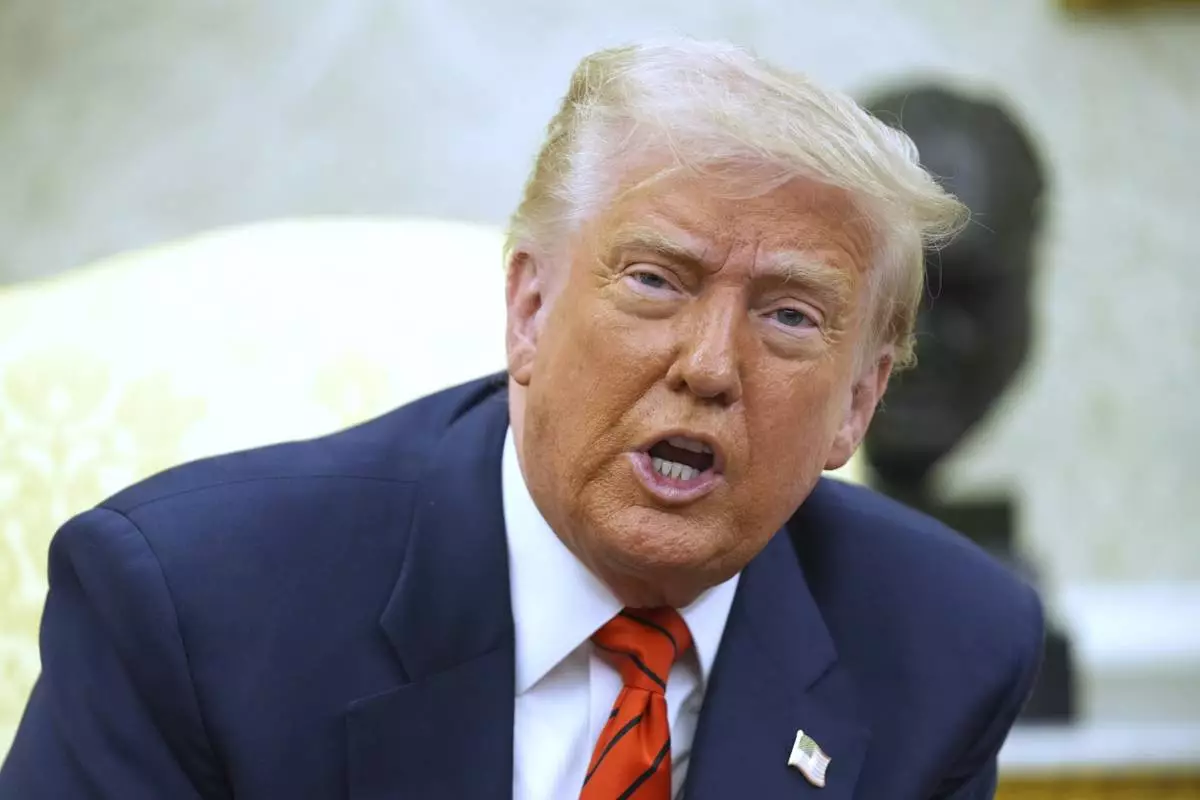
Canadian Prime Minister Mark Carney speaks during a meeting with President Donald Trump in the Oval Office of the White House, Tuesday, May 6, 2025, in Washington. (AP Photo/Evan Vucci)

President Donald Trump speaks during a meeting with Canadian Prime Minister Mark Carney in the Oval Office of the White House, Tuesday, May 6, 2025, in Washington. (AP Photo/Evan Vucci)
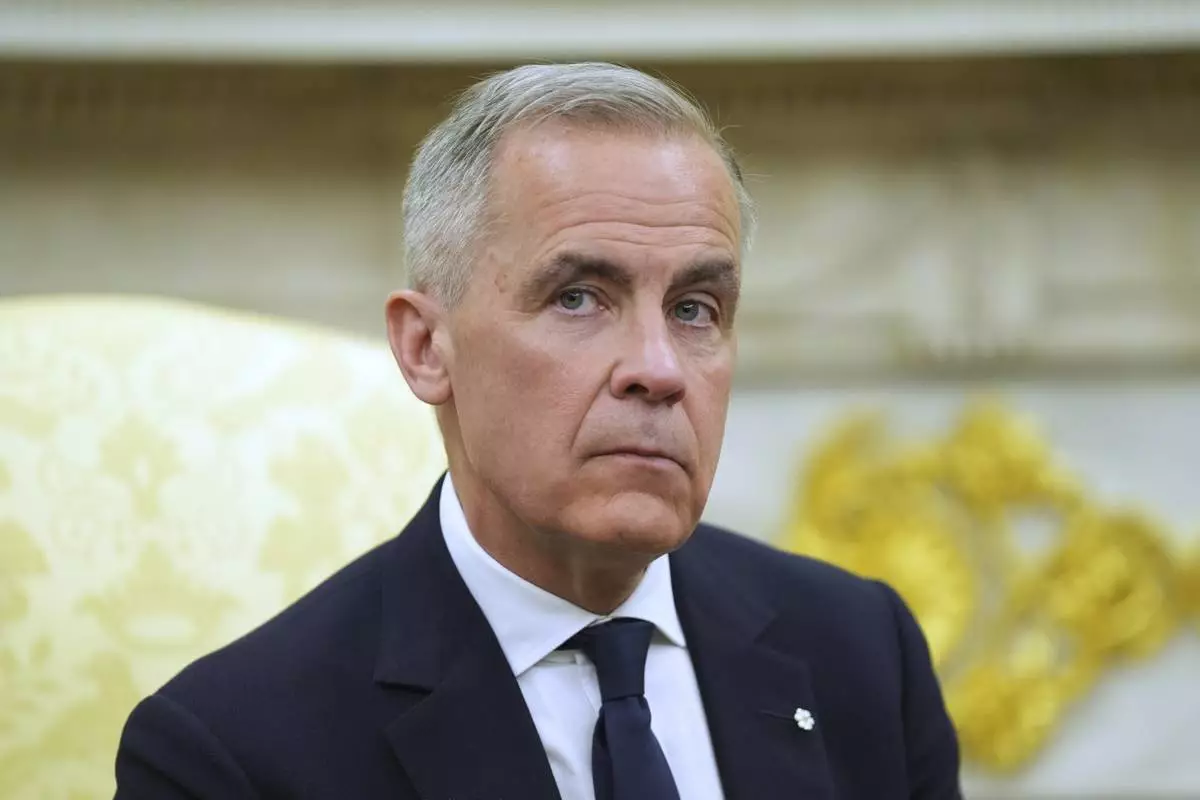
President Donald Trump speaks during a meeting with Canadian Prime Minister Mark Carney in the Oval Office of the White House, Tuesday, May 6, 2025, in Washington. (AP Photo/Evan Vucci)

Canadian Prime Minister Mark Carney listtens to questions during a meeting with President Donald Trump in the Oval Office of the White House, Tuesday, May 6, 2025, in Washington. (AP Photo/Evan Vucci)
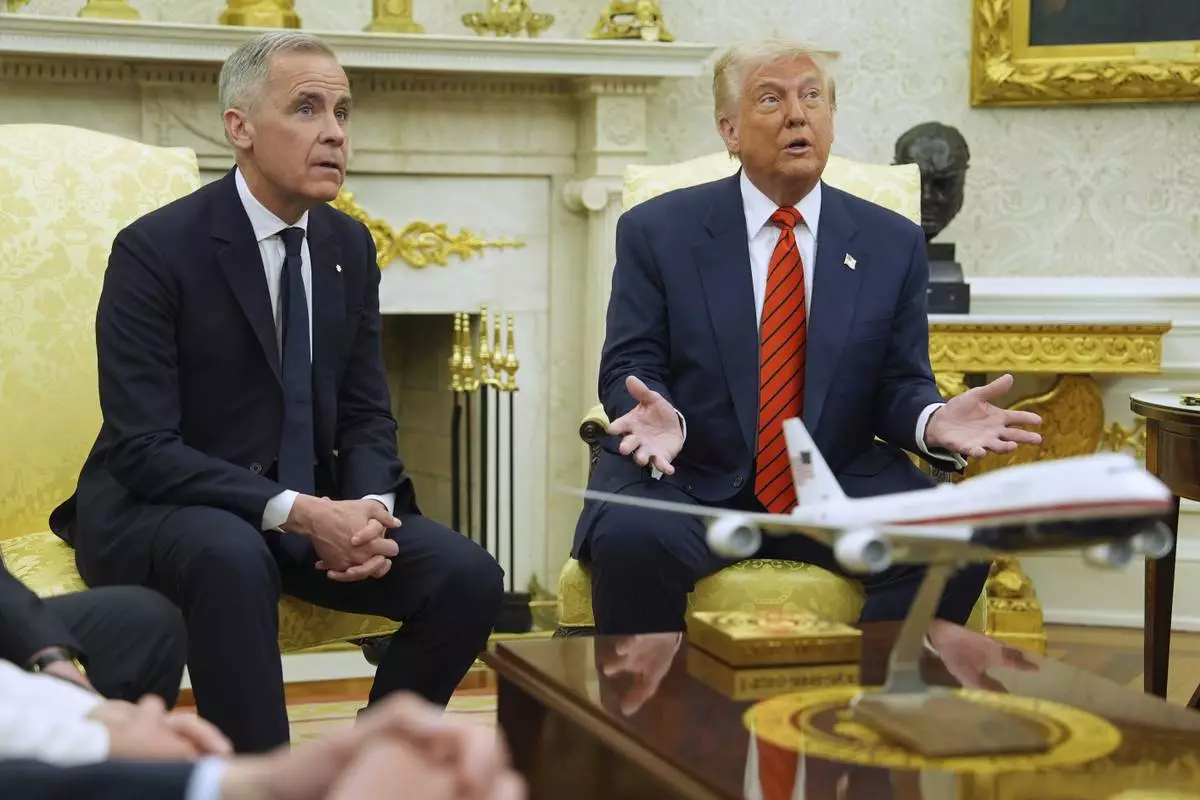
Canadian Prime Minister Mark Carney listtens to questions during a meeting with President Donald Trump in the Oval Office of the White House, Tuesday, May 6, 2025, in Washington. (AP Photo/Evan Vucci)

President Donald Trump meets Canadian Prime Minister Mark Carney in the Oval Office of the White House, Tuesday, May 6, 2025, in Washington. (AP Photo/Evan Vucci)
President Donald Trump meets Canadian Prime Minister Mark Carney in the Oval Office of the White House, Tuesday, May 6, 2025, in Washington. (AP Photo/Evan Vucci)
U.S. President Donald Trump says Iran has proposed negotiations after his threat to strike the Islamic Republic as an ongoing crackdown on demonstrators has led to hundreds of deaths.

Trump said late Sunday that his administration was in talks to set up a meeting with Tehran, but cautioned that he may have to act first as reports mount of increasing deaths and the government continues to arrest protesters.

“The meeting is being set up, but we may have to act because of what’s happening before the meeting. But a meeting is being set up. Iran called, they want to negotiate,” Trump told reporters on Air Force One on Sunday night.

Iran did not acknowledge Trump’s comments immediately. It has previously warned the U.S. military and Israel would be “legitimate targets” if America uses force to protect demonstrators.

The U.S.-based Human Rights Activists News Agency, which has accurately reported on past unrest in Iran, gave the death toll. It relies on supporters in Iran cross checking information. It said at least 544 people have been killed so far, including 496 protesters and 48 people from the security forces. It said more than 10,600 people also have been detained over the two weeks of protests.

With the internet down in Iran and phone lines cut off, gauging the demonstrations from abroad has grown more difficult. Iran’s government has not offered overall casualty figures.

The Latest:

A witness told the AP that the streets of Tehran empty at the sunset call to prayers each night.

Part of that stems from the fear of getting caught in the crackdown. Police sent the public a text message that warned: “Given the presence of terrorist groups and armed individuals in some gatherings last night and their plans to cause death, and the firm decision to not tolerate any appeasement and to deal decisively with the rioters, families are strongly advised to take care of their youth and teenagers.”

Another text, addressed “Dear parents,” which claimed to come from the intelligence arm of the paramilitary Revolutionary Guard, also directly warned people not to take part in demonstrations.

The witness spoke to the AP on condition of anonymity due to the ongoing crackdown.

—- By Jon Gambrell in Dubai, United Arab Emirates

Iran drew tens of thousands of pro-government demonstrators to the streets Monday in a show of power after nationwide protests challenging the country’s theocracy.

Iranian state television showed images of demonstrators thronging Tehran toward Enghelab Square in the capital.

It called the demonstration an “Iranian uprising against American-Zionist terrorism,” without addressing the underlying anger in the country over the nation’s ailing economy. That sparked the protests over two weeks ago.

State television aired images of such demonstrations around the country, trying to signal it had overcome the protests, as claimed by Iranian Foreign Minister Abbas Araghchi earlier in the day.

China says it opposes the use of force in international relations and expressed hope the Iranian government and people are “able to overcome the current difficulties and maintain national stability.”

Chinese Foreign Ministry spokesperson Mao Ning said Monday that Beijing “always opposes interference in other countries’ internal affairs, maintains that the sovereignty and security of all countries should be fully protected under international law, and opposes the use or threat of use of force in international relations.”

German Chancellor Friedrich Merz condemned “in the strongest terms the violence that the leadership in Iran is directing against its own people.”

He said it was a sign of weakness rather than strength, adding that “this violence must end.”

Merz said during a visit to India that the demonstrators deserve “the greatest respect” for the courage with which “they are resisting the disproportional, brutal violence of Iranian security forces.”

He said: “I call on the Iranian leadership to protect its population rather than threatening it.”

Iran’s Foreign Ministry spokesman on Monday suggested that a channel remained open with the United States.

Esmail Baghaei made the comment during a news conference in Tehran.

“It is open and whenever needed, through that channel, the necessary messages are exchanged,” he said.

However, Baghaei said such talks needed to be “based on the acceptance of mutual interests and concerns, not a negotiation that is one-sided, unilateral and based on dictation.”

The semiofficial Fars news agency in Iran, which is close to the paramilitary Revolutionary Guard, on Monday began calling out Iranian celebrities and leaders on social media who have expressed support for the protests over the past two weeks, especially before the internet was shut down.

The threat comes as writers and other cultural leaders were targeted even before protests. The news agency highlighted specific celebrities who posted in solidarity with the protesters and scolded them for not condemning vandalism and destruction to public property or the deaths of security forces killed during clashes. The news agency accused those celebrities and leaders of inciting riots by expressing their support.

Canada said it “stands with the brave people of Iran” in a statement on social media that strongly condemned the killing of protesters during widespread protests that have rocked the country over the past two weeks.

“The Iranian regime must halt its horrific repression and intimidation and respect the human rights of its citizens,” Canada’s government said on Monday.

Iran’s foreign minister claimed Monday that “the situation has come under total control” after a bloody crackdown on nationwide protests in the country.

Abbas Araghchi offered no evidence for his claim.

Araghchi spoke to foreign diplomats in Tehran. The Qatar-funded Al Jazeera satellite news network, which has been allowed to work despite the internet being cut off in the country, carried his remarks.

Iran’s foreign minister alleged Monday that nationwide protests in his nation “turned violent and bloody to give an excuse” for U.S. President Donald Trump to intervene.

Abbas Araghchi offered no evidence for his claim, which comes after over 500 have been reported killed by activists -- the vast majority coming from demonstrators.

Araghchi spoke to foreign diplomats in Tehran. The Qatar-funded Al Jazeera satellite news network, which has been allowed to work despite the internet being cut off in the country, carried his remarks.

Iran has summoned the British ambassador over protesters twice taking down the Iranian flag at their embassy in London.

Iranian state television also said Monday that it complained about “certain terrorist organization that, under the guise of media, spread lies and promote violence and terrorism.” The United Kingdom is home to offices of the BBC’s Persian service and Iran International, both which long have been targeted by Iran.

A huge crowd of demonstrators, some waving the flag of Iran, gathered Sunday afternoon along Veteran Avenue in LA’s Westwood neighborhood to protest against the Iranian government. Police eventually issued a dispersal order, and by early evening only about a hundred protesters were still in the area, ABC7 reported.

Los Angeles is home to the largest Iranian community outside of Iran.

Los Angeles police responded Sunday after somebody drove a U-Haul box truck down a street crowded with the the demonstrators, causing protesters to scramble out of the way and then run after the speeding vehicle to try to attack the driver. A police statement said one person was hit by the truck but nobody was seriously hurt.

The driver, a man who was not identified, was detained “pending further investigation,” police said in a statement Sunday evening.

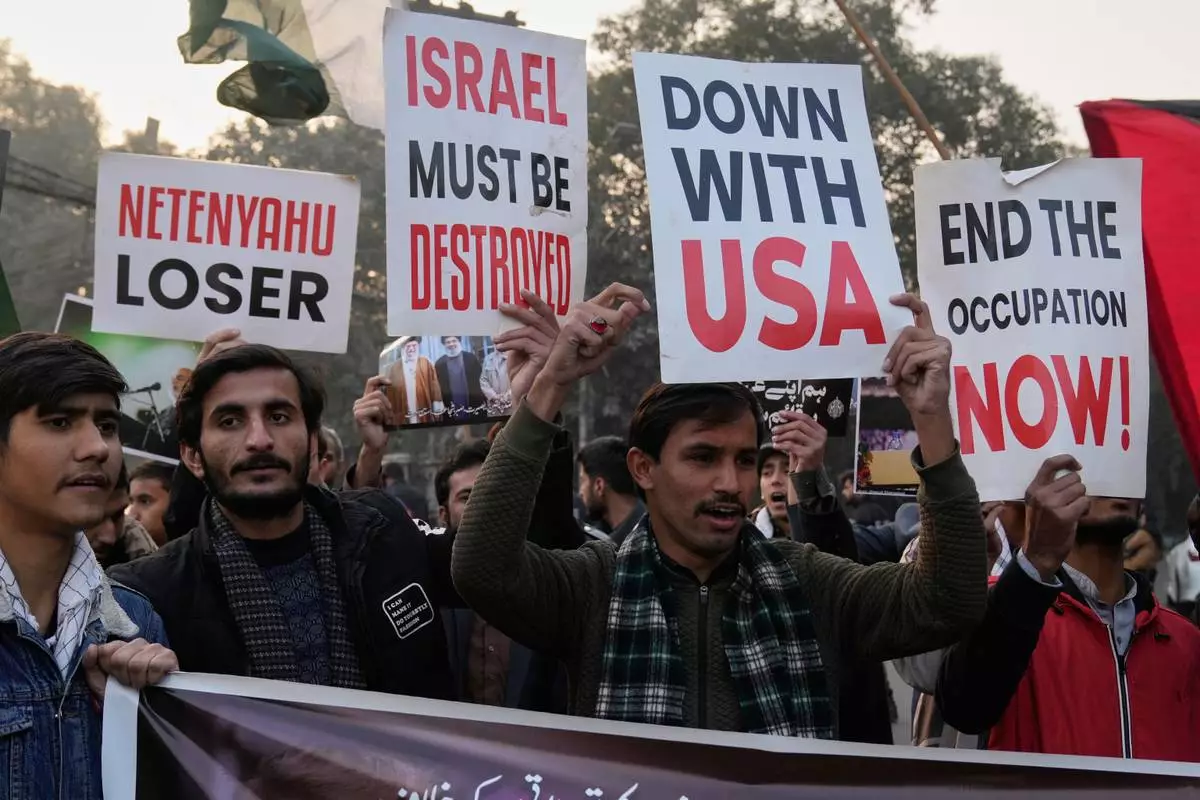
Shiite Muslims hold placards and chant slogans during a protest against the U.S. and show solidarity with Iran in Lahore, Pakistan, Sunday, Jan. 11, 2026. (AP Photo/K.M. Chaudary)

Shiite Muslims hold placards and chant slogans during a protest against the U.S. and show solidarity with Iran in Lahore, Pakistan, Sunday, Jan. 11, 2026. (AP Photo/K.M. Chaudary)

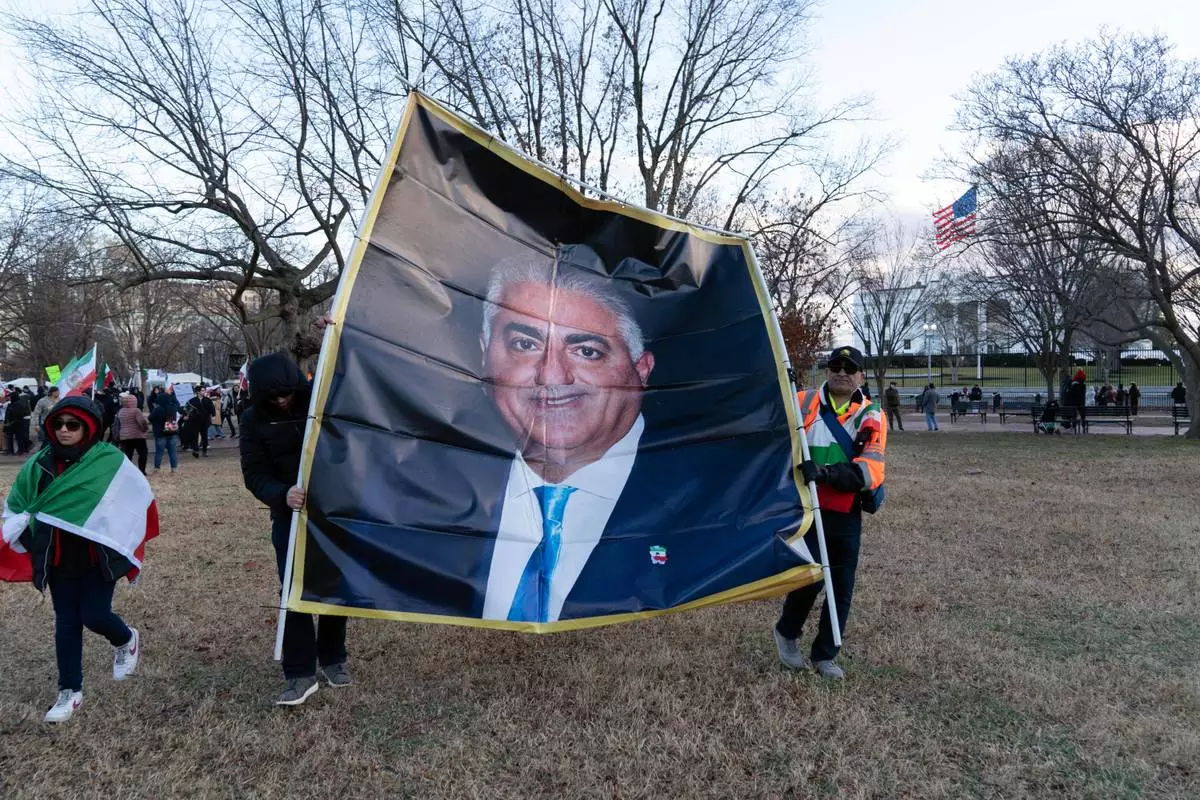
Activists carrying a photograph of Reza Pahlavi take part in a rally supporting protesters in Iran at Lafayette Park, across from the White House, in Washington, Sunday, Jan. 11, 2026. (AP Photo/Jose Luis Magana)

Activists carrying a photograph of Reza Pahlavi take part in a rally supporting protesters in Iran at Lafayette Park, across from the White House, in Washington, Sunday, Jan. 11, 2026. (AP Photo/Jose Luis Magana)

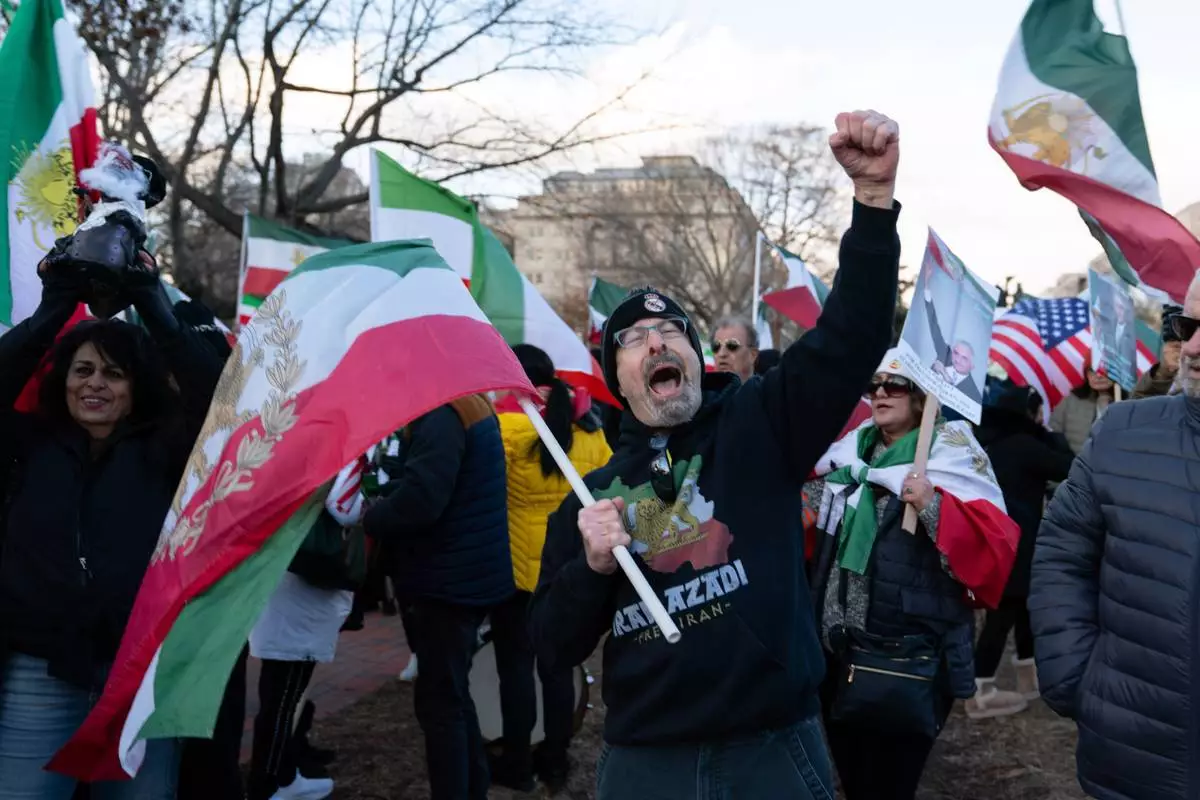
Activists take part in a rally supporting protesters in Iran at Lafayette Park, across from the White House in Washington, Sunday, Jan. 11, 2026. (AP Photo/Jose Luis Magana)

Activists take part in a rally supporting protesters in Iran at Lafayette Park, across from the White House in Washington, Sunday, Jan. 11, 2026. (AP Photo/Jose Luis Magana)

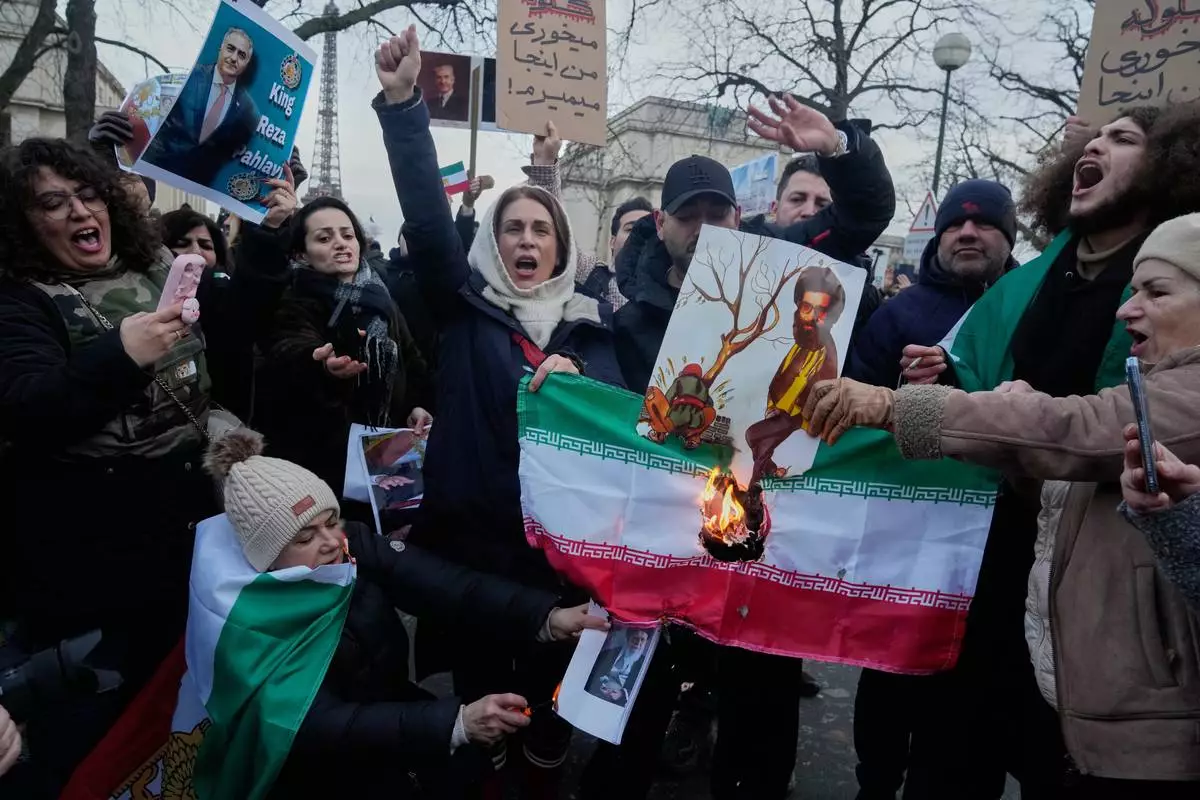
Protesters burn the Iranian national flag during a rally in support of the nationwide mass demonstrations in Iran against the government in Paris, Sunday, Jan. 11, 2026. (AP Photo/Michel Euler)

Protesters burn the Iranian national flag during a rally in support of the nationwide mass demonstrations in Iran against the government in Paris, Sunday, Jan. 11, 2026. (AP Photo/Michel Euler)

Recommended Articles