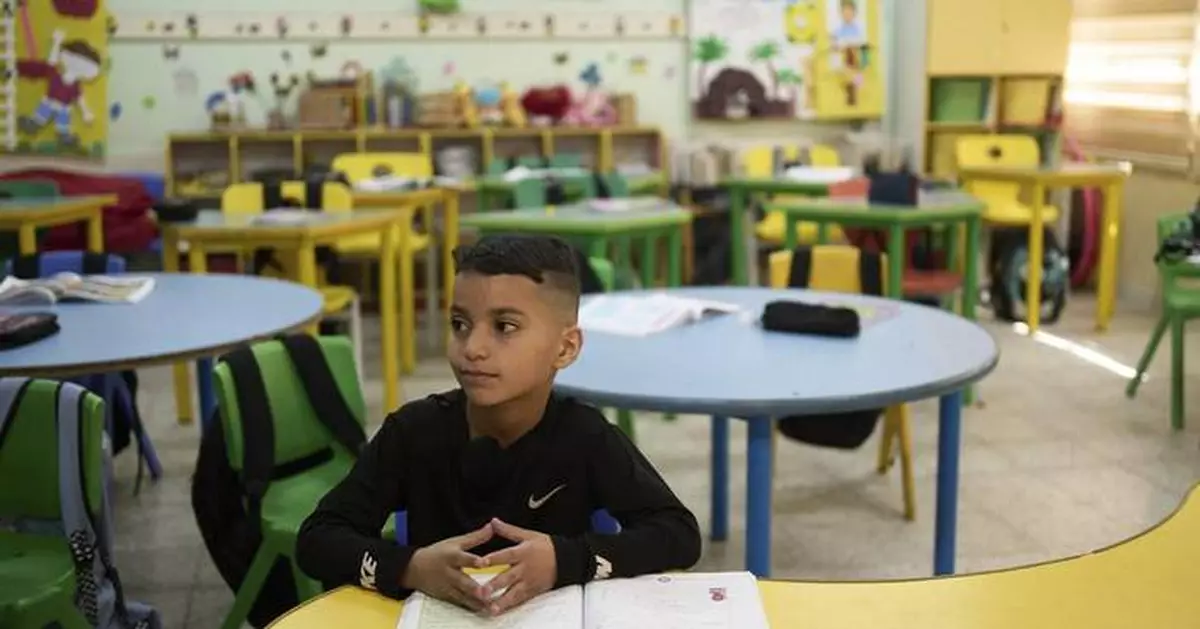
JERUSALEM (AP) — Standing in the east Jerusalem school he attended as a young boy, Palestinian construction worker Ahmad Shweikeh studies his son’s careful penmanship. This classroom may be closed Friday, leaving 9-year-old Laith with nowhere to study.
Shweikeh, 38, says he wants Laith — a shy boy, top of his class — to become a surgeon.
Click to Gallery
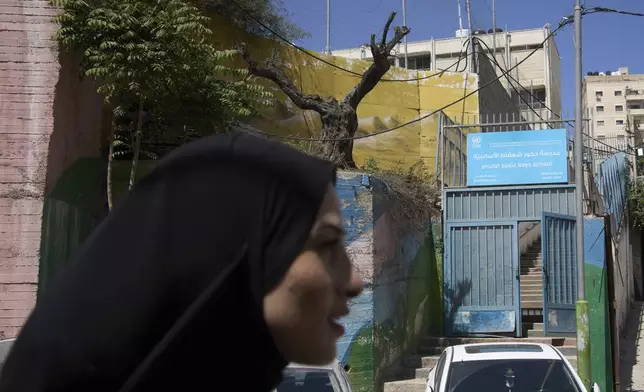
A woman passes the front entrance to the UNRWA Boys' School run by the U.N. agency for Palestinian refugees in the Shuafat Refugee Camp in east Jerusalem, Tuesday, April 29, 2025. (AP Photo/Maya Alleruzzo)
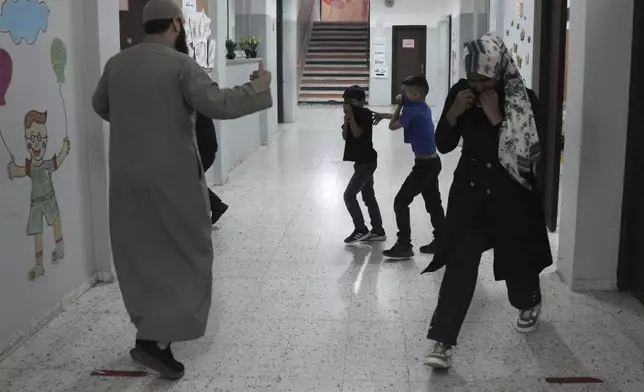
Students and teachers react to tear gas fired by Israeli Police into in the yard of the UNRWA Boys' School run by the U.N. agency for Palestinian refugees in the Shuafat Refugee Camp in east Jerusalem, Tuesday, April 29, 2025.(AP Photo/Mahmoud Illean)
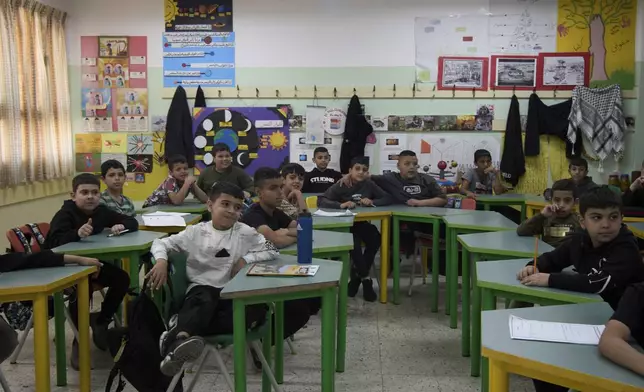
Students sit at their desks at the UNRWA Boys' School run by the U.N. agency for Palestinian refugees in the Shuafat Refugee Camp in east Jerusalem, in the Shuafat Refugee Camp in east Jerusalem, Tuesday, April 29, 2025. (AP Photo/Maya Alleruzzo)
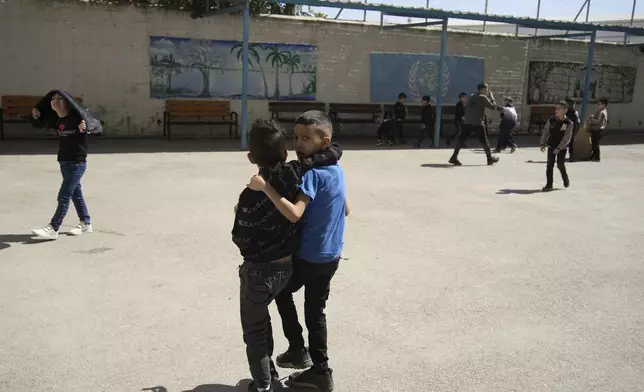
Students play outside during recess at the UNRWA Boys' School run by the U.N. agency for Palestinian refugees in the Shuafat Refugee Camp in east Jerusalem, Tuesday, April 29, 2025. (AP Photo/Maya Alleruzzo)
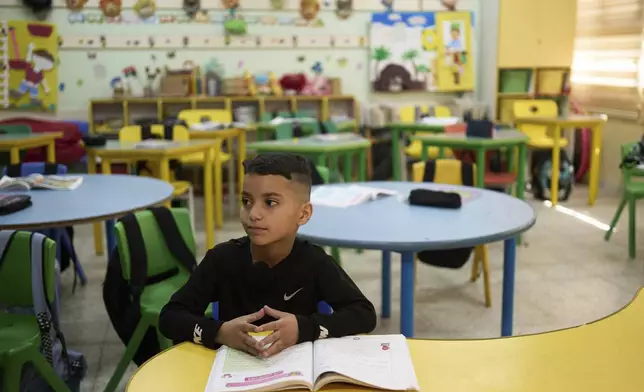
Laith Shweikeh, 9, sits at his desk at the UNRWA Boys' School run by the U.N. agency for Palestinian refugees in the Shuafat Refugee Camp in east Jerusalem, Tuesday, April 29, 2025. (AP Photo/Maya Alleruzzo)
“I never expected this,” Shweikeh said. “I watched some of my classmates from here become engineers and doctors. I hoped Laith would follow in their footsteps."
The school is one of six across east Jerusalem run by the United Nations agency for Palestinian refugees called UNRWA. Israeli soldiers in riot gear showed up at the schools last month and ordered them to shut down within 30 days. Now parents worry that their children will lose precious opportunities to learn. And they fret for their children's safety if they are made to enroll in Israeli schools.
The closure orders come after Israel banned UNRWA from operating on Israeli soil earlier this year, the culmination of a long campaign against the agency that intensified following the Hamas attacks on Israel Oct. 7, 2023.
UNRWA is the main provider of education and health care to Palestinian refugees across east Jerusalem, which Israel captured in the 1967 Mideast war. While UNRWA schools in the Israeli-occupied West Bank have not received closing orders, the closures have left in limbo the nearly 800 Palestinian students in first through ninth grade in east Jerusalem. Israel has annexed east Jerusalem and considers the entire city its unified capital.
The Israeli Ministry of Education says it will place the students into other Jerusalem schools. But parents, teachers and administrators caution that closing the main schools for the children of Palestinian refugees in east Jerusalem promises a surge in absenteeism.
For students in the Shuafat refugee camp, like Laith, switching to Israeli schools means crossing the hulking barrier that separates their homes from the rest of Jerusalem every day.
Some students aren’t even eligible to use the crossing, said Fahed Qatousa, the deputy principal of the UNRWA boys’ school in Shuafat. About 100 students in UNRWA schools in Shuafat have West Bank identifications, which will complicate their entry past the barrier, according to Qatousa.
“I will not in any way send Laith to a school where he has to go through a checkpoint or traffic,” Shweikeh said.
In a statement to The Associated Press, the Israeli Ministry of Education said it was closing the schools because they were operating without a license. The agency promised “quality educational solutions, significantly higher in level than that provided in the institutions that were closed.” It said that it would “ensure the immediate and optimal integration of all students.”
Qatousa fears the students will lose their chance to be educated.
“Israeli schools are overcrowded and cannot take a large number of students. This will lead to a high rate of not attending schools among our students. For girls, they will marry earlier. For boys, they will join the Israeli job market,” Qatousa said.
Laith remembers the moment last month when the troops entered his school.
“The soldiers talked to the schoolteachers and told them that they were going to close the school,” Laith said. “I don’t want the school to close. I want to stay here and continue to complete my education.”
His teacher, Duaa Zourba, who has worked at the school for 21 years, said teachers were “psychologically hurt” by Israel's order.
“Some of the teachers panicked. They started crying because of the situation, because they were very upset with that, with the decisions. I mean, how can we leave this place? We’ve been here for years. We have our own memories,” Zourba said.
Israel claims that UNRWA schools teach antisemitic content and anti-Israel sentiment. An UNRWA review of textbooks in 2022-2023 found that just under 4% of pages contained “issues of concern to U.N. values, guidance, or position on the conflict.”
An independent panel reviewed the neutrality of UNRWA after Israel alleged that a dozen of its employees in Gaza participated in Hamas’ Oct. 7 attacks. The panel issued a series of recommendations, including that UNRWA adopt a “zero-tolerance policy" on antisemitic views or hate speech in textbooks.
The Israeli Education Ministry says parents have been directed to register their children at other schools in Jerusalem. Parents told the AP they have not done so.
Zourba said she still plans to hold exams as scheduled for late May. UNRWA administrators pledged to keep the schools open for as long as possible — until Israeli authorities force them to shut down.
The day AP reporters visited the school, Israeli police fired tear gas into the school’s front yard as boys played soccer outside. The gas billowed through the hallways, sending children sprinting indoors, drooling, coughing and crying.
Police spokesperson Mirit Ben Mayor said the forces were responding to rock-throwing inside the camp but denied targeting the school specifically.
As gas filtered through the school, Zourba donned a disposable mask and ran to check on her students.
“As teachers in Shuafat, our first job has always been to ensure the protection and the safety of our kids,” she said. “Whenever there’s a raid, we close windows. We close doors so that they don’t smell very heavy tear gas.”
“The goal,” she said, “is for the kids to always think of this school as a safe place, to remember that there’s a place for them.”
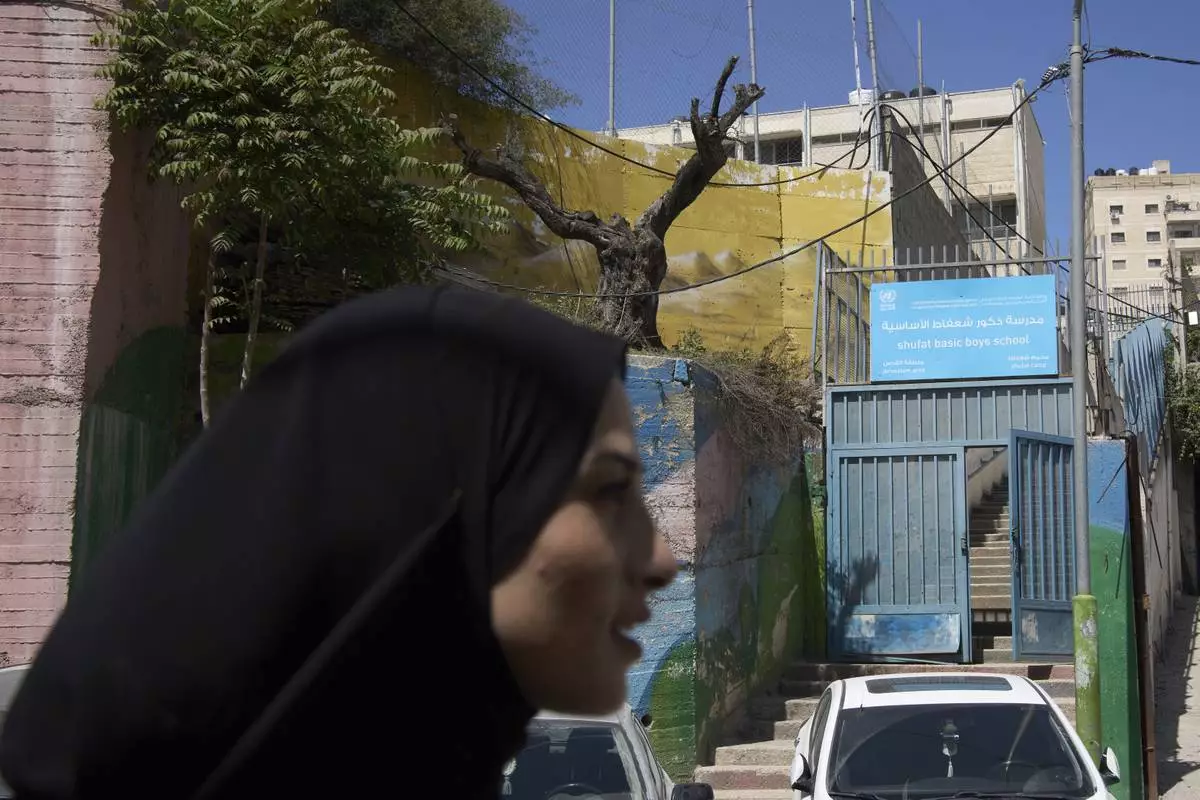
A woman passes the front entrance to the UNRWA Boys' School run by the U.N. agency for Palestinian refugees in the Shuafat Refugee Camp in east Jerusalem, Tuesday, April 29, 2025. (AP Photo/Maya Alleruzzo)
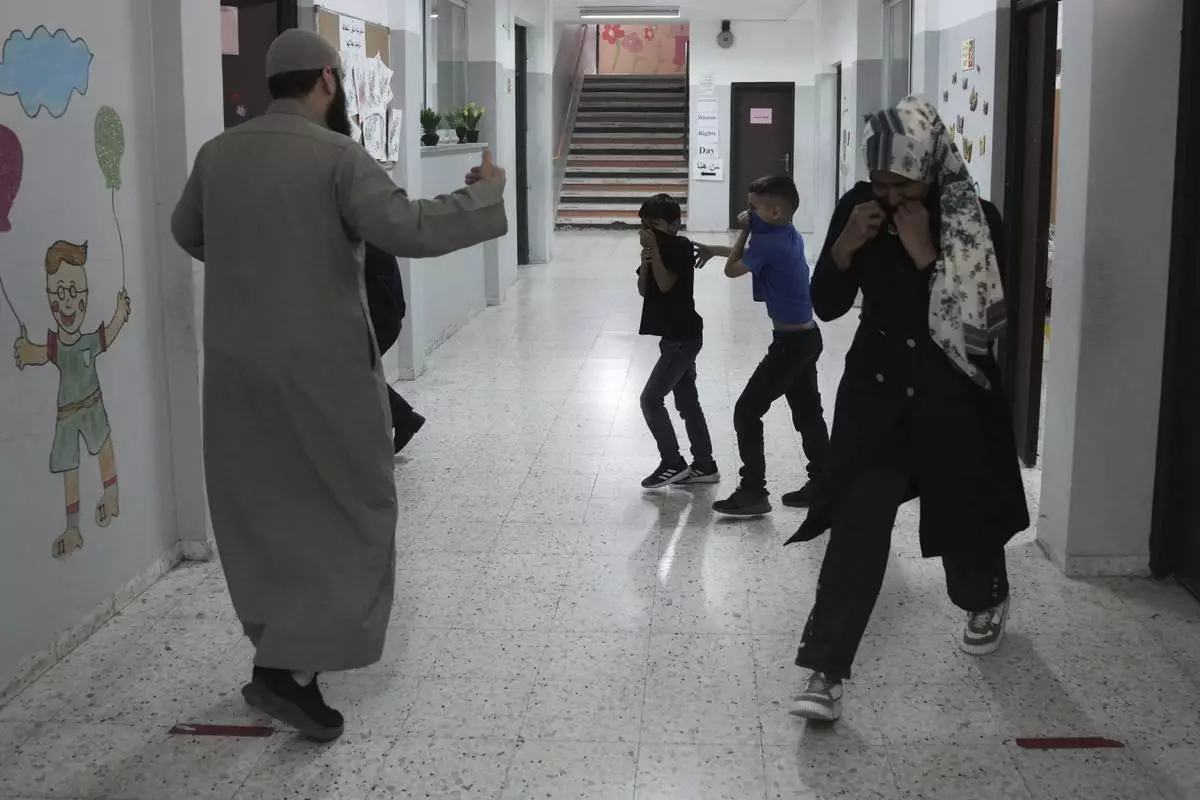
Students and teachers react to tear gas fired by Israeli Police into in the yard of the UNRWA Boys' School run by the U.N. agency for Palestinian refugees in the Shuafat Refugee Camp in east Jerusalem, Tuesday, April 29, 2025.(AP Photo/Mahmoud Illean)
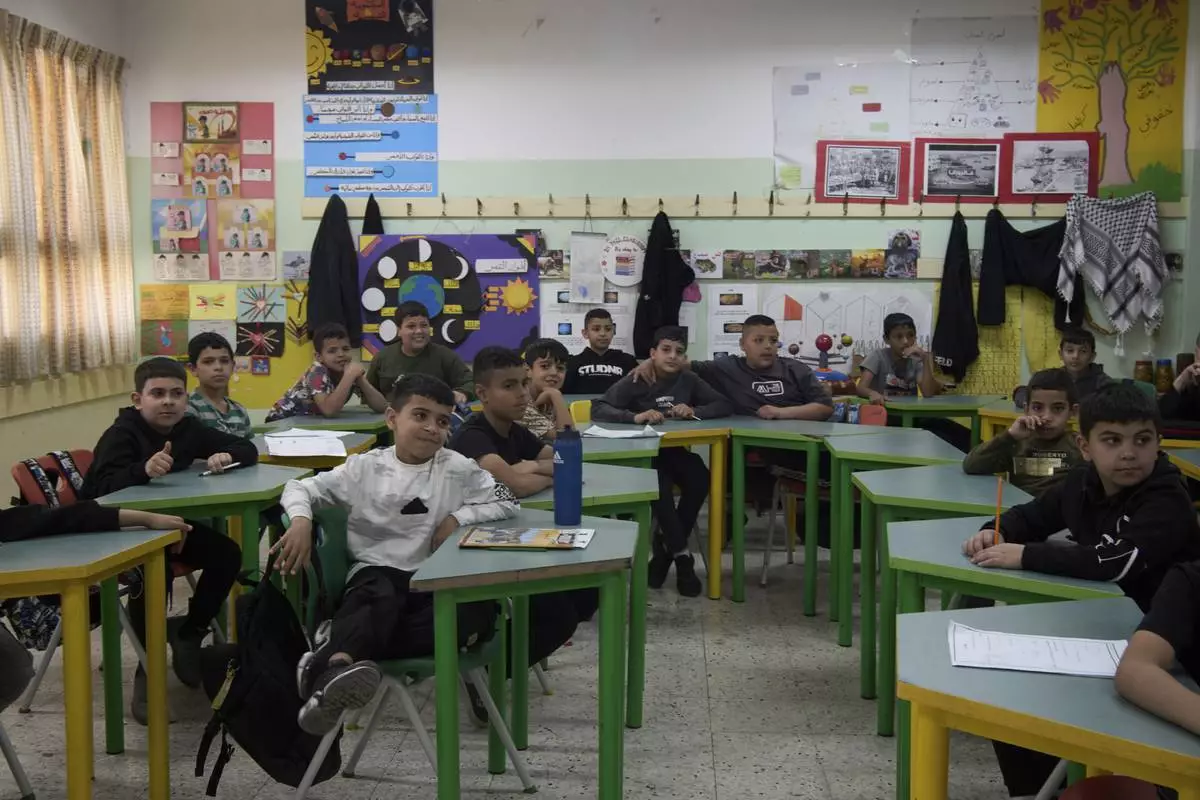
Students sit at their desks at the UNRWA Boys' School run by the U.N. agency for Palestinian refugees in the Shuafat Refugee Camp in east Jerusalem, in the Shuafat Refugee Camp in east Jerusalem, Tuesday, April 29, 2025. (AP Photo/Maya Alleruzzo)
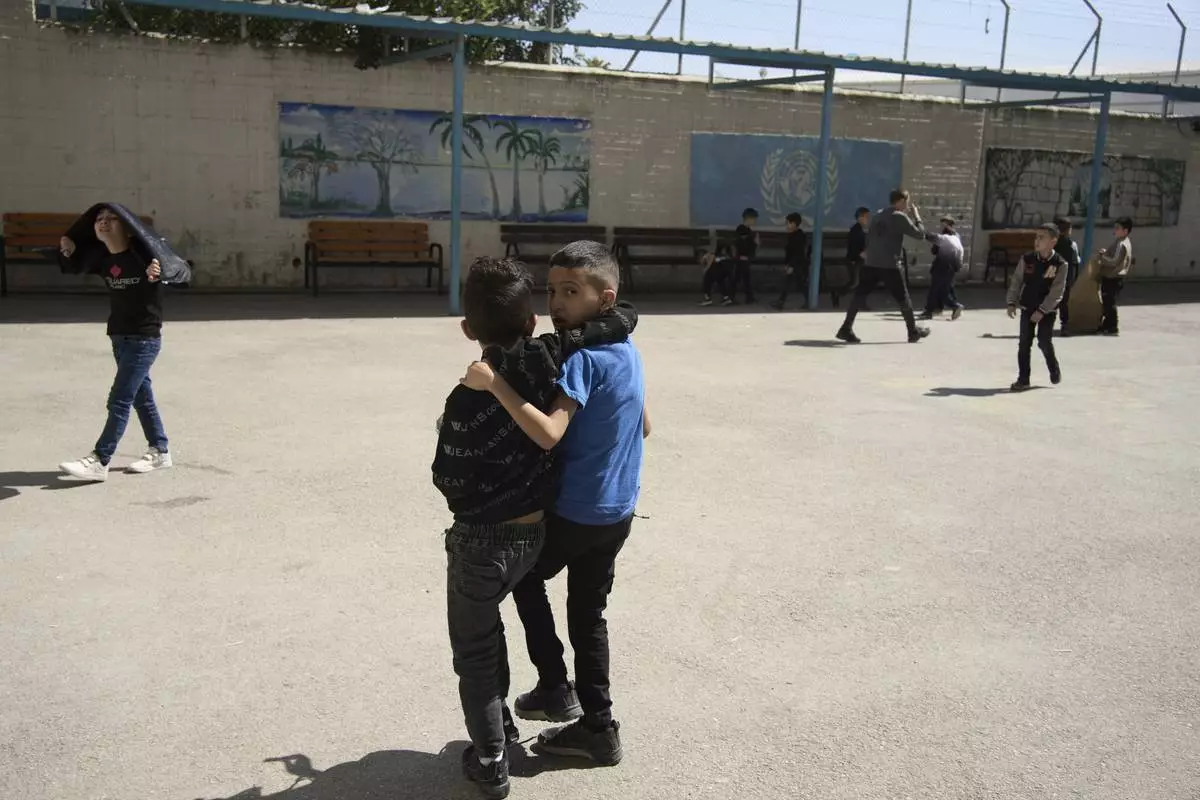
Students play outside during recess at the UNRWA Boys' School run by the U.N. agency for Palestinian refugees in the Shuafat Refugee Camp in east Jerusalem, Tuesday, April 29, 2025. (AP Photo/Maya Alleruzzo)
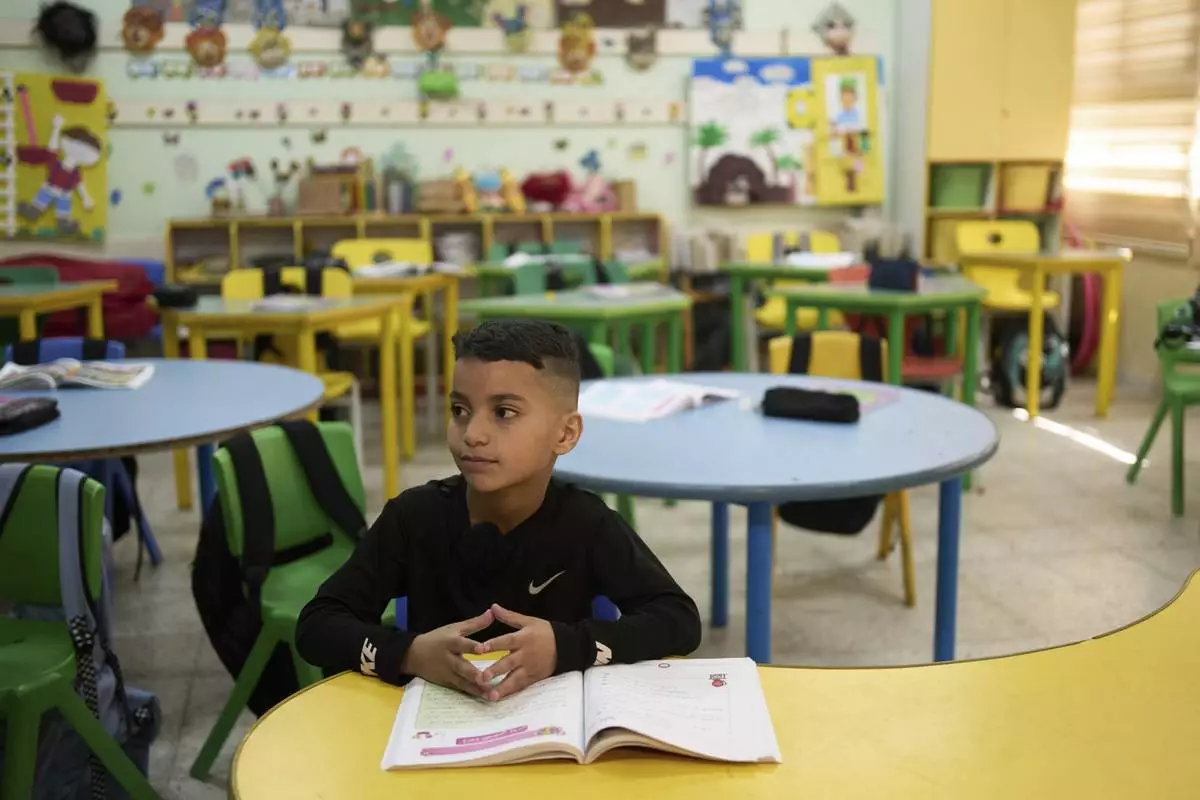
Laith Shweikeh, 9, sits at his desk at the UNRWA Boys' School run by the U.N. agency for Palestinian refugees in the Shuafat Refugee Camp in east Jerusalem, Tuesday, April 29, 2025. (AP Photo/Maya Alleruzzo)