RALEIGH, N.C. (AP) — The North Carolina elections board ousted its widely respected executive director Wednesday in a partisan move that will put Republicans in control of election operations in the political swing state, which includes the certification of results.
The removal of Karen Brinson Bell, who had held the job for nearly six years during a time when the board had Democratic majorities, came after Republicans took away the authority to appoint election board members from the Democratic governor late last year, overriding a veto while they still held a supermajority in the legislature. GOP legislators handed that power to the elected state auditor, a Republican.
Meeting for the first time with its new GOP majority, the North Carolina State Board of Elections agreed in a party-line vote to replace Brinson Bell with Sam Hayes, the top lawyer for the Republican House speaker. The board declined to consider her request to speak at the end of the meeting, adjourning instead.
“While I would have liked to have continued to serve the county boards of elections and the voters of North Carolina in this capacity, the state board has made a different decision,” Brinson Bell said after the meeting to those remaining in the audience.
Brinson Bell led the board during the voting difficulties of the early COVID-19 pandemic in 2020 and through last year’s presidential balloting after a devastating hurricane hit the state.
Democratic board member Siobhan O’Duffy Millen told her Republican colleagues before the 3-2 vote to hire Hayes that how they parted ways with Brinson Bell “is a shabby way to treat a nationally admired executive election director.”
Nonetheless, her removal was not surprising, given that there’s precedent for a new director to get hired with a changing partisan majority, and Republican legislative leaders have clashed over the years with Brinson Bell. Still, the circumstances are extraordinary.
The board’s partisan composition was altered just last week through the state law enacted by Republican lawmakers in December over the veto of then-Gov. Roy Cooper, a Democrat. It stripped the governor of his appointment powers not only to the state election board, but also to the chairs of county election boards. Republicans are also expected to install new GOP majorities on the local boards starting next month.
The GOP has tried several times since 2016 to remove the governor’s authority to choose members of the election board, whose duties include carrying out campaign finance laws, certifying election results and setting rules on a host of voting administration details.
New Democratic Gov. Josh Stein sued over the law, and some trial judges ruled that it had to be blocked. But the appointment switch took effect after a state Court of Appeals panel ruled the law could still be implemented starting May 1. The executive director is chosen for a two-year term set to begin May 15.
Brinson Bell received high marks from colleagues for helping administer elections during the pandemic and when a photo identification requirement was carried out in the first general election in 2024.
She also oversaw the effort to hold the presidential election in the state last year after Hurricane Helene laid waste to numerous counties when it struck in September. The storm and subsequent flooding knocked out power and damaged water treatment systems across western North Carolina. Nonetheless, election officials managed to open nearly all of the 80 voting sites initially planned for the hardest hit areas on the first day of early in-person voting, just weeks later.
Some Republican officials complained about long lines at early-vote sites in some counties, and with mixed results lobbied to get more open.
Brinson Bell was selected recently to serve as the incoming president of the National Association of State Election Directors — a position Brinson Bell said she can no longer hold after losing her job.
David Becker, a former U.S. Justice Department lawyer who now leads the Center for Election Innovation & Research, said the GOP's “highly partisan power grab” has “resulted in the removal of one of the most highly respected election officials in the country.”
Justin Roebuck, the chief election official in Ottawa County, Michigan, said Brinson Bell's "departure will be a significant loss — not only for North Carolina voters but for the entire election administration community that has benefited from her leadership.”
State Republicans have been unhappy with Brinson Bell going back years. They focused on her role in a legal settlement in 2020. The settlement extended to nine days after the November election the time for mail ballots postmarked by Election Day to be received and counted. State law at the time had set the limit at three days.
Brinson Bell defended her actions and those of the board, saying they helped more mail-in ballots get counted after worries about Postal Service delays during the pandemic.
GOP leaders also have criticized the previous board for what they called errors in how election laws were carried out for the 2024 election. It led to litigation and formal protests in last November’s race for a state Supreme Court seat that dragged on for months.
After last November’s election, Brinson Bell publicly asked that Senate leader Phil Berger -– the state’s most powerful Republican elected official -– retract a comment suggesting that results were being manipulated during the canvassing period to lead to favorable results for Democrats. She said such words could lead to threats against local election workers. Berger declined to withdraw his comments.
Asked about the departure of the executive director, Berger said late Wednesday that Brinson Bell “acted in a partisan manner” on the job.
Francis De Luca, a Republican who chairs the new elections board, said his goal was that “we get things so we have fair elections, make voting easy and make sure we follow the law. And make sure there's trust in the election system.”
Republican Donald Trump has won the state each of the three times he has run for president.
Hayes, the incoming election director, has been general counsel to previous Speaker Tim Moore and current Speaker Destin Hall. His recent career has largely been spent working for state agencies, and he has been highly involved with election-related litigation filed against GOP lawmakers.
While she was not allowed to speak during the meeting, Brinson Bell stayed afterward and addressed the audience and the two Democratic members of the election board, who remained after their GOP colleagues had left.
“We have done this work under incredibly difficult circumstances and in a toxic political environment,” she said, adding that she hoped election workers are “supported and rewarded for their work rather than vilified by those who don’t like the outcome.”
Associated Press writer Christina A. Cassidy in Atlanta contributed to this report.
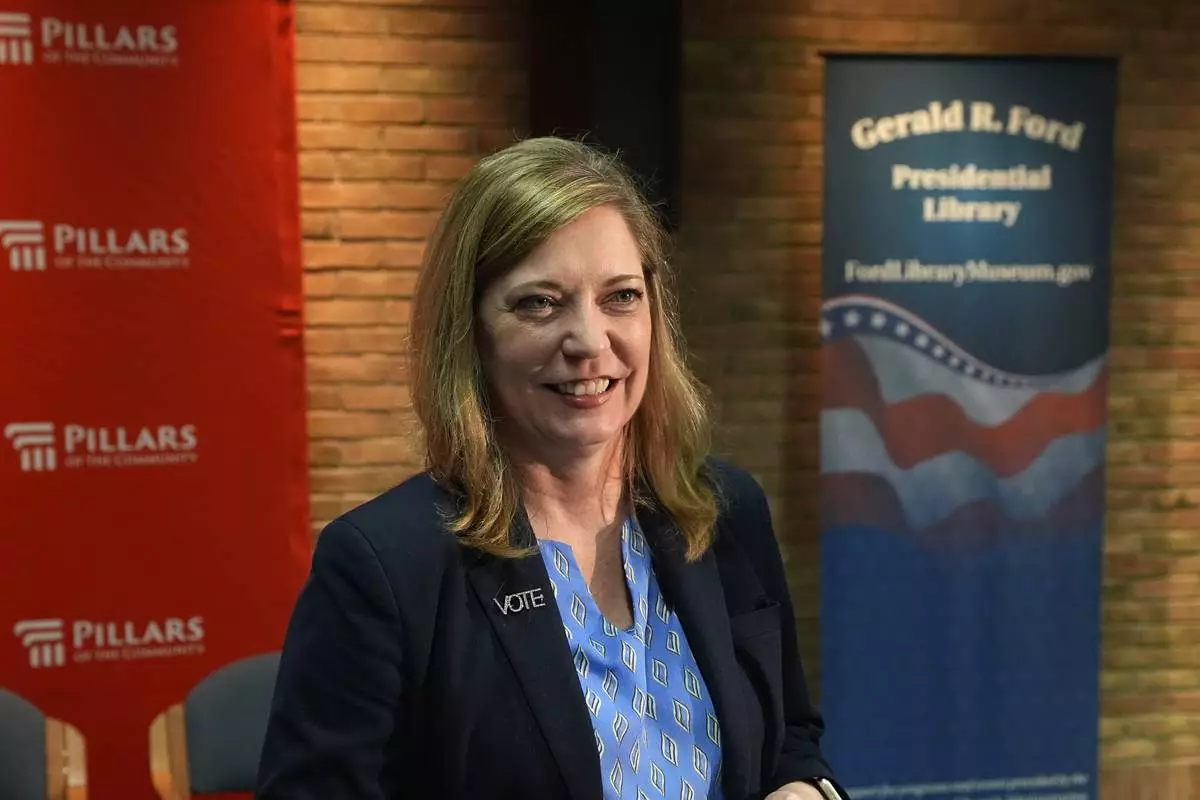
FILE - North Carolina Executive Director of the State Board of Election, Karen Brinson Bell is seen during an election forum, Sept. 19, 2024, in Ann Arbor, Mich. (AP Photo/Carlos Osorio, File)