Skip to Content Facebook Feature Image

A woman who called a Black child a slur has raised a backlash but also thousands of dollars

News

A woman who called a Black child a slur has raised a backlash but also thousands of dollars
News

News

A woman who called a Black child a slur has raised a backlash but also thousands of dollars

2025-05-09 03:12 Last Updated At:03:20

NOTE CONTENTS: This story contains a term that refers to a racial slur.

A video showing a Minnesota woman at a playground last week openly admitting to using a racist slur against a Black child has garnered millions of views. Maybe equally viral has been a crowdfunding effort that has raised hundreds of thousands of dollars to help the woman now relocate her family.

In the video, a man in Rochester, a city roughly 90 miles (145 kilometers) south of Minneapolis, confronts the woman for calling a 5-year-old boy the N-word. The woman appears to double-down on the racist term and flips off the man confronting her with both of her middle fingers.

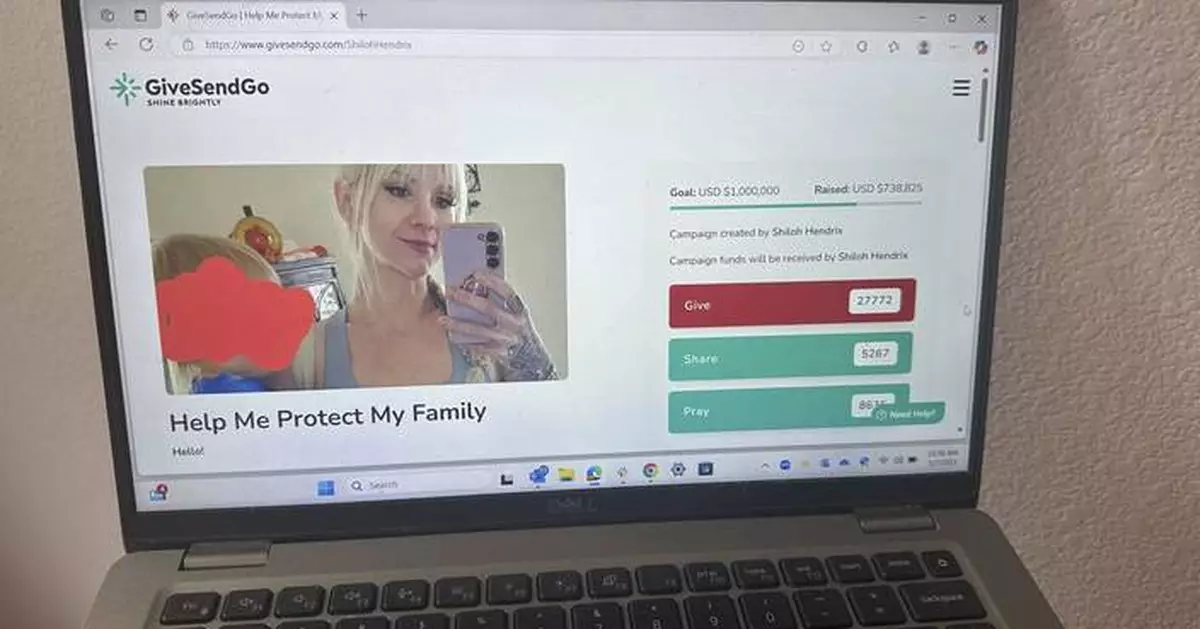
The woman, who could not be reached for comment, has since amassed over $700,000 through Christian fundraising platform GiveSendGo for relocation expenses because of threats she received over the video. The fundraising page said she used the word out of frustration because the boy went through her 18-month-old child's diaper bag. The Associated Press has not verified this assertion.

“I called the kid out for what he was,” she wrote, adding that the online videos have “caused my family, and myself, great turmoil.”

The flurry of monetary contributions has reignited multiple debates, from whether racist language and attacks are becoming more permissible to the differences between “cancel culture” and “consequence culture.” Many want to see the woman face some sort of comeuppance for using a slur, especially toward a child. Others say despite her words, she does not deserve to be harassed.

The NAACP Rochester chapter started its own fundraising campaign for the child’s family. The GoFundMe page had raised $340,000 when it was closed Saturday per the wishes of the family, who want privacy, said the civil rights organization. It was speaking on behalf of the family of the child, who the organization said was on the autism spectrum.

“This was not simply offensive behavior—it was an intentional racist, threatening, hateful and verbal attack against a child, and it must be treated as such,” the NAACP Rochester chapter said in a statement.

The Rochester Police Department investigated and submitted findings to the Rochester City Attorney’s Office for “consideration of a charging decision,” spokesperson Amanda Grayson said in a statement Monday.

GiveSendGo did not immediately respond Tuesday to a request for comment from The Associated Press.

The donations did and did not surprise Dr. Henry Taylor, director for the Center of Urban Studies at the University at Buffalo.

But shifts in the political and cultural climate have emboldened some people to express racist and bigoted views against people of color or those they consider outsiders. A more recent backlash, from the White House to corporate boardrooms, against diversity, equality and inclusion initiatives have amplified those feelings.

The racism “hovering beneath the surface" comes from blame, Taylor said. "People are given someone to hate and someone to blame for all of the problems and challenges that they are facing themselves,” Taylor said.

The volume of monetary contributions in the Rochester case is reminiscent of the surge of support for individuals like Kyle Rittenhouse, Daniel Penny and George Zimmerman. Rittenhouse, Penny and Zimmerman were cleared of wrongdoing or legally found to have acted in self-defense or in defense of others — Penny and Zimmerman after the death of a Black victim and Rittenhouse after fatally shooting two white protesters at a racial justice demonstration against police.

In the woman’s case, a contingent of supporters just want to fight cancel culture, said Franciska Coleman, an assistant professor of law at University of Wisconsin Law School, who has written about cancel culture and social regulation of speech. For some it can include donating to anyone who people are trying to “cancel,” Coleman said.

Some people are focused on how “it just seems too much that this mother of two young kids is getting death threats and rape threats,” Coleman said.

Conservative commentators have gone online to applaud her for not capitulating to angry internet mobs while acknowledging she used a hateful word. “No one’s excusing it. But she didn’t deserve to be treated like a domestic terrorist,” conservative podcast host Matt Walsh said in a Facebook post.

There’s an important distinction, Coleman said, between “cancel culture” and “consequence culture.” The latter is about holding people accountable for actions and words that cause injury such as with “this poor child.”

That is what many people want to see in this Rochester woman’s case. Because a formal system of punishment may not impose consequences for the woman’s racist behavior, people who support cancel culture believe that they “have to do it informally,” Coleman said.

She and Taylor agree that, in conventional societal thinking, using racist slurs against someone who has frustrated or even provoked you is never acceptable. Those who think otherwise, even now, are seen as being on the fringes.

But donors on the woman’s GiveSendGo page unabashedly used racist language against the boy, prompting the site to turn off the comments section. Others excused her behavior as acting out of aggravation. There are communities where the racial slur is only unacceptable in “racially mixed company,” Coleman said.

Social media websites and crowdfunding platforms have helped people around the world speak with each other and with their wallets. It’s intensified by the anonymity these platforms allow.

“Feeling that no one will know who you are enables you to act on your feelings, on your beliefs in an aggressive and even mean-spirited way that you might not do if you were exposed,” Taylor said.

This story was first published on May 7, 2025. It was updated on May 8, 2025, to make clear that Franciska Coleman, an assistant professor of law, was expressing an opinion of a certain group, not her own, when she said people who support cancel culture feel they have to informally impose consequences.

Tang reported from Phoenix. Raza reported from Sioux Falls, South Dakota.
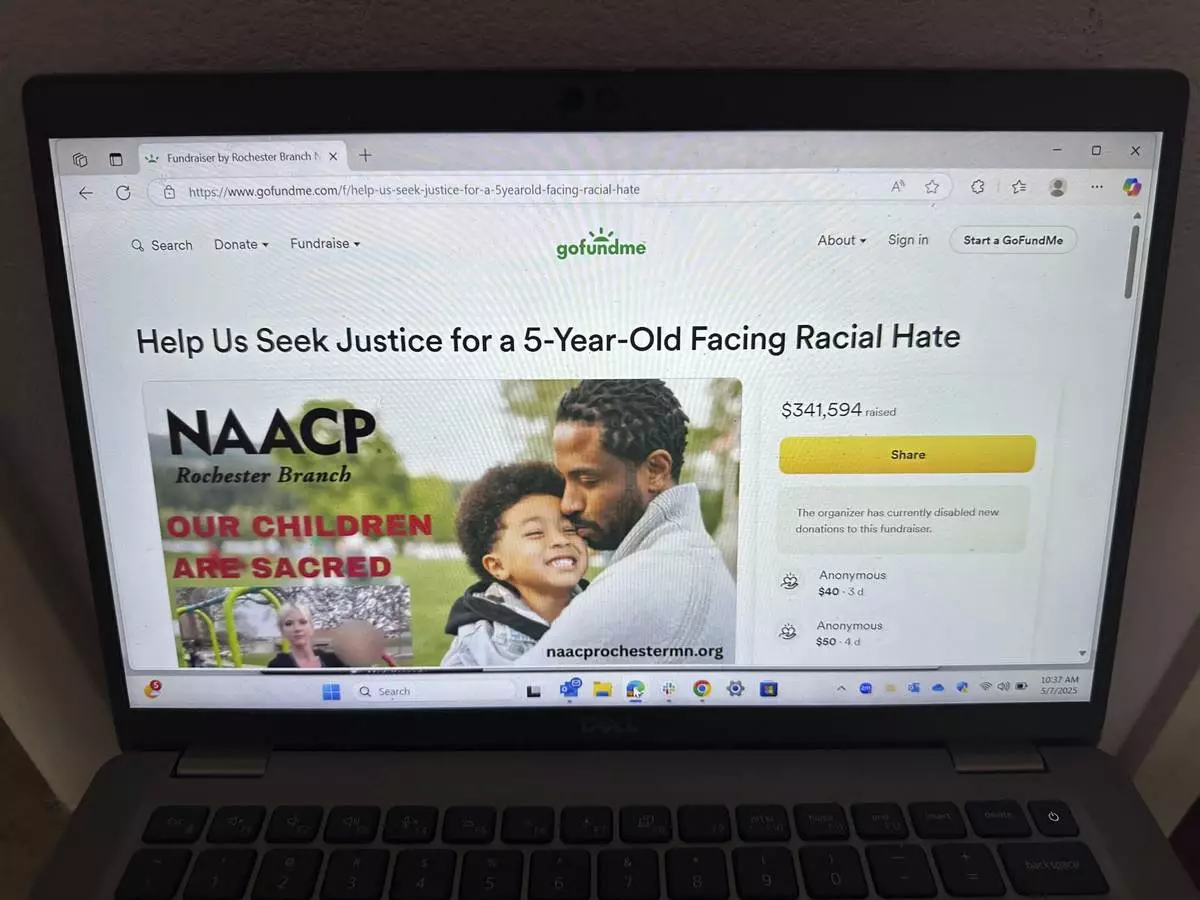
A screenshot of an online fundraiser on GoFundMe organized by the NAACP is seen on Wednesday, May 7, 2025. (AP Photo/Terry Tang)

A screenshot of an online fundraiser on GoFundMe organized by the NAACP is seen on Wednesday, May 7, 2025. (AP Photo/Terry Tang)

A screenshot of an online fundraiser on the Christian fundraising platform, GiveSendGo, is seen on Wednesday, May 7, 2025. (AP Photo/Terry Tang)
A screenshot of an online fundraiser on the Christian fundraising platform, GiveSendGo, is seen on Wednesday, May 7, 2025. (AP Photo/Terry Tang)
DUBAI, United Arab Emirates (AP) — U.S. President Donald Trump said Iran wants to negotiate with Washington after his threat to strike the Islamic Republic over its bloody crackdown on protesters, a move coming as activists said Monday the death toll in the nationwide demonstrations rose to at least 544.

Iran had no immediate reaction to the news, which came after the foreign minister of Oman — long an interlocutor between Washington and Tehran — traveled to Iran this weekend. It also remains unclear just what Iran could promise, particularly as Trump has set strict demands over its nuclear program and its ballistic missile arsenal, which Tehran insists is crucial for its national defense.

Meanwhile Monday, Iran called for pro-government demonstrators to head to the streets in support of the theocracy, a show of force after days of protests directly challenging the rule of 86-year-old Supreme Leader Ayatollah Ali Khamenei. Iranian state television aired chants from the crowd, who shouted “Death to America!” and “Death to Israel!”

Trump and his national security team have been weighing a range of potential responses against Iran including cyberattacks and direct strikes by the U.S. or Israel, according to two people familiar with internal White House discussions who were not authorized to comment publicly and spoke on condition of anonymity.

“The military is looking at it, and we’re looking at some very strong options,” Trump told reporters on Air Force One on Sunday night. Asked about Iran’s threats of retaliation, he said: “If they do that, we will hit them at levels that they’ve never been hit before.”

Trump said that his administration was in talks to set up a meeting with Tehran, but cautioned that he may have to act first as reports of the death toll in Iran mount and the government continues to arrest protesters.

“I think they’re tired of being beat up by the United States,” Trump said. “Iran wants to negotiate.”

He added: “The meeting is being set up, but we may have to act because of what’s happening before the meeting. But a meeting is being set up. Iran called, they want to negotiate.”

Iran through country's parliamentary speaker warned Sunday that the U.S. military and Israel would be “legitimate targets” if America uses force to protect demonstrators.

More than 10,600 people also have been detained over the two weeks of protests, said the U.S.-based Human Rights Activists News Agency, which has been accurate in previous unrest in recent years and gave the death toll. It relies on supporters in Iran crosschecking information. It said 496 of the dead were protesters and 48 were with security forces.

With the internet down in Iran and phone lines cut off, gauging the demonstrations from abroad has grown more difficult. The Associated Press has been unable to independently assess the toll. Iran’s government has not offered overall casualty figures.

Those abroad fear the information blackout is emboldening hard-liners within Iran’s security services to launch a bloody crackdown. Protesters flooded the streets in the country’s capital and its second-largest city on Saturday night into Sunday morning. Online videos purported to show more demonstrations Sunday night into Monday, with a Tehran official acknowledging them in state media.

In Tehran, a witness told the AP that the streets of the capital empty at the sunset call to prayers each night. By the Isha, or nighttime prayer, the streets are deserted.

Part of that stems from the fear of getting caught in the crackdown. Police sent the public a text message that warned: “Given the presence of terrorist groups and armed individuals in some gatherings last night and their plans to cause death, and the firm decision to not tolerate any appeasement and to deal decisively with the rioters, families are strongly advised to take care of their youth and teenagers.”

Another text, which claimed to come from the intelligence arm of the paramilitary Revolutionary Guard, also directly warned people not to take part in demonstrations.

“Dear parents, in view of the enemy’s plan to increase the level of naked violence and the decision to kill people, ... refrain from being on the streets and gathering in places involved in violence, and inform your children about the consequences of cooperating with terrorist mercenaries, which is an example of treason against the country,” the text warned.

The witness spoke to the AP on condition of anonymity due to the ongoing crackdown.

The demonstrations began Dec. 28 over the collapse of the Iranian rial currency, which trades at over 1.4 million to $1, as the country’s economy is squeezed by international sanctions in part levied over its nuclear program. The protests intensified and grew into calls directly challenging Iran’s theocracy.

Nikhinson reported from aboard Air Force One.

In this frame grab from video obtained by the AP outside Iran, a masked demonstrator holds a picture of Iran's Crown Prince Reza Pahlavi during a protest in Tehran, Iran, Friday, January. 9, 2026. (UGC via AP)

In this frame grab from video obtained by the AP outside Iran, a masked demonstrator holds a picture of Iran's Crown Prince Reza Pahlavi during a protest in Tehran, Iran, Friday, January. 9, 2026. (UGC via AP)

In this frame grab from footage circulating on social media from Iran shows protesters taking to the streets despite an intensifying crackdown as the Islamic Republic remains cut off from the rest of the world in Tehran, Iran, Friday, Jan. 9, 2026.(UGC via AP)

In this frame grab from footage circulating on social media from Iran shows protesters taking to the streets despite an intensifying crackdown as the Islamic Republic remains cut off from the rest of the world in Tehran, Iran, Friday, Jan. 9, 2026.(UGC via AP)

In this frame grab from footage circulating on social media from Iran showed protesters once again taking to the streets of Tehran despite an intensifying crackdown as the Islamic Republic remains cut off from the rest of the world in Tehran, Iran, Saturday Jan. 10, 2026. (UGC via AP)

In this frame grab from footage circulating on social media from Iran showed protesters once again taking to the streets of Tehran despite an intensifying crackdown as the Islamic Republic remains cut off from the rest of the world in Tehran, Iran, Saturday Jan. 10, 2026. (UGC via AP)

Recommended Articles