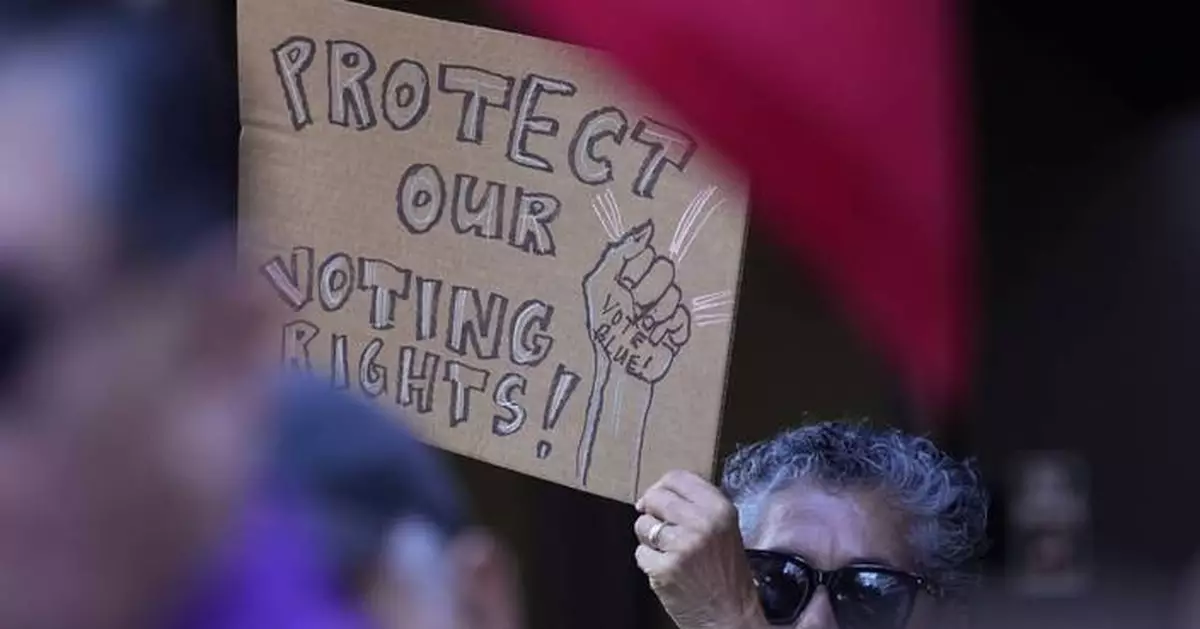
AUSTIN, Texas (AP) — Six people in a rural Texas county, including two City Council members and a school board trustee, have been indicted in a widening elections investigation led by Republican Attorney General Ken Paxton, bringing felony charges to a case that Latino rights activists have criticized as politically driven.
The top executive in Frio County, home to about 18,000 residents, a county elections worker and a local resident were also among those indicted on May 1, Paxton said Wednesday. The charges expand an investigation that included raids last year on the homes of Latino campaign volunteers near San Antonio, including an 87-year-old woman, although none of them have been indicted.
Most of the six are charged with what is known in Texas as vote harvesting, a felony that often involves payment for collecting and dropping off other people's absentee ballots. Several of the officials indicted in Frio County are accused of using Cash App to pay for vote harvesting services.
“The people of Texas deserve fair and honest elections, not backroom deals and political insiders rigging the system. Elected officials who think they can cheat to stay in power will be held accountable,” Paxton said in a statement.
The League of United Latin American Citizens last year called for a federal investigation into Texas authorities after its members’ homes were raided. No charges have been filed against any targets of those searches, according to spokesperson David Cruz, and the organization said it had not made decisions on whether to represent those who were indicted.
Gabriel Rosales, the Texas director for LULAC, called the charges unsubstantiated.
“This is voter suppression 101,” he said. “There’s no vote harvesting going on. There’s nobody creating these ballots. That’s a lie.”
The vote harvesting charges are third-degree felonies and carry up to 10 years in prison. Those accused are Frio County Judge Rochelle Camacho, the county's top official; Pearsall City Council members Ramiro Trevino and Racheal Garza; Pearsall ISD Trustee Adriann Ramirez; and Frio County resident Rosa Rodriguez.
Another official, former Frio County Elections Administrator Carlos Segura, is charged with tampering with evidence.
“The only word I have right now is that it’s ridiculous,” Segura said. He added that his lawyer advised him not to speak further.
Camacho, Trevino, Garza and Ramirez did not immediately respond to phone calls or an email requesting comment. A number could not be found for Rodriguez.
The indictments were the latest development in an investigation that Paxton started after the 2020 election to root out voter fraud, which is rare and typically occurs in isolated instances. Texas has tightened its voter laws in recent years and increased penalties that Democrats and opponents say are attempts to suppress turnout among Black and Latino voters.
Investigators with the Texas Attorney General’s Office were first told of allegations of vote harvesting by Mary Moore, who was Camacho’s opponent in the March 2022 Democratic primary for county judge, according to search warrant affidavits.
Moore accused Camacho of hiring a woman who had been collecting mail ballots for candidates in Frio County for nearly three decades. Moore alleged that the woman charged candidates anywhere from $1,500 to $2,500 to collect mail ballots, applications for ballot by mail and to even drive people to vote curbside, according to the affidavit.
Investigators allege that the vote harvesting scheme targeted elderly people at a Pearsall subdivision. Camacho and Ramirez, who were identified in court documents as sisters, allegedly took part in an effort in October 2022 to gather mail-in ballots from residents there, according to the affidavit.
Investigators allege the woman who was Camacho's main vote harvester hid ballots underneath her shirt and used different vehicles “to throw off investigators.”
Segura would provide the woman with information on when ballots were mailed and delivered, investigators allege.
A federal appeals court last year upheld the state's law that tightened voter restrictions and increased penalties for vote harvesting.
Lozano contributed from Houston. Lathan is a corps member for the Associated Press/Report for America Statehouse News Initiative. Report for America is a nonprofit national service program that places journalists in local newsrooms to report on undercovered issues.
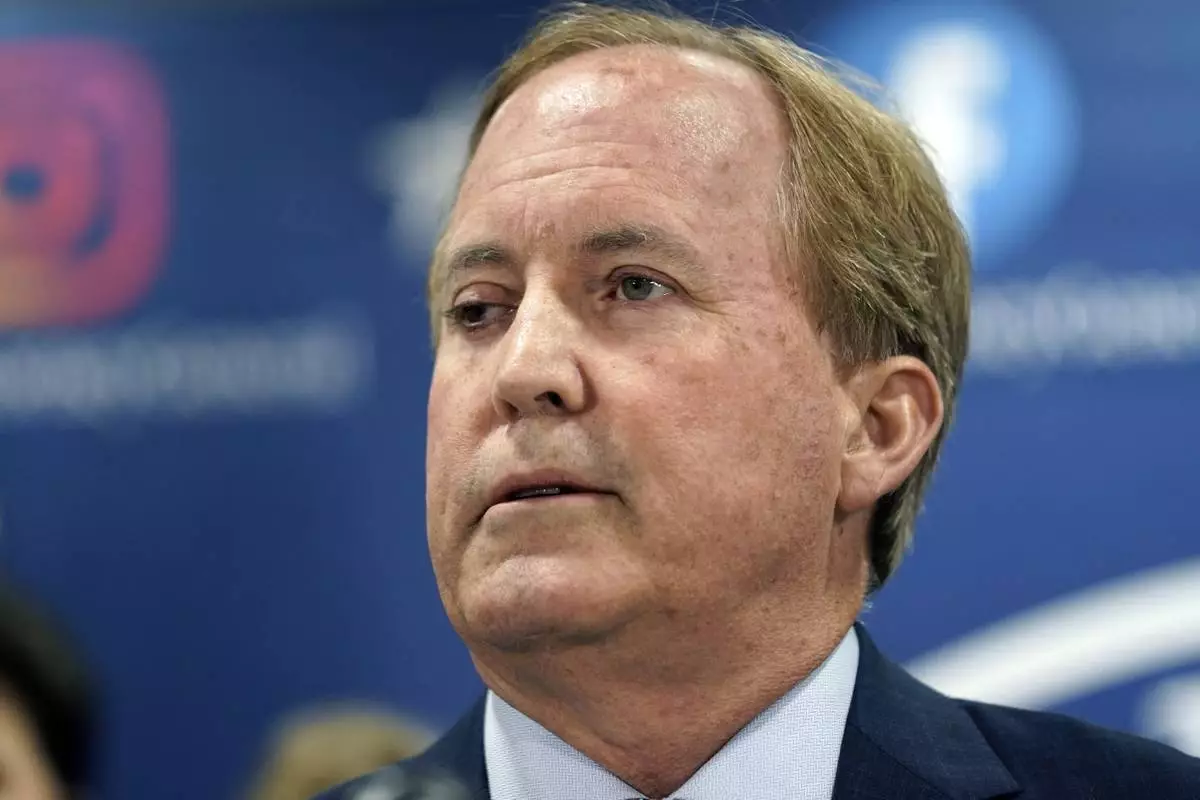
FILE - Texas Attorney General Ken Paxton makes a statement at his office, May 26, 2023, in Austin, Texas. (AP Photo/Eric Gay, File)
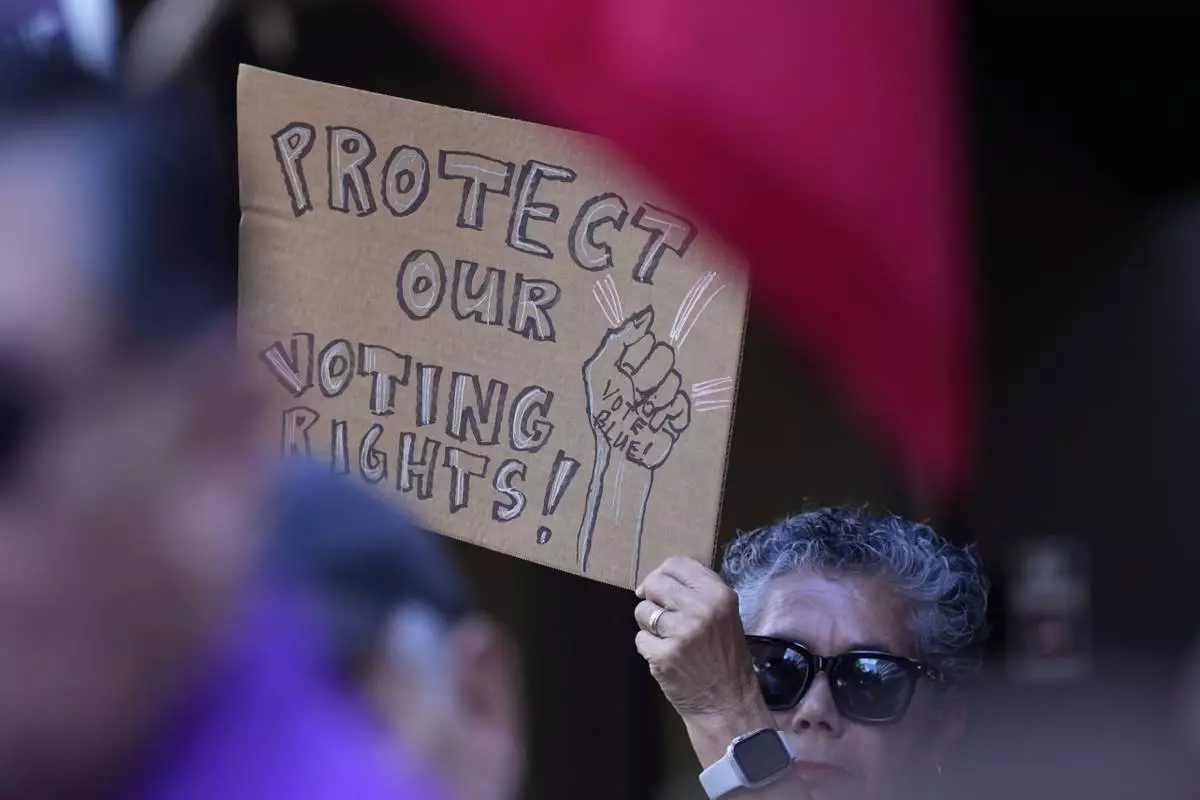
FILE - A supporter waves a sign at a news conference, Aug. 26, 2024, in San Antonio. (AP Photo/Eric Gay, file)
MINNEAPOLIS (AP) — Federal agents carrying out immigration arrests in Minnesota's Twin Cities region already shaken by the fatal shooting of a woman rammed the door of one home Sunday and pushed their way inside, part of what the Department of Homeland Security has called its largest enforcement operation ever.
In a dramatic scene similar to those playing out across Minneapolis, agents captured a man in the home just minutes after pepper spraying protesters outside who had confronted the heavily armed federal agents. Along the residential street, protesters honked car horns, banged on drums and blew whistles in attempts to disrupt the operation.
Video of the clash taken by The Associated Press showed some agents pushing back protesters while a distraught woman later emerged from the house with a document that federal agents presented to arrest the man. Signed by an immigration officer, the document — unlike a warrant signed by a judge — does not authorize forced entry into a private residence. A warrant signed by an immigration officer only authorizes arrest in a public area.
Immigrant advocacy groups have conducted extensive “know-your-rights” campaigns urging people not to open their doors unless agents have a court order signed by a judge.
But within minutes of ramming the door in a neighborhood filled with single-family homes, the handcuffed man was led away.
More than 2,000 immigration arrests have been made in Minnesota since the enforcement operation began at the beginning of December, said Homeland Security spokesperson Tricia McLaughlin.
Homeland Security Secretary Kristi Noem told Fox News on Sunday that the administration would send additional federal agents to Minnesota to protect immigration officers and continue enforcement.
The Twin Cities — the latest target in President Donald Trump’s immigration enforcement campaign — is bracing for what is next after 37-year-old Renee Good was shot and killed by an immigration officer on Wednesday.
“We’re seeing a lot of immigration enforcement across Minneapolis and across the state, federal agents just swarming around our neighborhoods,” said Jason Chavez, a Minneapolis city councilmember. “They’ve definitely been out here.”
Chavez, the son of Mexican immigrants who represents an area with a growing immigrant population, said he is closely monitoring information from chat groups about where residents are seeing agents operating.
People holding whistles positioned themselves in freezing temperatures on street corners Sunday in the neighborhood where Good was killed, watching for any signs of federal agents.
More than 20,000 people have taken part in a variety of trainings to become “observers” of enforcement activities in Minnesota since the 2024 election, said Luis Argueta, a spokesperson for Unidos MN, a local human rights organization .
“It’s a role that people choose to take on voluntarily, because they choose to look out for their neighbors,” Argueta said.
The protests have been largely peaceful, but residents remained anxious. On Monday, Minneapolis public schools will start offering remote learning for the next month in response to concerns that children might feel unsafe venturing out while tensions remain high.
Many schools closed last week after Good’s shooting and the upheaval that followed.
While the enforcement activity continues, two of the state’s leading Democrats said that the investigation into Good's shooting death should not be overseen solely by the federal government.
Minneapolis Mayor Jacob Frey and U.S. Sen. Tina Smith said in separate interviews Sunday that state authorities should be included in the investigation because the federal government has already made clear what it believes happened.
“How can we trust the federal government to do an objective, unbiased investigation, without prejudice, when at the beginning of that investigation they have already announced exactly what they saw — what they think happened," Smith said on ABC’s "This Week."
The Trump administration has defended the officer who shot Good in her car, saying he was protecting himself and fellow agents and that Good had “weaponized” her vehicle.
Todd Lyons, acting director of U.S. Immigration and Customs Enforcement, defended the officer on Fox News Channel’s “The Sunday Briefing.”
"That law enforcement officer had milliseconds, if not short time to make a decision to save his life and his other fellow agents,” he said.
Lyons also said the administration’s enforcement operations in Minnesota wouldn't be needed “if local jurisdictions worked with us to turn over these criminally illegal aliens once they are already considered a public safety threat by the locals.”
The killing of Good by an ICE officer and the shooting of two people by federal agents in Portland, Oregon, led to dozens of protests in cities across the country over the weekend, including New York, Los Angeles, Washington D.C. and Oakland, California.
Contributing were Associated Press journalists Giovanna Dell’Orto in Minneapolis; Thomas Strong in Washington; Bill Barrow in Atlanta; Christopher Weber in Los Angeles; and John Seewer in Toledo, Ohio.
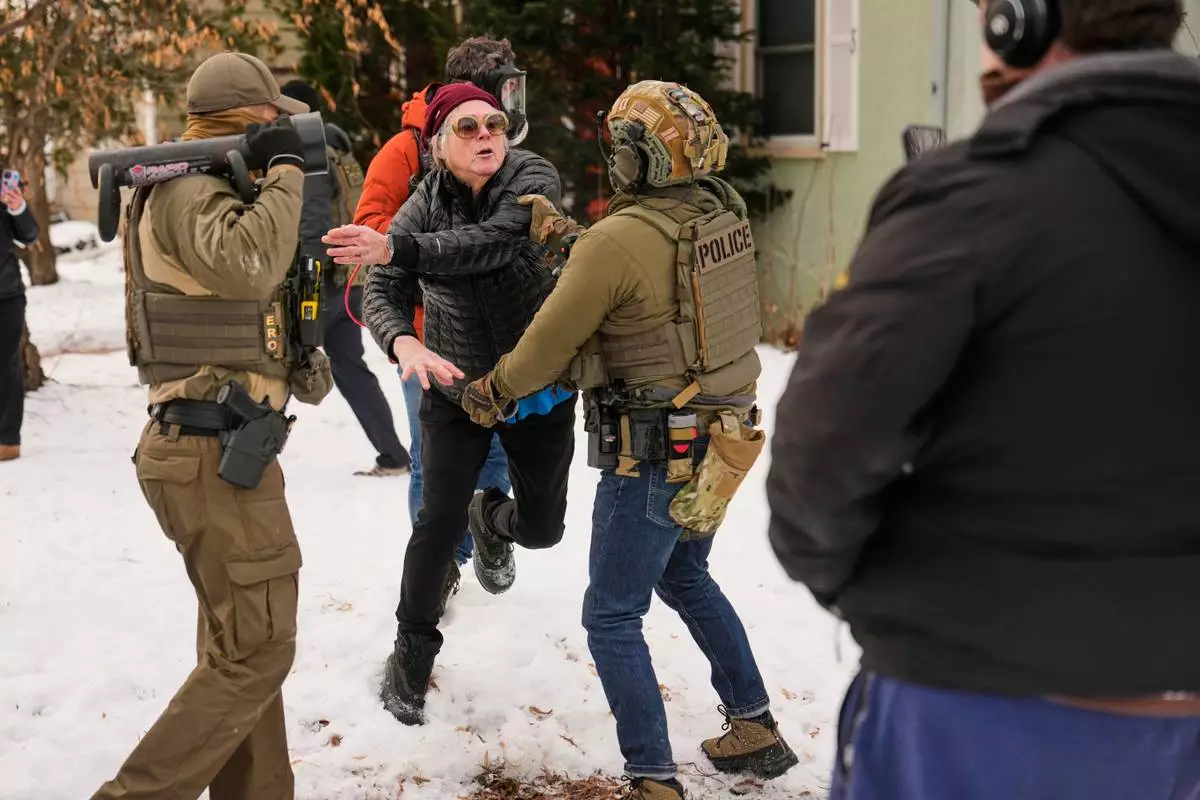
A woman gets into an altercation with a federal immigration officer as officers make an arrest Sunday, Jan. 11, 2026, in Minneapolis. (AP Photo/John Locher)
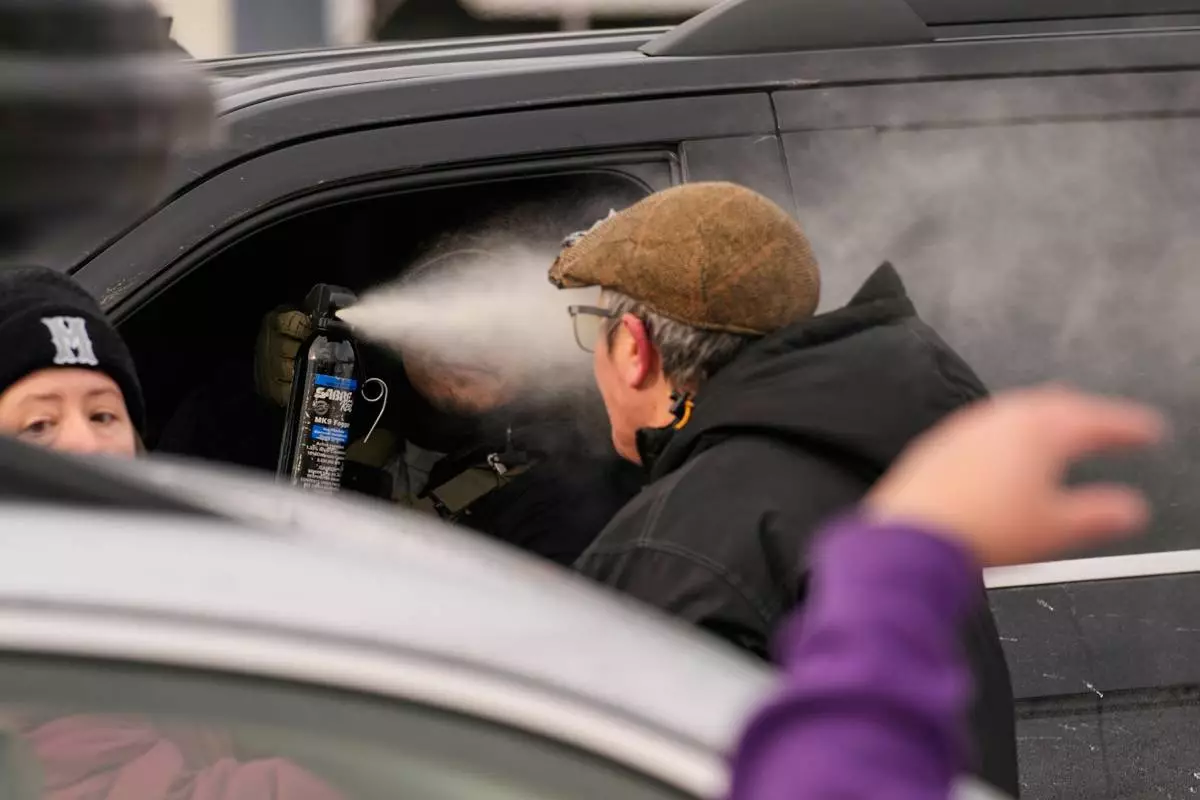
A federal immigration officer deploys pepper spray as officers make an arrest Sunday, Jan. 11, 2026, in Minneapolis. (AP Photo/John Locher)
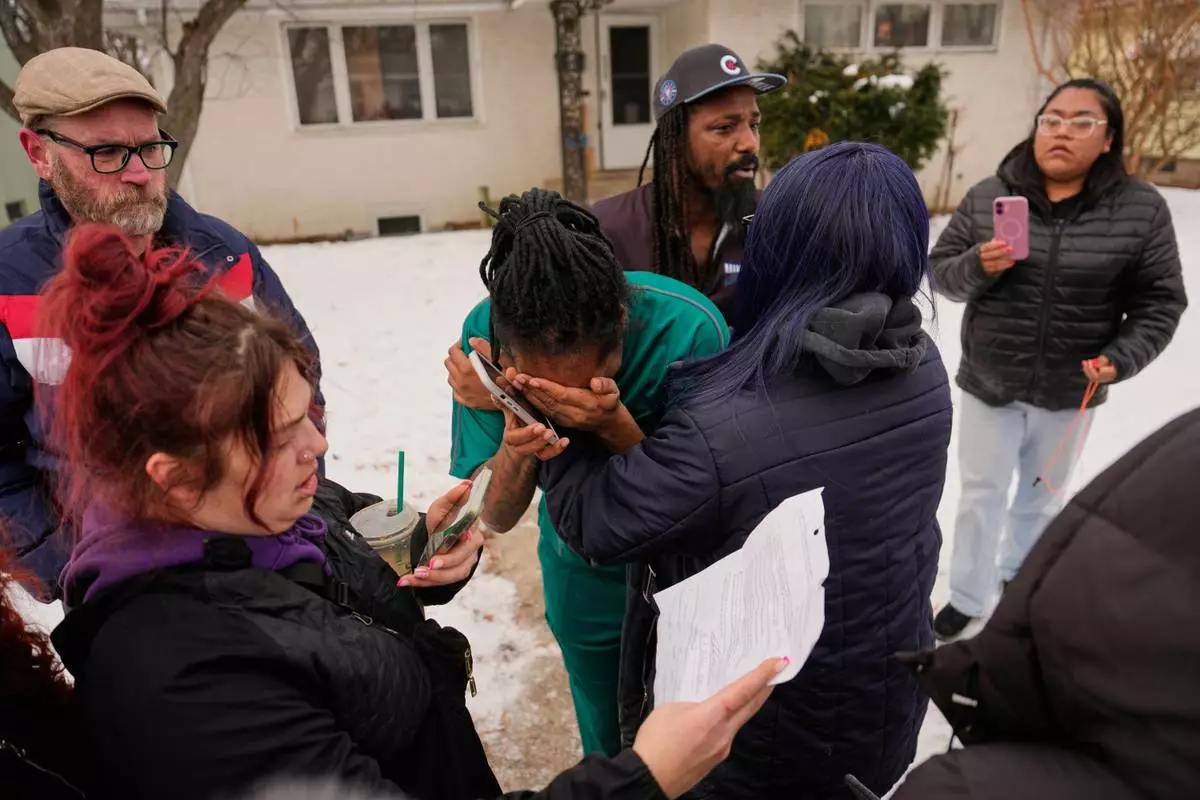
A family member, center, reacts after federal immigration officers make an arrest Sunday, Jan. 11, 2026, in Minneapolis. (AP Photo/John Locher)
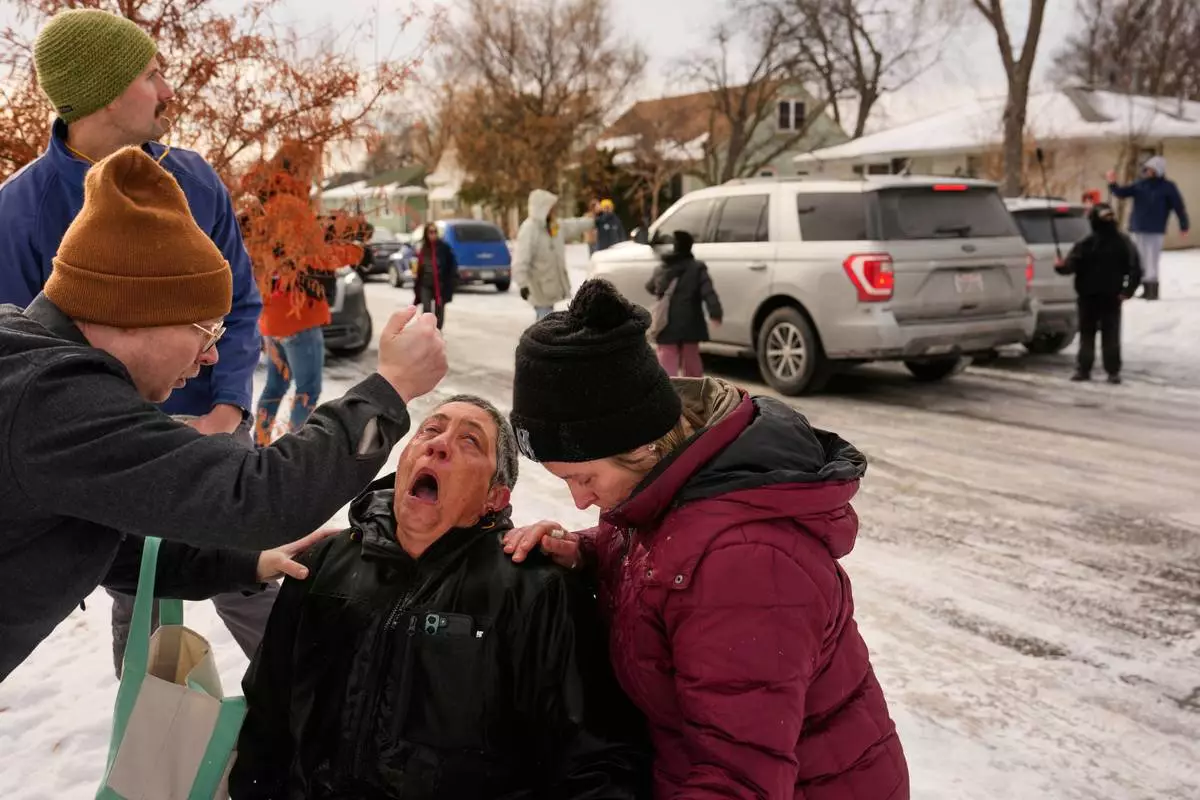
Bystanders are treated after being pepper sprayed as federal immigration officers make an arrest Sunday, Jan. 11, 2026, in Minneapolis. (AP Photo/John Locher)
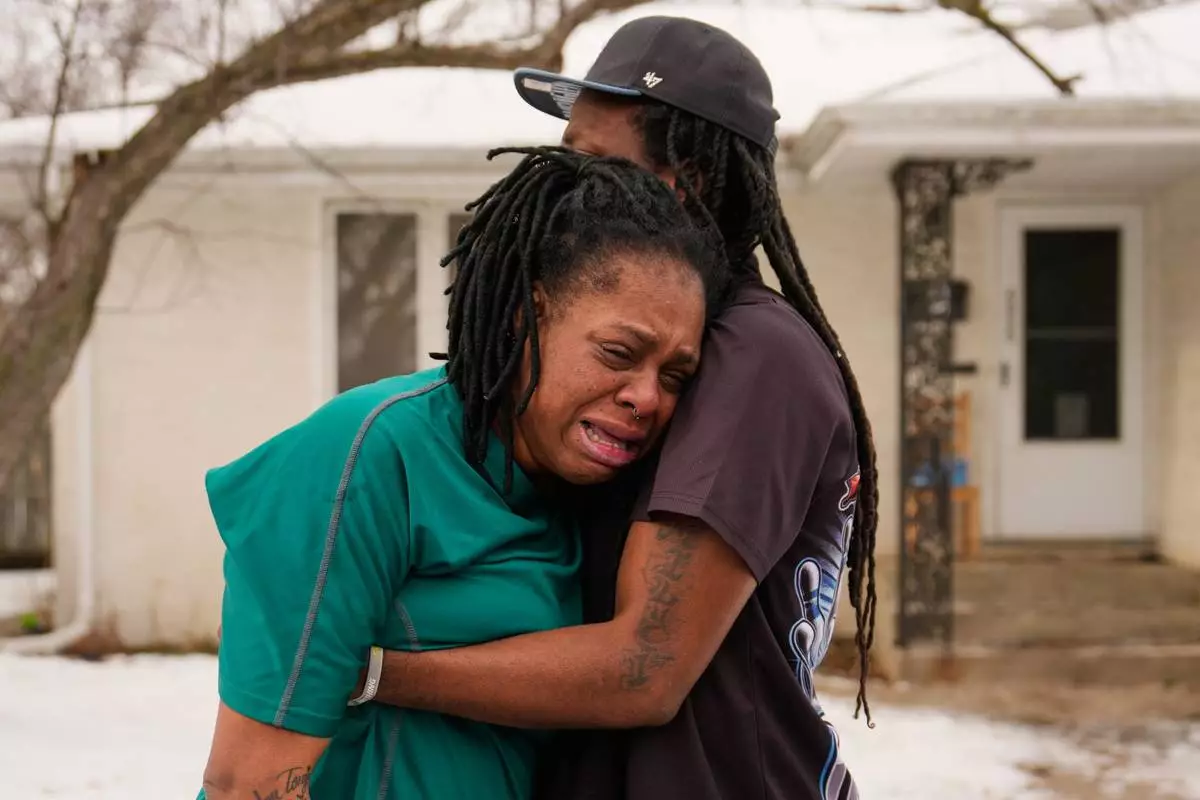
A family member reacts after federal immigration officers make an arrest Sunday, Jan. 11, 2026, in Minneapolis. (AP Photo/John Locher)
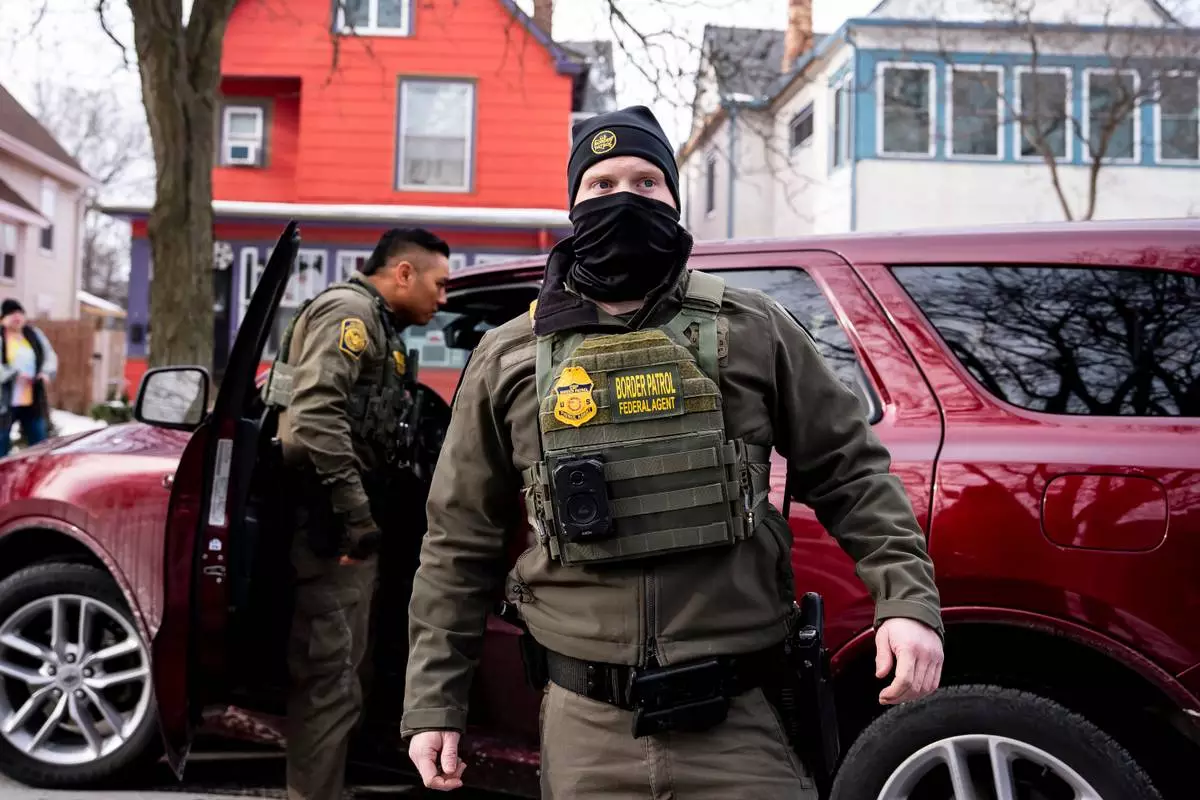
Federal agents look on after detaining a person during a patrol in Minneapolis, Minn., Sunday, Jan. 11, 2026. (Christopher Katsarov/The Canadian Press via AP)
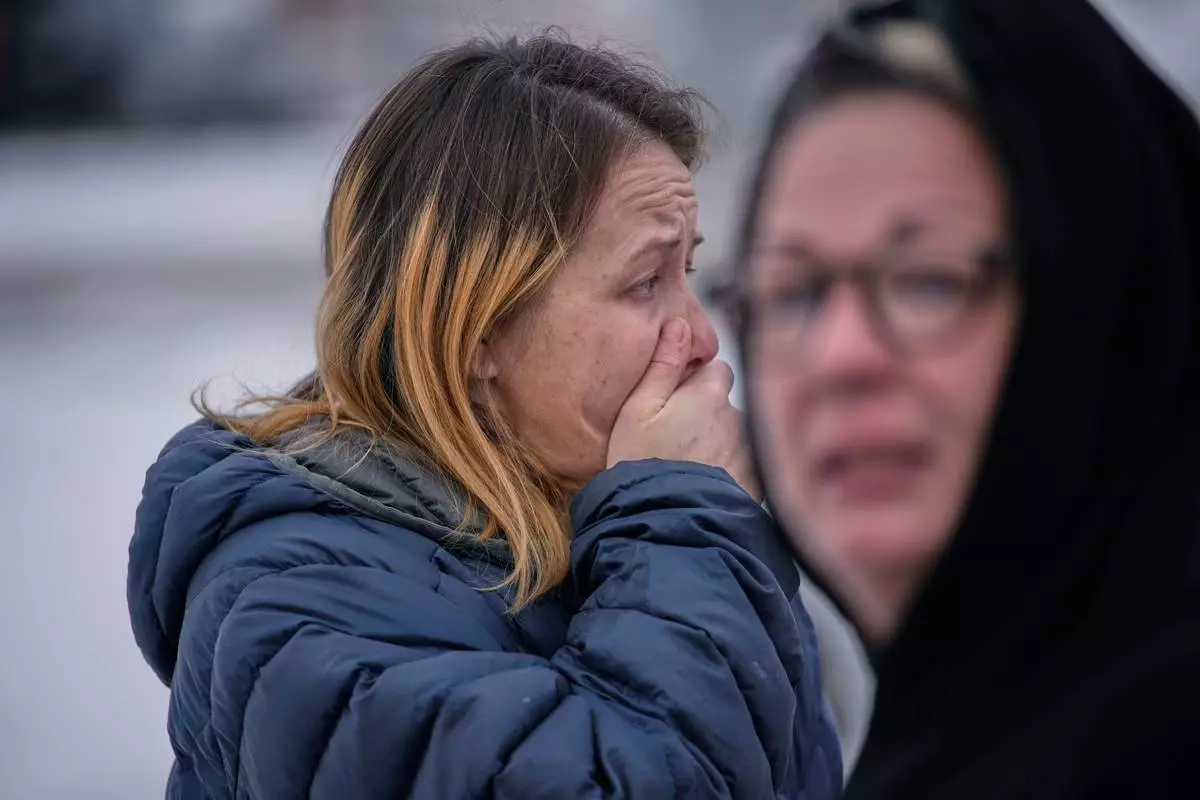
Bystanders react after a man was detained by Immigration and Customs Enforcement (ICE) agents during a traffic stop, Sunday, Jan. 11, 2026, in Robbinsdale, Minn. (AP Photo/John Locher)
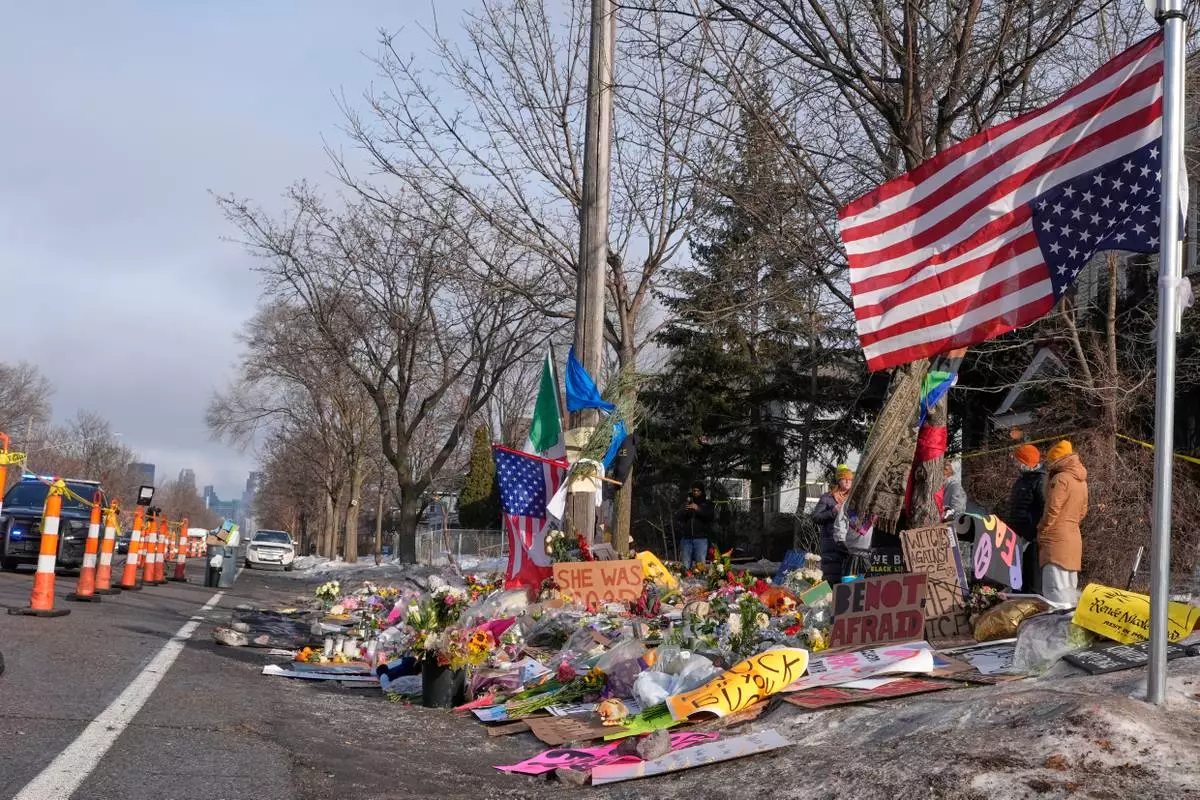
People stand near a memorial at the site where Renee Good was fatally shot by an ICE agent, Sunday, Jan. 11, 2026, in Minneapolis. (AP Photo/Jen Golbeck)
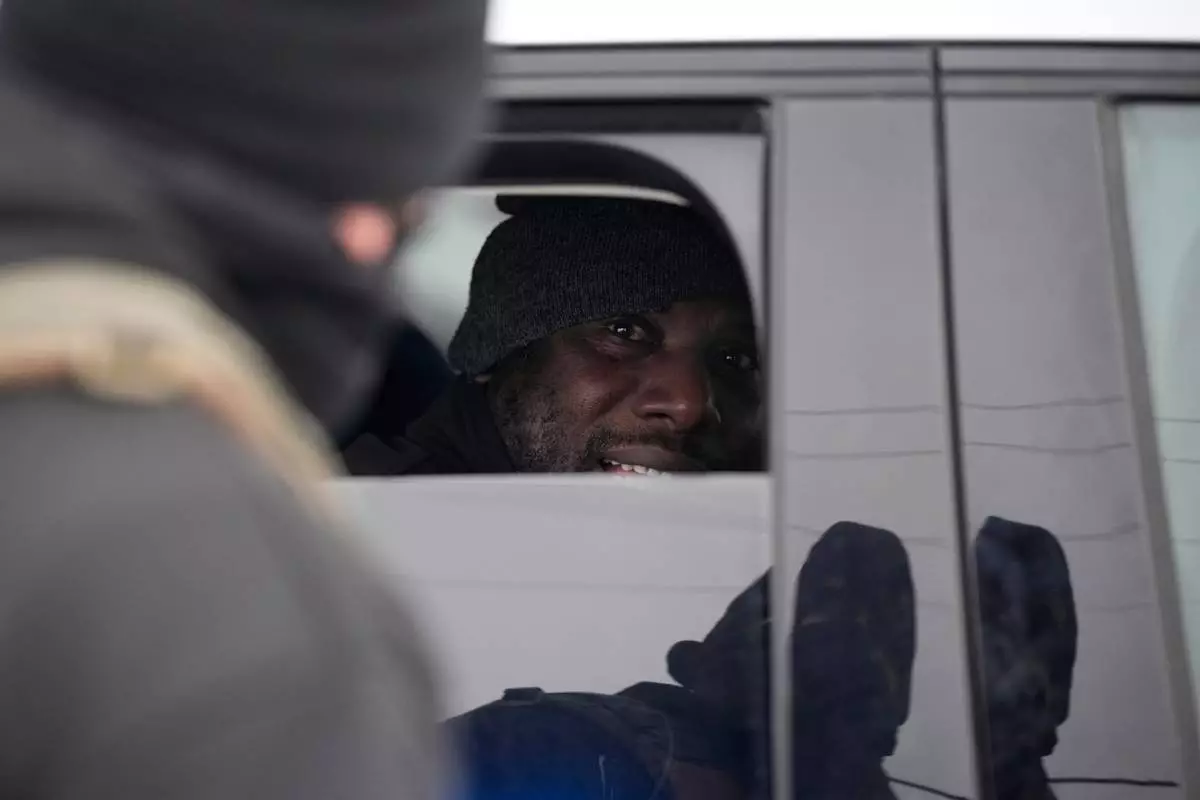
A man looks out of a car window after being detained by Immigration and Customs Enforcement (ICE) agents during a traffic stop, Sunday, Jan. 11, 2026, in Robbinsdale, Minn. (AP Photo/John Locher)
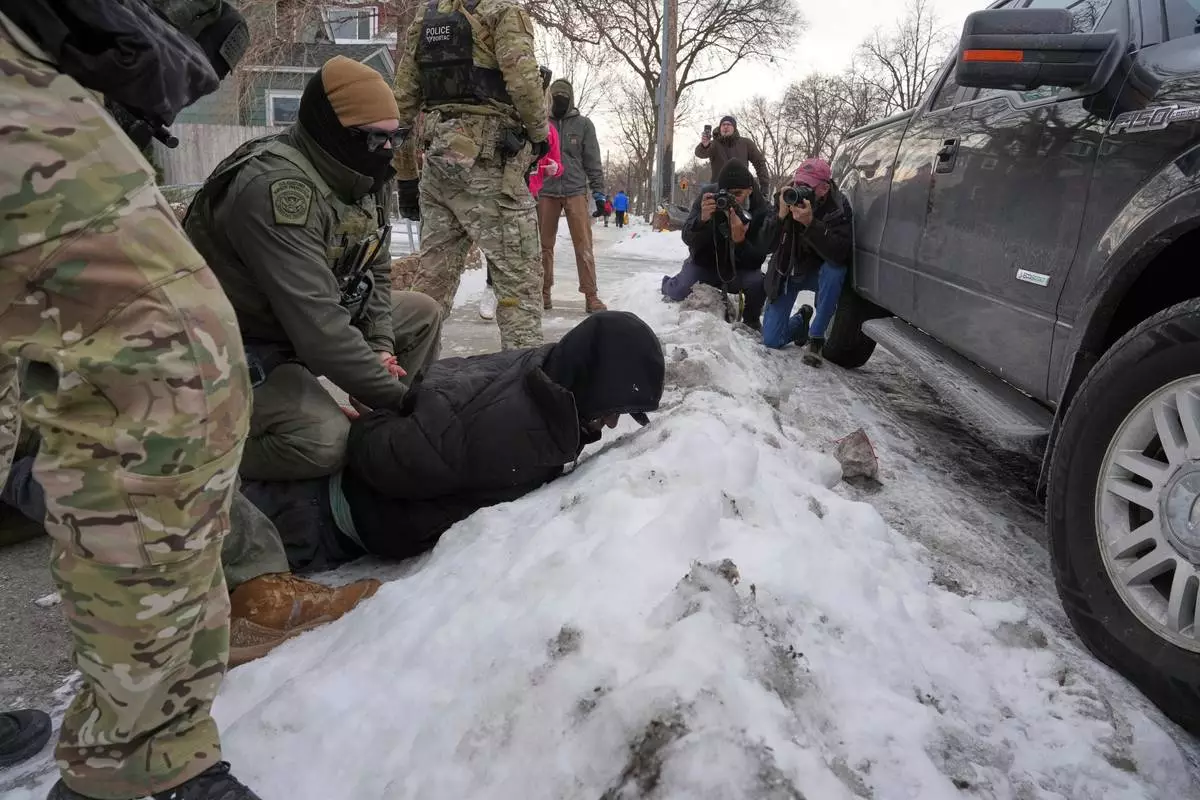
Border Patrol agents detain a man, Sunday, Jan. 11, 2026, in Minneapolis. (AP Photo/Adam Gray)
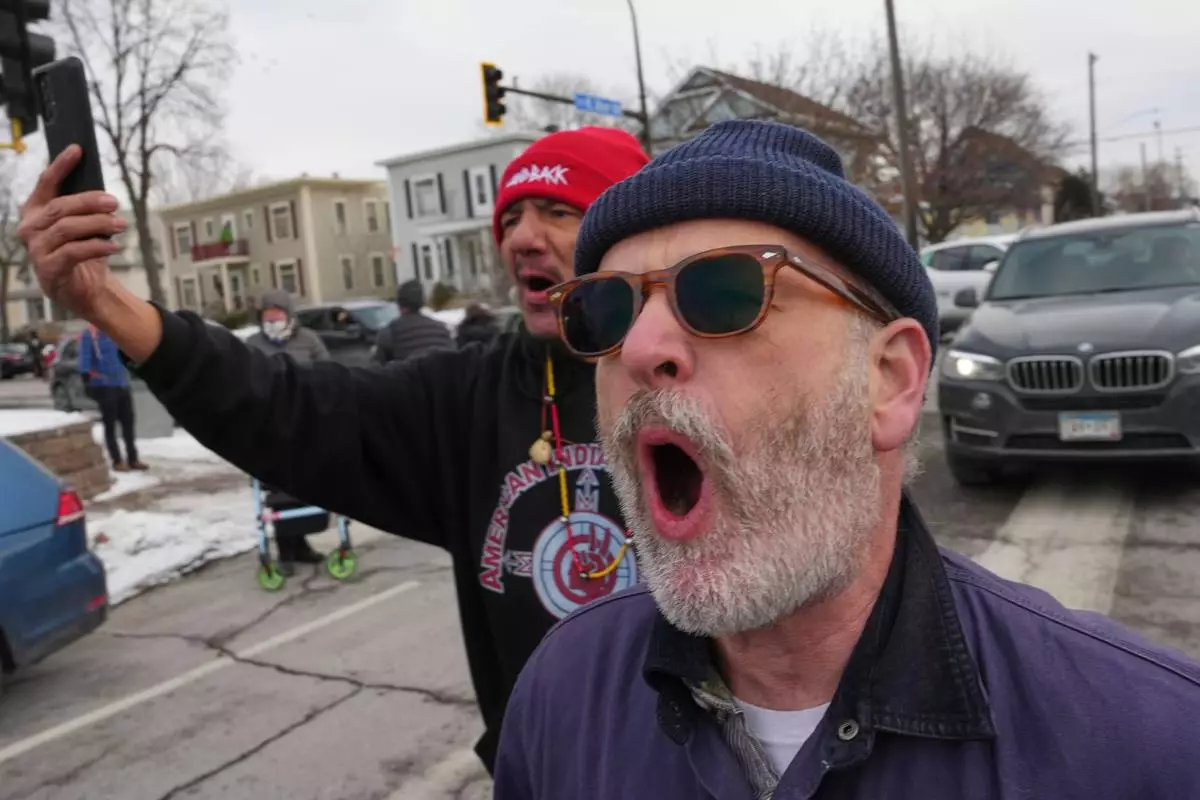
People shout toward Border Patrol agents making an arrest, Sunday, Jan. 11, 2026, in Minneapolis. (AP Photo/Adam Gray)
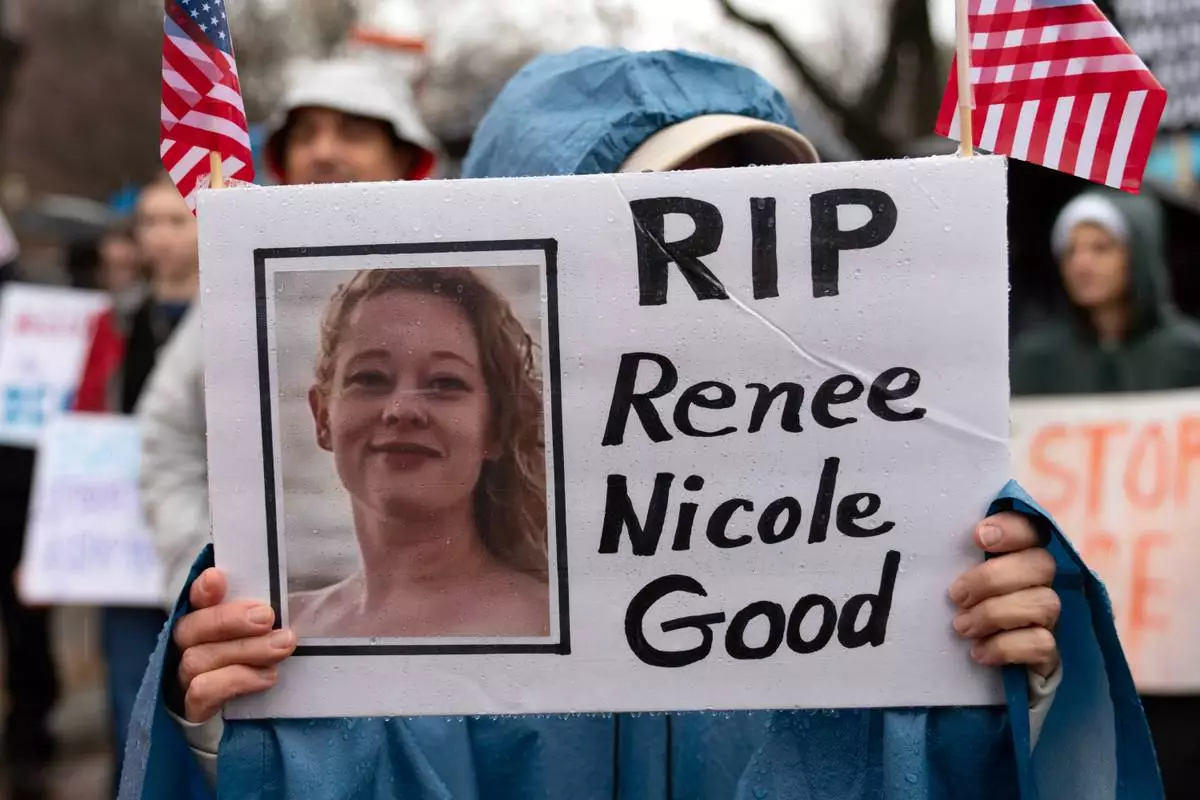
Demonstrators protest outside the White House in Washington, Saturday, Jan. 10, 2026, against the Immigration and Customs Enforcement agent who fatally shot Renee Good in Minneapolis. (AP Photo/Jose Luis Magana)
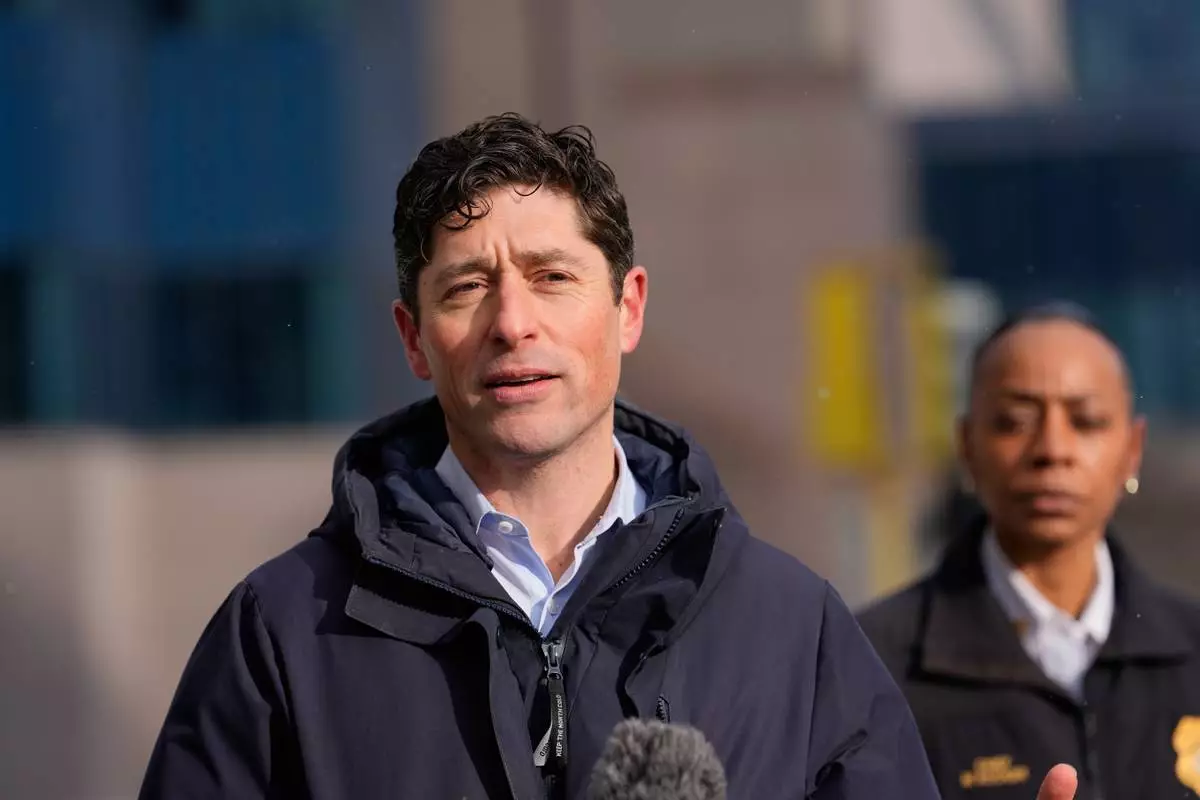
Minneapolis Mayor Jacob Frey holds a news conference on Saturday, Jan. 10, 2026, in Minneapolis. (AP Photo/Jen Golbeck)
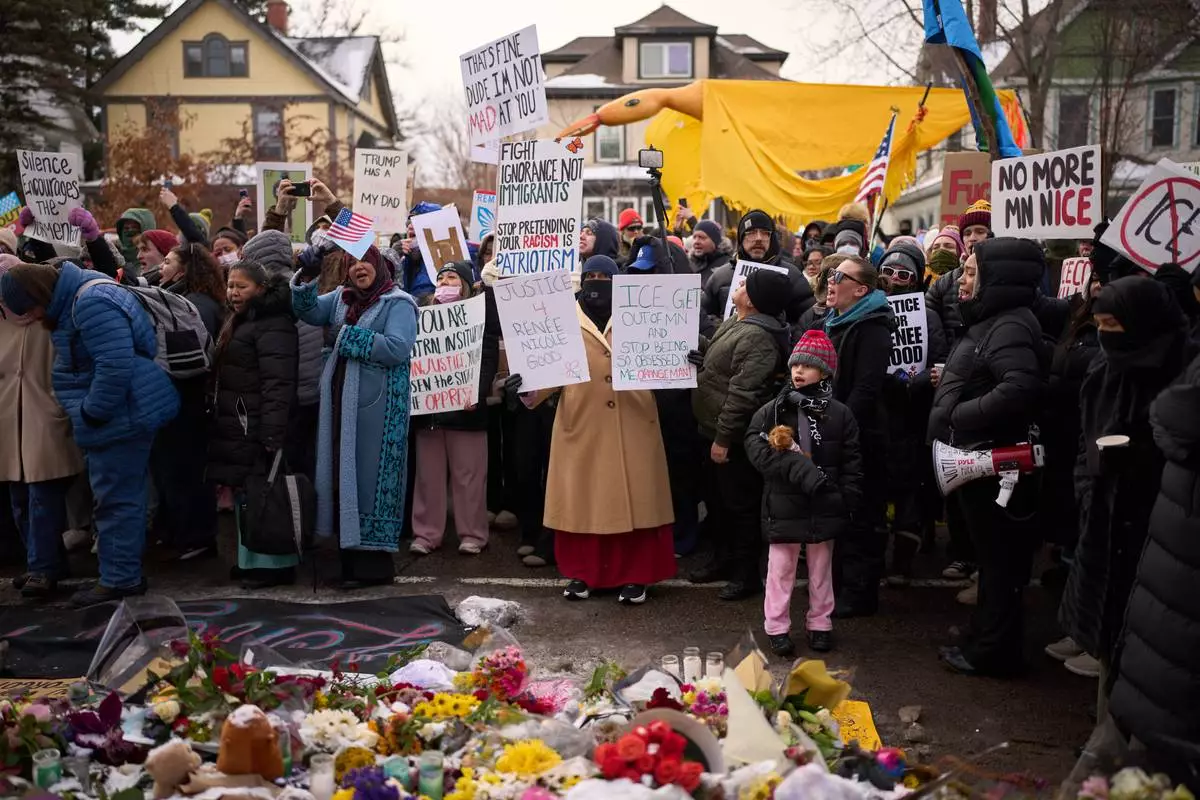
Protesters react as they visit a makeshift memorial during a rally for Renee Good, who was fatally shot by an ICE officer earlier in the week, Saturday, Jan. 10, 2026, in Minneapolis. (AP Photo/John Locher)