Senior citizens are now getting the chance to embark on new adventures in their later years as they get all-aboard the specially-tailored "silver-hair" tourist trains which are transporting them through the spectacular scenery of northwest China's Xinjiang Uygur Autonomous Region.
The new concept which aims to reinvigorate the lives of seniors has sprung up this year and is proving popular among those looking to maximize their retirement, with the initiative widely welcomed and seen as unlocking the potential of China's silver economy as its aging population grows.
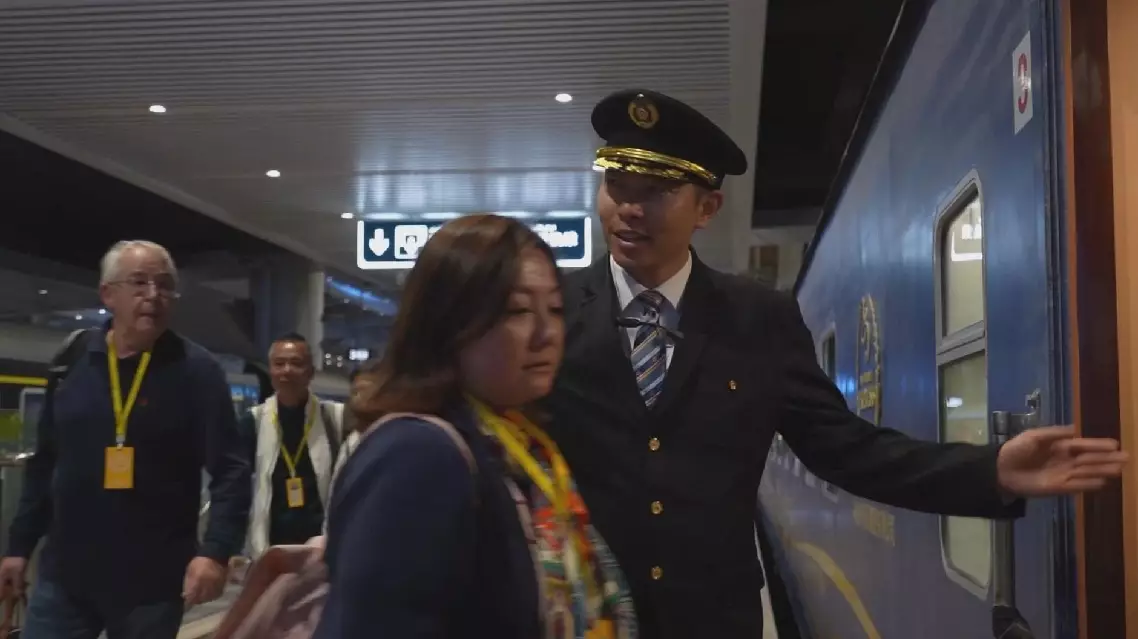
Unlike traditional train services, these "silver-hair" trains follow a "travel by night, tour by day" model, more akin to a cruise ship-style holiday. This allows travelers to rest onboard overnight and arrive at their destinations refreshed and ready to explore the scenic spots, eliminating the tiring and time-consuming effort of making frequent transfers and handling heavy luggage.
With most passengers being aged 60 and above, the carriages are specially designed to ensure accessibility for seniors, featuring barrier-free pathways, emergency call systems, anti-slip flooring, and safety handrails. Professional medical staff are also onboard throughout the journey to ensure a safe, comfortable, and convenient travel experience for elderly passengers.
"Our restrooms are equipped with extended handrails, making it easier for passengers to hold onto while washing up. The corridors also have extended rails so travelers can feel more secure while walking, or while the train is moving," said Wang Beibei, deputy manager of the Tourism Division under the Xinjiang Railway Tourism Development Group, as she showed off the facilities.
In addition to such considerations onboard, the train route is also thoughtfully mapped out to connect popular scenic spots across Xinjiang, offering an in-depth tourism experience which spans large distances.
"I was originally traveling with a tour groups. In order to avoid a lengthy trip, I chose an easier option this time, and it's truly beautiful. Xinjiang is so vast. Wherever you go, it's like stepping into a painting. Definitely worth the visit," said Zhang Lihua, one of the tourists enjoying the train ride.
So far this year, Xinjiang has operated seven of these "silver-hair" train tours, serving nearly 3,000 tourists, over 70 percent of whom are seniors. This customized service model is helping to further unleash the spending potential of the silver economy, as hotels and businesses dotted along these routes all enjoy a boost as more visitors flood in.
"Compared to previous years, our hotel bookings are up 15 percent, partly thanks to guests from these tourist trains, and also self-driving travelers. The growth is noticeable compared to previous years," said Chen Yinhu, a hotel manager.
Beyond the "silver-hair" routes which cater to the senior travelers, Xinjiang has launched other specialized tourist train services, featuring specific tours such as flower-viewing and various other immersive local cultural experiences. More than 100 themed tourist train services are planned for the year, catering to a diverse range of travelers, while also driving the economy in rural regions. "These tourist trains link key attractions in southern and northern Xinjiang, driving visitor numbers and boosting local consumption in service sectors like catering, hospitality, and specialty goods. The trains also contribute to rural revitalization and promote the clustered development of Xinjiang's tourism industry," said Zhang Shenghai, an official from the China Railway Urumqi Group.
Seniors get all aboard "silver-hair" trains as Xinjiang taps into silver economy
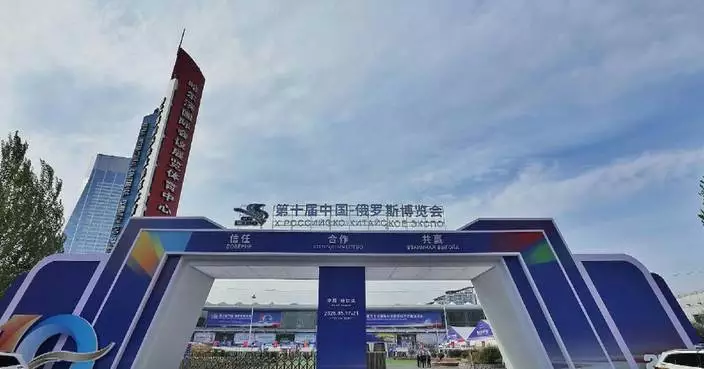
The 10th China-Russia Expo opened on Sunday in Harbin, the provincial capital of Heilongjiang in northeast China, highlighting the resilience, vitality and mutual benefits of China-Russia economic ties.
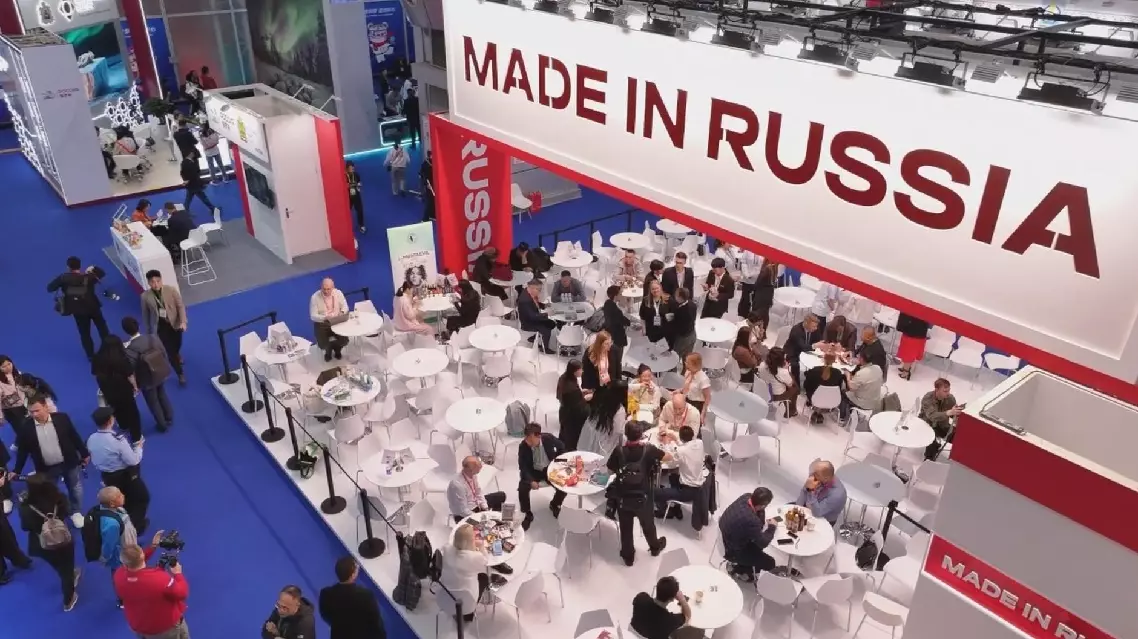
Held from May 17 to 21, this year's expo covers a floor space of 55,000 square meters, with more than 1,500 companies from 46 countries and regions taking part. Nearly 300 Russian companies are attending, while over 5,000 buyers are expected.
Since 2014, the event has attracted more than 7,200 Chinese and Russian companies and over a million visitors.
The China-Russia Expo is the largest comprehensive exhibition platform between the two countries.
President Xi Jinping and Russian President Vladimir Putin each sent congratulatory letters to the event, encouraging all sectors from both countries to seize the opportunity, make full use of their geographical proximity and economic complementarity, and further expand all-round practical cooperation.
"Leaders of the two countries have signed agreements to deepen practical cooperation, which we fully support. Russia and China stand side by side for common development, benefiting young people and all people. Such cooperation is timely and far-reaching. We are here in Harbin for the China-Russia Expo, coming from Russia's Sakha Republic. Our region is dominated by agriculture. We are seeking advanced farming technologies including irrigation equipment and harvesters. We hope to reach deals in the coming days to boost local development," said Vasiliy Petrovich Alexeev, head of Ust-Aidan Region of the Russian Federation.
"We are greatly inspired by the congratulatory letters from the heads of state of China and Russia. We will keep building targeted and efficient cooperation platforms, and smooth channels for sub-national exchanges between China and Russia," said Chen Shijun, president of Heilongjiang Council for the Promotion of International Trade.
China-Russia trade volume has surpassed 200 billion U.S. dollars for three consecutive years. China has been Russia's largest trading partner for 16 years running.
In the first quarter of this year, bilateral trade volume hit 60 billion U.S. dollars, a year-on-year increase of more than 14 percent.
This year's Expo features eight major exhibition zones. Beyond the exhibition halls, Russian delegations have also conducted field visits to Chinese companies. A delegation from the Republic of Buryatia visited one of northeast China's largest building materials distribution centers to explore potential areas of cooperation.
"Regular China-Russia economic and trade events continuously bring fresh cooperation opportunities for both sides. This field trip to Xilong Building Materials Market has helped us explore more practical directions and modes for bilateral cooperation," said Alexei Tsydenov, head of the Republic of Buryatia of the Russian Federation.
"Relying on Buryatia's abundant mineral resources and sound logistics conditions, we plan to build industrial parks focusing on home building materials, mineral resources and energy sectors in Russia. We will introduce advanced Chinese technologies and management models to drive coordinated industrial upgrading between the two countries," said Wu Jinrong, vice president of Harbin Xilong International Trade and Logistics Park.
From everyday consumer goods to advanced helicopters, and from mineral resources to intelligent robotics, China-Russia cooperation now spans a wide range of sectors. Economic ties and people-to-people exchanges between the two countries continue to advance toward higher-quality development and broader prospects.
China-Russia Expo promotes trust, cooperation, mutual benefit
China-Russia Expo promotes trust, cooperation, mutual benefit