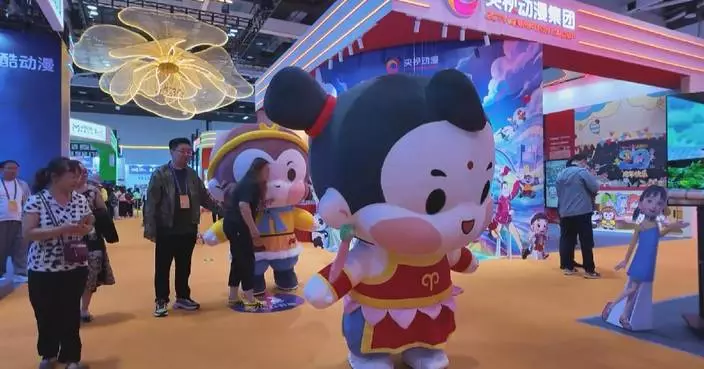
Export-oriented companies in the southern Chinese city of Dongguan, a global toy manufacturing hub, are tapping into the domestic market with the help of e-commerce platforms and AI-powered product innovation to counter U.S. tariff pressures.
Dongguan, home to over 5,500 toy manufacturing-related enterprises, produces nearly a quarter of the world's animation derivatives and 85 percent of China's designer toys. Yet, the "capital of toys" faced significant challenges from the sudden tariff surge imposed by the Trump administration.
The Dongguan Jollybaby Products Company, which previously derived 20 percent of its export revenue from the American market, saw nearly all of its 1,000-plus U.S. orders canceled after the imposition of tariffs as high as 145 percent.
The company's director general Wang Zhen, a veteran toy trader who has been engaged in this industry for 22 years, keenly perceived the opportunities for market expansion amid the tariff war.
On April 11, the platform announced a 200-billion-yuan large-scale procurement initiative to help foreign trade enterprises quickly expand into the domestic market.
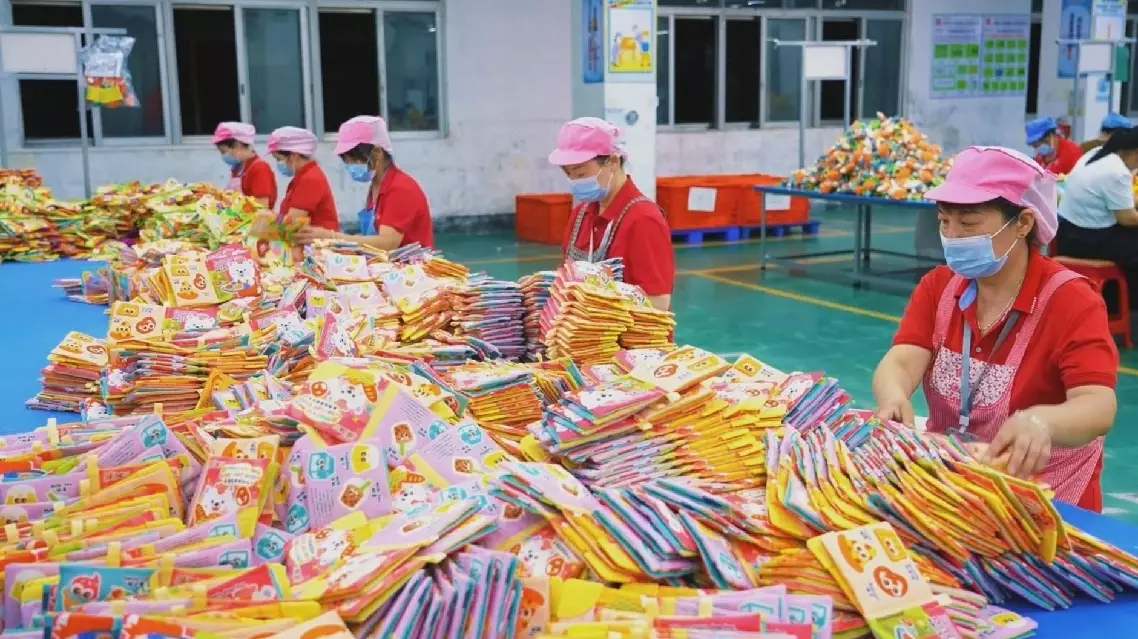
"After we contacted them, they responded very quickly. They immediately sent us their procurement policy. At a little past 12 o'clock at night, they sent me a message saying that they had decided to place an order of one million cloth books. At that time, our company chat room was in an uproar. Everyone was extremely excited," said Wang.
After that, the company put in intense work - the production department worked overtime to change the packaging, the research and development department optimized and adjusted the products, and the logistics department planned the transportation routes in advance to ensure that the goods could be delivered in time. Eventually, Jollybaby's products were put on sale on JD.com in less than 72 hours after Wang received the partnership message.
Wang's cloth books sold over 80,000 copies on the e-commerce platform in less than two weeks. The responsible entrepreneur decided to help more local tariffs-affected toy manufacturers to withstand the shock.
On April 24, Wang organized a business matchmaking event to provide a place for one-on-one negotiations between e-commerce platforms and over 80 enterprises in Dongguan's Chashan Town, helping more export-oriented firms shift to domestic sales.
"Our products were mainly sold to the United States, with the sales accounting for 50 percent or more of our total business volume. We have never done domestic sales before. We believe that we could take advantage of this platform to establish a connection with JD.com and explore how it can guide us in domestic sales and achieve growth in the domestic market," said Lin Jiaoting, deputy head of Dongguan Wang Yat Plastic Toys Company.
With greater ambitions for the promising Chinese market, Chashan toy makers are also deploying new strategic approaches, seeking to capture market share through innovative products supported by artificial intelligence (AI) technology.
"We want to empower toy enterprises with AI, enabling them to build their own brands and create their own IPs (intellectual properties) by making AI toys, and to handle all channels and processes from production, research and development to sales, thereby increasing added value," said Chen Xiaowei, deputy chief of Chashan Town.
"We create opportunities amid crises. Only in this way can we deeply realize that we need to build our own brands. Only when our brands grow stronger and bigger can they have a foothold in the global market," Wang said.
Chinese toy makers in Dongguan pivot to domestic market amid U.S. tariff storm