CHANDLER, Ariz. (AP) — There were dozens of statements submitted to the court by family and friends of Christopher Pelkey when it came time to sentence the man convicted of fatally shooting him during a road rage incident. They provided glimpses of Pelkey’s humor, his character and his military service.
But there was nothing quite like hearing from the victim himself — even if it was a version generated by artificial intelligence.
Click to Gallery
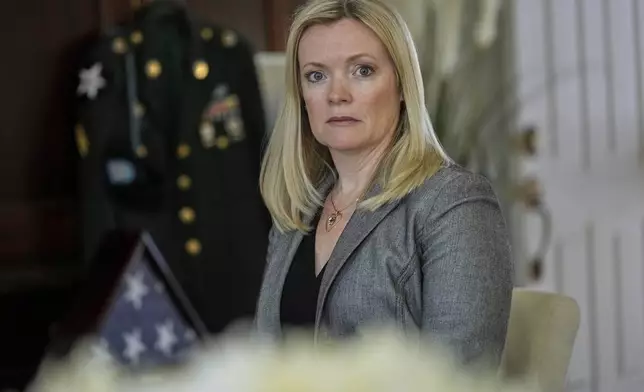
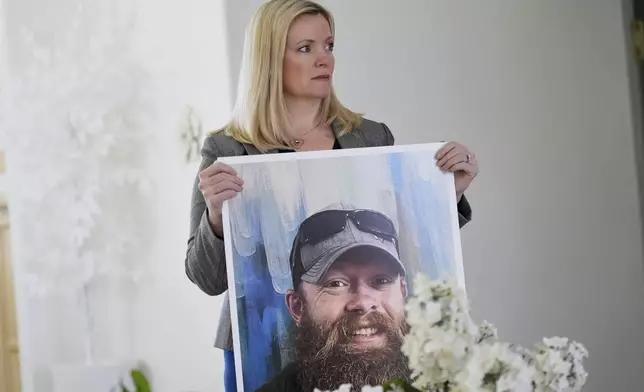
Stacey Wales, sister of the late Christopher Pelkey, is shown at her mother's home, Wednesday, May 7, 2025, in Chandler, Ariz. (AP Photo/Matt York)
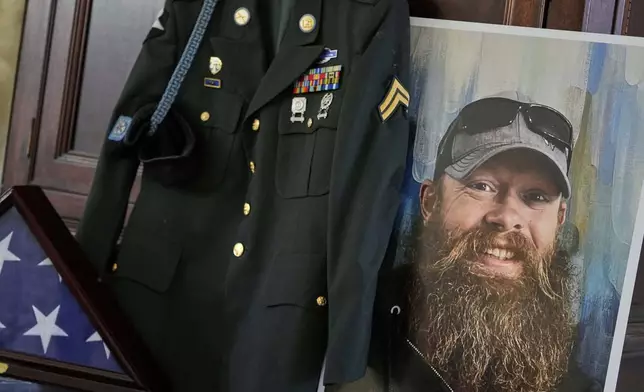
The Army dress uniform and photo of the late Christopher Pelkey is shown at his mother's home, Wednesday, May 7, 2025, in Chandler, Ariz. (AP Photo/Matt York)
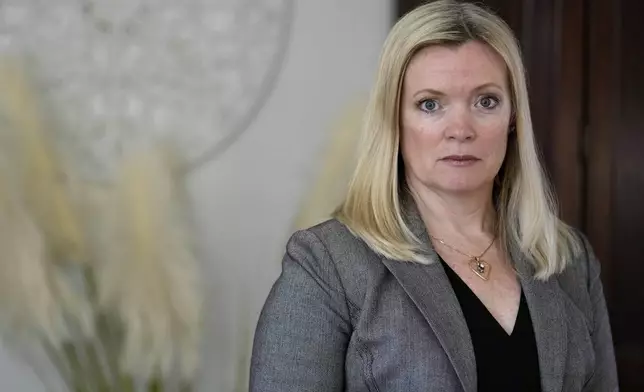
Stacey Wales, sister of the late Christopher Pelkey, is shown at her mother's home, Wednesday, May 7, 2025, in Chandler, Ariz. (AP Photo/Matt York)
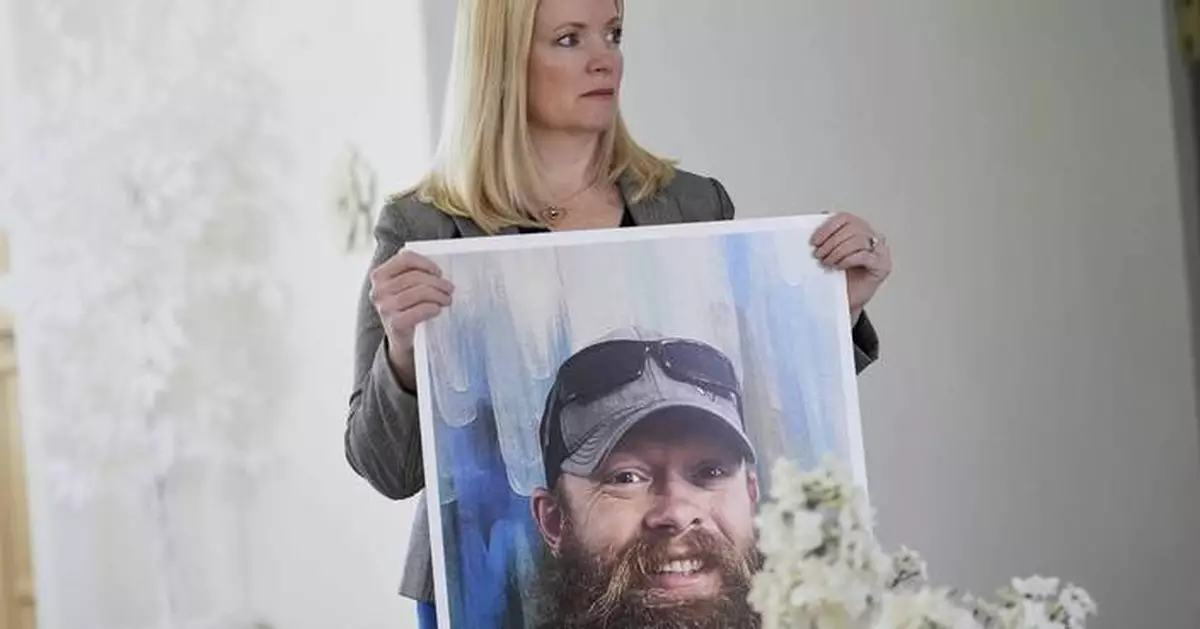
Stacey Wales, sister of the late Christopher Pelkey, displays her brother's image at her mother's home, Wednesday, May 7, 2025, in Chandler, Ariz. (AP Photo/Matt York)
In what's believed to be a first in U.S. courts, Pelkey’s family used AI to create a video using his likeness to give him a voice. The AI rendering of Pelkey told the shooter during the sentencing hearing last week in Phoenix that it was a shame they had to meet that day in 2021 under those circumstances — and that in another life, the two of them probably could have been friends.
“I believe in forgiveness and in God who forgives. I always have and I still do,” Pelkey's avatar told Gabriel Paul Horcasitas.
The AI version of Pelkey went on to encourage people to make the most of each day and to love each other, not knowing how much time one might have left.
While use of AI within the court system is expanding, it's typically been reserved for administrative tasks, legal research and case preparation. In Arizona, it's helped inform the public of rulings in significant cases.
But using AI to generate victim impact statements marks a new — and legal, at least in Arizona — tool for sharing information with the court outside the evidentiary phases.
Maricopa County Superior Court Judge Todd Lang, who presided over the case, said after watching the video that he imagined Pelkey, who was 37 at the time of his killing, would have felt that way after learning about him. Lang also noted the video said something about Pelkey's family, who had expressed their anger over his death and had asked for Horcasitas to receive the maximum sentence.
“Even though that's what you wanted, you allowed Chris to speak from his heart as you saw it," Lang said.
Horcasitas, 54, was convicted of manslaughter and sentenced to 10.5 years in prison.
Horcasitas' lawyer, Jason Lamm, told The Associated Press they filed a notice to appeal his sentence within hours of the hearing. Lamm said it's likely the appeals court will weigh whether the judge improperly relied on the AI video when handing down the sentence.
The shooting happened the afternoon of Nov. 13, 2021, as both drivers were stopped at a red light. According to records, Pelkey was shot after getting out of his truck and walking toward Horcasitas’ car.
Pelkey’s sister, Stacey Wales, raised the idea of her brother speaking for himself after struggling to figure out what she would say. She wrote a script for the AI-generated video, reflecting that he was a forgiving person.
In Arizona, victims can give their impact statements in any digital format, said victims’ rights attorney Jessica Gattuso, who represented the family.
Wales, a software product consultant, took the AI idea to her husband, Tim. He and his friend, who have work experience creating humanlike AI avatars. Using a video clip of Pelkey, they aimed to replicate his voice and speech patterns. They generated Pelkey's likeness through a single image of him, digitally manipulating it to remove glasses and a hat logo, edit his outfit and trim his beard.
Arizona Supreme Court Chief Justice Ann Timmer didn't address the road rage case specifically in an interview Wednesday. But she said the rise in popularity and accessibility to AI in recent years led to the creation of a committee to research best practices in the courts.
Gary Marchant, a member of the committee and a law professor at Arizona State University, said he understands why Pelkey’s family did it. But he warned the use of this technology could open the door to more people trying to introduce AI-generated evidence into courtrooms.
“There’s a real concern among the judiciary and among lawyers that deepfake evidence will be increasingly used,” he said. “It’s easy to create it and anyone can do it on a phone, and it could be incredibly influential because judges and juries, just like all of us, are used to believing what you see.”
Marchant pointed to a recent case in New York, where a man without a lawyer used an AI-generated avatar to argue his case in a lawsuit via video. It took only seconds for the judges to realize that the man addressing them from the video screen didn’t exist at all.
In the Arizona case, Wales said the AI-generated video worked because the judge had nearly 50 letters from family and friends that echoed the video's message.
“Everybody knew that Chris would forgive this person,” Wales said.
Yamat reported from Las Vegas. Associated Press reporter Susan Montoya Bryan in Albuquerque, New Mexico, contributed to this report.
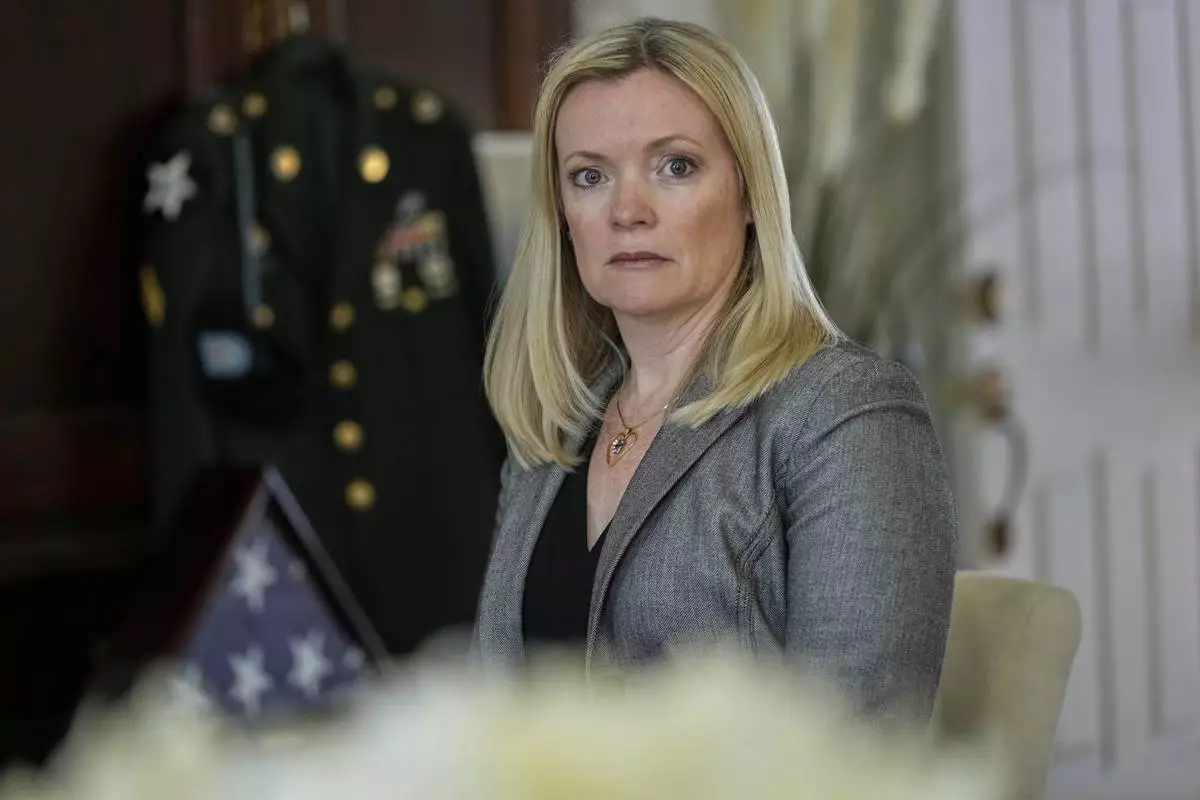
Stacey Wales, sister of the late Christopher Pelkey, is shown at her mother's home, Wednesday, May 7, 2025, in Chandler, Ariz. (AP Photo/Matt York)
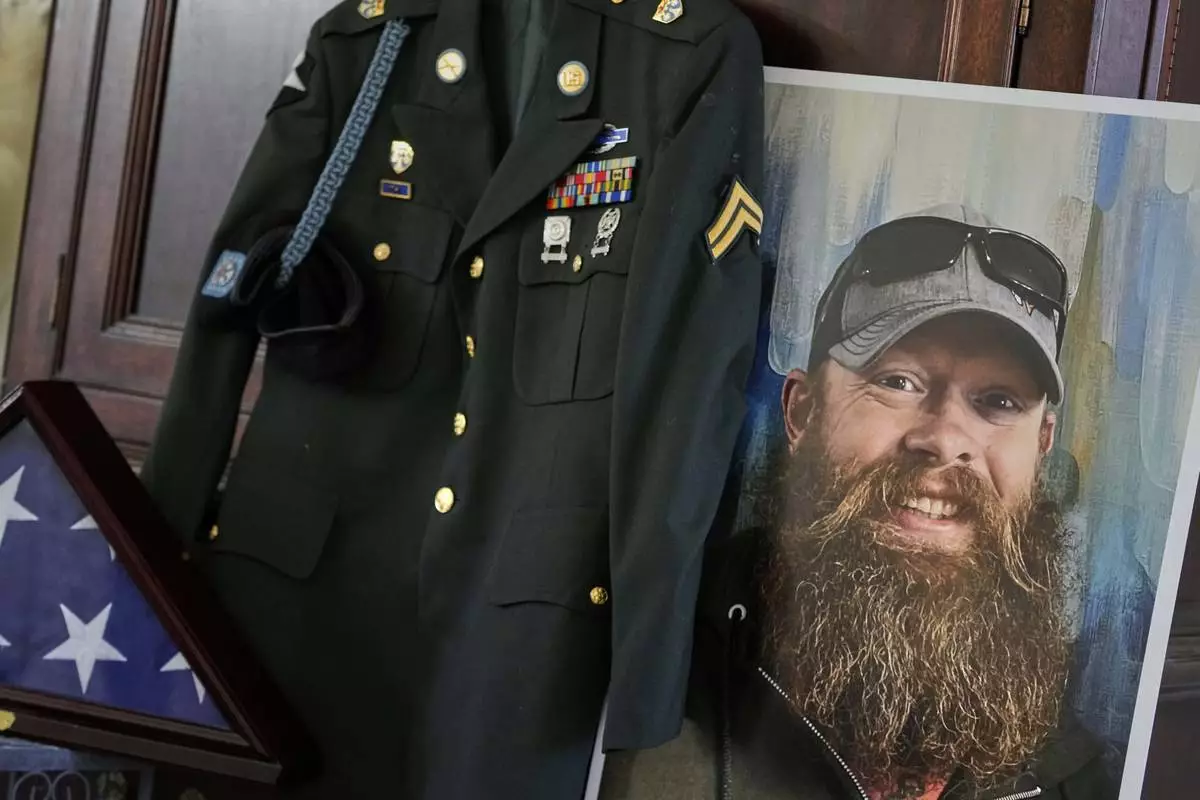
The Army dress uniform and photo of the late Christopher Pelkey is shown at his mother's home, Wednesday, May 7, 2025, in Chandler, Ariz. (AP Photo/Matt York)
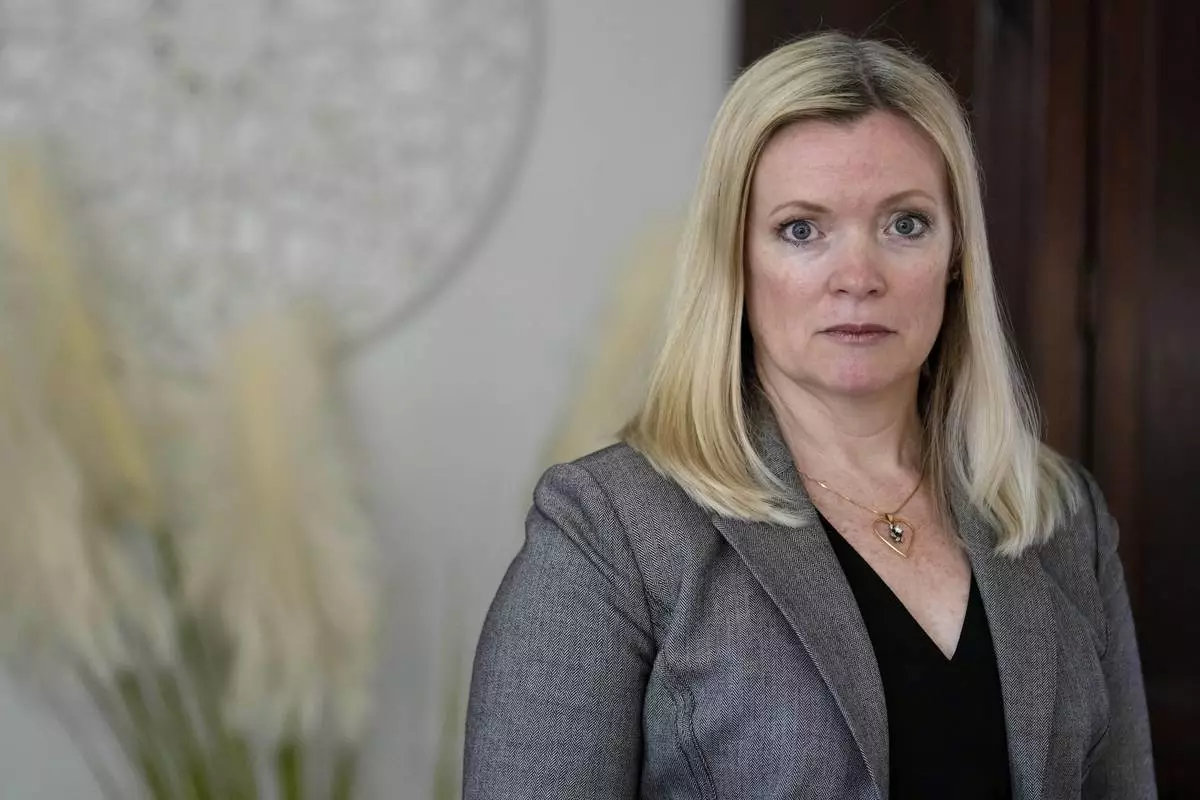
Stacey Wales, sister of the late Christopher Pelkey, is shown at her mother's home, Wednesday, May 7, 2025, in Chandler, Ariz. (AP Photo/Matt York)
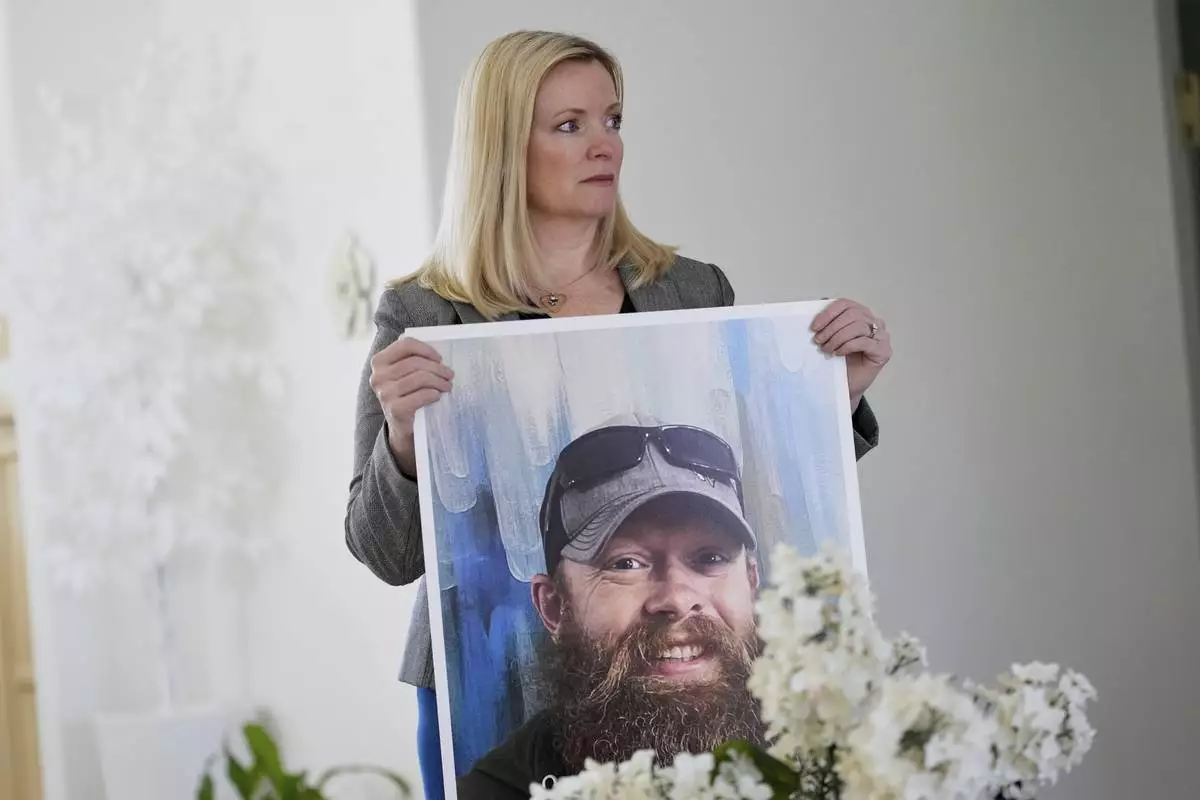
Stacey Wales, sister of the late Christopher Pelkey, displays her brother's image at her mother's home, Wednesday, May 7, 2025, in Chandler, Ariz. (AP Photo/Matt York)
NEW YORK (AP) — Reviving a campaign pledge, President Donald Trump wants a one-year, 10% cap on credit card interest rates, a move that could save Americans tens of billions of dollars but drew immediate opposition from an industry that has been in his corner.
Trump was not clear in his social media post Friday night whether a cap might take effect through executive action or legislation, though one Republican senator said he had spoken with the president and would work on a bill with his “full support.” Trump said he hoped it would be in place Jan. 20, one year after he took office.
Strong opposition is certain from Wall Street in addition to the credit card companies, which donated heavily to his 2024 campaign and have supported Trump's second-term agenda. Banks are making the argument that such a plan would most hurt poor people, at a time of economic concern, by curtailing or eliminating credit lines, driving them to high-cost alternatives like payday loans or pawnshops.
“We will no longer let the American Public be ripped off by Credit Card Companies that are charging Interest Rates of 20 to 30%,” Trump wrote on his Truth Social platform.
Researchers who studied Trump’s campaign pledge after it was first announced found that Americans would save roughly $100 billion in interest a year if credit card rates were capped at 10%. The same researchers found that while the credit card industry would take a major hit, it would still be profitable, although credit card rewards and other perks might be scaled back.
About 195 million people in the United States had credit cards in 2024 and were assessed $160 billion in interest charges, the Consumer Financial Protection Bureau says. Americans are now carrying more credit card debt than ever, to the tune of about $1.23 trillion, according to figures from the New York Federal Reserve for the third quarter last year.
Further, Americans are paying, on average, between 19.65% and 21.5% in interest on credit cards according to the Federal Reserve and other industry tracking sources. That has come down in the past year as the central bank lowered benchmark rates, but is near the highs since federal regulators started tracking credit card rates in the mid-1990s. That’s significantly higher than a decade ago, when the average credit card interest rate was roughly 12%.
The Republican administration has proved particularly friendly until now to the credit card industry.
Capital One got little resistance from the White House when it finalized its purchase and merger with Discover Financial in early 2025, a deal that created the nation’s largest credit card company. The Consumer Financial Protection Bureau, which is largely tasked with going after credit card companies for alleged wrongdoing, has been largely nonfunctional since Trump took office.
In a joint statement, the banking industry was opposed to Trump's proposal.
“If enacted, this cap would only drive consumers toward less regulated, more costly alternatives," the American Bankers Association and allied groups said.
Bank lobbyists have long argued that lowering interest rates on their credit card products would require the banks to lend less to high-risk borrowers. When Congress enacted a cap on the fee that stores pay large banks when customers use a debit card, banks responded by removing all rewards and perks from those cards. Debit card rewards only recently have trickled back into consumers' hands. For example, United Airlines now has a debit card that gives miles with purchases.
The U.S. already places interest rate caps on some financial products and for some demographics. The Military Lending Act makes it illegal to charge active-duty service members more than 36% for any financial product. The national regulator for credit unions has capped interest rates on credit union credit cards at 18%.
Credit card companies earn three streams of revenue from their products: fees charged to merchants, fees charged to customers and the interest charged on balances. The argument from some researchers and left-leaning policymakers is that the banks earn enough revenue from merchants to keep them profitable if interest rates were capped.
"A 10% credit card interest cap would save Americans $100 billion a year without causing massive account closures, as banks claim. That’s because the few large banks that dominate the credit card market are making absolutely massive profits on customers at all income levels," said Brian Shearer, director of competition and regulatory policy at the Vanderbilt Policy Accelerator, who wrote the research on the industry's impact of Trump's proposal last year.
There are some historic examples that interest rate caps do cut off the less creditworthy to financial products because banks are not able to price risk correctly. Arkansas has a strictly enforced interest rate cap of 17% and evidence points to the poor and less creditworthy being cut out of consumer credit markets in the state. Shearer's research showed that an interest rate cap of 10% would likely result in banks lending less to those with credit scores below 600.
The White House did not respond to questions about how the president seeks to cap the rate or whether he has spoken with credit card companies about the idea.
Sen. Roger Marshall, R-Kan., who said he talked with Trump on Friday night, said the effort is meant to “lower costs for American families and to reign in greedy credit card companies who have been ripping off hardworking Americans for too long."
Legislation in both the House and the Senate would do what Trump is seeking.
Sens. Bernie Sanders, I-Vt., and Josh Hawley, R-Mo., released a plan in February that would immediately cap interest rates at 10% for five years, hoping to use Trump’s campaign promise to build momentum for their measure.
Hours before Trump's post, Sanders said that the president, rather than working to cap interest rates, had taken steps to deregulate big banks that allowed them to charge much higher credit card fees.
Reps. Alexandria Ocasio-Cortez, D-N.Y., and Anna Paulina Luna, R-Fla., have proposed similar legislation. Ocasio-Cortez is a frequent political target of Trump, while Luna is a close ally of the president.
Seung Min Kim reported from West Palm Beach, Fla.
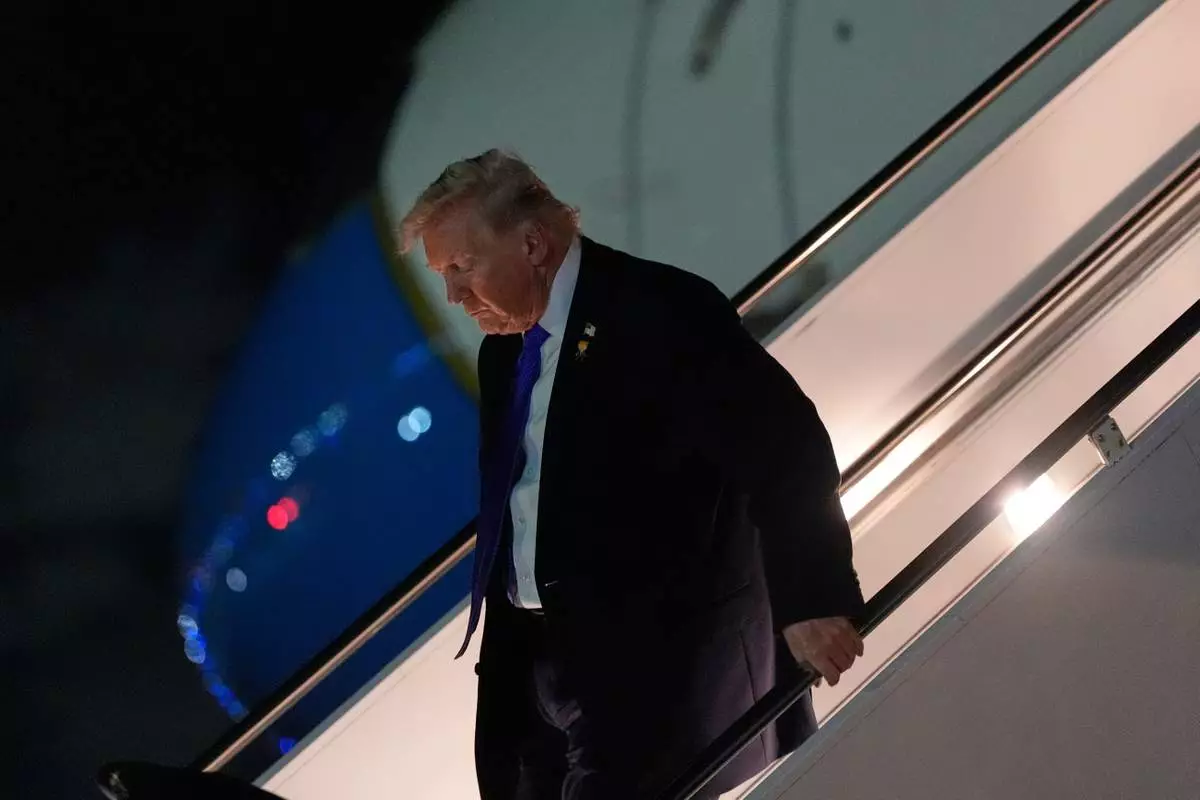
President Donald Trump arrives on Air Force One at Palm Beach International Airport, Friday, Jan. 9, 2025, in West Palm Beach, Fla. (AP Photo/Julia Demaree Nikhinson)
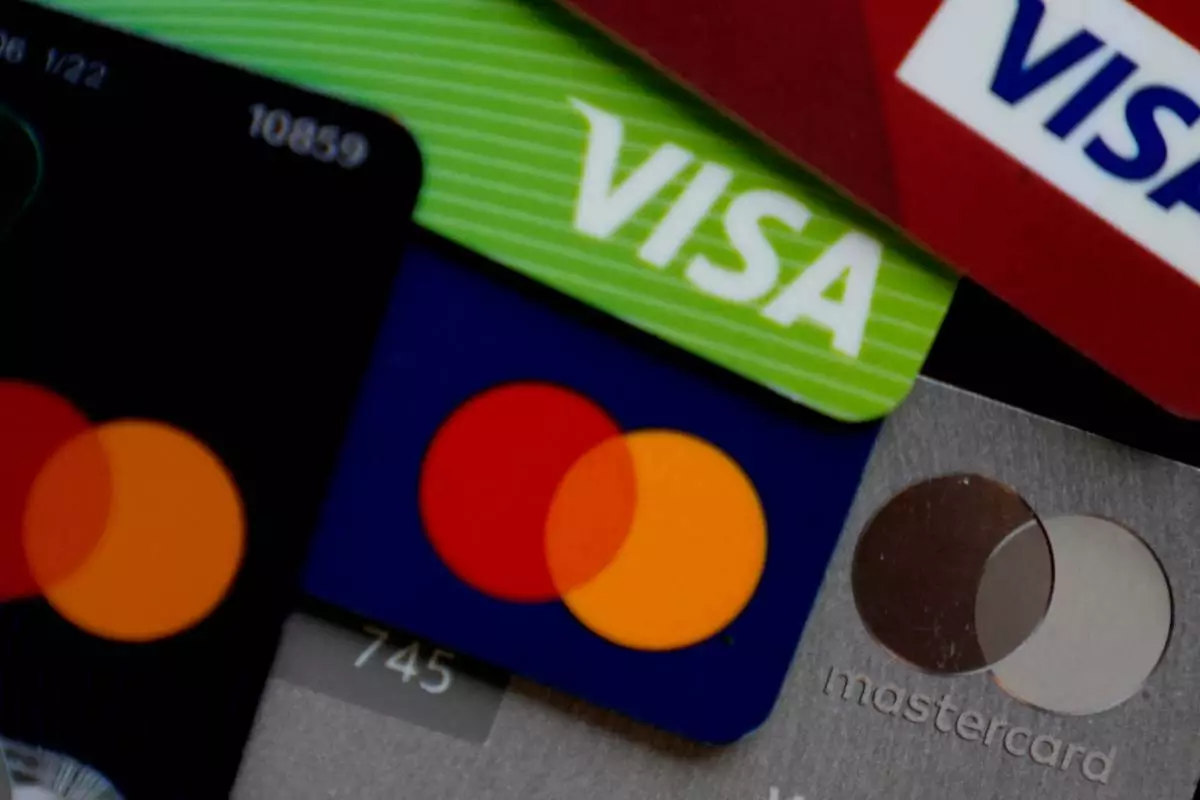
FILE - Visa and Mastercard credit cards are shown in Buffalo Grove, Ill., Feb. 8, 2024. (AP Photo/Nam Y. Huh, File)