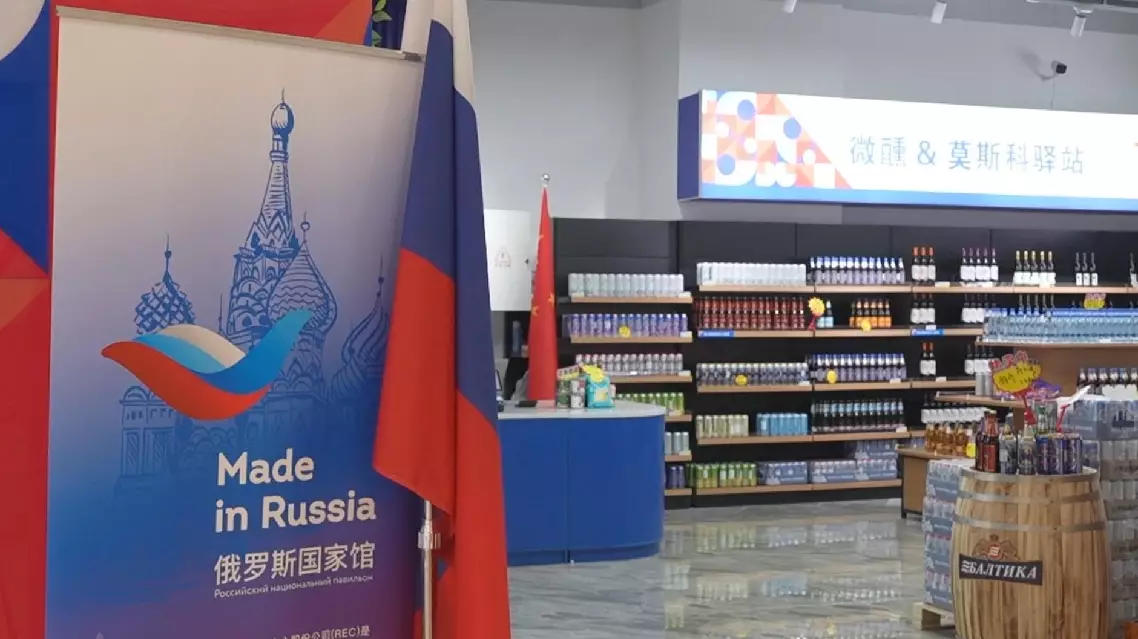
The Russian Pavilions and railway port in Chengdu, southwestern China, stand as vibrant symbols of 15 years of flourishing trade between Russia and its largest trading partner, China.
Opening Russian Pavilions in China has been a key step to strengthen Sino-Russian cooperation and friendship.
Chengdu is the fifth Chinese city to host one, stocking over 800 different authentic Russian products. Currently, there are three official Russian pavilions in the city, with the largest one spanning 600 square meters.
"While many classify these as 'agricultural sideline products,' our range goes beyond prepackaged foods, including daily chemicals, dairy, confectionery, alcohol, and beverages," said Li Yuan, general manager of Russian Pavilions in Chengdu.
The three pavilions attract around 600 visitors daily, with peak seasons including Chinese New Year and summer, although some products are sold all year round.
"The top sellers here are dairy and health foods, like MolSib milk powder. Its popularity stems from no anti-caking agents, natural ingredients, and higher protein content, ideal for children and seniors. Plus, it has a longer shelf life than pure milk," said Li.
The bilateral trade between China and Russia hit a record 245 billion U.S. dollars in 2024, up 1.9 percent year-on-year, with future collaboration expected in digital economy, e-commerce, biomedicine, and green energy.
The China-Europe Railway Express has been pivotal. Last year, the Chengdu International Railway Port dispatched over 5,500 freight trains, exporting Chinese electric vehicles and apparel to 29 Russian cities and importing Russian frozen goods, rapeseed oil, pulp, timber, and minerals. The port also operates a Moscow Consolidation Center.
"Our core facility features a Chinese-Russian bilingual conference system to streamline business talks. We also offer cross-border services, company registration, legal advice, and tax/finance compliance," said Zhong Guodong, logistics director of Russian Sinorail Logistics Company.
Russian Pavilions, Chengdu rail port drive 15 years of China-Russia trade growth
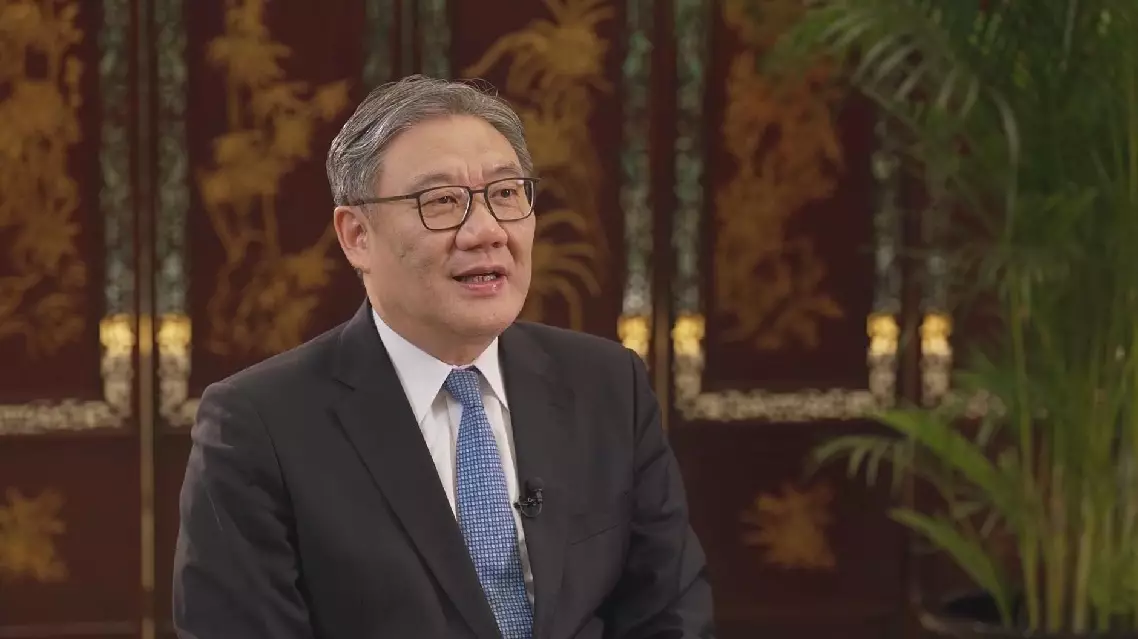
China's Minister of Commerce Wang Wentao outlined the key priorities of the 32nd Asia-Pacific Economic Cooperation (APEC) Ministers Responsible for Trade Meeting, which opened on Friday in Suzhou, East China's Jiangsu province.
In an interview with CGTN ahead of the two-day meeting, Wang said free trade, digital cooperation and green economy are high on the agenda of the meeting.
"The key areas include advancing regional economic integration and the Free Trade Area of the Asia-Pacific, supporting the World Trade Organization (WTO) in strengthening digital cooperation and developing green economy. At present, the international situation is marked by intertwined turbulence and chaos, with intensified geopolitical instability. The rise of unilateralism and protectionism poses serious challenges to the international economic and trade order, disrupting global and Asia-Pacific development. Against this backdrop, all parties have higher expectations for this trade ministers' meeting, hoping that it can build consensus and deliver outcomes," Wang said.
This year marks China's third time hosting the APEC meetings and the 35th anniversary of its membership.
By 2025, China had become the largest trading partner of 13 APEC economies. Trade between China and APEC economies reached 3.7 trillion U.S. dollars, accounting for 57.8 percent of China's total foreign trade.
China has signed 24 free trade agreements or economic and trade arrangements with 31 countries and regions, including 15 APEC economies. In recent years, China has also completed upgrades of free trade agreements with APEC economies such as Singapore and Peru.
The minister said that China has always been a firm supporter and an important contributor to APEC.
"We have actively shared our vast market and development opportunities with all parties. China's door to the world will only open wider and wider. Facing the common challenges, China will continue to fulfill its responsibilities as a major country, further deepen reform, expand high-standard opening-up, and continue to provide new opportunities for the Asia-Pacific region and the world with its new achievements in Chinese modernization," the minister said.
China's Commerce Minister outlines priorities for 32nd APEC trade ministers' meeting