A decades-old weekly train service, connecting Beijing and Moscow, has helped nurture friendships and build cultural bridges between the two countries.
Launched in 1959, the K3/4 line has carried countless Chinese and Russian passengers back and forth between the two countries.
Sun Guoxiang, who worked as a conductor on the train for 36 years before retirement, recalled changes in the train and its passengers over the years.
"I worked on this train for 36 years. Through over 60 years of operation, this international train has undergone many changes. For example, between the 1960s and 1990s, this train was mainly used for official business, used by civil servants to go abroad for inspections and visits. In the 1990s, when the former Soviet Union was facing great shortages of daily necessities, this train was used by many people doing business for a few years. After arriving at the stations, goods were sold in the carriages and the Soviets came on the train to buy goods. Later, with China’s reform and opening-up over the past 40 years, the Chinese people had money in their pockets and wanted to travel for tourism. So this international train provided them with such a service," Sun said.
Younger generations who have traveled on the train regard it as a bridge to experience different sceneries and cultures along the way.
"Each station along the line bears a sense of culture, whether in terms of architectural style or the overall layout. Moreover, Russian stations are open. You can enter and exit the station freely without any ticket inspection. I think this train itself is a cultural journey. You can feel the Russian culture in the most authentic way in every aspect," said Zhou Xiangfeng, a Russian translator who has traveled on the train.
"I think real cultural communication still relies more on genuine interaction and the existence of a proper channel. K3, for example, is like a river—what we need is to let culture flow through this river. It serves as an excellent bridge," said Yang Jiankun, another passenger who has traveled to Russia on the train.
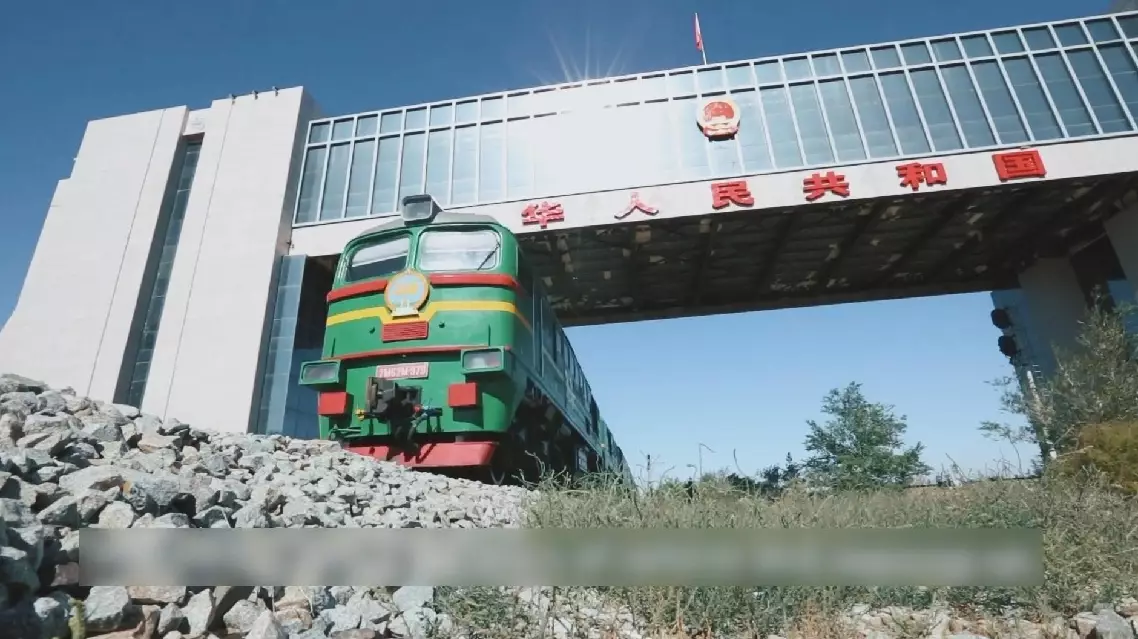
Decades-old train service helps cement bonds between China, Russia
Visiting Chinese Foreign Minister Wang Yi said Saturday China is willing to work with Lesotho to strengthen exchanges on governance experience, enhance coordination in multilateral affairs, and advance the China-Lesotho strategic partnership.
Wang, also a member of the Political Bureau of the Communist Party of China Central Committee, made the remarks when meeting with Lesotho Prime Minister Sam Matekane in the capital of Lesotho.
During the meeting, Wang congratulated Lesotho on the 60th anniversary of its independence this year, and spoke highly of Lesotho government's efforts to prioritize economic development and steer the African country onto a path of sustainable growth. Since the Beijing Summit of the Forum on China-Africa Cooperation (FOCAC) in 2024, the two sides have advanced cooperation under the 10 partnership action plans unveiled at the summit, successfully implementing a number of key projects to effectively promote Lesotho's development and revitalization, Wang said.
China stands ready to work with Lesotho to strengthen exchanges on governance experience, enhance coordination in multilateral affairs, and push for greater development of the China-Lesotho strategic partnership, he added.
Calling on the two sides to firmly support each other, Wang said that China will accelerate the implementation of its zero-tariff policy for African countries, including Lesotho, expand bilateral trade, investment and industrial cooperation, facilitate broader access of Lesotho's specialty products to the Chinese market, and continue to support Lesotho's national development.
China will continue to stand firmly with African countries, uphold justice for the Global South, including Lesotho, oppose unilateralism and acts of bullying, and work together to build a community with a shared future for humanity, Wang said.
On his part, Matekane said during the meeting that Lesotho cherishes its friendship with China and the strategic partnership between the two countries, and expressed gratitude for China's valuable support for the development of African countries, including Lesotho.
Lesotho firmly adheres to the one-China principle and resolutely supports China in safeguarding its core interests, he said, noting that his country stands ready to strengthen strategic mutual trust with China, expand people-to-people exchanges, jointly implement the outcomes of the FOCAC Beijing Summit, and deepen cooperation in areas such as infrastructure, manufacturing and energy.
Matekane stressed that China's zero-tariff policy for African products will inject new impetus into Lesotho's development. He also expressed Lesotho's willingness to strengthen solidarity and cooperation with China on multilateral platforms such as BRICS to jointly address global challenges.
On the same day, Wang also held talks with Lejone Mpotjoana, minister of foreign affairs and international relations of Lesotho.
China, Lesotho to strengthen exchanges, advance cooperation