LIMA, Peru (AP) — Peruvians were elated Thursday after a Catholic cardinal who spent years guiding the faithful in the South American country and who they see as one of their own was elected pope.
Pope Leo XIV is a dual citizen of the United States and Peru, where he first served as a missionary and then as a bishop. That made him the first pope from each country.
Click to Gallery
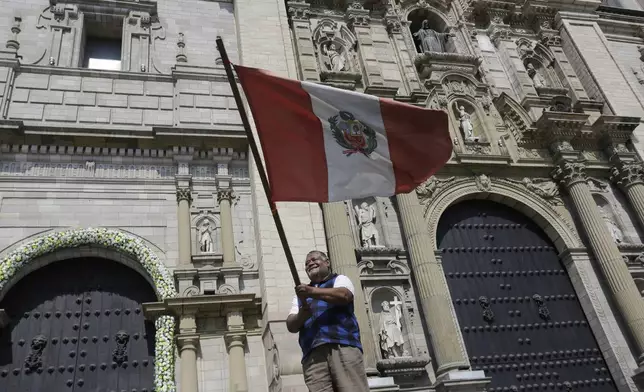
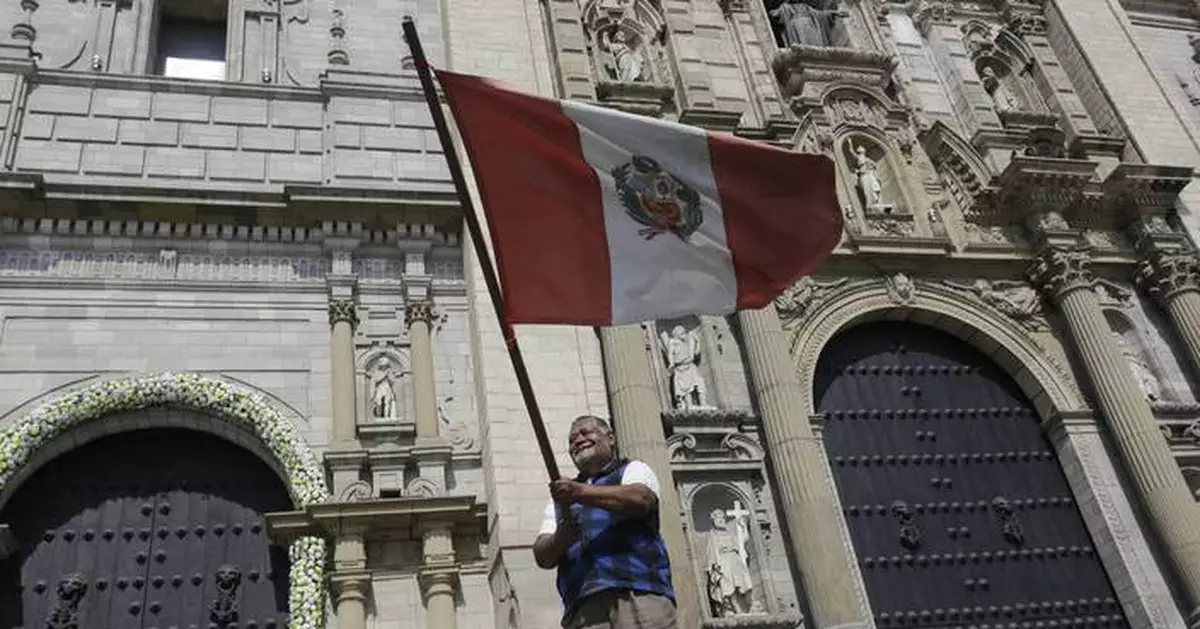
A man waves a Peruvian flag in front of the Cathedral after Cardinal Robert Prevost was elected as the new pope taking the name Leo XIV, in Lima, Peru, Thursday, May 8, 2025. (AP Photo/Cesar Zamalloa)
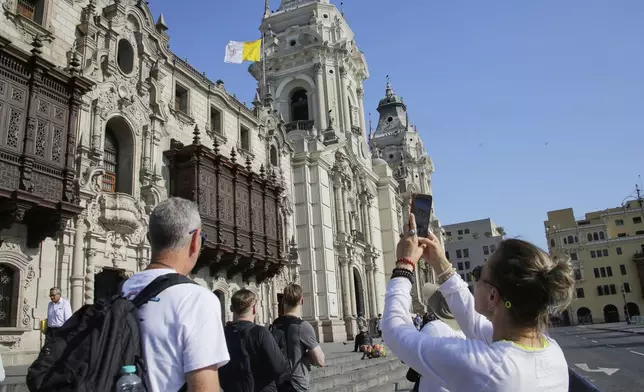
A woman photographs the Vatican flag flying above the Cathedral in Lima, Peru, following the election of Robert Prevost, a dual citizen of the United States and Peru who served as a missionary and bishop in the country, as Pope Leo XIV, Thursday, May 8, 2025. (AP Photo/Cesar Zamalloa)
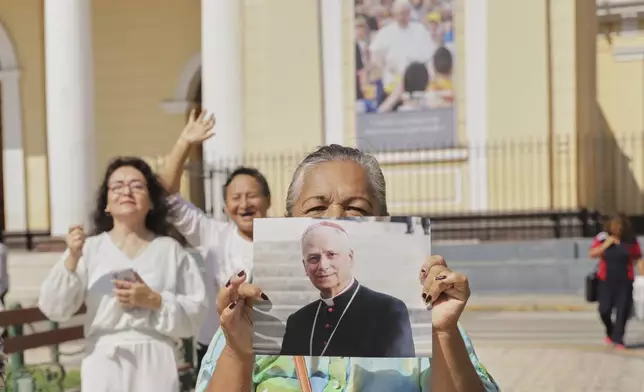
Faithful hold a photo of Bishop Robert Prevost, who was elected Pope Leo XIV, in front of the Cathedral of Chiclayo, Peru, Tuesday, May 8, 2025, where he served as bishop for several years, (AP Photo/Manuel Medina)
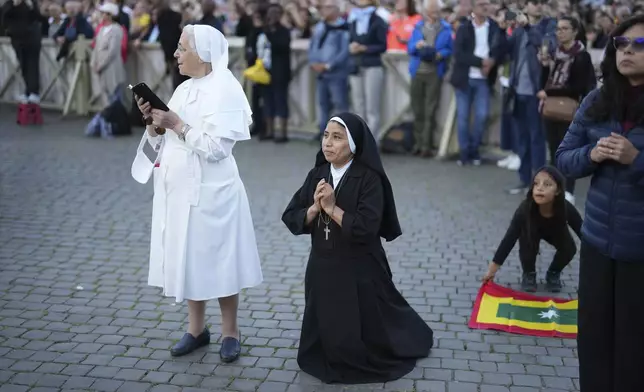
Sor Clara a nun from Peru prays during the speech of the newly elected Pope Leo XIV at the Vatican, Thursday, May 8, 2025. (AP Photo/Francisco Seco)
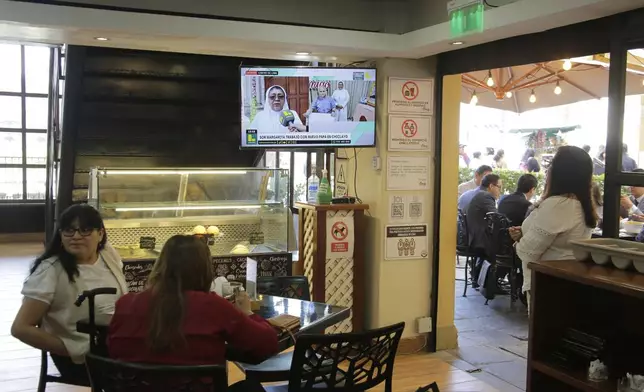
Diners lunch in a restaurant where a television programs airs an interview with a nun who used to work alongside Robert Prevost, who was elected as the new pope, taking the name Leo XIV, in Lima, Peru, Thursday, May 8, 2025. (AP Photo/Cesar Zamalloa)
A man waves a Peruvian flag in front of the Cathedral after Cardinal Robert Prevost was elected as the new pope taking the name Leo XIV, in Lima, Peru, Thursday, May 8, 2025. (AP Photo/Cesar Zamalloa)
In Peru's capital, Lima, the bells of the cathedral rang after Cardinal Robert Prevost was announced as Pope Francis' successor. People outside the church quickly expressed their desire for a papal visit.
“For us Peruvians, it is a source of pride that this is a pope who represents our country,” said elementary school teacher Isabel Panez, who was near the cathedral when the news was announced. “We would like him to visit us here in Peru.”
Leo, standing on the balcony of St. Peter’s Basilica for the first time as pope, addressed in Spanish the people of Chiclayo, which sits just 9 miles (14 kilometers) from Peru’s northern Pacific coast and is among the country’s most populous cities.
“Greetings... to all of you, and in particular, to my beloved diocese of Chiclayo in Peru, where a faithful people have accompanied their bishop, shared their faith,” he said.
Thomas Nicolini, a Peruvian who studies economics in Rome, said he went to St. Peter’s Square as soon as he heard Prevost was the new pope.
“That’s a beautiful area, but one of the regions that needs lots of hope," he said referring to Chiclayo. "So, now I’m expecting that the new pope helps as many people as possible, and tries to reignite, let’s say, the faith young people have lost.”
Diana Celis, who attended several Masses officiated by Prevost in Chiclayo, told The Associated Press that he would often repeat that he had “come from Chicago to Chiclayo, the only difference is a few letters.”
Chiclayo, with a population of more than 800,000, plays a vital role as the main commercial hub of Peru’s northern coast, with highways linking it to the Andes mountains and Amazon region. Its surrounding lands are agriculturally productive.
But despite its economic importance, Chiclayo faces social challenges and about 20% of its population lives in poverty.
Born in Chicago in 1955, Prevost has held Peruvian nationality since 2015, Peru's national register agency confirmed Thursday. In 2014, he served as the administrator and later bishop of Chiclayo and remained in that position until Francis summoned him to Rome in 2023 to serve as the powerful head of the office that vets bishop nominations from around the world, one of the most important jobs in the Catholic Church.
“He will be very sensitive to the social doctrine of the Church and will undoubtedly be attentive to the signs of the times,” the Rev. Edinson Farfán, bishop of Chiclayo, told reporters.
Yet a network of survivors of Catholic clergy sex abuse raised concerns about Prevost’s handling of complaints filed while he was bishop of Chiclayo in 2022. The Peruvian Bishops’ Conference did not immediately respond to a request for comment from the AP regarding the mishandling accusations alleged by the Survivors Network of those Abused by Priests.
Janinna Sesa, who met Prevost while she worked for the church’s Caritas nonprofit, said he is the kind of person who will “put on boots and wade through the mud” to help those most in need. She said he did just that in 2022, when torrential rains affected Chiclayo and nearby villages.
He also delivered food and blankets to remote Andean villages, driving a white pickup truck and sleeping on a thin mattress on the floor. In those villages, Sesa said, Prevost ate whatever was offered to him, including the peasant diet consisting of potatoes, cheese and sweet corn. But, if the opportunity came up, he would enjoy carne asada – one of his favorite dishes – accompanied by a glass of Coca-Cola.
“He has no problem fixing a broken-down truck until it runs,” she said, highlighting his automotive interest.
Sesa added that Prevost was also the driving force for the purchase of two oxygen-production plants during the coronavirus pandemic, which killed more than 217,000 people across Peru.
“He worked so hard to find help, that there was not only enough for one plant, but for two oxygen plants,” she said.
Peruvian President Dina Boluarte said Prevost's election was a “historic moment" for Peru and the U.S.
“He chose to be one of us, to live among us, and to carry in his heart the faith, culture, and dreams of this nation,” she said in a video message in which she also recalled that Prevost chose to become a Peruvian citizen “as an expression of his profound love for Peru.”
Garcia Cano reported from Mexico City. Associated Press writer Giada Zampano contributed to this report from Vatican City.
Follow AP’s coverage of Latin America and the Caribbean at https://apnews.com/hub/latin-america
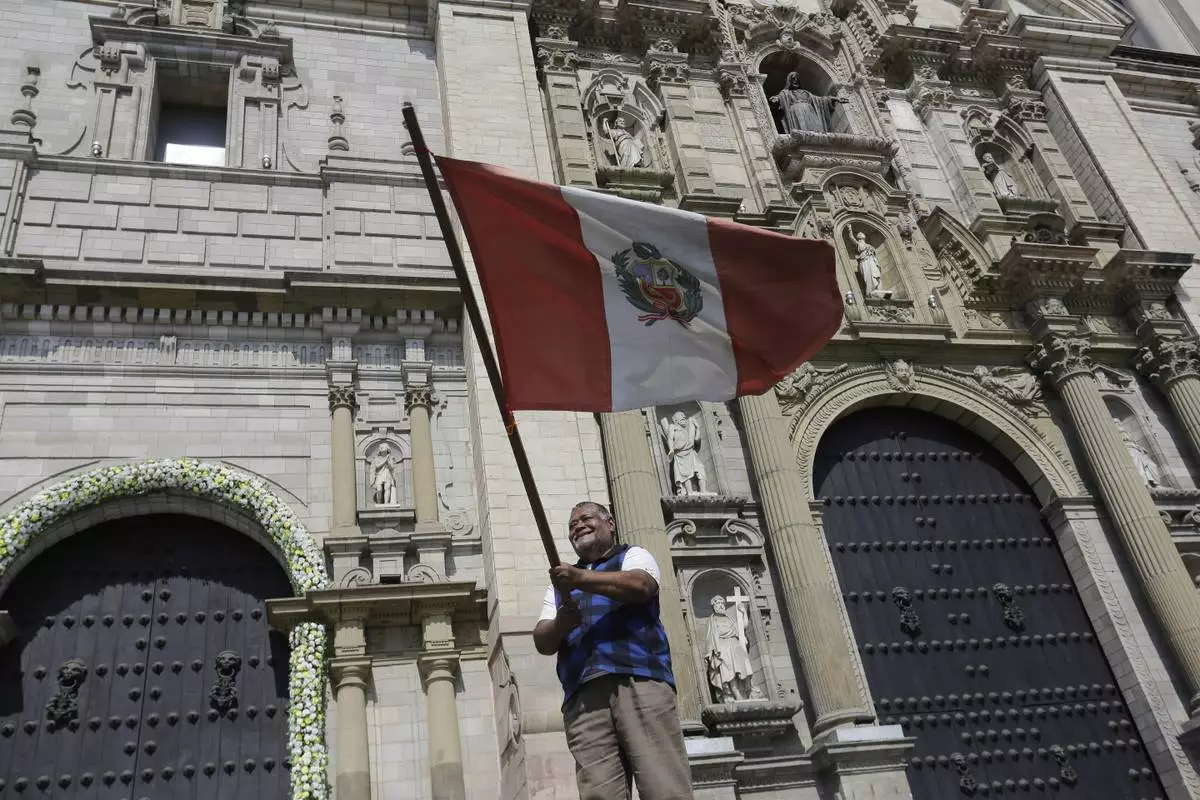
A man waves a Peruvian flag in front of the Cathedral after Cardinal Robert Prevost was elected as the new pope taking the name Leo XIV, in Lima, Peru, Thursday, May 8, 2025. (AP Photo/Cesar Zamalloa)
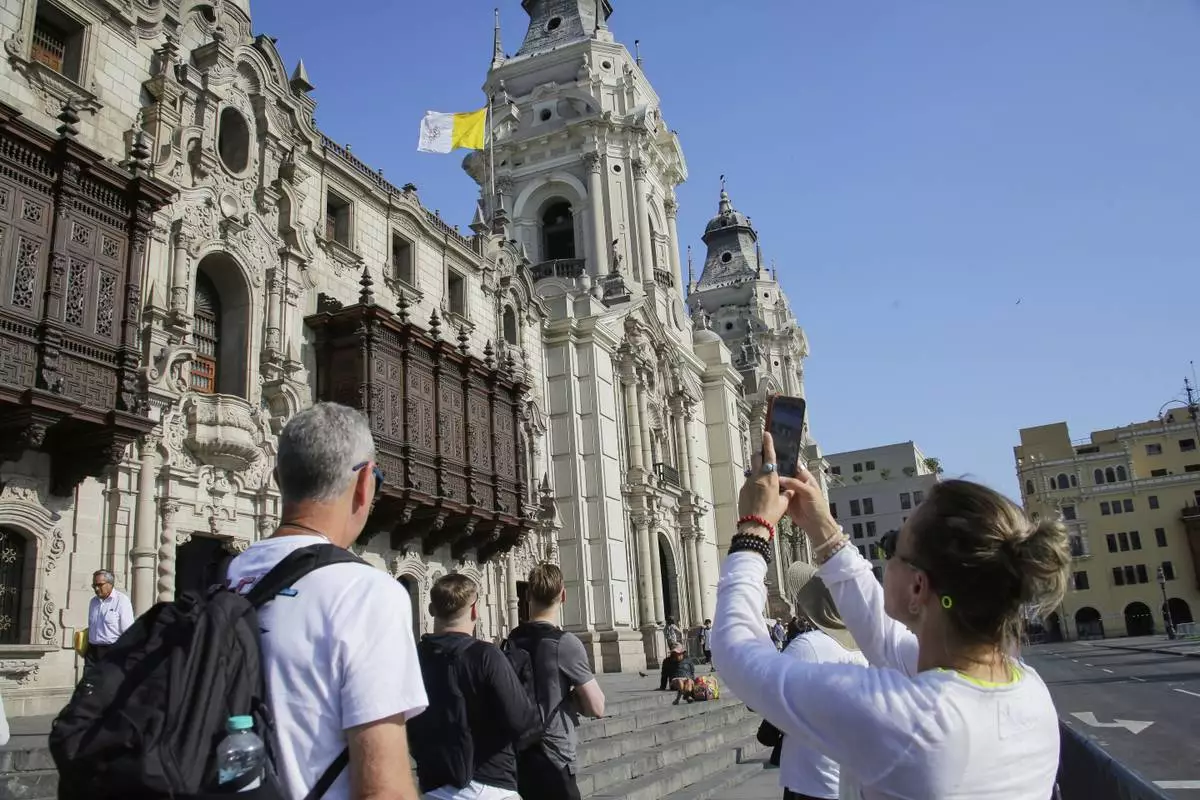
A woman photographs the Vatican flag flying above the Cathedral in Lima, Peru, following the election of Robert Prevost, a dual citizen of the United States and Peru who served as a missionary and bishop in the country, as Pope Leo XIV, Thursday, May 8, 2025. (AP Photo/Cesar Zamalloa)
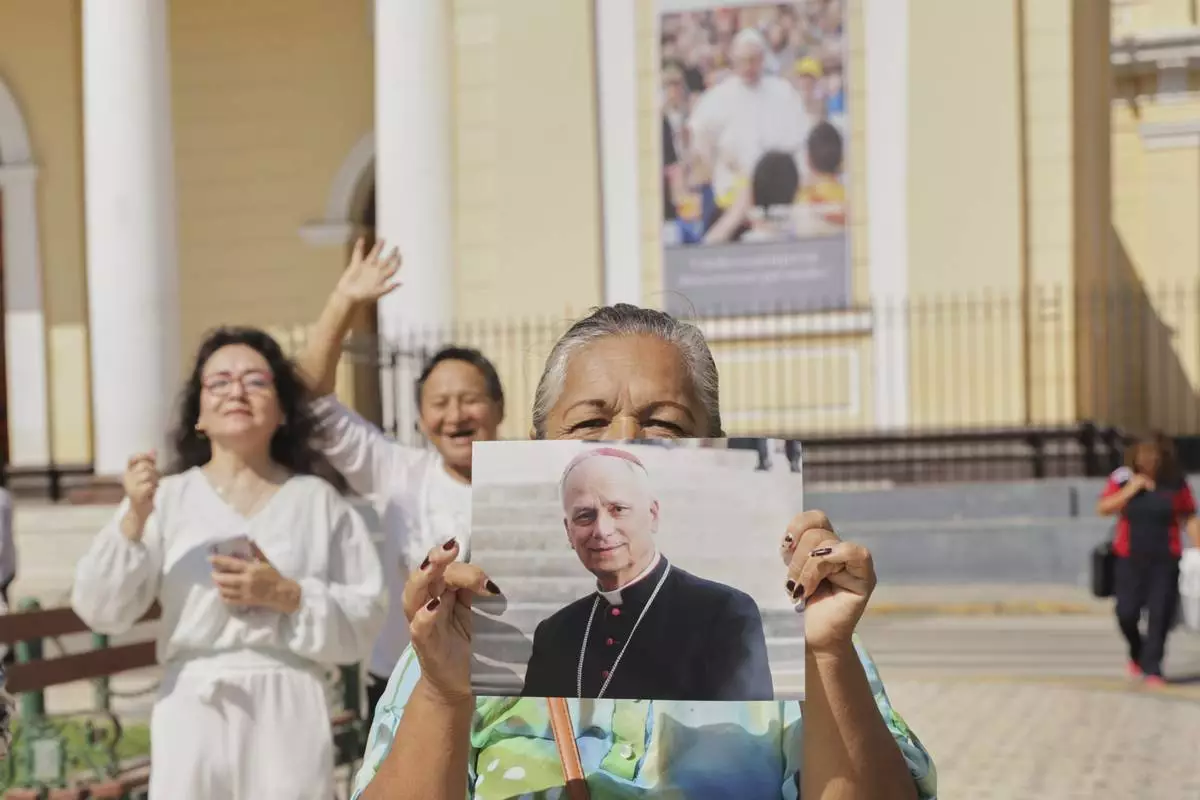
Faithful hold a photo of Bishop Robert Prevost, who was elected Pope Leo XIV, in front of the Cathedral of Chiclayo, Peru, Tuesday, May 8, 2025, where he served as bishop for several years, (AP Photo/Manuel Medina)
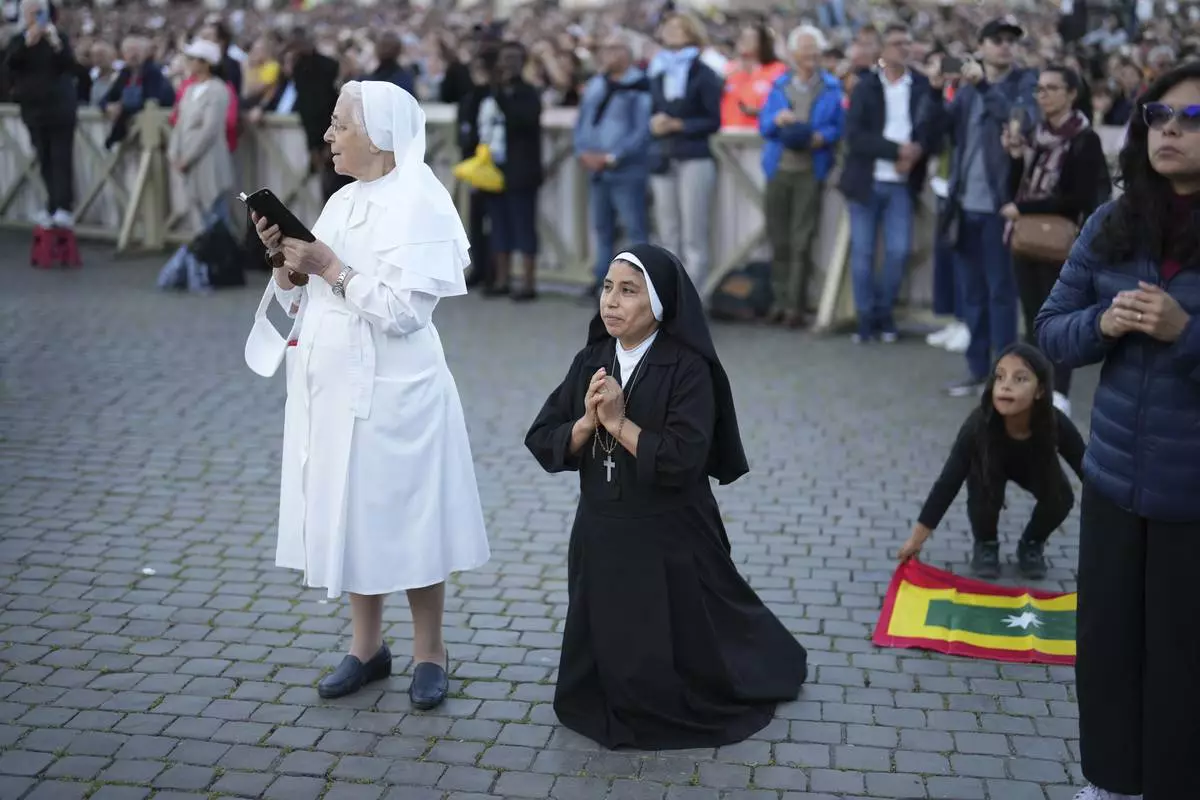
Sor Clara a nun from Peru prays during the speech of the newly elected Pope Leo XIV at the Vatican, Thursday, May 8, 2025. (AP Photo/Francisco Seco)
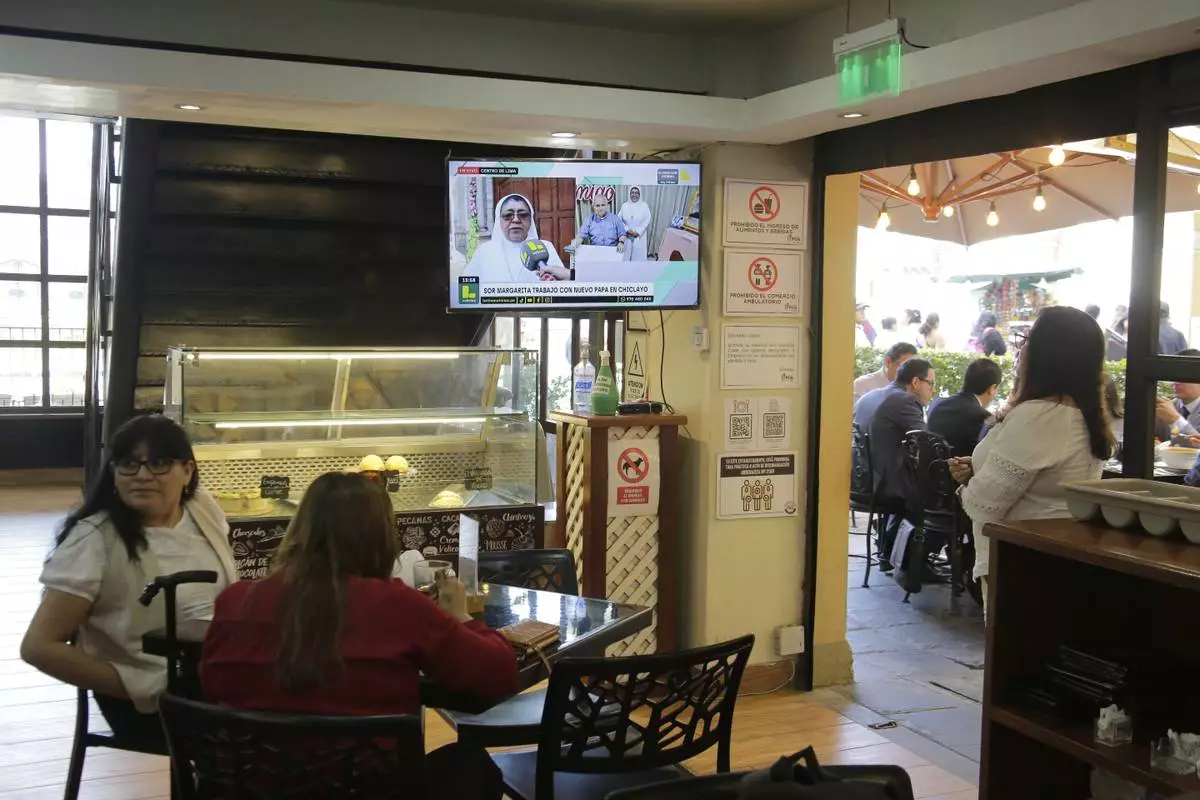
Diners lunch in a restaurant where a television programs airs an interview with a nun who used to work alongside Robert Prevost, who was elected as the new pope, taking the name Leo XIV, in Lima, Peru, Thursday, May 8, 2025. (AP Photo/Cesar Zamalloa)
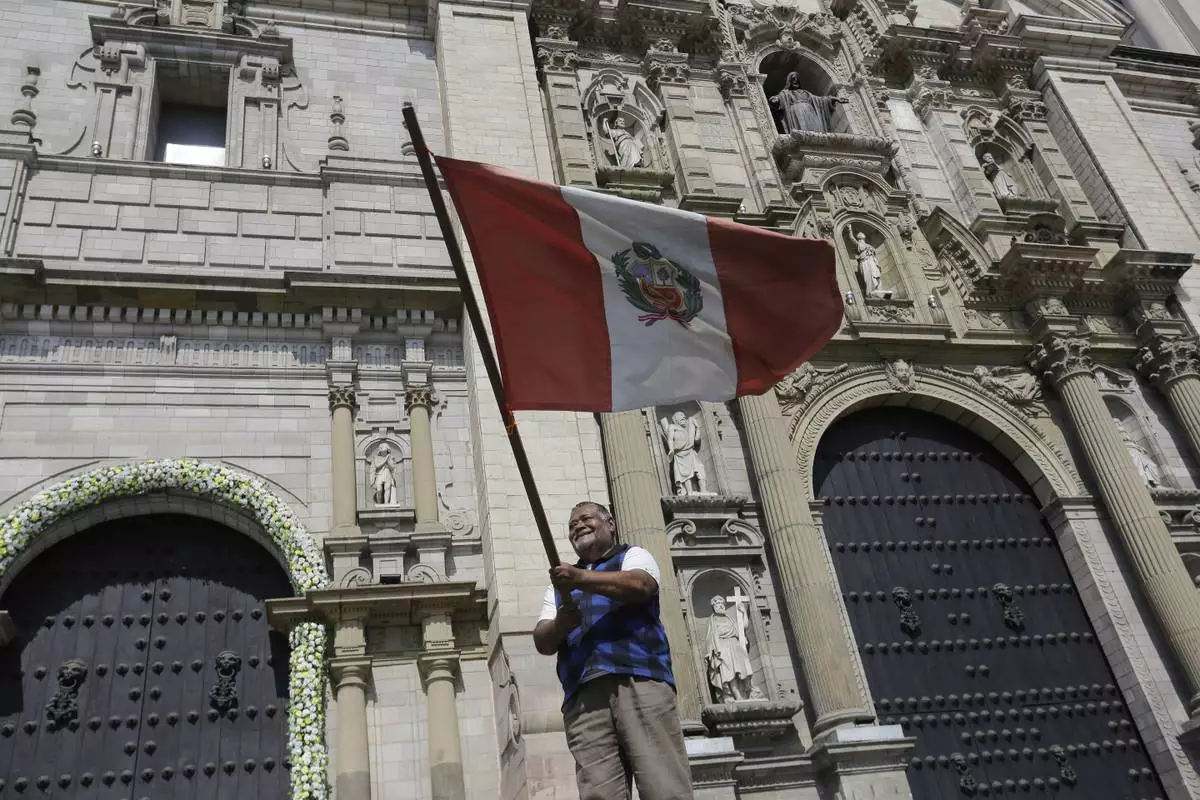
A man waves a Peruvian flag in front of the Cathedral after Cardinal Robert Prevost was elected as the new pope taking the name Leo XIV, in Lima, Peru, Thursday, May 8, 2025. (AP Photo/Cesar Zamalloa)