SANTA CLARA, Calif. (AP) — Robert Saleh once again is tasked with reviving the San Francisco defense following a rough season when the Niners struggled to slow down opposing offenses.
The main difference this time when Saleh returns for a second stint as Niners defensive coordinator following an unsuccessful run as head coach of the New York Jets is the talent that he inherits.
Instead of building a defense up nearly from scratch as he did in his first tenure, Saleh inherits a unit that features a former Defensive Player of the Year in edge rusher Nick Bosa, four-time All-Pro linebacker Fred Warner and versatile defensive back Deommodore Lenoir.
“There’s a lot of really good talent on this defense,” Saleh said Thursday. “So it’s not nearly as what ’17 was.”
Saleh was hired as head coach Kyle Shanahan’s first defensive coordinator in 2017 and struggled the first two seasons. But after the team drafted Bosa in 2019 and implemented the “wide nine” scheme that featured edge rushers lining up wide and focusing on getting up field, the defense took off.
San Francisco went to the Super Bowl in the 2019 season and still had a strong season the following season when Bosa missed almost the entire year with a knee injury, leading to Saleh getting the head coaching job with the Jets.
Saleh was fired midway through this past season in New York, but the Jets had a strong defense under his tenure. During Saleh’s last two full seasons with the Jets in 2022-23, New York ranked first in yards passing allowed per game (178.9) and yards per play allowed (4.7), and second in total defense (301.7 yards per game).
“Obviously, I’ve gone through the head coaching stuff and you learn a lot going through that,” Saleh said. “But I’m happy to be back in this chair where I get to coach a little bit more football and not deal with all the administrative stuff that comes with being a head coach.”
Saleh said he never considered taking a year off when he didn't get another shot at being a head coach and returning to the 49ers was his first choice as a coordinator.
Saleh had high praise for the way Shanahan and general manager John Lynch run the organization and appreciates the loyalty they showed early in his first time as coordinator.
“If you think about those first two years as D-coordinator in ’17 and ’18, it wasn’t easy,” he said. "It could have been very easy for them to move on from me. I’m indebted to this organization, to those men for the rest of my life. They stuck with me and we made it happen. We did what we needed to do, and the rest is history. I’m excited about the opportunity to get the chance to do it again with them.”
Saleh said his defensive system has evolved since he left San Francisco as he tries to stay ahead of whatever offenses are doing around the NFL.
He plans to bring in those new elements along with some of the successful changes that the Niners have undergone to create a new defense. He also will have to incorporate in several rookies who could be key contributors to fill several holes created earlier this offseason.
“Some things are the same, some things are the same from the Jets, some things are meshed, some things are coming in that are new,” he said. "We’re trying to stay a couple years ahead. A lot of it may seem similar, but there’s a lot of nuance that makes a difference.”
Saleh will be the fourth defensive coordinator in four seasons for San Francisco. DeMeco Ryans, who replaced Saleh in 2021, left to become head coach in Houston following the 2022 season, and Steve Wilks and Nick Sorensen were each replaced after one season the past two years.
The 49ers regressed this season under Sorensen as the injury-filled unit struggled to create turnovers, stop the run and create consistent pressure on the quarterback.
San Francisco ranked 29th in the league in scoring defense, allowing 25.6 points per game, and was tied for the seventh-fewest takeaways with 17. The Niners had just two takeaways over the final nine games and ended the season allowing at least 40 points in back-to-back games for the first time since 2015.
“There’s a lot of empathy for what happened to the group last year,” Saleh said. “There was a lot of things that, through the halfway point, this defense was playing some really good football and there were a lot of injuries and the wheels kind of fell off during the last four weeks of the season.”
AP NFL: https://apnews.com/hub/NFL
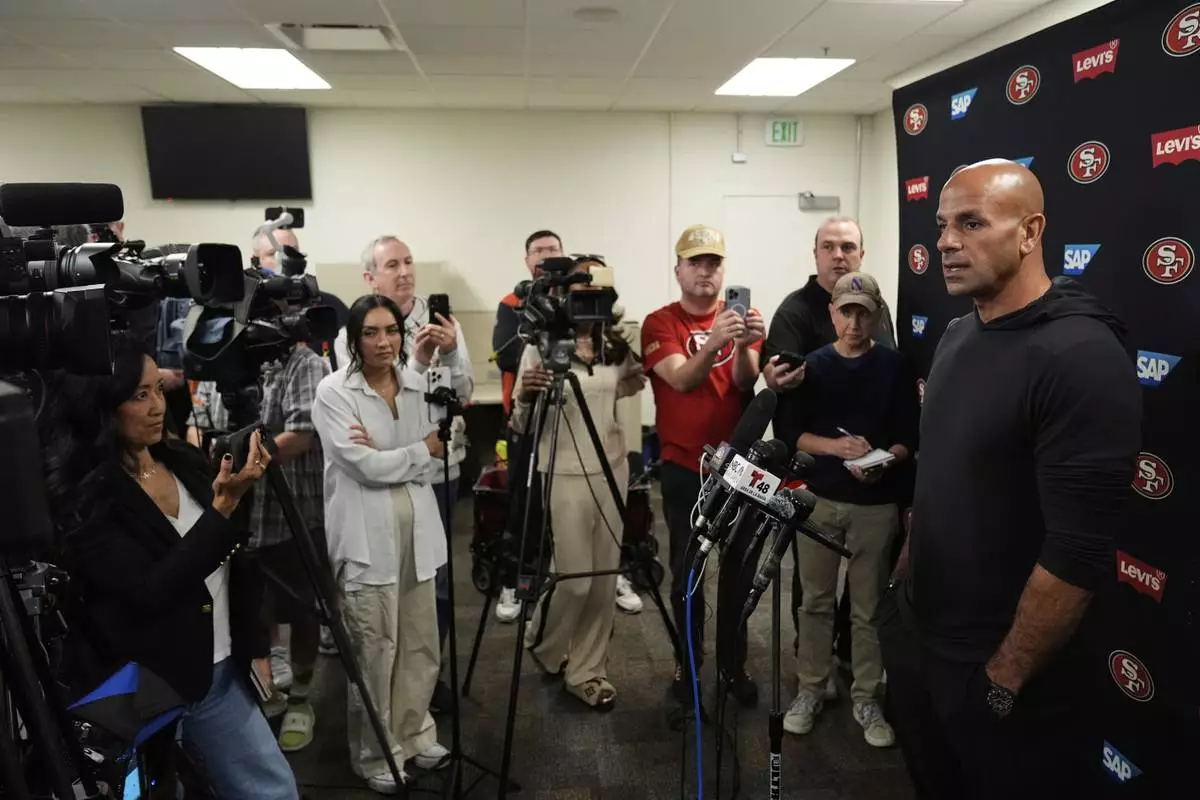
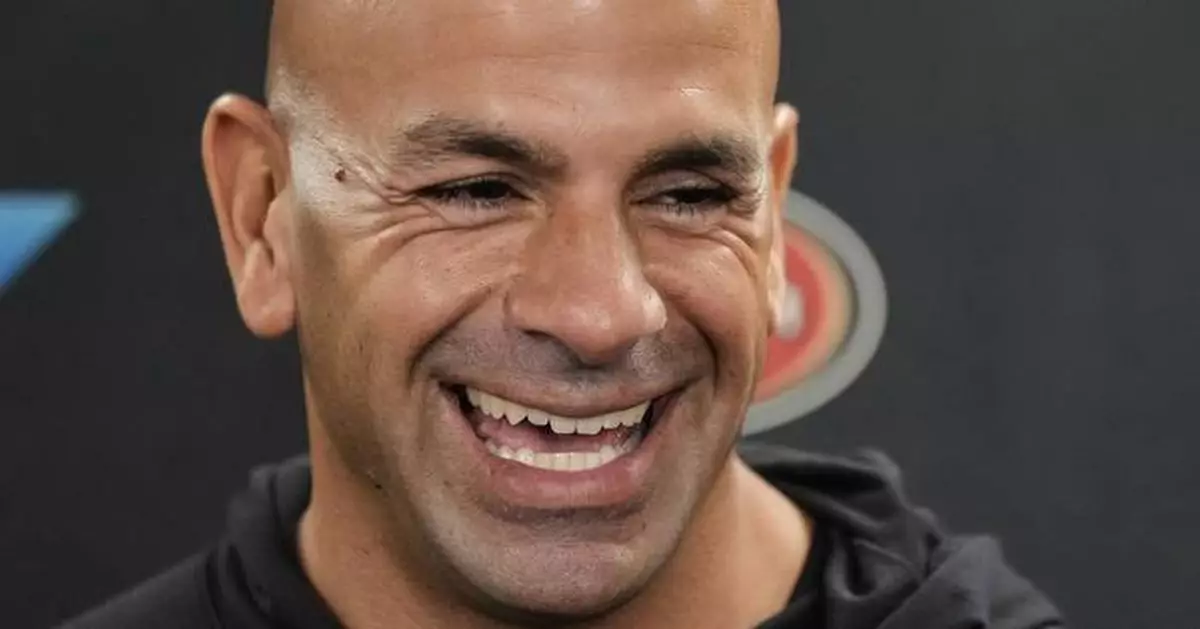
San Francisco 49ers defensive coordinator Robert Saleh, right, speaks to reporters during an NFL football press conference, Thursday, May 8, 2025, in Santa Clara, Calif. (AP Photo/Godofredo A. Vásquez)
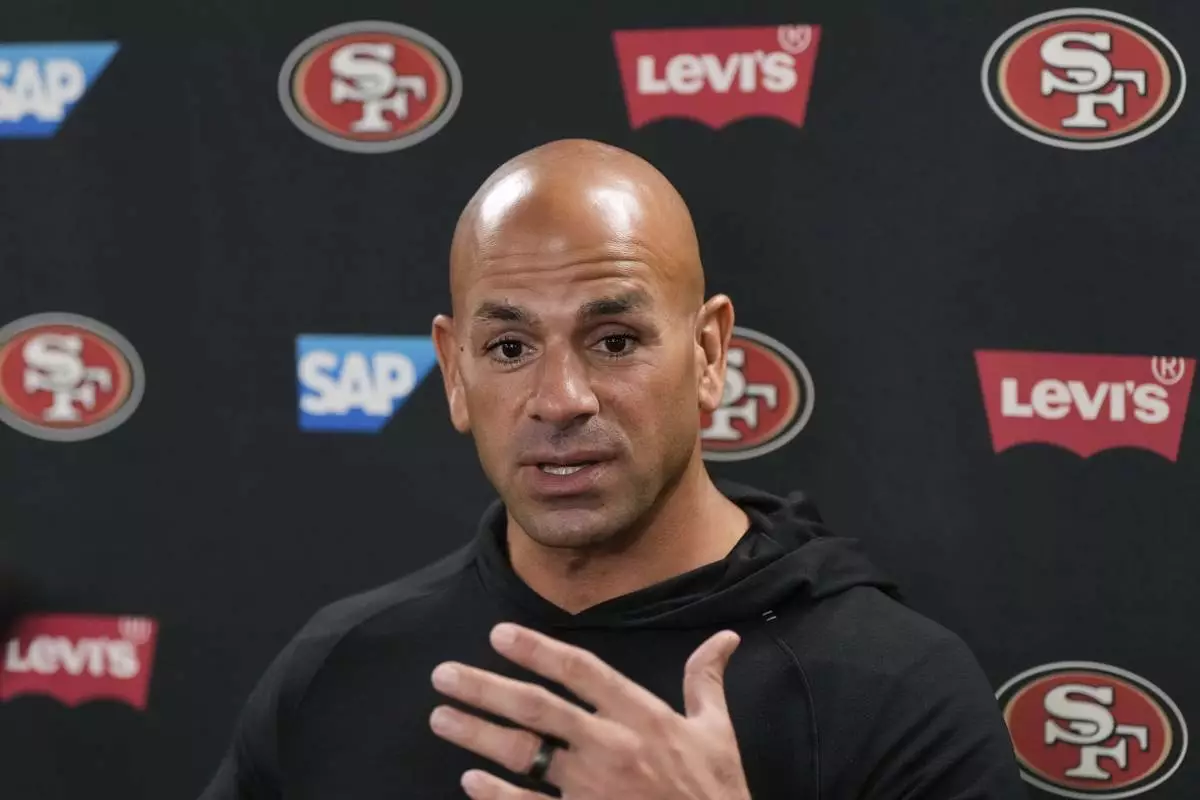
San Francisco 49ers defensive coordinator Robert Saleh speaks to reporters during an NFL football press conference, Thursday, May 8, 2025, in Santa Clara, Calif. (AP Photo/Godofredo A. Vásquez)
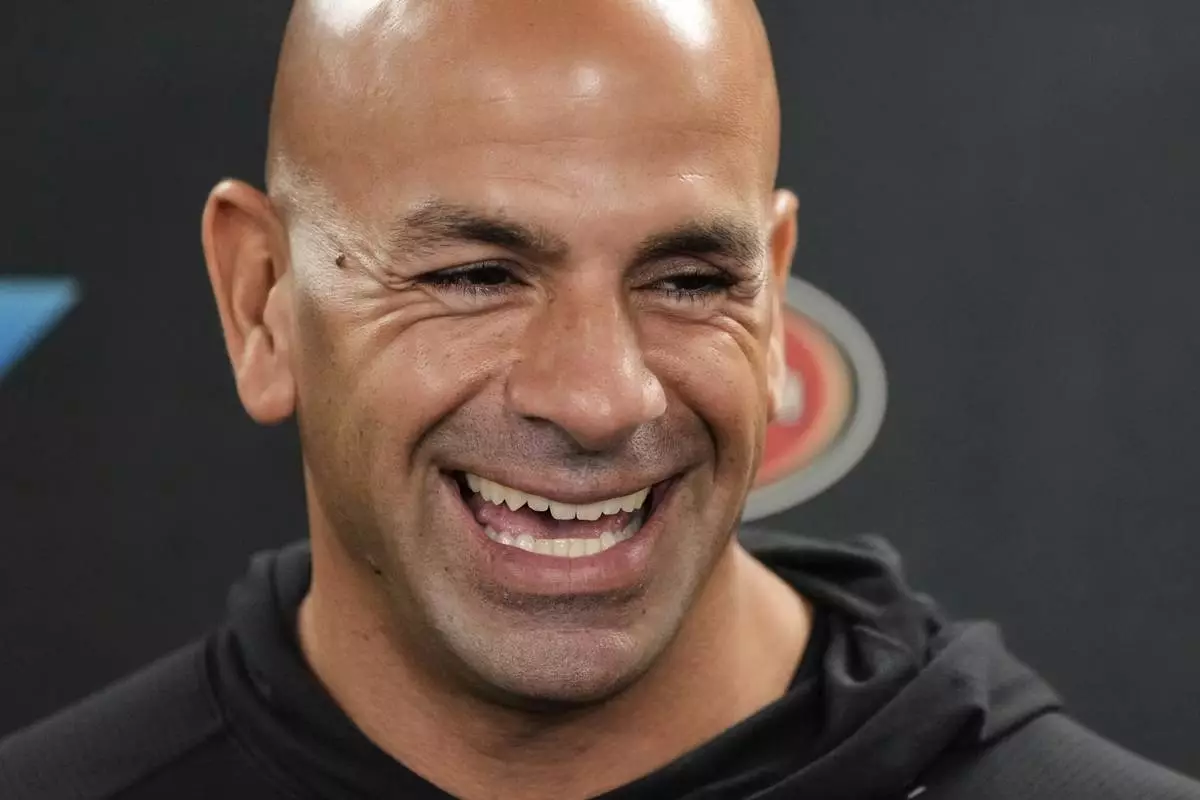
San Francisco 49ers defensive coordinator Robert Saleh speaks to reporters during an NFL football press conference, Thursday, May 8, 2025, in Santa Clara, Calif. (AP Photo/Godofredo A. Vásquez)
NEW YORK (AP) — Thousands of nurses at some of New York City's biggest hospitals could go on strike Monday during a severe flu season, three years after a similar walkout forced some of the same medical facilities to transfer some patients and divert ambulances.
The looming strike could impact operations at several of the city’s major private hospitals, including Mount Sinai in Manhattan, Montefiore Medical Center in the Bronx and NewYork-Presbyterian/Columbia University Irving Medical Center.
Nearly 15,000 nurses could walk off the job early Monday if a deal is not reached, amounting to the largest nurses strike in city history, according to Nancy Hagans, president of the New York State Nurses Association. As of Sunday morning, little progress had been made at the bargaining table, Hagans said. A vast majority of the union's nurses voted to authorize the strike last month.
Like the 2023 labor fight, this year's dispute involves a complicated array of issues, claims, counterclaims and hospital-by-hospital particulars. Once again, staffing levels are a major flashpoint: Nurses say the big-budget medical centers are refusing to commit to — or even backsliding on — provisions for manageable, safe workloads.
This time, the nurses' union also wants guardrails on hospitals using artificial intelligence, plus more workplace security measures. A gunman strode into Mount Sinai in November, and a man with a sharp object barricaded himself in a Brooklyn hospital room this week; both men ultimately were killed by police.
The private, nonprofit hospitals involved in the current negotiations say they've made strides in staffing since 2023. Some of them suggest the union's demands, taken as a whole, are far too expensive.
Scores of nurses rallied Friday in Manhattan, insisting their primary concern was proper caregiving and accusing the medical centers — whose top executives make millions of dollars a year — of greed and intransigence.
“My hospital tries to cut corners on staffing every day, and then they try to fight historic gains we made three years ago,” said Sophie Boland, a pediatric intensive care nurse in the NewYork-Presbyterian hospital system.
The hospitals, meanwhile, have called the union’s strike threat “reckless.” They vowed in a statement Thursday to “do whatever is necessary to minimize disruptions.”
Hagans, the union president, has also stressed that patients should not delay care during a potential strike.
Still, New York Gov. Kathy Hochul expressed concern that a strike could affect patient care, urging both sides on Friday “to stay at the table and get a deal done.”
Mount Sinai has hired over 1,000 temporary nurses and held preparatory drills for a strike that could affect its 1,100-bed main hospital and two affiliates — Mount Sinai Morningside and Mount Sinai West — with about 500 beds each.
NewYork-Presbyterian said it also had arranged for temporary nurses but, if the strike happens, some patients might be moved to new rooms or advised to transfer to another facility. Montefiore posted a message assuring patients that appointments would be kept.
The same union mounted a three-day strike at the Mount Sinai flagship facility and Montefiore in 2023, when nurses emphasized their sacrifices during the exhausting, frightening height of the COVID-19 pandemic and the national nurse staffing crisis that followed.
The walkout prompted those hospitals to postpone non-emergency surgeries, tell many ambulances to go elsewhere and transfer some intensive-care infants and other patients. Temporary nurses and even administrators with clinical backgrounds were tapped to fill in, but some patients noticed longer waits and more sparsely staffed wards.
The strike ended with an agreement on raises totaling 19% over three years and staffing improvements, including the possibility of extra pay if nurses had to work short-handed.
Now, the union says, the hospitals are retreating from those guarantees and falling short on other promises.
Montefiore, for example, agreed to “make all reasonable efforts” to stop keeping some emergency room patients in hallways while they wait for space to open up in other wards. Yet three years later, nurses still scramble to treat “hallway patients,” Montefiore intensive care nurse Michelle Gonzalez said Friday.
Montefiore has suggested it's made some progress: The hospital told elected officials in a letter in October that there has been a 35% reduction in the time it takes from emergency admission to a clinical unit bed.
Overall, the hospitals say they have greatly reduced nursing job vacancy rates in the last three years, and Mount Sinai and NewYork-Presbyterian/Columbia Irving University Medical Center say they also have added hundreds of nursing positions.
In recent days, several smaller hospitals — including multiple Northwell Health facilities on Long Island — averted potential walkouts by striking deals or making what the union viewed as adequate progress.
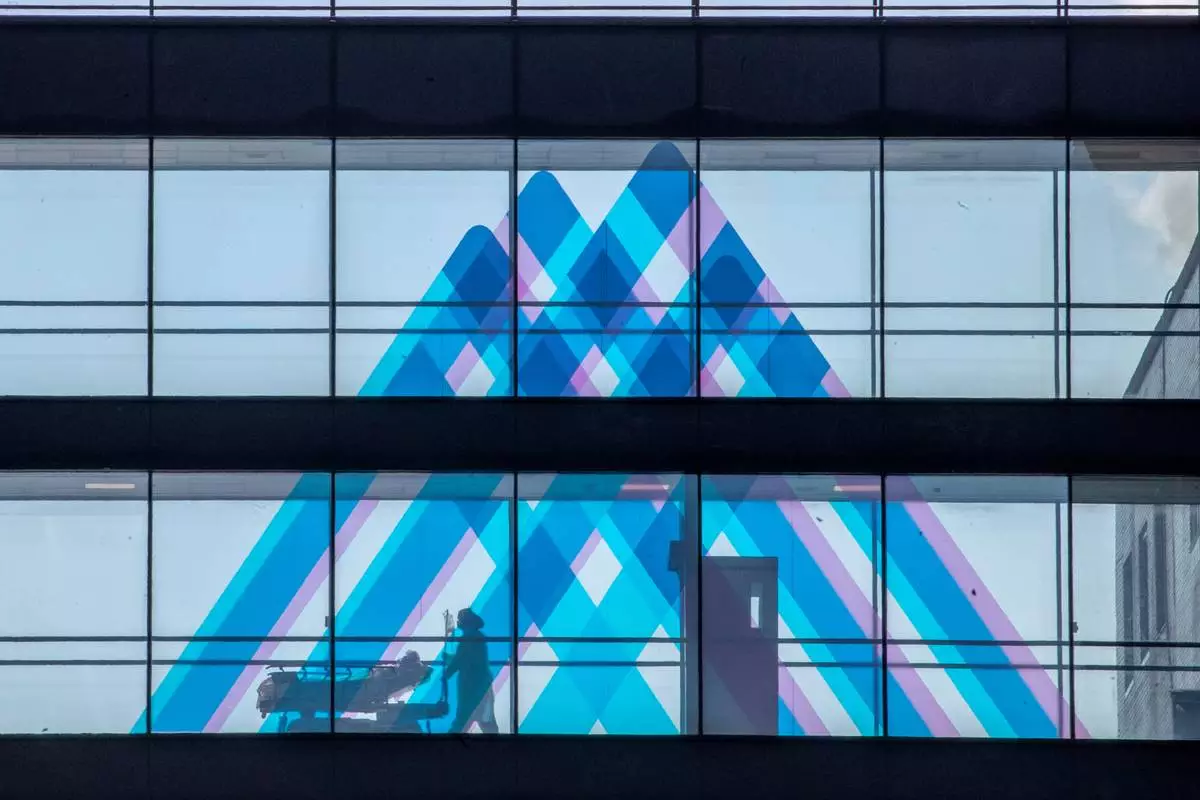
FILE - A medical worker transports a patient at Mount Sinai Hospital, April 1, 2020, in New York. (AP Photo/Mary Altaffer, File)