WASHINGTON (AP) — A majority of U.S. adults disapprove of President Donald Trump’s handling of issues related to colleges and universities, according to a new poll, as his administration ramps up threats to cut federal funding unless schools comply with his political agenda.
More than half of Americans, 56%, disapprove of the Republican president's approach on higher education, the survey from The Associated Press-NORC Center for Public Affairs Research finds, while about 4 in 10 approve, in line with his overall job approval.
Since taking office in January, Trump has tried to force change at universities he says have become hotbeds of liberalism and antisemitism. The spotlight most recently has been on Harvard University, where Trump's administration has frozen more than $2.2 billion in federal grants, threatened to strip the school’s tax-exempt status, and demanded broad policy changes.
The Trump administration also has cut off money to other elite colleges, including Columbia University, the University of Pennsylvania and Cornell University, over issues including the handling of pro-Palestinian activism and transgender athletes' participation in women's sports. Harvard has framed the government’s demands as a threat to the autonomy that the Supreme Court has long granted American universities.
The poll shows a disconnect between the Trump administration’s targeting of universities and an American public that sees them as key to scientific research, new ideas and innovative technology. About 6 in 10 U.S. adults say colleges and universities make more of a positive contribution to medical and scientific research than a negative one, and a similar share favors maintaining federal funding for scientific research.
“Let’s talk about Harvard for a minute,” said Freddy Ortega, 66, a Democrat and a retired military veteran in Columbus, Georgia. “The way he took away all that money in funding, impacting things that Harvard has been working on for the betterment of the world.”
“One man should not have that much power," Ortega continued. "This is something for Congress to deal with.”
Ortega, who's Hispanic, also said he's concerned about Trump’s attempts to dismantle diversity, equity and inclusion programs across U.S. society. “I came up in the military. I know the good that those programs do," he said. "It changes the direction that people’s lives are going to take.”
Trump’s stance on higher education resonates more strongly with Republicans, most of whom see college campuses as places where conservatives are silenced and liberal ideas run unchecked. About 8 in 10 Republicans approve of how Trump is handling issues related to colleges and universities — which, notably, is higher than the share of Republicans, 70%, who approve of his handling of the economy — and about 6 in 10 say they're “extremely” or “very” concerned about liberal bias on campus.
Republicans are more divided, however, on withholding federal funding from schools unless they bow to Trump’s demands. About half are in favor, while about one-quarter are opposed and a similar share are neutral.
“I’m all for it,” said Republican voter Hengameh Abraham, 38, a mother of two in Roseville, California. She supports cutting federal funds and opposes DEI programs, saying she emigrated to America from Iran as a teenager and worked hard to get ahead in school without the help of affirmative action programs.
“Your racial identity, nationality and background should not be a factor in getting accepted to college or getting a job,” said Abraham. She supports Trump’s focus on campus antisemitism. When pro-Palestinian protests swept U.S. colleges last year, some of the demonstrators' messaging was anti-U.S., she said.
“I do not think if you have any kind of anti-American agenda or slogan that you should be allowed on a university campus in the United States," she said.
In Harvard's case, Trump has threatened to remove its tax-exempt status, and his administration has implemented funding cuts. Those measures are divisive among the general public: Nearly half oppose withholding federal funding as a punitive action, while about one-quarter favor it. About one-quarter are neutral.
Charles Jolivette, 43, a college career counselor who lives in New Orleans, sees Trump’s education policies as an attack on free speech and people of color.
“Not only is the president going after anyone he feels is an opponent and anyone who is not compliant, but he’s attacking some of the most important elements of our society,” said Jolivette, a Democrat. “It’s rampant bullying from the president of the United States, who is supposed to be crossing the aisle.”
A top concern of most Americans is the cost of a college degree. About 6 in 10 U.S. adults are “extremely” or “very” concerned about the cost of tuition. That concern is shared by majorities of Democrats and Republicans and far outweighs concerns about antisemitism and liberal bias on campuses among the general public.
“College costs a lot more than it needs to. To get an education, you should not have to break your pocketbook,” said Eunice Cortez, 68, a Republican near Houston.
Cortez, who's originally from Mexico, did not go to college, but she made sure her U.S.-born children did and is proud that her grandchildren are getting college degrees. She supports Trump but is concerned that some of his policies, including funding cuts, will make it harder for people who need tuition aid to get an education. She sees it as the government “getting in the way” of an educated society.
The poll shows a divide between college-educated Americans and those without college degrees, highlighting a possible cultural rift that Trump has seized on in the past.
Most Americans with a college degree, 62%, are opposed to withholding funding from universities that don't comply with the president's requirements, while those without a college degree are split, with about 3 in 10 in favor, a similar share opposed, and about 4 in 10 saying they don't have an opinion.
Kara Hansen, 40, a registered independent in Seminole, Oklahoma, is a few credits shy of a college degree. She supports the idea of dismantling the Education Department to shake things up. But she said she's concerned by what she calls Trump’s “authoritarian tendencies” and a growing fear on college campuses to speak up and voice opinions.
“It feels like everybody has a muzzle on," Hansen said. "They can’t fully express themselves because they’re afraid of getting in trouble, and afraid of Trump.”
About 3 in 10 U.S. adults say students or professors can freely speak their minds “a lot” on college and university campuses. About 4 in 10 say they can do this to “some” extent. Republicans feel their views are stifled: About 8 in 10 say liberals can speak their minds “a lot” or “some” on campus, but fewer than half say the same about conservatives.
Gecker reported from San Francisco.
The AP-NORC poll of 1,175 adults was conducted May 1-5, using a sample drawn from NORC’s probability-based AmeriSpeak Panel, which is designed to be representative of the U.S. population. The margin of sampling error for adults overall is plus or minus 4 percentage points.
The Associated Press’ education coverage receives financial support from multiple private foundations. The AP is solely responsible for all content. Find the AP’s standards for working with philanthropies, a list of supporters and funded coverage areas at AP.org.
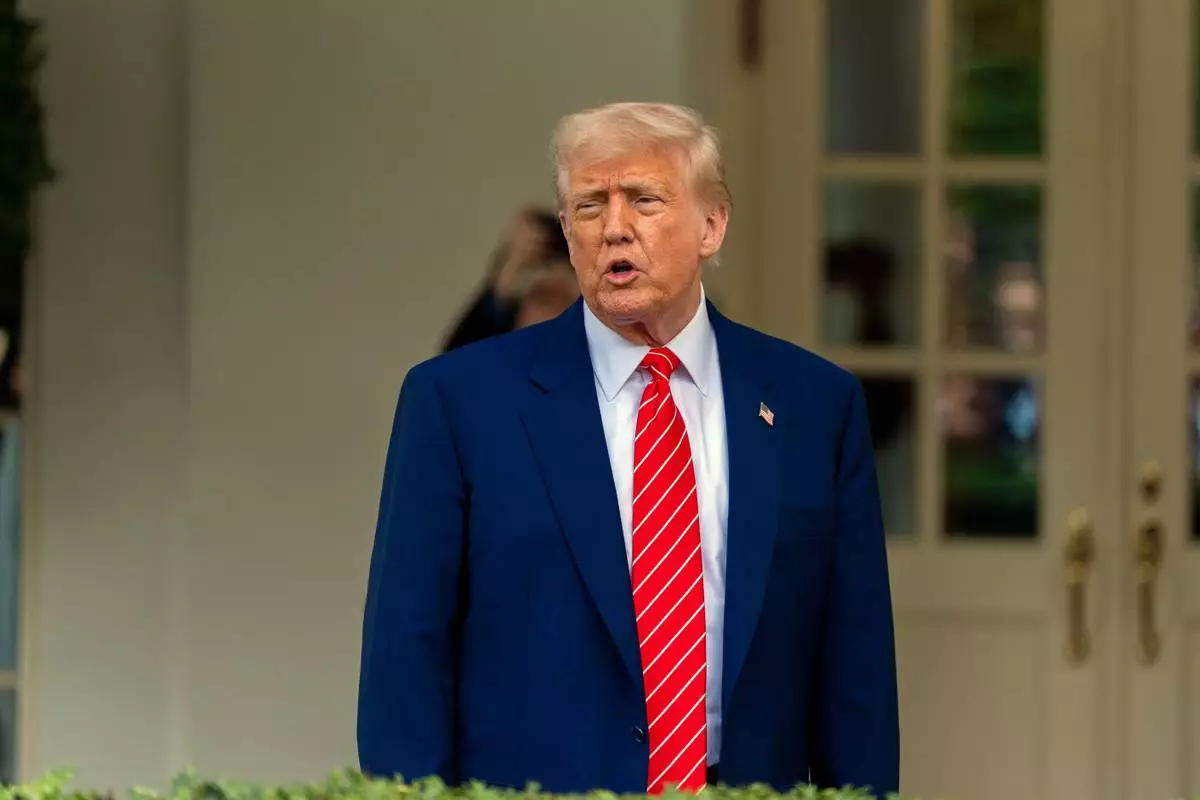
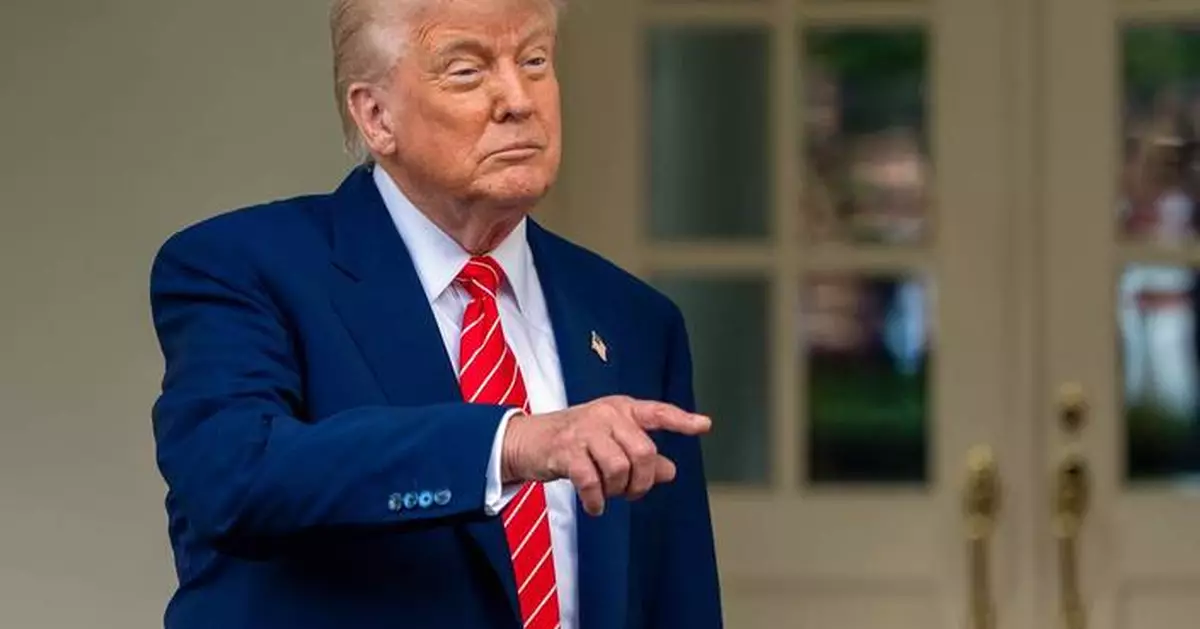
President Donald Trump speaks with reporters in front of the West Wing of the White House, Thursday, May 8, 2025, in Washington. (AP Photo/Alex Brandon)
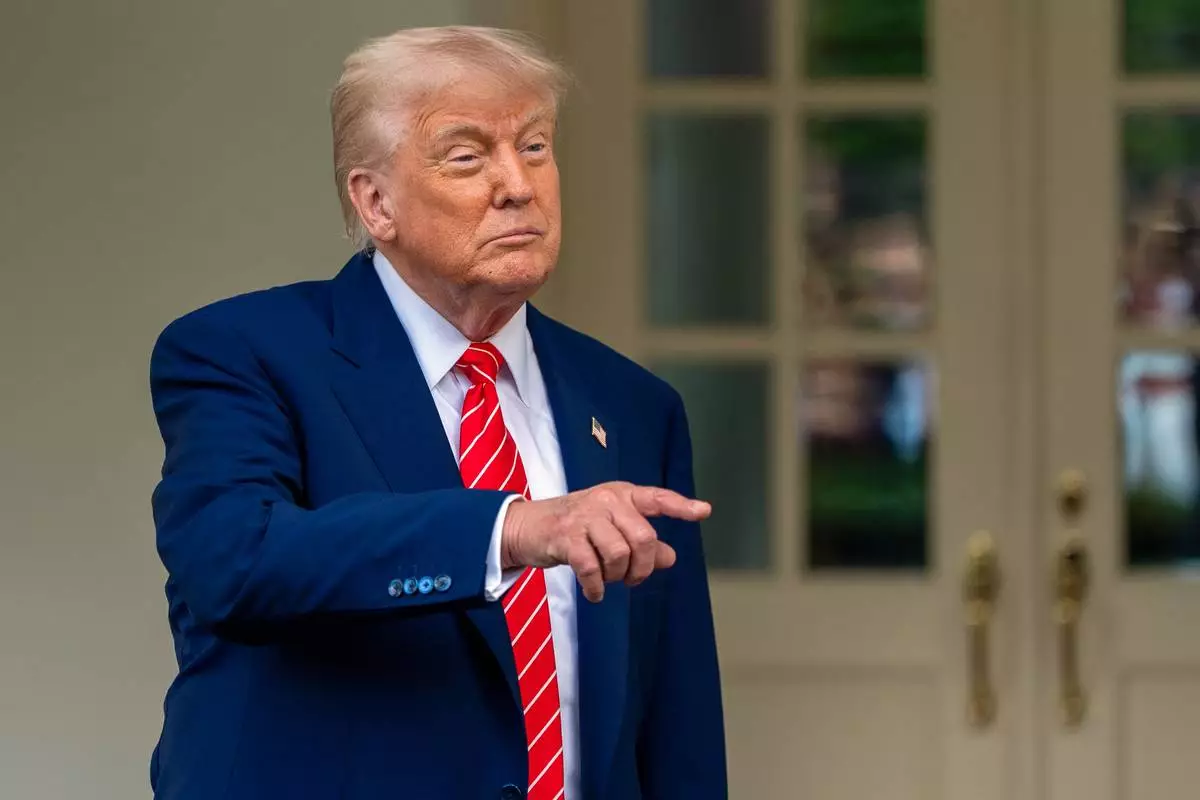
President Donald Trump speaks with reporters in front of the West Wing of the White House, Thursday, May 8, 2025, in Washington. (AP Photo/Alex Brandon)