NEW YORK (AP) — President Donald Trump's tariffs crusade has taken aim at a number of foreign goods, from European wines and car parts from Mexico to films made abroad. Lately, the president's wandering ire has found another rhetorical poster child: toy dolls.
Trump asserted that children will be fine having two dolls — perhaps three or five — instead of 30 if U.S. import taxes increase consumer prices. The response on social media included memes of him portrayed as the Grinch and photos of a young Barron Trump’s child-sized Mercedes convertible.
“COMPLETELY out of touch," The Loyal Subjects CEO Jonathan Cathey, whose collectible toy company in Los Angeles produces Strawberry Shortcake and Rainbow Brite dolls, wrote on Linkedin. "If that ain’t a ‘Let them eat cake’ moment shot through the echoes of history? Love how toys and dolls have become THE martyr metaphor for this nonsensical trade war incoherence.”
The president's comments also touched a nerve with parents, both ones who took offense at the casual way he hypothesized that perhaps “two dolls will cost a couple bucks more” and those who acknowledged their own kids have more toys than they need.
Either way, the U.S. toy industry has a lot riding on a possible deescalation of the tariff standoff between the Trump administration and the government in Beijing. Nearly 80% of the toys sold in the U.S. come from China.
The Toy Association, a trade group, has lobbied for an immediate reprieve from the 145% tariff rate the president put on Chinese-made products. Some toy companies warn the likelihood of holiday shortages increases each week the tariff remains in effect.
Here's a snapshot of the doll debate and how tariffs are impacting toys:
From Barbie, Bratz and Cabbage Patch Kids to Adora baby dolls, American Girl and Our Generation, dolls are a big business in the U.S. as well as beloved playthings.
The doll category, which includes accessories like clothes, generated U.S. sales of $2.7 billion last year compared to $2.9 billion in 2023 and $3.4 billion in 2019, according to market research firm Circana.
Consumers splurged on toys during the height of the COVID pandemic to keep children and themselves occupied, but sales flattened as inflation seized the economy.
Younger girls becoming more interested in buying makeup and skincare also has cooled the demand for dolls, Marshal Cohen, Circana's chief retail advisor, said.
The nation's largest toy maker, Mattel, said this week it would have to raise prices for some products sold in the U.S. to offset higher costs related to tariffs.
The company, whose brands include Barbie and American Girl, said the increases were necessary even though it’s speeding up the expansion of its manufacturing base outside of China.
Smaller toy companies are expected to have a harder time than Mattel and Hasbro, which makes the eating, drinking and diaper-wetting Baby Alive. Cathey said he paused The Loyal Subjects' shipments from China in April because he couldn't pay the stratospheric tariff they would have incurred.
“Nobody insulates themselves with that much cash,” he said.
With about four months' worth of inventory on hand, Cathey said his ability to secure holiday stock depends on a break in the U.S.-China trade standoff happening in the next two weeks since it would take time for cargo operations to resume.
Cepia, a Missouri company that was behind the 2009 holiday season hit Zhu Zhu Pets, launched a line of 11-inch fashion dolls called Decora Girlz last year. CEO James Russell Hornsby said he was working to relocate some production but the move won't happen in time to replace the orders he planned to get from China.
Hornsby described himself as a Trump supporter and said he understands the administration's desire to reduce trade imbalances.
“Let's just get the deals done and stop all this because (Trump's) disrupting Christmas,” he said.
Although American Girl launched in 1986 with a line based on fictional historical characters, the dolls never were domestic products. They were made in Germany before production eventually moved to China.
Toy experts say that in addition to lower costs, Chinese factories have developed techniques and expertise that are not easily replicated.
“We don’t have any capacity in the U.S. to make rooted doll hair. And then you’ve got things like the faces. Some of them are hand-painted, others are done with a Tampo (printing) machine,” James Zahn, editor-in-chief of industry publication The Toy Book, said of doll-making.
Hornsby said rooting the synthetic hair onto the heads of Decora Girlz dolls is carried out by skilled workers at factories in Guangzhou and Dongguan, China.
“It's not just sticking into a machine and it automatically does it," he said. ”You have to know what you’re doing in order to make that doll look like it’s got a full set of hair when literally maybe only 60% of the head is filled with hair."
White House Deputy Chief of Staff Stephen Miller said last week that he assumes consumers would prefer to pay more for American-made products. Dolls made in China might have lead paint in them, he said.
Teresa Murray, consumer watchdog director at the U.S. Public Interest Research Group, said the picture is more complicated.
Products for children ages 12 and under require third-party testing and certification from labs approved by the U.S. Consumer Product Safety Commission, the agency tasked with enforcing lead levels in toys, Murray said.
The rules apply to all products sold in the U.S. Toys by major brands such as Fisher-Price, Mattel, Hasbro and Lego, which have long outsourced manufacturing to China, are usually in compliance, she said.
But the rise of online shopping, including e-commerce platforms that ship directly to U.S. consumers from overseas, has posed a challenge, according to Murray. When valued at less than $800, such parcels entered the U.S. duty-free and were not subject to the same scrutiny as bulk imports, she said.
The White House eliminated the customs exemption starting May 2 for low-value parcels that originated in mainland China and Hong Kong. U.S Customs and Border Protection expects additional oversight will make it easier to flag problems.
Toy companies and industry experts argue the high tariffs on Chinese imports will tempt price-sensitive shoppers to search for cheap counterfeit toys that carry higher safety risks.
Plenty of people agree American consumer culture has gotten out of hand, in large part due to prices kept low through the labor of foreign factory workers who earn much less than they would in the U.S.
Katie Walley-Wiegert, 38, a senior marketer in Richmond, Virginia, and the parent of a 2-year-old son, agrees there’s too much materialism but thinks parents should have choices when deciding what is best for their children. She found the wealthy Trump’s comments off-putting.
“I think it is a small view of what purchase habits and realities are for people who buy toys for kids,” Walley-Wiegert said.
San Francisco resident Elenor Mak, who founded the Jilly Bing doll company after she couldn't find an Asian American doll for her daughter, Jillian, now 5, said the president's remarks upset her because some families struggle to buy even one doll.
The trade war with China “just makes it even more impossible for those families,” Mak said.
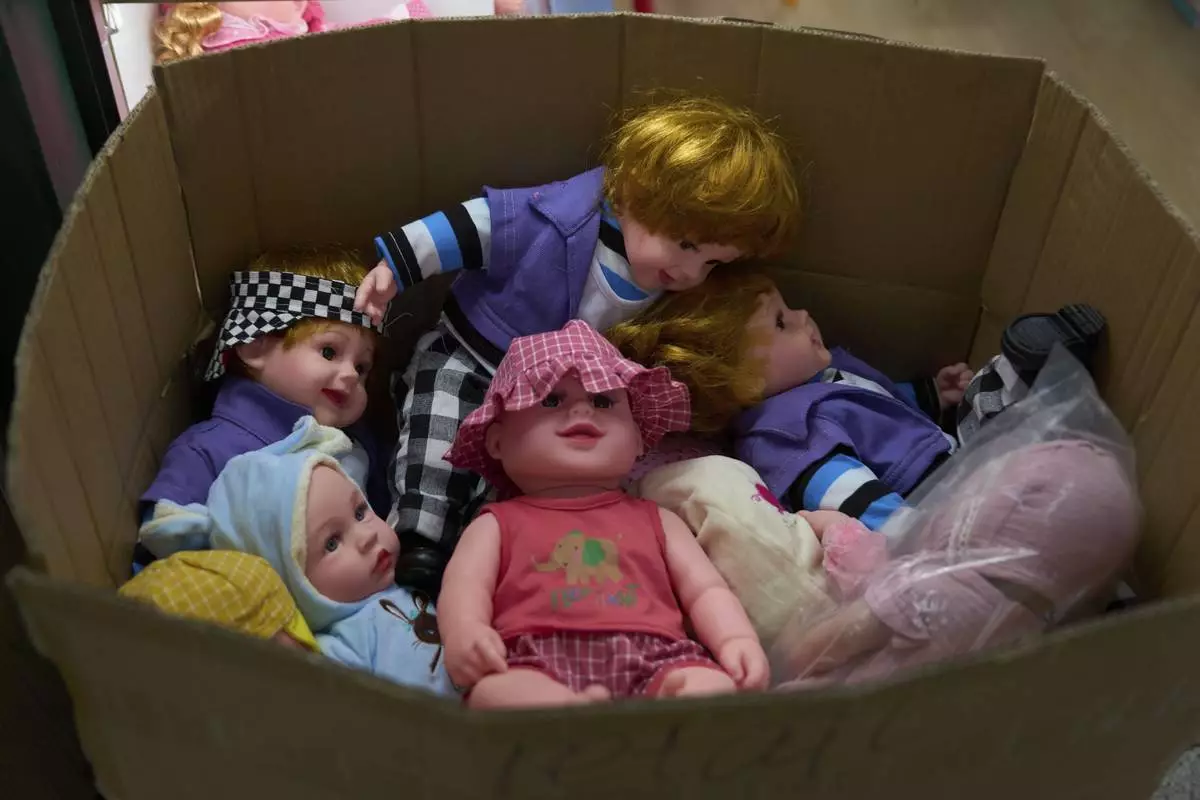
FILE -Dolls are packed in a carton at the Yiwu International Trade Market in Yiwu, eastern China's Zhejiang province, Thursday, April 10, 2025. (AP Photo/Ng Han Guan, File)
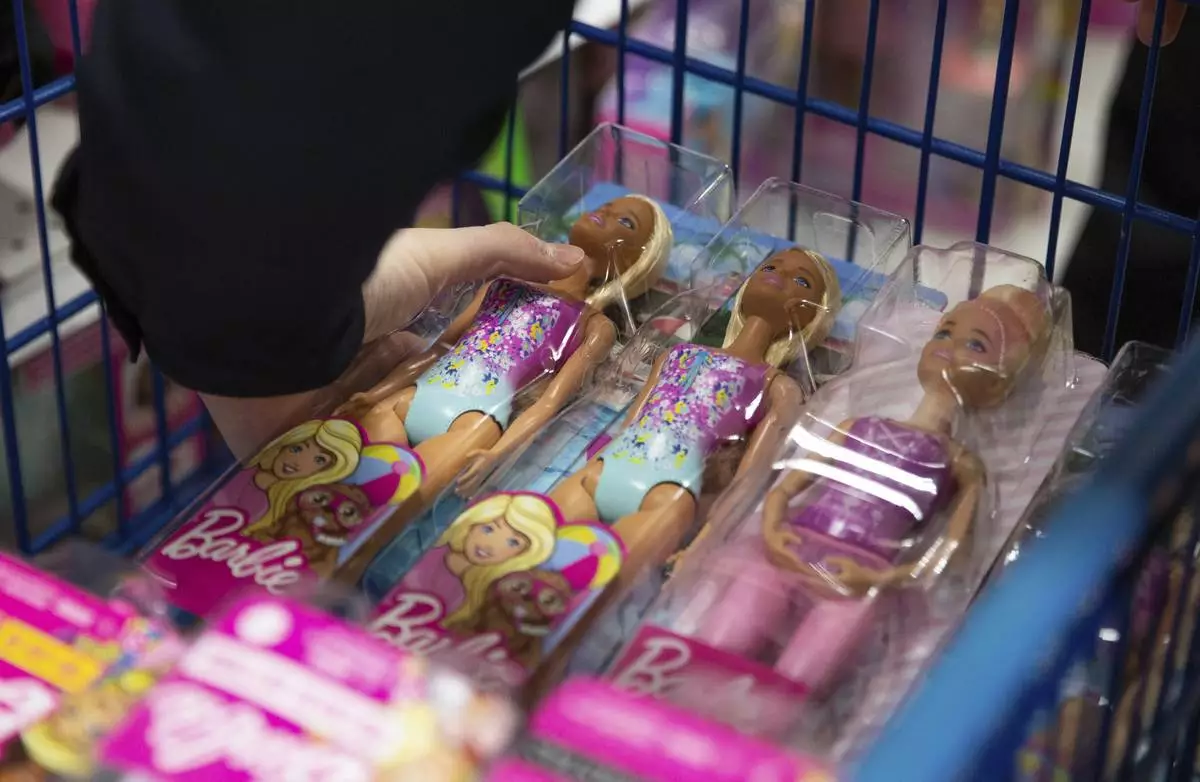
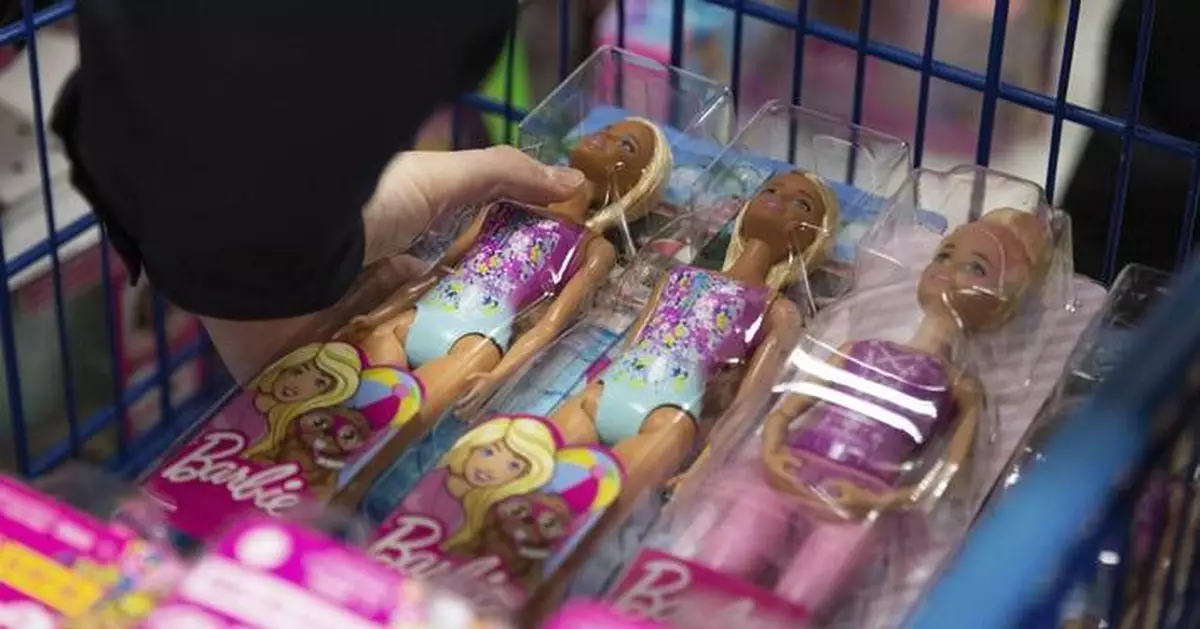
A collection of Barbie dolls are placed into a cart in Bowling Green, Ky., on Tuesday, Dec. 7, 2021. (Grace Ramey/Daily News via AP, File)