The new pope, Leo XIV, has this in common with many of his peers in the Catholic hierarchy: He's been in positions of authority when accusations of sexual abuse have arisen against priests under his supervision.
Now some advocates for victims say there needs to be an accounting of how Leo — the name taken by Cardinal Robert Prevost upon his election Thursday — handled such cases when he held positions of church authority in Chicago and Peru. And they hope that as pope, he will crack down on other bishops who they say are mishandling similar cases.
“Some might advise giving the new pontiff the benefit of the doubt. We disagree. It is on Pope Leo XIV to win the trust of victims and their families,” Anne Barrett Doyle of the advocacy group BishopAccountability.org said in a statement.
In its statement, BishopAccountability.org contended that unlike many dioceses and religious orders, Prevost never published a list of accused abusers under his supervision.
The group also contended that under his most recent Vatican post, Prevost maintained “secrecy” in the disciplinary process for bishops. “Under his watch, no complicit bishop was stripped of his title,” it said.
Some advocates, however, credit Prevost with supporting survivors of an abusive, Peru-based Catholic movement that was eventually dissolved by the late Pope Francis.
Prevost “stood with us when others didn’t. That’s why his election matters,” said abuse survivor and journalist Predo Salinas, who helped found the group Ending Clergy Abuse.
No one has accused the pope of any act of abuse himself. Nor is he accused of what many Catholic bishops worldwide have done — knowingly keeping confirmed abusers in public ministry — in what has been the defining scandal of the Catholic Church in recent decades.
Rather, he’s been accused of falling short in his responses to cases in Chicago and Peru.
The Survivors Network of those Abused by Priests filed a formal complaint on March 25 against then-Cardinal Prevost with the Vatican secretary of state, alleging he abused ecclesiastical power in his handling of two cases. The filing amounted to a formal call for an investigation under rules established by Pope Francis in 2023 for dealing with the hierarchy's handling of abuse cases.
One case involves the time when Prevost was based in Chicago as the Midwest regional leader of the Order of St. Augustine.
The case involved James Ray, then a priest in the Archdiocese of Chicago. The archdiocese placed him on restricted ministry in 1990 due to abuse allegations, according to a later report by the Illinois attorney general's office.
Bishops often imposed such restrictions — with varying levels of enforcement and typically without warning the public — until the explosive sex-abuse scandal exposed by the Boston Globe in 2002 in the Boston Archdiocese led to a nationwide policy of automatic removal from ministry.
According to the complaint, Ray — who was not an Augustinian — was allowed to live at an Augustinian friary in Chicago from 2000 to 2002.
The archdiocese, not the Augustinians, had ultimate responsibility for Ray as one of its priests, and there’s no indication that anyone had a legal duty to inform neighbors that an accused abuser lived among them. But the complaint alleges that Prevost was aware of the arrangement, citing a 2000 internal archdiocesan memo, and should have informed the school.
“By doing so, Cardinal Prevost endangered the safety of the children,” the complaint said.
Ray was moved out of the friary in 2002 and eventually left the priesthood. Prevost became worldwide leader of the Augustinians later that year.
The other case involves Prevost's tenure as bishop of Chiclayo, Peru.
In April 2022, three women came forward to accuse two priests — Eleuterio Vásquez Gonzales and Ricardo Yesquen — of sexually abusing them beginning in 2007, when they were minors, according to the complaint. The diocese, led by Prevost, forwarded information about the case to the Vatican office overseeing such complaints. It closed the case without a finding, though the diocese later reopened the investigation in 2023 after Prevost left for a Vatican post.
The complaint says the diocese suspended Gonzales from ministry pending investigation but that later photos allegedly showed him continuing to celebrate Mass publicly. It said the diocese reported that Yesquen was no longer in ministry due to his age and health.
According to the complaint, Prevost fell short because the diocese did not interview the women — depriving the Vatican investigators of potentially vital information — and failed to offer support to the accusers or to report the priests to civil authorities.
Bishop Edinson Farfán, Prevost’s successor in Chiclayo, defended his predecessor’s handling of the case, saying it’s important to be sensitive to the alleged victims while also respecting the investigative process.
The Vatican investigation said Prevost acted correctly in imposing preliminary restrictions on Gonzales while Peruvian authorities conducted their own civil investigation, the typical way the church handles allegations that are also being investigated by secular authorities.
Nine days after Peruvian authorities closed the case because the statute of limitations expired, Prevost was publicly named to take over the Vatican’s office for bishops, leaving the diocese. The Vatican’s dicastery for the doctrine of the faith ultimately shelved the case, citing a lack of sufficient evidence to proceed with a canonical trial against Gonzales.
Some hoped Prevost's intervention in a scandal involving the Sodalitium Christianae Vitae, a Catholic movement in Peru, was a sign of reforms to come. Salinas said in a statement that the new pope, then in his role as bishop of Chiclayo, played a pivotal role in confronting the case, which is considered one of the most egregious sex-abuse scandals in Latin America.
In a remarkable move, Pope Francis dissolved Sodalitium Christianae Vitae in January over alleged sexual and spiritual abuses and financial mismanagement.
“The world is waiting,” said Gemma Hickey, president of Ending Clergy Abuse. “Let this pope be remembered not for the global abuse crisis he inherits, but for how he ends it.”
In 2023, when he took the Vatican job of overseeing the selection of bishops, Prevost told Vatican News that there has been progress in how some bishops have handled abuse but that more work is needed with “bishops who have not received the necessary preparation” to deal with it.
He added: “Silence is not the solution. We must be transparent and honest, we must accompany and assist the victims, because otherwise their wounds will never heal."
Francis had a mixed record on responding to the clergy sexual abuse crisis. Most notably in 2018, he bungled a major case in Chile before reversing course, ordering an investigation and apologizing to the victims. Ultimately, it became a turning point for how he handled cases of priests sexually abusing children for the rest of his papacy.
This version corrects the summary of a BishopAccountability.org statement.
Associated Press religion coverage receives support through the AP’s collaboration with The Conversation US, with funding from Lilly Endowment Inc. The AP is solely responsible for this content.
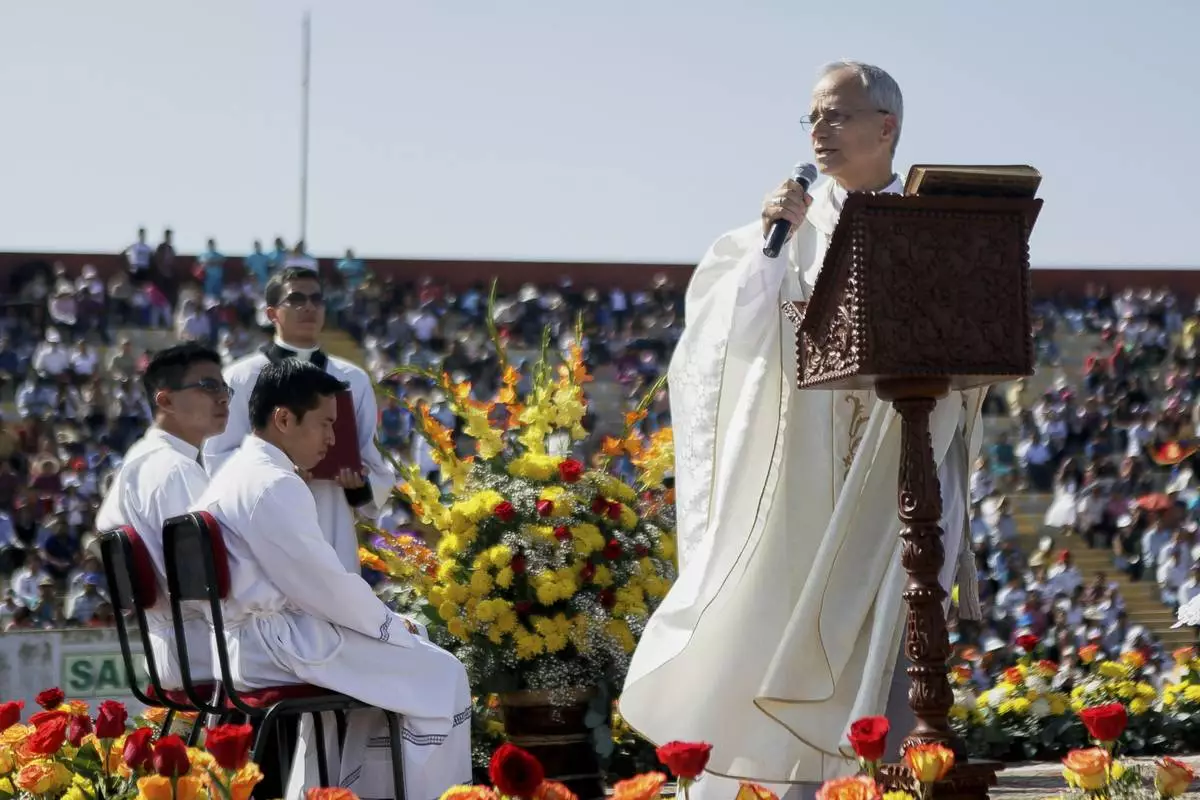
Pope Leo XIV, then Apostolic Administrator of Chiclayo Robert Prevost, preaches during a Corpus Christi celebration in a stadium in Chiclayo, Peru, Friday, June 19, 2015. (AP Photo/Julio Reano)
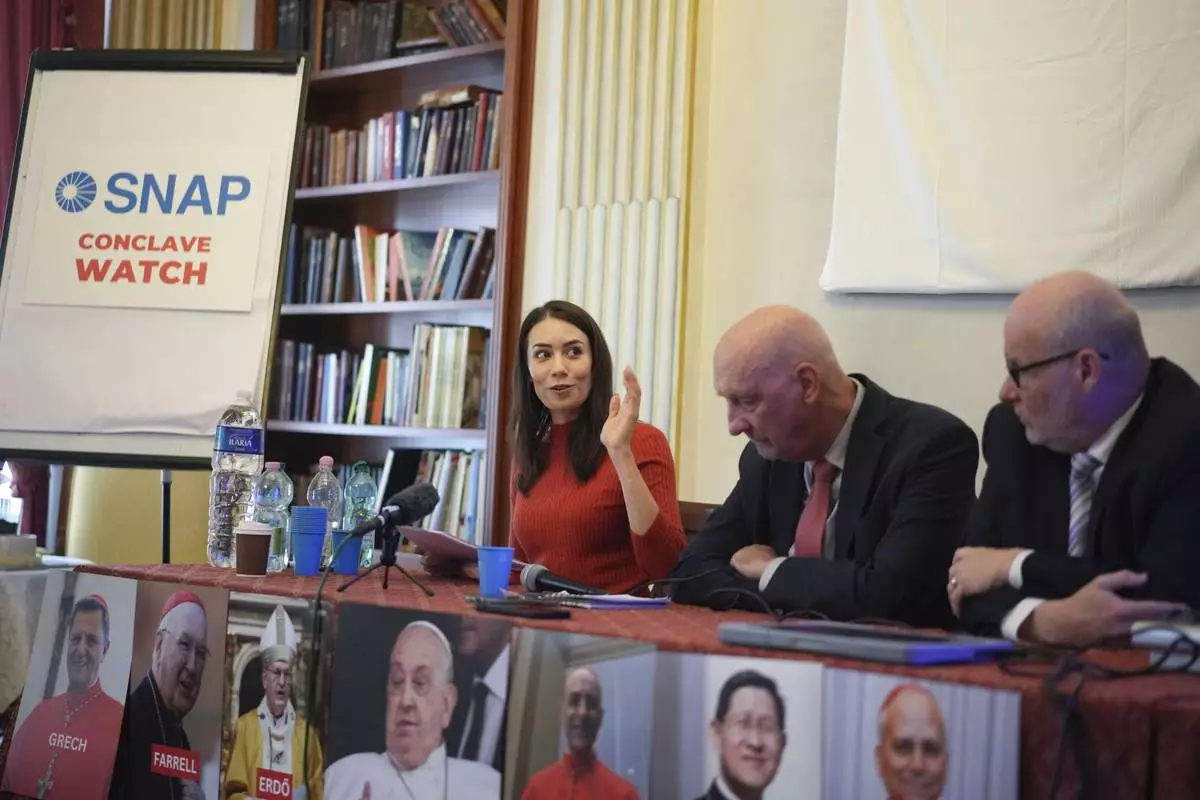
FILE - Survivors Network of those Abused by Priests activists, from left, Sarah Pearson, Peter Isely and President Shaun Dougherty talk to reporters during a press conference in Rome, March 25, 2025. (AP Photo/Andrew Medichini, File)
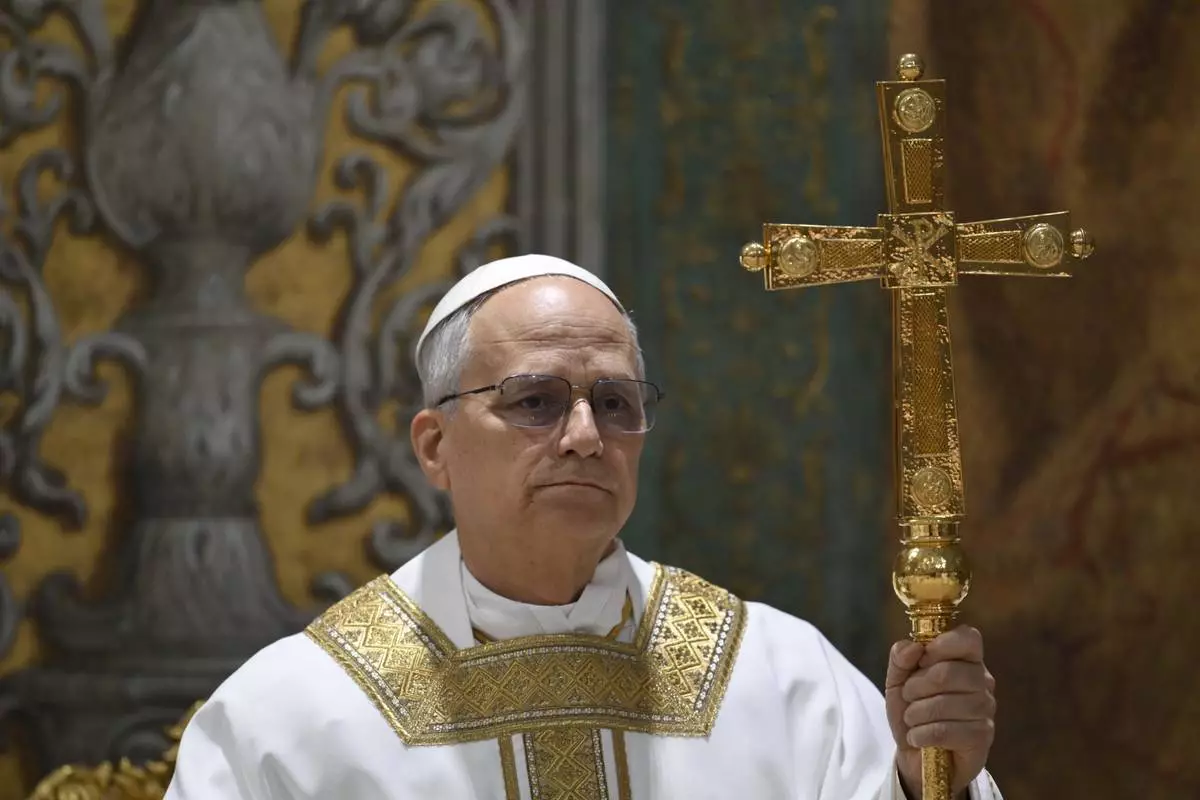
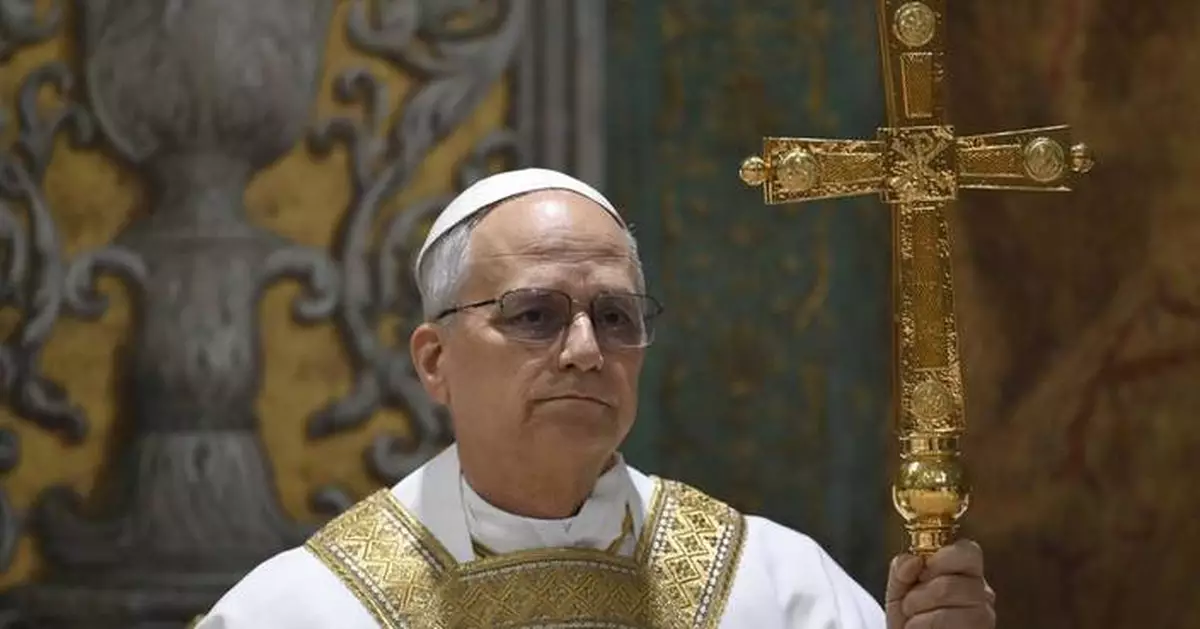
Newly elected Pope Leo XIV concelebrates Mass with the College of Cardinals inside the Sistine Chapel at the Vatican the day after his election as 267th pontiff of the Roman Catholic Church, Friday, May 9, 2025. (Vatican Media via AP)