Skip to Content Facebook Feature Image

Pope Leo XIV's Creole heritage highlights complex history of racism and the church in America

News

Pope Leo XIV's Creole heritage highlights complex history of racism and the church in America
News

News

Pope Leo XIV's Creole heritage highlights complex history of racism and the church in America

2025-05-10 12:03 Last Updated At:12:11

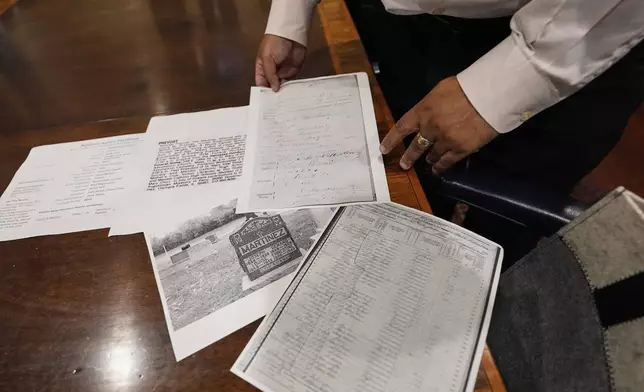
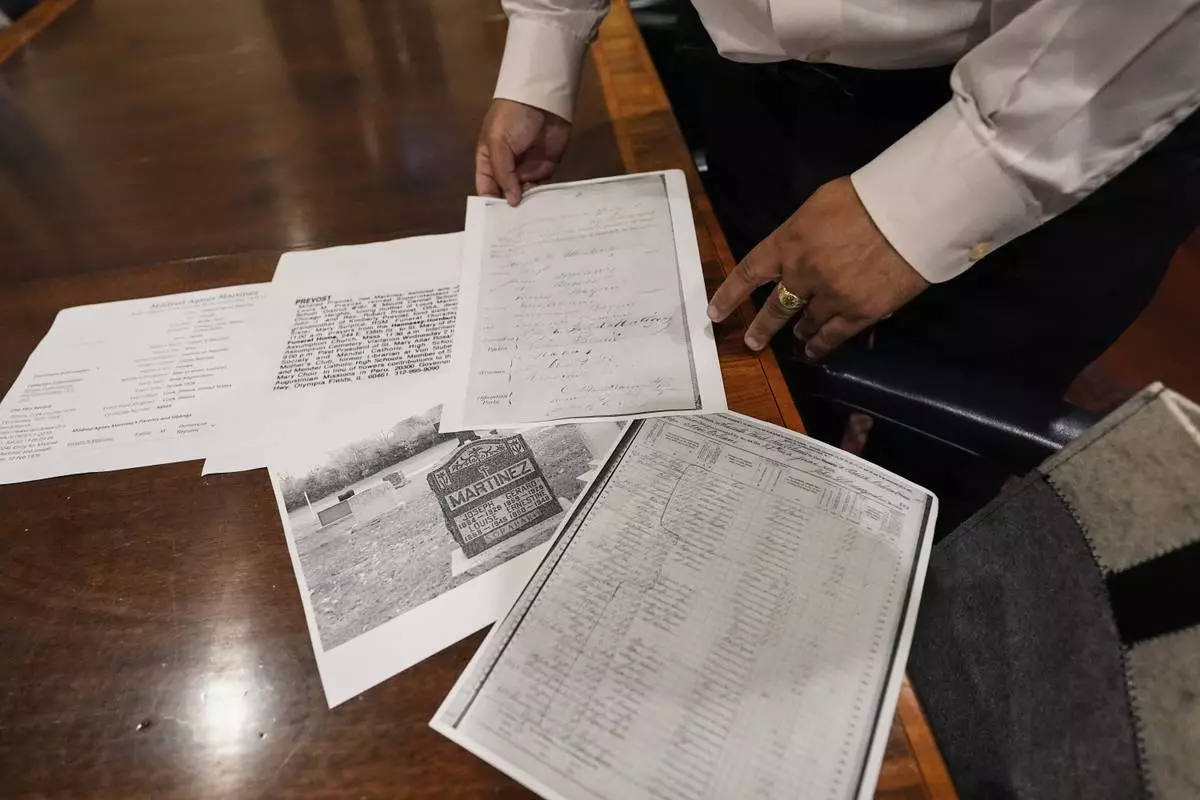
NEW ORLEANS (AP) — The new pope’s French-sounding last name, Prevost, intrigued Jari Honora, a New Orleans genealogist, who began digging in the archives and discovered the pope had deep roots in the Big Easy.

All four of Pope Leo XIV’s maternal great-grandparents were “free people of color” in Louisiana based on 19th-century census records, Honora found. As part of the melting pot of French, Spanish, African and Native American cultures in Louisiana, the pope’s maternal ancestors would be considered Creole.

More Images
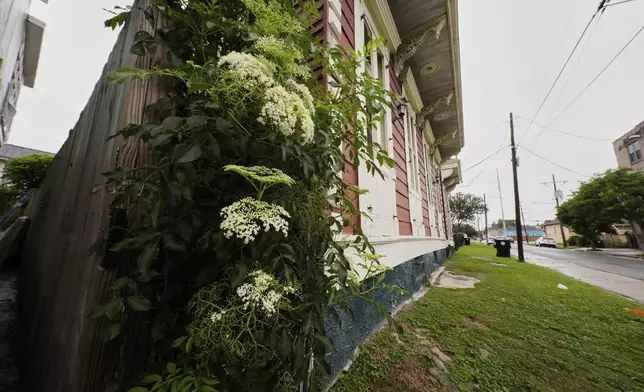
A neighborhood is seen in the 7th Ward, Friday, May 9, 2025 in New Orleans, which is the community where the grandparents of Pope Leo XIV lived. (AP Photo/Gerald Herbert)
A neighborhood is seen in the 7th Ward, Friday, May 9, 2025 in New Orleans, which is the community where the grandparents of Pope Leo XIV lived. (AP Photo/Gerald Herbert)

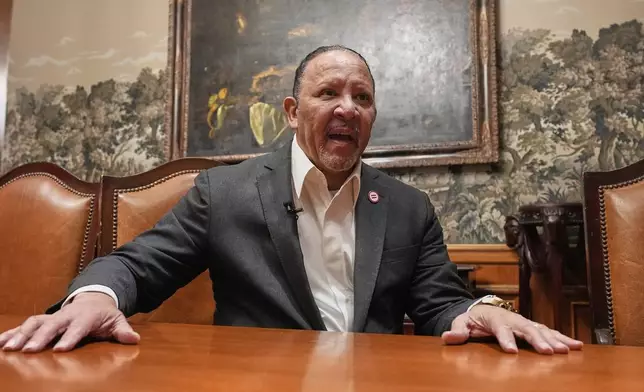
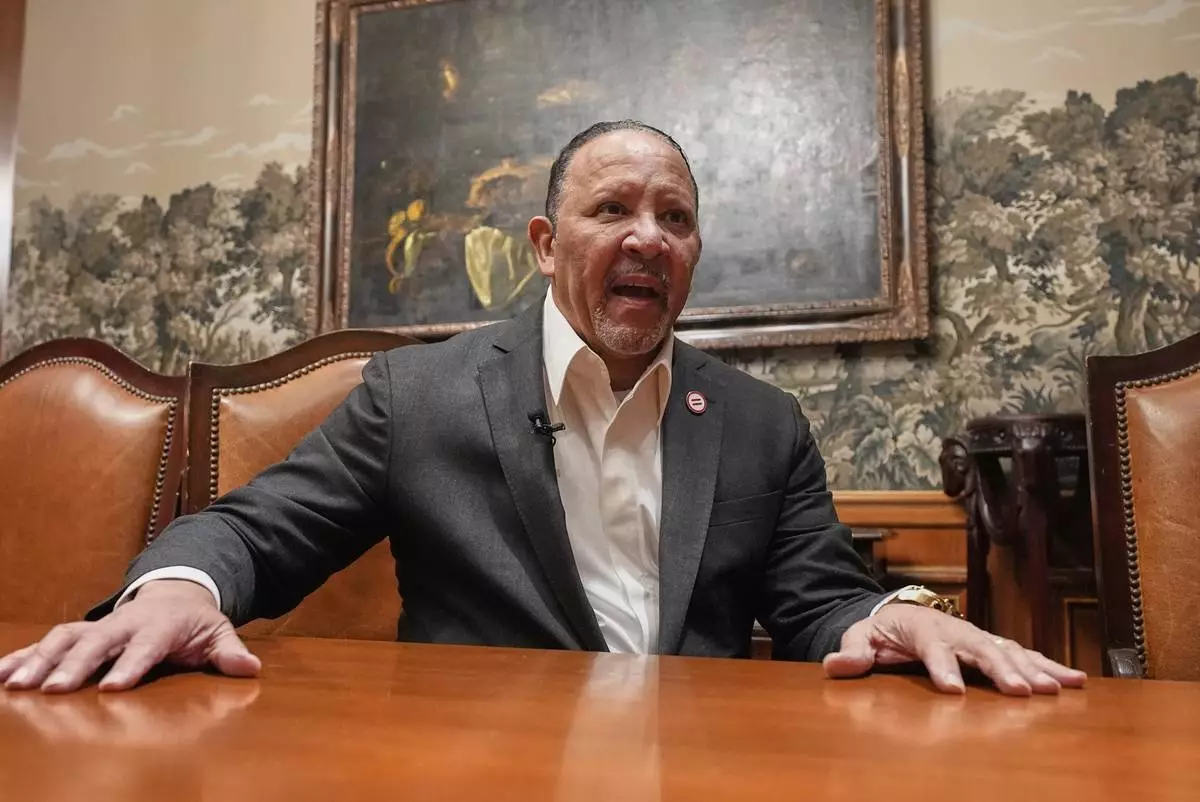
Marc Morial, Former New Orleans Mayor and current president of the National Urban League, speaks to the Associated Press about the creole roots of Pope Leo XIV, in New Orleans, Friday, May 9, 2025. (AP Photo/Gerald Herbert)
Marc Morial, Former New Orleans Mayor and current president of the National Urban League, speaks to the Associated Press about the creole roots of Pope Leo XIV, in New Orleans, Friday, May 9, 2025. (AP Photo/Gerald Herbert)

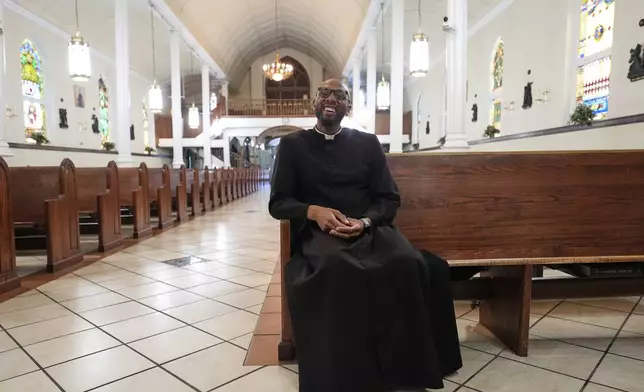
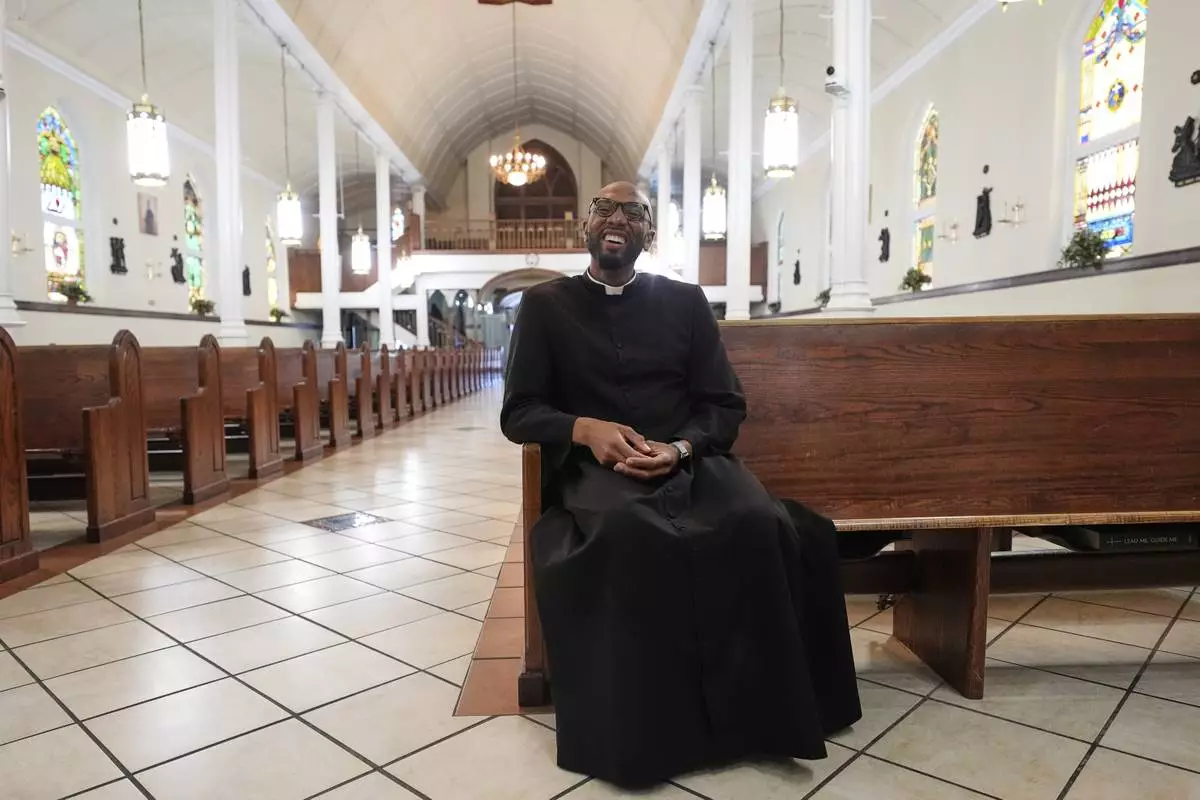
Reverend Ajani K. Gibson, pastor of St. Peter Claver, a Catholic Church in the 7th Ward neighborhood where the grandparents of Pope Leo XIV lived, speaks with The Associated Press inside the Church in New Orleans, Friday, May 9, 2025. (AP Photo/Gerald Herbert)
Reverend Ajani K. Gibson, pastor of St. Peter Claver, a Catholic Church in the 7th Ward neighborhood where the grandparents of Pope Leo XIV lived, speaks with The Associated Press inside the Church in New Orleans, Friday, May 9, 2025. (AP Photo/Gerald Herbert)

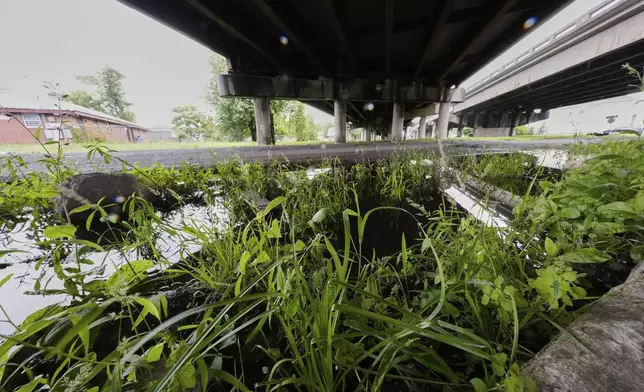
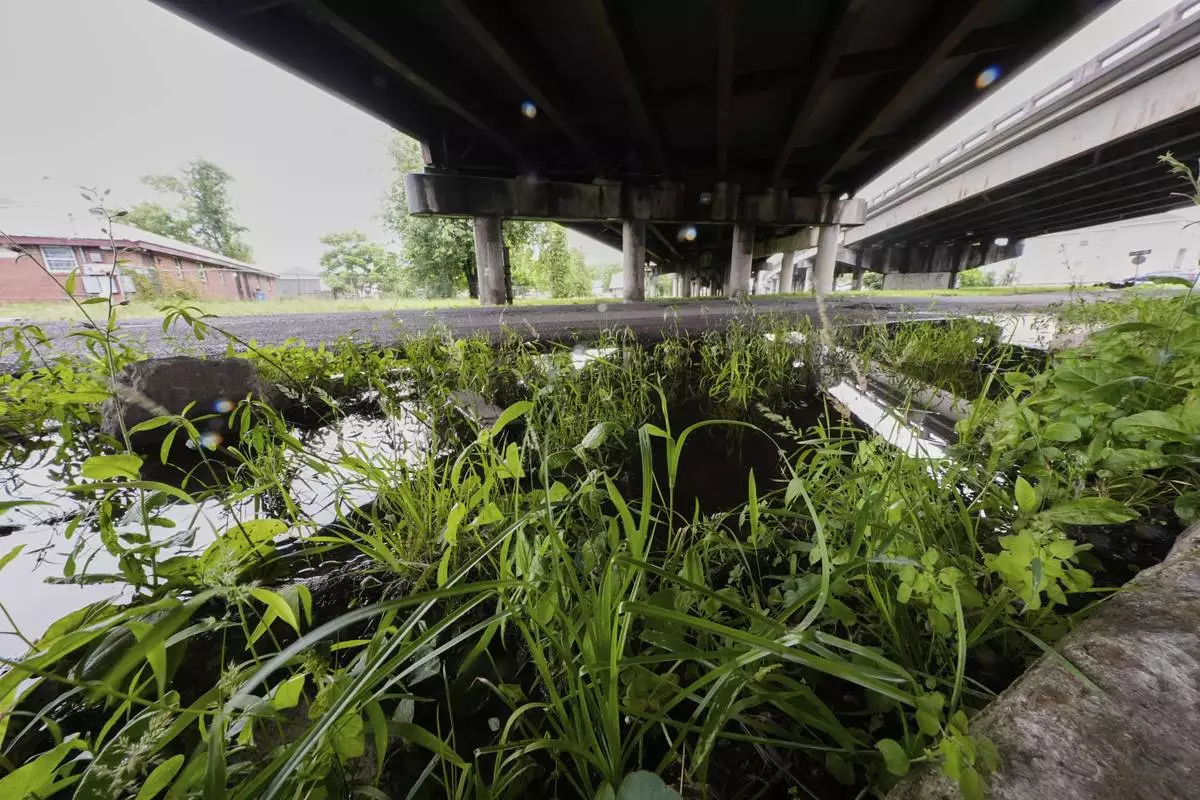
The expressway overpass that replaced of the home of the grandparents of Pope Leo XIV, is seen at the site of the former home, in the 7th Ward of New Orleans Friday, May 9, 2025. (AP Photo/Gerald Herbert)
The expressway overpass that replaced of the home of the grandparents of Pope Leo XIV, is seen at the site of the former home, in the 7th Ward of New Orleans Friday, May 9, 2025. (AP Photo/Gerald Herbert)

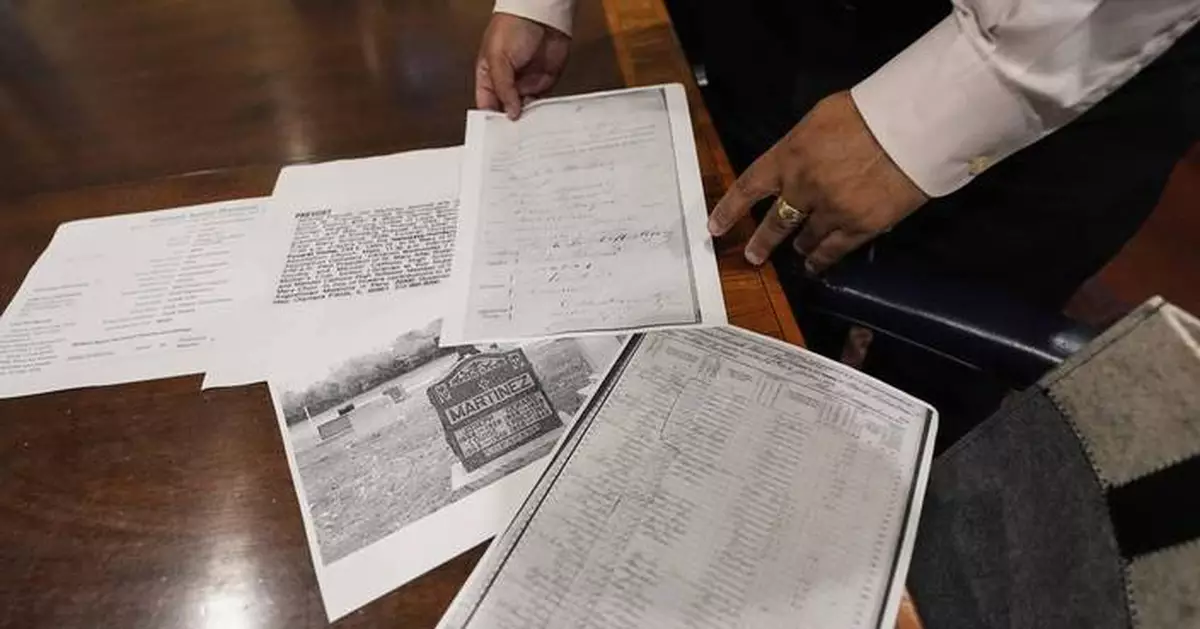
Jari Honora, family historian for the Historic New Orleans Collection, shows genealogy material of the grandparents of Pope Leo XIV in New Orleans, Friday, May 9, 2025. (AP Photo/Gerald Herbert)

Jari Honora, family historian for the Historic New Orleans Collection, shows genealogy material of the grandparents of Pope Leo XIV in New Orleans, Friday, May 9, 2025. (AP Photo/Gerald Herbert)

“It was special for me because I share that heritage and so do many of my friends who are Catholic here in New Orleans,” said Honora, a historian at the Historic New Orleans Collection, a museum in the French Quarter.

Honora and others in the Black and Creole Catholic communities say the election of Leo — a Chicago native who spent over two decades in Peru including eight years as a bishop — is just what the Catholic Church needs to unify the global church and elevate the profile of Black Catholics whose history and contributions have long been overlooked.

Leo, who has not spoken openly about his roots, may also have an ancestral connection to Haiti. His grandfather, Joseph Norval Martinez, may have been born there, though historical records are conflicting, Honora said. However, Martinez’s parents — the pope’s great-grandparents — were living in Louisiana since at least the 1850s, he said.

Andrew Jolivette, a professor of sociology and Afro-Indigenous Studies at the University of California, Santa Barbara, did his own digging and found the pope's ancestry reflected the unique cultural tapestry of southern Louisiana. The pope's Creole roots draw attention to the complex, nuanced identities Creoles hold, he said.

“There is Cuban ancestry on his maternal side. So, there are a number of firsts here and it’s a matter of pride for Creoles," said Jolivette, whose family is Creole from Louisiana. “So, I also view him as a Latino pope because the influence of Latino heritage cannot be ignored in the conversation about Creoles.”

Most Creoles are Catholic and historically it was their faith that kept families together as they migrated to larger cities like Chicago, Jolivette said.

The former Cardinal Robert Prevost's maternal grandparents — identified as “mulatto” and “Black” in historical records — were married in New Orleans in 1887 and lived in the city’s historically Creole Seventh Ward. In the coming years, the Jim Crow regime of racial segregation rolled back post-Civil War reforms and “just about every aspect of their lives was circumscribed by race, extending even to the church,” Honora said.

The pope’s grandparents migrated to Chicago around 1910, like many other African American families leaving the racial oppression of the Deep South, and “passed for white,” Honora said. The pope’s mother, Mildred Agnes Martinez, who was born in Chicago, is identified as “white” on her 1912 birth certificate, Honora said.

“You can understand, people may have intentionally sought to obfuscate their heritage,” he said. “Always life has been precarious for people of color in the South, New Orleans included.”

The pope’s grandparents’ old home in New Orleans was later destroyed, along with hundreds of others, to build a highway overpass that “eviscerated” a stretch of the largely Black neighborhood in the 1960s, Honora said.

A former New Orleans mayor, Marc Morial, called the pope's family's history, "an American story of how people escape American racism and American bigotry.”

As a Catholic with Creole heritage who grew up near the neighborhood where the pope’s grandparents lived, Morial said he has contradictory feelings. While he’s proud of the pope’s connection to his city, Morial said the new pontiff’s maternal family’s shifting racial identity highlights “the idea that in America people had to escape their authenticity to be able to survive.”

The Rev. Ajani Gibson, who heads the predominantly Black congregation at St. Peter Claver Church in New Orleans, said he sees the pope’s roots as a reaffirmation of African American influence on Catholicism in his city.

“I think a lot of people take for granted that the things that people love most about New Orleans are both Black and Catholic,” said Gibson, referring to rich cultural contributions to Mardi Gras, New Orleans' jazz tradition and brass band parades known as second-lines.

He hoped the pope’s Creole heritage — emerging from the city’s “cultural gumbo pot” — signals an inclusive outlook for the Catholic Church.

“I want the continued elevation of the universal nature of the church — that the church looks, feels, sounds like everybody,” Gibson said. “We all have a place and we come and bring who we are, completely and totally, as gifts to the church.”

Shannen Dee Williams, a history professor at the University of Dayton, said she hopes that Leo's “genealogical roots and historic papacy will underscore that all roads in American Catholicism, in North, South and Central America, lead back to the church’s foundational roots in its mostly unacknowledged and unreconciled histories of Catholic colonialism, slavery and segregation.”

“There have always been two trans-Atlantic stories of American Catholicism; one that begins with Europeans and another one that begins with Africans and African-descended people, free and enslaved, living in Europe and Africa in the 16th century,” she said. “Just as Black history is American history, (Leo's) story also reminds us that Black history is, and always has been, Catholic history, including in the United States.”

Kim R. Harris, associate professor of African American Religious Thought and Practice at Loyola Marymount University in Los Angeles, said the pope's genealogy got her thinking about the seven African American Catholics on the path to sainthood who have been recognized by the National Black Catholic Congress, but haven't yet been canonized.

Harris highlighted Pierre Toussaint, a philanthropist born in Haiti as a slave who became a New York City entrepreneur and was declared “Venerable” by Pope John Paul II in 1997.

“The excitement I have in this moment probably has to do with the hope that this pope's election will help move this canonization process along,” Harris said.

While it's not known how Leo identifies himself racially, his roots bring a sense of hope to African American Catholics, she said.

“When I think about a person who brings so much of the history of this country in his bones, I really hope it brings to light who we are as Americans, and who we are as people of the diaspora,” she said. "It brings a whole new perspective and widens the vision of who we all are.”

Reynold Verret, president of Xavier University of Louisiana in New Orleans, the only historically Black Catholic university, said he was “a little surprised” about the pope's heritage.

“It's a joyful connection,” he said. “It is an affirmation that the Catholic Church is truly universal and that (Black) Catholics remained faithful regardless of a church that was human and imperfect. It also shows us that the church transcends national borders.”

Bharath reported from Los Angeles.

Brook is a corps member for The Associated Press/Report for America Statehouse News Initiative. Report for America is a nonprofit national service program that places journalists in local newsrooms to report on undercovered issues.

Associated Press religion coverage receives support through the AP’s collaboration with The Conversation US, with funding from Lilly Endowment Inc. The AP is solely responsible for this content.
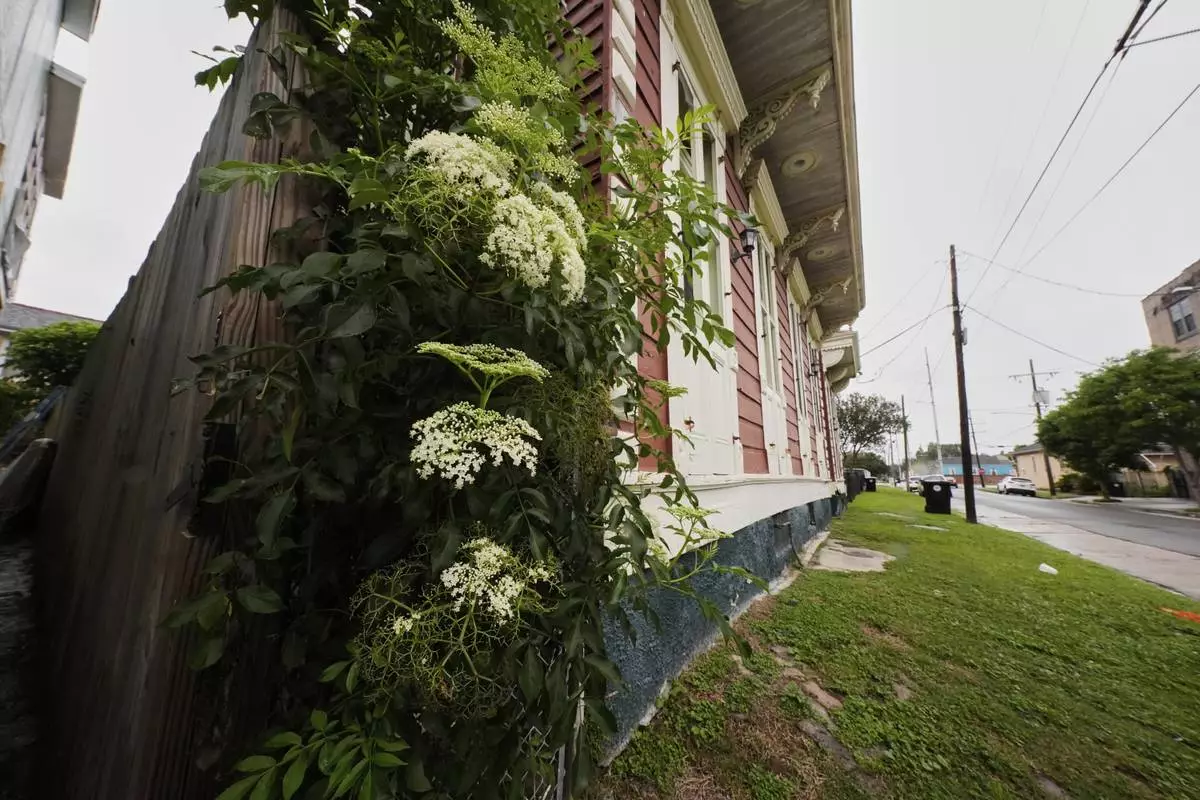
A neighborhood is seen in the 7th Ward, Friday, May 9, 2025 in New Orleans, which is the community where the grandparents of Pope Leo XIV lived. (AP Photo/Gerald Herbert)
A neighborhood is seen in the 7th Ward, Friday, May 9, 2025 in New Orleans, which is the community where the grandparents of Pope Leo XIV lived. (AP Photo/Gerald Herbert)

Marc Morial, Former New Orleans Mayor and current president of the National Urban League, speaks to the Associated Press about the creole roots of Pope Leo XIV, in New Orleans, Friday, May 9, 2025. (AP Photo/Gerald Herbert)
Marc Morial, Former New Orleans Mayor and current president of the National Urban League, speaks to the Associated Press about the creole roots of Pope Leo XIV, in New Orleans, Friday, May 9, 2025. (AP Photo/Gerald Herbert)

Reverend Ajani K. Gibson, pastor of St. Peter Claver, a Catholic Church in the 7th Ward neighborhood where the grandparents of Pope Leo XIV lived, speaks with The Associated Press inside the Church in New Orleans, Friday, May 9, 2025. (AP Photo/Gerald Herbert)
Reverend Ajani K. Gibson, pastor of St. Peter Claver, a Catholic Church in the 7th Ward neighborhood where the grandparents of Pope Leo XIV lived, speaks with The Associated Press inside the Church in New Orleans, Friday, May 9, 2025. (AP Photo/Gerald Herbert)

The expressway overpass that replaced of the home of the grandparents of Pope Leo XIV, is seen at the site of the former home, in the 7th Ward of New Orleans Friday, May 9, 2025. (AP Photo/Gerald Herbert)
The expressway overpass that replaced of the home of the grandparents of Pope Leo XIV, is seen at the site of the former home, in the 7th Ward of New Orleans Friday, May 9, 2025. (AP Photo/Gerald Herbert)

Jari Honora, family historian for the Historic New Orleans Collection, shows genealogy material of the grandparents of Pope Leo XIV in New Orleans, Friday, May 9, 2025. (AP Photo/Gerald Herbert)
Jari Honora, family historian for the Historic New Orleans Collection, shows genealogy material of the grandparents of Pope Leo XIV in New Orleans, Friday, May 9, 2025. (AP Photo/Gerald Herbert)
U.S. President Donald Trump says Iran has proposed negotiations after his threat to strike the Islamic Republic as an ongoing crackdown on demonstrators has led to hundreds of deaths.

Trump said late Sunday that his administration was in talks to set up a meeting with Tehran, but cautioned that he may have to act first as reports mount of increasing deaths and the government continues to arrest protesters.

“The meeting is being set up, but we may have to act because of what’s happening before the meeting. But a meeting is being set up. Iran called, they want to negotiate,” Trump told reporters on Air Force One on Sunday night.

Iran did not acknowledge Trump’s comments immediately. It has previously warned the U.S. military and Israel would be “legitimate targets” if America uses force to protect demonstrators.

The U.S.-based Human Rights Activists News Agency, which has accurately reported on past unrest in Iran, gave the death toll. It relies on supporters in Iran cross checking information. It said at least 544 people have been killed so far, including 496 protesters and 48 people from the security forces. It said more than 10,600 people also have been detained over the two weeks of protests.

With the internet down in Iran and phone lines cut off, gauging the demonstrations from abroad has grown more difficult. Iran’s government has not offered overall casualty figures.

The Latest:

A witness told the AP that the streets of Tehran empty at the sunset call to prayers each night.

Part of that stems from the fear of getting caught in the crackdown. Police sent the public a text message that warned: “Given the presence of terrorist groups and armed individuals in some gatherings last night and their plans to cause death, and the firm decision to not tolerate any appeasement and to deal decisively with the rioters, families are strongly advised to take care of their youth and teenagers.”

Another text, addressed “Dear parents,” which claimed to come from the intelligence arm of the paramilitary Revolutionary Guard, also directly warned people not to take part in demonstrations.

The witness spoke to the AP on condition of anonymity due to the ongoing crackdown.

—- By Jon Gambrell in Dubai, United Arab Emirates

Iran drew tens of thousands of pro-government demonstrators to the streets Monday in a show of power after nationwide protests challenging the country’s theocracy.

Iranian state television showed images of demonstrators thronging Tehran toward Enghelab Square in the capital.

It called the demonstration an “Iranian uprising against American-Zionist terrorism,” without addressing the underlying anger in the country over the nation’s ailing economy. That sparked the protests over two weeks ago.

State television aired images of such demonstrations around the country, trying to signal it had overcome the protests, as claimed by Iranian Foreign Minister Abbas Araghchi earlier in the day.

China says it opposes the use of force in international relations and expressed hope the Iranian government and people are “able to overcome the current difficulties and maintain national stability.”

Chinese Foreign Ministry spokesperson Mao Ning said Monday that Beijing “always opposes interference in other countries’ internal affairs, maintains that the sovereignty and security of all countries should be fully protected under international law, and opposes the use or threat of use of force in international relations.”

German Chancellor Friedrich Merz condemned “in the strongest terms the violence that the leadership in Iran is directing against its own people.”

He said it was a sign of weakness rather than strength, adding that “this violence must end.”

Merz said during a visit to India that the demonstrators deserve “the greatest respect” for the courage with which “they are resisting the disproportional, brutal violence of Iranian security forces.”

He said: “I call on the Iranian leadership to protect its population rather than threatening it.”

Iran’s Foreign Ministry spokesman on Monday suggested that a channel remained open with the United States.

Esmail Baghaei made the comment during a news conference in Tehran.

“It is open and whenever needed, through that channel, the necessary messages are exchanged,” he said.

However, Baghaei said such talks needed to be “based on the acceptance of mutual interests and concerns, not a negotiation that is one-sided, unilateral and based on dictation.”

The semiofficial Fars news agency in Iran, which is close to the paramilitary Revolutionary Guard, on Monday began calling out Iranian celebrities and leaders on social media who have expressed support for the protests over the past two weeks, especially before the internet was shut down.

The threat comes as writers and other cultural leaders were targeted even before protests. The news agency highlighted specific celebrities who posted in solidarity with the protesters and scolded them for not condemning vandalism and destruction to public property or the deaths of security forces killed during clashes. The news agency accused those celebrities and leaders of inciting riots by expressing their support.

Canada said it “stands with the brave people of Iran” in a statement on social media that strongly condemned the killing of protesters during widespread protests that have rocked the country over the past two weeks.

“The Iranian regime must halt its horrific repression and intimidation and respect the human rights of its citizens,” Canada’s government said on Monday.

Iran’s foreign minister claimed Monday that “the situation has come under total control” after a bloody crackdown on nationwide protests in the country.

Abbas Araghchi offered no evidence for his claim.

Araghchi spoke to foreign diplomats in Tehran. The Qatar-funded Al Jazeera satellite news network, which has been allowed to work despite the internet being cut off in the country, carried his remarks.

Iran’s foreign minister alleged Monday that nationwide protests in his nation “turned violent and bloody to give an excuse” for U.S. President Donald Trump to intervene.

Abbas Araghchi offered no evidence for his claim, which comes after over 500 have been reported killed by activists -- the vast majority coming from demonstrators.

Araghchi spoke to foreign diplomats in Tehran. The Qatar-funded Al Jazeera satellite news network, which has been allowed to work despite the internet being cut off in the country, carried his remarks.

Iran has summoned the British ambassador over protesters twice taking down the Iranian flag at their embassy in London.

Iranian state television also said Monday that it complained about “certain terrorist organization that, under the guise of media, spread lies and promote violence and terrorism.” The United Kingdom is home to offices of the BBC’s Persian service and Iran International, both which long have been targeted by Iran.

A huge crowd of demonstrators, some waving the flag of Iran, gathered Sunday afternoon along Veteran Avenue in LA’s Westwood neighborhood to protest against the Iranian government. Police eventually issued a dispersal order, and by early evening only about a hundred protesters were still in the area, ABC7 reported.

Los Angeles is home to the largest Iranian community outside of Iran.

Los Angeles police responded Sunday after somebody drove a U-Haul box truck down a street crowded with the the demonstrators, causing protesters to scramble out of the way and then run after the speeding vehicle to try to attack the driver. A police statement said one person was hit by the truck but nobody was seriously hurt.

The driver, a man who was not identified, was detained “pending further investigation,” police said in a statement Sunday evening.

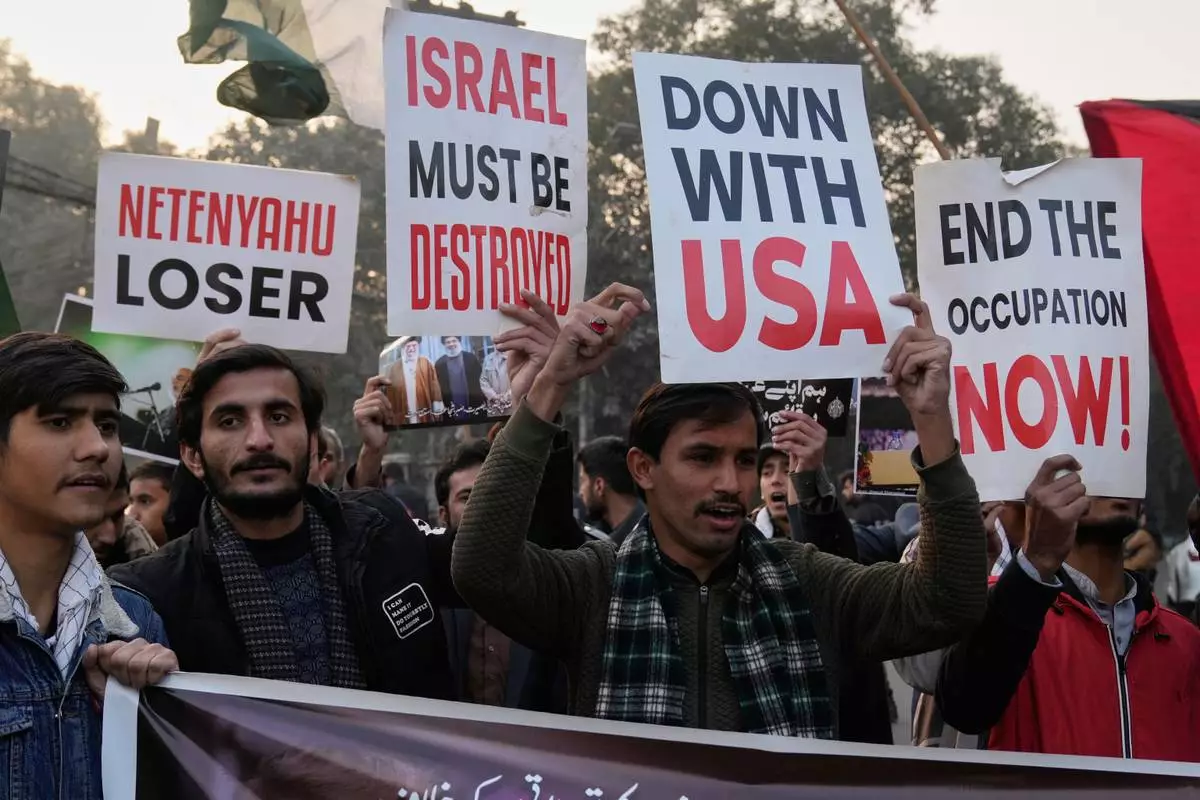
Shiite Muslims hold placards and chant slogans during a protest against the U.S. and show solidarity with Iran in Lahore, Pakistan, Sunday, Jan. 11, 2026. (AP Photo/K.M. Chaudary)

Shiite Muslims hold placards and chant slogans during a protest against the U.S. and show solidarity with Iran in Lahore, Pakistan, Sunday, Jan. 11, 2026. (AP Photo/K.M. Chaudary)

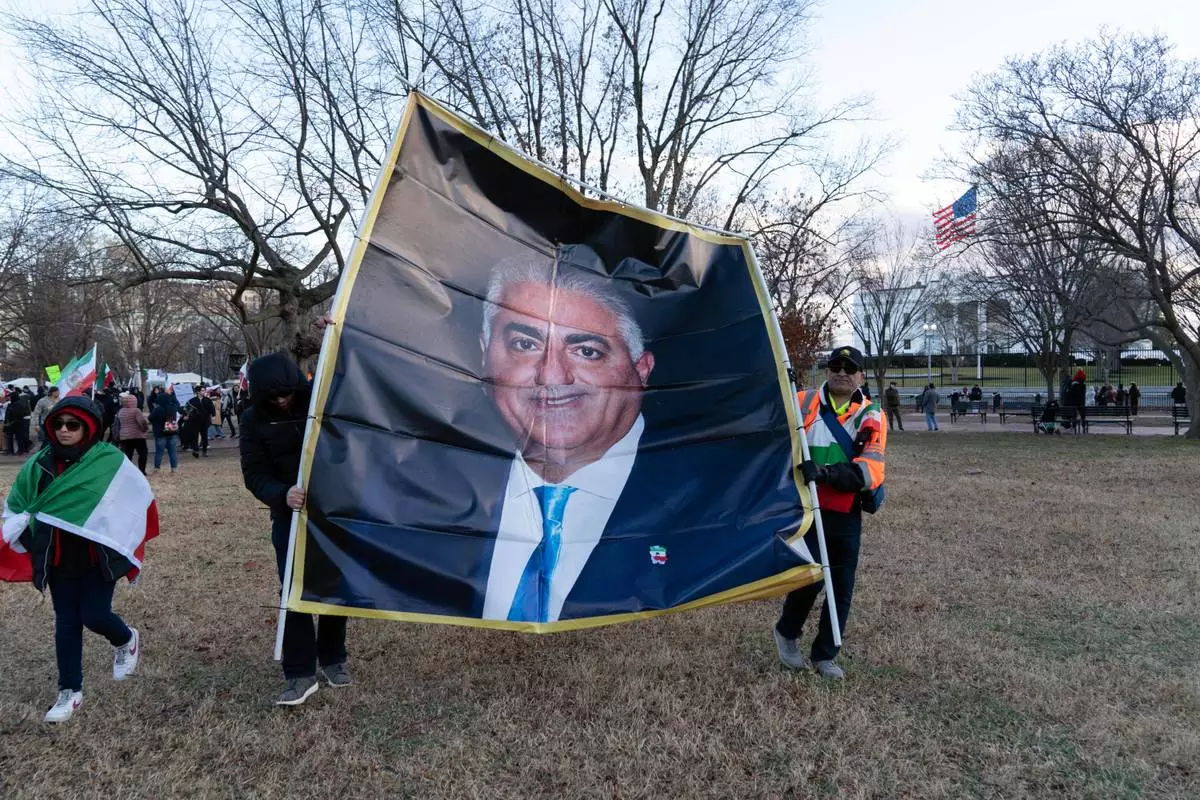
Activists carrying a photograph of Reza Pahlavi take part in a rally supporting protesters in Iran at Lafayette Park, across from the White House, in Washington, Sunday, Jan. 11, 2026. (AP Photo/Jose Luis Magana)

Activists carrying a photograph of Reza Pahlavi take part in a rally supporting protesters in Iran at Lafayette Park, across from the White House, in Washington, Sunday, Jan. 11, 2026. (AP Photo/Jose Luis Magana)

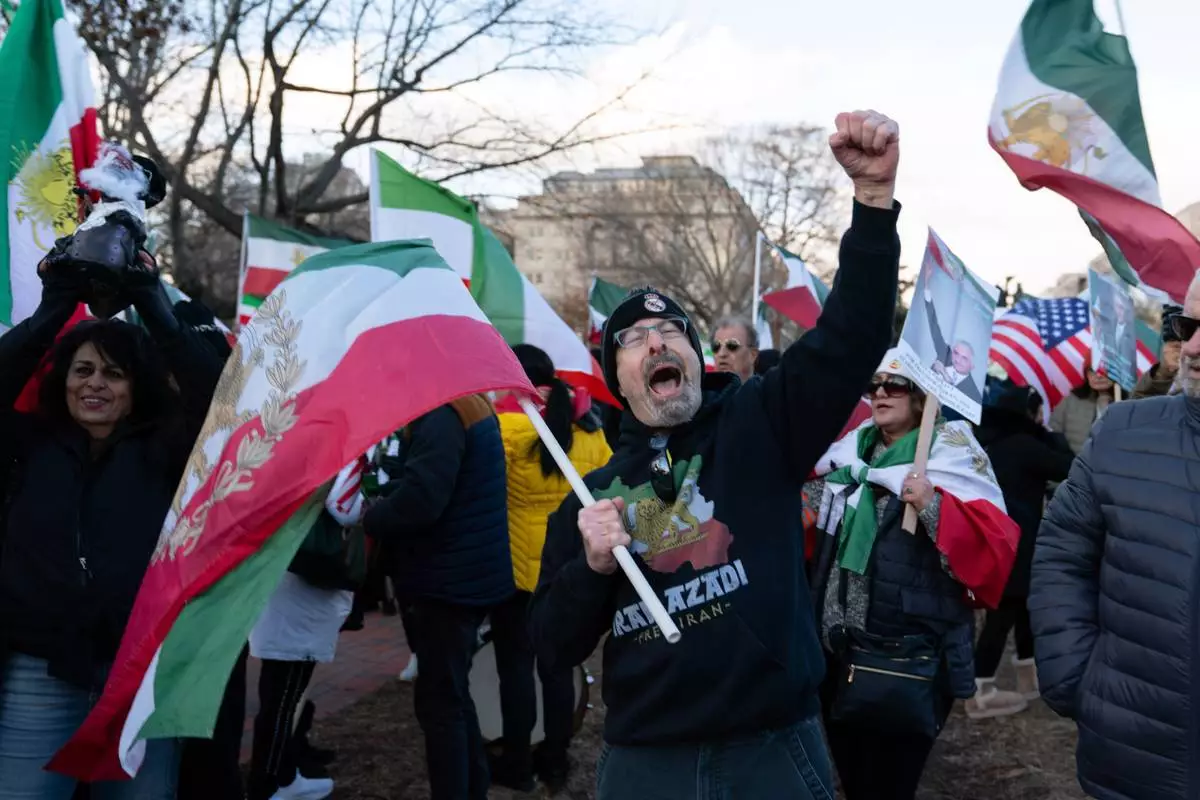
Activists take part in a rally supporting protesters in Iran at Lafayette Park, across from the White House in Washington, Sunday, Jan. 11, 2026. (AP Photo/Jose Luis Magana)

Activists take part in a rally supporting protesters in Iran at Lafayette Park, across from the White House in Washington, Sunday, Jan. 11, 2026. (AP Photo/Jose Luis Magana)

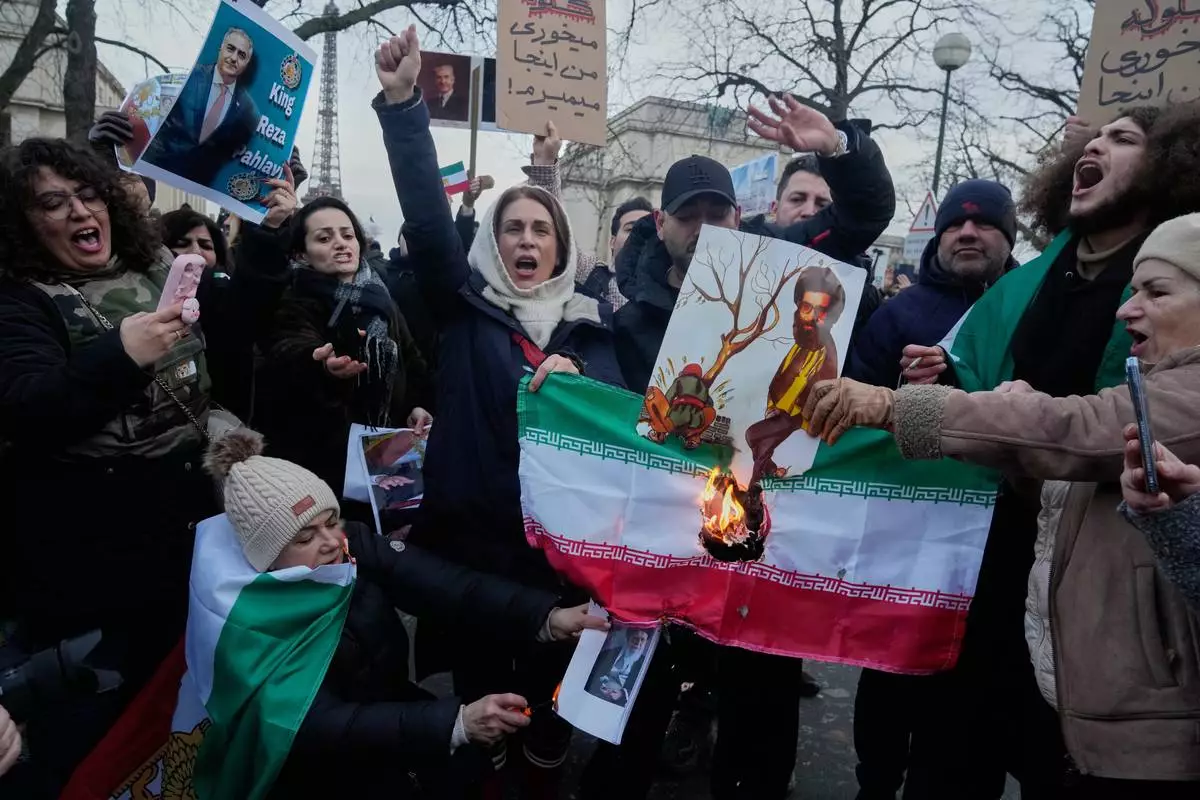
Protesters burn the Iranian national flag during a rally in support of the nationwide mass demonstrations in Iran against the government in Paris, Sunday, Jan. 11, 2026. (AP Photo/Michel Euler)

Protesters burn the Iranian national flag during a rally in support of the nationwide mass demonstrations in Iran against the government in Paris, Sunday, Jan. 11, 2026. (AP Photo/Michel Euler)

Recommended Articles