VATICAN CITY (AP) — Pope Leo XIV laid out the vision of his papacy Saturday, identifying artificial intelligence as one of the most critical matters facing humanity and vowing to continue with some of the core priorities of Pope Francis.
But in a sign he was making the papacy very much his own, Leo made his first outing since his election, traveling to a sanctuary south of Rome that is dedicated to the Madonna and is of particular significance to his Augustinian order and his namesake, Pope Leo XIII.
Click to Gallery
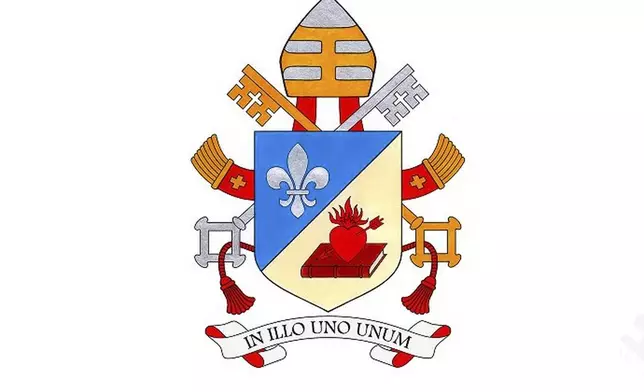
This image released by Vatican Governatorato Saturday, May 10, 2025. shows the Pope Leo XIV's coat of arms. (Vatican Secretariat of State via AP)
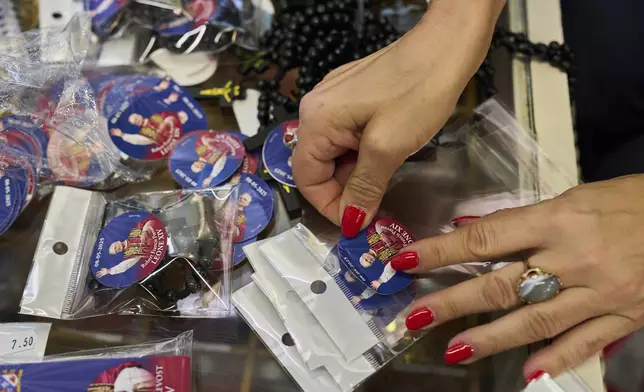
A vendor sticks pictures of newly elected Pope Leo XIV onto rosaries in a religious souvenir shop in Rome, Saturday, May 10, 2025. (AP Photo/Bernat Armangue)
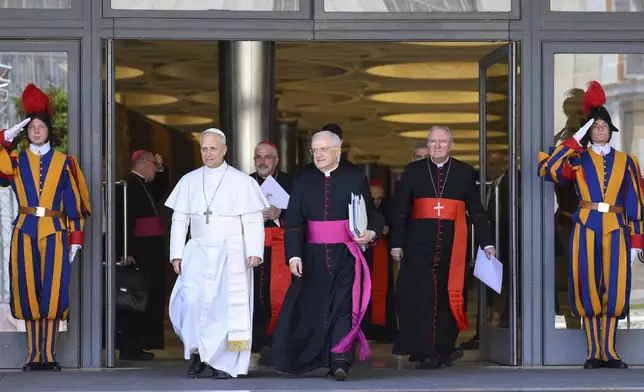
Pope Leo XIV, left, is flanked by Monsignor Leonardo Sapienza, second from left, after his meeting with the College of Cardinals in the New Synod Hall at the Vatican, Saturday, May 10, 2025. (Vatican Media via AP)
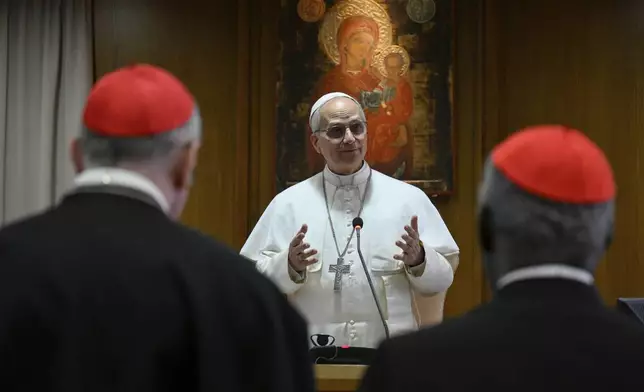
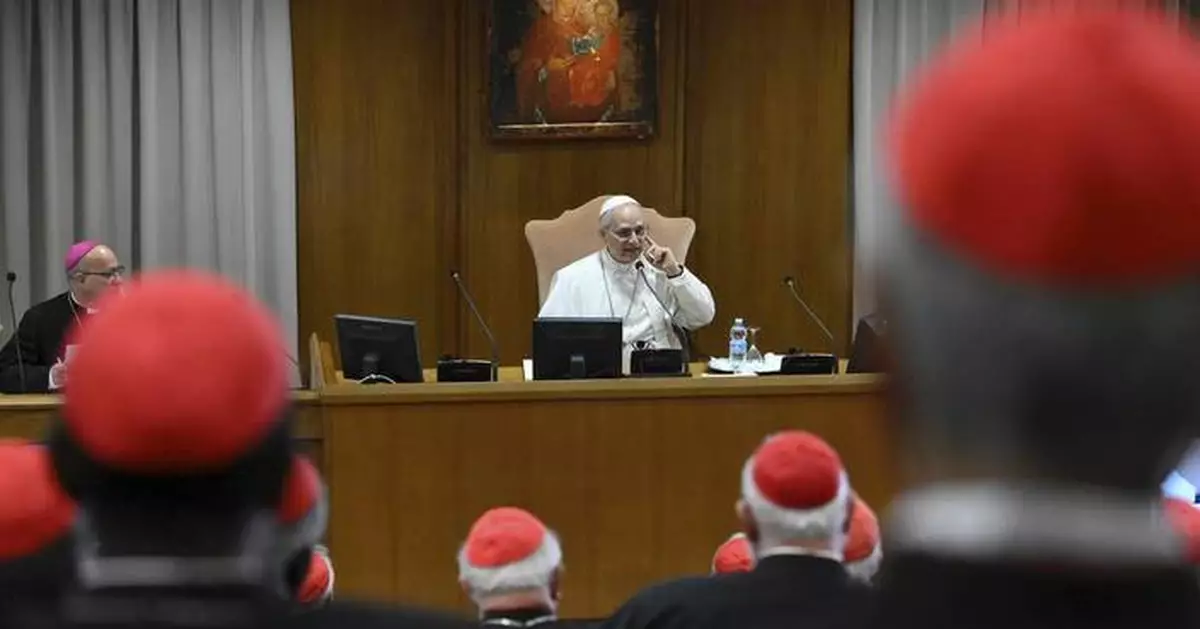
Pope Leo XIV meets the College of Cardinals in the New Synod Hall at the Vatican, Saturday, May 10, 2025. (Vatican Media via AP)
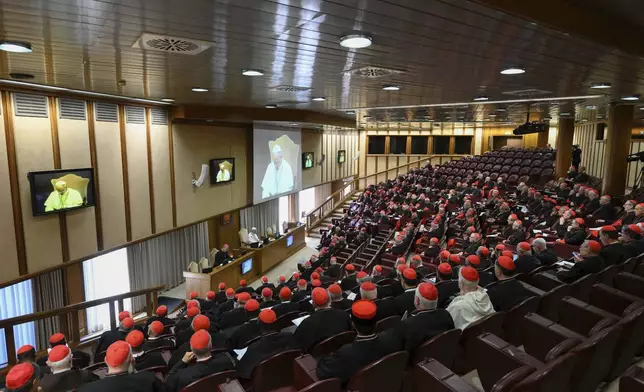
Pope Leo XIV meets the College of Cardinals in the New Synod Hall at the Vatican, Saturday, May 10, 2025. (Vatican Media via AP)
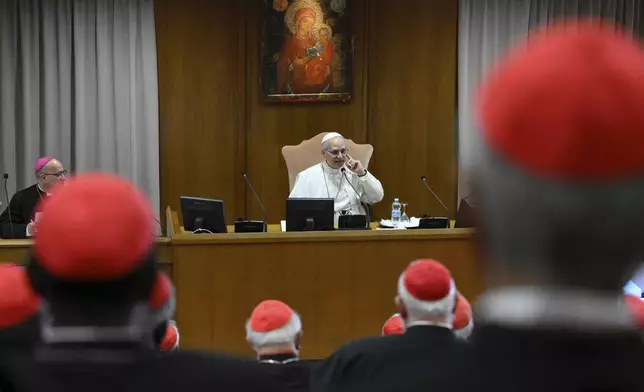
Pope Leo XIV meets the College of Cardinals in the New Synod Hall at the Vatican, Saturday, May 10, 2025. (Vatican Media via AP)
Townspeople of Genazzano gathered in the square outside the main church housing the Madre del Buon Consiglio (Mother of Good Counsel) sanctuary as Leo arrived and greeted them. The sanctuary, which is managed by Augustinian friars, has been a place of pilgrimage since the 15th century and the previous Pope Leo elevated it to a minor basilica and expanded the adjacent convent in the early 1900s.
After praying in the church, Leo greeted the townspeople and told them they had both a gift and a responsibility in having the Madonna in their midst. He offered a blessing and then got back into the passenger seat of the car, a black Volkswagen. En route back to the Vatican, he stopped to pray at Francis' tomb at St. Mary Major Basilica.
The after-lunch outing came after Leo presided over his first formal audience, with the cardinals who elected him pope. In it Leo repeatedly cited Francis and the Argentine pope's own 2013 mission statement, making clear a commitment to making the Catholic Church more inclusive and attentive to the faithful and a church that looks out for the "least and rejected.”
Leo, the first American pope, told the cardinals that he was fully committed to the reforms of the Second Vatican Council, the 1960s meetings that modernized the church. He identified AI as one of the main issues facing humanity, saying it poses challenges to defending human dignity, justice and labor.
The Vatican, meanwhile, provided hints of its own about the Leo pontificate: It revealed Saturday that Leo would retain the motto and coat of arms that he had as bishop of Chiclayo, Peru that emphasize unity in the church.
The motto, “In Illo uno unum,” was pronounced by St. Augustine in a sermon to explain that “although we Christians are many, in the one Christ we are one.” The emblem is that of the Augustinian order: a pierced flaming heart and a book, representing the Scriptures.
The Vatican also provided details about the pectoral cross that Leo is wearing: It was a gift from the Augustinian order when he was made a cardinal in 2023. It contains relics of St. Augustine and his mother, St. Monica, who was crucial in his conversion to Christianity.
St. Augustine of Hippo is one of the theological and devotional giants of early Christianity. The Augustinian order, formed in the 13th century as a community of “mendicant” friars, is dedicated to poverty, service and evangelization.
Leo referred to AI in explaining the choice of his name: His namesake, Pope Leo XIII, was pope from 1878 to 1903 and laid the foundation for modern Catholic social thought. He did so most famously with his 1891 encyclical Rerum Novarum, which addressed workers’ rights and capitalism at the dawn of the industrial age. The late pope criticized both laissez-faire capitalism and state-centric socialism, giving shape to a distinctly Catholic vein of economic teaching.
In his remarks Saturday, Leo said he identified with his predecessor.
“In our own day, the church offers everyone the treasury of its social teaching in response to another industrial revolution and to developments in the field of artificial intelligence that pose new challenges for the defense of human dignity, justice and labor,” he said.
Toward the end of his pontificate, Francis became increasingly vocal about the threats to humanity posed by AI and called for an international treaty to regulate it.
Francis in many ways saw the Chicago-born Augustinian missionary Robert Prevost as something of an heir apparent: He moved him to take over a small Peruvian diocese in 2014, where Prevost later became bishop and head of the Peruvian bishops conference, and then called him to Rome to take over one of the most important Vatican offices vetting bishop nominations in 2023.
In the speech, delivered in Italian in the Vatican’s synod hall — not the Apostolic Palace — Leo made repeated references to Francis and the mourning over his death. He held up Francis’ 2013 mission statement, “The Joy of the Gospel,” as something of his own marching orders.
He cited Francis' insistence on the missionary nature of the church and the need to make its leadership more collegial. He cited the need to pay attention to what the faithful say “especially in its most authentic and inclusive forms, especially popular piety.”
Again, referring to Francis' 2013 mission statement, Leo cited the need for the church to express “loving care for the least and rejected” and engage in courageous dialogue with the contemporary world.
Greeted by a standing ovation, Leo read from his prepared text, only looking up occasionally. Even when he first appeared to the world on Thursday night, Leo read from a prepared, handwritten text in Italian that he must have drafted sometime before his historic election or the hour or so after. He seemed most comfortable speaking off-the-cuff in the few words he pronounced in Spanish.
Prevost was elected the 267th pontiff on Thursday on the fourth ballot of the conclave, an exceptionally fast outcome given this was the largest and most geographically diverse conclave in history and not all cardinals knew one another before arriving in Rome.
Madagascar Cardinal Désiré Tsarahazana told reporters on Saturday that on the final ballot, Prevost had received “more” than 100 of the 133 votes. That suggests an extraordinary margin, well beyond the two-thirds, or 89 votes, necessary to be elected.
Cardinal Pietro Parolin, the Vatican secretary of state who had been considered one of the top contenders to be pope, offered his congratulations on Saturday in a letter published in his hometown paper, Il Giornale di Vicenza.
Parolin praised Leo's grasp of today's problems, recalling his first words from the loggia when he spoke of the need for a peace that is "disarmed and disarming." Parolin said he had appreciated Prevost's leadership in Chiclayo, saying he helped handle a particularly thorny problem — with no details — and grew to appreciate his governance more closely at the Vatican handling the bishops' office.
Specifically, Parolin praised Leo's understanding of people and situations, his “calmness in argumentation, balance in proposing solutions, respect, care and love for everyone.”
Associated Press religion coverage receives support through the AP’s collaboration with The Conversation US, with funding from Lilly Endowment Inc. The AP is solely responsible for this content.
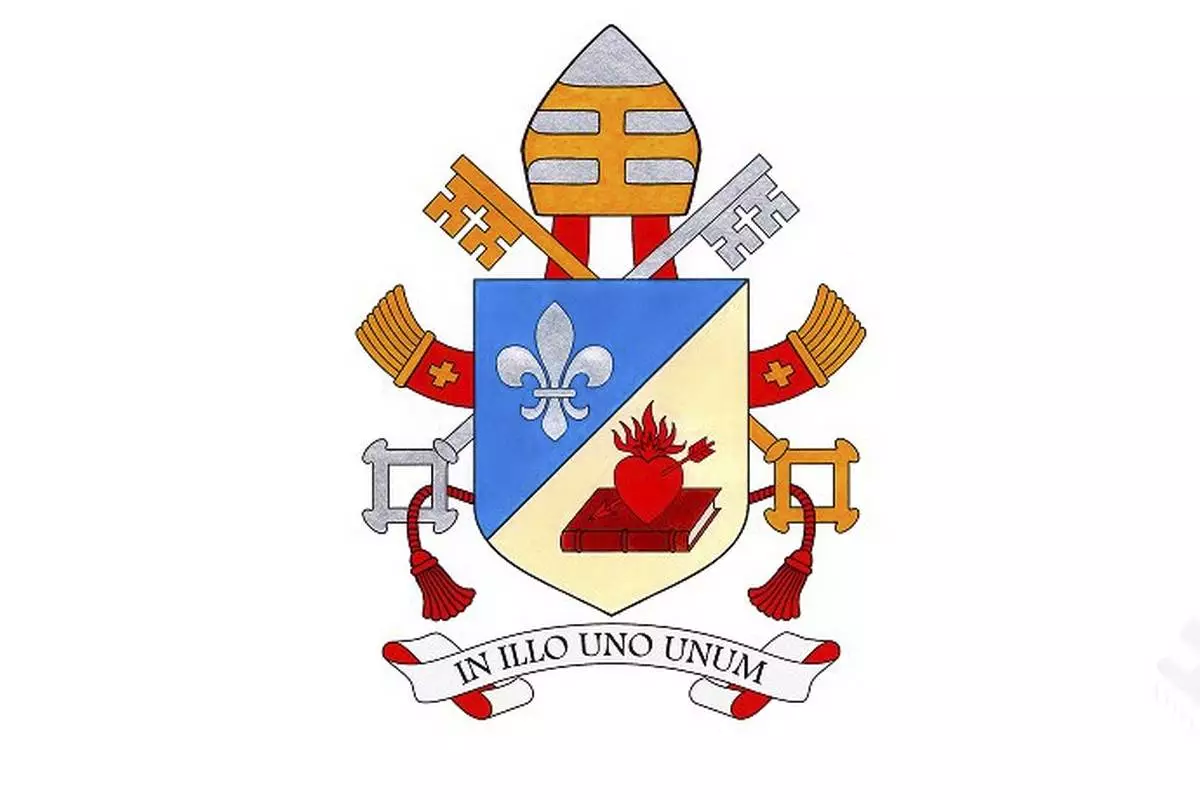
This image released by Vatican Governatorato Saturday, May 10, 2025. shows the Pope Leo XIV's coat of arms. (Vatican Secretariat of State via AP)
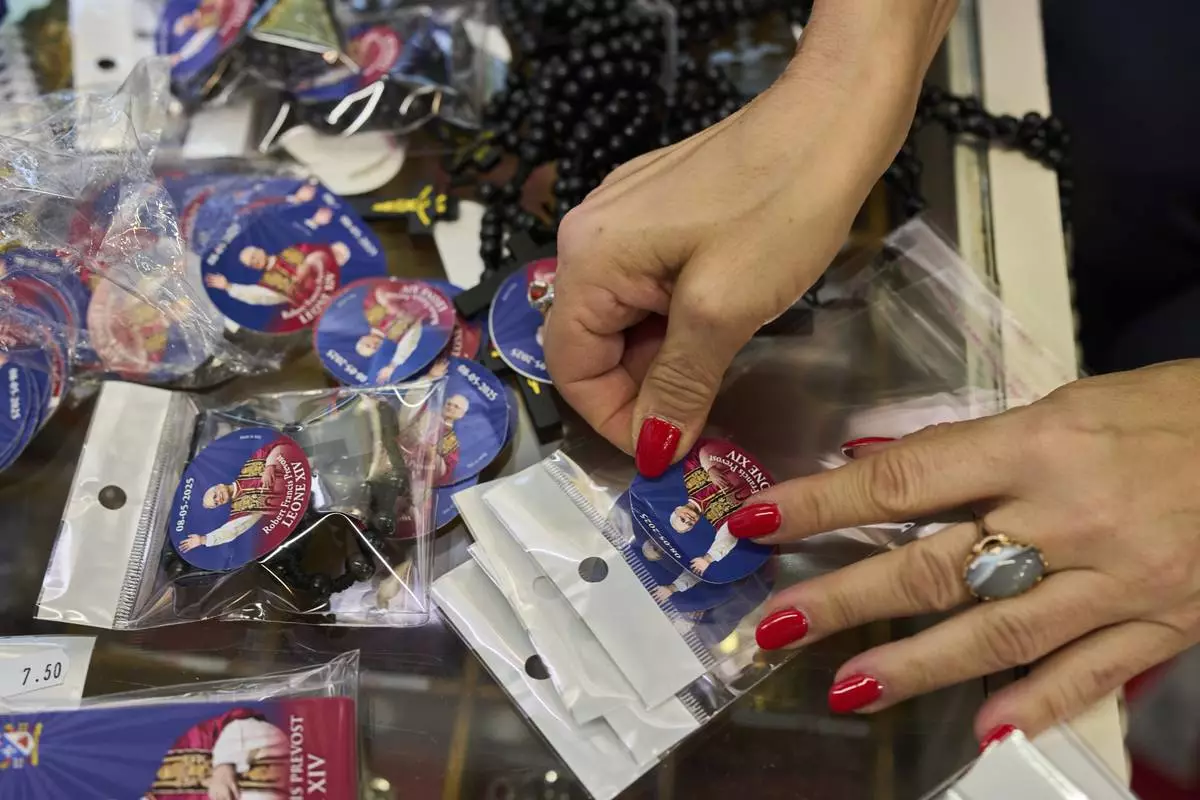
A vendor sticks pictures of newly elected Pope Leo XIV onto rosaries in a religious souvenir shop in Rome, Saturday, May 10, 2025. (AP Photo/Bernat Armangue)
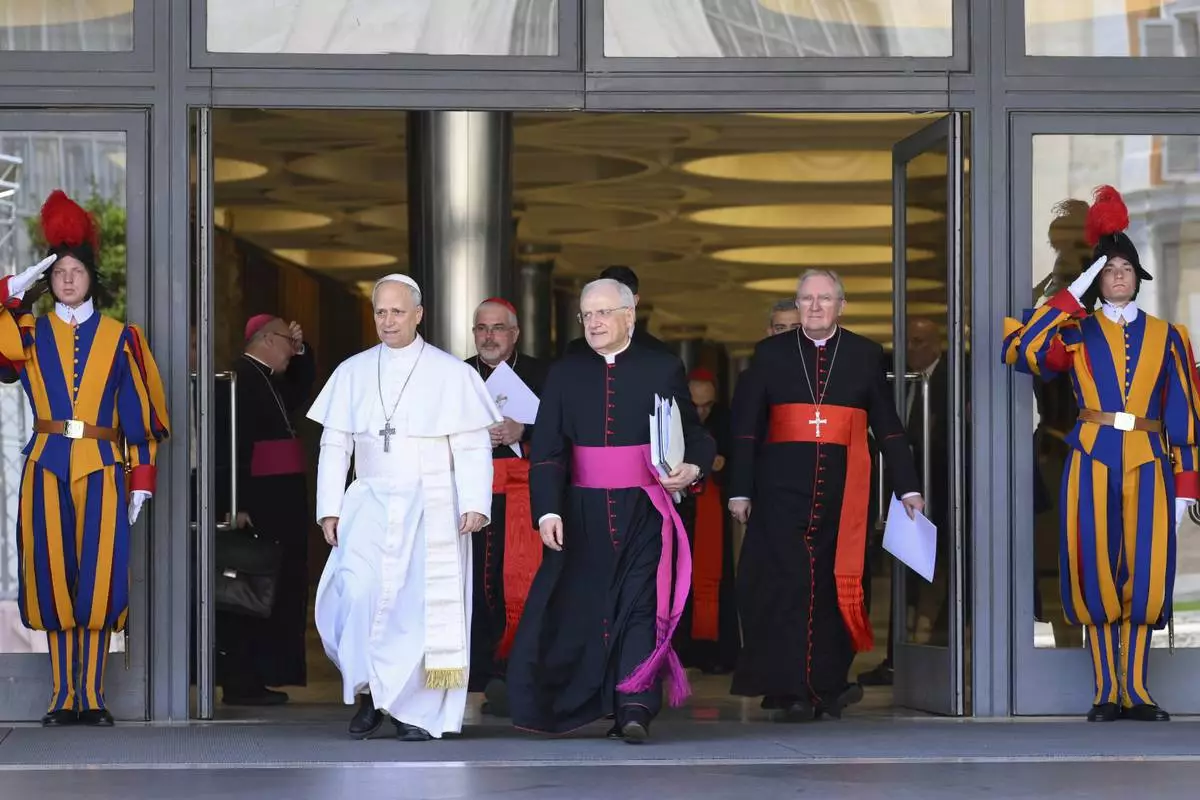
Pope Leo XIV, left, is flanked by Monsignor Leonardo Sapienza, second from left, after his meeting with the College of Cardinals in the New Synod Hall at the Vatican, Saturday, May 10, 2025. (Vatican Media via AP)
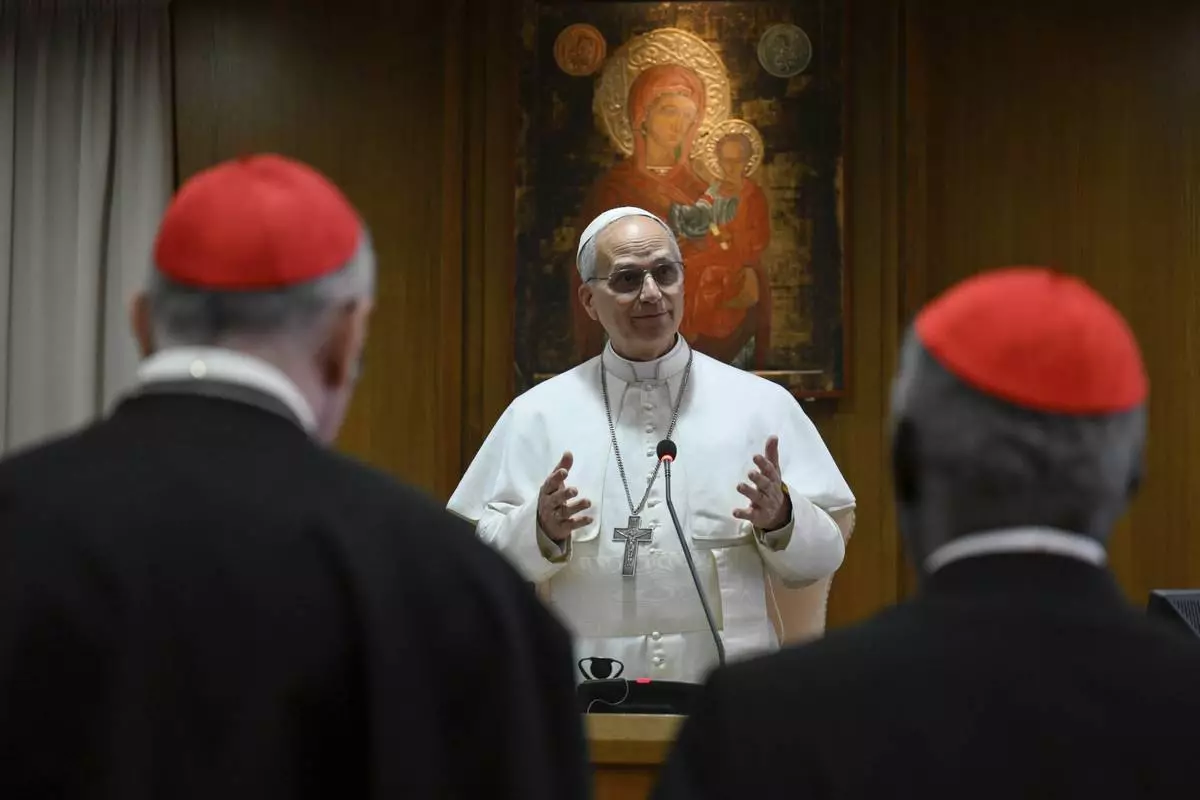
Pope Leo XIV meets the College of Cardinals in the New Synod Hall at the Vatican, Saturday, May 10, 2025. (Vatican Media via AP)
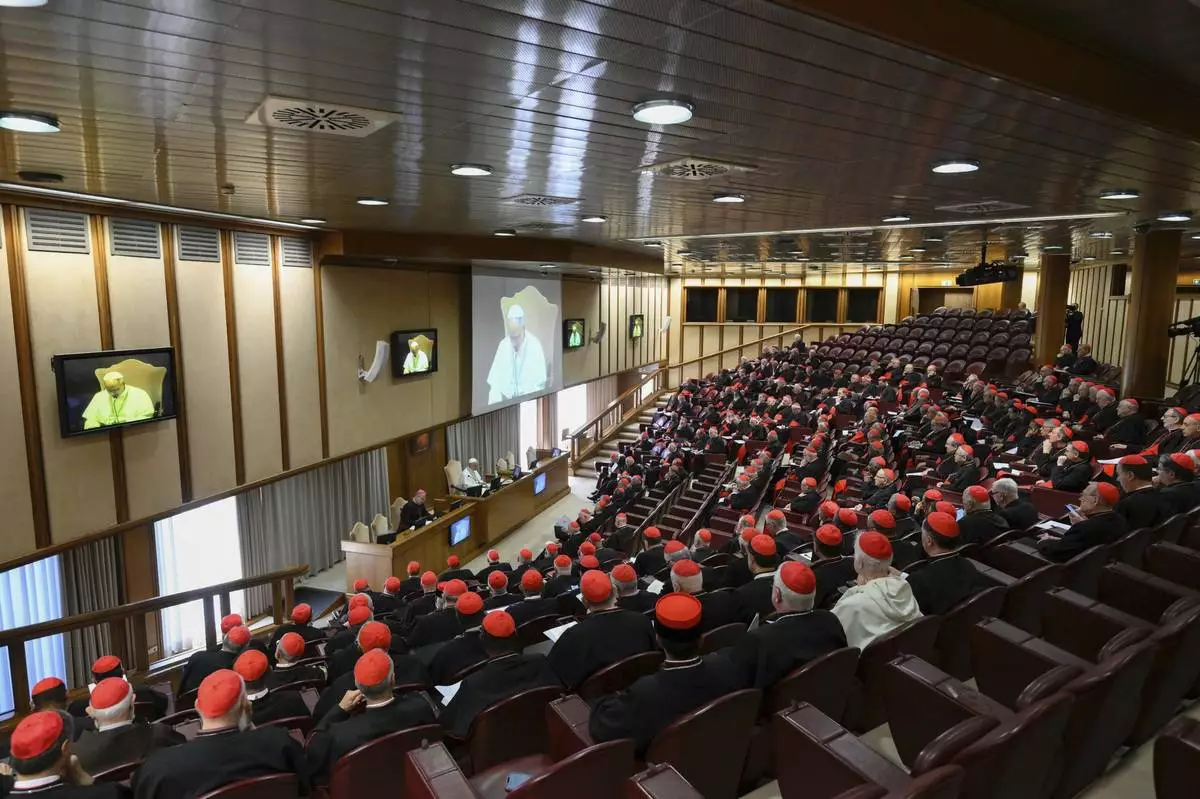
Pope Leo XIV meets the College of Cardinals in the New Synod Hall at the Vatican, Saturday, May 10, 2025. (Vatican Media via AP)
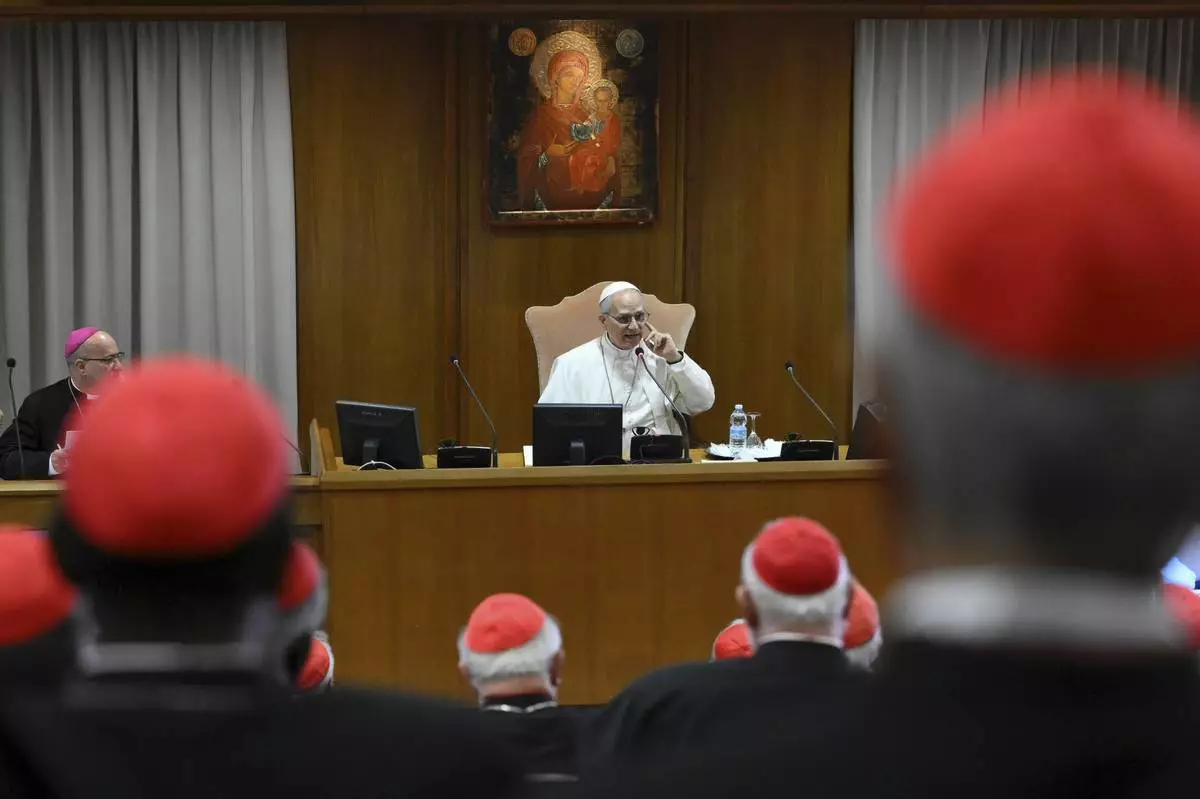
Pope Leo XIV meets the College of Cardinals in the New Synod Hall at the Vatican, Saturday, May 10, 2025. (Vatican Media via AP)