The population of milu deer, commonly known as Pere David's deer, has multiplied in Daqing Mountain National Nature Reserve in north China's Inner Mongolia Autonomous Region, thanks to scientific conservation efforts.
Once believed extinct in the early 20th century due to habitat destruction and environmental changes, milu is a rare species under national first-class protection, unique to China.
In September 2021, 27 milu deer - 9 males and 18 females - were relocated from Beijing and east China's Jiangsu Province to Daqing Mountain National Nature Reserve for enhanced protection.
Today, the herd has grown to 64, including 12 born in April this year.
Daqing Mountain National Nature Reserve, one of the northernmost, coldest and highest-altitude milu habitats in China, presents a stark contrast to the deer's original habitats in Beijing and Jiangsu. As a result, the herd needed time to adapt to the region's special conditions.
The area where the milu deer live covers about 10,000 mu (about 666 hectares) of grasslands, forests, and streams at an average altitude of 1,100 meters. This diverse environment, particularly the warm, humid wetlands and lakes, has become a key gathering spot for the animals.
To monitor the herd's movements and behavior, researchers have equipped the deer with digital collars powered by the BeiDou satellite navigation system, which allow for tracking without interfering with their natural activities.
The collected data shows that the deer's range is steadily expanding, indicating growing familiarity with their new home.
Researchers also collect and analyze fresh droppings on a regular basis to study the deer's diet, check for parasites, and perform DNA tests to monitor the herd's genetic diversity.
These scientific efforts have been instrumental in supporting the herd's population growth, ensuring the long-term survival of milu in the reserve.
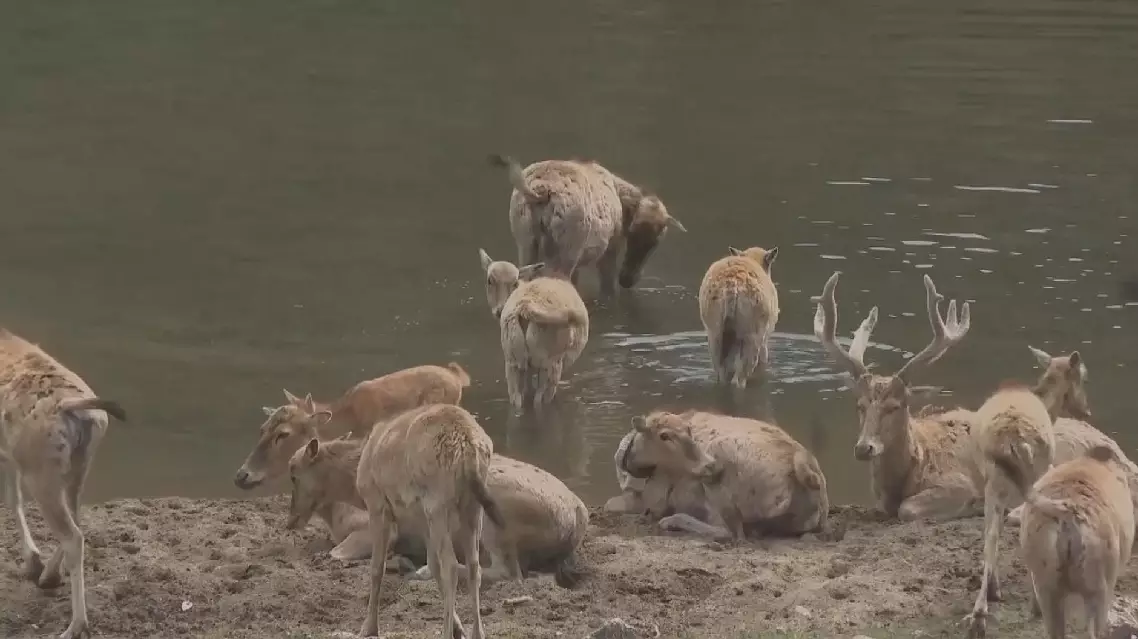
Milu deer thrive in north China's nature reserve with population multiplying
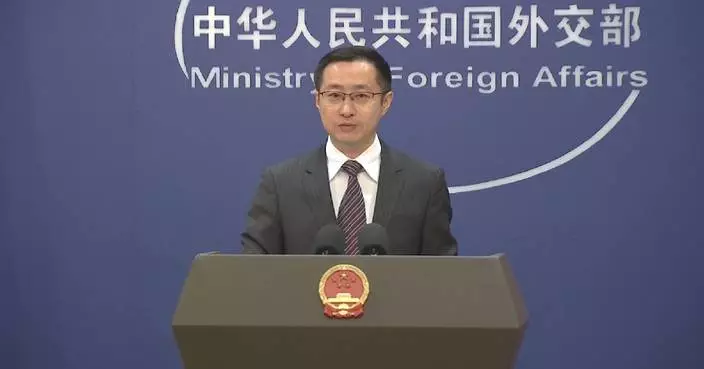
China's development has never been a "threat" to anyone but the source of growth advancing common development of all countries, Foreign Ministry spokesman Lin Jian said at a regular press conference in Beijing on Friday.
Some Western media and think tanks are peddling so-called "China Shock 2.0," saying that "China is achieving fast development in high-tech sectors such as renewable energy and AI and relies on foreign markets to absorb its overcapacity, thus reducing the market share of developed countries and sending more serious shock waves to the global economy compared with the era of traditional manufacture industry," while there are foreign commentators saying that the "China Shock 2.0" argument ignores the genuine innovation occurring within the Chinese industrial ecosystem and that Chinese export is the exact booster of the global economy that is needed in the turbulent period and more indispensable than ever.
Commenting on that, Lin said: "From the world's factory to the world's market and innovation powerhouse, China's development is achieved through strong performance driven by innovation and brings tangible cooperation opportunities and space to the world. High-quality Chinese products represented by the 'old three' of textiles, furniture and home appliances have stabilized the global industrial and supply chain, lowered the living cost of global consumers and eased the inflationary pressure worldwide. China's green production capacity represented by the 'new three' of electric vehicles, batteries and solar panels has bridged the gap between supply and demand in global green development and bolstered the global energy transition and low-carbon development. Moreover, China's high-tech products represented by the 'new new three' of robots, AI and innovative drugs have broken high-tech barriers and monopoly and enabled people in more countries to access affordable new technologies," said the spokesman.
"Openness and cooperation bring about progress and win-win result. China's development has never been a 'threat' to anyone but the source of growth advancing common development of all countries. What really creates 'shocks' to the world has never been the innovation of Chinese companies and efficiency of Chinese industrial capacity, but protectionist moves of setting up barriers, decoupling and severing industrial and supply chains. China will stay committed to high-standard opening up, defend the multilateral trading system and provide more certainty and new impetus to the world economy with its own steady development," said Lin.
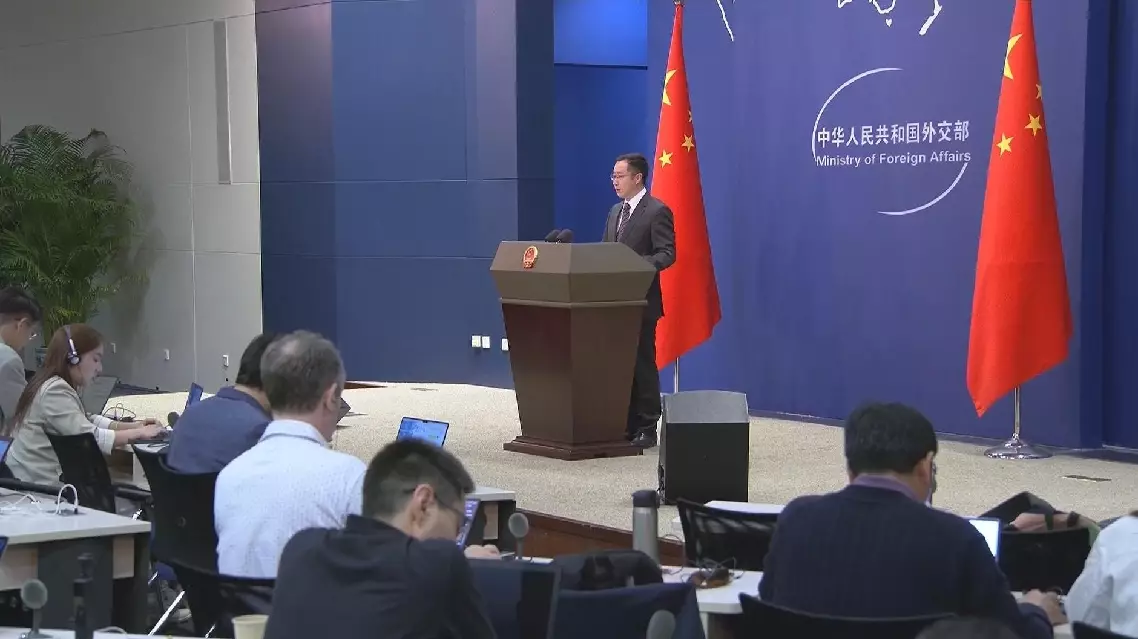
China's development never a threat: FM spokesman