Skip to Content Facebook Feature Image

Maoming gov't helps tilapia exporters expand domestic market

China

China

China

Maoming gov't helps tilapia exporters expand domestic market

2025-05-11 14:39 Last Updated At:15:17

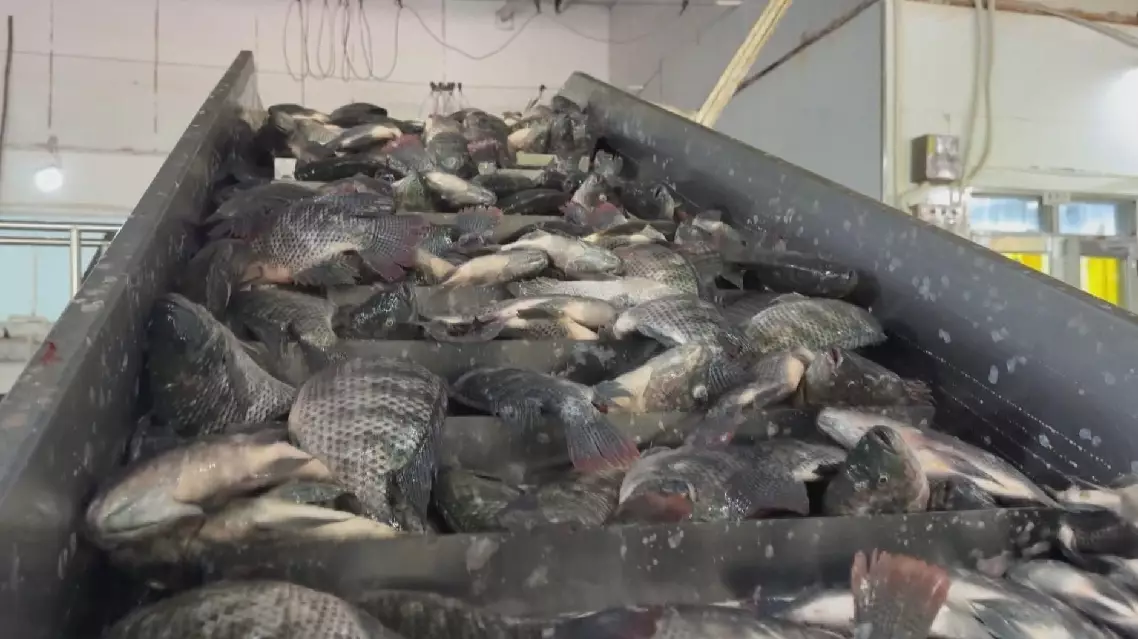
Maoming City in south China's Guangdong Province, one of China's largest tilapia processing and export hubs, has rolled out efforts to help enterprises tap into the domestic market as a way out amid tariff disputes with the United States.

The total value of tilapia export in Maoming reached 2.44 billion yuan (about 341.6 million U.S. dollars) last year. This year, due to the impact of U.S. tariff abuse, many tilapia processing companies have seen a decline in export orders, and they are striving to explore the domestic market.

Under the guidance of government authorities and the support of industry associations, stakeholders across the entire industry chain are working together and taking multiple measures to tackle the challenges of export market uncertainties and to promote domestic sales.

Chen Qi, chairman of the Maoming Tilapia Association, said that they have intensified efforts to promote tilapia products this year, in order to tap into the domestic market. In addition to receiving customers from different cities across the country every month, they have also organized companies to participate in business matchmaking events.

"We went to Beijing in January and to Dongguan in March, and we are planning to go to Shenzhen in May. Then, we will go on to promote [our products] in the southwest region. We will vigorously expand domestic market by inviting domestic distribution companies and buyers to visit and attend exhibitions," said Chen.

Maoming has increased investment in tilapia breeding technology, processing research and development and brand building. The city has introduced the world’s largest tilapia breeding enterprises to improve quality, while actively fostering leading companies on the processing side, to continuously advance the development of the tilapia industry chain.

Data show that in 2024, Maoming's tilapia breeding area exceeded 260,000 mu (about 17,342 hectares), with an export volume of around 100,000 tonnes. These products were mainly sold to more than 20 countries and regions including the United States and Canada.

"From fresh tilapia to frozen products, and then to processed products, we aim for [in the near term] an approximately 15 percent growth in the domestic market," said Zhong Xiuwei, deputy director of Maoming Municipal Bureau of Agricultural and Rural Affairs.

In the next step, Maoming will build a big data platform for agricultural products to accurately grasp market dynamics and consumer demand. Additionally, by establishing teams of brokers and buyers, the city will build more effective channels to connect production with market, expanding the sales reach of tilapia.

"Currently, our fresh [tilapia] products are delivered to nearly every province in the country, and the entire industry chain is well-developed. Through government efforts, enterprises have participated in various exhibitions and promoted Maoming tilapia in multiple large and medium-sized cities. These efforts have played a significant role in driving the development of our tilapia industry," said Zhong.
Maoming gov't helps tilapia exporters expand domestic market
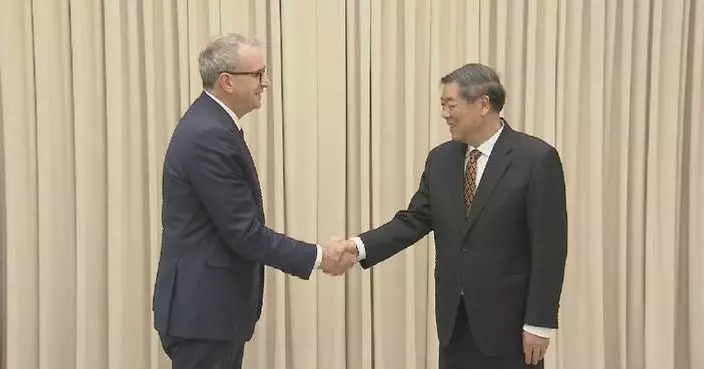
Maoming gov't helps tilapia exporters expand domestic market
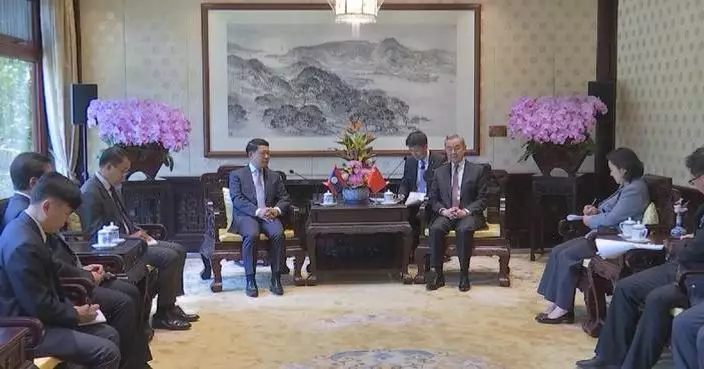
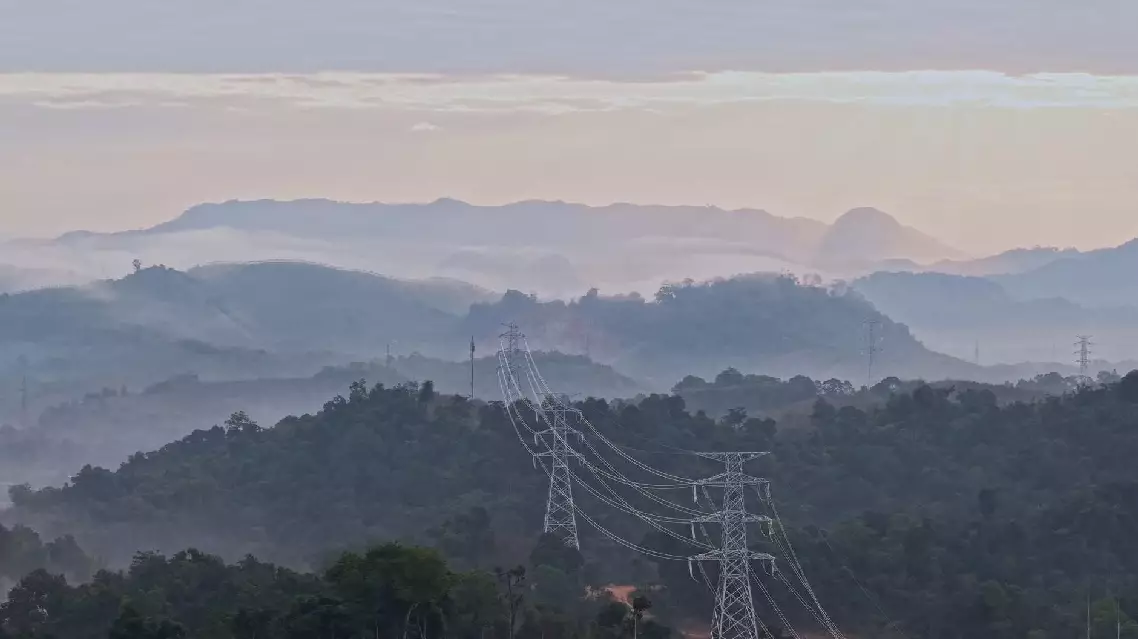
China's first 500-kV cross-border alternating-current power interconnection project entered service Monday, creating the highest voltage grid tie between the two countries and advancing Belt and Road energy cooperation.

The project raises two-way power transfer capacity between the two countries from 50,000 kW to 1.5 million kW, enabling the annual transmission of about 3 billion kWh of clean electricity, roughly 30 times the capacity of previous lines, according to China Southern Power Grid.

As the largest cross-border grid project and the highest-voltage power link between China and Laos, it connects southwest China's Yunnan Province with Oudomxay and Luang Namtha provinces in northern Laos.

Cross-border electricity trading began as the project entered operation. About 4.81 million kWh of power from clean energy bases in northern Laos was transmitted to Yunnan through the new line, marking a more regular and institutionalized phase of power connectivity between the two countries.

It is also the first time an overseas new energy project has participated in China's electricity market, the company said. The power involved in the transaction came from a large mountain photovoltaic project in Laos, one of the core supporting power sources for the interconnection line.

"This project is the cross-border power grid project with the highest voltage level between China and Laos. Leveraging the China-Laos power grid interconnection and the power markets in southern China, surplus hydropower from Laos can be transmitted to China during the rainy season, while China can supply supplemental power to northern Laos during the dry season. This project represents yet another landmark achievement between China and Laos in deepening power cooperation and jointly advancing the high-quality development of the Belt and Road Initiative," said Li Jingru, general manager of Electricite du Laos Transmission Company Limited (EDL-T), a joint venture of China Southern Power Grid and Lao state-run Electricite du Laos.

The solar project has an average annual power generation capacity of about 1.65 billion kWh. In 2026, it is expected to transmit about 1.1 billion kWh of solar power across the border, supporting energy complementarity between the two countries.

"In the future, efforts will be made to further promote normalized cross-border electricity trading, meet the trading needs such as electricity transmission from Laos to China's Yunnan, from China's Yunnan to Laos, and from Laos to China's Guangdong, and facilitate the optimal allocation of energy resources in the Lancang-Mekong region," said Li Minhong, marketing director of China Southern Power Grid.

Construction of the interconnection project began in late February last year. Spanning a total length of 177.5 km, the transmission line includes a 145-km Chinese section and a 32.5-km Lao section.

New China-Laos power link expands transfer capacity 30-fold, boosts electricity trading

New China-Laos power link expands transfer capacity 30-fold, boosts electricity trading

Recommended Articles