Skip to Content Facebook Feature Image

Puerto Rico seeks to lure manufacturing to boost its economy as Trump's tariff war deepens

News

Puerto Rico seeks to lure manufacturing to boost its economy as Trump's tariff war deepens
News

News

Puerto Rico seeks to lure manufacturing to boost its economy as Trump's tariff war deepens

2025-05-13 03:55 Last Updated At:04:00

SAN JUAN, Puerto Rico (AP) — A global trade war is offering Puerto Rico hope as the U.S. territory attempts to strengthen its fragile economy.

Government officials are jumping on planes to try and convince international companies to relocate their manufacturing plants to the island, where they would be exempt from tariffs.

More Images
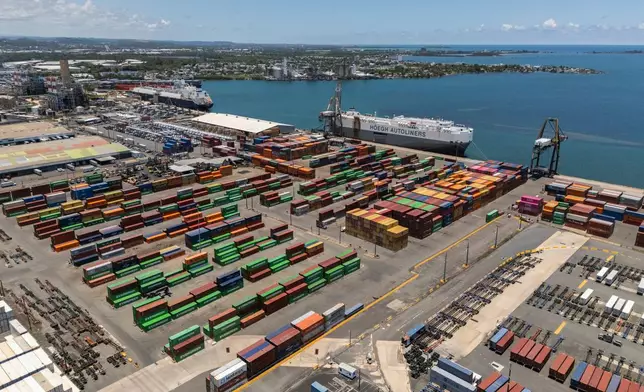
Trucks drive past shipping containers at the San Juan port, Puerto Rico, Thursday, May 8, 2025. (AP Photo/Alejandro Granadillo)
Trucks drive past shipping containers at the San Juan port, Puerto Rico, Thursday, May 8, 2025. (AP Photo/Alejandro Granadillo)

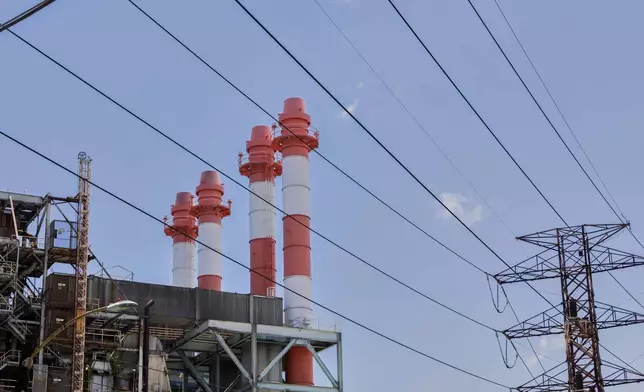
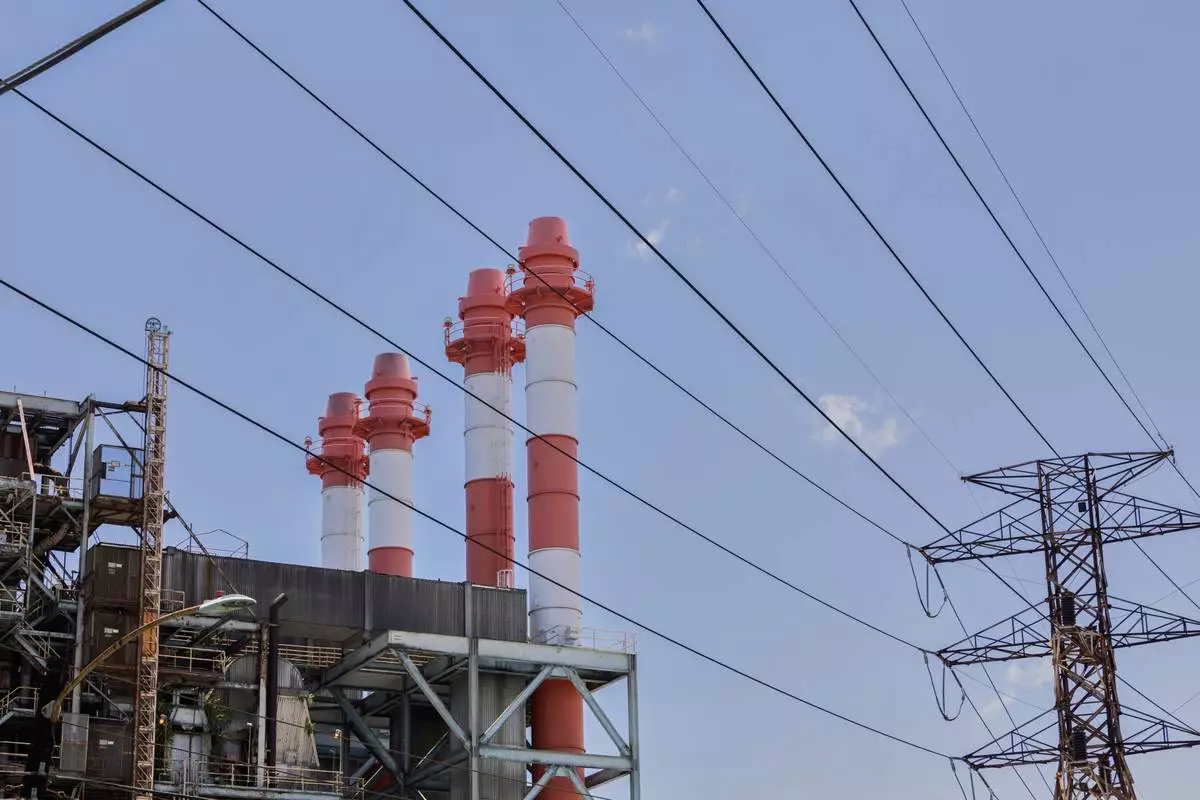
Power lines rise in front of electric towers and smokestacks at the Palo Seco power plant in Toa Baja, Puerto Rico, Thursday, May 8, 2025. (AP Photo/Alejandro Granadillo)
Power lines rise in front of electric towers and smokestacks at the Palo Seco power plant in Toa Baja, Puerto Rico, Thursday, May 8, 2025. (AP Photo/Alejandro Granadillo)

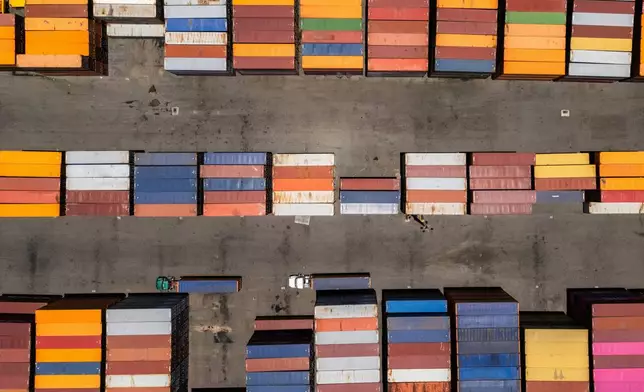
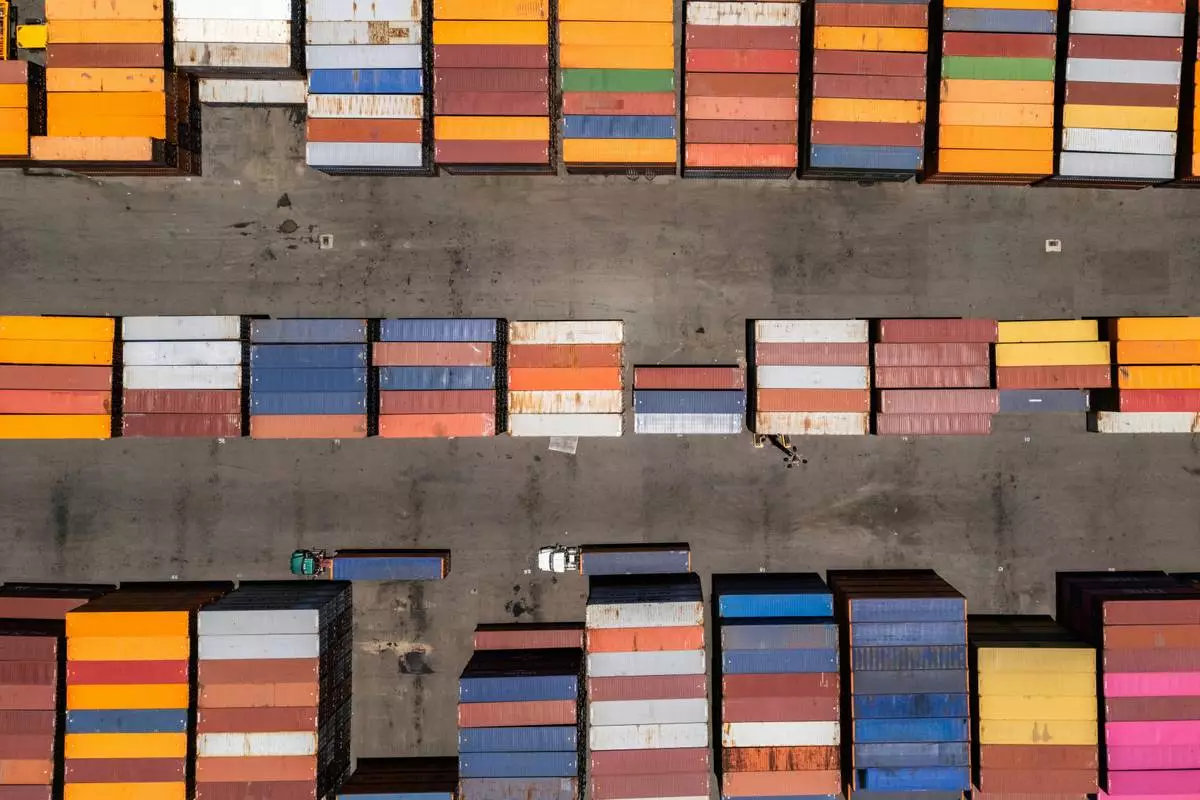
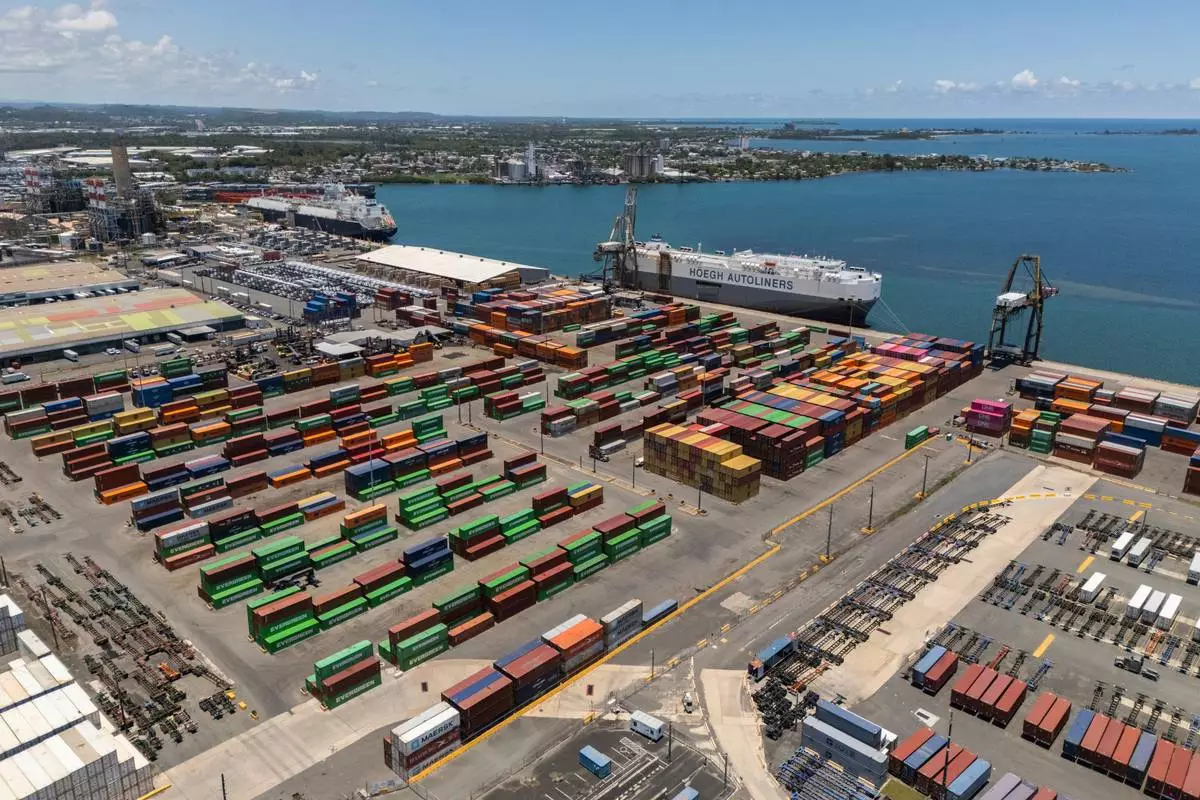
Tractor trailers and containers fill a shipping yard at the San Juan port in Puerto Rico, Thursday, May 8, 2025. (AP Photo/Alejandro Granadillo)
Tractor trailers and containers fill a shipping yard at the San Juan port in Puerto Rico, Thursday, May 8, 2025. (AP Photo/Alejandro Granadillo)

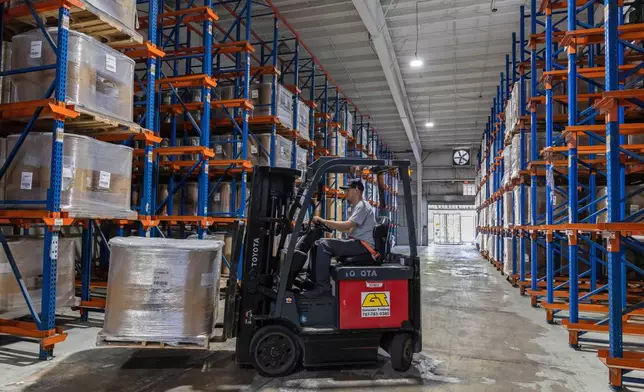
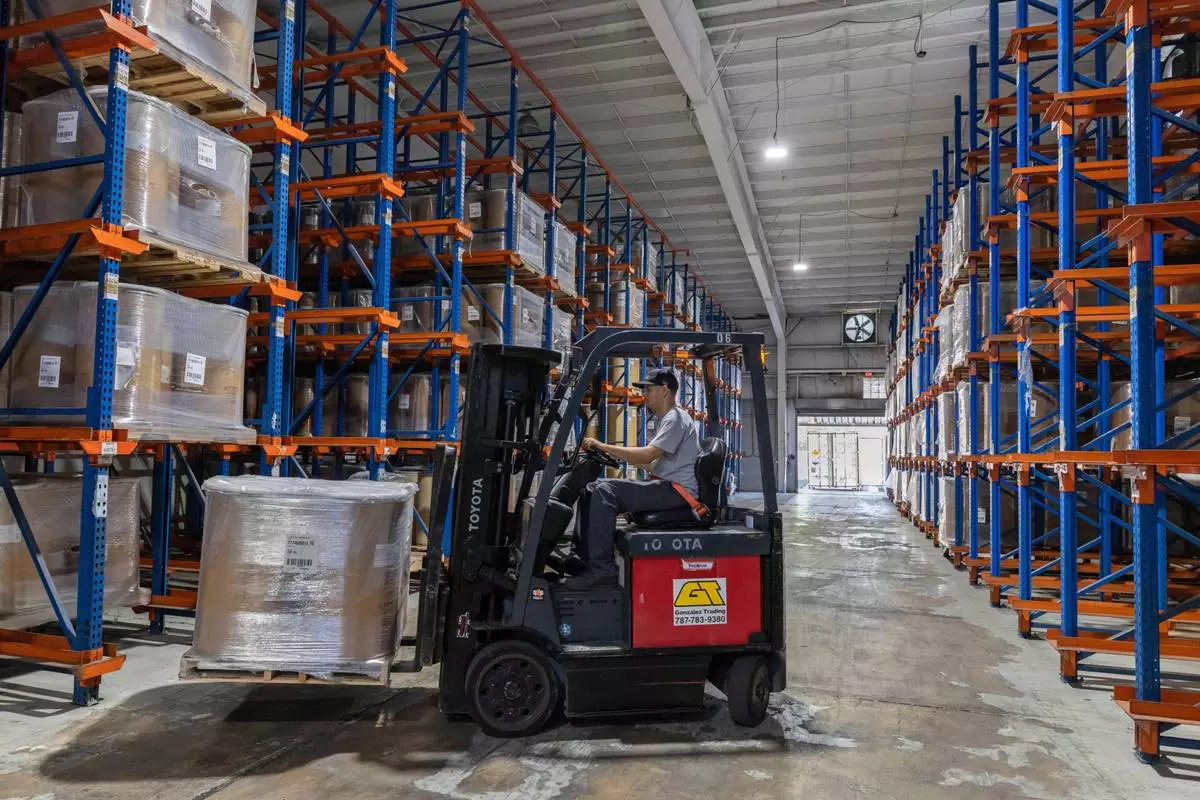
A forklift worker transports goods at a warehouse in San Juan, Puerto Rico, Thursday, May 8, 2025. (AP Photo/Alejandro Granadillo)
A forklift worker transports goods at a warehouse in San Juan, Puerto Rico, Thursday, May 8, 2025. (AP Photo/Alejandro Granadillo)

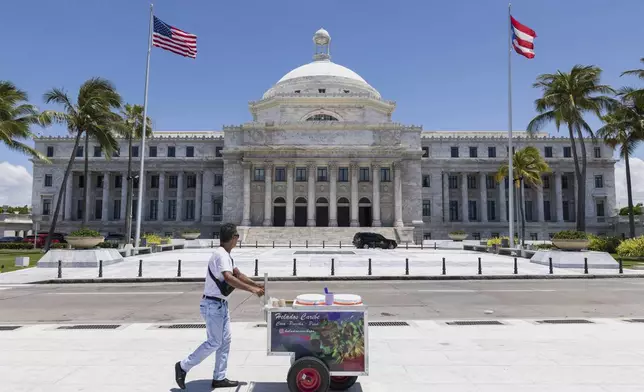
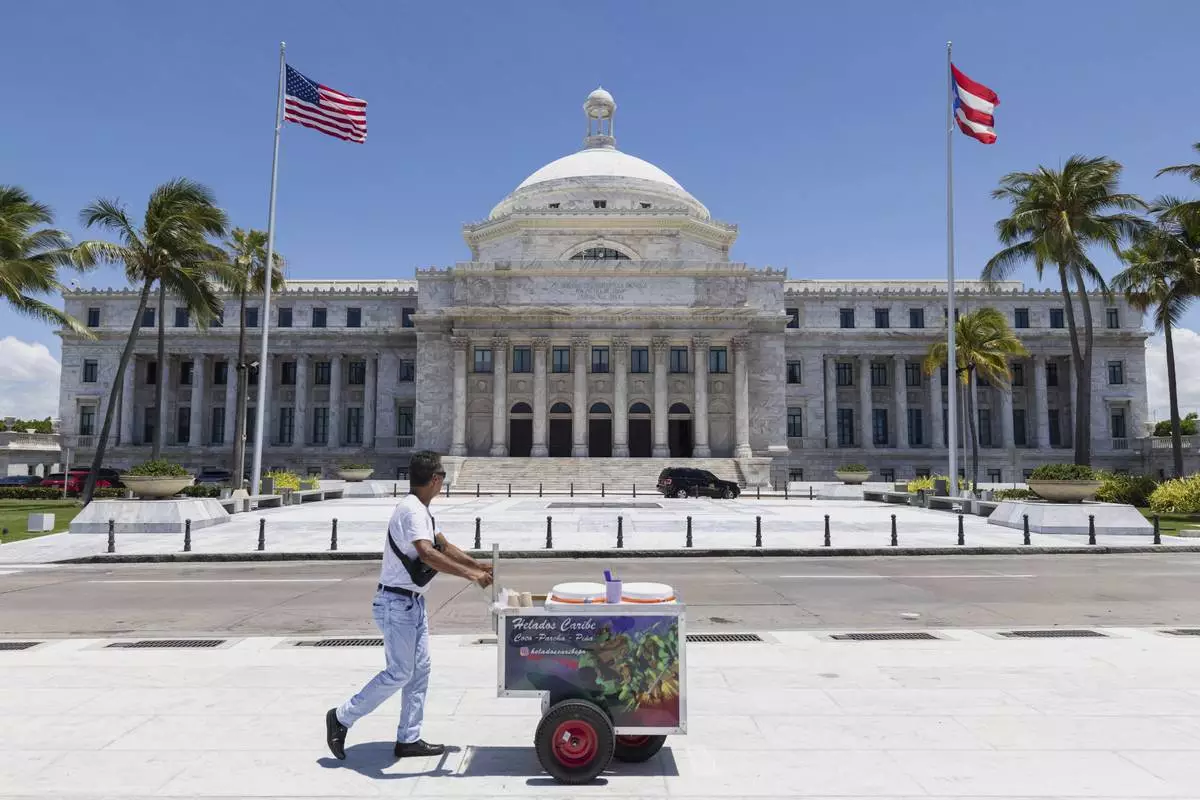
An ice cream vendor pushes his cart past Puerto Rico's Capitol building in San Juan, Puerto Rico, Thursday, May 8, 2025. (AP Photo/Alejandro Granadillo)
An ice cream vendor pushes his cart past Puerto Rico's Capitol building in San Juan, Puerto Rico, Thursday, May 8, 2025. (AP Photo/Alejandro Granadillo)

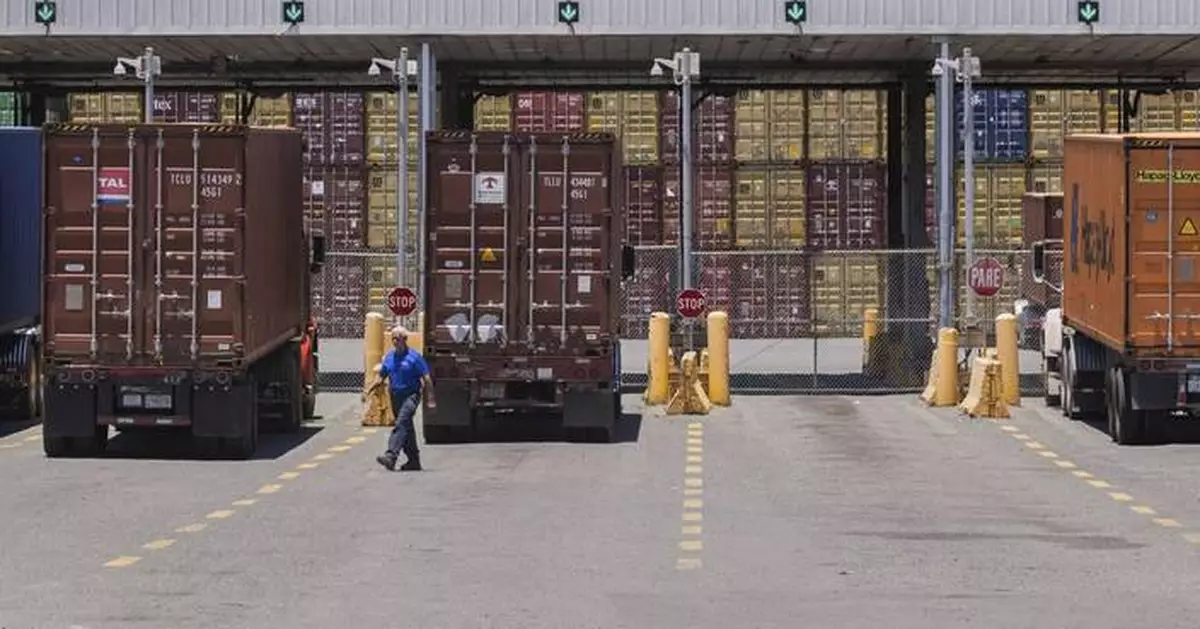
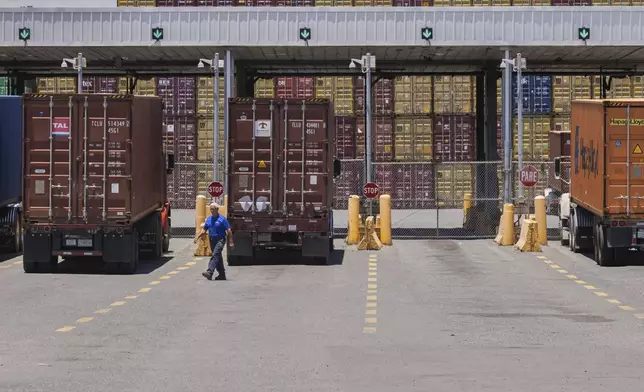
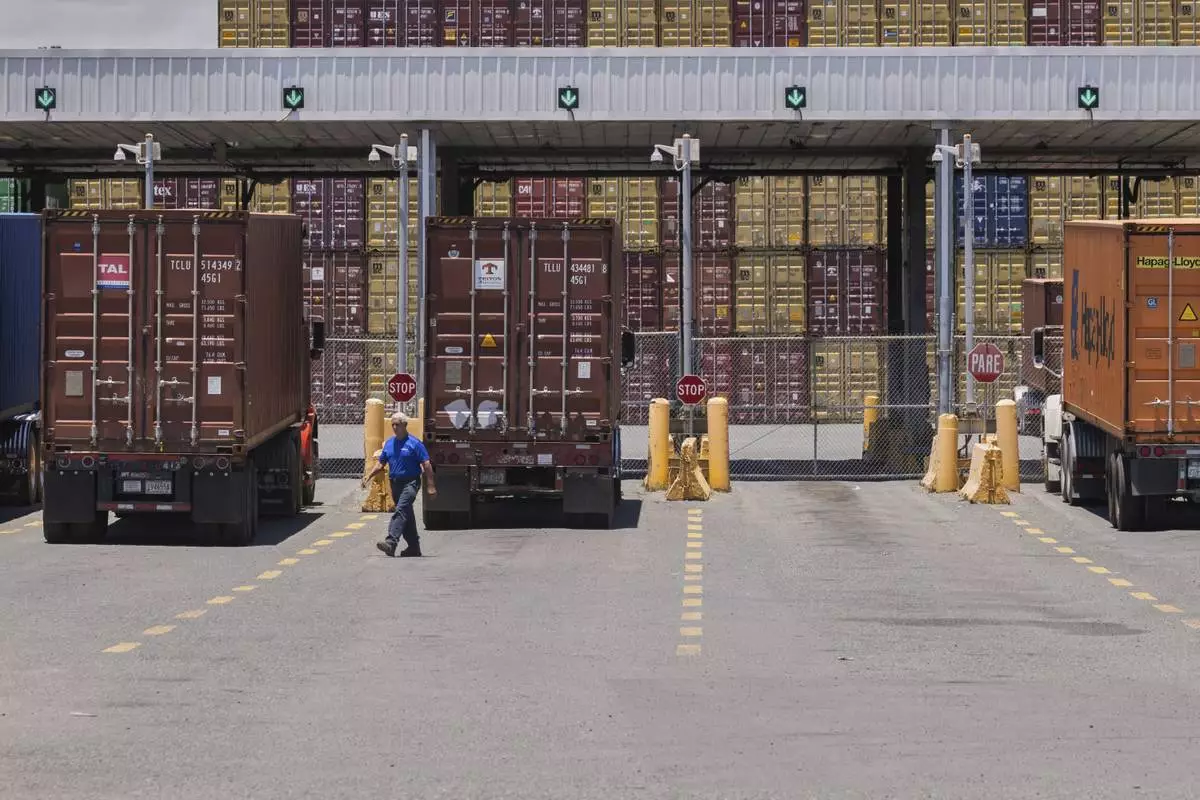
A worker traverses the entrance of a shipping terminal in San Juan, Puerto Rico, Thursday, May 8, 2025. (AP Photo/Alejandro Granadillo)

A worker traverses the entrance of a shipping terminal in San Juan, Puerto Rico, Thursday, May 8, 2025. (AP Photo/Alejandro Granadillo)

Any relocation would be a boost to Puerto Rico’s shaky economy as the government emerges from a historic bankruptcy and continues to struggle with chronic power outages. The island also is bracing for potentially big cuts in federal funding under the administration of U.S. President Donald Trump, with federal funds currently representing more than half of Puerto Rico’s budget.

“The tariff issue is a controversial one, but for Puerto Rico, it’s a great opportunity,” said Gov. Jenniffer González.

Manufacturing remains the island’s biggest industry, representing nearly half of its gross domestic product. But the government wants to recapture Puerto Rico’s heyday, when dozens of big-name companies, especially in the pharmaceutical sector, were based here and kept the economy humming.

So far, officials have identified between 75 to 100 companies that might consider relocating operations to Puerto Rico given the ongoing trade war, said Ella Woger Nieves, CEO of Invest Puerto Rico, a public-private partnership that promotes the island as a business and investment destination.

The companies identified work in sectors including aerospace, pharmaceuticals and medical devices.

Officials also have welcomed site selectors to Puerto Rico and organized tours to show them the island’s available infrastructure and stress how tariffs wouldn’t apply here.

“This is the moment to plant those seeds,” Woger Nieves said.

She said officials with Invest Puerto Rico and various government agencies are expected to make almost 20 more trips this year in a bid to attract more manufacturing to the island. The government praised an executive order that Trump signed Monday that aims to reduce the time it takes to approve construction of pharmaceutical manufacturing facilities in the U.S.

In the mid-1900s, needlework was one of Puerto Rico’s largest industries, employing about 7,000 workers who labored on handkerchiefs, underwear, bedspreads and other items, according to a 1934 fair competition code signed by President Franklin D. Roosevelt.

Manufacturing later shifted to chemicals, clothes and electronics. By the late 1970s, a growing number of pharmaceutical companies began moving their operations to Puerto Rico, lured by a federal tax incentive created in 1976 to help boost the island’s economic growth. However, in 1996, the U.S. government began phasing out the incentive, which exempted the subsidiaries of U.S. companies operating in Puerto Rico from federal taxes on local profits.

From 1995 to 2005, overall manufacturing employment fell by nearly 30%, but employment in the sectors of pharmaceuticals, medicines and chemicals increased by at least 10%, according to the U.S. Bureau of Labor Statistics.

Puerto Rico continues to lead U.S. exports of pharmaceutical and medicine manufacturing, representing nearly 20% of total U.S. exports in 2020, according to the bureau.

In 2024, the island exported nearly $25 billion worth of goods, including $11 billion worth of vaccines and certain cultures; $7 billion worth of packaged medicaments; $1 billion worth of hormones; $984 million worth of orthopedic items; and $625 million worth of medical instruments, according to the Observatory of Economic Complexity.

Sergio Marxuach, policy director and general counsel for the Center for a New Economy, a non-profit, non-partisan think tank, said the push to attract more companies makes sense, especially recruiting those in the pharmaceutical and medical device sectors.

“If I were advising the government, begin there because you already have a footprint,” he said.

Marxuach noted that outside of those areas, Puerto Rico could have an advantage when it comes to national defense and security contracts, including the manufacturing of drones or underwater surveillance systems.

“They need a place to manufacture in scale,” he said, adding that doing so in a U.S. jurisdiction is key.

Puerto Rico’s government also is meeting with university officials to potentially change curriculums if needed to ensure students are graduating with the skills required by companies.

Puerto Rico touts its U.S. jurisdiction, tax incentives and skilled workforce as reasons international companies should relocate to the island.

But it cannot escape its well-known energy problems.

Chronic power outages continue to plague Puerto Rico, with two island-wide blackouts occurring on Dec. 31 and April 16.

Crews are still repairing the power grid after it was razed by Hurricane Maria in September 2017, a powerful Category 4 storm. But the grid was already fragile following a lack of maintenance and investment for decades.

“Puerto Rico needs more reliable energy for the economic growth to improve,” said Robert F. Mujica, executive director of a federal control board that oversees the island’s finances.

Woger Nieves, the CEO of Invest Puerto Rico, said that when officials meet with company leaders, they explain the state of the island’s energy infrastructure and offer alternatives including cogeneration and renewables.

“Power doesn’t have to necessarily be an impediment,” she said.

Marxuach, with the Center for a New Economy, said Puerto Rico’s energy system is costly and inefficient, and noted that alternatives can be expensive.

“Puerto Rico has to address some issues that actually create additional costs for investors to come here,” he said.

One those costs is that any goods sent to the U.S. from Puerto Rico must by law be sent aboard a U.S.-flagged vessel with a U.S. crew.

Other challenges remain.

Currently, the short-term reaction of many CEOs and companies “is basically to wait and see” how the tariff war plays out, Marxuach said.

Trump has said that he wants to keep some tariffs in place, but he also has mentioned efforts to reach deals with trading partners. His team said Trump is using “strategic uncertainty” to his advantage.

Another dilemma is that relocating operations takes years, not months, and other countries also are vying for the attention of international companies.

“We’re competing with Vietnam, South Korea, Malaysia, Singapore, that have very advanced manufacturing facilities already,” Marxuach said. “It’s not a slam dunk.”

This story has been corrected to say that the 1934 fair competition code was signed by President Franklin D. Roosevelt.

Follow AP’s coverage of Latin America and the Caribbean at https://apnews.com/hub/latin-america
Trucks drive past shipping containers at the San Juan port, Puerto Rico, Thursday, May 8, 2025. (AP Photo/Alejandro Granadillo)
Trucks drive past shipping containers at the San Juan port, Puerto Rico, Thursday, May 8, 2025. (AP Photo/Alejandro Granadillo)

Power lines rise in front of electric towers and smokestacks at the Palo Seco power plant in Toa Baja, Puerto Rico, Thursday, May 8, 2025. (AP Photo/Alejandro Granadillo)
Power lines rise in front of electric towers and smokestacks at the Palo Seco power plant in Toa Baja, Puerto Rico, Thursday, May 8, 2025. (AP Photo/Alejandro Granadillo)

Tractor trailers and containers fill a shipping yard at the San Juan port in Puerto Rico, Thursday, May 8, 2025. (AP Photo/Alejandro Granadillo)
Tractor trailers and containers fill a shipping yard at the San Juan port in Puerto Rico, Thursday, May 8, 2025. (AP Photo/Alejandro Granadillo)

A forklift worker transports goods at a warehouse in San Juan, Puerto Rico, Thursday, May 8, 2025. (AP Photo/Alejandro Granadillo)
A forklift worker transports goods at a warehouse in San Juan, Puerto Rico, Thursday, May 8, 2025. (AP Photo/Alejandro Granadillo)

An ice cream vendor pushes his cart past Puerto Rico's Capitol building in San Juan, Puerto Rico, Thursday, May 8, 2025. (AP Photo/Alejandro Granadillo)
An ice cream vendor pushes his cart past Puerto Rico's Capitol building in San Juan, Puerto Rico, Thursday, May 8, 2025. (AP Photo/Alejandro Granadillo)

A worker traverses the entrance of a shipping terminal in San Juan, Puerto Rico, Thursday, May 8, 2025. (AP Photo/Alejandro Granadillo)
A worker traverses the entrance of a shipping terminal in San Juan, Puerto Rico, Thursday, May 8, 2025. (AP Photo/Alejandro Granadillo)
DUBAI, United Arab Emirates (AP) — U.S. President Donald Trump said Iran wants to negotiate with Washington after his threat to strike the Islamic Republic over its bloody crackdown on protesters, a move coming as activists said Monday the death toll in the nationwide demonstrations rose to at least 544.

Iran had no immediate reaction to the news, which came after the foreign minister of Oman — long an interlocutor between Washington and Tehran — traveled to Iran this weekend. It also remains unclear just what Iran could promise, particularly as Trump has set strict demands over its nuclear program and its ballistic missile arsenal, which Tehran insists is crucial for its national defense.

Meanwhile Monday, Iran called for pro-government demonstrators to head to the streets in support of the theocracy, a show of force after days of protests directly challenging the rule of 86-year-old Supreme Leader Ayatollah Ali Khamenei. Iranian state television aired chants from the crowd, who shouted “Death to America!” and “Death to Israel!”

Trump and his national security team have been weighing a range of potential responses against Iran including cyberattacks and direct strikes by the U.S. or Israel, according to two people familiar with internal White House discussions who were not authorized to comment publicly and spoke on condition of anonymity.

“The military is looking at it, and we’re looking at some very strong options,” Trump told reporters on Air Force One on Sunday night. Asked about Iran’s threats of retaliation, he said: “If they do that, we will hit them at levels that they’ve never been hit before.”

Trump said that his administration was in talks to set up a meeting with Tehran, but cautioned that he may have to act first as reports of the death toll in Iran mount and the government continues to arrest protesters.

“I think they’re tired of being beat up by the United States,” Trump said. “Iran wants to negotiate.”

He added: “The meeting is being set up, but we may have to act because of what’s happening before the meeting. But a meeting is being set up. Iran called, they want to negotiate.”

Iran through country's parliamentary speaker warned Sunday that the U.S. military and Israel would be “legitimate targets” if America uses force to protect demonstrators.

More than 10,600 people also have been detained over the two weeks of protests, said the U.S.-based Human Rights Activists News Agency, which has been accurate in previous unrest in recent years and gave the death toll. It relies on supporters in Iran crosschecking information. It said 496 of the dead were protesters and 48 were with security forces.

With the internet down in Iran and phone lines cut off, gauging the demonstrations from abroad has grown more difficult. The Associated Press has been unable to independently assess the toll. Iran’s government has not offered overall casualty figures.

Those abroad fear the information blackout is emboldening hard-liners within Iran’s security services to launch a bloody crackdown. Protesters flooded the streets in the country’s capital and its second-largest city on Saturday night into Sunday morning. Online videos purported to show more demonstrations Sunday night into Monday, with a Tehran official acknowledging them in state media.

In Tehran, a witness told the AP that the streets of the capital empty at the sunset call to prayers each night. By the Isha, or nighttime prayer, the streets are deserted.

Part of that stems from the fear of getting caught in the crackdown. Police sent the public a text message that warned: “Given the presence of terrorist groups and armed individuals in some gatherings last night and their plans to cause death, and the firm decision to not tolerate any appeasement and to deal decisively with the rioters, families are strongly advised to take care of their youth and teenagers.”

Another text, which claimed to come from the intelligence arm of the paramilitary Revolutionary Guard, also directly warned people not to take part in demonstrations.

“Dear parents, in view of the enemy’s plan to increase the level of naked violence and the decision to kill people, ... refrain from being on the streets and gathering in places involved in violence, and inform your children about the consequences of cooperating with terrorist mercenaries, which is an example of treason against the country,” the text warned.

The witness spoke to the AP on condition of anonymity due to the ongoing crackdown.

The demonstrations began Dec. 28 over the collapse of the Iranian rial currency, which trades at over 1.4 million to $1, as the country’s economy is squeezed by international sanctions in part levied over its nuclear program. The protests intensified and grew into calls directly challenging Iran’s theocracy.

Nikhinson reported from aboard Air Force One.

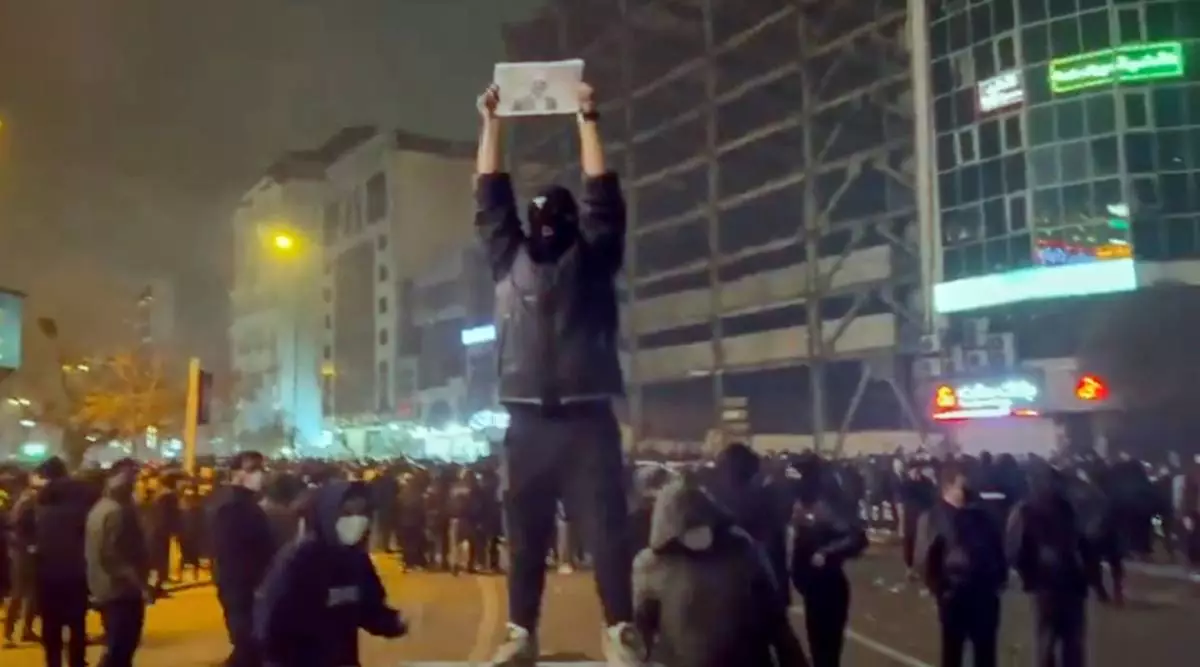
In this frame grab from video obtained by the AP outside Iran, a masked demonstrator holds a picture of Iran's Crown Prince Reza Pahlavi during a protest in Tehran, Iran, Friday, January. 9, 2026. (UGC via AP)

In this frame grab from video obtained by the AP outside Iran, a masked demonstrator holds a picture of Iran's Crown Prince Reza Pahlavi during a protest in Tehran, Iran, Friday, January. 9, 2026. (UGC via AP)

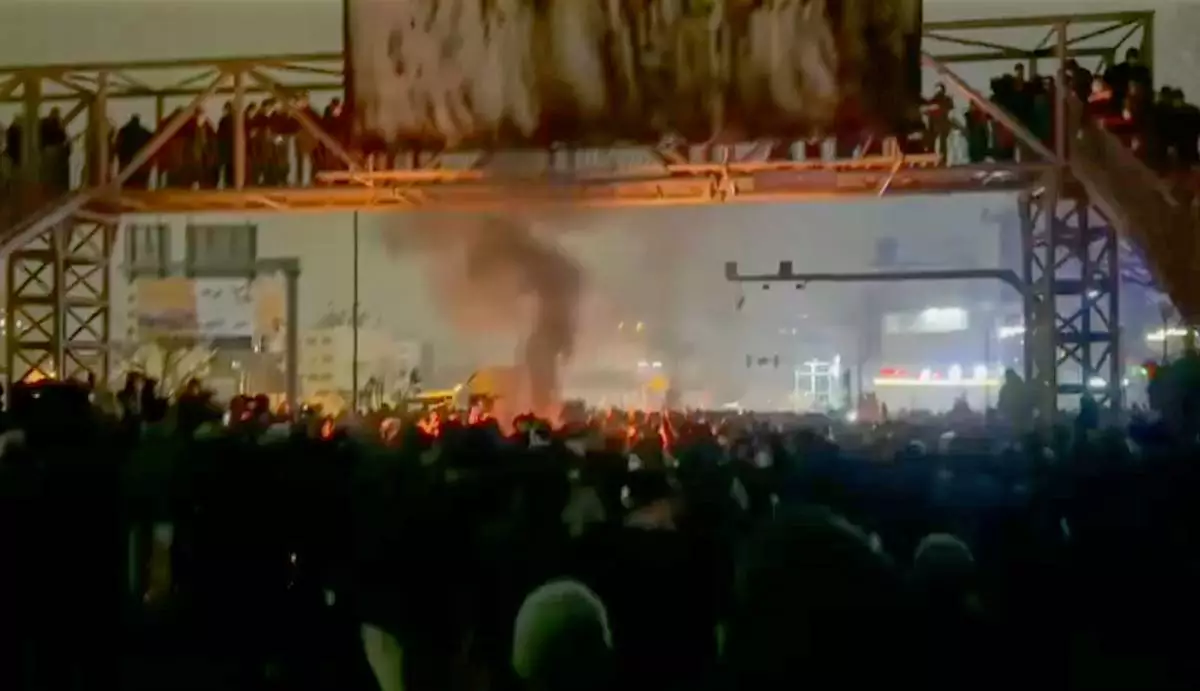
In this frame grab from footage circulating on social media from Iran shows protesters taking to the streets despite an intensifying crackdown as the Islamic Republic remains cut off from the rest of the world in Tehran, Iran, Friday, Jan. 9, 2026.(UGC via AP)

In this frame grab from footage circulating on social media from Iran shows protesters taking to the streets despite an intensifying crackdown as the Islamic Republic remains cut off from the rest of the world in Tehran, Iran, Friday, Jan. 9, 2026.(UGC via AP)

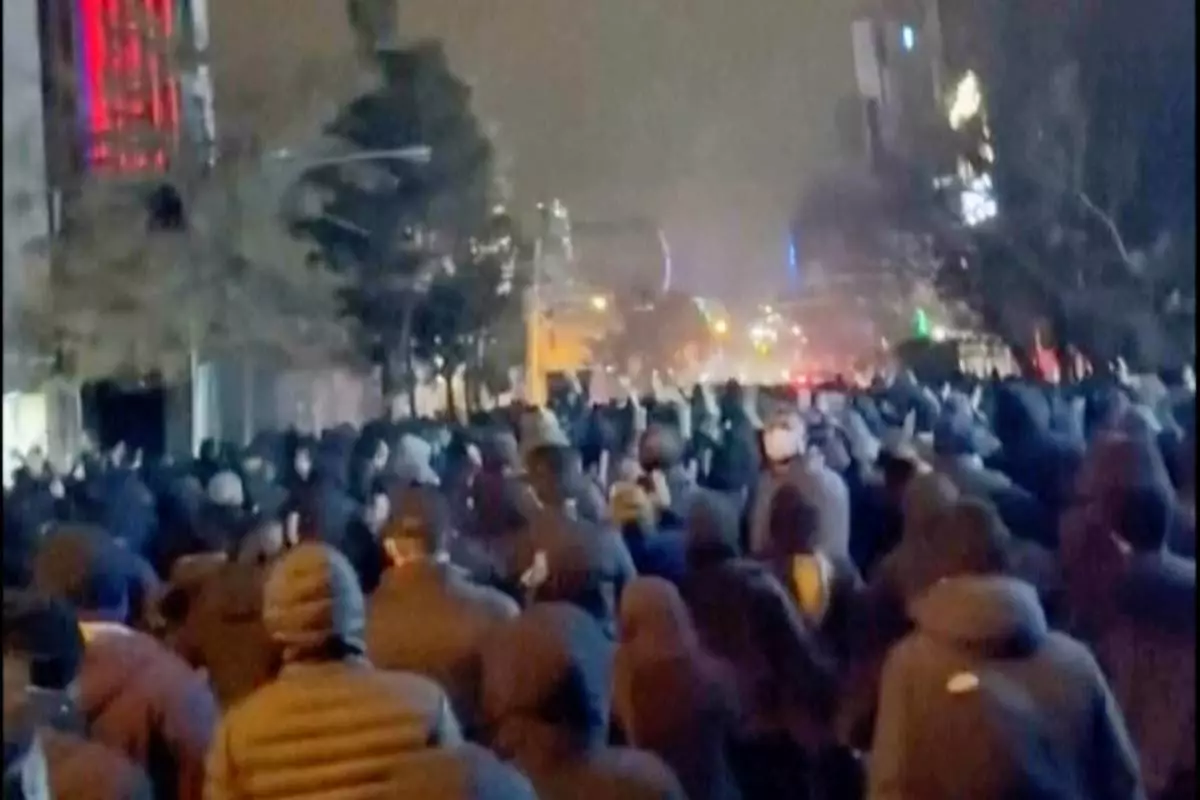
In this frame grab from footage circulating on social media from Iran showed protesters once again taking to the streets of Tehran despite an intensifying crackdown as the Islamic Republic remains cut off from the rest of the world in Tehran, Iran, Saturday Jan. 10, 2026. (UGC via AP)

In this frame grab from footage circulating on social media from Iran showed protesters once again taking to the streets of Tehran despite an intensifying crackdown as the Islamic Republic remains cut off from the rest of the world in Tehran, Iran, Saturday Jan. 10, 2026. (UGC via AP)

Recommended Articles