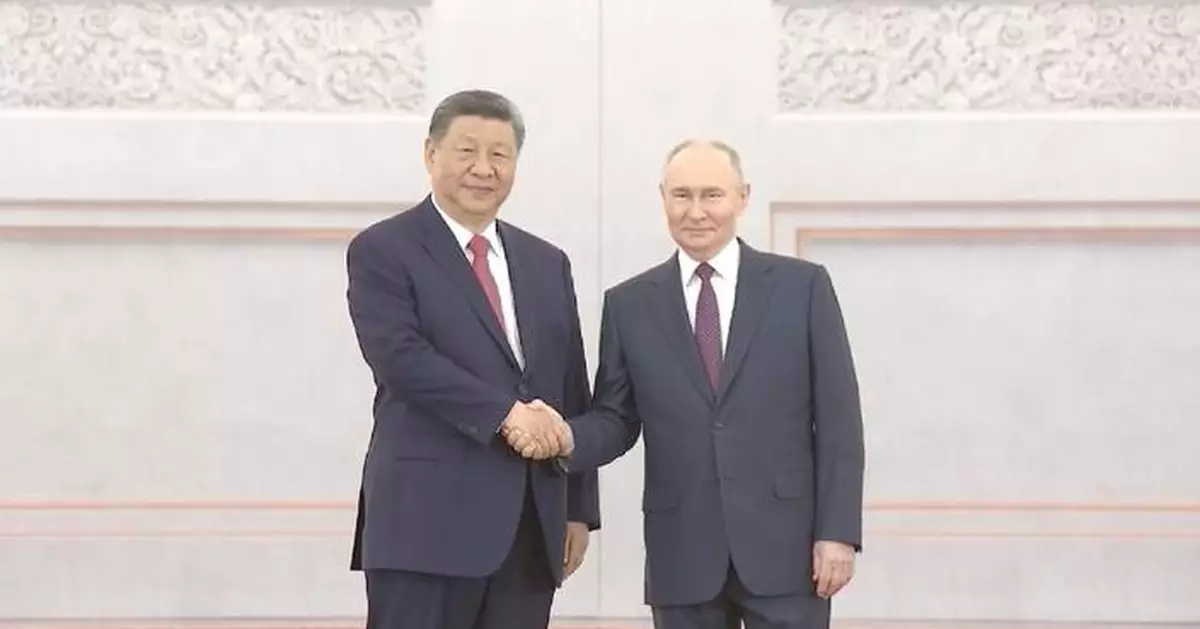
Chinese President Xi Jinping's visit to Russia has further consolidated the China-Russia comprehensive strategic partnership of coordination for a new era, led the world in jointly maintaining the postwar international order, and promoted the multi-polarization of the world and the reconstruction of the international political landscape, Chinese Foreign Minister Wang Yi said Saturday.
At the invitation of Russian President Vladimir Putin, Xi paid a state visit to Russia and attended the celebrations marking the 80th anniversary of the victory in the Soviet Union's Great Patriotic War from Wednesday to Saturday.
Click to Gallery
Xi's Russia trip advances friendships, defends int'l equity: Chinese FM
Xi's Russia trip advances friendships, defends int'l equity: Chinese FM
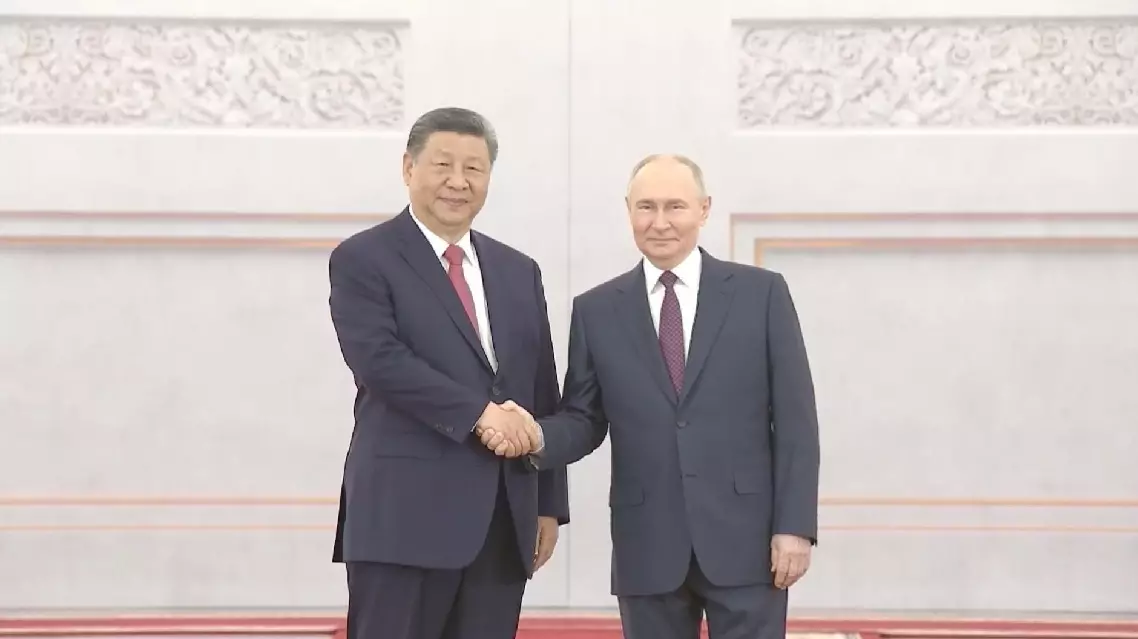
Xi's Russia trip advances friendships, defends int'l equity: Chinese FM
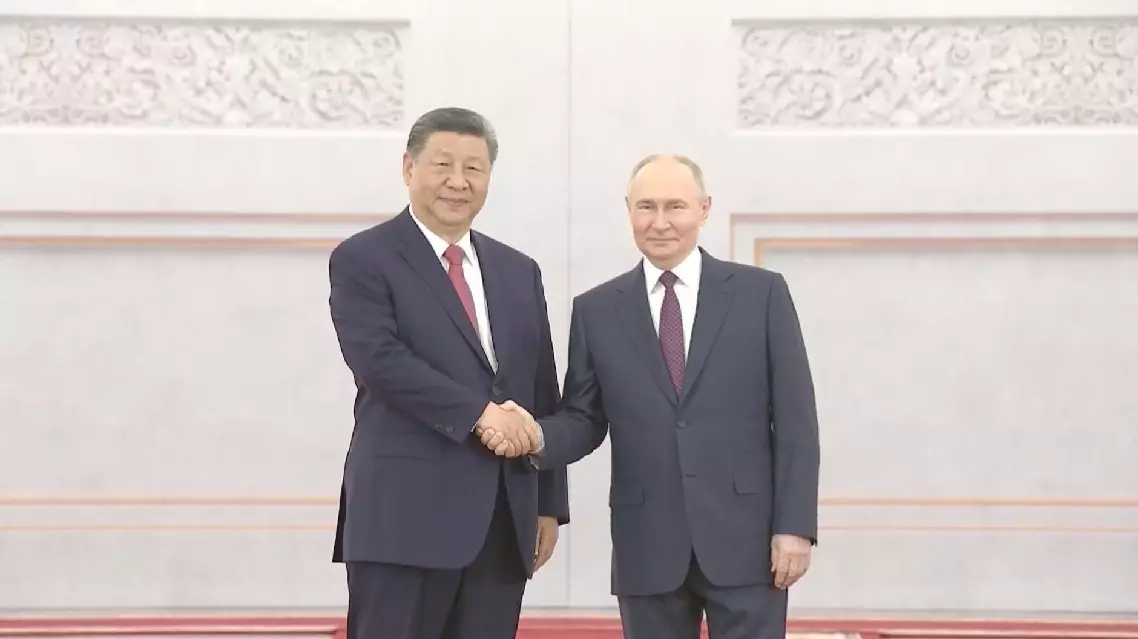
Xi's Russia trip advances friendships, defends int'l equity: Chinese FM

Xi's Russia trip advances friendships, defends int'l equity: Chinese FM
Wang, also a member of the Political Bureau of the Communist Party of China Central Committee, said during a press briefing that Xi's visit has great historical significance.
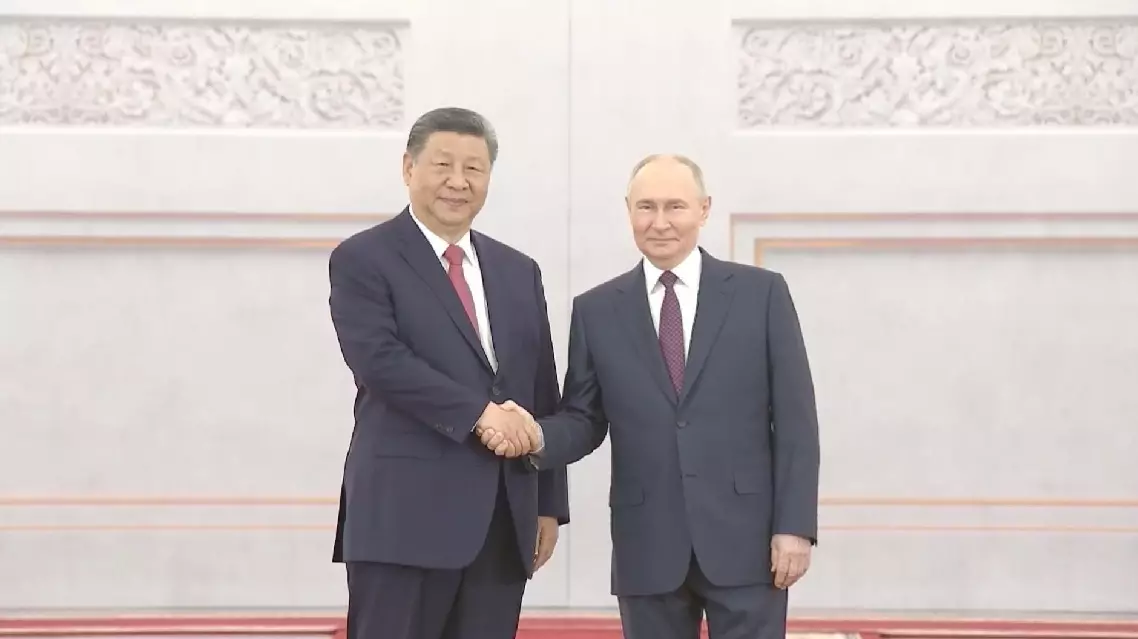
During his visit, Xi and Putin had in-depth communication on issues of common concern for nearly 10 hours, Wang said, adding that the most important political outcome of the visit was the signing of a joint statement on deepening the China-Russia comprehensive strategic partnership of coordination for a new era by the two heads of state.
The two sides agreed to continue expanding cooperation and to consolidate the foundation of economic, trade and energy cooperation, Wang said, adding that the two sides signed a new version of the investments protection agreement, effectively countering the countercurrent of protectionism.
Regarding the Ukraine crisis, Xi noted that China welcomes all efforts conducive to peace, and believes it is important to accommodate the legitimate security concerns of all countries and eliminate the root causes of the crisis.
Xi's attendance at the May 9 Victory Day celebrations once again demonstrated China's commitment to working with other countries to uphold a correct historical perspective on World War II (WWII) and jointly safeguard the postwar international order, Wang said.
Amid a complex and turbulent international landscape, Xi said, China and Russia must firmly uphold the UN-centered international system and the international order underpinned by international law. Wang said that Taiwan's restoration to China is a victorious outcome of WWII and an integral part of the postwar international order.
No matter how the situation on the Taiwan island evolves or what troubles external forces may make, the historical trend toward China's ultimate and inevitable reunification is unstoppable, Xi said.
During his visit, Xi also had extensive contacts with political leaders from various countries attending the celebrations and held bilateral meetings with several national leaders from three continents, reaching broad consensuses on firmly supporting each other, defending multilateralism and opposing power politics and bullying.
During his meeting with Myanmar leader Min Aung Hlaing, Xi emphasized that the Chinese side supports Myanmar in safeguarding its sovereignty, independence, territorial integrity and national stability, and steadily advancing its domestic political agenda.
While meeting with Cuban President Miguel Diaz-Canel and Venezuelan President Nicolas Maduro, respectively, Xi pointed out that Latin American and Caribbean States are sovereign and independent nations, not anyone's backyard.
Diaz-Canel and Maduro spoke highly of Xi's vision of building a community with a shared future for mankind as well as the Global Development Initiative, the Global Security Initiative and the Global Civilization Initiative. They expressed readiness to work with China in opposing unilateralism and protectionism. In his meeting with Serbian President Aleksandar Vucic and Slovak Prime Minister Robert Fico, respectively, Xi emphasized that China and the EU should firmly pursue multilateralism, jointly oppose unilateral bullying, safeguard the achievements of economic globalization, and maintain the global free trade system and international economic and trade order.
Xi's Russia trip advances friendships, defends int'l equity: Chinese FM
Xi's Russia trip advances friendships, defends int'l equity: Chinese FM
Xi's Russia trip advances friendships, defends int'l equity: Chinese FM
Xi's Russia trip advances friendships, defends int'l equity: Chinese FM
Xi's Russia trip advances friendships, defends int'l equity: Chinese FM