WASHINGTON (AP) — He was special, Albert Votaw's daughter remembers all these decades later.
Cathy Votaw is 70 now, more than a dozen years older than her father lived to be. She describes a man with a larger-than-life personality and a love of fun — as if you couldn't tell that from the photos, which show an outrageous handlebar mustache and a penchant for bowties sewn by his wife.
Click to Gallery
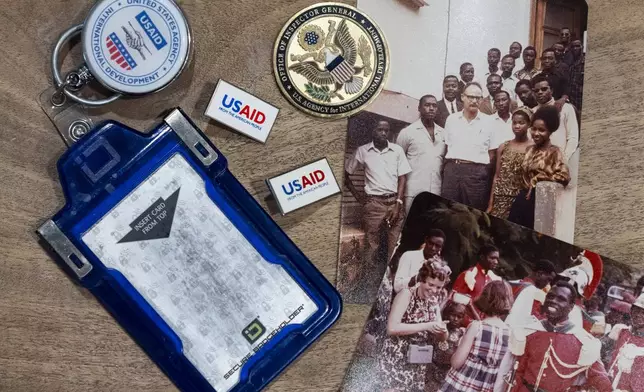
Anna Eisenberg's empty USAID badge holder is seen next to USAID pins, a coin from the USAID Office of Inspector General awarded to her mother, Cathy Votaw, and photographs of her grandfather, Albert Votaw, and his family during his service with USAID in West Africa circa 1968, Thursday, Feb. 27, 2025, in Washington. (AP Photo/Jacquelyn Martin)
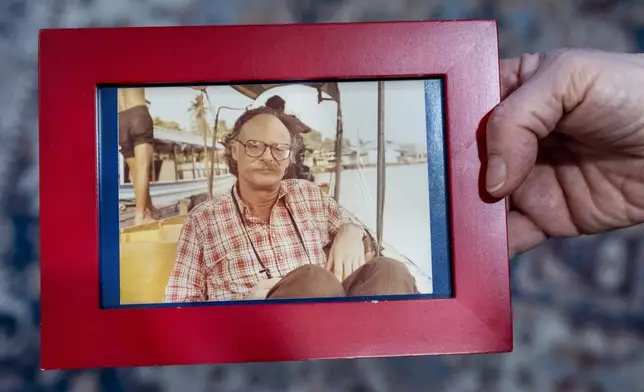
Cathy Votaw, 69, holds a photograph of her father, Albert Votaw, seen in Bangkok circa 1983 shortly before his death in a terror attack, Thursday, Feb. 27, 2025, in Washington. (AP Photo/Jacquelyn Martin)
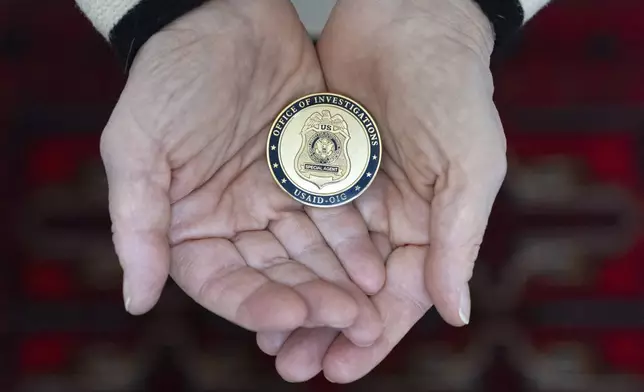
Cathy Votaw, 69, holds a coin from the USAID Office of Investigations, Thursday, Feb. 27, 2025, in Washington. (AP Photo/Jacquelyn Martin)
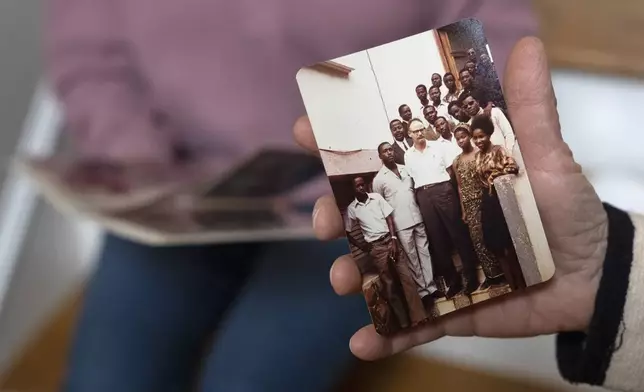
Anna Eisenberg, left, and her mother Cathy Votaw, 69, look at photographs of Votaw's father, Albert Votaw, during his service with USAID in West Africa, Thursday, Feb. 27, 2025, at their home in Washington. (AP Photo/Jacquelyn Martin)
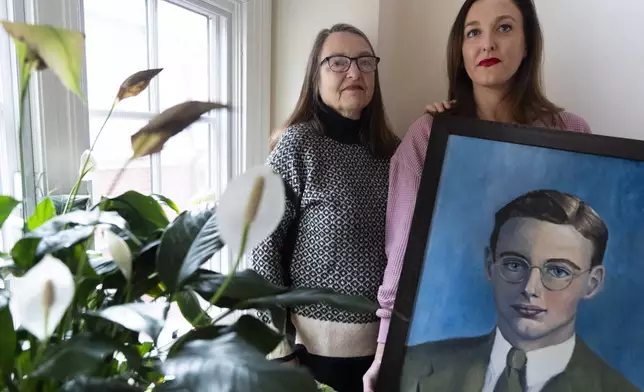
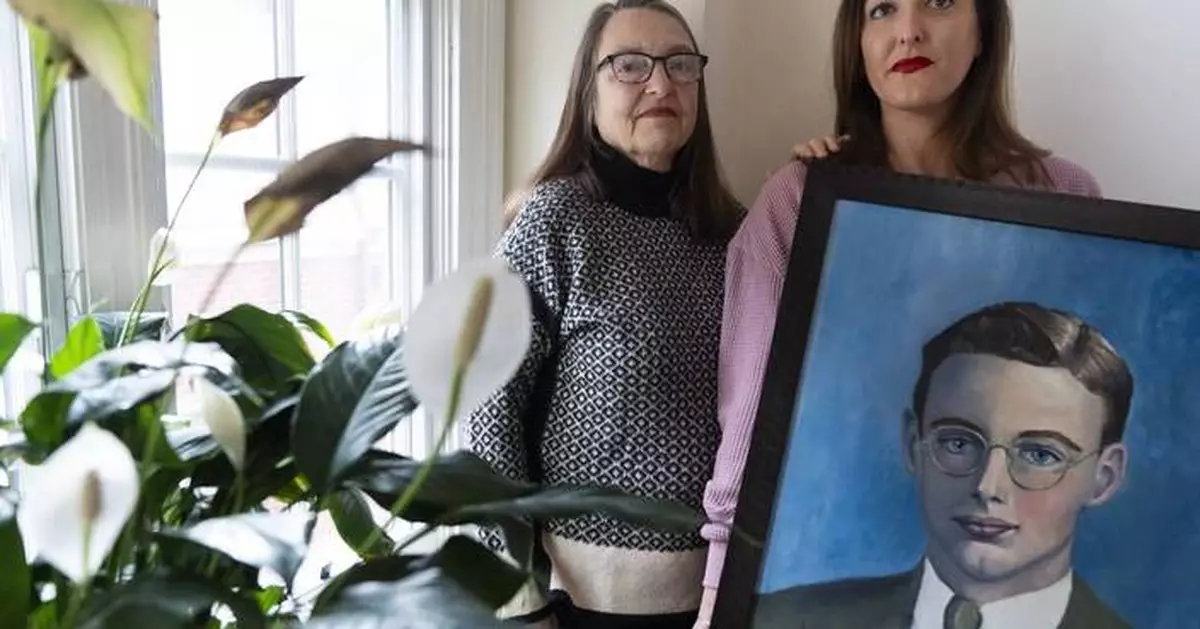
Cathy Votaw, 69, left, and her daughter Anna Eisenberg, pose with a painting of Votaw's father, Albert Votaw, portrayed as a young man in the 1940's, Thursday, Feb. 27, 2025, at their home in Washington. (AP Photo/Jacquelyn Martin)
Each year on April 18, the anniversary of the 1983 bombing at the U.S. Embassy in Beirut that took the lives of her father and 62 others, a persistent sense of loss awakens in Cathy. Some years, she writes an email to her family, telling them about Albert, a public-housing expert for the U.S. Agency for International Development.
He was, she writes, dedicated to public service — and to USAID. And she is so sorry, she tells Albert Votaw's grandchildren and great-grandchildren, that his death at the hands of an anti-American attacker driving a truck packed with explosives means they never got to meet him.
Yet Albert Votaw's influence echoes down across the generations. Four decades later, as the agency that worked to promote American security through international development and humanitarian work disappears at the hands of Donald Trump and Elon Musk, two things are abundantly clear:
Service to USAID shattered the Votaw family. And service to USAID reshaped it as well.
In a way, the requiem of the now-dismantled agency can be told through its people — including some entire families, like the Votaws. Albert’s work for USAID, and his death while on the job, steered the work of two generations of his family after him.
It led his daughter, Cathy, to dedicate part of her life to working on behalf of the families of Americans killed by extremist attacks.
It led his granddaughter, Anna, to work as a contractor for USAID, with a willingness to take on dangerous assignments — a proclivity that she ties directly to his death.
"When my father talked about his work, he talked about ... how he was proud of the fact that he was an American, coming over here to help people,” Cathy Votaw says.
Her father's time at USAID began in the first years after the aid and development agency's 1960s founding by Congress and President John F. Kennedy. Cathy and her sisters as children followed Votaw on his initial postings in a career that took him to countries including Ivory Coast, Tunisia, Thailand and, finally, Lebanon.
Back then, “you feel like you were recognized as a country for trying to do the right thing and trying to help, and in fact, contributing lives and resources to help people overseas,” Cathy says.
After the 1983 bombing, President Ronald Reagan eulogized Albert and the 16 other Americans killed.
“The best way for us to show our love and respect for our fellow countrymen who died in Beirut this week is to carry on with their task," Reagan said.
Over the years, the names of 98 USAID and other foreign assistance colleagues were placed on a memorial wall inside USAID headquarters.
One of those names was Albert Votaw.
After her father died, Cathy Votaw switched from private legal practice to working as a federal prosecutor. It paid tribute, she felt, to his government service. She also became an advocate for better treatment for federal workers and other American victims of extremist attacks and their families.
The embassy suicide bombing that killed her father was one of the first of its kind. The Votaws and others lobbied the State Department to beef up efforts to work with families in future attacks. They won a victory in federal court designating Iran responsible as a sponsor of militants involved.
And in the biggest achievement of all, survivors of attacks and relatives of victims, including Cathy, successfully pushed Congress to set up a fund for them and future victims, using billions of dollars in fines paid by entities that did business with countries the U.S. deems state sponsors of terror.
Somehow, Albert’s death in the Beirut bombing gave one of his granddaughters, Anna Eisenberg, a deep sense that because the worst had already happened to her family, it wouldn’t happen to her.
After growing up hearing of her grandfather's life and death in public service, she started work as a contractor for USAID almost as soon as she got out of college.
Teaching communication skills to communities in war zones and telling the story of USAID, her assignments took her to Nigeria, where she profiled teachers as they schooled young children orphaned in attacks. And she worked in Afghanistan, coaching female government communication workers to speak up.
In northern Nigeria, ‘’they were like, ‘Are you sure you want to do this? ... You're not in an armored car. You don't have any weapons,''' Anna, now 37, recounted of her trips through militants' territory. “I just felt like I was able to go places ... because nothing bad would happen: 'Yeah, my grandfather got blown up — we're good."'
In some ways, Anna was looking forward to Trump's second term. She believed that Trump, in his first term, had done a better job than most presidents at promoting how USAID built jobs at home.
As it turned out, her job ended when USAID's life as a functioning independent agency did — in form-letter terminations.
Albert had been jittery about his assignment to Beirut in a way he'd never been before. Still, he reassured his family, the U.S. government knew what it was doing.
Eleven days after Albert arrived, the truck bomb exploded at the front of the U.S. embassy there. Many of those killed, including Albert, were in the embassy cafeteria.
This year’s anniversary of his death was nothing like the ones before. This year, USAID itself sat in ruins.
Trump and Musk, whose Department of Government Efficiency crews are slashing staffing and programs across federal government, made USAID an early target. They shut USAID headquarters, terminated the majority of its development and humanitarian programs abroad and fired most staff and contractors.
A few weeks ago, at the now-closed and barricaded USAID headquarters in Washington, a crew pried off the memorial to those who died in Beirut, including the name of a gregarious public-housing expert who had a handlebar mustache and lived for, and died for, his work.
The State Department said it would find a permanent home for the memorial.
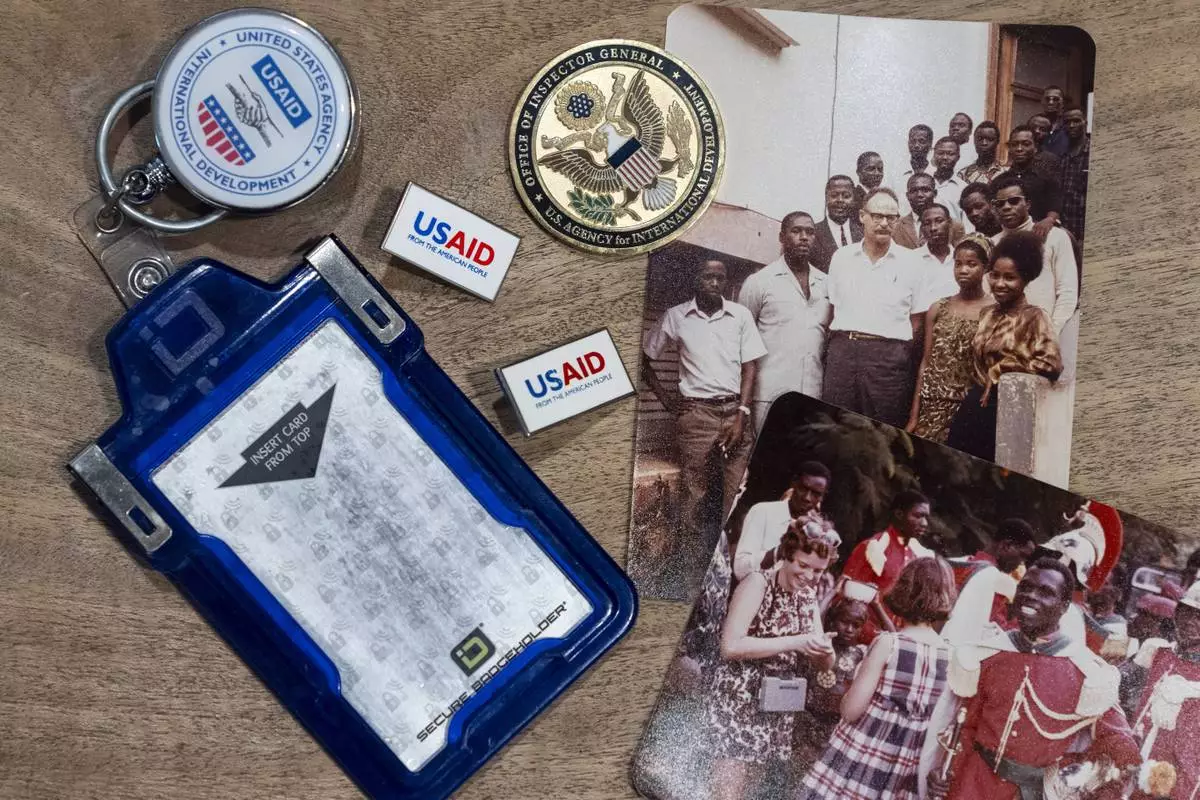
Anna Eisenberg's empty USAID badge holder is seen next to USAID pins, a coin from the USAID Office of Inspector General awarded to her mother, Cathy Votaw, and photographs of her grandfather, Albert Votaw, and his family during his service with USAID in West Africa circa 1968, Thursday, Feb. 27, 2025, in Washington. (AP Photo/Jacquelyn Martin)
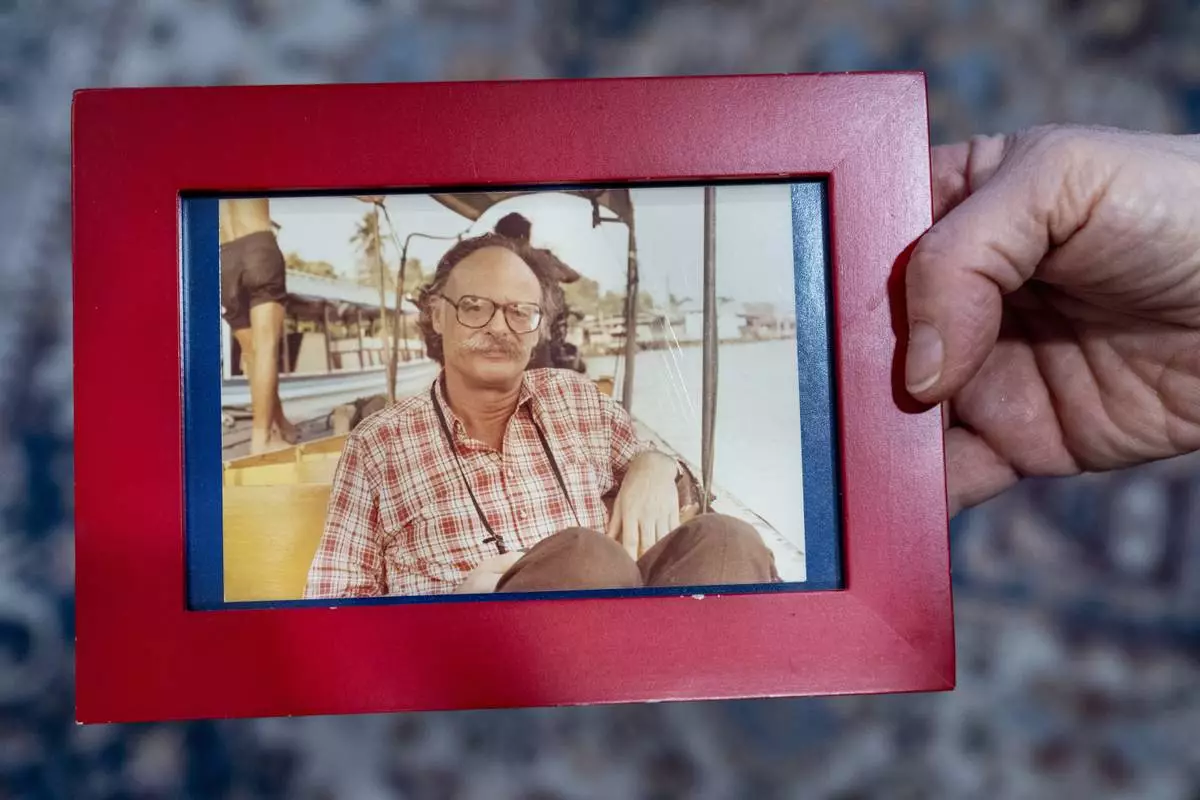
Cathy Votaw, 69, holds a photograph of her father, Albert Votaw, seen in Bangkok circa 1983 shortly before his death in a terror attack, Thursday, Feb. 27, 2025, in Washington. (AP Photo/Jacquelyn Martin)
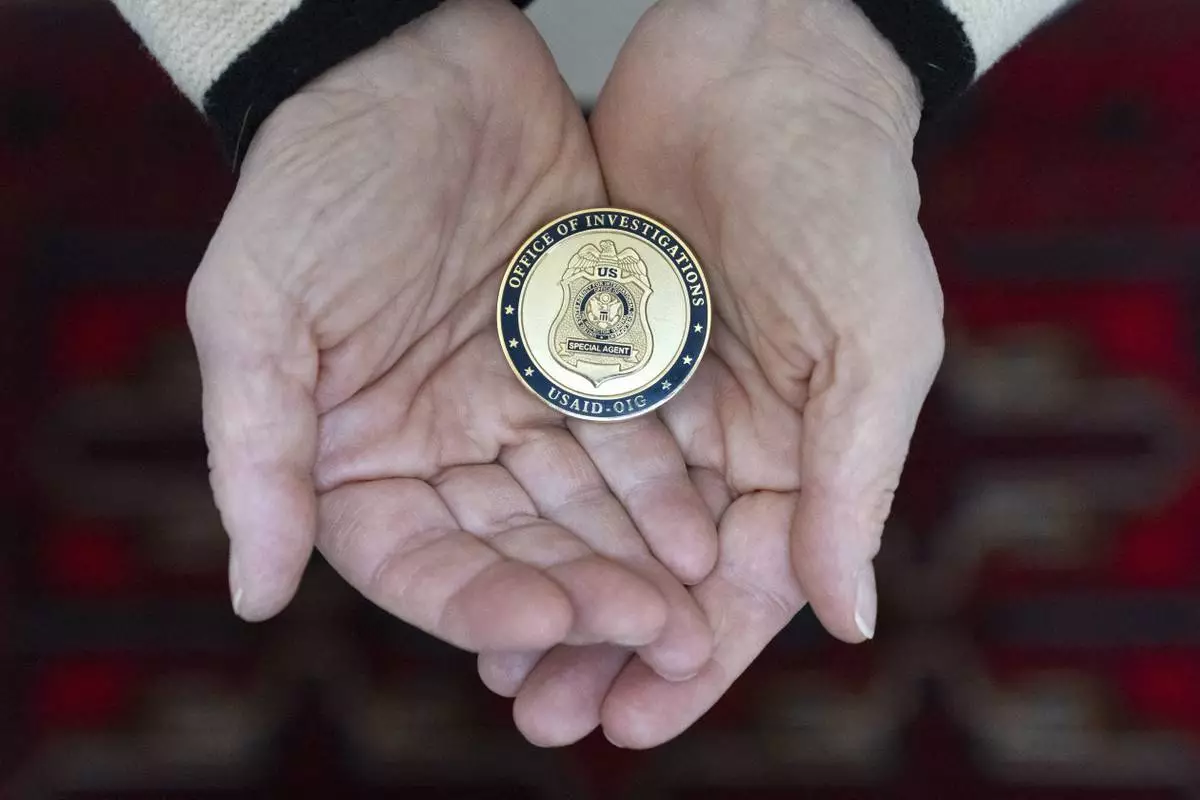
Cathy Votaw, 69, holds a coin from the USAID Office of Investigations, Thursday, Feb. 27, 2025, in Washington. (AP Photo/Jacquelyn Martin)
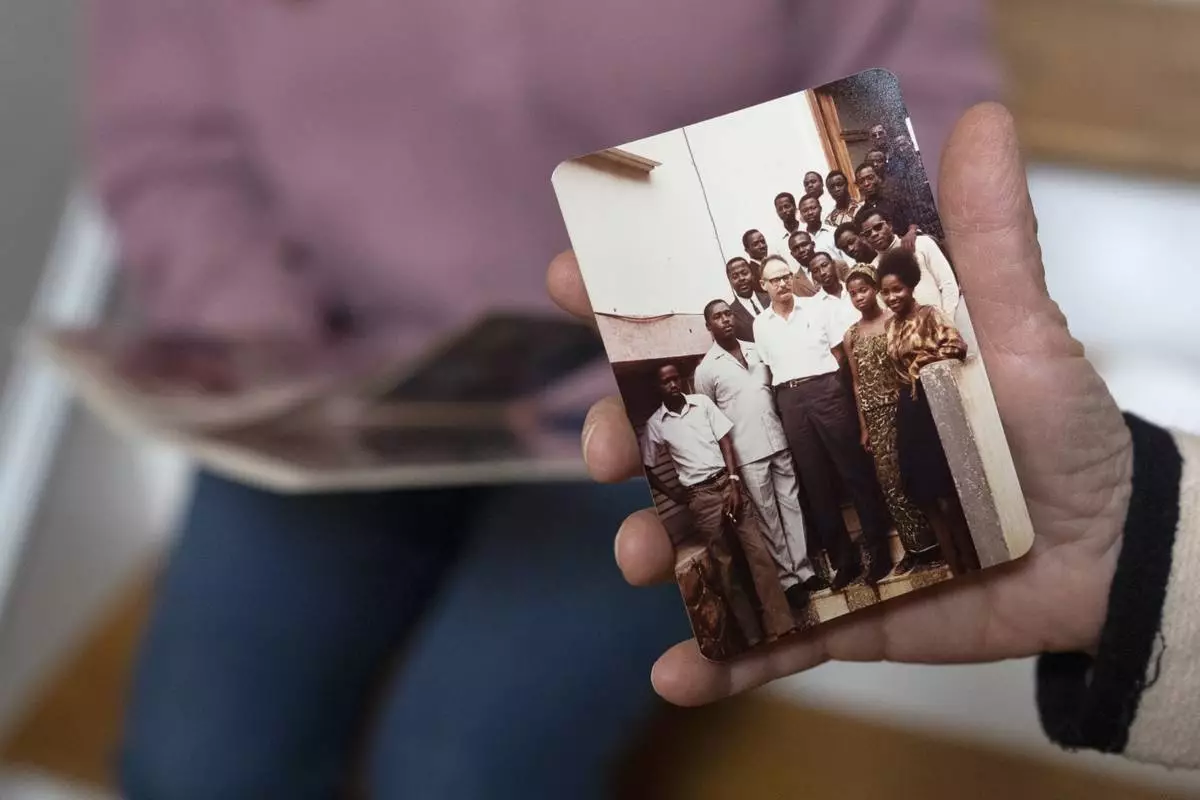
Anna Eisenberg, left, and her mother Cathy Votaw, 69, look at photographs of Votaw's father, Albert Votaw, during his service with USAID in West Africa, Thursday, Feb. 27, 2025, at their home in Washington. (AP Photo/Jacquelyn Martin)
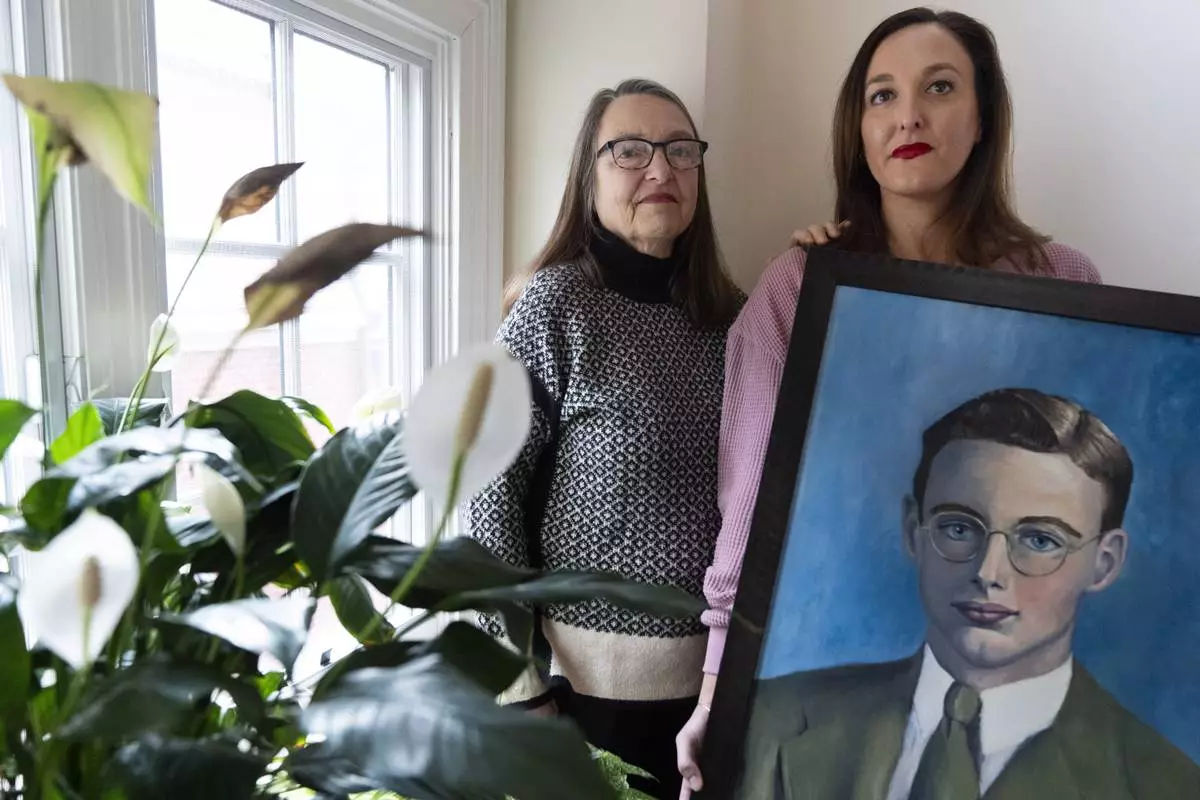
Cathy Votaw, 69, left, and her daughter Anna Eisenberg, pose with a painting of Votaw's father, Albert Votaw, portrayed as a young man in the 1940's, Thursday, Feb. 27, 2025, at their home in Washington. (AP Photo/Jacquelyn Martin)