RIYADH, Saudi Arabia (AP) — On his trip this week to the Middle East, U.S. President Donald Trump will visit Saudi Arabia, Qatar and the United Arab Emirates, though his most pressing regional challenges concern two other countries: Israel and Iran.
After ending a ceasefire two months ago, Israel is intensifying the war in the Gaza Strip, where a blockade on food, medicine and other supplies is worsening a humanitarian crisis. And Iran, an enemy of Israel and a rival of Saudi Arabia, stands on the cusp of being able to develop nuclear weapons.
Click to Gallery
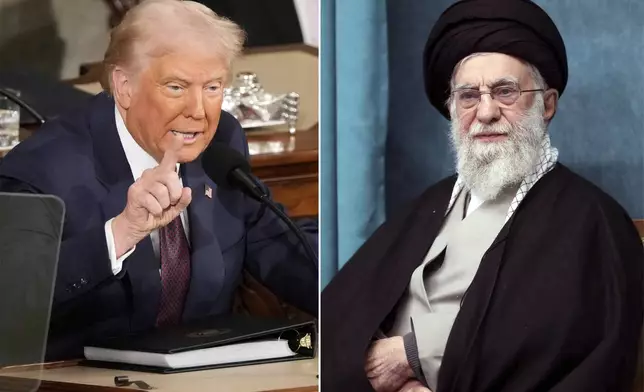
FILE - This combo of pictures show President Donald Trump, left, addressing a joint session of Congress at the Capitol in Washington, March 4, 2025, and a handout of Supreme Leader Ayatollah Ali Khamenei attending a ceremony in Tehran, Iran, March 8, 2025. (AP Photo/Ben Curtis - Office of the Iranian Supreme Leader via AP)
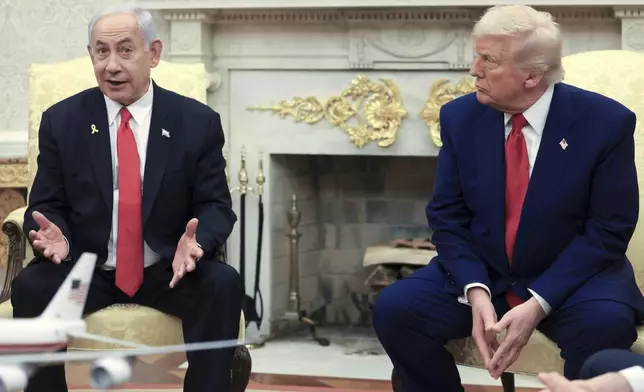
FILE - President Donald Trump, right, listens as Israel's Prime Minister Benjamin Netanyahu speaks during a meeting in the Oval Office at the White House in Washington, April 7, 2025. (Pool via AP, file)
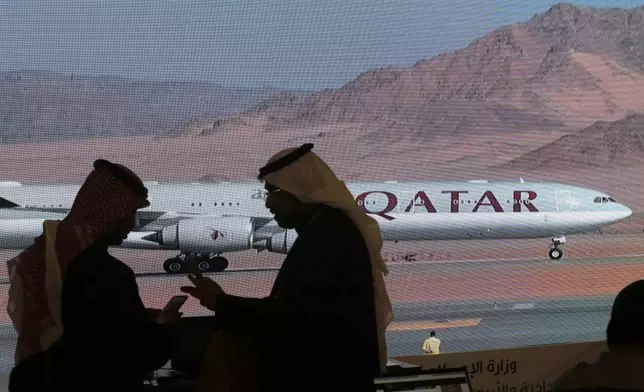
FILE - Journalists chat as video of a plane is shown on a screen while landing at at Al Ula airport in Saudi Arabia, Jan. 5, 2021. (AP Photo/Amr Nabil, file)
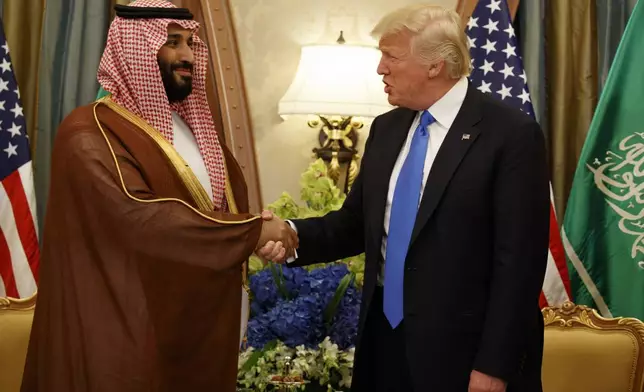
FILE- President Donald Trump, right, shakes hands with Saudi Deputy Crown Prince and Defense Minister Mohammed bin Salman during a bilateral meeting, in Riyadh, May 20, 2017. (AP Photo/Evan Vucci, File)
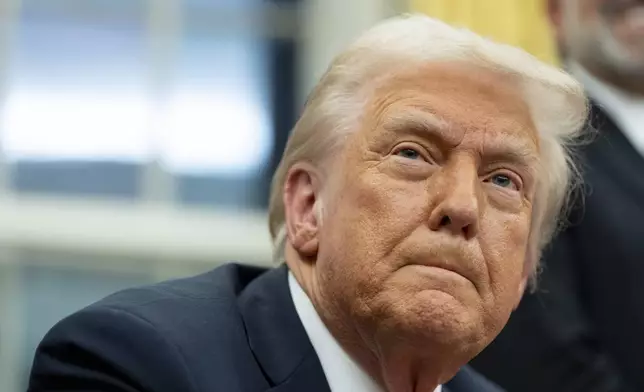
FILE - President Donald Trump speaks with reporters as he signs executive orders in the Oval Office at the White House, Feb. 10, 2025, in Washington. (AP Photo/Alex Brandon, file)
Yet Trump will focus his attention on three energy-rich nations home to existing or planned Trump-branded real estate projects — places where he aims to leverage American economic interests to do what he personally revels in: making business deals.
“This is his happy place,” said Jon B. Alterman, a senior vice president at the Washington-based Center for Strategic and International Studies. “His hosts will be generous and hospitable. They’ll be keen to make deals. They’ll flatter him and not criticize him. And they’ll treat his family members as past and future business partners.”
Trump said Sunday he was ready to accept a luxury Boeing 747-8 jumbo jet as a gift from the ruling family of Qatar, prompting criticism from some Democrats and allies of the president.
Trump won’t be able to avoid diplomacy on Gaza or Iran: The Gulf countries hosting him are also interested in easing the regional tensions that emanate from these two places.
“Trump can easily score a win by reassuring them of America’s strategic commitment to the region, demonstrating consistent messaging and generally rising above the fray,” analysts Elizabeth Dent and Simon Henderson of the Washington Institute for Near East Policy wrote Friday.
By not scheduling a trip to Israel during his first trip to the region during his second term as president, Trump is reinforcing a feeling in Israel that its interests may not be top of mind for him.
That sense intensified last week, when Trump announced that the U.S. would halt its strikes on the Houthis, an Iran-backed rebel group in Yemen that agreed to stop its attacks on American vessels in the Red Sea.
The Houthis' attacks on Israel did not appear to be covered by that deal, which came as a surprise to Israel, according to an Israeli official who spoke on condition of anonymity to discuss a sensitive diplomatic issue. Days after the deal between the U.S. and the Houthis — and despite a two-day Israeli assault on Houthi targets — a missile from Yemen again set off air raid sirens in Israel. Then Israel's military warned Sunday that Houthi-controlled ports in Yemen could be targeted again.
Trump's move to launch negotiations with Iran over its nuclear program also jarred Israel, which fears a deal that would not be strict enough to prevent Iran from obtaining a nuclear weapon or rein in its support for regional militant groups.
Israel had hoped that Trump might provide military assistance in any strike it carried out on the country's nuclear facilities — an action that is unrealistic so long as there are negotiations, or if they reach a deal.
That has raised questions in Israel over Trump's reliability on other major issues, like a long-sought normalization deal with Saudi Arabia as part of any defense pact the administration may reach with the kingdom. Saudi Arabia has said it would only normalize ties with Israel in exchange for significant concessions for the Palestinians toward statehood, something the current Israeli government is unlikely to agree to.
Israel has said it will hold off on expanding the war in Gaza until after Trump's visit, leaving the window open for a new ceasefire deal to materialize. On Monday, an Israeli-American held hostage for more than 19 months in the Gaza Strip was released by Hamas in a goodwill gesture toward the Trump administration.
Still, Trump has given Israel free rein in Gaza and, like Israel, blames Hamas for any civilian casualties.
U.S. Ambassador to Israel Mike Huckabee played down any significance to Trump's decision not to visit Israel, saying in interviews with Israeli media that his visit to the region was focused on economic issues.
For Iran, much depends on the talks it is having with the U.S. over its rapidly advancing nuclear program. A reported two-month deadline to reach a deal likely has passed as U.S. officials signal America may push for Iran to give up enrichment entirely — something Tehran has insisted is a red line.
Although four rounds of talks mediated by Oman have not led to a major breakthrough, they have gone into the so-called “expert level” — meaning specifics about any possible accord likely have been discussed.
Iranian Foreign Minister Abbas Araghchi traveled over the weekend to both Saudi Arabia and Qatar ahead of Trump’s trip. Iran likely is trying to pass messages to the U.S. while signaling its interest in continuing the talks. Iranian officials increasingly threaten to pursue a nuclear weapon, while Trump and Israel have both threatened to strike Iranian nuclear sites if a deal isn't reached.
The Islamic Republic is running out of options. Its economy has cratered since Trump in 2018 unilaterally pulled America out of their initial nuclear deal with world powers. And Iran's self-described “Axis of Resistance” — a group of aligned nations and militant groups, including Hamas in Gaza and Hezbollah in Lebanon — has been mauled since the Israel-Hamas war began.
Iran also faces internal political pressure, including from women increasingly refusing to wear the state-mandated headscarf, or hijab.
There is one thing that unites most Iranians, however — pride over the Persian Gulf. Trump’s consideration of having America uniformly call the body of water the “Arabian Gulf” instead drew fierce criticism from across the country.
“This gulf has always been the Persian Gulf — and it will forever remain the Persian Gulf,” Tehran’s Friday prayer leader Ayatollah Ahmad Khatami said.
After starting his trip in Saudi Arabia, Trump will then go to Qatar, which recently announced plans for a Trump-branded development there.
This tight embrace of the president comes after his first trip to the Middle East — in 2017 — apparently sparked what became known as the Qatar crisis. That is when Bahrain, Egypt, Saudi Arabia and the UAE boycotted Qatar over its support of Islamists in the region and its ties to Iran, with which it shares a massive offshore natural gas field.
The dispute grew so serious that Kuwait’s ruling emir at the time, Sheikh Sabah Al Ahmad Al Sabah, suggested on a visit to the White House there could have been “military action.”
Trump initially criticized Qatar as having “historically been a funder of terrorism at a very high level” at the start of the boycott. Less than a year later, he praised Qatar and rolled that back. The four nations ended their boycott just before Biden took office.
Any plane gifted to the U.S. by Qatar could be converted into a potential presidential aircraft, U.S. officials said — which would amount to the president accepting an astonishingly valuable gift from a foreign government. “This was just a gesture of good faith” from Qatar, which knew that Boing had encountered delays building the next generation of the Air Force One aircraft, Trump said Monday at the White House.
Goldenberg reported from Tel Aviv, Israel. AP reporter Darlene Superville in Washington contributed.
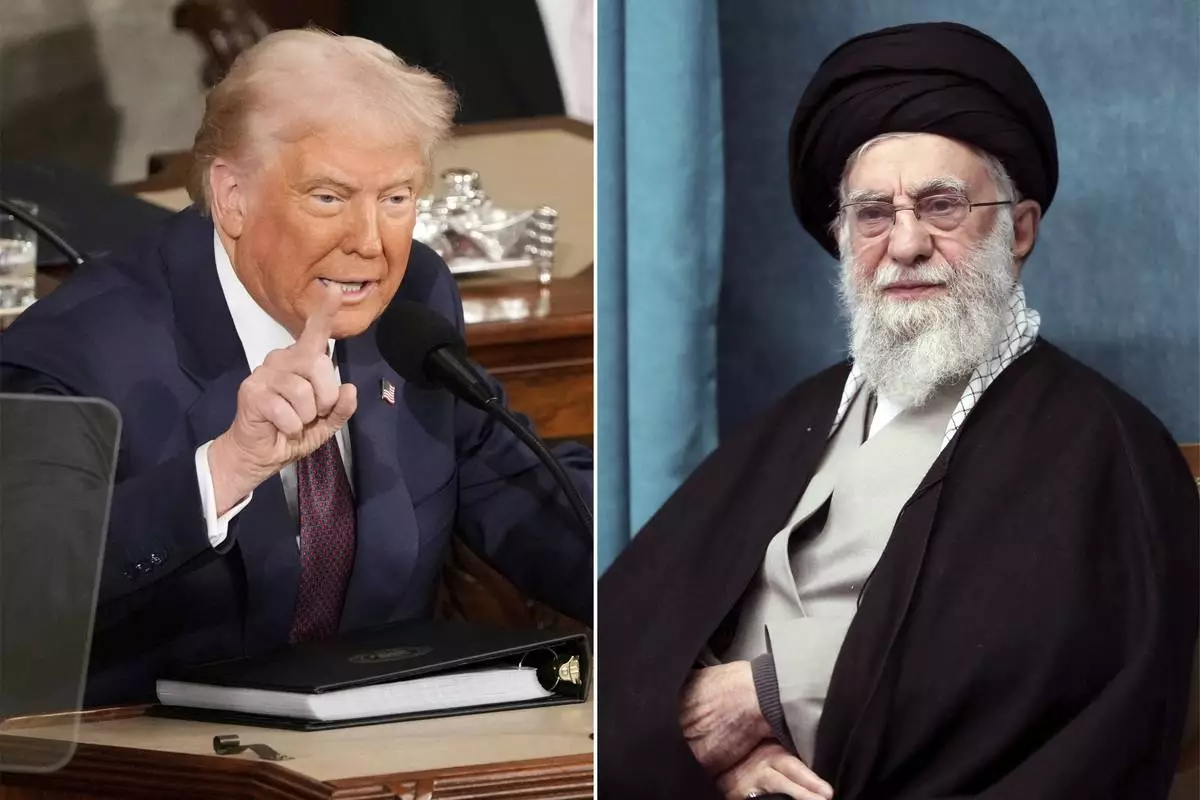
FILE - This combo of pictures show President Donald Trump, left, addressing a joint session of Congress at the Capitol in Washington, March 4, 2025, and a handout of Supreme Leader Ayatollah Ali Khamenei attending a ceremony in Tehran, Iran, March 8, 2025. (AP Photo/Ben Curtis - Office of the Iranian Supreme Leader via AP)
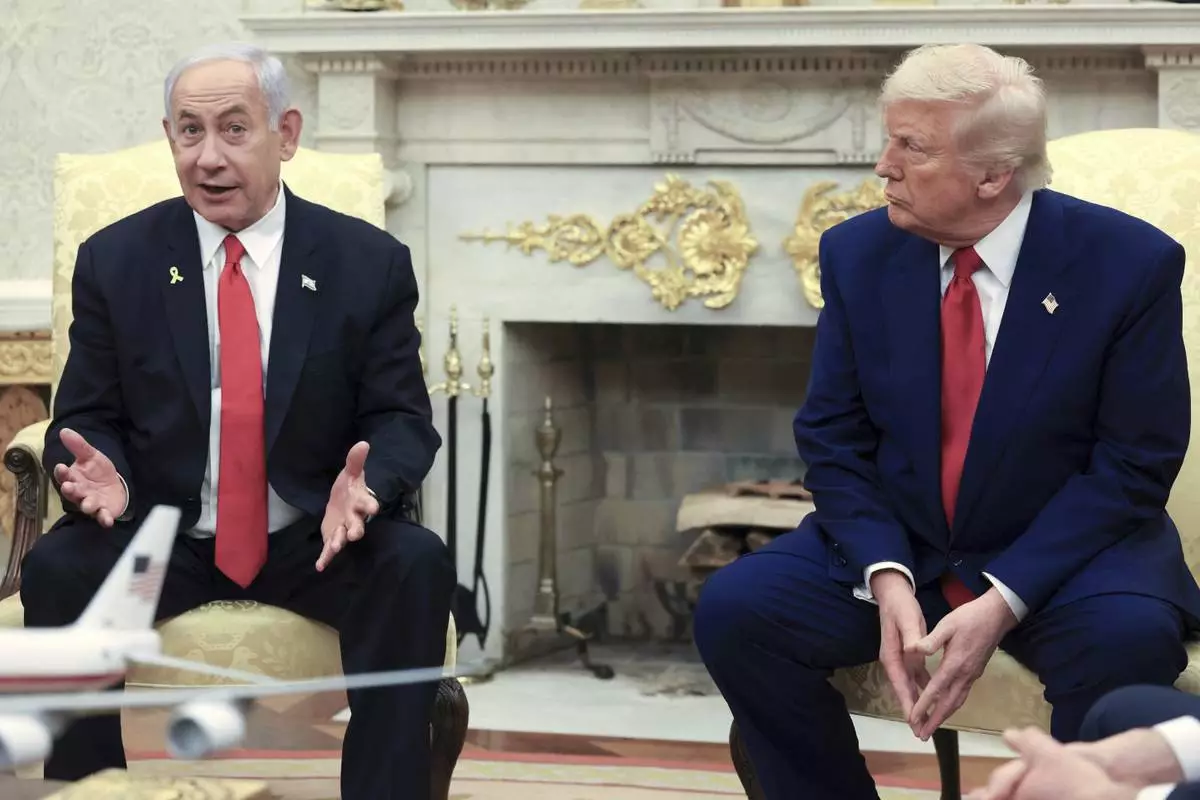
FILE - President Donald Trump, right, listens as Israel's Prime Minister Benjamin Netanyahu speaks during a meeting in the Oval Office at the White House in Washington, April 7, 2025. (Pool via AP, file)
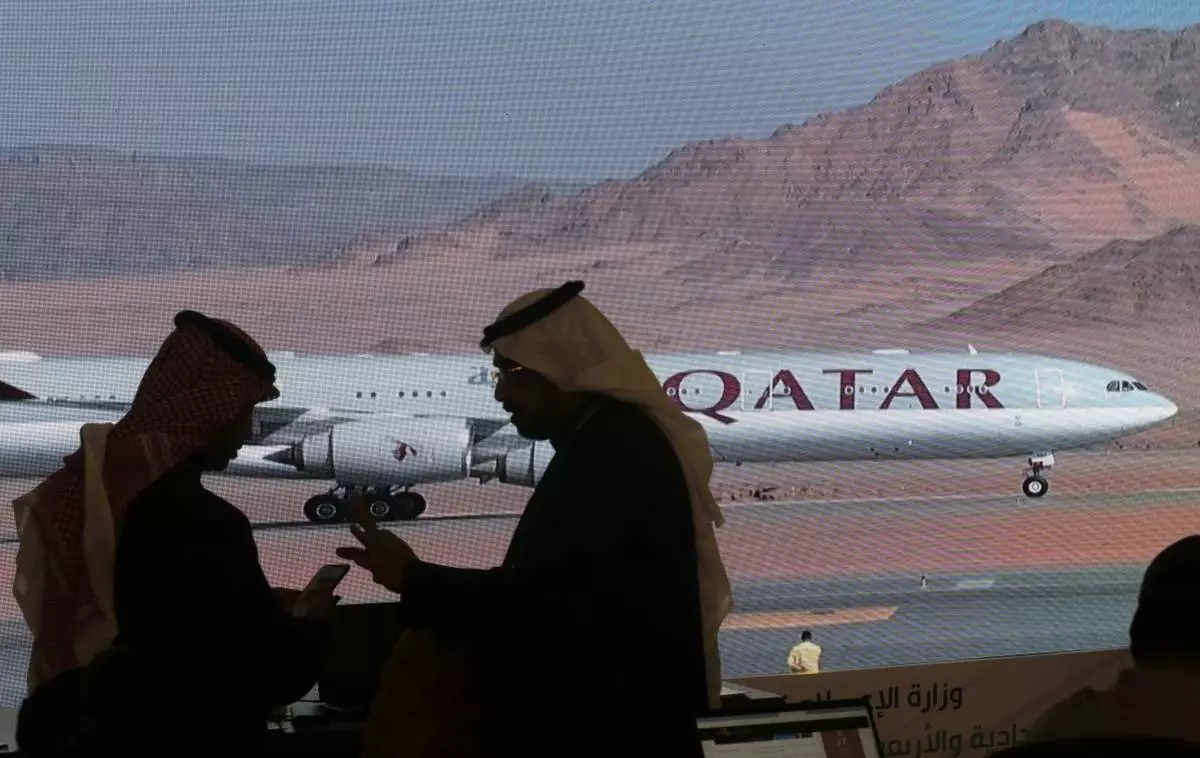
FILE - Journalists chat as video of a plane is shown on a screen while landing at at Al Ula airport in Saudi Arabia, Jan. 5, 2021. (AP Photo/Amr Nabil, file)
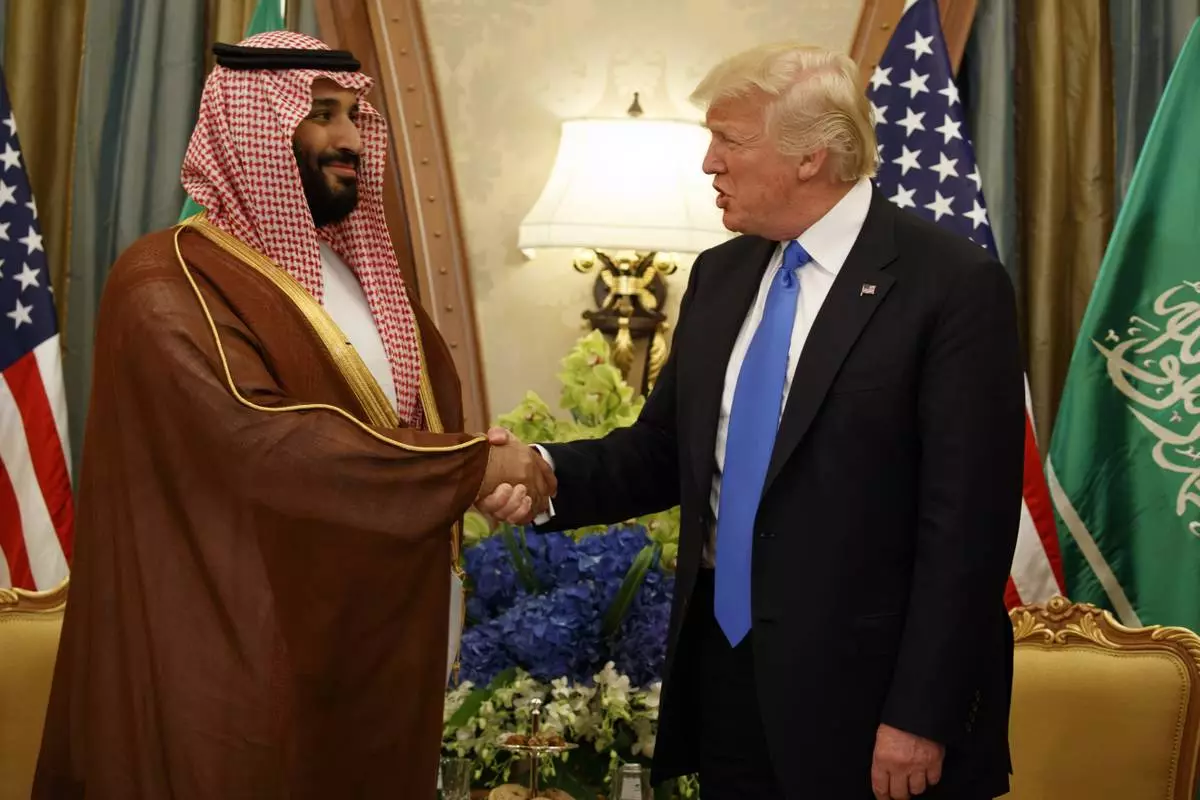
FILE- President Donald Trump, right, shakes hands with Saudi Deputy Crown Prince and Defense Minister Mohammed bin Salman during a bilateral meeting, in Riyadh, May 20, 2017. (AP Photo/Evan Vucci, File)
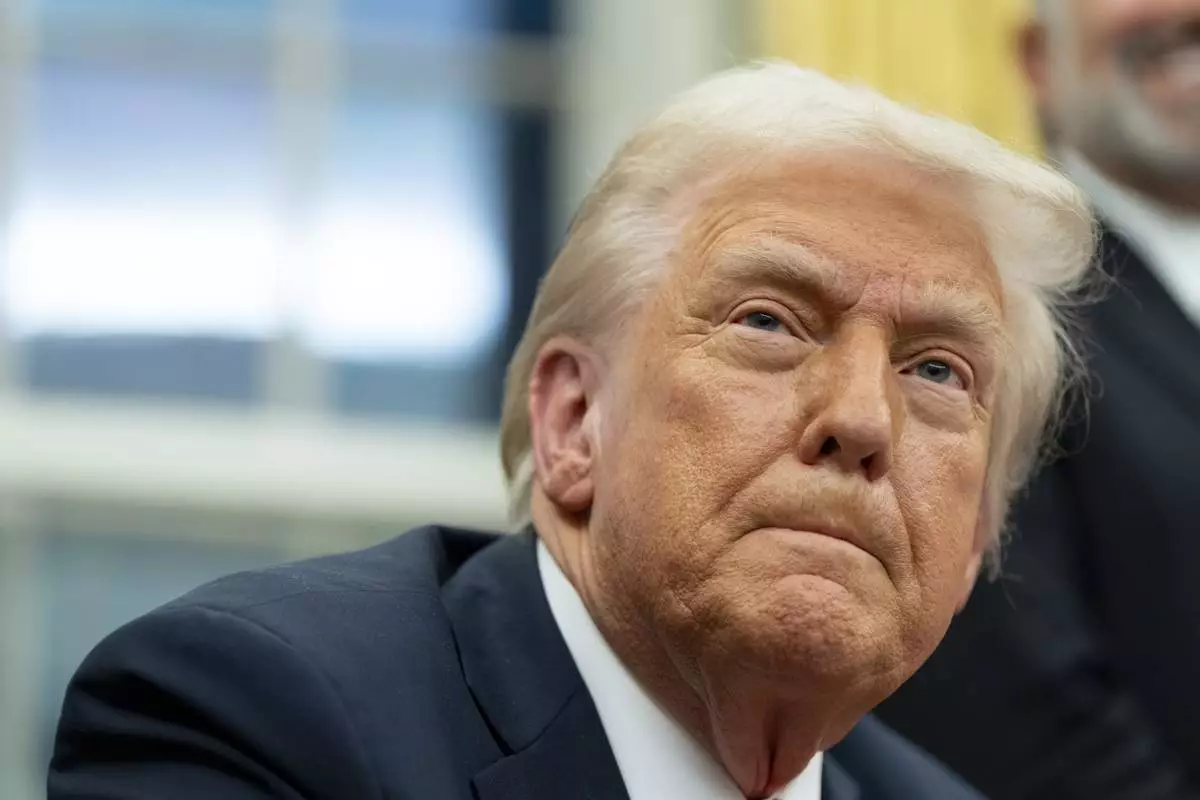
FILE - President Donald Trump speaks with reporters as he signs executive orders in the Oval Office at the White House, Feb. 10, 2025, in Washington. (AP Photo/Alex Brandon, file)