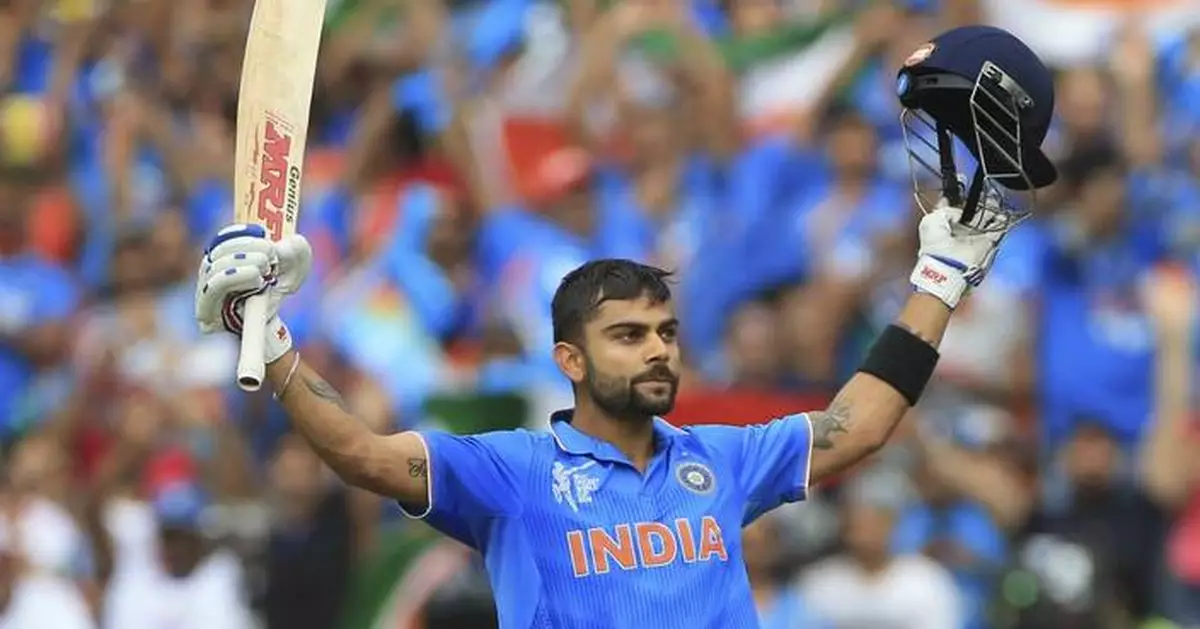
Test cricket has lost its biggest star with Virat Kohli's retirement from the longer format.
The India great — contemporary cricket's version of Lionel Messi in soccer — put up some staggering numbers across his test career as the beacon of a team followed by 1.4 billion people.
Click to Gallery
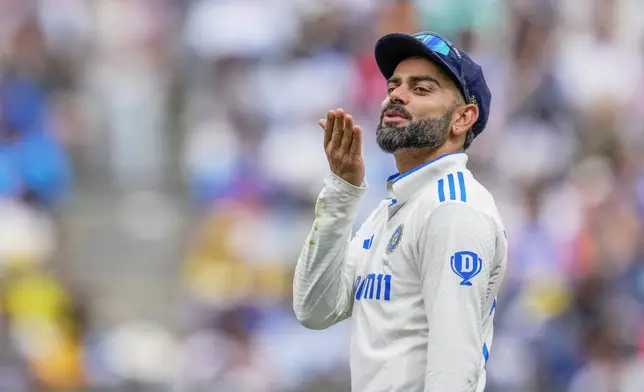
FILE - India's Virat Kohli gestures to a member of a crowd during play on the first day of the fourth cricket test between Australia and India at the Melbourne Cricket Ground, Melbourne, Australia, on Dec. 26, 2024. (AP Photo/Asanka Brendon Ratnayake, File)
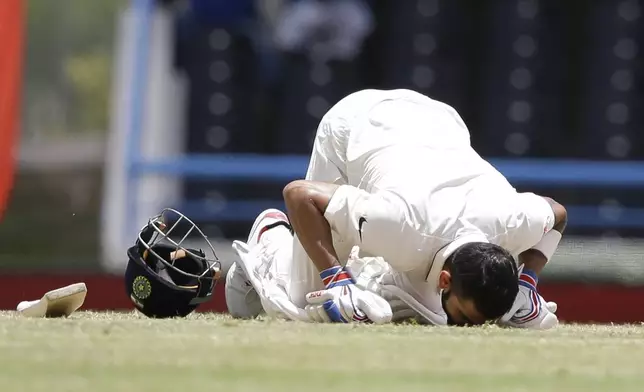
FILE - India's captain Virat Kohli kisses the field after scoring a double-century during day two of the first cricket Test match against West Indies at the Sir Vivian Richards Stadium in North Sound, Antigua, on July 22, 2016. (AP Photo/Ricardo Mazalan, File)
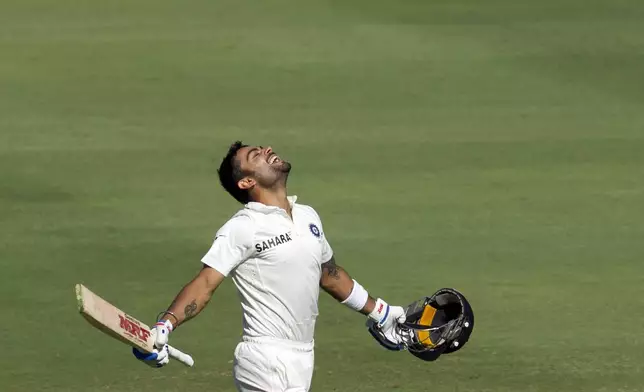
FILE - India's batsman Virat Kohli runs as he celebrates his century during the first day of their cricket test match against South Africa at Wanderers stadium in Johannesburg, South Africa, on Dec. 18, 2013. (AP Photo/Themba Hadebe, File)
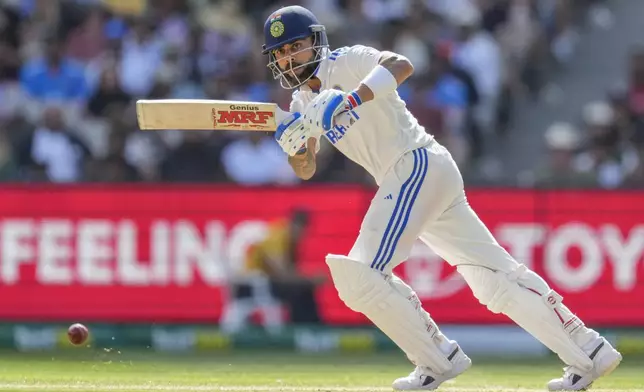
FILE - India's Virat Kohli watches the ball after playing a shot during play on the second day of the fourth cricket test between Australia and India at the Melbourne Cricket Ground, Melbourne, Australia, on Dec. 27, 2024. (AP Photo/Asanka Brendon Ratnayake, File)
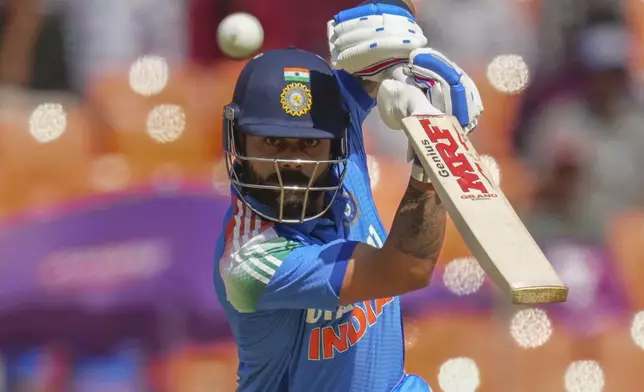
FILE - India's Virat Kohli plays a shot during the third one day international cricket match between India and England in Ahmedabad , India, on Feb. 12, 2025. (AP Photo/ Ajit Solanki, File)
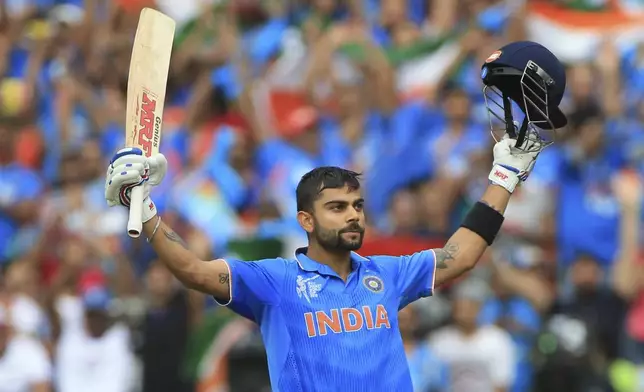
FILE - India's Virat Kohli, celebrates his hundred runs during the World Cup Pool B match against Pakistan in Adelaide, Australia, on Feb. 15, 2015. (AP Photo/James Elsby, File)
Here's a flavor of those stats over his 14-year test career:
The number of double-hundreds made by Kohli in tests, the most by an India player and the fourth most in test history. Six of them came in an extraordinary 18-month, 33-innings spell from July 2016 to December 2017 — a period in which he was the No. 1 batter in the format.
The number of test centuries made by Kohli — only 14 players have more. He also had 31 half-centuries.
Kohli's batting average in tests.
The number of test appearances made by Kohli. He was captain in 68 tests, winning 40 of them — the most for an Indian captain and fourth overall in test cricket.
Kohli's highest test score, made against South Africa in Pune, India, in October 2019. He finished the innings not out and it was the last of his double centuries.
The number of test runs made by Kohli, which ranks him fourth on the all-time list of India players behind fellow greats Sachin Tendulkar, Rahul Dravid and Sunil Gavaskar.
The number of followers Kohli has on Instagram.
AP cricket: https://apnews.com/hub/cricket

FILE - India's Virat Kohli gestures to a member of a crowd during play on the first day of the fourth cricket test between Australia and India at the Melbourne Cricket Ground, Melbourne, Australia, on Dec. 26, 2024. (AP Photo/Asanka Brendon Ratnayake, File)
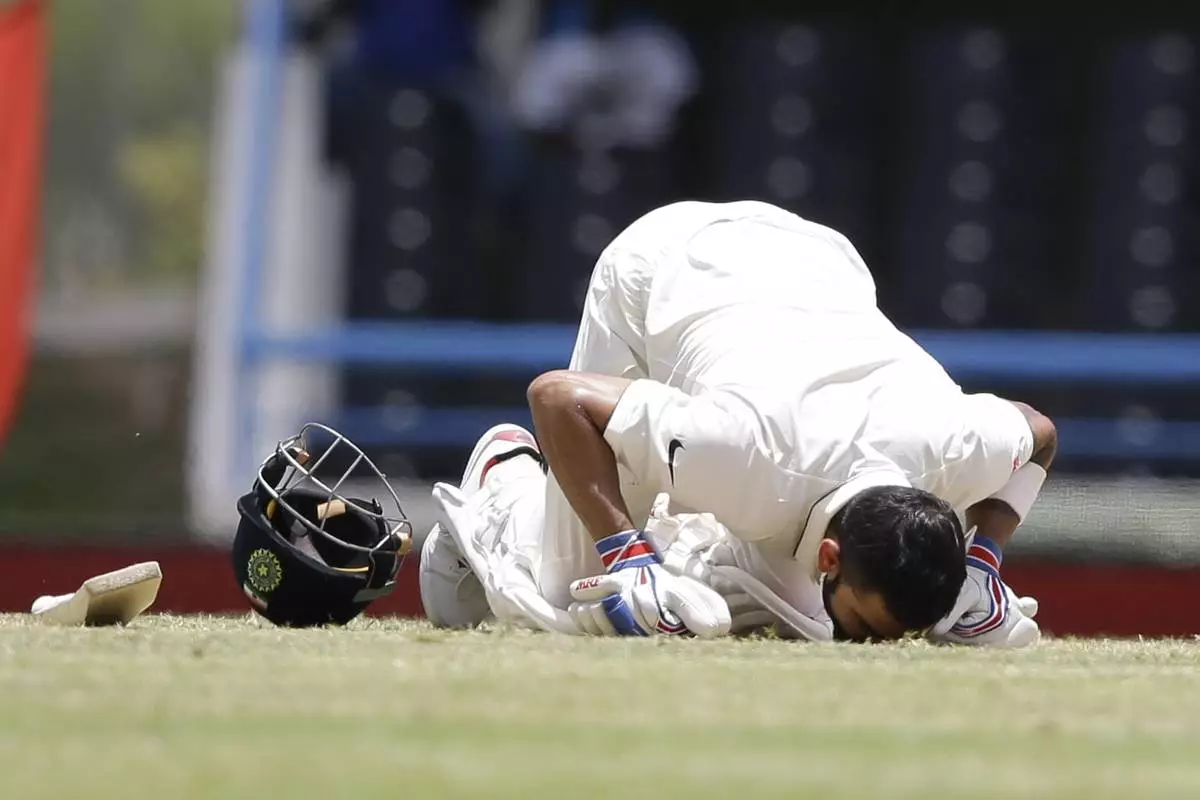
FILE - India's captain Virat Kohli kisses the field after scoring a double-century during day two of the first cricket Test match against West Indies at the Sir Vivian Richards Stadium in North Sound, Antigua, on July 22, 2016. (AP Photo/Ricardo Mazalan, File)

FILE - India's batsman Virat Kohli runs as he celebrates his century during the first day of their cricket test match against South Africa at Wanderers stadium in Johannesburg, South Africa, on Dec. 18, 2013. (AP Photo/Themba Hadebe, File)
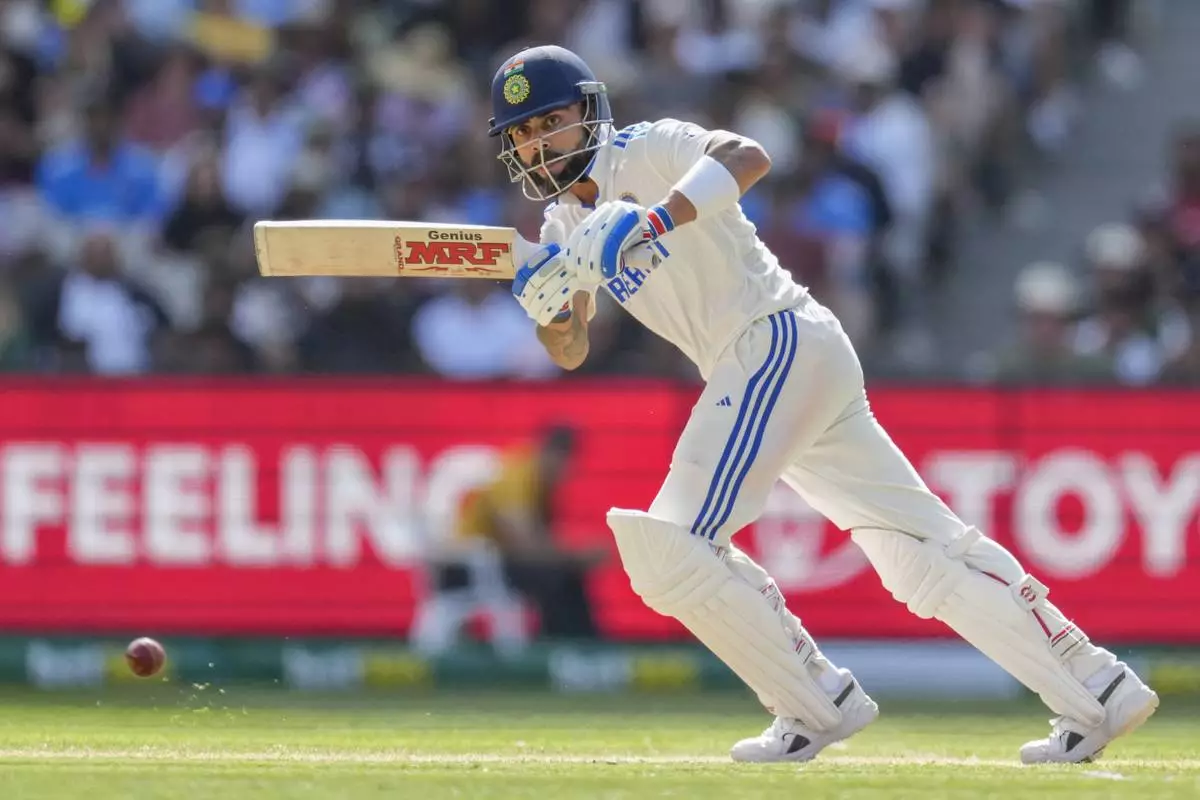
FILE - India's Virat Kohli watches the ball after playing a shot during play on the second day of the fourth cricket test between Australia and India at the Melbourne Cricket Ground, Melbourne, Australia, on Dec. 27, 2024. (AP Photo/Asanka Brendon Ratnayake, File)
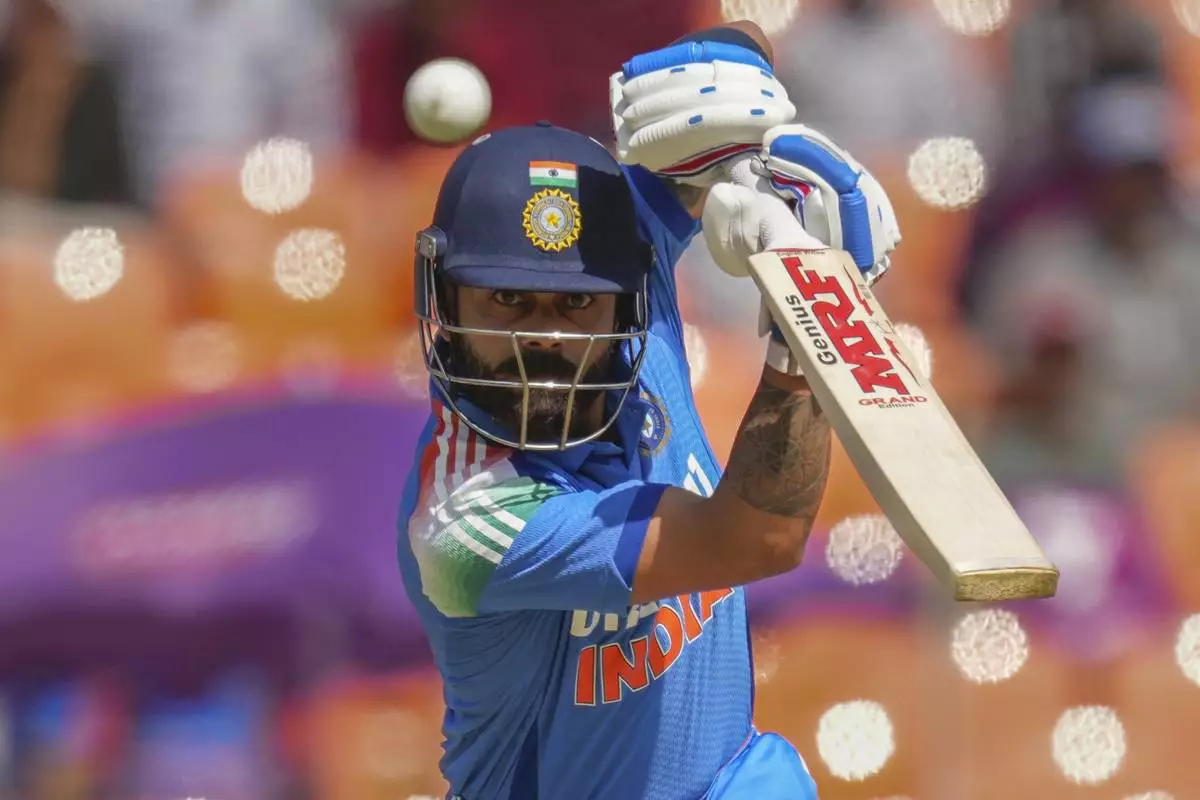
FILE - India's Virat Kohli plays a shot during the third one day international cricket match between India and England in Ahmedabad , India, on Feb. 12, 2025. (AP Photo/ Ajit Solanki, File)
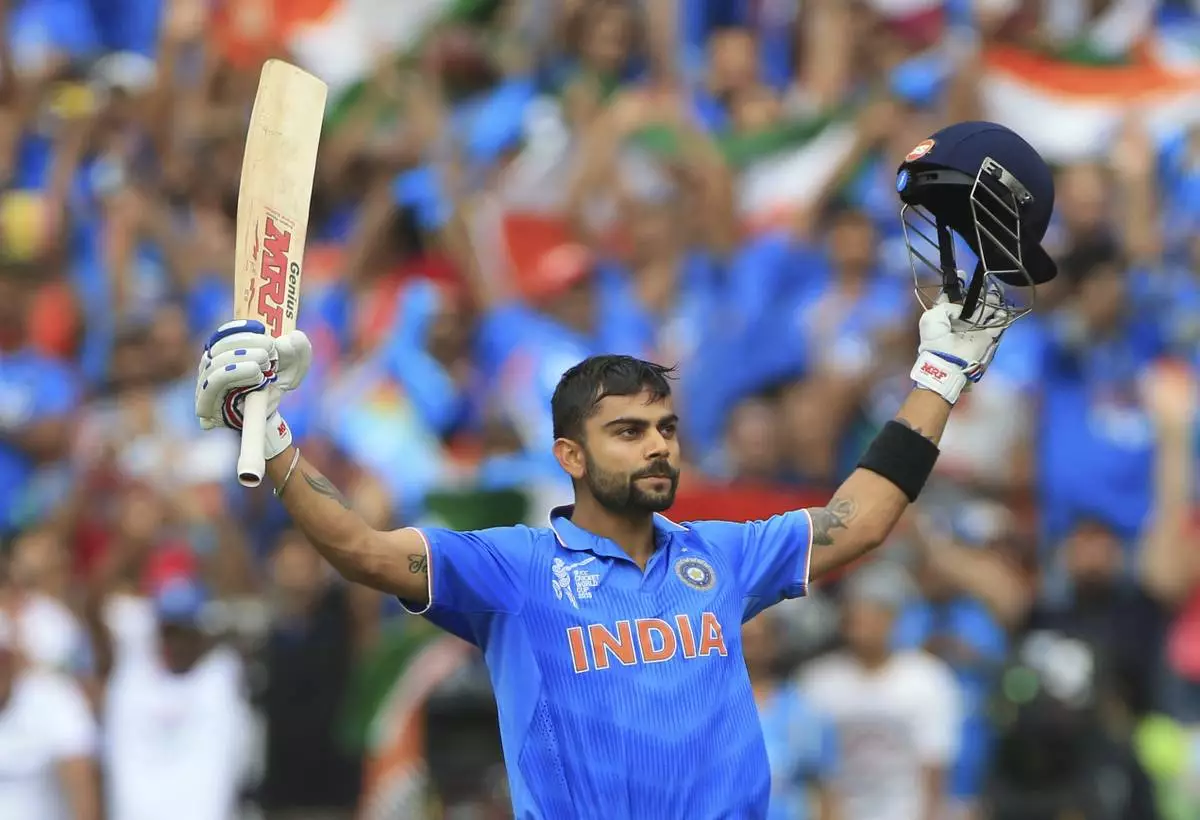
FILE - India's Virat Kohli, celebrates his hundred runs during the World Cup Pool B match against Pakistan in Adelaide, Australia, on Feb. 15, 2015. (AP Photo/James Elsby, File)