A stalemate between President Donald Trump and Illinois Gov. JB Pritzker that threatened a $1.2 billion plan to keep invasive carp from reaching the Great Lakes appears to have been settled after the Trump administration offered assurances it will cover its share of the costs.
After a delay that has stretched on since February, Illinois officials are set to resume closing on property they need to continue work on a project that will generate vast bubble curtains to deter the carp, stun them with electrical fields and play sound frequencies to disorient them.
Here's what to know:
The U.S. Army Corps of Engineers along with state officials in Illinois and Michigan have been planning since 2020 to install a gantlet of technologies in the Des Plaines River near Joliet, Illinois, to deter invasive carp from entering Lake Michigan.
The Corps and the states signed a deal in 2024 to work together on the project using $226 million allocated through the Bipartisan Infrastructure Law. And elements of the Water Resources Development Act adopted last year call for the federal government to cover 90% of operating and maintenance costs.
Construction on the project began in January. Pritzker's administration was set to close in February on a parcel of property for the project and transfer it to the Corps.
Everything appeared on track until late January, when the Trump administration froze federal grants and loans as it reviewed whether spending aligned with Trump's priorities on issues such as climate change and diversity. The administration rescinded the freeze less than two days later but questions persist about the federal government's spending commitments.
Pritzker, a billionaire heir to the Hyatt hotel empire and a potential 2028 Democratic presidential contender, is one of Trump’s fiercest critics. He has described the early months of the Trump administration as “true villainous cruelty by a few idiots.”
Days before Illinois was to finalize a property deal for the carp project, Pritzker hit pause and demanded assurances that the federal government would honor its spending commitment. Site preparation has continued since then, but substantial work to install technology has been on hold.
The White House issued a memo late Friday saying the Trump administration recognized the threat invasive carp pose to Great Lakes recreation and fishing and that it's committed to protecting the lakes.
The federal government is prepared to do its part so long as states cooperate, according to the memo, which calls on Illinois to complete the property deal by July 1 and promises the federal government will streamline permitting and environmental reviews.
“My Administration fully supports preventing the spread of invasive carp,” the memo said. “The State of Illinois, where the (project) is located, must cease further delay in cooperating with this effort, for the sake of its own citizens and economy and for the sake of all of the Great Lake States.”
Pritzker's office issued a news release late Friday evening saying the governor was satisfied.
Work on the project isn't slated to finish until 2032, but Joel Brammeier, president and CEO of the nonpartisan Alliance for the Great Lakes, said Monday that prospects suddenly look dramatically better than they did last week.
“We're back to business as usual. That's a good thing,” he said.
Four species of carp were imported to the U.S. from Asia in the 1960s and 1970s to clear algae from sewage ponds and fish farms in the Deep South. They escaped into the Mississippi River and have moved north into dozens of tributaries in the central U.S.
Government agencies, advocacy groups and others have long debated how to prevent the fish from reaching the Great Lakes, where scientists say they could out-compete native species for food and habitat in waterways where the fishing industry is valued at $7 billion.
A shipping canal that forms part of the link between the Mississippi and Lake Michigan has a network of fish-repelling barriers, which the Corps says is effective, but critics consider inadequate.
The new project at the Brandon Road Lock and Dam on the Des Plaines River near Joliet will provide another layer of protection at a downstream choke point between the Illinois River, which is infested with invasive carp, and Lake Michigan.
“I’m hopeful everyone is taking this project seriously now and we’re not going to see any more delays,” Brammeier said.
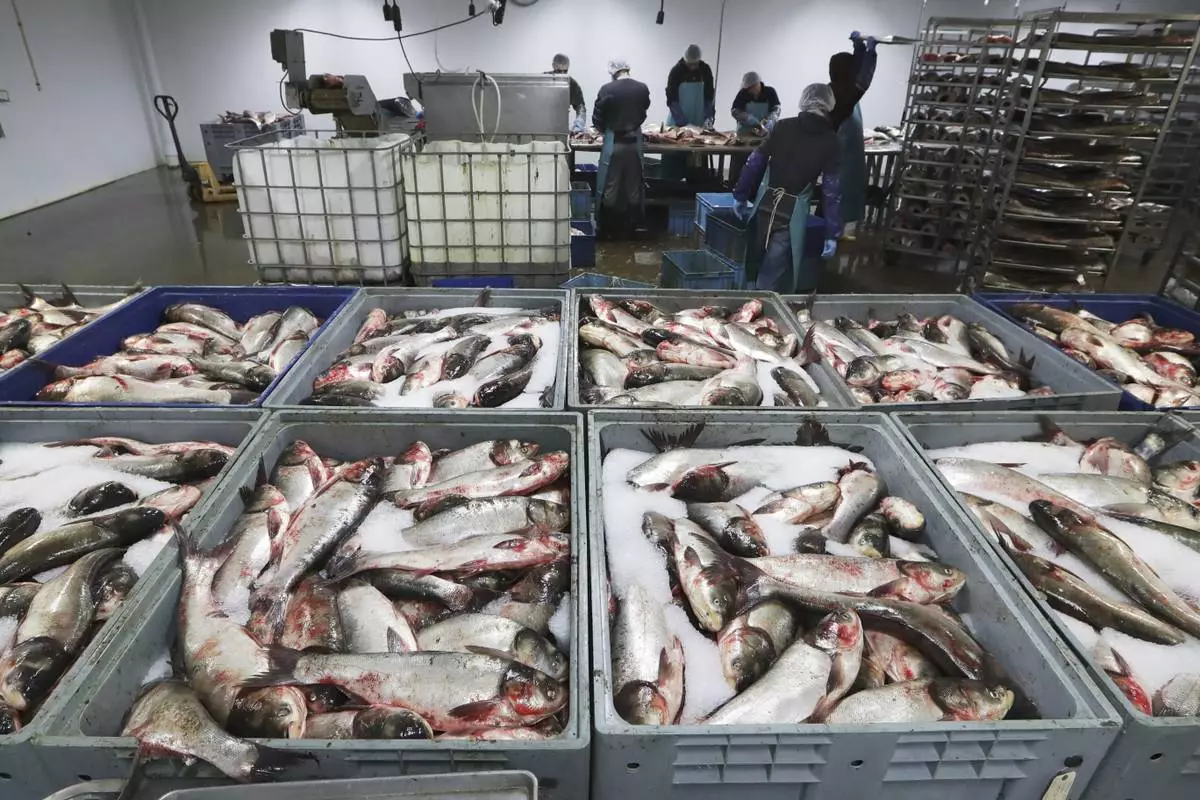
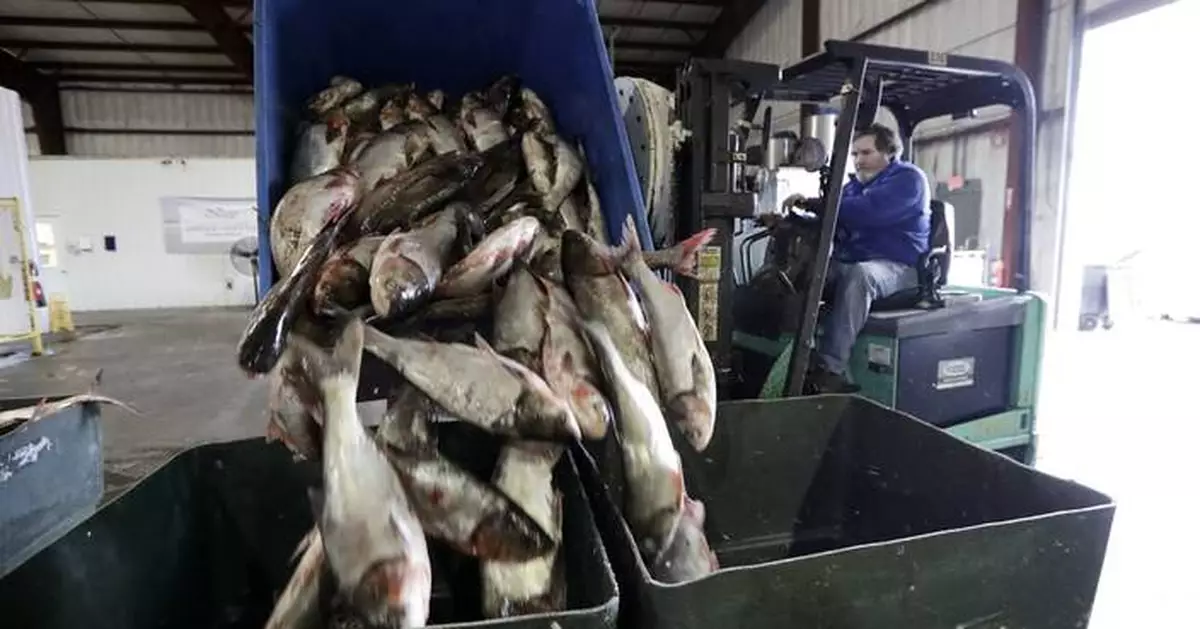
FILE - Asian carp are processed at Two Rivers Fisheries in Wickliffe, Ky., Feb. 11, 2020. (AP Photo/Mark Humphrey, File)
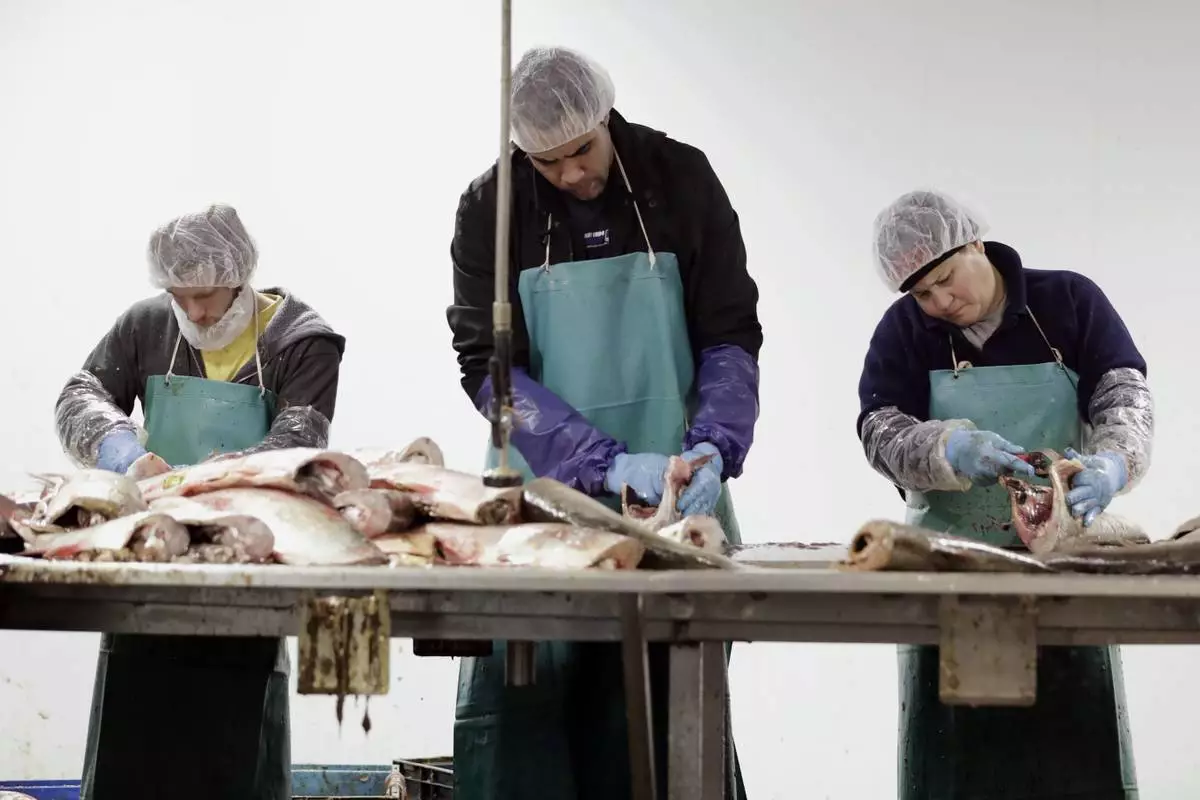
FILE - Asian carp are processed at Two Rivers Fisheries in Wickliffe, Ky, Feb. 11, 2020. (AP Photo/Mark Humphrey, file)
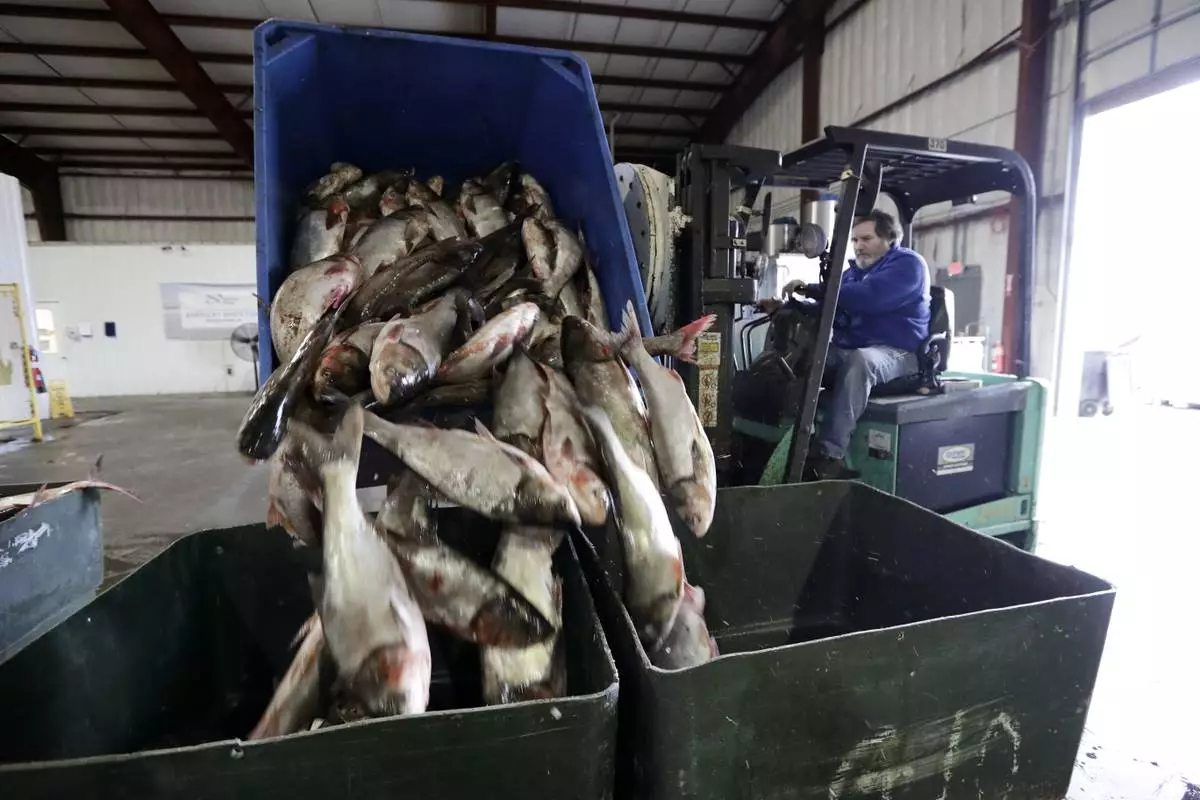
FILE - Asian carp are unloaded at Two Rivers Fisheries in Wickliffe, Ky, Feb. 11, 2020. (AP Photo/Mark Humphrey, file)
NEW YORK (AP) — Thousands of nurses in three hospital systems in New York City went on strike Monday after negotiations through the weekend failed to yield breakthroughs in their contract disputes.
The strike was taking place at The Mount Sinai Hospital and two of its satellite campuses, with picket lines forming. The other affected hospitals are NewYork-Presbyterian and Montefiore Medical Center in the Bronx.
About 15,000 nurses are involved in the strike, according to New York State Nurses Association.
“After months of bargaining, management refused to make meaningful progress on core issues that nurses have been fighting for: safe staffing for patients, healthcare benefits for nurses, and workplace violence protections,” the union said in a statement issued Monday. “Management at the richest hospitals in New York City are threatening to discontinue or radically cut nurses’ health benefits.”
The strike, which comes during a severe flu season, could potentially force the hospitals to transfer patients, cancel procedures or divert ambulances. It could also put a strain on city hospitals not involved in the contract dispute, as patients avoid the medical centers hit by the strike.
The hospitals involved have been hiring temporary nurses to try and fill the labor gap during the walkout, and said in a statement during negotiations that they would “do whatever is necessary to minimize disruptions.” Montefiore posted a message assuring patients that appointments would be kept.
“NYSNA’s leaders continue to double down on their $3.6 billion in reckless demands, including nearly 40% wage increases, and their troubling proposals like demanding that a nurse not be terminated if found to be compromised by drugs or alcohol while on the job," Montefiore spokesperson Joe Solmonese said Monday after the strike had started. "We remain resolute in our commitment to providing safe and seamless care, regardless of how long the strike may last.”
New York-Presbyterian accused the union of staging a strike to “create disruption,” but said in a statement that it has taken steps to ensure patients receive the care they need.
"We’re ready to keep negotiating a fair and reasonable contract that reflects our respect for our nurses and the critical role they play, and also recognizes the challenging realities of today’s healthcare environment,” the statement said.
The work stoppage is occurring at multiple hospitals simultaneously, but each medical center is negotiating with the union independently. Several other hospitals across the city and in its suburbs reached deals in recent days to avert a possible strike.
The nurses’ demands vary by hospital, but the major issues include staffing levels and workplace safety. The union says hospitals have given nurses unmanageable workloads.
Nurses also want better security measures in the workplace, citing incidents like a an incident last week, when a man with a sharp object barricaded himself in a Brooklyn hospital room and was then killed by police.
The union also wants limitations on hospitals’ use of artificial intelligence.
The nonprofit hospitals involved in the negotiations say they’ve been working to improve staffing levels, but say the union’s demands overall are too costly.
Nurses voted to authorize the strike last month.
Both New York Gov. Kathy Hochul and Mayor Zohran Mamdani had expressed concern about the possibility of the strike. As the strike deadline neared, Mamdani urged both sides to keep negotiating and reach a deal that “both honors our nurses and keeps our hospitals open.”
“Our nurses kept this city alive through its hardest moments. Their value is not negotiable,” Mamdani said.
State Attorney General Letitia James voiced similar support, saying "nurses put their lives on the line every day to keep New Yorkers healthy. They should never be forced to choose between their own safety, their patients’ well-being, and a fair contract.”
The last major nursing strike in the city was only three years ago, in 2023. That work stoppage, at Mount Sinai and Montefiore, was short, lasting three days. It resulted in a deal raising pay 19% over three years at those hospitals.
It also led to promised staffing improvements, though the union and hospitals now disagree about how much progress has been made, or whether the hospitals are retreating from staffing guarantees.
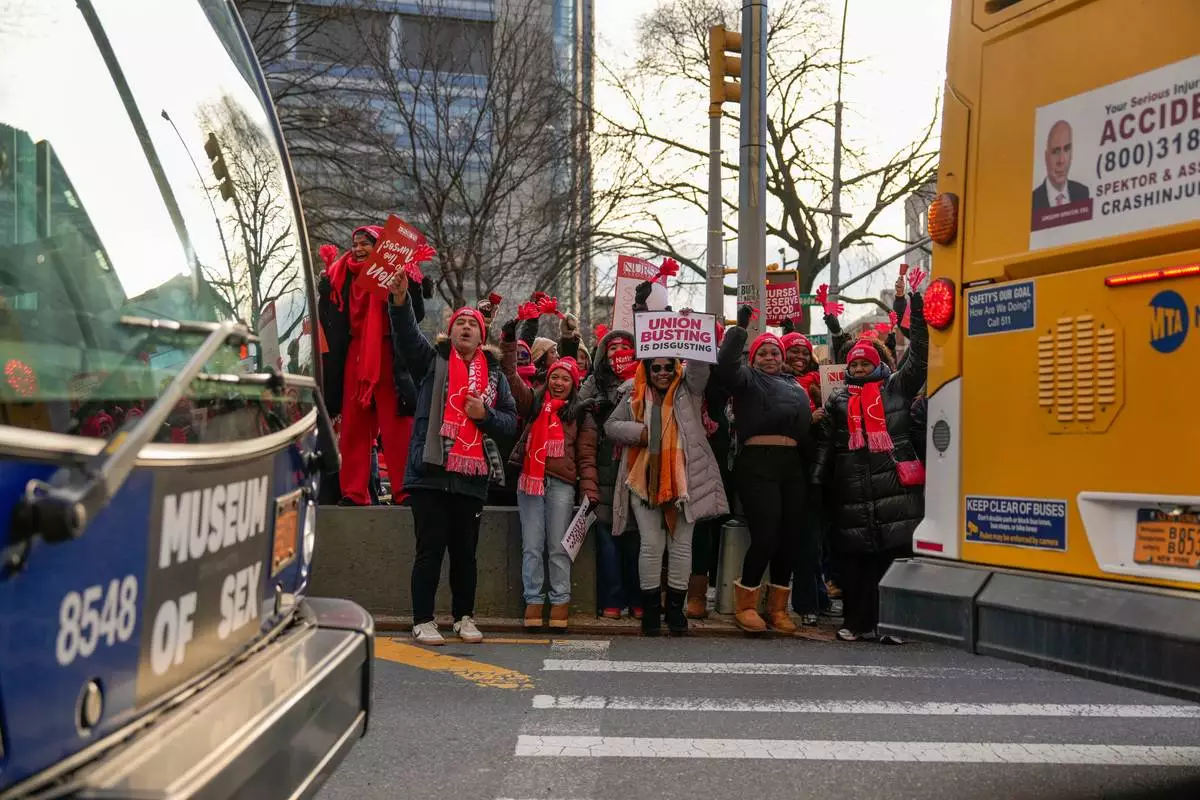
Nurses strike outside New York-Presbyterian Hospital, Monday, Jan. 12, 2026, in New York. (AP Photo/Yuki Iwamura)
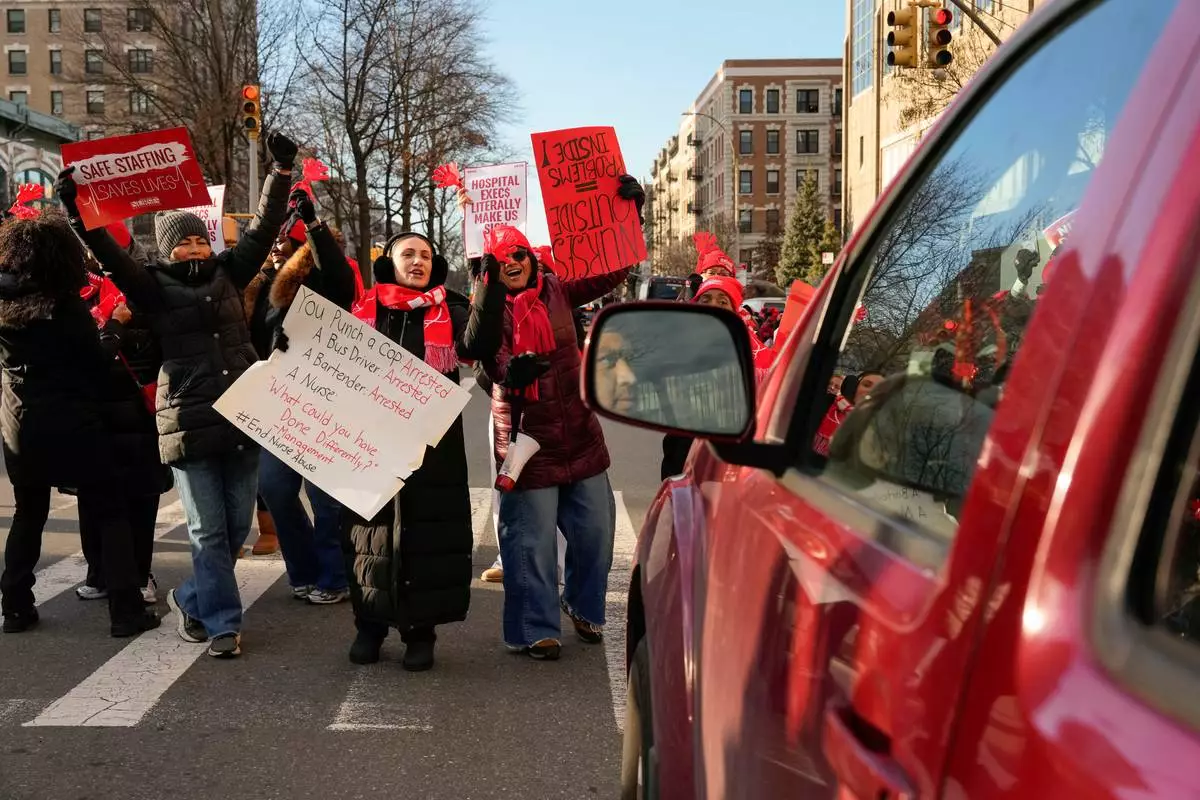
Nurses strike outside New York-Presbyterian Hospital, Monday, Jan. 12, 2026, in New York. (AP Photo/Yuki Iwamura)
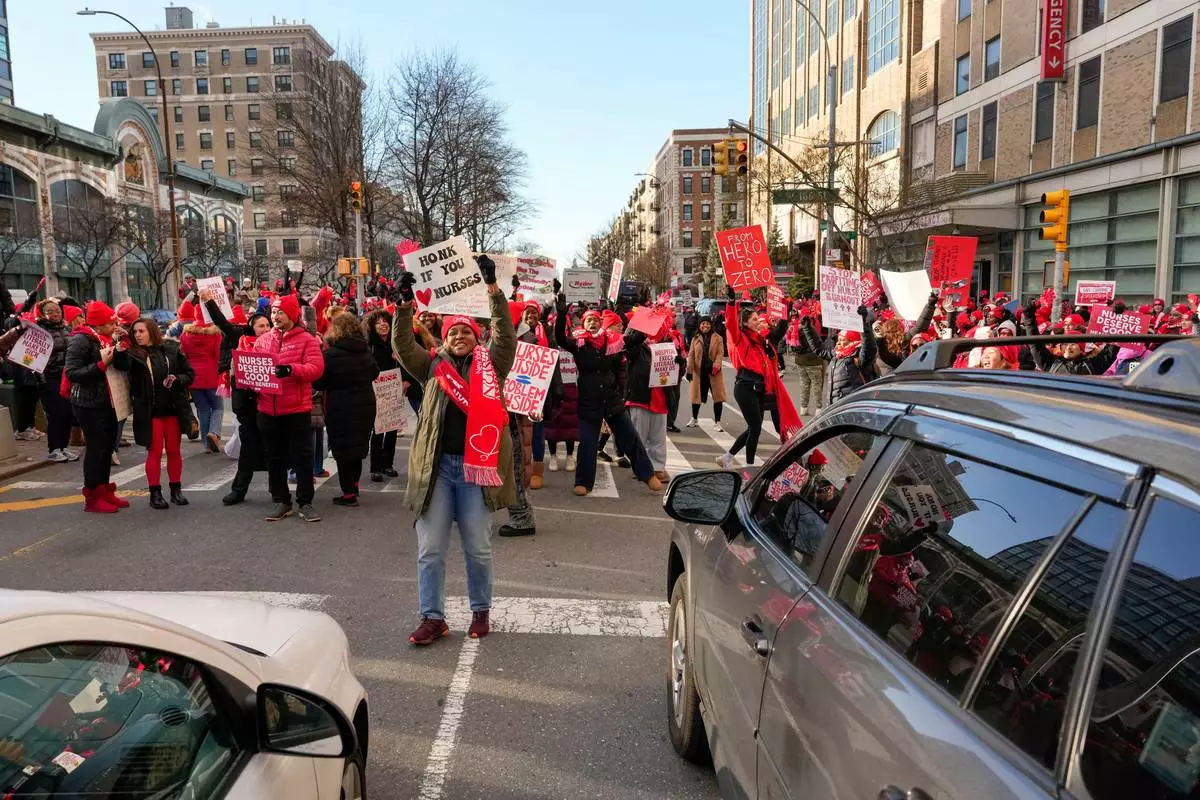
Nurses strike outside New York-Presbyterian Hospital, Monday, Jan. 12, 2026, in New York. (AP Photo/Yuki Iwamura)
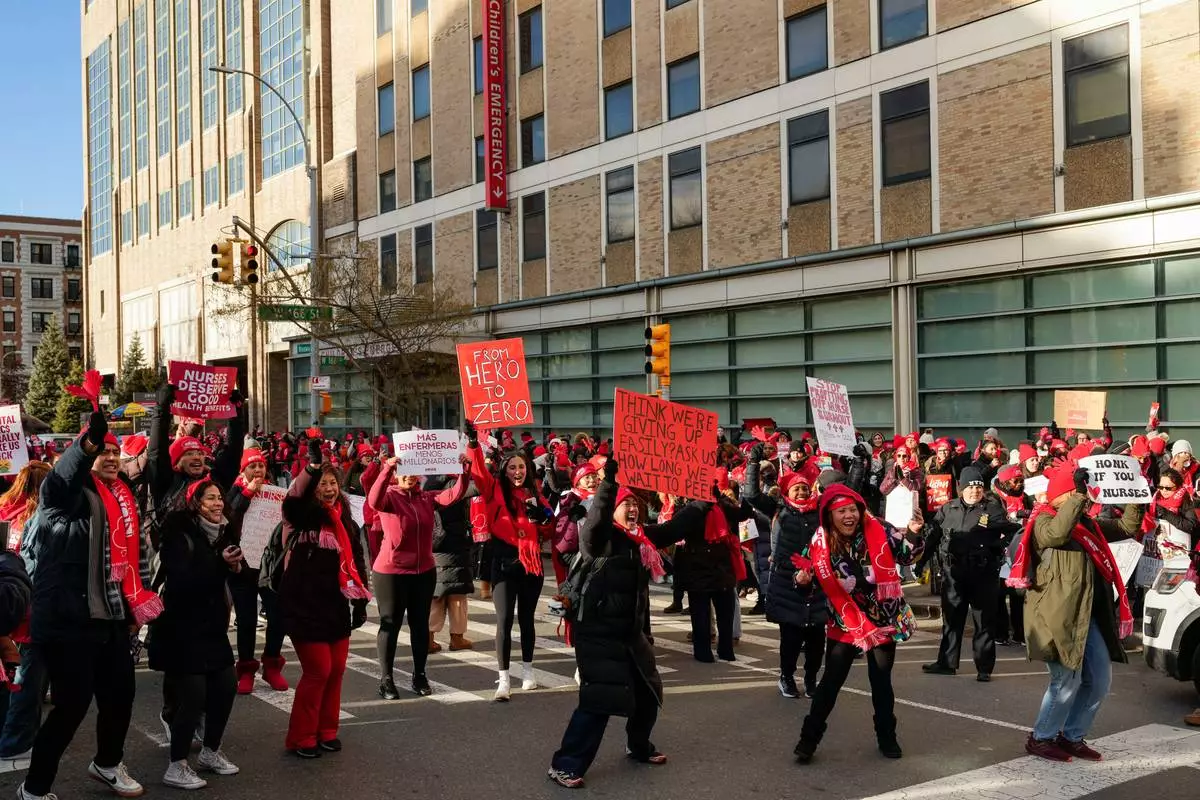
Nurses strike outside New York-Presbyterian Hospital, Monday, Jan. 12, 2026, in New York. (AP Photo/Yuki Iwamura)

Nurses strike outside New York-Presbyterian Hospital, Monday, Jan. 12, 2026, in New York. (AP Photo/Yuki Iwamura)
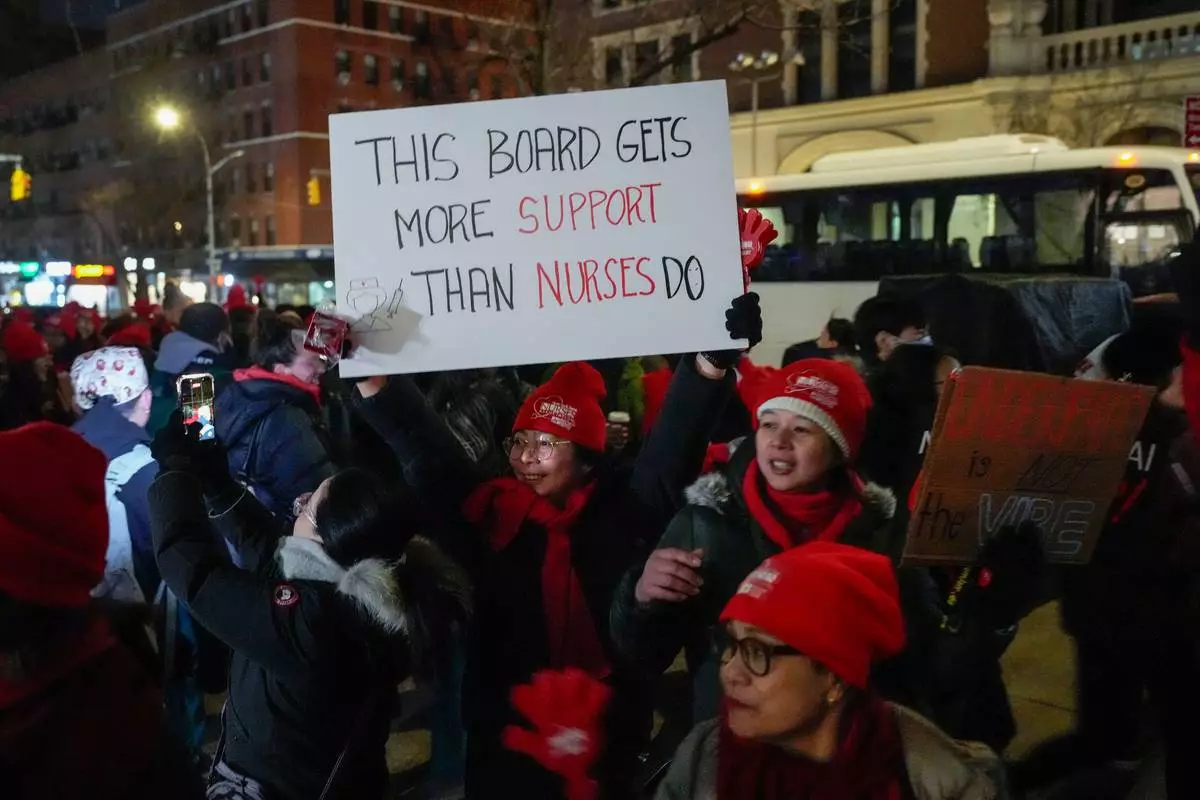
Nurses strike outside Mount Sinai West Hospital, Monday, Jan. 12, 2026, in New York. (AP Photo/Yuki Iwamura)
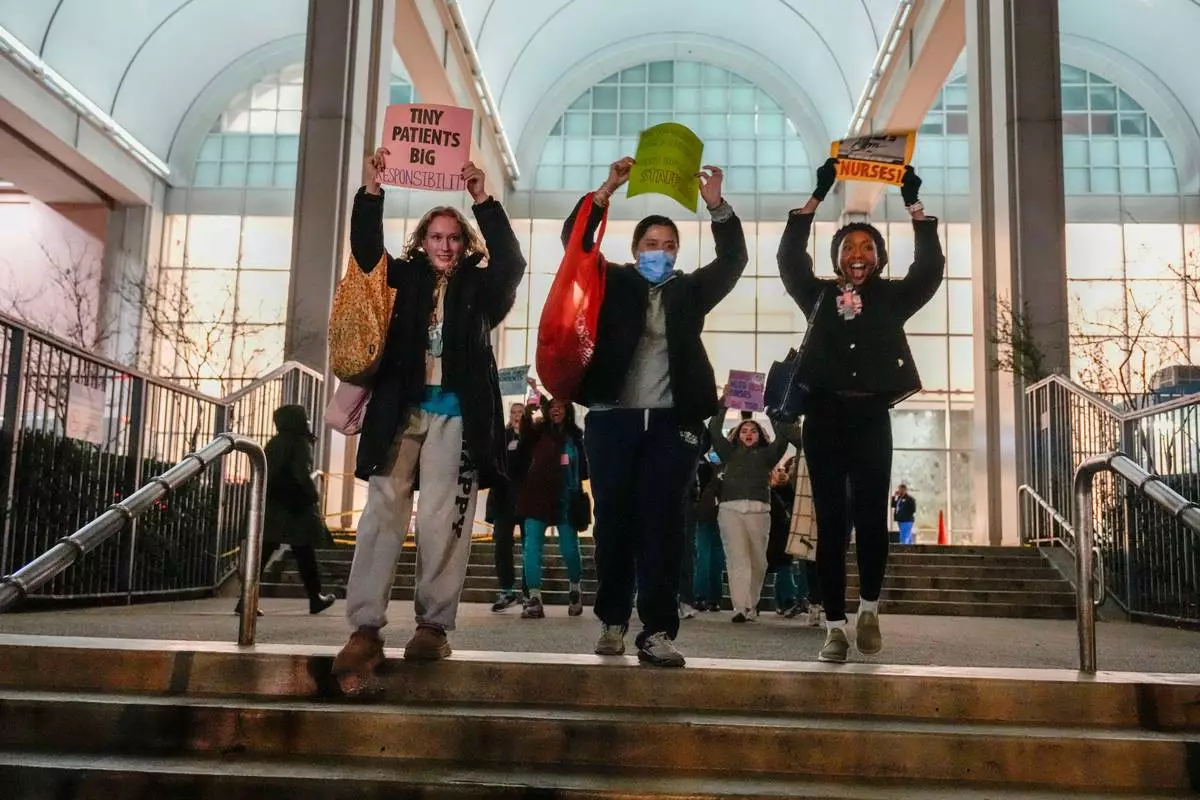
Nurses strike outside Mount Sinai West Hospital, Monday, Jan. 12, 2026, in New York. (AP Photo/Yuki Iwamura)
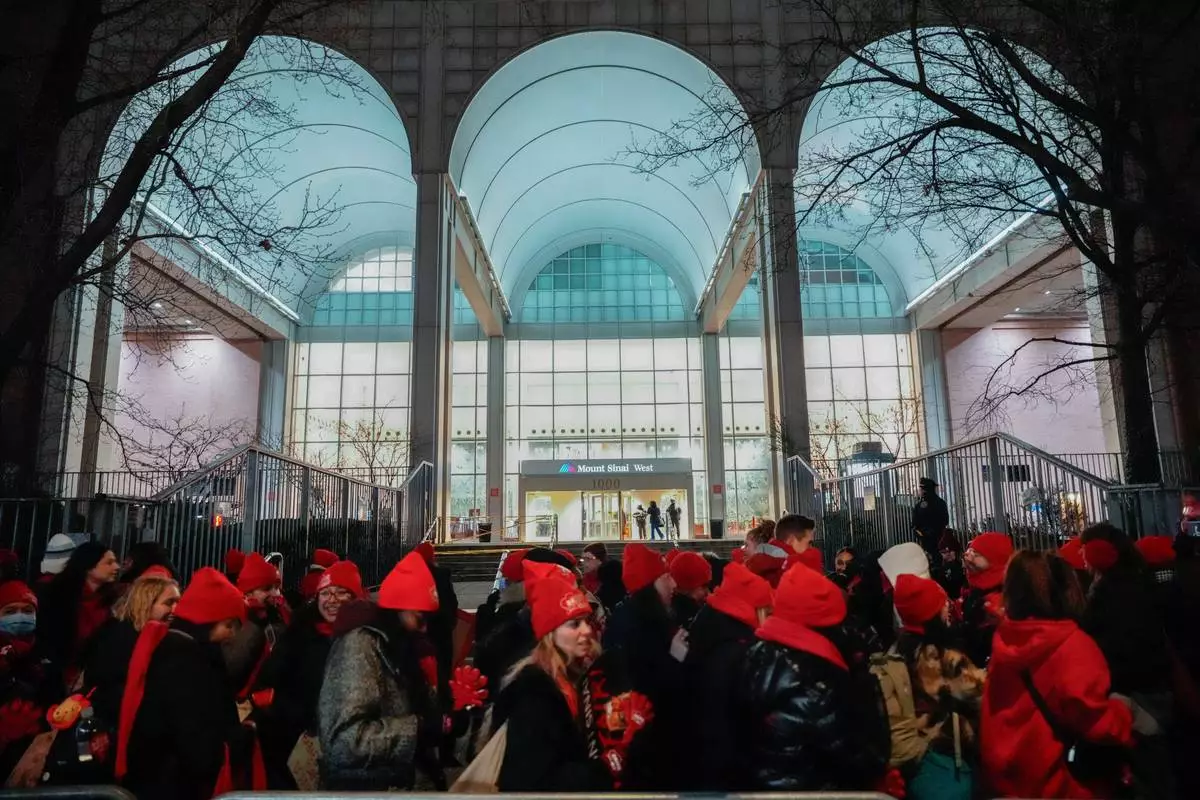
Nurses strike outside Mount Sinai West Hospital, Monday, Jan. 12, 2026, in New York. (AP Photo/Yuki Iwamura)

Nurses strike outside Mount Sinai West Hospital, Monday, Jan. 12, 2026, in New York. (AP Photo/Yuki Iwamura)

FILE - A medical worker transports a patient at Mount Sinai Hospital, April 1, 2020, in New York. (AP Photo/Mary Altaffer, File)